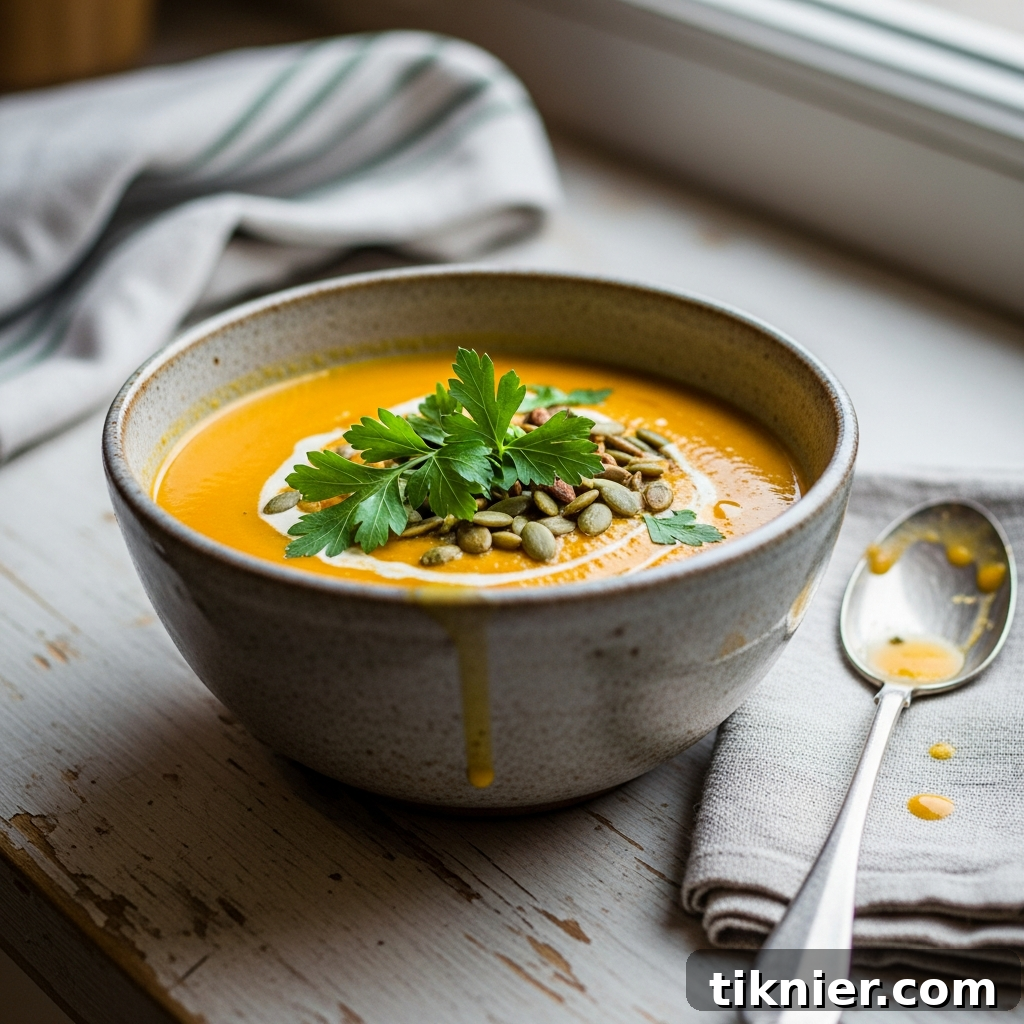
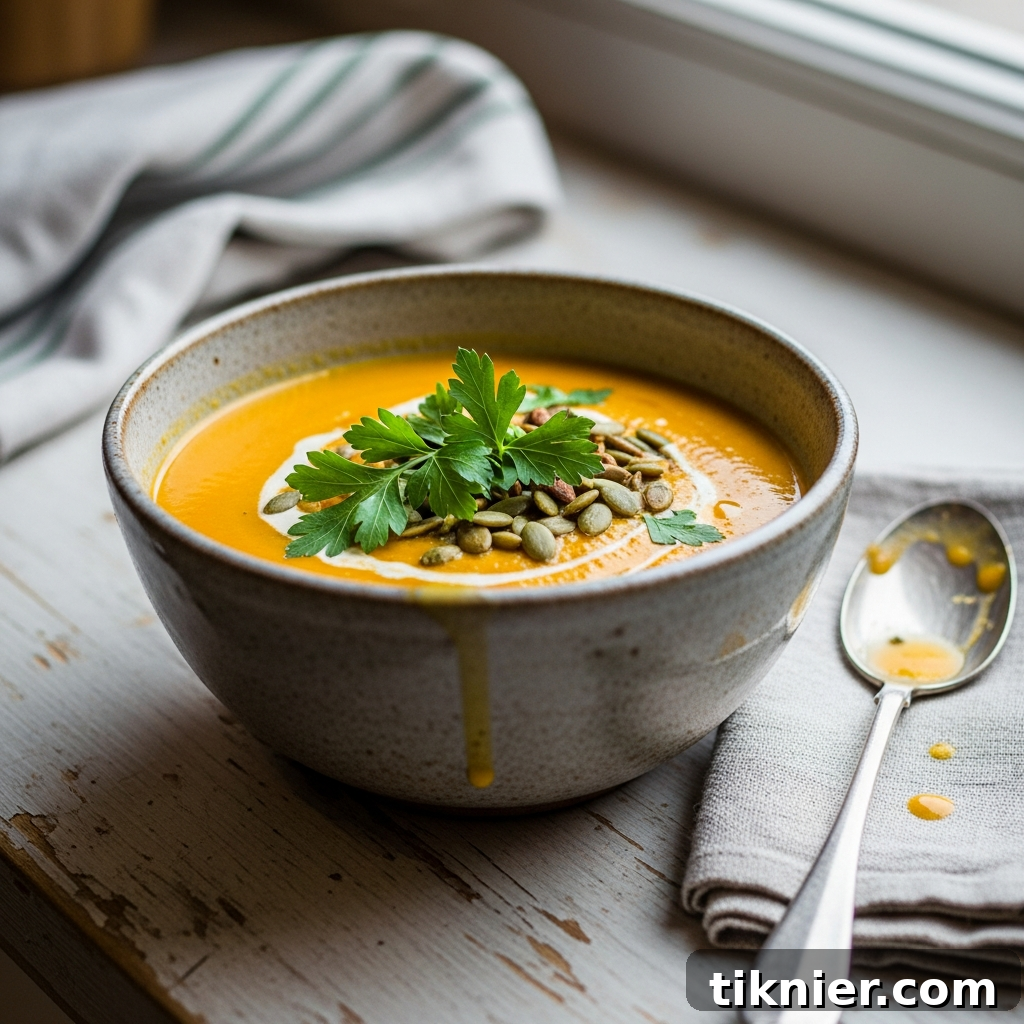
There’s a particular magic in the air as autumn approaches, ushering in a desire for meals that nourish the soul as much as the body. For many years, my culinary comfort was a simple vegetable soup, much like the one my grandmother lovingly simmered on the stovetop. While undeniably wholesome, it often left me yearning for a depth of flavor that felt truly transformative.
That yearning led to an afternoon of experimentation with a bounty of fresh produce from the local farmer’s market. The epiphany came with the decision to roast the vegetables first. As olive oil, salt, and colorful medley of sweet potatoes, carrots, and onions crackled on a baking sheet, the kitchen filled with an aroma so profound and inviting, it promised something truly special. This was the foundational step towards a soup that would redefine comfort in our home.
The initial blended batch was already a significant improvement – sweet, caramelized, and richer than any boiled vegetable soup. Yet, I knew it could reach an even higher plane of deliciousness. Through persistent refinement, I discovered two “secret weapons” that elevate this recipe from excellent to extraordinary. A generous dash of smoked paprika introduced a warm, savory depth, making the soup feel incredibly substantial and hearty. Then, a small splash of sherry vinegar, added right at the end, delivered a bright, zesty finish, awakening all the roasted flavors and making them truly sing. It’s these two additions that truly set our roasted vegetable soup apart.
This vibrant, nourishing soup has since become an undisputed favorite. It’s our go-to for chilly evenings, busy weeknights, or any moment we crave healthy, wholesome comfort in a bowl. It’s more than just a meal; it’s an experience, a warm embrace that satisfies on every level.
Skip to My Special Recipe!
Unlocking Flavor: Why This Roasted Vegetable Soup Recipe Stands Out
Vegetable soup has long been cherished as a timeless classic, celebrated for its wholesome, nourishing qualities and its innate ability to deliver a warm, comforting hug in a bowl. Traditionally, many recipes involve little more than simmering chopped vegetables in a pot of broth. While this method yields a decent soup, it often falls short of truly engaging the palate, frequently resulting in a blend where individual vegetable flavors become muddled and the overall taste profile feels somewhat one-dimensional.
The transformative power of this particular roasted vegetable soup recipe originates in the oven. Roasting vegetables at a high temperature isn’t just a cooking method; it’s a flavor-creation process. This intense heat initiates the Maillard reaction, a complex chemical process responsible for browning and the development of rich, savory aromas. It caramelizes the natural sugars within the vegetables, concentrating their flavors and creating a profound sweetness and complexity that simply cannot be achieved through boiling or steaming. Sweet potatoes emerge tender and intensely sweet, carrots deepen in flavor, onions turn wonderfully jammy, and the garlic becomes incredibly mild and creamy. This initial step lays a robust and deeply flavorful foundation for the entire soup.
Beyond the roasting, what truly elevates this recipe are its two signature finishing touches. First, the inclusion of smoked paprika. This is no ordinary spice. Unlike its sweet or hot counterparts, smoked paprika, often labeled Pimentón de la Vera, imparts a profound, savory depth and a rustic warmth that evokes the richness typically associated with slow-cooked meats or wood-fired dishes. It introduces a sophisticated layer of smoky complexity that is incredibly satisfying and comforting, making the soup feel surprisingly hearty and substantial, even without any meat.
The second game-changer is a judicious splash of sherry vinegar. Adding acid at the end of cooking is a secret weapon employed by chefs worldwide to brighten and “wake up” a dish. The sherry vinegar acts as a perfect counterpoint to the deep, earthy sweetness of the roasted vegetables and the robust smokiness of the paprika. Its subtle tang cuts through the richness, preventing the soup from tasting heavy, and instead, it lifts and harmonizes all the flavors. This balance of intense roasted notes, smoky warmth, and a vibrant, acidic finish is what makes this roasted vegetable soup an unforgettable and guaranteed winner every single time.
The Essential Ingredients for a Sublime Roasted Vegetable Soup
The beauty of this soup lies in its elegant simplicity and its reliance on fresh, everyday ingredients. The key to truly spectacular flavor isn’t an obscure list of items, but rather the careful selection and treatment of each component. Every ingredient plays a vital role, building layers of taste, from the inherent sweetness of root vegetables to the aromatic spices that infuse warmth and character.
Before you begin, ensure you have all these items ready from your pantry or grocery store. A little bit of mise en place makes the cooking process smooth and enjoyable. This recipe is also wonderfully adaptable, making it an excellent choice for using up any lingering produce that might be residing in your vegetable drawer.
- 1 large sweet potato, peeled and uniformly cubed (about 1.5-inch pieces)
- 2 medium carrots, peeled and roughly chopped (similar in size to sweet potato)
- 1 large parsnip, peeled and chopped (or an additional carrot if parsnips are unavailable)
- 1 red bell pepper, cored, seeded, and roughly chopped
- 1 yellow onion, cut into large wedges
- 1 whole head of garlic, the very top portion sliced off to expose the cloves
- 3 tablespoons high-quality olive oil, for rich flavor and even roasting
- 1 teaspoon smoked paprika, the star spice for deep flavor
- 1/2 teaspoon dried thyme, a classic herb that complements root vegetables
- Salt and freshly ground black pepper to taste, essential for enhancing all flavors
- 6 cups vegetable broth, a good quality broth makes a significant difference
- 1 tablespoon sherry vinegar, the crucial finishing touch for brightness
- Optional for garnish: fresh parsley (chopped), toasted pumpkin seeds (pepitas), a swirl of cream or coconut milk
A few crucial notes on our standout ingredients: For the smoked paprika, please ensure you purchase a variety specifically labeled “smoked” or “Pimentón de la Vera.” This distinct smoky flavor cannot be replicated by sweet or hot paprika and is foundational to the soup’s unique character. When selecting sherry vinegar, opt for a decent quality brand; it offers a more nuanced, nutty, and complex acidity compared to simpler vinegars, perfectly complementing the rich roasted vegetables. Finally, embrace the entire head of garlic! Roasting it whole transforms the cloves into an incredibly sweet, creamy, and mellow paste, contributing a subtle yet profound aromatic depth to the soup that is far superior to raw garlic.
Step-by-Step Guide: Crafting Your Perfect Roasted Vegetable Soup
The process of making this delightful soup is surprisingly straightforward, relying more on a smart technique – roasting – than on complicated culinary maneuvers. With most of the work happening in the oven, you’ll be amazed at how easily you can achieve a pot of velvety, deeply flavorful soup. Follow these stages closely, from the initial preparation to that final, perfect blend, and you’ll soon be enjoying this healthy, comforting meal.
Step 1: Preheat the Oven and Prepare the Vegetables for Roasting
Your first step is to prepare your oven. Preheat it to a robust 400°F (200°C). A hot oven is critical for achieving that coveted caramelization and preventing the vegetables from steaming instead of roasting. While the oven heats, gather your largest rimmed baking sheet. On this sheet, combine your cubed sweet potato, chopped carrots, chopped parsnip, red bell pepper, and onion wedges. It’s important to cut these vegetables into fairly uniform, generous pieces – approximately 1 to 1.5 inches. This ensures they cook evenly and develop beautiful browned edges without burning.
Step 2: Season Generously and Roast Until Golden Perfection
Now it’s time to flavor your bounty. Drizzle the prepared vegetables generously with olive oil, ensuring every piece gets a light coating. Then, sprinkle over the star of the show, smoked paprika, along with dried thyme, a good pinch of salt, and freshly ground black pepper. Use your hands to thoroughly toss everything together directly on the baking pan, making sure each vegetable piece is well coated with oil and seasoning. Nestle the whole head of garlic, with its top sliced off, cut-side up, amongst the vegetables. Critically, spread all the vegetables into a single layer on the baking sheet. Overcrowding is the enemy of roasting, as it traps steam and inhibits browning. Roast for 30 to 40 minutes, taking a moment halfway through to flip the vegetables for even browning, until they are fork-tender and possess deliciously browned, caramelized edges. Those dark spots are pure flavor!
Step 3: Combine Roasted Vegetables and Simmer with Broth
Once your vegetables have achieved their perfect roasted state, carefully remove the baking sheet from the oven. Allow the head of garlic to cool for just a minute or two – enough for it to be handled safely. Then, with a gentle squeeze from the base, the soft, sweet, roasted garlic cloves will effortlessly pop out into your large soup pot or Dutch oven. Add the rest of the beautifully roasted vegetables to the pot. Pour in the vegetable broth, ensuring everything is submerged, and give it a good stir to combine all those incredible flavors.
Step 4: Blend to Silky Smoothness
Bring the mixture in the pot to a gentle simmer over medium-high heat. Once it begins to bubble, reduce the heat to low, cover the pot, and allow it to gently bubble for about 15 minutes. This simmering period is crucial; it gives all the complex roasted flavors a chance to meld and deepen further into the broth. Now, it’s blending time! An immersion blender is the most convenient tool for this step – simply place it directly into the pot and blend until you achieve your desired silky-smooth consistency. If you’re using a standard countertop blender, proceed with caution: transfer the hot soup in small batches, never filling the blender more than halfway, and always remember to vent the lid to allow steam to escape and prevent pressure buildup. Blend each batch until perfectly smooth before combining back into the pot.
Step 5: The Essential Finishing Touches and Serving
With your soup now beautifully smooth and velvety, it’s time for the final, transformative step. Stir in that all-important tablespoon of sherry vinegar. This might seem like a small amount, but it’s a non-negotiable step that brightens all the deep flavors and adds a perfect zing. Give the soup a taste. Now is your opportunity to adjust the seasoning; add more salt and freshly ground black pepper as needed until it reaches perfection. Ladle the hot, aromatic soup into bowls. For an extra flourish and delightful texture, finish each serving with a sprinkle of fresh, chopped parsley and a scattering of toasted pumpkin seeds (pepitas). Enjoy the comforting warmth and rich flavors of your homemade roasted vegetable soup immediately.
Elevate the Experience: How to Serve Roasted Vegetable Soup
Serving this exquisite roasted vegetable soup is truly half the enjoyment. Its rich, inviting orange hue and deep, complex flavors make it a wonderfully versatile dish, equally at home dressed up for an elegant dinner party or kept simple for a cozy, comforting weeknight meal. The velvety texture and robust taste provide a beautiful canvas for a variety of delicious toppings and pairings, allowing you to customize each bowl to perfection.
The most classic and arguably essential companion to any comforting soup is, of course, bread. A thick, crusty slice of artisanal sourdough, still warm from the oven, or a basket of flaky, buttery biscuits are perfect for dipping and soaking up every last drop of the flavorful broth. For the ultimate in comfort food indulgence, I highly recommend serving it alongside a gooey, sharp cheddar grilled cheese sandwich. The irresistible combination of the creamy, savory soup and the cheesy, crunchy sandwich is pure culinary bliss, a pairing that never fails to delight.
However, where you can truly unleash your culinary creativity is with the garnishes. Toppings not only enhance the visual appeal of the soup but also add crucial textural contrast, which is especially welcome with a smooth, blended soup. Here are some of my favorite ways to finish a bowl, transforming a simple meal into an elevated dining experience:
- A Touch of Creaminess: For an extra layer of luxurious richness, swirl in a tablespoon or two of heavy cream, créme fraîche, or for a dairy-free option, full-fat coconut milk. This adds a beautiful marble effect and a silken mouthfeel.
- Something Crunchy and Textural: Toasted pumpkin seeds (pepitas) are my absolute go-to for their nutty crunch. Other fantastic options include homemade croutons (garlic and herb are particularly good), crispy roasted chickpeas for added protein, or even some savory crumbled bacon or crispy fried onions for a more indulgent touch.
- Fresh Herbs for Brightness: A simple sprinkle of freshly chopped flat-leaf parsley is always perfect, adding a touch of verdant color and fresh flavor. Chives, finely minced, or delicate fresh thyme leaves would also complement the earthy flavors beautifully.
- A Drizzle of Flavorful Oil: A thin swirl of high-quality extra virgin olive oil not only looks elegant but also adds a subtle peppery note. For those who enjoy a bit of a kick, a spicy chili oil can introduce a gentle heat, while a nutty pumpkin seed oil enhances the autumnal theme.
- A Bit of Tangy Cheese: A fine grating of Parmesan cheese offers a salty, umami depth. Alternatively, a crumble of tangy goat cheese or salty feta can add a delicious, contrasting bite that really perks up the palate.
Ultimately, the best way to serve this soup is the way that brings the most joy to you and your family. Consider setting out a few different topping options and let everyone customize their own bowl. This transforms a simple, healthy meal into a fun, interactive, and personalized dining experience that everyone will love.
Maximizing Your Meal: Storing & Reusing Roasted Vegetable Soup Leftovers
One of the many virtues of this particular roasted vegetable soup is its exceptional performance as leftovers. In fact, many connoisseurs argue that the flavors actually deepen and meld even more harmoniously overnight, often making it taste even better the next day. This inherent quality makes it an ideal candidate for meal prepping, allowing you to create a large batch at the start of the week for convenient, healthy meals throughout the coming days. Proper storage techniques are crucial to maintaining its freshness, flavor, and delightful texture.
Once the soup has cooled down completely to room temperature – this is an important step for food safety and quality – transfer it to an airtight container. It will keep beautifully and safely in the refrigerator for up to five days. This makes it perfect for quick lunches or effortless dinners. If you wish to extend its shelf life even further, this soup freezes exceptionally well. For optimal convenience, I recommend portioning the soup into individual servings using freezer-safe containers or sturdy zip-top bags. This allows for easy thawing of just the amount you need. When properly stored, the soup will remain delicious and good in the freezer for up to three months. Always remember to label your containers with the date to keep track of freshness!
When you’re ready to indulge in your delicious leftovers, here are the most effective ways to bring your soup back to its glorious, comforting life:
- Reheating on the Stovetop (Recommended Method): This is my preferred approach as it allows for gentle, even reheating. Simply pour the desired amount of soup into a saucepan and gently warm it over medium-low heat, stirring occasionally, until it is thoroughly heated through. Be aware that the soup may thicken slightly in the refrigerator due to chilling. If you find it too thick, feel free to add a small splash of water or vegetable broth to thin it back to your preferred consistency.
- Reheating in the Microwave (Quick Option): For a super-fast lunch or a solitary serving, the microwave works perfectly fine. Pour the soup into a microwave-safe bowl, cover it loosely (to prevent splatters and retain moisture), and heat it in one-minute increments. Stir the soup well between each minute until it is steaming hot and evenly warmed through.
- Creative Reuse Beyond the Bowl: Don’t limit your thinking to just “soup.” A thicker, more concentrated version of this roasted vegetable puree can be transformed into a wonderful, healthy pasta sauce, especially delicious with a touch of grated Parmesan. You can also use it as a flavorful and nutritious base for cooking grains like quinoa, couscous, or rice, infusing them with all that incredible roasted vegetable goodness. Stir it into mashed potatoes for added flavor and color, or even use it as a base for a savory tart or quiche filling.
Having a container of this scrumptious roasted vegetable soup in your fridge or freezer is like giving a thoughtful gift to your future self. It’s a ready-made, effortlessly healthy, and deeply comforting meal, waiting patiently to nourish you on even the busiest of days.
Customize Your Comfort: Substitutions & Variations for Roasted Vegetable Soup
While this recipe for roasted vegetable soup is undeniably delicious and well-balanced as written, its true charm lies in its incredible adaptability and forgiving nature. Think of this recipe not as a rigid set of rules, but as a flexible template, an excellent starting point for culinary creativity. Feel absolutely free to adjust it based on the vegetables you have on hand, your personal flavor preferences, or even the seasonality of ingredients. Swapping out components is not only a fantastic way to prevent food waste but also an exciting opportunity to discover new and equally delightful flavor combinations.
The base of roasted vegetables offers the most significant scope for variation. Don’t have a parsnip? No problem! Simply use an extra carrot, a piece of celery root, or even a small turnip. Butternut squash or pumpkin are phenomenal additions during the autumn months, contributing a similar natural sweetness and creating an even creamier texture. You could also roast other vegetables alongside the core ingredients, such as cauliflower florets, broccoli spears, or even sliced zucchini. Just keep in mind that different vegetables may have slightly different cooking times; harder root vegetables require longer, while softer ones like zucchini should be added later to prevent them from becoming mushy. Ensure you cut all vegetables into similar sizes to promote even cooking.
Here are a few popular and delicious variations I’ve tried and loved over the years, each adding its own unique twist:
- For an Extra Creamy Indulgence: If you desire an even more luxurious, velvety texture beyond what the blended vegetables naturally provide, consider a creamy addition. After blending the soup, stir in about a half cup of heavy cream or half-and-half. For a superb dairy-free alternative that also adds a subtle sweetness, a can of full-fat coconut milk works wonders. Simply stir it in and gently heat through, ensuring it doesn’t boil.
- Introduce a Spicy Kick: For those who appreciate a bit of heat, infusing a spicy element is simple. Toss a pinch of red pepper flakes or a dash of cayenne pepper in with the vegetables before roasting. For a more profound, smoky heat, you could even roast a whole jalapeño or poblano pepper alongside the other vegetables, then deseed it (if desired) and blend it into the soup.
- Boost the Protein Content for a Heartier Meal: To transform this soup into a more complete and satisfying main course, consider adding plant-based protein. During the last few minutes of simmering, before blending, stir in a can of rinsed and drained cannellini beans, great northern beans, or even some cooked red lentils. These additions will thicken the soup slightly and provide a good source of fiber and protein.
- Experiment with Different Herbs: While dried thyme is a classic and wonderful choice for these root vegetables, don’t hesitate to explore other aromatic herbs. Fresh rosemary or sage sprigs tossed onto the baking sheet during roasting will infuse the olive oil and vegetables with their distinctive, earthy flavors. A bay leaf added during the simmering phase can also contribute a subtle, savory undertone.
Ultimately, the beauty of this recipe lies in its adaptability. Don’t be afraid to experiment and make it your own. The core method of roasting the vegetables to caramelization, simmering them with quality broth, and then blending to a smooth consistency will almost always yield a delicious and comforting soup, regardless of the precise combination of vegetables and spices you choose. It’s all about building those deep, delicious layers of flavor that make every spoonful a true delight.
Smoky & Bright Roasted Vegetable Soup
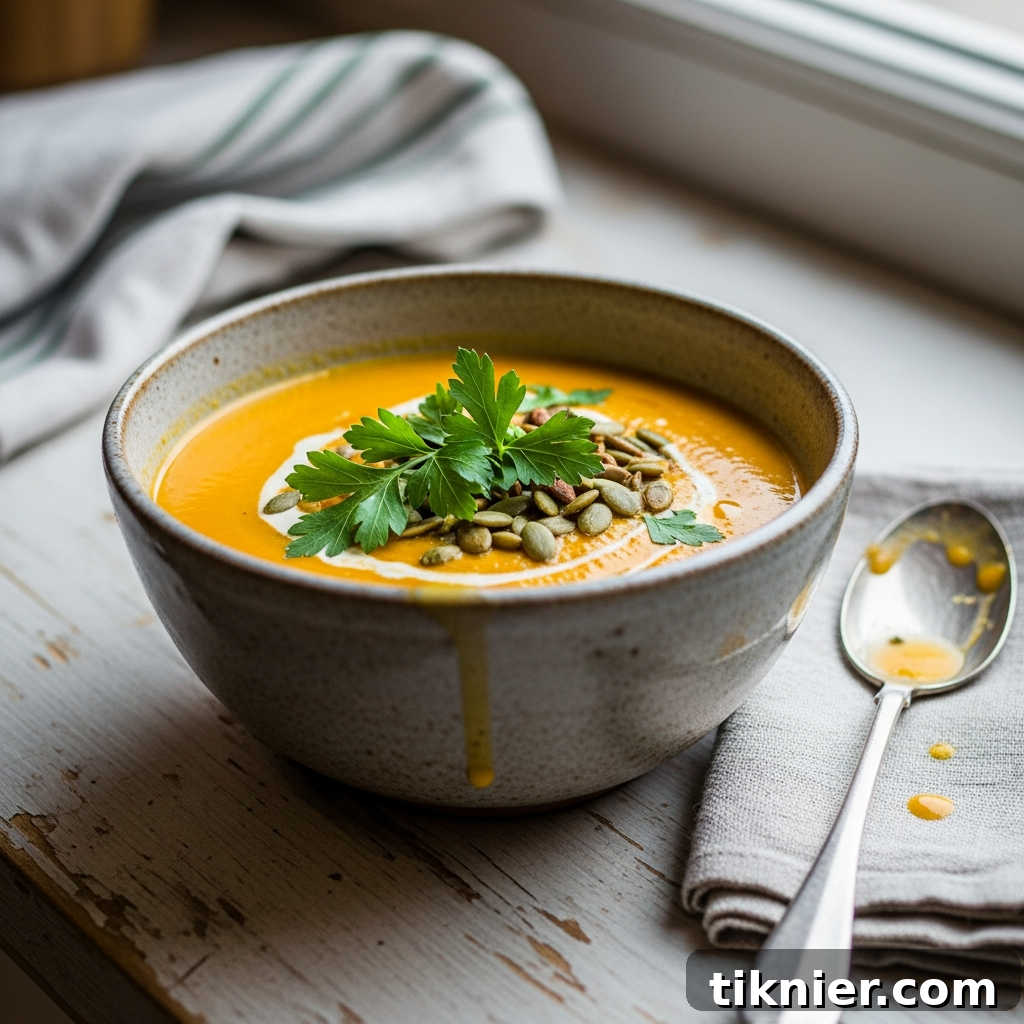
Description: A velvety, rich soup crafted from deeply caramelized root vegetables, enhanced with a smoky depth from paprika and a bright, zesty finish from sherry vinegar. The ultimate healthy comfort food that’s both nourishing and incredibly flavorful.
Yield: 8 servings | Category: Soup | Cuisine: American
Prep Time: 15 minutes | Cook Time: 55 minutes
Ingredients
- 1 large sweet potato, peeled and cubed (approx. 1.5-inch pieces)
- 2 medium carrots, peeled and chopped (similar size)
- 1 large parsnip, peeled and chopped (similar size)
- 1 red bell pepper, seeded and roughly chopped
- 1 yellow onion, cut into large wedges
- 1 head of garlic, top sliced off to expose cloves
- 3 tablespoons olive oil
- 1 teaspoon smoked paprika (essential for flavor)
- 1/2 teaspoon dried thyme
- Salt and freshly ground black pepper to taste
- 6 cups vegetable broth (low sodium preferred)
- 1 tablespoon sherry vinegar (crucial for brightness)
- Optional for garnish: fresh chopped parsley, toasted pumpkin seeds, a swirl of cream or coconut milk
Instructions
- Preheat oven to 400°F (200°C). Prepare a large rimmed baking sheet.
- On the baking sheet, toss the cubed sweet potato, chopped carrots, chopped parsnip, red bell pepper, and onion wedges with olive oil, smoked paprika, dried thyme, salt, and pepper. Ensure vegetables are evenly coated.
- Nestle the head of garlic, cut-side up, amongst the seasoned vegetables. Spread all vegetables into a single layer on the baking sheet to ensure proper roasting and caramelization.
- Roast for 30-40 minutes, flipping the vegetables once halfway through, until they are tender, beautifully browned, and caramelized at the edges.
- Once roasted, remove from oven. Squeeze the soft, roasted garlic cloves into a large pot or Dutch oven. Add the remaining roasted vegetables to the pot.
- Pour in the vegetable broth. Bring the mixture to a gentle simmer over medium-high heat, then reduce heat to low, cover, and let it cook for an additional 15 minutes to allow flavors to meld.
- Using an immersion blender, carefully blend the soup directly in the pot until it reaches a perfectly smooth, velvety consistency. Alternatively, transfer in batches to a standard blender, blending until smooth (vent lid!).
- Stir in the crucial 1 tablespoon of sherry vinegar. Taste the soup and adjust seasonings (salt, pepper) as needed for your preference.
- Serve the hot, vibrant soup immediately. Garnish each bowl with fresh parsley and toasted pumpkin seeds, or other desired toppings, for added texture and freshness.
Notes
The absolute key to this soup’s incredible flavor is achieving a deep caramelization on your vegetables during roasting. Don’t shy away from those lovely browned bits – they are where all the magic happens! Ensure your vegetables are spread in a true single layer on the baking sheet; overcrowding will cause them to steam rather than roast, preventing that desirable depth of flavor.
Servings: 8 | Calories: 150 kcal | Fat: 6g | Carbohydrates: 22g | Protein: 3g
Demystifying Your Deliciousness: 5 FAQs About Roasted Vegetable Soup
Here are comprehensive and straightforward answers to the most common questions I often receive about this highly popular and much-loved roasted vegetable soup recipe. Dive in to troubleshoot, enhance, and get the most out of your culinary experience!
Can I make this roasted vegetable soup in advance?
Absolutely, and I highly recommend it! This is one of those truly wonderful recipes that not only holds up well but actually tastes even better the next day. Preparing it in advance allows all those magnificent roasted flavors more time to fully meld and deepen, resulting in an even richer, more complex, and wonderfully harmonious soup. I frequently make a substantial batch on a Sunday afternoon, ensuring I have convenient, healthy, and delicious lunches or dinners readily available throughout the busy week ahead.
To prepare it ahead, simply follow the recipe instructions all the way through to completion. Once the soup is cooked and blended, let it cool completely to room temperature. This is a crucial step for food safety. Once cooled, transfer the soup into an airtight container. It will store perfectly in the refrigerator for up to 5 days. When you’re ready to enjoy it, gently reheat the soup on the stovetop over medium-low heat, stirring occasionally. You might notice the soup has thickened a bit when chilled, so feel free to add a small splash of vegetable broth or water to thin it back to your desired consistency before serving.
What other vegetables work well in this roasted vegetable soup?
This recipe is incredibly forgiving and versatile, making it an excellent foundation for experimentation based on what’s in season or what you have on hand. Butternut squash is a fantastic substitute for sweet potato, offering a similar natural sweetness and contributing to an incredibly creamy texture. Other root vegetables like celery root, turnips, or even celeriac also integrate beautifully. For added complexity and nutrition, consider adding vegetables such as cauliflower florets or broccoli florets, which roast up wonderfully and impart a pleasant, nutty flavor. Even thinly sliced fennel can be a delicious, slightly anise-flavored addition that brightens the overall profile. Mushrooms, especially cremini or shiitake, can add a wonderful umami depth.
The main consideration when swapping or adding vegetables is to cut harder vegetables like squash, carrots, and parsnips into similar-sized pieces (about 1 to 1.5 inches) so they cook at a consistent rate. Softer vegetables, such as zucchini, bell peppers (beyond the red one already included), or cherry tomatoes, can also be used, but you might want to add them to the baking sheet halfway through the roasting time. This prevents them from becoming overly soft or mushy, ensuring they retain some texture and vibrant flavor. Remember that changing the vegetable composition will subtly alter the final flavor and color of your soup, which is all part of the fun of customizing your culinary creations.
How can I make my roasted vegetable soup creamier without dairy?
Achieving a wonderfully rich and creamy texture in your roasted vegetable soup without using any dairy products is entirely possible, thanks to several excellent plant-based options. My absolute favorite method, and one that complements the roasted flavors beautifully, is to incorporate full-fat coconut milk. After you’ve blended the soup to your desired smoothness, simply stir in about a half cup to a full cup of canned full-fat coconut milk. Gently heat the soup through without allowing it to come to a rolling boil. The coconut milk adds a luxurious creaminess, a subtle sweetness, and a delightful richness that truly elevates the soup.
Another fantastic dairy-free option involves raw cashews. Soak approximately a half cup of raw, unsalted cashews in hot water for at least 30 minutes, or overnight in cold water. Drain them thoroughly, then add these softened cashews directly to your blender along with the roasted vegetables and vegetable broth. Blend everything until it is completely smooth and silky. The cashews break down into an incredibly rich and velvety cream that provides remarkable body to the soup. Finally, for a simple and effective technique, you can simply add an additional starchy potato, such as a Russet or Yukon Gold, to your vegetable mix before roasting. The extra starch from the potato will naturally create a noticeably creamier and thicker consistency when blended, without requiring any additional ingredients.
Why is my roasted vegetable soup bland or lacking flavor?
If your otherwise promising roasted vegetable soup tastes a little flat or underwhelming, there are typically three common culprits that need addressing. The first and most frequent reason is insufficient seasoning. Salt is absolutely vital for enhancing and drawing out the natural flavors of all the ingredients. Be generous with your salt and freshly ground black pepper both before you roast the vegetables and, crucially, during the final taste test after blending. Don’t be shy; adjust as needed until the flavors truly pop. A pinch more salt can be a game-changer.
The second likely reason could be that the vegetables were not roasted long enough, or they were overcrowded on the baking sheet. The goal isn’t just to cook the vegetables; it’s to achieve deep caramelization, those lovely dark brown, slightly crispy edges. This is where the complex, intense, and sweet flavors are developed through the Maillard reaction. If your vegetables are merely softened but not deeply browned, they haven’t reached their full flavor potential. Ensure they are in a single layer and allow them to get good color in the oven.
The third, and often overlooked, reason is a lack of acid. That final splash of sherry vinegar might seem like a small addition, but it is absolutely critical for balancing and brightening all the deep, earthy, roasted flavors. Acid provides a necessary contrast that prevents the soup from tasting heavy, muddy, or one-note. If your soup tastes bland, try adding another small splash of sherry vinegar or even a squeeze of fresh lemon juice, stir well, and taste the profound difference it makes in awakening all the flavors.
Is it necessary to peel the vegetables for this roasted vegetable soup?
For this specific roasted vegetable soup recipe, where the goal is a perfectly smooth and velvety consistency, I do highly recommend peeling the sweet potato, carrots, and parsnip. The skins of these root vegetables, while edible, can be somewhat tough, fibrous, or slightly gritty even after roasting and blending. Peeling them ensures that your final blended soup has that desirable silky-smooth texture without any unpleasant fibrous bits interrupting the experience. Since the overall aim is a luxurious, seamless soup, taking those extra few minutes for peeling is generally well worth the effort for the superior mouthfeel it creates.
However, it’s not a hard and fast rule for every vegetable. You absolutely do not need to peel the red bell pepper; its skin softens sufficiently during roasting to blend smoothly into the soup. Similarly, the skins of the onion and garlic are, of course, removed after roasting (the garlic cloves are squeezed out of their softened skins). If you were aiming for a more rustic, chunky vegetable soup, rather than a blended one, you could certainly choose to leave the skins on carrots and potatoes for added nutrients and fiber. In such cases, just be sure to scrub them very thoroughly clean before roasting to remove any dirt or impurities.
What To Cook Next: More Flavorful & Comforting Recipes
If you’ve fallen in love with the deep, caramelized flavors and comforting warmth of this roasted vegetable soup, I have a few other cherished recipes that I’m confident you’ll enjoy just as much. Each one focuses on building rich flavors and providing a truly satisfying meal experience.
- Roasted Tomato Soup: A beloved classic reimagined and made infinitely better by roasting the tomatoes. This technique intensifies their natural sweetness and deepens their savory notes, resulting in a vibrant, comforting soup that’s miles ahead of its stovetop counterpart. Perfect with a grilled cheese!
- Vegetarian Tortellini Soup with Roasted Red Peppers: A hearty, satisfying, and incredibly flavorful soup that’s packed with cheesy tortellini and the sweet, smoky nuances of roasted red peppers. It’s a wonderful option when you’re craving something substantial and warming, with a delightful textural contrast.
- Roasted Poblano and Crab Chowder: For those who appreciate a touch of elegance and a gentle smoky heat, this rich and creamy chowder is an absolute must-try. It features the earthy, mild spice of roasted poblano peppers beautifully complemented by sweet, succulent chunks of crab meat, creating a truly gourmet comfort food experience.
I genuinely hope you give these recipes a try and that they quickly become new favorites in your kitchen, bringing as much joy and deliciousness to your table as they have to mine!