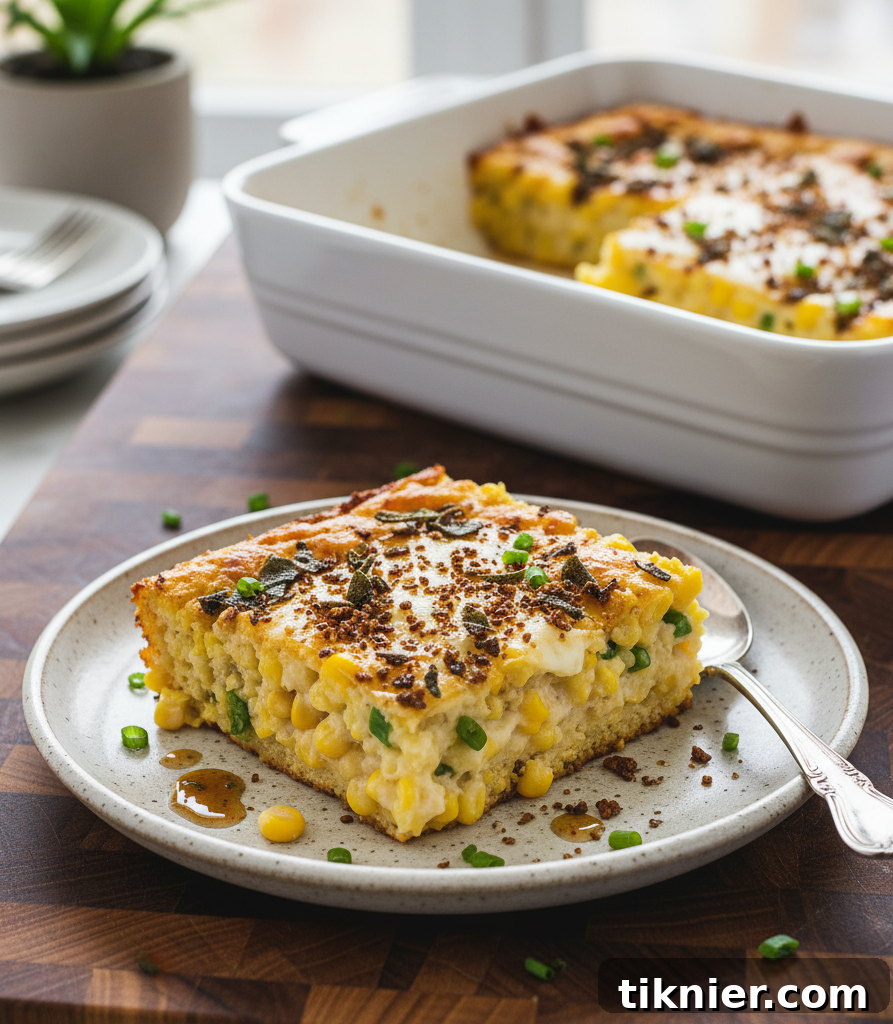
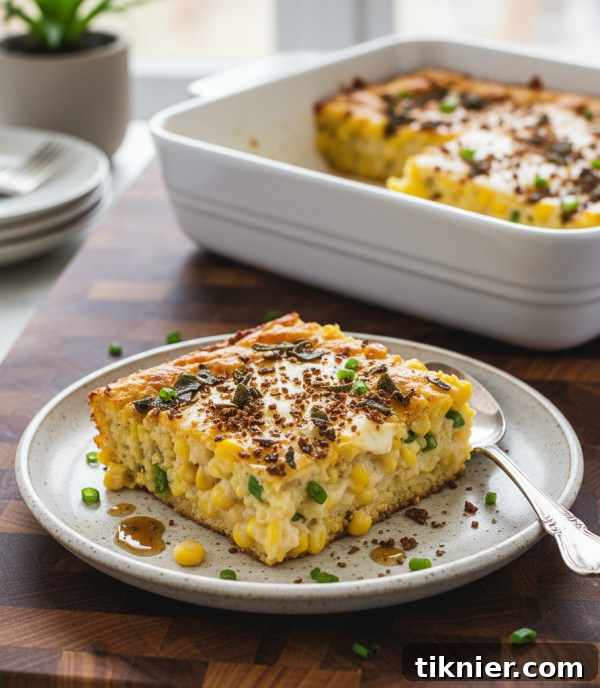
The memory of my first taste of corn casserole is as vivid as yesterday. I was a wide-eyed twelve-year-old at a bustling church potluck, and there it was, a sweet, creamy marvel scooped generously onto my plate right beside a piece of crispy fried chicken. In that moment, it felt like the most exquisite dish I had ever encountered. For countless years thereafter, that simple, classic version of corn casserole remained my ultimate benchmark. It’s a beloved Southern side dish for a reason, a comforting staple gracing every holiday table from the joyous Thanksgiving feast to the hopeful Easter dinner.
However, as I ventured into hosting my own gatherings and holiday meals, a thought began to simmer in the back of my mind about this cherished dish. While undeniably comforting and nostalgic, I couldn’t help but wonder: could it be more? I yearned to infuse my corn casserole with an extra layer of complexity, a distinctive signature touch that would elevate it beyond expectation, prompting guests to inquisitively ask, “What incredible ingredient did you add to this?”
My culinary epiphany struck one crisp autumn afternoon while I was preparing a butternut squash pasta, a recipe that called for a luxurious brown butter and sage sauce. The instant that nutty, earthy, and utterly aromatic scent of browning butter infused with fresh sage filled my kitchen, I knew—this was it. The revelation was immediate and profound. I absolutely had to try this flavor combination in my beloved corn casserole. The deep, toasted notes of the brown butter, combined with the earthy, slightly peppery perfume of crispy sage, were precisely the savory elements I needed. They promised to perfectly balance the inherent sweetness of the corn and the rich, creamy texture of the cheese. It was a true game-changer, a culinary breakthrough that transformed my approach to this classic dish, and I’ve never looked back since.
Skip to My Special Recipe!
Why This Brown Butter Sage Corn Casserole Recipe is a Must-Try
Corn casserole, affectionately known in various Southern regions as corn pudding or spoonbread, is a quintessential element of countless potlucks and holiday feasts. Its enduring and widespread popularity stems from its remarkable simplicity and undeniable comfort. At its heart, it’s often celebrated as a “dump-and-stir” recipe, utilizing readily available pantry staples such as a box of Jiffy corn muffin mix and canned corn. This straightforward approach makes it practically foolproof, consistently delivering a creamy, custardy, and delightful cornbread-like side dish that resonates with nearly everyone’s palate.
The classic rendition of this recipe serves as a perfect, comforting canvas. However, it can occasionally lean a bit heavily into a single-note sweetness, which, while pleasant, sometimes lacks the depth and sophistication I craved. This is precisely where my unique twist comes into play, transforming a simple comfort food into a more sophisticated and impeccably balanced dish. This isn’t merely another corn casserole; it’s an elevated culinary experience designed to impress and delight.
The true secret to this exceptional upgrade lies in the ingenious addition of brown butter infused with fresh sage. Browning butter, a relatively simple yet profoundly transformative French culinary technique, involves gently cooking unsalted butter until its milk solids toast to a beautiful golden-brown hue. This process magically transforms plain melted butter into a complex, nutty, and deeply flavorful liquid gold. The resulting toasted milk solids release an incredible, rich aroma and impart a depth of flavor that ordinary melted butter simply cannot rival. This remarkable nuttiness harmoniously complements the natural sweetness of the corn and provides a delightful contrast to the subtle tang of the sour cream, creating a symphony of flavors that is truly captivating.
Further enhancing this magic is the infusion of fresh sage leaves into the browning butter. As the sage leaves gently sizzle in the hot butter, they become wonderfully crispy, releasing their distinct woodsy, earthy, and subtly peppery oils directly into the butter. This not only imbues the butter with an incredible aromatic quality but also yields crispy sage crumbles, which become a delightful garnish. Sprinkling these savory, crunchy sage crumbles over the casserole just before serving adds an additional layer of delightful texture and a final, herbaceous burst of flavor. This single, seemingly simple step elevates the entire dish from a merely comforting classic to a truly memorable side that will undoubtedly leave a lasting impression on everyone at your table, prompting requests for the recipe time and time again.
Essential Ingredients for Your Elevated Corn Casserole
The inherent beauty of this particular recipe lies in its ability to take a collection of simple, accessible ingredients and elevate them dramatically through one key, transformative technique. While the majority of the items you’ll need are common pantry staples, making a conscious effort to select quality ingredients where it truly matters will undeniably result in a superior final product. Here’s a comprehensive breakdown of what you’ll need to create this unforgettable brown butter sage corn casserole, along with insights into why each component is vital.
- 1/2 cup (1 stick) unsalted butter: The choice of unsalted butter is critically important here. It grants you complete control over the total salt content of the dish, allowing you to season it precisely to your taste. This stick of butter forms the crucial foundation for our magical brown butter, which will infuse the entire casserole with its rich, nutty essence.
- 8-10 fresh sage leaves: This is unequivocally our star ingredient, the key to the unique flavor profile! Using fresh sage is absolutely essential for achieving the most vibrant, aromatic flavor and for creating those perfectly crispy leaves that will serve as an exquisite garnish. Dried sage, while convenient, simply cannot replicate the complex aromatic quality or the delightful texture that fresh leaves provide.
- 1 (8.5 ounce) box Jiffy corn muffin mix: This iconic box is the ultimate time-saving shortcut for corn casserole enthusiasts. It offers the ideal pre-measured blend of cornmeal, flour, and leavening agents, which are crucial for giving the casserole its distinctive, tender, and slightly cake-like texture.
- 1 (15 ounce) can whole kernel corn, drained: This ingredient contributes wonderful pops of texture and bursts of natural sweet corn flavor throughout every bite of the casserole. It’s imperative to drain it exceptionally well to prevent any excess moisture from making your casserole watery.
- 1 (14.75 ounce) can creamed corn: This is arguably the most important secret to the casserole’s luxuriously creamy, moist, and custardy interior. Creamed corn provides essential moisture and a concentrated, comforting corn flavor that helps bind the dish together beautifully.
- 1 cup full-fat sour cream: This is one area where you absolutely should not compromise! Full-fat sour cream is vital for adding essential moisture, imparting a pleasant tang that brilliantly balances the sweetness of the corn, and contributing to a wonderfully rich and tender crumb texture. Lower-fat versions may result in a drier, less flavorful casserole.
- 2 large eggs, lightly beaten: The eggs play a crucial role as a binding agent, helping the casserole to set properly during baking and contributing to its slightly puffed, almost soufflé-like structure, giving it an airy yet substantial feel.
- 8 ounces sharp white cheddar cheese, freshly grated and divided: Grating your own cheese from a block is a non-negotiable step for the best results. Pre-shredded cheeses are typically coated in starches that inhibit smooth melting, resulting in a less creamy finish. A good quality sharp white cheddar offers a delightful tangy, savory counterpoint to the sweet corn, enhancing the overall flavor complexity.
- 1/2 cup thinly sliced green onions: These provide a mild, fresh, and slightly pungent oniony bite that expertly cuts through the richness of the other ingredients, adding a layer of freshness and vibrancy.
- 1/2 teaspoon kosher salt: Salt is more than just a seasoning; it’s a flavor enhancer. Kosher salt helps to bring out and harmonize all the other distinct flavors within the casserole, ensuring a well-rounded taste.
- 1/4 teaspoon black pepper: A touch of freshly ground black pepper adds a subtle warmth and a hint of gentle spice, providing a nuanced depth to the overall flavor profile.
Step-by-Step Guide to Making the Best Corn Casserole
Crafting this elevated brown butter sage corn casserole is remarkably straightforward, almost as simple as preparing the classic version, with just one extra initial step that makes all the difference in its exquisite flavor. By diligently following these detailed instructions, you are guaranteed to achieve a perfectly golden-brown casserole that will undoubtedly become the star attraction of any side dish spread, eliciting rave reviews from all who taste it.
Step 1: Preheat Oven and Prepare Your Baking Dish
Begin by preheating your oven to a precise 375°F (190°C). This crucial step ensures that your oven reaches and maintains a consistent, perfect temperature by the time your casserole is ready to bake, leading to even cooking. While the oven heats, take a moment to thoroughly grease a 9×9 inch baking dish or any comparable 2-quart casserole dish. I personally favor using a ceramic or glass baking dish for this particular recipe, as these materials are known for their ability to conduct and distribute heat more uniformly. This property is key to achieving a perfectly cooked center without overly browning or drying out the edges, ensuring a consistently delicious texture throughout.
Step 2: Master the Art of Brown Butter Sage
This particular step is paramount for infusing your casserole with its signature, unparalleled flavor. Select a small, light-colored saucepan, as the light interior makes it significantly easier to observe the subtle color changes of the milk solids as they brown. Place the stick of unsalted butter into the saucepan and melt it over medium heat. Once the butter has completely melted, carefully add the whole, fresh sage leaves. Allow them to gently sizzle and dance in the hot butter. Initially, the butter will begin to foam and bubble quite vigorously. Swirl the pan occasionally to encourage even cooking and prevent scorching. After approximately 3 to 5 minutes, you’ll notice the foaming starts to subside, and distinct toasted brown specks will appear at the bottom of the pan. Simultaneously, a truly wonderful, nutty aroma, reminiscent of toasted hazelnuts, will begin to fill your kitchen. This is your cue! Immediately remove the pan from the heat to halt the cooking process and prevent the butter from burning. Using a slotted spoon, carefully retrieve the now crispy sage leaves and transfer them to a paper towel-lined plate to drain. These little flavor bombs are precious; save them diligently for your garnish!
Step 3: Combine All Casserole Ingredients
Now, it’s time to bring together the heart of the casserole. In a generously sized mixing bowl, combine the contents of the Jiffy corn muffin mix, the thoroughly drained can of whole kernel corn, the luscious can of creamed corn, the rich full-fat sour cream, and the lightly beaten eggs. Next, add the majority of your freshly grated sharp white cheddar cheese, making sure to reserve about 2 ounces (roughly a good handful) to sprinkle over the top as a delicious crust. Finally, gently stir in the thinly sliced green onions, the kosher salt, and the black pepper. This assembly process is quick and sets the stage for the next flavorful addition.
Step 4: Gently Incorporate Brown Butter and Mix
Before adding the brown butter, allow it to cool for just a minute or two. This brief cooling period is important to prevent the residual heat from inadvertently scrambling the eggs in your mixture. Slowly and deliberately pour the golden-brown butter into the corn mixture. Be mindful to leave behind any of the very dark, almost black, sediment that might have settled at the bottom of the saucepan; these are slightly burnt milk solids and can impart a bitter flavor. Once the butter is added, gently stir all the ingredients together until they are just combined. A crucial tip for achieving a wonderfully tender corn casserole is to avoid overmixing the batter. A few small lumps here and there are perfectly acceptable and will not impact the final texture or taste; in fact, overmixing can lead to a tougher casserole.
Step 5: Bake to Golden Perfection
Carefully pour the prepared batter into your greased baking dish and use a spatula to spread it evenly into a consistent layer. Evenly sprinkle the reserved 2 ounces of freshly grated white cheddar cheese over the entire top surface of the casserole; this will form a beautiful, cheesy crust. Place the dish into your preheated oven and bake for approximately 40 to 50 minutes. You’ll know your casserole is perfectly done when several key indicators are present: the edges will have visibly begun to pull away from the sides of the dish, the top will boast a glorious golden-brown hue, and a knife or toothpick inserted into the very center of the casserole comes out completely clean, without any wet batter clinging to it. These signs collectively confirm a perfectly cooked, ready-to-enjoy casserole.
Step 6: Allow to Rest and Garnish with Crispy Sage
This final step might just be the most challenging due to the enticing aroma filling your kitchen, but it is absolutely essential for optimal results! Once removed from the oven, allow the casserole to rest on a wire rack for a minimum of 10 minutes before attempting to serve it. This resting period is critical, as it allows the internal structure of the casserole to set properly, ensuring that it holds its shape beautifully when you scoop it out, preventing it from crumbling. Just before you are ready to present this magnificent dish, retrieve those precious crispy sage leaves you saved. Gently crumble them between your fingers and artfully sprinkle them all over the top of the casserole. This serves as the perfect, flavorful, and textural finishing touch, adding a final layer of sophistication and aroma.
Exquisite Ways to Serve Your Brown Butter Sage Corn Casserole
This Brown Butter Sage Corn Casserole is a triumph of versatility, making it a perfect and welcomed addition to almost any dinner table, regardless of the occasion. Its sophisticated savory depth, combined with the inherent comfort of a classic side dish, makes it an ideal partner for a vast array of main courses. Naturally, its impressive flavor and elegant presentation make it an absolute indispensable item for any grand holiday spread, where it truly shines.
For a traditional holiday meal, this casserole is nothing short of a showstopper, guaranteeing to impress your guests. Here are a few classic and beloved ways to serve it, making your holiday feast truly memorable:
- Thanksgiving Feast: Imagine this rich, aromatic casserole served right alongside your perfectly roasted turkey, luscious gravy, creamy mashed potatoes, and tangy cranberry sauce. The savory sage notes within the casserole beautifully echo the traditional, herbaceous flavors often found in holiday stuffing, making it an utterly perfect and harmonious companion for the quintessential Thanksgiving spread.
- Christmas or Easter Dinner: This dish is absolutely divine when paired with a succulent honey-glazed ham, its sweetness providing a delightful contrast, or a flawlessly cooked prime rib, where the savory corn and sharp cheddar exquisitely cut through the richness of the meat, creating a balanced and satisfying bite.
- Special Sunday Supper: You don’t need a holiday to enjoy this masterpiece! This dish has the magical ability to transform any regular Sunday dinner into a special occasion. Pair it simply with a perfectly roasted chicken and some fresh green beans for a meal that feels both effortlessly elegant and incredibly comforting, embodying true home-cooked warmth.
But please, do not confine this incredible deliciousness solely to the holidays! It is equally fantastic and deeply satisfying for everyday weeknight meals and is a spectacular addition to any summer barbecue. Envision it nestled next to a perfectly juicy grilled steak, its rich flavors complementing the smoky char, or served with a rack of tender, smoky BBQ ribs, where the creamy casserole provides a soothing counterpoint. You can even cut this delightful casserole into generous squares and serve it as a hearty, satisfying side with a big, steaming bowl of chili. The creamy texture and sweet corn flavor offer a wonderful contrast to the spicy, savory notes of the chili. Truly, this is one of the most adaptable and universally appealing side dishes you can possibly make, promising to be a crowd-pleaser every single time.
Storing and Reimagining Your Corn Casserole Leftovers
If you are fortunate enough to find yourself with leftovers of this truly incredible brown butter sage corn casserole, consider yourself in for a delightful treat. This dish stores and reheats exceptionally well, and I often find that its flavors deepen and meld even more beautifully by the next day, making it arguably even more delicious. However, proper storage is paramount to ensure you can fully savor its wonderful taste again.
Here’s how to best store and reheat your casserole, ensuring it remains fresh and delectably flavorful for future enjoyment:
- Refrigerating: Once the casserole has cooled completely to room temperature – this is a critical step to prevent condensation and bacterial growth – you have a couple of options. Either cover the original baking dish tightly with plastic wrap or aluminum foil, or, if you prefer, transfer the leftovers to an airtight container. Stored properly, it will maintain its quality and taste in the refrigerator for up to 4 days, making it perfect for meal prepping.
- Freezing: You’ll be pleasantly surprised to learn that this casserole freezes remarkably well, making it an excellent option for long-term storage or holiday meal preparation. For optimal results and ease of reheating, I highly recommend cutting the cooled casserole into individual serving portions. Wrap each portion tightly in plastic wrap, ensuring no air exposure, and then place these wrapped portions into a freezer-safe zip-top bag or a rigid airtight container. It can be safely frozen for up to 3 months without significant loss of quality or flavor. This freezing technique is a fantastic strategy for getting ahead on holiday cooking!
- Reheating: For the absolute best texture and to preserve the casserole’s original integrity, I strongly recommend reheating it in the oven. Place the desired portion (or the entire casserole) in an oven-safe dish, cover it loosely with aluminum foil to prevent it from drying out, and bake at 350°F (175°C) for approximately 20-25 minutes, or until it is thoroughly heated through to the center. While the oven method is preferred, if you’re truly pressed for time, you can certainly use the microwave. Simply place an individual portion on a microwave-safe plate and heat it in 60-second intervals, stirring gently between each interval, until it reaches your desired warmth.
Beyond merely reheating, don’t hesitate to get creative with your leftovers! Try cubing the cold casserole and pan-frying these cubes in a little bit of butter until they achieve a gorgeous golden-brown hue and a crispy exterior. These become delightful, almost polenta-like cakes and are absolutely fantastic served with a perfectly fried egg on top for a truly satisfying breakfast. Alternatively, you could crumble the leftover casserole into a skillet with some savory breakfast sausage and scrambled eggs for a hearty and flavorful morning hash, transforming your dinner leftovers into an exciting new meal.
Creative Substitutions & Delicious Variations for Your Corn Casserole
While I firmly believe that this Brown Butter Sage Corn Casserole recipe, as presented, achieves a state of perfection, I also understand that every cook enjoys imparting their own unique flair and adapting dishes to personal preferences or available ingredients. The wonderful news is that this recipe serves as an incredibly adaptable base, offering ample room for experimentation. Feel empowered to explore different options based on your taste buds or whatever ingredients you happen to have on hand. It’s truly an excellent foundation for unleashing your culinary creativity in the kitchen.
Here are a few thoughtful substitutions and delightful variations that meld beautifully with this recipe, allowing you to personalize it to your heart’s content:
- Cheese Swaps to Explore: While the sharp white cheddar provides a fantastic, tangy bite, venturing into other cheese territories can introduce exciting new dimensions of flavor. Consider using smoked Gouda for a wonderfully smoky, rich, and slightly sweet undertone that adds sophistication. If you’re looking to introduce a gentle kick of spicy heat, pepper jack cheese is an excellent choice, melting beautifully and providing a subtle warmth. A harmonious blend of sharp cheddar and Monterey Jack would also create a delightful balance of familiar tang and creamy texture.
- Amp Up the Heat: For those who appreciate a bit of a fiery kick in their dishes, incorporating some finely diced fresh jalapeños is a classic and highly recommended option. Alternatively, a small, 4-ounce can of diced green chiles, thoroughly drained to remove excess liquid, will introduce a lovely mild heat and a delightful Tex-Mex inspired flavor profile. For a more subtle, internal warmth that permeates the entire dish without visible chunks, a pinch or two of cayenne pepper stirred into the batter can work wonders.
- Alternative Herb Infusions: If sage isn’t your preferred herb, or if you simply don’t have fresh sage readily available, you can absolutely infuse the brown butter with other woody, aromatic herbs. A few sprigs of fresh thyme would lend an earthy, citrusy note, while a small sprig of rosemary would impart a more piney, pungent aroma – both particularly lovely choices, especially around the cooler holiday seasons. Just remember to remove these larger herb sprigs from the butter before you mix the infused butter into the casserole batter, as they are primarily for flavor infusion, not consumption in this form.
- Creating a Gluten-Free Version: Making a gluten-free adaptation of this corn casserole is straightforward and simple. The key is to substitute the Jiffy corn muffin mix with your favorite gluten-free cornbread mix. Be sure to check the weight of the gluten-free mix box and adjust accordingly if it differs significantly from the 8.5 ounces of the Jiffy mix. Most 1-to-1 gluten-free baking mixes perform exceptionally well in this application, maintaining the desired texture and structure of the casserole.
Feel completely free to mix and match these innovative ideas to craft your very own signature version of this versatile casserole. Perhaps a pepper jack and jalapeño combination for an undeniable spicy kick, or a smoked Gouda and thyme rendition for a more rustic, deeply smoky flavor profile. The creative possibilities are genuinely boundless, so embrace the fun, experiment, and make this incredible corn casserole truly your own culinary masterpiece.
Brown Butter Sage Corn Casserole
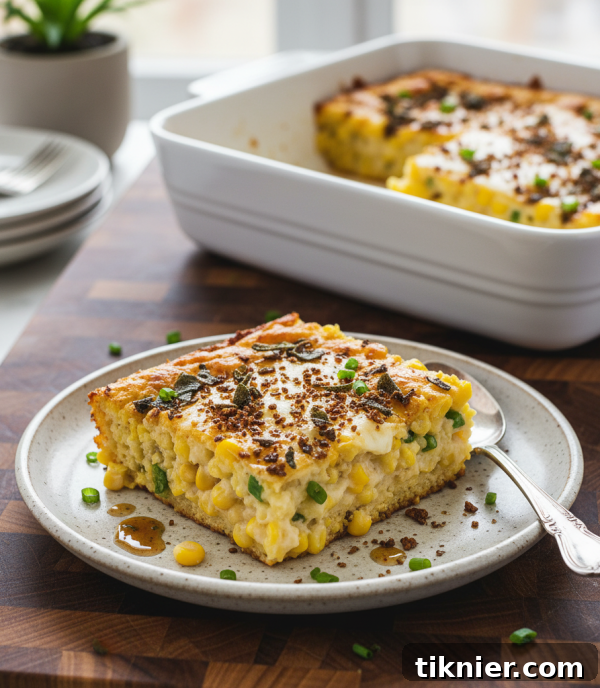
Description: A classic Southern corn casserole elevated with the nutty, sophisticated flavor of brown butter and crispy sage. This creamy, cheesy, and savory side dish is perfect for holidays and weeknight dinners alike.
Yield: 8-10 servings | Category: Side Dish | Cuisine: Southern
Prep Time: 15 minutes | Cook Time: 45 minutes
Ingredients
- 1/2 cup (1 stick) unsalted butter
- 8-10 fresh sage leaves
- 1 (8.5 ounce) box Jiffy corn muffin mix
- 1 (15 ounce) can whole kernel corn, drained
- 1 (14.75 ounce) can creamed corn
- 1 cup full-fat sour cream
- 2 large eggs, lightly beaten
- 8 ounces sharp white cheddar cheese, freshly grated and divided
- 1/2 cup thinly sliced green onions
- 1/2 teaspoon kosher salt
- 1/4 teaspoon black pepper
Instructions
- Preheat oven to 375°F (190°C) and grease a 9×9 inch baking dish.
- Melt butter in a saucepan over medium heat. Add sage leaves and cook for 3-5 minutes, swirling pan, until butter browns and smells nutty. Remove crispy sage leaves and set aside.
- In a large bowl, combine Jiffy mix, both cans of corn, sour cream, eggs, 6 oz. of cheese, green onions, salt, and pepper.
- Stir in the slightly cooled brown butter until just combined.
- Pour batter into the prepared dish. Top with the remaining 2 oz. of cheese.
- Bake for 40-50 minutes, until golden and set in the center.
- Rest for 10 minutes. Crumble reserved crispy sage leaves over the top before serving.
Notes
Using a light-colored saucepan makes it easier to monitor the browning of the butter. Be sure to grate your own cheese for the smoothest, creamiest melt.
Servings: 8 | Calories: 410 kcal | Fat: 28g | Carbohydrates: 31g | Protein: 11g
Frequently Asked Questions About Corn Casserole (FAQs)
Here are clear, concise, and comprehensive answers to the most common questions I receive about this particular brown butter sage corn casserole recipe, designed to help you achieve perfect results every time.
Can I Make This Corn Casserole Ahead of Time for Convenience?
Absolutely, preparing this corn casserole in advance is one of its most appealing features, making it an absolute lifesaver, especially when you’re managing large holiday meals like Thanksgiving or Christmas. You actually have a couple of excellent options for making it ahead. The first approach is to fully assemble the entire casserole without baking it. Simply combine all the ingredients exactly as directed in the recipe, pour the prepared batter into your greased baking dish, cover it tightly with plastic wrap or foil, and then refrigerate it for up to 24 hours. When you’re ready to bake, remove the dish from the refrigerator about 30 minutes prior to baking to allow it to come closer to room temperature, then proceed to bake as directed. You might find you need to add an extra 5-10 minutes to the total baking time since it starts colder.
Your second excellent option is to bake the casserole completely ahead of time. You can bake the casserole a full day or two in advance, allow it to cool thoroughly to room temperature, then cover it well and refrigerate. When it’s time to serve, simply cover the dish with aluminum foil to prevent drying, and reheat it in a 350°F (175°C) oven for approximately 20-25 minutes, or until it is warmed through to the center. This method is incredibly advantageous for saving precious oven space and reducing stress on a busy cooking day, allowing you to enjoy your meal with less last-minute fuss.
Why Is My Corn Casserole Watery or Runny, and How Can I Fix It?
A runny or watery corn casserole is a common frustration, but it’s typically the result of one or two easily rectifiable issues. The most frequent culprit is often insufficient draining of the canned whole kernel corn. That excess liquid, if not properly removed, introduces too much moisture into the batter, which subsequently prevents the casserole from setting up into that perfectly firm, yet tender and custardy, spoonable texture we all desire. To avoid this, make sure you pour the corn into a fine-mesh colander and give it a really good, vigorous shake to expel as much of the canning liquid as possible before you add it to your mixing bowl.
Another common reason for a runny casserole can be underbaking. It’s important to remember that oven temperatures can vary significantly, so the specified baking time should always be treated as a guideline rather than an absolute rule. The casserole requires adequate time for the eggs to fully cook and set, thereby solidifying the entire dish. The most reliable way to check for proper doneness is to insert a thin knife or a wooden toothpick directly into the center of the casserole. If it comes out clean, without any wet batter clinging to it, your casserole is ready. If it still appears wet or gooey, return it to the oven for an additional 5-10 minutes and test again. Furthermore, allowing the casserole to rest for at least 10 minutes after it comes out of the oven is absolutely crucial, as it continues to set and firm up during this cooling period.
Can I Use Fresh or Frozen Corn Instead of Canned Whole Kernel Corn?
Yes, absolutely! You can certainly substitute fresh or frozen corn for the canned whole kernel corn in this corn casserole recipe, and doing so can impart a wonderful, vibrant freshness to the dish. If you opt for frozen corn, you’ll need approximately 1.5 cups. There’s no need to go through the extra step of thawing it beforehand; simply add it directly to the batter while still frozen. It will thaw and cook perfectly in the oven without affecting the outcome. The convenience is unmatched.
If you choose to use fresh corn, you’ll want the kernels from about 2 medium-sized ears of corn. Fresh corn offers an incredible natural pop and a delightful sweetness that is hard to surpass. However, it is vitally important to note that you will still need to use the full can of creamed corn regardless of whether you use fresh or frozen whole kernels. The creamed corn is a fundamental ingredient, utterly essential for achieving the creamy, moist texture that defines this casserole. It provides a rich, concentrated corn-flavored base that simply cannot be replicated by using only whole kernels, whether fresh or frozen.
Is Corn Casserole the Same as Corn Pudding or Spoonbread?
This is an excellent and frequently asked question, as these terms are indeed often used interchangeably, particularly across different regions of the American South. While they all belong to a family of very similar corn-based side dishes, there are subtle yet distinct differences that set them apart. Spoonbread, for instance, is typically characterized by a lighter, airier, and more soufflé-like consistency. It often contains a greater proportion of eggs and frequently omits flour, relying solely on cornmeal for its delicate structure. It earns its name because it’s meant to be so incredibly tender that you truly need a spoon to enjoy it.
Corn pudding, on the other hand, is generally more custardy and contains a higher amount of eggs and dairy, such as milk or heavy cream, and often omits any type of corn muffin mix. My specific brown butter sage corn casserole recipe, which ingeniously utilizes the Jiffy corn muffin mix, is a wonderful and incredibly popular hybrid of these styles. It beautifully embodies the creamy, custardy texture found in a traditional corn pudding, yet it possesses the slightly more structured, cake-like crumb characteristic of a cornbread. This unique combination offers the best of all worlds, which explains why this particular version has become so immensely popular and cherished at countless potlucks, family gatherings, and holiday tables across the entire country.
How Do I Know When My Brown Butter Sage Corn Casserole is Done Baking?
Knowing precisely when to remove your corn casserole from the oven is absolutely crucial for achieving that coveted, perfect texture – tender, custardy, and set, without being overcooked or dry. There are three primary and reliable indicators you should look for to determine doneness. First, observe the overall appearance. The casserole should have developed a beautiful, inviting golden-brown crust on top, indicating proper caramelization and cooking. You should also notice that the edges of the casserole are just beginning to pull away slightly from the sides of the baking dish. You might also see some gentle bubbling around the edges, which is a good sign that the casserole is hot and cooking all the way through.
Second, gently give the baking dish a slight shake. The center of the casserole should appear mostly set, exhibiting only a very slight, subtle jiggle. If the center looks visibly liquidy or ripples significantly when you move it, it definitively requires more time in the oven. The final and most consistently reliable test is the classic knife or toothpick test. Carefully insert a thin knife or a wooden toothpick directly into the very center of the casserole. If it comes out clean, without any wet, gooey batter clinging to it, then your casserole is perfectly baked and ready to be removed. If it comes out with wet batter, simply return it to the oven for another 5-7 minutes and perform the test again. Trust these visual and tactile signs, and you will consistently achieve a perfectly baked, delicious casserole every single time.
Explore More Delicious Recipes
If you thoroughly enjoyed creating and savoring this unique Brown Butter Sage Corn Casserole, I am confident that you will equally delight in some of my other cherished comfort food recipes. Each one is crafted to bring warmth and flavor to your table.
- Homemade Cornbread Dressing: A true Southern culinary institution, this dressing recipe offers the perfect savory, herbaceous complement to any holiday meal, embodying tradition and flavor.
- Over 25 Thanksgiving Casserole Recipes: Dive into a treasure trove of inspiration for your ultimate holiday table with this extensive roundup of my absolute favorite, crowd-pleasing casserole recipes, guaranteed to impress.
- Spicy Crab and Corn Chowder: For those who adore the dynamic pairing of sweet corn with rich, savory flavors, you absolutely must try this incredibly satisfying chowder. It’s rich, wonderfully creamy, and boasts a delightful, subtle spicy kick.
It is my sincere hope that you derive as much pleasure from preparing and sharing these delectable dishes as my family and I do!