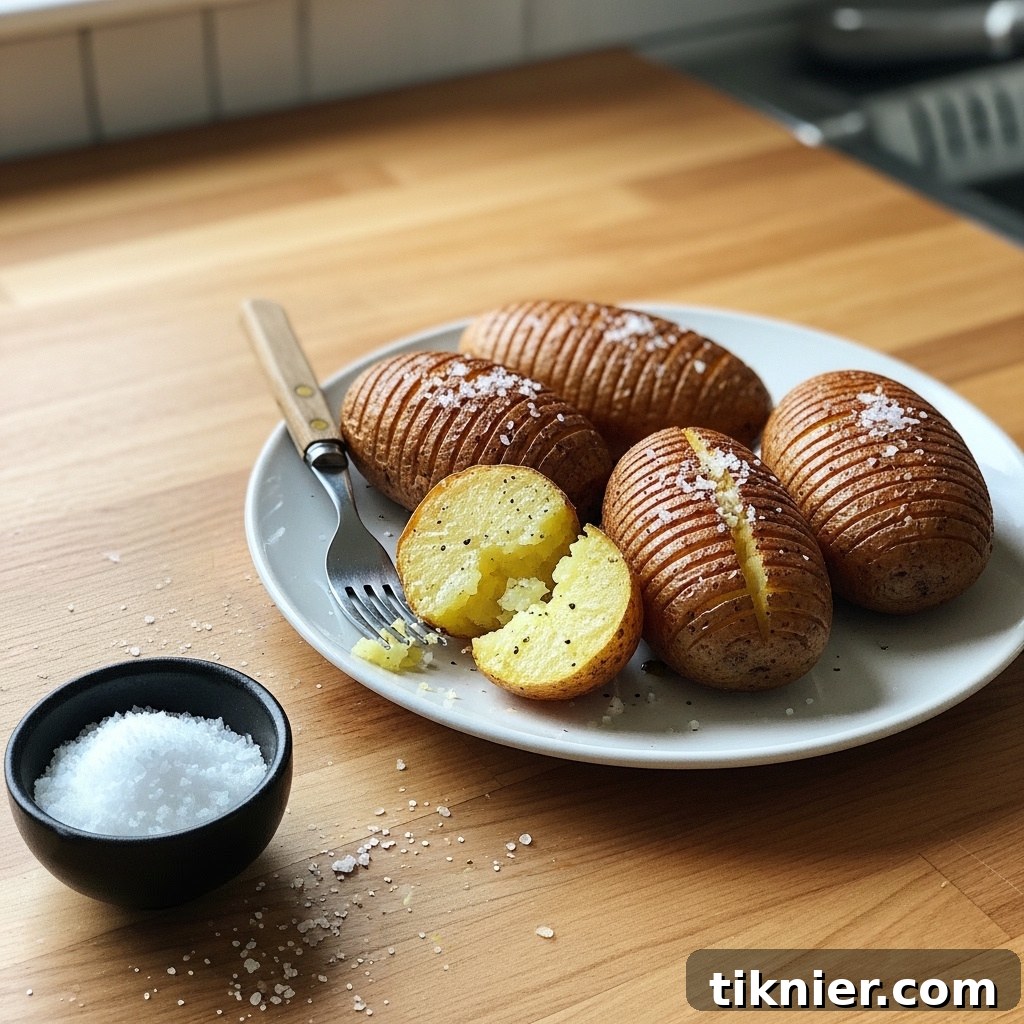
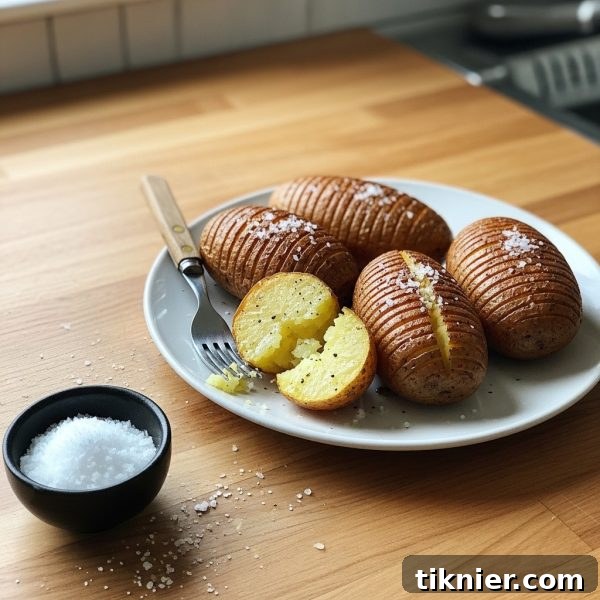
Prepare to experience what I confidently declare is the finest baked potato you will ever taste. Yes, that’s a bold claim, but one I stand by with absolute certainty.
For many years, my approach to a baked potato was purely pragmatic. It involved a quick poke with a fork, a toss into a hot oven, and a hopeful wait. The results were often passable, sometimes decent, but rarely extraordinary. The skin frequently turned out tough and dry, and the interior seldom achieved the coveted fluffy texture found in truly exceptional steakhouses.
My perception of the humble baked potato underwent a complete transformation during a memorable weekend trip to Charleston with my husband. We dined at an venerable steakhouse, the kind steeped in tradition with rich dark wood and plush leather booths. Alongside my perfectly cooked filet, I received a baked potato that could have graced the pages of a gourmet magazine. Its skin boasted a deep golden-brown hue, almost shattering at the gentle touch of my fork, and it was generously dusted with large flakes of sea salt.
One bite of that skin was all it took; I was utterly captivated. It was incredibly crispy, deeply savory, and bursting with flavor. Far from merely being a vessel for the fluffy interior, the skin itself was an undeniable star. I spent the remainder of the meal pondering its secret. A little charm and persistence with our waiter hinted that their method extended beyond a simple oven bake. Upon returning home, I embarked on a culinary quest. I experimented with various fats, different cooking durations, and a range of temperatures. The pivotal breakthrough arrived when I ingeniously combined a technique I use for achieving extra-crispy roasted potatoes—a brief boil in alkaline water—with my newfound favorite cooking fat: luxurious duck fat. The culmination of this dedicated experimentation is the very recipe you’re about to discover, yielding a truly perfect baked potato with skin so exquisitely crispy and flavorful, it will redefine your expectations.
Jump to My Signature Baked Potato Recipe!
Unlocking the Secret to the Perfect Crispy Baked Potato Skin
The baked potato stands as a cherished cornerstone of American comfort food. It’s a humble, versatile ingredient, capable of serving as both a fulfilling side dish and a substantial main course, offering a blank canvas for an endless array of toppings. Its widespread appeal stems from its accessibility, simplicity, and profoundly satisfying nature. It’s the dependable companion to a sizzling steak, the hearty foundation for a loaded lunch, and a simple pleasure enjoyed entirely on its own.
However, despite its apparent simplicity, achieving a truly perfect baked potato at home can be surprisingly elusive. All too often, homemade versions suffer from pale, leathery skins and dense, somewhat watery interiors. This meticulously crafted recipe is designed to rectify all those common pitfalls, elevating the modest potato into something genuinely extraordinary, rivaling even the finest steakhouse offerings.
The profound secret to this recipe lies in a unique, two-part cooking technique. Firstly, we par-boil the potatoes in water that has been made alkaline with the addition of baking soda. This seemingly minor adjustment performs a remarkable transformation on the potato’s exterior. The alkaline environment works to gently break down the pectin within the potato skin, creating an incredibly thin, starchy layer on the surface. When the potatoes are subsequently drained and then intentionally “roughed up,” this process significantly increases the surface area, creating countless microscopic nooks and crannies that are ideal for crisping.
This brings us to the second, equally crucial component of our master plan: the duck fat. When that starchy, meticulously scuffed-up surface is generously coated in rich, flavorful duck fat and then exposed to the high heat of a preheated oven, it achieves a level of crispness that simply cannot be replicated with conventional oils. Duck fat boasts a naturally high smoke point, making it perfect for high-temperature baking, and imparts a distinctively savory flavor that penetrates and seasons the potato from the outside in. This innovative method not only guarantees a baked potato with a shatteringly crisp, deep golden, and intensely flavorful skin but also ensures the interior steams to a perfectly light, airy, and utterly fluffy texture. It’s a testament to how intelligent food science, combined with a touch of culinary luxury, can produce an unparalleled result.
Essential Ingredients for Steakhouse-Quality Baked Potatoes
The inherent beauty of a truly perfect baked potato lies in its reliance on very few, yet meticulously chosen, ingredients. This simplicity underscores why the quality of each component and the precision of the technique used to combine them are paramount. Here’s precisely what you’ll need to meticulously craft a steakhouse-worthy potato experience directly within the comfort of your own kitchen.
- 4 large Russet potatoes, thoroughly scrubbed clean
- 1 tbsp baking soda
- 2 tbsp duck fat or ghee, thoughtfully melted (avocado oil offers a suitable substitute)
- 1 ½ tsp kosher salt, judiciously divided
- ½ tsp freshly ground black pepper
- Flaky sea salt, for an exquisite finishing touch
The undisputed cornerstone and paramount star of the baked potato realm is unequivocally the Russet potato. Its inherently high starch content coupled with a remarkably low moisture level is precisely what contributes to that coveted, incredibly light, wonderfully fluffy, and exceptionally absorbent interior. Furthermore, its skin is notably thicker compared to other varieties, which means it is perfectly resilient and robust enough to withstand our specialized cooking method and achieve that wonderfully crisp texture. When selecting your Russets, always ensure they are firm to the touch, possess smooth skin, and are entirely free of any soft spots or sprouts.
Our not-so-secret weapon for imparting incredible depth of flavor and achieving unparalleled crispiness is the luxurious duck fat. This particular ingredient represents my signature twist, truly elevating the recipe to an extraordinary level. It possesses an exquisitely silky texture and delivers a rich, deeply savory flavor that is simply divine when paired with potatoes. You can typically locate it in tubs within the refrigerated section of well-stocked grocery stores, often near the butter, or sometimes in the dedicated oil aisle. Should duck fat prove elusive, ghee serves as a fantastic alternative, offering a nutty, buttery flavor profile. For those seeking a neutral-flavored, high-heat option, avocado oil performs admirably.
Under no circumstances should you omit the crucial baking soda from the boiling water. While seemingly a small quantity, its chemical properties are absolutely critical for preparing the potato skin for its transformative crisping journey. For seasoning, I consistently use kosher salt during the cooking process; its crystal structure adheres exceptionally well to the potato skin, enhancing flavor penetration. To culminate the experience, I finish with a delicate sprinkle of beautiful flaky sea salt, such as Maldon. This final touch provides an essential burst of clean, briny flavor and that irresistible, satisfying crunch, elevating the potato to perfection.
Mastering the Art: Step-by-Step Instructions for Your Perfect Baked Potato
Follow these meticulously detailed steps precisely, and I guarantee you will be rewarded with the absolute best baked potato of your life. Every single detail, from the use of the wire rack to the specific baking temperatures, has been carefully orchestrated to build intricate layers of exquisite texture and profound flavor.
Step 1: Precision Oven Preheat and Pan Preparation
Begin by preheating your oven to a precise 400°F (200°C). The fundamental key to crafting a truly magnificent baked potato lies in achieving perfectly even cooking. To facilitate this, position a sturdy wire rack directly inside a rimmed baking sheet. This seemingly simple piece of equipment is nothing short of a game-changer. It ingeniously elevates the potatoes, allowing hot air to circulate freely and completely around their entire surface. This crucial elevation prevents the potato bottoms from becoming soggy and steaming on the pan, thereby ensuring a uniformly crisp and golden skin on all sides.
Step 2: The Alkaline Par-Boil
In a large, heavy-bottomed pot or a Dutch oven, bring approximately 3 quarts of water to a vigorous, rolling boil. Once the water is bubbling fiercely, carefully introduce the baking soda and 1 teaspoon of the kosher salt. Stir the mixture gently to dissolve the solids, then cautiously lower your thoroughly scrubbed potatoes into the pot, taking care to avoid any splashes of hot water. Allow them to boil for a precise duration of 10 to 12 minutes.
Step 3: Assessing Exterior Doneness
At this stage, your objective is not to cook the potatoes completely through, but rather to merely soften their exterior. After approximately 10 minutes, test their readiness by carefully piercing the skin with a fork. It should penetrate with only a slight, discernible resistance. If the skin feels excessively tough, allow them another minute or two, but exercise caution to prevent them from becoming overly mushy or breaking apart.
Step 4: Drain, Dry, and Deliberately Scuff
Carefully drain the par-boiled potatoes in a sturdy colander and allow them to rest undisturbed for a couple of minutes. It is imperative that they become completely dry, meaning all surface steam must fully evaporate. Return the now-dry potatoes to the empty pot, securely place the lid on top, and give the pot a good, vigorous shake for approximately 5 seconds. This is often my favorite part of the process. This vigorous shaking action effectively “roughs up” the surfaces of the potatoes, meticulously creating an abundance of tiny nooks and crannies that will perfectly capture the cooking fat and ultimately become astonishingly crispy.
Step 5: Luxuriant Fat Coating and Seasoning
Now, it’s time to infuse maximum flavor. Drizzle the melted duck fat generously all over the warm, impeccably scuffed-up potatoes. Sprinkle evenly with the remaining ½ teaspoon of kosher salt and the freshly ground black pepper. Do not be timid; gently get in there with your hands and meticulously toss everything together, ensuring that every single potato is uniformly coated in that glorious fat and perfectly balanced seasoning.
Step 6: The Initial Bake for Internal Perfection
Arrange the thoroughly coated potatoes directly onto the wire rack you meticulously prepared earlier, taking care to leave ample space between each potato to ensure unrestricted air circulation. Place the baking sheet into your preheated 400°F oven and bake for an initial period of 30 minutes.
Step 7: The Grand Finale: Second Bake for Ultimate Crispiness
After the initial 30 minutes, it is time to intensify the crisping process. Elevate the oven temperature to 425°F (220°C). Allow the potatoes to continue baking for an additional 20 to 25 minutes. You will know they have reached their peak of perfection when their skins achieve a deep golden-brown color, feel noticeably rigid to the touch, and emit a satisfying hollow sound when given a gentle tap.
Step 8: The Essential Rest and Elegant Serve
Patience, as they say, is a profound virtue, even when it comes to potatoes. Allow the perfectly baked potatoes to rest on the wire rack for approximately 5 minutes before serving. This brief resting period permits the internal steam to redistribute slightly, settling the interior. To serve, use a sharp knife to carefully slice them open lengthwise down the center. Then, use a fork to gently push the ends of the potato toward the center, expertly fluffing up that steamy, perfect interior. Conclude with a generous, final sprinkle of flaky sea salt and your absolute favorite toppings.
Creative Ways to Serve Your Perfect Baked Potato
Once you’ve triumphantly retrieved these golden, crispy beauties from the oven, the truly delightful part begins. A flawlessly cooked baked potato serves as a magnificent starting point, but it’s the artful selection and application of toppings that truly transforms it into a satisfying meal or an indulgently decadent side dish. You have the freedom to adhere to classic, understated choices, or unleash your culinary creativity by piling them high with an extensive array of delicious ingredients.
For an authentic steakhouse experience that rightfully allows the exceptional potato itself to shine as the star, you simply cannot err with the revered “holy trinity” of toppings. A generous, melting pat of high-quality salted butter sinking into the fluffy interior, a dollop of cool sour cream or tangy crème fraîche, and a delicate sprinkle of freshly chopped chives form a combination that consistently delights. It’s a presentation that is simultaneously simple, elegantly refined, and utterly delicious.
However, why limit your imagination there? Creating a vibrant baked potato bar stands as one of my most cherished ways to serve these culinary masterpieces, ideal for a relaxed family dinner or an engaging get-together with friends. It fosters an interactive and enjoyable dining experience, empowering every guest to personalize their own unique creation. Here are a few inspiring ideas to ignite your very own potato bar:
- The Quintessential Loaded Potato: Abundant crumbled crispy bacon, a generous shower of shredded sharp cheddar cheese, a dollop of cool sour cream, and a scattering of finely sliced green onions.
- Hearty Chili Cheese: A substantial scoop of your absolute favorite beef or turkey chili, extra shredded cheddar cheese, and a delicate whisper of jalapeño for an invigorating kick.
- Comforting Broccoli Cheddar: Tender, steamed broccoli florets luxuriously enrobed in a warm, rich, and creamy cheddar cheese sauce.
- Succulent Pulled Pork: Melt-in-your-mouth, smoky pulled pork (with a judicious drizzle of extra BBQ sauce, naturally) crowned with a spoonful of crisp coleslaw directly on top.
- Sophisticated French Onion: Sweet, deeply caramelized onions, lusciously melted Gruyère cheese, and a fragrant sprinkle of fresh thyme for an exquisitely sophisticated culinary twist.
Regardless of how you ultimately choose to adorn them, the optimal way to serve a baked potato is undeniably hot, directly from the oven. Promptly slit it open, bestow a satisfying fluff with a fork to create welcoming pockets for all the forthcoming toppings, and then invite everyone to enthusiastically dig in while that incredible skin remains at its absolute crispiest peak.
Optimizing Storage and Reusing Leftover Baked Potatoes
While these exquisitely baked potatoes unquestionably reach their peak perfection when savored immediately, fresh from the oven, the realities of life often lead to the delightful occurrence of leftovers. The excellent news is that a leftover baked potato is a truly valuable asset to have on hand, offering the promise of quick and effortless meals later in the week. The crucial factor lies in storing them meticulously to preserve as much of their magnificent texture as possible.
Firstly, it is imperative to allow the potatoes to cool completely to room temperature. Storing them while they are still warm will inevitably generate condensation within your chosen storage container, a guaranteed path to a disappointingly soggy potato. Once thoroughly cooled, you can either wrap them individually in aluminum foil or place them securely in an airtight container. When stored correctly, they will maintain their quality splendidly in the refrigerator for up to 4 days.
When the time comes for reheating, you are presented with a few viable options. Microwaving offers the quickest solution, though it often results in a softer skin texture. For a superior and more desirable texture, I strongly advocate for reheating them in either the oven or an air fryer. Simply arrange them on a baking sheet and place them in a preheated 350°F oven for approximately 15 to 20 minutes, or until they are thoroughly warmed through. This method will effectively help to resurrect some of that cherished crispiness in the skin.
Beyond the simple act of reheating, leftover baked potatoes prove to be incredibly versatile. Here are some of my preferred methods for granting them a delicious second life:
- Decadent Twice-Baked Potatoes: Begin by slicing the cold potatoes neatly in half lengthwise. Carefully scoop out the fluffy interior, then mash it with rich butter, creamy sour cream, your favorite cheese, and fragrant chives. Spoon this delectable mixture back into the potato skins, crown with additional cheese, and bake until beautifully hot and bubbly.
- Hearty Breakfast Hash: Dice the cold potato (inclusive of its wonderful skin) into cubes and pan-fry them with finely chopped onions, vibrant bell peppers, and any leftover cooked meat such as savory sausage or crispy bacon. Top with a perfectly fried egg for a truly satisfying breakfast.
- Irresistibly Crispy Smashed Potatoes: Halve the cold potatoes, arrange them on an oiled baking sheet, and use the bottom of a sturdy glass to gently but firmly smash them flat. Drizzle with a little more oil, season generously, and bake at 425°F until they are incredibly crispy and golden brown.
- Effortless Quick Potato Salad: Chop the leftover baked potato into uniform cubes and utilize them as an excellent base for a swift and delightful potato salad. The inherent fluffy texture of the baked potato works wonderfully with a creamy dressing.
Therefore, never hesitate to prepare an extra baked potato or two. Your future self will undoubtedly express gratitude when you find yourself with a convenient head start on another truly delicious meal.
Versatile Substitutions and Creative Variations for Your Baked Potato
While I firmly believe this specific recipe approaches culinary perfection as it stands, one of the most rewarding aspects of cooking is the freedom to personalize a dish and truly make it your own. There are numerous delightful avenues to adapt this baked potato recipe to perfectly align with your individual taste preferences, specific dietary requirements, or simply to utilize ingredients readily available in your pantry. It serves as a wonderfully forgiving canvas, inviting a touch of creative culinary exploration.
The most significant and impactful substitution you can consider involves the choice of cooking fat. While the duck fat is instrumental in imparting that signature rich, deeply savory flavor, other fats can also perform beautifully. Ghee, or clarified butter, will bestow the potato skin with a distinctively nutty, buttery flavor profile. High-quality rendered bacon fat represents a classic Southern choice that effortlessly infuses the skin with an utterly smoky and delicious taste. For a completely vegan or dairy-free alternative, a premium quality, high-heat oil such as avocado oil is the quintessential neutral choice, yet it still allows the skin to achieve an incredibly crisp texture.
Furthermore, you can playfully experiment with the seasonings to engineer a diverse range of flavor profiles. Here are a few inspiring variations to spark your imagination:
- Aromatic Garlic Herb: Thoroughly mix a teaspoon of aromatic garlic powder and a teaspoon of fragrant dried rosemary or thyme into the melted fat before generously coating the potatoes. This addition introduces a lovely aromatic and savory depth of flavor.
- Smoky & Spicy Kick: Integrate a half teaspoon of earthy smoked paprika and a delicate pinch of fiery cayenne pepper into your salt and pepper mixture for a potato boasting a warm, intriguing smoky kick.
- Everything Bagel Inspired: After coating the potatoes in the chosen fat, liberally sprinkle them with a generous amount of everything bagel seasoning just prior to baking. The delightful blend of toasted sesame seeds, poppy seeds, and savory garlic is an absolutely fantastic complement to the crispy potato skin.
- Exploring Different Potato Varieties: While Russets are universally considered the gold standard for achieving that supremely fluffy interior, you can absolutely employ this method with other potato types. Yukon Golds, for instance, will yield a creamier, more buttery interior and possess a slightly more delicate skin. Sweet potatoes also respond well to this technique, just be sure to judiciously adjust the boiling and baking times as necessary to accommodate their unique characteristics.
No matter what minor adjustments or creative changes you choose to implement, the core technique of par-boiling in alkaline water, meticulously scuffing the surface, and baking on a wire rack will consistently deliver a demonstrably superior baked potato. Embrace the fun of experimentation and discover your family’s exciting new favorite version!
The Perfect Baked Potato with Crispy, Salty Skin
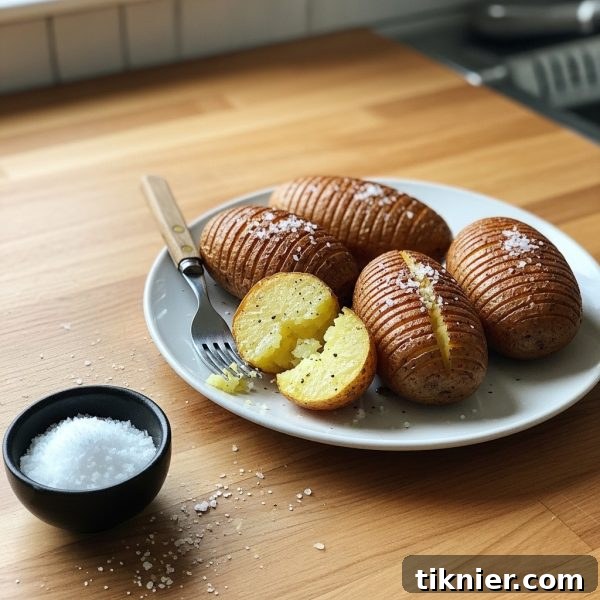
Description: This is the ultimate baked potato experience, featuring a shatteringly crisp, perfectly salty skin and an impeccably fluffy interior, achieved through a unique par-boiling technique and the luxurious richness of duck fat.
Yield: 4 servings | Category: Side Dish | Cuisine: American
Prep Time: 15 minutes | Cook Time: 1 hour 5 minutes
Ingredients
- 4 large Russet potatoes, thoroughly scrubbed clean
- 1 tbsp baking soda
- 2 tbsp duck fat or ghee, melted (or avocado oil)
- 1 ½ tsp kosher salt, divided
- ½ tsp freshly ground black pepper
- Flaky sea salt, for finishing
Instructions
- Preheat your oven to 400°F (200°C). Position a wire rack inside a rimmed baking sheet for optimal air circulation.
- Bring 3 quarts of water to a vigorous boil in a large pot. Add the baking soda and 1 teaspoon of kosher salt, then carefully add the scrubbed potatoes and boil for 10-12 minutes, until skins are just softened when pierced with a fork.
- Drain the potatoes very well in a colander, allowing them to steam dry for 2 minutes. Return the dry potatoes to the empty pot, cover tightly with a lid, and shake vigorously for 5 seconds to scuff the surfaces.
- Drizzle the melted duck fat (or chosen alternative) over the warm, scuffed potatoes. Sprinkle with the remaining ½ teaspoon of kosher salt and the black pepper. Gently toss to ensure even coating.
- Arrange the coated potatoes in a single layer on the prepared wire rack, ensuring space between them. Bake for 30 minutes.
- Increase the oven temperature to 425°F (220°C). Continue to bake for another 20-25 minutes, or until the potato skins are deep golden brown, feel rigid, and sound hollow when tapped.
- Allow the potatoes to rest on the rack for 5 minutes before serving. Slice each potato open lengthwise, fluff the interior with a fork, and finish with a generous sprinkle of flaky sea salt and your preferred toppings.
Notes
Using a wire rack is absolutely essential for achieving complete 360-degree crispiness on your potato skin. Do not skip this critical step for the best results!
Servings: 4 | Calories: 320 kcal | Fat: 10g | Carbohydrates: 52g | Protein: 6g
Frequently Asked Questions About Baking the Perfect Potato
Here are clear, concise, and comprehensive answers to the most common inquiries I receive regarding this exceptional baked potato recipe, ensuring every detail is understood for your culinary success.
Why is it necessary to boil the baked potato first?
This is arguably the most critical question, cutting straight to the heart of what distinguishes this recipe. While boiling potatoes before baking might initially appear as an unnecessary extra step, it is, in fact, the absolute cornerstone for achieving that desired, perfectly crispy skin. We aren’t merely boiling them in plain water; we are intentionally adding baking soda, which elevates the water’s pH, making it alkaline. This alkaline environment performs a transformative chemical reaction: it gently helps to break down the pectin, which acts as the cellular “glue” holding the potato skin together. This process not only softens the exterior but also actively draws starch to the surface. When the potatoes are subsequently drained and vigorously shaken, that newly formed starchy outer layer becomes extensively scuffed, creating an incredible textural landscape brimming with microscopic nooks and crannies. When this starchy, exquisitely roughed-up surface is thoroughly coated in fat and then exposed to the intense high heat of the oven, it undergoes a “frying” effect, crisping up in a manner that a raw potato simply cannot replicate. It’s a precise application of food science that yields dramatically superior results compared to baking alone.
What is truly the best type of potato for a baked potato?
For the quintessential American-style baked potato, characterized by its incredibly light, fluffy, and almost cloud-like interior, the Russet potato reigns as the undisputed champion. Russets, often referred to as Idaho potatoes, are classified as “starchy” or “mealy” potatoes. They are distinguished by their high starch content and inherently low moisture. When baked, the starch granules within them swell and separate, yielding that wonderfully absorbent, crumbly, and airy texture that is perfectly suited for soaking up generous amounts of butter, sour cream, and other delightful toppings.
While this ingenious method can certainly be applied to other potato varieties, such as Yukon Golds, it is important to note that the final result will differ. Yukon Golds are categorized as waxier potatoes, possessing higher moisture and lower starch levels. Consequently, their flesh tends to be creamier and denser, and their skins are notably thinner. While they will undoubtedly still be delicious when prepared with this technique, they will not achieve the signature fluffy interior characteristic of a Russet. For this specific recipe, where the desired outcome is the pronounced contrast between the shatteringly crispy skin and the airy, light interior, I unequivocally recommend adhering to Russets if they are available to you.
Can I successfully make this baked potato recipe without duck fat?
Absolutely, without a doubt! While I enthusiastically extol the virtues of duck fat for its unparalleled flavor contribution and its exceptional crisping capabilities, I fully understand that it may not always be readily available or might not align with everyone’s dietary preferences. The fantastic news is that the ingenious par-boiling and scuffing technique will, by itself, still ensure you achieve a wonderfully crispy skin, irrespective of the specific fat you choose to employ. The pivotal factor is to select a fat that possesses a high smoke point, capable of withstanding the intense temperatures of the oven.
Ghee, also known as clarified butter, serves as an outstanding substitute. It imparts a rich, nutty, and distinctly buttery flavor that complements potatoes magnificently. Another superb option, particularly for those desiring a Southern-inspired rendition, is rendered bacon fat. It will infuse the potato skin with an undeniably smoky, savory flavor that is simply irresistible. For a completely plant-based or vegan baked potato, opt for a neutral-flavored oil with a naturally high smoke point, such as high-quality avocado oil. Even a good quality olive oil can work effectively in a pinch, though it might produce a little more smoke at the higher baking temperatures. Rest assured, the texture will remain remarkably amazing.
Is it safe and beneficial to eat the skin of this baked potato?
Yes, unequivocally, it is not only entirely safe but, more importantly, it is an integral and often considered the very best part of this specific recipe! The entire philosophy and goal behind this meticulous cooking method is to elevate the potato skin from a mere protective wrapper into an extraordinary, crispy, salty, and intensely flavorful culinary delight. Furthermore, it’s worth noting that a significant portion of a potato’s valuable nutrients, including dietary fiber, essential B vitamins, and vital iron, are concentrated either directly in or just beneath the skin. Therefore, consuming the skin is not only a delicious choice but also a nutritionally beneficial one, contributing to your overall well-being. It transforms into a genuinely delicious and wholesome component of the vegetable.
The most crucial prerequisite before embarking on this culinary journey is to ensure you thoroughly clean the potatoes. I highly recommend utilizing a stiff vegetable brush under cool, running water to meticulously scrub away any residual dirt, soil, or debris from the surface of each potato. Since you will be savoring every last bit of that incredible crispy skin, it is paramount to ensure it is impeccably clean. Once they have been thoroughly scrubbed, remember to pat them completely dry before they are introduced to the boiling water, and you are then perfectly prepared to proceed with the recipe.
How can I ensure the inside of my baked potato achieves maximum fluffiness?
The ultimate fluffiness of the potato’s interior is largely attributable to three interconnected primary factors: selecting the appropriate potato variety, executing the cooking process with precision, and handling the potato correctly once it emerges from the oven. As we’ve extensively discussed, commencing with a high-starch Russet potato is the initial and most pivotal step. Its inherent cellular structure is perfectly designed to expand and separate when cooked, thereby creating that wonderfully light, airy texture.
Secondly, it is absolutely essential to bake the potato until it is truly, fully cooked through to its core. An undercooked potato will invariably result in a dense, somewhat waxy interior, lacking the desired lightness. You can reliably test for complete doneness by carefully inserting a thin metal skewer or a slender knife directly into the center of the potato; it should slide in with absolutely no perceptible resistance whatsoever. The combined 50 to 55-minute total baking time specified in this recipe should be perfectly adequate for achieving this ideal state for a large potato. Finally, the moment the potato exits the oven is paramount. Allow it to rest for a mere few minutes, then promptly slice it open lengthwise. Immediately use a fork to actively fluff up the insides by gently pushing the two ends of the potato toward the middle. This deliberate action efficiently releases trapped steam and effectively separates the cooked starch granules, critically preventing the interior from becoming dense or gummy as it begins to cool, thus preserving its exquisite fluffiness.
Explore These Delicious Recipes Next
Achieving the perfect baked potato is an incredibly satisfying culinary victory, and it often inspires thoughts of all the other wonderful, comforting meals it can effortlessly complement or even become the centerpiece of. A truly exceptional side dish like this one can serve as the ideal starting point for a fantastic weeknight dinner or an impressive special holiday feast.
If you thoroughly enjoyed mastering this technique and are now seeking more delicious and inspiring meal ideas, you have certainly arrived at the perfect destination. Whether your goal is to assemble a complete menu to beautifully accompany your magnificent potatoes or simply to find more delightful inspiration for your weekly meal rotation, I offer a plethora of tried-and-true recipes that my family adores. These curated collections are brimming with ideas that are not only approachable and easy to follow but also bursting with flavor, making them perfectly suited for any occasion or gathering.
Take a moment to explore some of these highly popular posts to meticulously plan your next unforgettable meal. You’ll discover everything from swift and simple weeknight solutions to truly impressive holiday spreads that are guaranteed to delight everyone at your table and earn rave reviews.
- 110 Easy Dinner Ideas That Taste Great
- My Favorite Thanksgiving Dinner Ideas
- Cheap Meal Ideas & Budget Friendly Recipes