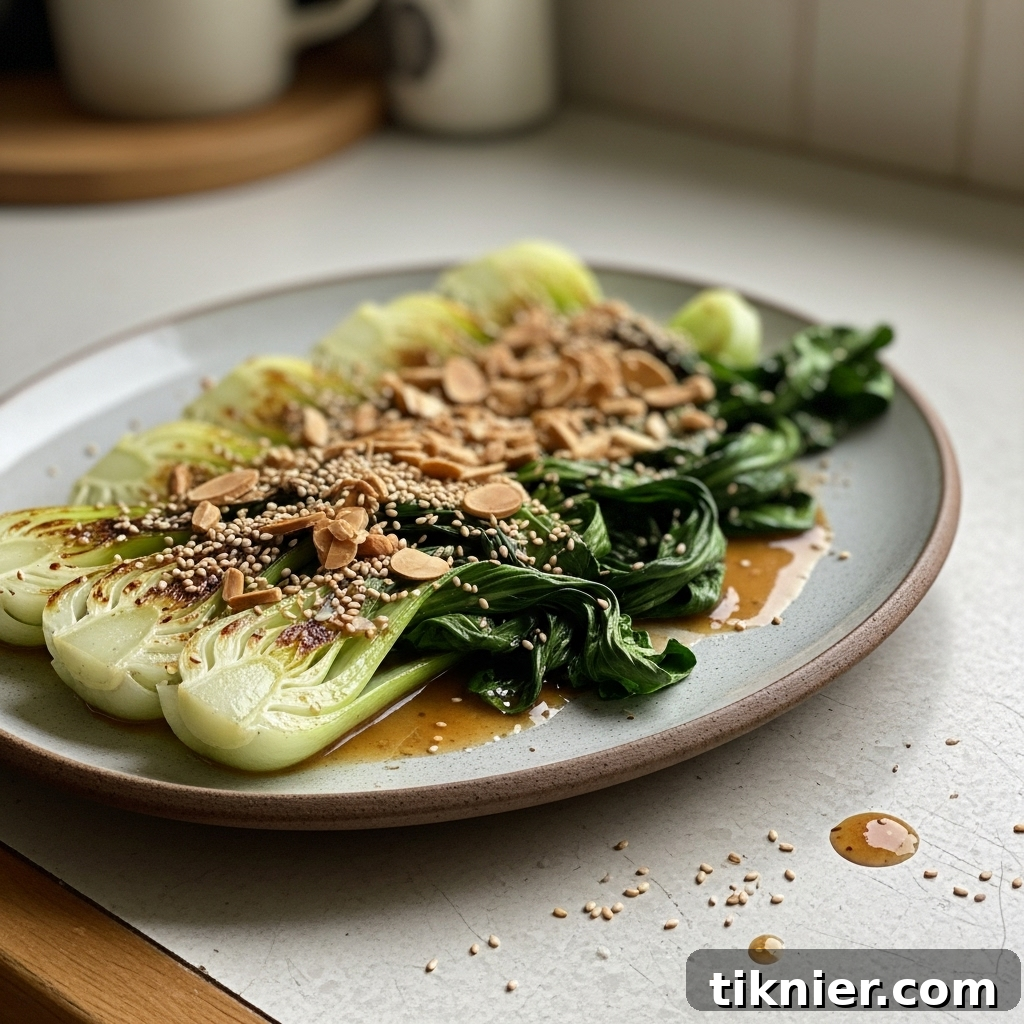
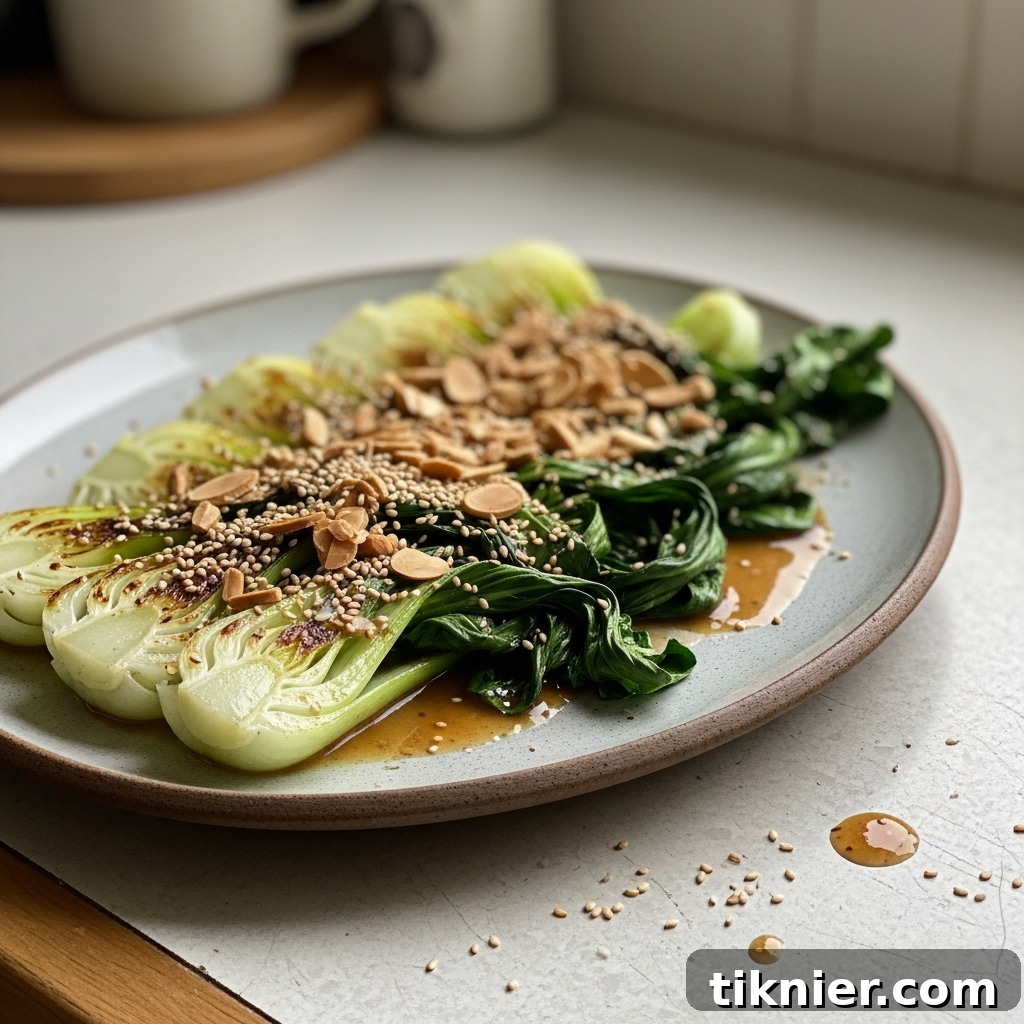
Prepare to experience a culinary revelation with this extraordinary Brown Butter Miso Bok Choy. This recipe isn’t just a side dish; it’s a game-changer that will fundamentally transform your perception of greens, elevating humble bok choy to a star on any plate.
I distinctly recall my initial, rather uninspiring introduction to bok choy. My husband, ever the adventurous eater, convinced me to try it at a restaurant. What arrived at our table was a plate of steamed bok choy – watery, undeniably bland, and utterly forgettable. I politely ate it, but inwardly, I resigned myself to avoiding this particular vegetable in my home kitchen. It simply seemed like a lot of effort for very little flavor payoff.
For years, I consistently bypassed bok choy in the produce aisle, convinced it held no culinary magic for me. Then, a turning point arrived. A dear friend served a deceptively simple seared version at a dinner party, and to my surprise, it was exceptionally good. It boasted a beautiful char, a slight tenderness, and a bright garlic sauce. That experience sparked a flicker of curiosity. I realized bok choy possessed untapped potential; it just needed that special touch, that unique combination of flavors to transform it from a mere obligation into something truly captivating.
Inspired, I returned to my kitchen, eager to experiment. My first instinct for imparting richness was butter. And if you’re going to use butter, why not take it a step further and brown it? That nutty, deep, complex flavor of brown butter is unparalleled. This was a strong start, but the dish still craved a profound savory note that simple soy sauce couldn’t quite deliver. Rummaging through my fridge, my eyes landed on a tub of white miso paste, an ingredient I’d previously used for a soup. On a whim, I whisked a spoonful into the nascent sauce. The moment it hit the hot pan, mingling with the intoxicating aroma of brown butter and garlic, a wave of fragrant warmth filled the kitchen. That was it. That was the missing link, the transformative twist. This isn’t just a bok choy recipe anymore; it’s an immersive culinary experience.
Skip to My Special Recipe!
Why This Brown Butter Miso Bok Choy Recipe Works Wonders
Garlic bok choy is a beloved classic across many Asian cuisines, celebrated for its elegant simplicity, incredible speed, and its wonderfully crisp-tender texture. Traditionally, it’s swiftly stir-fried with fragrant garlic, a hint of fresh ginger, and a splash of umami-rich soy or oyster sauce. This time-honored method is fantastic because it brilliantly preserves the fresh, slightly sweet notes of the vegetable while infusing it with savory goodness. It stands as a healthy, remarkably fast side dish that possesses an uncanny ability to complement nearly any main course. The white stalks of the bok choy remain juicy and retain a delightful crunch, while the delicate green leaves wilt just enough to lovingly soak up every drop of the flavorful sauce. Its enduring popularity stems from this beautiful equilibrium of texture and its innate versatility as a blank canvas for vibrant, delicious flavors.
So, why tamper with a classic? Because we believe it can be elevated to new heights. My unique twist introduces two culinary powerhouses, one from French gastronomy and another from traditional Japanese cooking: brown butter and white miso paste. The initial step of searing the bok choy creates a magnificent, caramelized surface that adds an invaluable layer of smoky, concentrated flavor – a crucial nuance often overlooked in simpler stir-fry techniques. This deep browning sets the stage for extraordinary taste.
Then, the true magic unfolds. Browning the butter isn’t just about melting it; it’s a meticulous process that transforms it into a rich, nutty, and profoundly complex base that oil alone simply cannot replicate. It imparts a luxurious, almost indulgent quality to the dish. Whisking in the white miso paste introduces an incredible depth of savory richness, a concept the Japanese refer to as “umami.” This fermented soybean paste delivers a harmonious blend of salty, subtly sweet, and deeply earthy flavors that perfectly complements the nutty profile of the brown butter. Together, these two exceptional ingredients meld to create a lustrous, profoundly flavorful glaze that adheres beautifully to every crevice of the bok choy, transforming it from a simple vegetable into something truly special, utterly memorable, and undeniably gourmet.
Essential Ingredients for Your Garlic Bok Choy Masterpiece
The true brilliance of this recipe lies in how a carefully curated selection of a few key ingredients harmonizes to forge something truly spectacular. While the ingredient list might appear slightly more extensive than a rudimentary stir-fry, rest assured that each component plays an indispensable role in constructing the intricate layers of flavor. Here’s a comprehensive look at what you’ll need to create this incredible Brown Butter Miso Bok Choy:
- 1 lb baby bok choy, meticulously rinsed and expertly halved lengthwise. Ensure it’s thoroughly dried for optimal searing.
- 1 tbsp avocado oil or any other neutral, high-heat cooking oil suitable for searing.
- 2 tbsp unsalted butter, the cornerstone for our exquisite brown butter.
- 3 cloves garlic, finely thinly sliced to release maximum aroma and flavor.
- 1 tsp fresh ginger, freshly grated for a vibrant, aromatic zing.
- 1 tbsp white miso paste, our secret weapon for unparalleled umami depth.
- 2 tbsp low-sodium soy sauce or tamari, providing a salty, savory foundation without excessive sodium.
- 1 tbsp mirin, a Japanese sweet rice wine that adds a subtle sweetness and gloss to the sauce.
- 1 tsp rice vinegar, for a touch of bright acidity that balances the richness.
- 2 tbsp water, to help create the perfect sauce consistency.
- ¼ cup toasted sliced almonds, for a delightful textural contrast and nutty garnish.
- Toasted sesame seeds, for an extra layer of aroma and visual appeal as a garnish.
The two ingredients that unequivocally elevate this recipe and make it truly sing are the unsalted butter and the white miso paste. Using unsalted butter is paramount because you will be browning it. This precise process concentrates its inherent flavor, and employing unsalted butter grants you absolute command over the final saltiness of your dish, a crucial detail since both the miso and soy sauce contribute significant salinity.
Now, let’s delve into the marvel that is white miso paste. This is undeniably my culinary secret weapon. It is a wonderfully versatile fermented soybean paste, notably milder and subtly sweeter than its red or yellow counterparts. It infuses the dish with an incredible depth of savory, complex umami flavor that is profoundly satisfying and remarkably nuanced. You can typically locate it in the refrigerated section of most well-stocked grocery stores, often situated near the tofu or other fermented products. Investing in a good quality paste will undoubtedly make a world of difference in the final taste. When expertly combined with the rich, nutty brown butter, it forms a sauce that is simply divine, transforming the entire dish into an unforgettable gourmet experience.
Step-by-Step Instructions: Crafting Your Perfect Brown Butter Miso Bok Choy
This exquisite dish comes together with remarkable speed, making it imperative to have all your ingredients meticulously prepped and ready before you even consider igniting the stove. This foundational culinary practice, known as “mise en place,” is an absolute lifesaver for fast-paced recipes like this Brown Butter Miso Bok Choy, ensuring a smooth and stress-free cooking experience.
Step 1: Meticulously Prep the Bok Choy and Whisk the Flavorful Sauce
Your first crucial step is to prepare the star of our dish: the bok choy. Begin by rinsing each bulb thoroughly under cool running water, paying close attention to clean any hidden grit between the stalks. Next, slice each bulb precisely in half lengthwise. The most critical aspect of this stage is to dry the bok choy halves with absolute diligence using a clean kitchen towel or several layers of paper towels. Any residual water is the arch-nemesis of a good sear, so strive for maximum dryness. While the bok choy rests, grab a small mixing bowl. Into this bowl, whisk together the white miso paste, low-sodium soy sauce, mirin, rice vinegar, and water. Continue whisking until the miso is completely dissolved and the mixture achieves a smooth, harmonious consistency. Setting this prepared sauce aside now guarantees you can incorporate it into the pan at the precise, opportune moment.
Step 2: Achieve the Perfect Sear on the Bok Choy
Position a large skillet, ideally a cast-iron pan known for its superior heat retention, over medium-high heat. Add the avocado oil and allow it to heat until it just begins to shimmer, indicating it’s ready. Carefully place the thoroughly dried bok choy halves cut-side down in a single layer. It is paramount not to overcrowd the pan; if necessary, work in two batches. Overcrowding will lower the pan’s temperature and cause the bok choy to steam rather than achieve that coveted caramelized sear. Allow it to cook, undisturbed, for 2 to 3 minutes. You are looking for a deep, rich, and beautifully browned caramelization on that cut surface. Once achieved, flip each piece and cook for an additional 1 to 2 minutes on the other side before removing them from the pan and setting them aside.
Step 3: Master the Art of Brown Butter
Reduce the heat under your skillet to medium-low. Add the two tablespoons of unsalted butter. Now, this is a moment requiring your full attention; stay close and observe carefully. The butter will first melt, then it will begin to foam and sizzle gently. Swirl the pan occasionally to ensure the butter cooks evenly. After a couple of minutes, you will start to notice tiny brown specks forming at the bottom of the pan, and a wonderfully rich, nutty aroma will fill the air. This delightful fragrance is your cue – the brown butter is ready. Be vigilant, as it can transition from perfectly browned to burnt in a matter of seconds, leading to a bitter taste.
Step 4: Swiftly Sauté the Fragrant Aromatics
As soon as that butter reaches its perfect, golden-brown stage, swiftly toss in your thinly sliced garlic and grated ginger. Stir them constantly in the hot brown butter. This step is incredibly quick, typically requiring only about 30 to 45 seconds. Your objective is simply to release their vibrant fragrance, not to brown them excessively. If you’re concerned about the garlic burning, which can impart a bitter flavor to the entire dish, momentarily pull the pan off the heat.
Step 5: Artfully Create the Glossy Sauce
Now, it’s time for the prepared miso-soy sauce mixture. Pour it directly into the skillet. It will immediately bubble and steam vigorously – this is precisely what you want. Use your spoon or spatula to stir everything together, making sure to scrape up all those incredibly flavorful browned bits (known as “fond”) from the bottom of the pan. This fond is packed with savory goodness and will contribute immensely to the sauce’s depth. The sauce will rapidly thicken into a beautiful, glossy glaze in less than a minute.
Step 6: Flawlessly Finish the Dish
Gently return the perfectly seared bok choy to the skillet, nestling it into the bubbling sauce. Carefully toss everything together to ensure each piece of bok choy is thoroughly coated in that amazing brown butter miso glaze. Allow it to cook for just one final minute, simply to heat the bok choy through. The ultimate goal here is to maintain the bok choy’s crisp-tender texture, not to overcook it until it becomes soft and limp.
Step 7: Garnish and Serve Immediately for Peak Enjoyment
With tongs, transfer the glistening, saucy bok choy to a beautiful serving platter. Drizzle any remaining, irresistible glaze from the pan generously over the top. For a final flourish of both flavor and crucial texture, garnish liberally with toasted sliced almonds and a sprinkle of toasted sesame seeds. This dish is at its absolute peak of deliciousness and textural perfection when served piping hot, straight out of the pan. Enjoy!
How To Masterfully Serve Brown Butter Miso Bok Choy
This Brown Butter Miso Bok Choy is so inherently flavorful and satisfying that it can effortlessly stand as a dish unto itself. However, its true brilliance shines most brightly when thoughtfully paired with the right main course. Its complex savory, nutty, and umami-rich flavor profile renders it an incredibly versatile side dish, harmonizing beautifully with an expansive array of proteins and starches. Consider this recipe your new secret weapon for transforming any ordinary weeknight dinner into a meal that feels distinctly more gourmet and special.
My absolute favorite way to serve this exquisite bok choy is alongside a perfectly cooked protein. The umami-laden sauce is an unparalleled match for seafood, especially richer, flakier fish varieties. It’s absolutely divine when served with a simple pan-seared salmon, allowing the crisp skin to mingle with the glossy sauce, or with a delicate, buttery piece of miso-glazed cod. This dish also pairs exquisitely with succulent roasted chicken, where the rich sauce can beautifully meld with the savory chicken drippings. For a heartier, more robust meal, consider serving it alongside a perfectly grilled steak or a tender pork tenderloin; the bright, crisp texture of the bok choy wonderfully cuts through the richness of the meat, creating a balanced and incredibly satisfying plate.
Beyond its role as a perfect side, you can also ingeniously transform this dish into the very foundation of a more substantial and fulfilling meal. Here are a few creative ideas to spark your culinary imagination:
- As a Noodle Bowl Base: Elevate your noodle game by serving the saucy bok choy over a generous bed of chewy soba noodles or comforting ramen. For a truly complete and satisfying meal, crown it with a perfectly soft-boiled egg and a judicious sprinkle of chili flakes for a gentle kick.
- With Steamed Rice: Sometimes, the simplest pairings yield the most profound enjoyment. Spoon the glistening bok choy and plenty of that delectable brown butter miso sauce over a mound of fluffy jasmine or basmati rice. The rice eagerly soaks up the savory sauce, ensuring not a single precious drop of flavor is missed.
- Part of a Wholesome “Bowl” Meal: Construct a beautifully balanced and nutrient-rich grain bowl. Begin with a foundation of wholesome quinoa or nutty brown rice. Artfully arrange the garlic bok choy, vibrant green edamame, finely shredded carrots, and your choice of lean protein, such as perfectly grilled chicken or flavorful baked tofu, for a healthy and utterly delicious lunch or dinner.
Regardless of how you choose to present it, always ensure you transfer it to a platter where its beautiful caramelized color and glossy sauce can be fully appreciated. Drizzling that luscious extra sauce over the top right before it reaches the table is a simple touch that makes it look every bit as good as it tastes – I promise, it’s a feast for the eyes and the palate.
Storing & Reusing Your Delicious Brown Butter Miso Bok Choy Leftovers
While this Brown Butter Miso Bok Choy is undeniably at its peak of crisp-tender perfection immediately after it leaves the skillet, any leftovers can still be wonderfully delicious if treated with a little thoughtful care. The primary objective when storing and reheating is to preserve as much of that delightful texture as possible. As is typical with most cooked greens, the texture will naturally soften somewhat upon refrigeration and reheating, but the extraordinary flavor of the brown butter miso sauce remains magnificently intact.
To properly store your leftover bok choy, first allow it to cool completely to room temperature. This is a crucial step; storing it while it’s still warm can create undesirable condensation inside the container, which will inevitably lead to soggier bok choy. Once cooled, transfer it to an airtight container. It will keep beautifully in the refrigerator for up to three days. I strongly advise against freezing this dish, as the delicate cellular structure of the bok choy will break down significantly upon thawing, resulting in an unpleasantly mushy texture.
When you’re ready to savor your leftovers, you have a couple of excellent options for reheating, each designed to minimize textural compromise:
- The Skillet Method (Highly Recommended): This is hands down the best approach to revive your bok choy. Heat a skillet over medium heat. If the pan appears dry, you can add a tiny splash of neutral oil or a small pat of butter. Add the leftover bok choy and cook for just a couple of minutes, tossing gently and continuously, until it’s heated through. This method helps to re-crisp the edges slightly, bringing back some of that desirable texture.
- The Microwave Method (For Quick Convenience): If you’re truly pressed for time, the microwave will suffice, though it’s not ideal for texture. Place the bok choy on a microwave-safe plate and cover it loosely with a lid or plastic wrap to retain some moisture. Heat in short 30-second intervals until it’s thoroughly warm. Exercise caution to avoid overdoing it, as excessive microwave heating can quickly render the bok choy limp and tough.
Beyond simply reheating, you can unleash your creativity and repurpose the leftovers into entirely new culinary delights. Chop the bok choy into smaller, bite-sized pieces and toss it into a batch of fried rice during the final minute of cooking, allowing its flavors to meld. Alternatively, incorporate it into a brothy noodle soup, such as ramen or udon, for an extra boost of flavor, nutrients, and tender vegetables. The delicious sauce will gently melt into the broth, enriching it further and creating a deeply satisfying meal.
Creative Substitutions & Exciting Variations for Your Garlic Bok Choy
One of the most rewarding aspects of cooking is the freedom to personalize a recipe, making it uniquely your own. This Brown Butter Miso Bok Choy recipe is wonderfully adaptable, providing a versatile canvas for your culinary imagination. Whether you need to accommodate specific dietary restrictions or simply wish to experiment with ingredients you have readily available, there are abundant simple swaps and thrilling variations you can explore.
Tailoring this dish to suit various dietary needs is remarkably straightforward. For a completely gluten-free version, effortlessly substitute the low-sodium soy sauce with tamari, its excellent gluten-free counterpart, or opt for coconut aminos for a soy-free alternative. To make it both vegan and dairy-free, swap the unsalted butter for a high-quality vegan butter that is designed to brown well. Alternatively, you could use a flavorful oil like toasted sesame oil or coconut oil, though you will, of course, miss the specific, nuanced flavor of brown butter. It’s also important to double-check that your chosen miso paste is vegan, as some varieties can occasionally contain fish-based ingredients.
If you’re eager to play with the flavor profile or introduce different textural elements, here are a few of my favorite variations:
- Infuse Some Heat: For those who relish a delightful kick, add a generous pinch of red pepper flakes into the pan alongside the garlic and ginger. You could also swirl in a teaspoon of sriracha or chili garlic sauce directly into the sauce mixture before pouring it into the skillet, ensuring even distribution of warmth.
- Introduce Other Complementary Vegetables: This versatile brown butter miso sauce is absolutely fantastic with a myriad of other vegetables. Feel free to incorporate sliced shiitake mushrooms, vibrant bell peppers, tender broccoli florets, or even snow peas into the pan. Just be sure to judiciously adjust the cooking time accordingly to ensure each vegetable is perfectly cooked to its ideal crisp-tender stage.
- Switch Up the Crunchy Element: If sliced almonds aren’t on hand, toasted cashews, crunchy peanuts, or even wholesome sunflower seeds would make equally delicious and satisfying crunchy toppings. For an extra layer of savory depth and irresistible crunch, a sprinkle of crispy fried shallots or thinly sliced fried garlic would also be heavenly.
- Experiment with Different Greens: While baby bok choy is undeniably ideal for this recipe due to its tenderness and convenient size, this method also yields wonderful results with larger, more mature bok choy. If using mature bok choy, you’ll simply need to chop it into smaller, more manageable 1-inch pieces. Crucially, separate the tougher white stalks from the more delicate green leaves, cooking the stalks for a few minutes longer before adding the leaves to the pan to ensure even cooking. This technique also works beautifully with other sturdy greens like Swiss chard or lacinato kale (ribs removed and chopped), though cooking times will vary slightly.
Embrace the spirit of culinary adventure and don’t hesitate to experiment! This recipe provides a fantastic, robust flavor base that you can confidently build upon and personalize. Cooking should always be an enjoyable and creative process, so use the ingredients you love and what you have readily available to make this dish truly and uniquely yours.
Brown Butter Miso Bok Choy: The Ultimate Side Dish
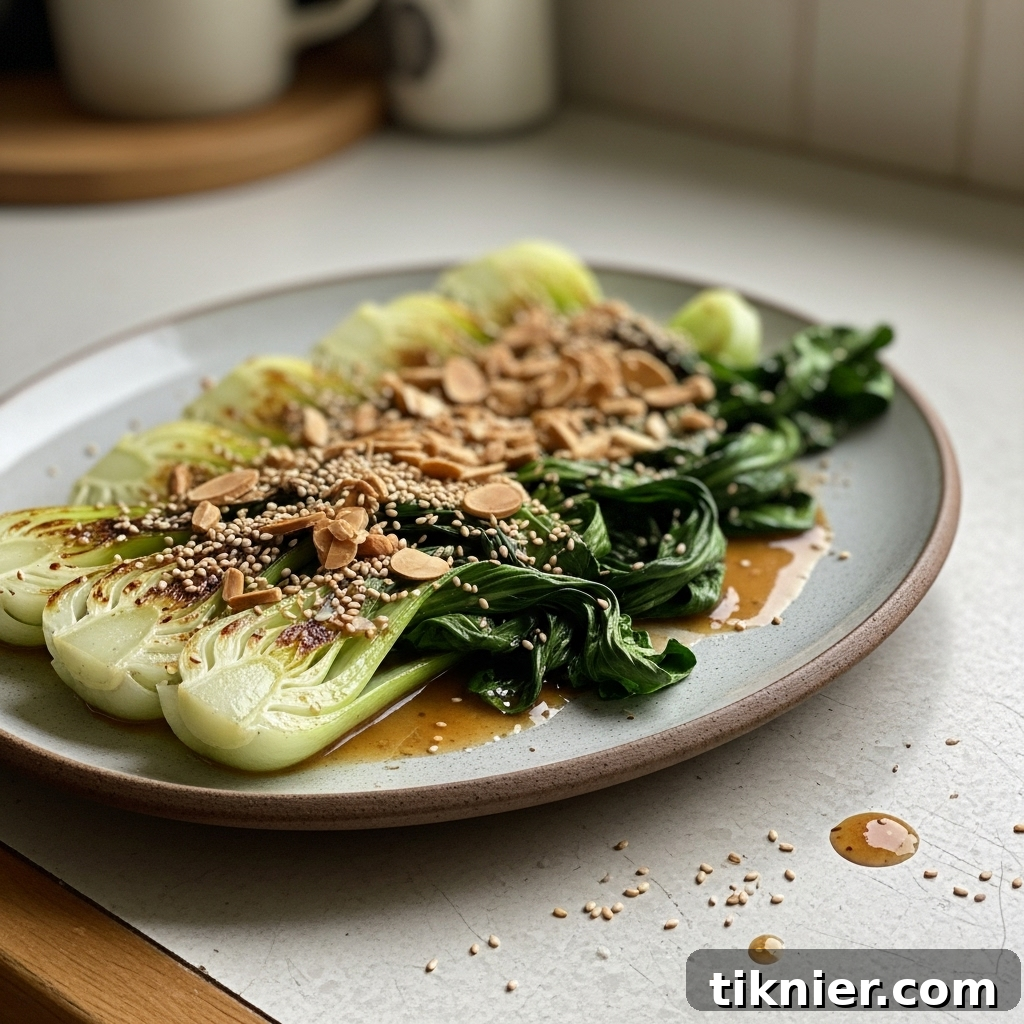
Description: A stunningly flavorful and incredibly easy side dish that transforms crisp-tender baby bok choy into a gourmet experience. Seared to perfection and coated in a magical, umami-rich sauce of nutty brown butter, savory white miso, and fragrant garlic. Finished with toasted almonds for the perfect textural crunch.
Yield: 4 servings | Category: Side Dish | Cuisine: Asian-Inspired / Fusion
Prep Time: 10 minutes | Cook Time: 10 minutes
Ingredients
- 1 lb baby bok choy, thoroughly rinsed and halved lengthwise
- 1 tbsp avocado oil or other neutral high-heat oil
- 2 tbsp unsalted butter
- 3 cloves garlic, thinly sliced
- 1 tsp fresh ginger, grated
- 1 tbsp white miso paste
- 2 tbsp low-sodium soy sauce or tamari
- 1 tbsp mirin
- 1 tsp rice vinegar
- 2 tbsp water
- ¼ cup toasted sliced almonds, for garnish
- Toasted sesame seeds, for garnish
Instructions
- Prepare Bok Choy & Sauce: Thoroughly dry the bok choy halves with paper towels. In a small bowl, whisk together the miso paste, soy sauce, mirin, rice vinegar, and water until the miso is completely dissolved and the sauce is smooth. Set aside.
- Sear Bok Choy: Heat avocado oil in a large skillet (preferably cast iron) over medium-high heat until shimmering. Place bok choy cut-side down in a single layer (work in batches if necessary). Sear for 2-3 minutes until deeply browned and caramelized. Flip each piece and cook for another 1-2 minutes. Remove from skillet and set aside.
- Brown the Butter: Reduce heat to medium-low. Add the unsalted butter to the skillet. Cook, swirling occasionally, for 2-3 minutes until it melts, foams, and develops a rich, nutty brown color with small specks at the bottom. Watch carefully to prevent burning.
- Sauté Aromatics: Immediately add the thinly sliced garlic and grated ginger to the brown butter. Sauté, stirring constantly, for just 30-45 seconds until fragrant. Do not let the garlic burn.
- Create the Sauce: Pour the prepared miso-soy sauce mixture directly into the skillet. It will bubble and steam. Stir constantly, scraping up any browned bits (fond) from the bottom of the pan. The sauce will rapidly thicken into a glossy glaze in under a minute.
- Combine & Finish: Return the seared bok choy to the skillet with the sauce. Gently toss everything together to coat each piece evenly. Cook for just 1 final minute to heat the bok choy through while maintaining its crisp-tender texture.
- Garnish & Serve: Transfer the saucy bok choy to a serving platter. Drizzle any remaining glaze over the top. Garnish generously with toasted sliced almonds and toasted sesame seeds. Serve immediately for best flavor and texture.
Notes
Drying Bok Choy: Ensure the bok choy is completely dry before searing for optimal caramelization and to avoid steaming. Browning Butter: Keep a close eye on the butter as it browns; it can transition from perfect to burnt very quickly. Garlic Caution: Burnt garlic will turn bitter, so be swift when adding aromatics and the liquid sauce.
Servings: 4 | Calories: 185 kcal | Fat: 15g | Carbohydrates: 9g | Protein: 5g
5 Essential FAQs About Brown Butter Miso Bok Choy
Here are some straightforward and comprehensive answers to the most common questions I receive about this delightful Brown Butter Miso Bok Choy recipe, ensuring your success every time.
1. What is the best and most effective way to clean and cut bok choy?
Properly cleaning bok choy is incredibly important because grit and stubborn dirt have a notorious habit of hiding between the layers of the stalks, particularly near the base. The most effective way to tackle this is to first trim just a tiny sliver off the very root end. This action gently loosens the individual stalks slightly without causing the entire bulb to fall apart. Next, hold the bok choy bulb under cool, running water, using your fingers to gently separate each stalk and meticulously rinse thoroughly between every single layer. Pay exceptional attention to the dense base where all the stalks converge, as this is often where the most dirt accumulates.
Once it’s immaculately clean, gently shake off the excess water and then thoroughly pat it dry with a clean kitchen towel or several sheets of paper towels. For this specific recipe, which utilizes tender baby bok choy, a simple vertical slice right down the middle is all that’s required. This creates two perfect halves, preserves the vegetable’s attractive shape, and, crucially, creates a flat surface that is absolutely ideal for achieving a beautiful, even sear. If you happen to be using larger, more mature bok choy, you might consider quartering it lengthwise or even separating the leaves from the stalks and chopping them individually, as detailed in a later FAQ.
2. My bok choy turned out soggy and limp. What went wrong during cooking?
Ah, the dreaded soggy bok choy – a common culinary frustration, but thankfully, one with straightforward solutions. There are typically three primary culprits responsible for this less-than-ideal texture. The first, and most frequently encountered, is excess moisture. If the bok choy is not dried completely and meticulously after washing, that residual water will hit the intensely hot pan and instantly create steam. Steaming the vegetable is the exact opposite of searing it, which unfortunately leads to a soft, limp, and unappealing texture instead of the desired crisp-tender bite.
The second reason for sogginess is overcrowding the pan. If you pile too much bok choy into the skillet at once, you will dramatically lower the temperature of the cooking surface. Once again, this creates steam, causing the bok choy to essentially stew in its own juices. It is far more effective and yields superior results to work in smaller batches, ensuring each piece has ample space to make direct, unimpeded contact with the hot cooking surface. Finally, overcooking is a surefire way to achieve soggy, mushy results. Bok choy cooks remarkably quickly. The culinary goal here is “crisp-tender,” meaning the white stalks should still retain a pleasant, slight bite while the leaves are tender. The entire cooking process, from the initial sear to the final saucing, should only take a matter of mere minutes.
3. Can I use regular, mature bok choy instead of baby bok choy in this recipe?
You absolutely can use regular, mature bok choy! While I personally favor baby bok choy for its inherent tenderness and convenient size, standard, mature bok choy performs beautifully with just a minor adjustment in preparation. Mature bok choy typically features thicker, more fibrous white stalks and larger, more robust green leaves. Because the thicker stalks naturally require a longer cooking time than the more delicate leaves, it’s best practice to separate them for even cooking.
To do this, simply chop the firm white stalks into uniform 1-inch pieces and roughly chop the green leafy parts, keeping them in two separate piles. When you’re ready to cook, you’ll add the chopped white stalks to the skillet first and sauté them for approximately 3 to 4 minutes, allowing them to begin to tenderize. Then, and only then, you can add the chopped green leaves and cook for an additional minute or two until they wilt and become tender. From this point, you can confidently proceed with making the brown butter miso sauce in the pan and tossing everything together as directed in the recipe instructions.
4. What exactly is miso paste, and where can I typically find it in a grocery store?
Miso paste is a truly wonderful and versatile Japanese seasoning, traditionally crafted from fermented soybeans, sea salt, and a special fungus called koji. It is an indispensable staple in Japanese cuisine and is the very secret behind the rich, savory, and complex “umami” flavor found in countless dishes, most famously in traditional miso soup. There are many distinct types of miso, but the most common varieties you’ll encounter are white (shiro), yellow (shinshu), and red (aka). For this particular Brown Butter Miso Bok Choy recipe, I wholeheartedly recommend using white miso. It boasts a shorter fermentation time, which makes it the mildest and subtly sweetest of the trio, a characteristic that beautifully complements the nutty brown butter without overwhelming the delicate flavor of the bok choy.
Years ago, miso was considered a niche specialty item, often relegated to Asian markets. However, it is now widely available in the majority of well-stocked mainstream supermarkets. You can typically locate it in the refrigerated section, commonly situated near the tofu, kimchi, or other refrigerated condiments and fermented products. It usually comes packaged in a small plastic tub and, once opened, lasts for a remarkably long time in the fridge. This makes it an absolutely fantastic and economical ingredient to keep on hand for quickly adding a profound depth of flavor to an array of soups, marinades, dressings, and sauces.
5. My garlic burned in the brown butter, and it made the dish bitter. What went wrong, and how can I prevent this?
This is an incredibly common issue, so please do not feel discouraged; it happens to many home cooks! It occurs because brown butter is exceptionally hot – significantly hotter than simply melted butter – and thinly sliced garlic cooks in a literal matter of mere seconds. The precise moment it transitions from a beautiful golden color to a darker brown, it quickly becomes bitter, and this bitterness can unfortunately permeate and ruin the otherwise exquisite flavor of your sauce. The key to preventing this lies entirely in precise timing and meticulous heat management.
First and foremost, ensure your heat is reduced to medium-low *before* you add the garlic and ginger to the pan. Second, have your pre-mixed miso-soy sauce readily accessible and positioned right next to the stove, prepared for immediate use. Add the thinly sliced garlic and grated ginger to the hot brown butter and stir them constantly and vigorously for just 30 to 45 seconds. The very instant you detect their wonderfully fragrant aroma, immediately pour in the liquid sauce. The cooler temperature of the liquid will instantly drop the temperature of the pan and effectively halt the cooking process of the garlic, decisively preventing it from burning. It’s a rapid-fire sequence of steps, but once you practice and get the hang of it, you’ll master it every single time, yielding perfectly fragrant, never-bitter garlic.
Try These Delicious Recipes Next!
If you absolutely adored the rich, satisfying, and umami-packed flavors in this Brown Butter Miso Bok Choy, and you thoroughly enjoy discovering innovative ways to make dinner truly exciting, then I am confident you will find immense pleasure in exploring some of my other curated recipe collections. The act of putting a delicious, wholesome meal on the table, whether it’s a quick and easy weeknight supper or an elaborate holiday feast, remains one of my greatest culinary joys and passions.
For those exceptionally busy weeknights when you’re craving culinary inspiration that is both undeniably delicious and entirely doable, you simply must explore my comprehensive collection of dinner ideas. It’s thoughtfully packed with an array of recipes that my family loves and that I personally turn to again and again for reliable, flavorful meals. You’ll discover everything from deeply comforting casseroles to incredibly quick and satisfying skillet meals, all designed to simplify your cooking experience.
110 Easy Dinner Ideas That Taste Great: Effortless Recipes for Your Home
We are all keenly aware that grocery bills can accumulate rapidly, but that certainly doesn’t imply you have to compromise on exquisite flavor or quality. I’ve meticulously compiled a list of my absolute favorite budget-friendly recipes that are truly big on taste without ever requiring you to break the bank. These are smart, savvy meals that ingeniously utilize simple, accessible ingredients to their fullest potential, proving that deliciousness doesn’t have to be expensive.
Cheap Meal Ideas and Budget-Friendly Recipes: Maximize Flavor, Minimize Cost
And for those truly special occasions when you’re orchestrating a grand gathering around the table, a little thoughtful planning invariably goes a very long way. My comprehensive Thanksgiving guide is brimming with show-stopping recipes, from the centerpiece turkey to all the classic, beloved sides infused with a special twist – much like this very bok choy recipe. It stands as an invaluable resource you can consistently turn to for inspiration and guidance for any significant family holiday or festive celebration.
27 Incredible Thanksgiving Dinner Ideas: Elevate Your Holiday Feast