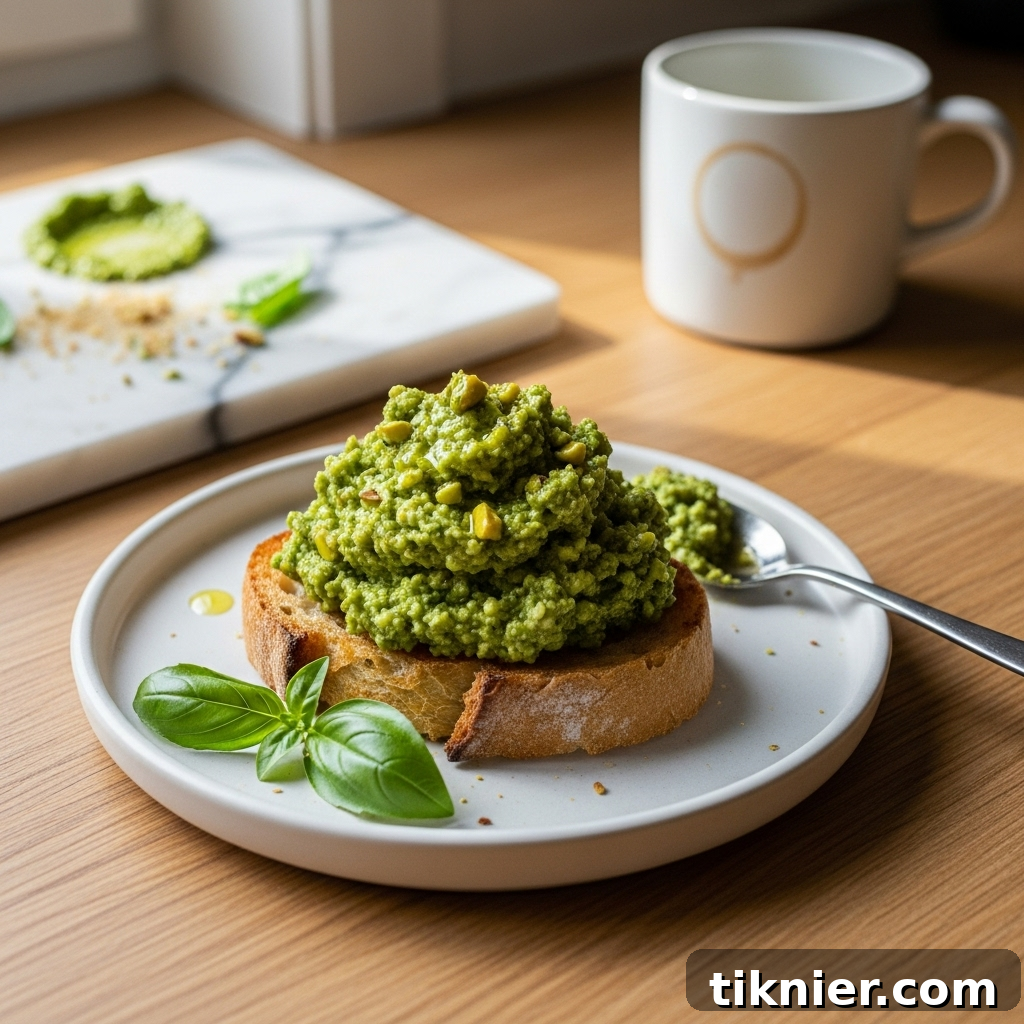
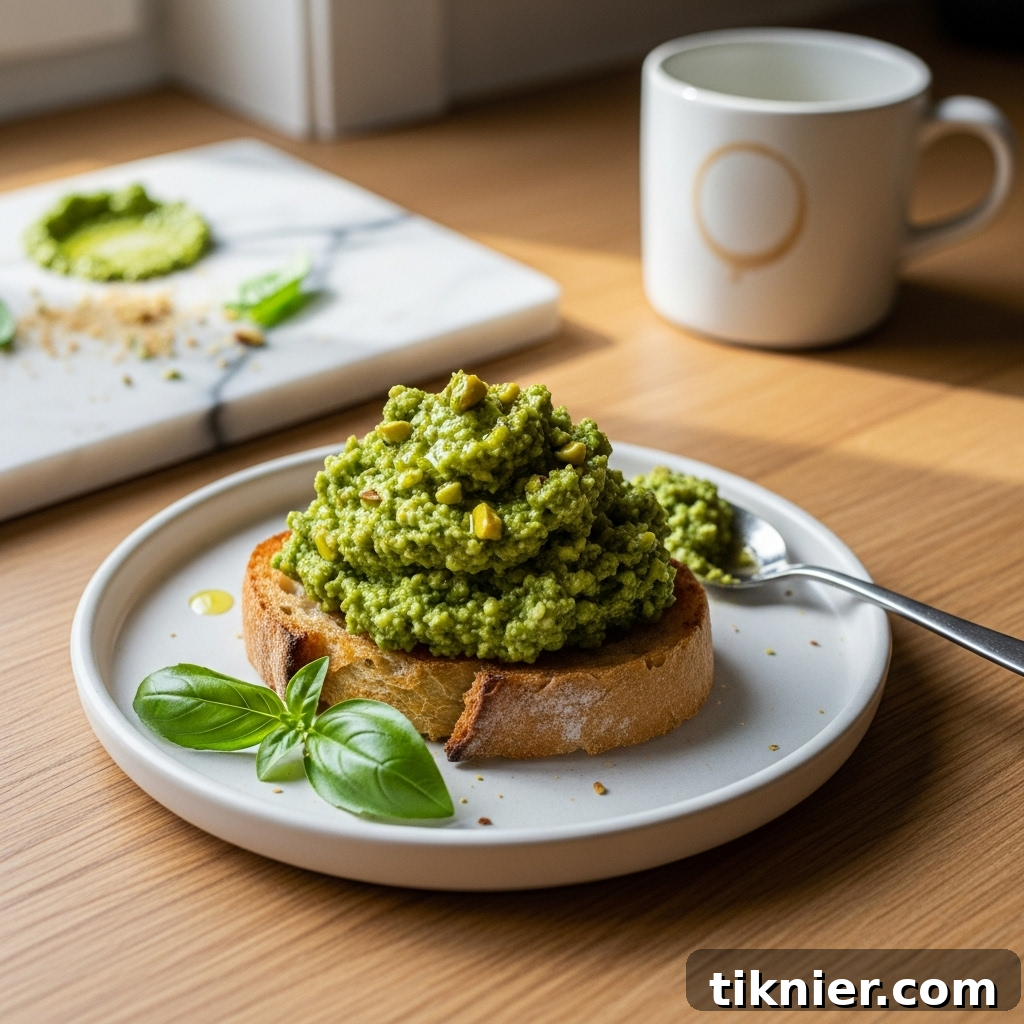
Prepare to experience what many consider to be the finest pesto recipe you’ll ever create. This unique blend takes a beloved classic and elevates it with unexpected, yet harmonious, flavors that will captivate your palate.
I distinctly recall my first encounter with authentic pesto. It was during an anniversary trip, nestled within a charming, age-old Italian trattoria. A simple, glistening bowl of pasta arrived, adorned with a vivid green sauce, and the air immediately filled with the intoxicating aroma of fresh basil and garlic. It was nothing short of culinary enchantment.
Upon returning home, I was determined to replicate that magic. For years, I perfected the classic pine nut version, and it truly is a magnificent creation. However, my nature dictates a constant quest for innovation. I’m always compelled to infuse my culinary endeavors with a personal touch.
The inspiration for this distinctive twist struck me one afternoon as I was idly snacking on pistachios, simultaneously planning a Japanese-themed dinner. A tub of white miso paste sat on my counter, and a metaphorical lightbulb illuminated. What if I could marry the nutty, subtly sweet notes of pistachios with the savory, umami-rich depth of miso? It felt audacious, yet an intuitive feeling told me this combination would be spectacular.
And indeed, it surpassed all expectations. The pistachios impart an extraordinary creaminess and richness to the pesto, while the miso introduces a profound, savory whisper that leaves you pondering, “What is that incredible flavor?” It’s the concealed ingredient that transforms a cherished staple into something truly exceptional. This rendition has quickly become my go-to for special occasions or simply a delightful treat on a quiet Tuesday evening.
Jump to the Full Recipe Card!
Why This Pistachio Miso Pesto Recipe is a Game Changer
Pesto boasts a rich history, tracing its origins to Genoa, Italy. Its name derives from the word “pestare,” meaning to pound or crush, a nod to its traditional preparation using a mortar and pestle. The classic harmony of basil, pine nuts, garlic, salty cheese, and premium olive oil is celebrated globally for a reason – it’s effortlessly fresh, simple, and bursting with flavor.
Its widespread appeal stems from its incredible versatility and ease. This is a no-cook sauce that comes together in mere minutes, yet it delivers a depth of flavor that suggests hours of preparation. You can effortlessly toss it with pasta, generously spread it on sandwiches, or add a dollop to grilled meats and vegetables. It truly is a culinary golden ticket.
So, why introduce changes to such a timeless masterpiece? My approach isn’t to replace the classic, but rather to enhance and evolve it. This particular pistachio pesto recipe introduces two pivotal modifications that culminate in a uniquely delicious and unforgettable culinary experience. Firstly, we consciously opt for pistachios over the traditional pine nuts. When gently toasted, pistachios develop a more robust, buttery, and slightly sweet flavor profile. This not only contributes an unparalleled creaminess but also adds substantial body and a more pronounced, earthy taste that beautifully complements the other vibrant ingredients.
The second, and arguably most impactful, innovation is the inclusion of white miso paste. This ingredient is my secret weapon for unlocking an entirely new dimension of flavor. Miso, a fermented soybean paste, is a fundamental component of Japanese cuisine, renowned for its rich umami – the fifth taste, often described as savory deliciousness. Just a single teaspoon of white miso paste introduces a complex, salty, and profound savory depth that simply cannot be achieved with salt alone. It expertly rounds out the sharp notes of garlic and the richness of the cheese, resulting in a sauce that is exceptionally balanced, exquisitely rich, and utterly irresistible. It’s the subtle yet transformative change that will have everyone asking for your secret recipe.
Essential Ingredients for Crafting Your Pistachio Pesto
The true magic of this pesto lies in the careful selection of simple, high-quality ingredients, each playing a crucial role in the symphony of flavors. My distinctive additions of pistachios and miso paste elevate this classic sauce to an entirely new echelon of gourmet excellence. Here’s precisely what you’ll need to create this exceptional condiment:
- 2 cups fresh basil leaves, packed: The vibrant heart and soul of any great pesto. Ensure your basil is brilliantly green, intensely fragrant, and free from any wilting. The fresher the basil, the more lively and aromatic your finished pesto will be.
- 1/2 cup raw, shelled pistachios: These nuts contribute an unparalleled buttery richness and a subtly sweet undertone. Opting for raw, unsalted pistachios gives you complete control over the flavor and allows for optimal toasting.
- 1/2 cup freshly grated Parmigiano-Reggiano cheese: This is a non-negotiable for authentic flavor. Please, for the sake of superior texture and taste, grate your own from a solid block. Pre-grated varieties often contain anti-caking agents that can impart a gritty texture and dull the vibrant flavor of your pesto. Real Parmigiano-Reggiano provides that essential nutty, salty bite.
- 2 large cloves garlic, peeled: I’ve found that two cloves strike the perfect balance, delivering a zesty kick without overpowering the other delicate flavors. If you consider yourself a true garlic enthusiast, feel free to incorporate an additional clove to suit your preference.
- 1 teaspoon white (shiro) miso paste: This is the highly acclaimed secret ingredient! White miso is characterized by its milder flavor and slight sweetness compared to darker miso varieties. It infuses the pesto with a remarkable savory depth and that coveted umami flavor, making this version truly extraordinary.
- 1 tablespoon fresh lemon juice: The inclusion of a small amount of acid is absolutely crucial. It acts as a natural brightener, enhancing all the individual flavors, and crucially, helps maintain the pesto’s stunning, vivid green hue.
- 1/2 cup extra-virgin olive oil, plus more if needed: Given that this is a raw sauce, the quality and flavor of your olive oil will be prominently featured. Invest in a high-quality extra-virgin olive oil that boasts a fruity, smooth, and pleasant taste.
- 1/4 teaspoon fine sea salt: We use a judicious amount of salt here, as both the Parmigiano-Reggiano and the miso paste already contribute significant salinity. We will fine-tune the seasoning at the very end.
- 1/4 teaspoon freshly ground black pepper: A tiny dash provides a subtle warmth and a gentle hint of spice, completing the flavor profile.
Each of these thoughtfully selected components works in perfect harmony to create a truly outstanding pesto. The quality of your ingredients genuinely makes a profound difference, so endeavor to source the finest you can afford for a show-stopping result.
Step-by-Step Instructions For Crafting Your Perfect Pistachio Pesto
Creating this exceptional pistachio miso pesto is remarkably straightforward when broken down into manageable steps. By following these clear instructions, you’ll have a batch of vibrant, delicious sauce ready in approximately 15 minutes. All you’ll need is a reliable food processor and a small skillet.
Step 1: Gently Toast the Pistachios
Begin by placing your raw, shelled pistachios in a small, dry skillet. There’s no need to add any oil at this stage. Set the heat to medium and toast them for about 3 to 5 minutes. It’s imperative to remain attentive and shake the pan frequently to ensure even toasting and prevent them from burning on one side. You’ll know they’re perfectly toasted when they achieve a slightly deeper green color and release a wonderfully nutty, fragrant aroma. Immediately transfer them from the hot pan onto a plate to cool completely. Leaving them in the skillet will allow residual heat to continue cooking and potentially burn them.
Step 2: Pulse the Foundational Ingredients
Once your pistachios have cooled entirely, transfer them to the bowl of your food processor. Add the freshly grated Parmigiano-Reggiano cheese, the peeled garlic cloves, the white miso paste, and the fresh lemon juice. Secure the lid and pulse the mixture several times. Your aim here is to achieve a coarsely chopped, crumbly texture, reminiscent of moist sand. This crucial step establishes a robust and flavorful base before we introduce the more delicate ingredients.
Step 3: Incorporate the Fresh Basil
Now, add all of your packed fresh basil leaves directly on top of the nut and cheese mixture in the food processor. Secure the lid once more and pulse the mixture an additional 5 to 7 times. Pause to scrape down the sides of the bowl with a spatula once or twice to ensure all ingredients are thoroughly incorporated. You want the basil to be finely chopped and fully blended, but exercise caution to avoid over-processing at this stage. Overworking the basil can bruise the delicate leaves, potentially leading to a bitter taste in your finished pesto.
Step 4: Gradually Stream in the Olive Oil
This is the pivotal step that develops that signature creamy, beautifully emulsified texture. With the food processor running continuously on its low setting, slowly and steadily pour the extra-virgin olive oil in a thin stream through the feed tube. Continue processing until all the oil has been incorporated and the pesto has achieved a smooth, cohesive consistency. You will observe the mixture transforming from a coarse chop into a luscious, unified sauce.
Step 5: Season and Final Pulse
Turn off the food processor and give the sides of the bowl one final scrape with your spatula. Add the fine sea salt and the freshly ground black pepper. Replace the lid and give it just one or two quick pulses to thoroughly combine the seasonings. This is the moment for a taste test. Dip a clean spoon into the pesto and assess if it requires any adjustments. Perhaps a little more salt, an extra squeeze of lemon juice, or even a touch more cheese. If the pesto appears too thick for your preference, you can blend in an additional tablespoon of olive oil until it reaches your desired, perfect consistency.
Creative Ways to Serve Your Pistachio Miso Pesto
The quintessential way to enjoy pesto, of course, is tossed with a delightful bowl of pasta. I particularly love pairing this rich pesto with pasta shapes that offer ample nooks and crannies to capture every last drop of the luscious sauce, such as fusilli, gemelli, or farfalle. A little tip: remember to reserve a small amount of the starchy pasta water to help the pesto beautifully coat the noodles, creating a silky, emulsified sauce.
However, please, do not confine this incredible pesto solely to pasta nights. This pistachio miso pesto is far too exquisite and versatile to be limited. I’ve discovered countless wonderful applications for it throughout the week, and it truly has the power to elevate even the simplest of meals. It imparts a burst of fresh, savory, and umami-rich flavor to almost anything it touches.
Here are just a few of my cherished ways to serve this adaptable sauce, transforming everyday dishes into gourmet experiences:
- As an Elevated Sandwich or Wrap Spread: Ditch the conventional mayonnaise and instead, generously spread a vibrant layer of this pesto on your bread for your next turkey and provolone, grilled chicken, or even a sophisticated caprese sandwich. It’s also utterly magnificent in a vegetarian wrap, paired with roasted red peppers, fresh spinach, and creamy feta cheese.
- A Sophisticated Topping for Proteins: A generous dollop of this fragrant pesto placed atop perfectly grilled salmon, pan-seared chicken breast, or a beautifully cooked steak just before serving is simply divine. It acts as an instant, gourmet sauce that adds incredible flavor and moisture.
- Infused into Dips and Dressings: Swirl a tablespoon or two into your favorite hummus or plain Greek yogurt to create an astonishingly flavorful vegetable dip. You can also thin it out with a little extra olive oil and a touch more lemon juice to craft a vibrant, herbaceous salad dressing that will impress any guest.
- On Pizza or Artisanal Flatbreads: Reimagine your pizza night by using this pesto as a flavorful base instead of traditional tomato sauce. It is particularly sensational on a “white” pizza, adorned with succulent chicken, fresh spinach, and melted mozzarella cheese.
- Brighten Your Breakfast and Brunch: Incorporate a small spoonful into your scrambled eggs for an unexpected burst of flavor, or spread it lavishly on toast and top with a perfectly fried egg. It completely transforms your morning routine into a culinary delight.
- Swirled into Warming Soups: A final swirl of pesto into a hearty bowl of minestrone, a creamy tomato soup, or a simple potato leek soup adds an unparalleled layer of freshness, herbaceousness, and depth just before serving, making the soup feel more substantial and flavorful.
Truly, the culinary possibilities with this pistachio miso pesto are boundless. Keep a jar readily available in your refrigerator, and I confidently promise you’ll find yourself reaching for it repeatedly, making every meal feel a bit more special and chef-inspired.
Optimizing Storage & Creative Reuse of Pesto Leftovers
One of the most satisfying aspects of preparing a fresh batch of homemade pesto is the anticipation of having delicious leftovers. This recipe typically yields about 1.5 cups, ensuring you’ll have ample extra to incorporate into subsequent meals. Proper storage is paramount to preserving its freshness, vibrant green color, and exquisite flavor for as long as possible.
The primary adversaries of fresh pesto are exposure to air and light, both of which can lead to the oxidation of the delicate basil. This process causes the pesto to lose its brilliant green hue, often turning a dull, brownish shade. While the flavor typically remains good, it undeniably loses that visually appealing, lively look. Fortunately, by implementing a few simple storage techniques, you can perfectly preserve its quality.
Here are my recommended methods for storing and creatively reusing your delectable pistachio miso pesto:
- For Short-Term Storage (Refrigerator): Carefully transfer the freshly made pesto into an airtight container, such as a small glass jar. Before securing the lid, gently press the pesto down with the back of a spoon to eliminate any trapped air pockets. Then, pour a thin, protective layer of extra-virgin olive oil over the entire surface of the pesto. This creates an effective barrier that prevents oxygen from reaching the pesto, thereby preserving its vivid green color. Stored this way, your pesto will remain fresh and delicious in the refrigerator for up to one week.
- For Long-Term Storage (Freezer): Pesto freezes exceptionally well, making it ideal for future culinary adventures. My preferred freezing method involves spooning the pesto into an ice cube tray. This technique yields perfect, convenient, single-serving portions that you can easily pop out as needed. Once the pesto cubes are frozen solid, transfer them to a freezer-safe zip-top bag or a dedicated freezer container, ensuring as much air is removed as possible before sealing. These frozen pesto portions will maintain their quality and flavor for up to six months in the freezer.
Reusing your stored pesto is remarkably easy and convenient. If it has been refrigerated, simply give it a good stir to thoroughly reincorporate the protective layer of olive oil on top. If you’re using frozen pesto, you can either let a cube thaw gradually in the refrigerator overnight or at room temperature for a couple of hours. Alternatively, for quick meals, you can toss a frozen pesto cube directly into a hot pan with pasta, into a simmering soup, or onto hot grilled vegetables. The heat will melt and integrate it in mere moments. Should the pesto appear a little thick after storage, you can effortlessly revive its perfect consistency by stirring in a splash of warm water, a spoonful of reserved pasta water, or an additional drizzle of fresh olive oil until it reaches your desired texture.
Exciting Substitutions & Creative Variations for Your Pesto
While I am absolutely enamored with this pistachio and miso combination, one of the true beauties of pesto lies in its inherent adaptability. It’s less of a rigid recipe and more of a versatile culinary concept, providing an incredible template for creative experimentation. Feel completely free to play around with the ingredients based on what you have readily available or the specific flavors you’re currently craving. This recipe is wonderfully forgiving and encourages personal expression.
Always remember the fundamental framework: a fresh green herb, a nut or seed, a hard cheese, garlic, and quality oil. Once you grasp this basic formula, you can mix and match to your heart’s content, creating endless variations. It’s also an excellent strategy for utilizing leftover herbs or nuts you might have lingering in your pantry.
Here are some simple yet impactful substitutions and exciting variations you can confidently explore:
- Experiment with Different Nuts: If pistachios aren’t on hand, toasted walnuts or almonds make fantastic, flavorful substitutes, each lending a distinct character. For a more classic and delicate pesto, you can always revert to using traditional pine nuts. For those with nut allergies or simply seeking an alternative, try using toasted sunflower seeds or pepitas (pumpkin seeds) for a delightful crunch and earthy flavor.
- Explore Alternative Greens: While basil is the undisputed classic, you can substitute up to half of the basil with other vibrant greens to create a different flavor profile and add nutritional benefits. A handful of fresh spinach, for instance, will make the pesto even creamier and impart a milder, slightly sweeter taste. Conversely, adding fresh arugula will introduce a pleasant peppery bite, adding complexity to the sauce.
- Vary the Cheese Selection: If you prefer a sharper, more intensely salty flavor in your pesto, consider using Pecorino Romano cheese instead of Parmigiano-Reggiano. For an entirely vegan pesto, you can simply omit the cheese altogether. To replicate that desirable cheesy, savory depth, incorporate a few tablespoons of nutritional yeast along with an extra pinch of salt to balance the flavors.
- Introduce a Hint of Heat: For those who appreciate a subtle kick, add a pinch of red pepper flakes to the food processor along with the garlic and nuts. This tiny addition imparts a lovely warmth and gentle spice to the finished sauce, awakening the palate.
- Amplify the Brightness: For an extra layer of zesty brightness and aromatic intensity, you can incorporate a little bit of finely grated lemon zest along with the fresh lemon juice. The zest truly makes the fresh basil flavor pop and provides a wonderful aromatic lift to the entire pesto.
Do not hesitate to be adventurous and experiment. The most delightful outcome is creating a new version of pesto that you love even more than the last. Cooking should be an enjoyable and creative process, and this recipe offers the perfect foundation for playful exploration in your kitchen.
Pistachio Miso Pesto: A Modern Twist on a Classic
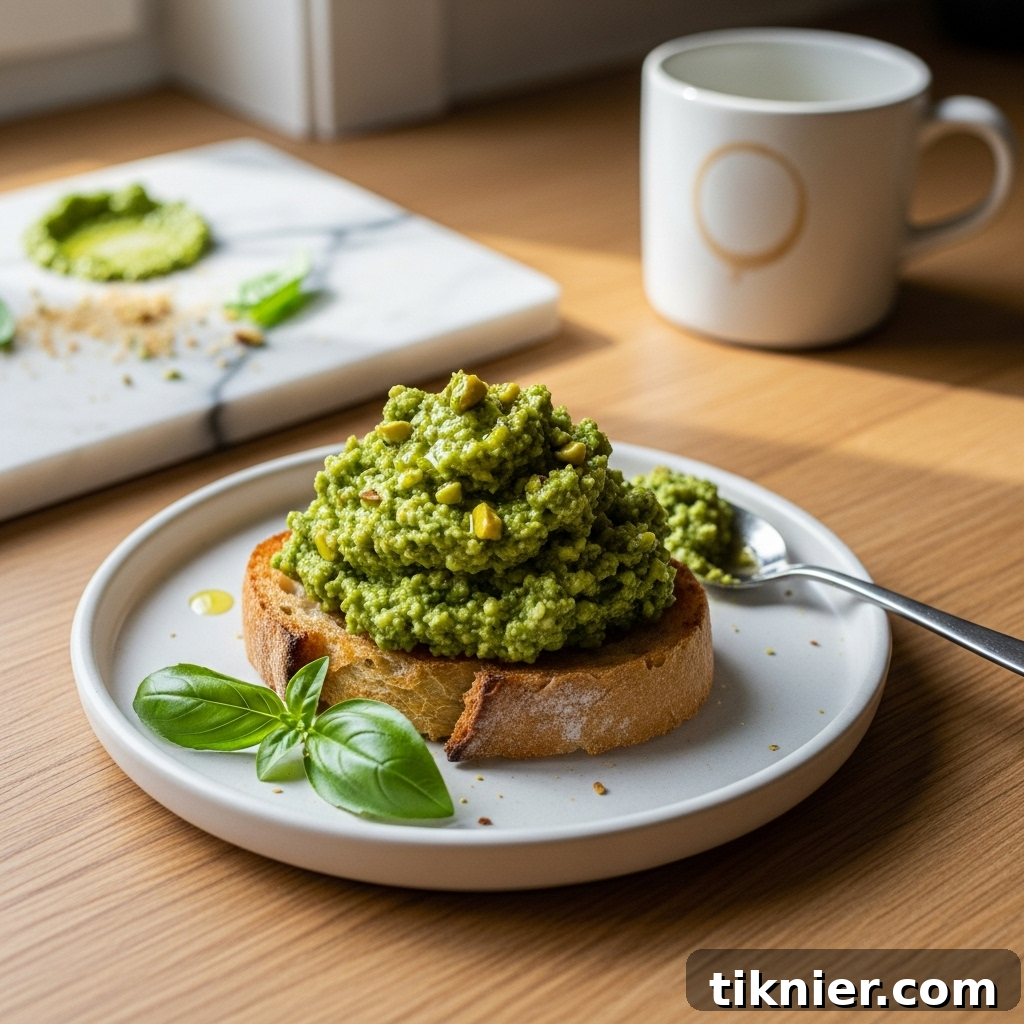
Description: A remarkably vibrant, exceptionally creamy pesto featuring an innovative twist. Toasted pistachios and savory white miso paste combine to create a uniquely delicious and umami-rich sauce that effortlessly elevates any dish, from simple pasta to elegant grilled chicken.
Yield: Approximately 1.5 cups | Category: Sauce | Cuisine: Italian-Inspired (with Japanese influence)
Prep Time: 10 minutes | Cook Time: 5 minutes
Ingredients
- 2 cups fresh basil leaves, packed firmly
- 1/2 cup raw, shelled pistachios
- 1/2 cup freshly grated Parmigiano-Reggiano cheese (from a block)
- 2 large cloves garlic, peeled
- 1 teaspoon white (shiro) miso paste
- 1 tablespoon fresh lemon juice
- 1/2 cup extra-virgin olive oil, plus additional as needed for consistency
- 1/4 teaspoon fine sea salt
- 1/4 teaspoon freshly ground black pepper
Instructions
- Toast Pistachios: In a dry skillet over medium heat, toast the raw pistachios for 3-5 minutes, stirring frequently, until fragrant and lightly golden. Immediately transfer to a plate to cool completely.
- Form Base Paste: Once cooled, add the pistachios, grated Parmigiano-Reggiano, peeled garlic, miso paste, and lemon juice to a food processor. Pulse several times until the mixture is coarsely chopped and crumbly.
- Add Basil: Add all the packed fresh basil leaves to the food processor. Pulse 5-7 times more, stopping to scrape down the sides with a spatula as needed, until the basil is finely chopped and fully incorporated. Avoid over-processing.
- Emulsify with Olive Oil: With the food processor running on a low setting, slowly and steadily stream in the extra-virgin olive oil through the feed tube until the pesto is smooth, creamy, and beautifully emulsified.
- Season and Adjust: Turn off the processor. Add the fine sea salt and freshly ground black pepper. Give it one or two quick pulses to combine. Taste and adjust seasonings as desired (more salt, lemon, or cheese). If the pesto is too thick, blend in another tablespoon of olive oil until the desired consistency is achieved.
Notes
For the most exceptional results, prioritize high-quality ingredients. This includes truly fresh, vibrant basil, genuine Parmigiano-Reggiano grated from a block, and a superior extra-virgin olive oil. To store leftovers, transfer the pesto to an airtight container, gently press it down, and pour a thin layer of olive oil over the surface to prevent oxidation. It will keep well in the refrigerator for up to one week.
Servings: 12 (approx. 2 tbsp per serving) | Calories: 120 kcal | Fat: 12g | Carbohydrates: 2g | Protein: 3g
5 Frequently Asked Questions About This Pistachio Miso Pesto
Here are comprehensive and straightforward answers to some of the most common questions I receive regarding this unique pistachio miso pesto recipe.
Why does my homemade pesto sometimes taste bitter?
A bitter flavor is a common challenge many home cooks face when preparing pesto, and there are typically a few identifiable culprits. The most frequent reason is often related to over-processing the delicate basil leaves. The blades of a food processor, especially when running for extended periods, generate heat. This heat can bruise the basil leaves, causing them to release polyphenols, which are bitter-tasting compounds. This is precisely why I emphasize pulsing the basil just until it’s finely chopped, rather than allowing the machine to run continuously, which can generate excessive heat.
Another potential source of bitterness can be the quality or type of olive oil used. Some lower-quality or particularly robust, peppery extra-virgin olive oils can naturally possess a somewhat bitter finish. When these oils are rapidly emulsified at high speed in a food processor, these inherent bitter notes can become significantly more pronounced. Opting for a milder, fruitier, and high-quality extra-virgin olive oil can significantly mitigate this issue. Lastly, the garlic itself might be a factor. If a garlic clove has started to sprout a small green germ in its center, that germ can be quite bitter. Carefully removing this germ before adding the garlic to your food processor can make a noticeable difference in the final taste of your pesto.
How can I ensure my pesto maintains its vibrant green color?
Preserving that stunning, vivid green color in your pesto is primarily about preventing oxidation, which occurs when the delicate, cut basil is exposed to air. My initial line of defense within this recipe is the addition of fresh lemon juice. The acid in the lemon juice acts as a natural antioxidant, helping to stabilize the chlorophyll in the basil and maintain its bright hue. Another highly effective trick, often employed by professional chefs, is to briefly blanch the basil leaves before using them. To do this, simply immerse the basil in boiling water for approximately 10-15 seconds, then immediately transfer them into a bowl of ice water to halt the cooking process. Ensure they are thoroughly patted dry before adding them to your food processor.
During the pesto-making process, adding the basil as one of the last ingredients and processing it for the shortest amount of time necessary will also help. Once the pesto is complete, the most critical step for maintaining its vibrant green color during storage is to create an effective barrier against air exposure. Before sealing your airtight container, pour a thin, protective layer of extra-virgin olive oil over the entire surface of the pesto. This oil layer acts as a physical shield, preventing the pesto from coming into direct contact with the air in the jar, thereby keeping it looking fresh and beautifully green for much longer.
Is it possible to make this pistachio pesto without a food processor?
Absolutely, it is entirely possible to make this delicious pistachio miso pesto without a food processor. While a food processor undoubtedly offers the quickest and most convenient method, it is certainly not the only way. The most traditional Italian method for making pesto involves using a mortar and pestle, which yields a wonderfully rustic texture and releases the flavors in a unique way. To achieve this, you would begin by crushing the garlic cloves with a pinch of salt until they form a smooth paste. Next, you would add the toasted pistachios and grind them down, followed by the fresh basil leaves, crushing them against the sides of the mortar until they begin to release their fragrant oils. Finally, you would stir in the grated cheese and then slowly drizzle in the extra-virgin olive oil, continuing to mix until a cohesive sauce forms.
If you don’t possess a mortar and pestle, a high-powered blender can also be utilized. The main challenge with a blender is to avoid overheating the sauce, which can occur due to the high-speed blades. You may find it beneficial to add a small amount of the olive oil earlier in the blending process to help the ingredients move more freely and prevent them from getting stuck. Be sure to use a low speed and frequently stop to scrape down the sides of the blender jar. The resulting texture might be slightly smoother and more uniform than pesto made in a food processor or with a mortar and pestle, but it will still be incredibly flavorful and satisfying.
What distinctly separates this pistachio miso pesto from classic Genovese pesto?
Classic pesto, specifically Pesto alla Genovese, is meticulously defined by its specific set of core ingredients: fresh basil, garlic, pine nuts, Parmigiano-Reggiano or Pecorino Romano cheese, and extra-virgin olive oil. This traditional rendition offers a fresh, intensely herbal, and often subtly peppery flavor profile, with the pine nuts contributing a delicate, buttery background note that enhances the overall richness. My innovative recipe, however, intentionally modifies two of these fundamental components to craft a sauce with a noticeably distinct character, while still respectfully honoring the essence and spirit of the original beloved creation.
Firstly, the substitution of pine nuts with pistachios results in a significantly richer, creamier texture and a more pronounced, slightly sweeter nutty flavor. This exchange imbues the sauce with a sense of greater luxury and a deeper, more complex mouthfeel. However, the most profound difference comes from the strategic inclusion of white miso paste. Miso introduces a deep, foundational savory flavor known as umami, a taste profile that is inherently absent in classic pesto. This umami addition creates an extra layer of complexity, imparting a salty depth that perfectly complements the existing flavors of the cheese and nuts. It makes the pesto taste inherently richer, more balanced, and profoundly satisfying without ever overpowering the fresh, herbaceous quality of the basil. It is truly a modern, globally inspired evolution of a traditional Italian favorite, offering a captivating new experience for the palate.
Is making my own pesto at home a more economical choice?
That’s an excellent and very practical question, and the answer can be somewhat nuanced. When you initially consider the upfront cost of purchasing all the individual ingredients, especially if you don’t typically keep them stocked in your pantry, it can sometimes appear more expensive than simply buying a small jar of pre-made pesto from the grocery store. High-quality extra-virgin olive oil, a wedge of authentic Parmigiano-Reggiano, and shelled pistachios can indeed represent a significant initial investment.
However, it’s crucial to consider both the quantity and, more importantly, the unparalleled quality you receive for your expenditure. A small, often high-quality jar of refrigerated pesto from a specialty store can be surprisingly pricey for the amount it contains. With a comparable monetary outlay for fresh, premium ingredients, you can typically produce a much larger batch of homemade pesto. More significantly, the difference in quality and flavor is simply incomparable. Pesto made with truly fresh basil, freshly grated, genuine cheese, and your chosen superior olive oil boasts a flavor that is brighter, more vibrant, intensely aromatic, and far superior to any product that has been sitting on a shelf, even in the refrigerated section. Therefore, while the initial cost might seem higher, the exceptional value in terms of both superior flavor and greater volume makes homemade pesto a clear and resounding winner in my culinary philosophy.
Explore These Delightful Recipes Next
If you’ve thoroughly enjoyed the fresh, bold, and unique flavors of this pistachio miso pesto, I am confident you will adore some of my other favorite recipes. Each one is crafted with the philosophy of transforming simple, accessible ingredients into something truly special and memorable for your family and cherished friends.
- Easy Dinner Ideas That Taste Great: Are you constantly searching for more simple yet incredibly impressive meal ideas? This extensive collection is brimming with my tried-and-true, go-to recipes, perfectly suited for those busy weeknights when you still desire a delicious, comforting, and home-cooked dinner without the fuss.
- Cheap Meal Ideas & Budget-Friendly Recipes: Creating your own flavorful sauces like this pesto is an ingenious way to save money while still achieving extraordinary taste. This curated list provides even more inventive ideas for crafting amazing, satisfying meals that won’t strain your budget.
- Easy Breakfast Ideas: Don’t forget, this versatile pesto isn’t exclusively for dinner! Try a small, zesty spoonful on your morning scrambled eggs or generously spread it on avocado toast for an unexpected burst of flavor. For even more inspiration on how to kickstart your day with delicious and effortless meals, be sure to explore my favorite easy breakfast recipes.