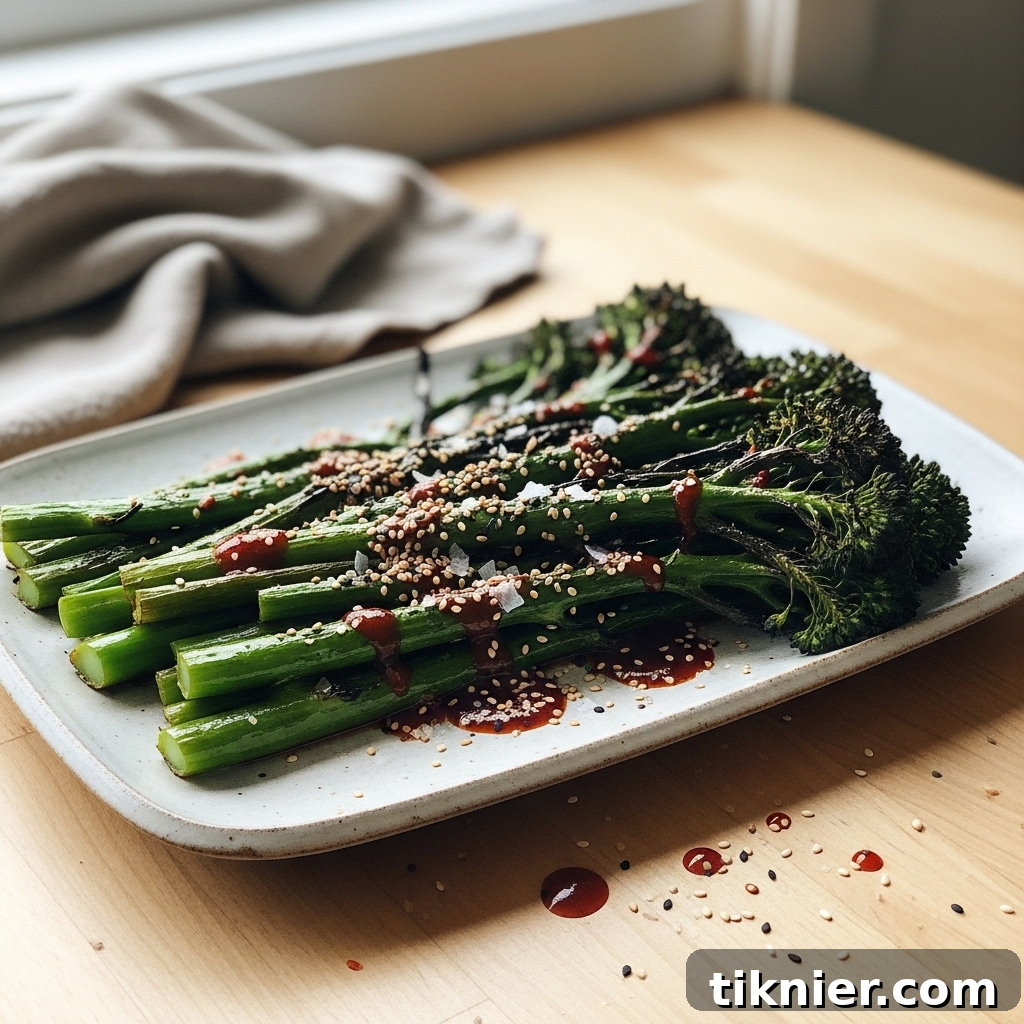
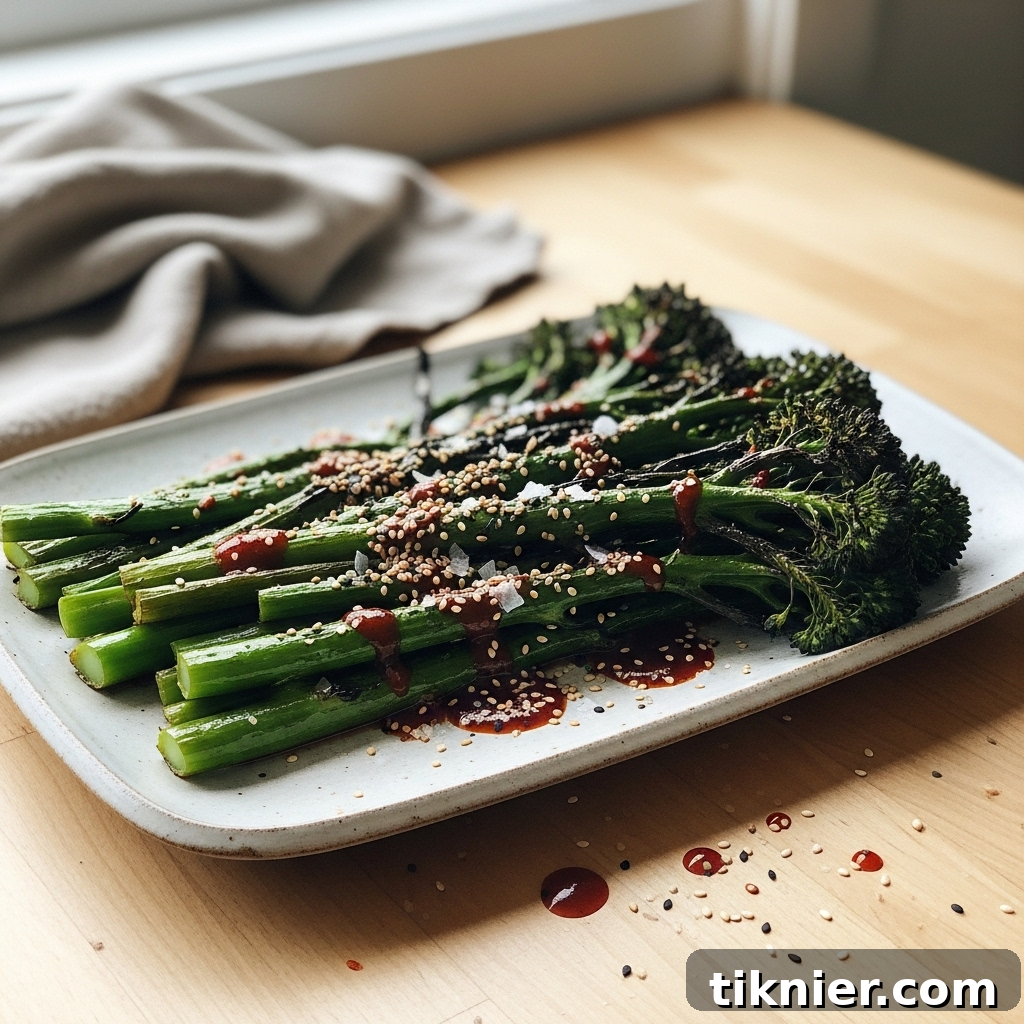
Prepare to elevate your vegetable game with what I confidently declare is the most sensational charred broccolini recipe you will ever encounter. This isn’t just a side dish; it’s a culinary revelation, a harmonious blend of smoky, sweet, spicy, and deeply savory flavors that will leave a lasting impression on your palate.
My journey to perfecting this dish began at one of those chic, new-Southern eateries downtown. The broccolini served there was delicious – crisp, tender, and beautifully smoky. Yet, something was missing; it lacked that indescribable spark, that elusive magic that makes a dish truly unforgettable. I craved a deeper complexity, a sauce with soul, not just a simple seasoning.
My culinary quest began the moment I returned home. While charring the broccolini to perfection was straightforward – a blazing hot oven and a preheated pan doing most of the work – the real challenge lay in crafting a sauce that transcended the ordinary. Lemon and garlic felt too predictable, and balsamic glaze, while classic, felt a little dated for the vibrant creation I envisioned. Then, inspiration struck in the form of gochujang, the versatile Korean fermented chili paste I had on hand. Its unique balance of savory, sweet, and spicy notes was compelling. What if I paired this powerhouse Korean ingredient with the rich, nutty depth of brown butter, a quintessential French technique? The fusion was nothing short of extraordinary. The brown butter elegantly mellowed the gochujang’s heat, while a splash of rice vinegar and a hint of maple syrup wove all the elements into a cohesive, dazzling flavor profile. This was the vibrant, Southern-meets-global twist the broccolini had been waiting for.
Jump to the Full Recipe Card!
Why This Gochujang Brown Butter Charred Broccolini Recipe Stands Out
This isn’t just another roasted vegetable recipe; it’s a testament to how simple ingredients, when paired thoughtfully and prepared with a touch of ingenuity, can create a truly extraordinary dining experience. The magic of this particular Gochujang Brown Butter Charred Broccolini lies in a few critical components and techniques that elevate it far beyond the average side dish.
Firstly, the act of charring itself is transformative. High-heat roasting brings out the natural sugars in broccolini, creating intensely flavorful caramelized edges and a delightfully tender-crisp texture. Broccolini, with its long, slender stems and delicate florets, is ideally suited for this method, emerging from the oven with a perfect balance of smoky bitterness and inherent sweetness. This beautifully charred base provides the ideal canvas for our bold, complex sauce.
Secondly, the sauce is where the true brilliance unfolds. The concept of combining a rich fat with a spicy, aromatic element is a culinary cornerstone found across various global cuisines, and it consistently delivers. Here, we harness the incredible depth of gochujang, a fermented Korean chili paste that has rightfully gained international acclaim. Gochujang offers much more than just heat; it contributes a profound umami, a subtle sweetness, and a complex savory character that is utterly addictive. Marrying this with the lusciousness of butter creates a sauce that feels both comfortingly familiar and exhilaratingly exotic.
However, my unique twist takes this concept to new heights. The “secret weapon” in this recipe is not one, but two, key components. The first is the use of **brown butter**, or beurre noisette. This classic French technique involves cooking unsalted butter until its milk solids toast to a golden, nutty perfection. This process imparts an incredible depth, aroma, and flavor that regular melted butter simply cannot replicate. It adds a sophisticated richness that forms the perfect foundation for our sauce.
The second, and arguably the most distinctive, element is **toasted black sesame paste (neri goma)**. While many recipes might suggest a sprinkle of sesame seeds for garnish, integrating the paste directly into the sauce is a game-changer. Neri goma offers a deeply earthy, profoundly nutty flavor that is far more intense than its white sesame counterpart. It adds a luxurious silkiness to the sauce and introduces a background note of subtle bitterness that masterfully cuts through the richness of the brown butter and the spice of the gochujang. This addition provides a mysterious depth, leaving your guests wondering about the secret ingredient that makes this dish so remarkably special.
Essential Ingredients for Gochujang Brown Butter Charred Broccolini
The beauty of this dish truly lies in the synergistic interplay of a select few, high-quality ingredients. Each item on this list contributes a vital layer of flavor and texture, ensuring a truly unforgettable culinary experience. While some ingredients might seem specialized, they are increasingly accessible and absolutely worth seeking out for the unparalleled taste they bring to the table. For optimal results, prioritizing quality, especially for the butter and flavor pastes, is paramount.
My signature addition, the **toasted black sesame paste (neri goma)**, is what sets this recipe apart from any other. It’s important to note that neri goma is distinctly different from tahini, which is typically made from raw or lightly toasted white sesame seeds. Black sesame paste boasts a much deeper, richer, and more intense nutty flavor profile. It imparts a profound earthy quality and a luxurious creaminess that beautifully complements the brown butter and expertly balances the spicy kick of the gochujang. You can generally find this ingredient at well-stocked Asian markets, specialty food stores, or through online retailers. A small jar will go a long way in your kitchen.
Here’s a comprehensive list of everything you’ll need to create my exquisite Gochujang Brown Butter Charred Broccolini:
- 1 lb broccolini, ends trimmed: Choose fresh, firm broccolini with vibrant green florets for the best roasting results.
- 1 tbsp avocado oil or other neutral high-heat oil: Avocado oil is ideal for its high smoke point, ensuring your broccolini chars beautifully without burning prematurely. Olive oil can also work, but avocado or grapeseed is preferred.
- 1/2 tsp kosher salt: Essential for seasoning the broccolini and drawing out its natural flavors during roasting.
- 1/4 tsp black pepper: A touch of freshly ground black pepper adds a subtle warmth and aroma.
- 4 tbsp unsalted butter: Opt for a high-quality, European-style unsalted butter if possible. Its higher fat content means more milk solids to brown, yielding a richer, more intensely nutty brown butter flavor.
- 2 cloves garlic, finely minced: Fresh garlic is crucial for aromatic depth in the sauce. Mince it finely to ensure its flavor is evenly distributed.
- 2 tbsp gochujang (Korean chili paste): Gochujang is available in various heat levels (mild, medium, hot). Select one that aligns with your spice preference. Be aware that brands can also differ in sweetness and saltiness, so a quick taste test can help you decide if minor adjustments are needed for the sauce.
- 1 tbsp toasted black sesame paste (neri goma): This is the star of the show for its unique nutty, earthy, and deep umami notes. As mentioned, it’s not interchangeable with regular tahini.
- 1 tbsp soy sauce or tamari: Provides essential savory depth and umami. Use tamari for a gluten-free option without compromising on flavor.
- 1 tbsp rice vinegar: A crucial acidic element that brightens the rich sauce, preventing it from feeling heavy and balancing the sweetness and spice.
- 2 tsp honey or maple syrup: A touch of natural sweetness is vital to balance the gochujang’s spice and the sauce’s savory notes, creating a well-rounded flavor profile.
- 1/2 tsp toasted sesame oil: Added at the very end as a finishing oil, it contributes a potent, aromatic nutty fragrance.
- Toasted white and black sesame seeds, for garnish: These add a delightful textural contrast and visual appeal.
- Flaky sea salt, for garnish: A final sprinkle enhances all the flavors and provides a satisfying crunch.
Step-by-Step Instructions: Crafting Your Gochujang Brown Butter Charred Broccolini
While this dish exudes gourmet sophistication, the actual process is remarkably straightforward and comes together quickly. The key to success lies in mindful timing and precise execution, ensuring every component is prepared to perfection. By having your sauce ingredients prepped while the broccolini roasts, everything will be hot, fresh, and ready to be united in a spectacular symphony of flavors.
Step 1: Prepare and Roast the Broccolini for Optimal Char
Begin by preheating your oven to a robust 425°F (220°C). A high oven temperature is non-negotiable for achieving that coveted char and caramelization on the broccolini, preventing it from merely steaming. While the oven heats, arrange your trimmed broccolini on a large baking sheet. This “large baking sheet” detail is crucial: you want the broccolini spread in a single, even layer with ample space between each piece. Overcrowding will trap steam, resulting in limp, steamed vegetables rather than crispy, charred florets. Drizzle the broccolini directly on the pan with avocado oil, then sprinkle generously with kosher salt and black pepper. Use your hands to thoroughly toss and coat every stalk, ensuring even seasoning and oil distribution for maximum crispiness.
Step 2: Achieve the Perfect Charred Texture
Slide the baking sheet into the preheated oven and roast for approximately 15 to 20 minutes. The exact timing will depend on the thickness of your broccolini stems and your oven’s calibration. About halfway through the roasting time, use a pair of tongs to carefully flip the broccolini. This ensures both sides achieve that beautiful, dark char. You’re aiming for tender-crisp stems that still offer a slight bite, and florets that are deeply browned, almost blackened in spots. Don’t shy away from that char – it’s where much of the incredible smoky flavor resides!
Step 3: Master the Art of Brown Butter (Beurre Noisette)
During the final 10 minutes of the broccolini’s roasting time, turn your attention to the sauce, starting with the foundation: brown butter. Select a small, light-colored saucepan for this step; the light interior is essential for observing the subtle color changes of the milk solids and preventing them from burning. Melt the unsalted butter over medium heat. It will first melt, then begin to foam. Continue cooking, gently swirling the pan every 30 seconds or so. After about 4 to 6 minutes, the foam will subside, and you’ll start to see tiny golden-brown specks forming at the bottom of the pan. Simultaneously, your kitchen will fill with an incredibly inviting nutty aroma. This is the precise moment you’re looking for. Stay vigilant, as brown butter can transition from perfectly toasted to burnt in a matter of seconds.
Step 4: Artfully Build the Rich Gochujang Sauce
The instant those milk solids reach a beautiful hazelnut-brown color, immediately remove the pan from the heat. The residual heat will continue the cooking process. Add your finely minced garlic to the hot brown butter and swirl the pan for about 30 seconds; the garlic will become fragrant almost instantly. Next, whisk in the gochujang, toasted black sesame paste, soy sauce, rice vinegar, and honey. Continue whisking vigorously until the sauce is completely smooth, glossy, and beautifully emulsified. It should have a thick, cohesive, glaze-like consistency, vibrant in color and rich in aroma.
Step 5: Combine and Coat for Maximum Flavor
By now, your broccolini should be perfectly charred and ready to be removed from the oven. Without delay, transfer the hot broccolini directly from the baking sheet into a large mixing bowl. Speed is key here; you want the broccolini to be piping hot. Pour the magnificent gochujang brown butter sauce generously over the hot broccolini. Using tongs, gently yet thoroughly toss everything together, ensuring every single piece of broccolini is lavishly coated in the rich, glossy sauce. The heat from the broccolini will further warm and intensify the sauce’s fragrant notes.
Step 6: Garnish and Serve Immediately for Peak Enjoyment
Carefully transfer the sauced broccolini to your most appealing serving platter. To add an extra layer of nutty aroma and visual appeal, drizzle with a touch of toasted sesame oil. Finish with a generous sprinkle of both toasted white and black sesame seeds for delightful textural contrast, and a final flourish of flaky sea salt to make all the complex flavors truly pop. This dish is undeniably at its best when served hot and fresh, allowing the crisp char of the broccolini and the warm, luscious sauce to be savored in their prime.
Creative Ways to Serve Gochujang Brown Butter Charred Broccolini
This Gochujang Brown Butter Charred Broccolini is so robustly flavored and visually stunning that it can easily command attention as the centerpiece of a meal, yet it also excels as an incredibly versatile and harmonious supporting player. Its bold, spicy, nutty, and umami-rich profile makes it an ideal accompaniment that can transform a simple weeknight dinner into a gourmet experience or impress guests at a sophisticated dinner party. The secret to perfect pairing is to match it with main courses that can hold their own against its distinctive character without being completely overwhelmed.
I often find that its complexity means you don’t need an overly fussy or elaborate main dish. Let the broccolini be the star that brings the excitement and innovative flavor to your plate. It’s a remarkably effective way to infuse an ordinary meal with a chef-inspired touch, all with minimal additional effort.
Here are some of my favorite and most recommended ways to serve this exceptional dish:
- As a Dynamic Side to Grilled Meats: The smoky char of perfectly grilled steak, succulent pork chops, or tender chicken thighs creates a natural and irresistible synergy with the charred broccolini. The rich, spicy, and savory gochujang brown butter sauce acts as both a vibrant side dish and a flavorful condiment, enhancing every bite of your protein.
- A Sophisticated Partner to Seared Fish: Pair this broccolini with a beautifully seared fillet of salmon, a delicate piece of sea bass, or perfectly cooked scallops. The bright acidity from the rice vinegar in the sauce provides a brilliant counterpoint to the richness of the fish, creating a balanced and elegant meal.
- Elevated Over Grains for a Hearty Meal: For a supremely satisfying vegetarian main course or a more substantial side, spoon the broccolini, along with all its delectable sauce, over a bed of fluffy steamed rice, nutritious quinoa, or earthy farro. The grains will absorb any extra sauce, ensuring that not a single drop of flavor is wasted. For an added layer of richness and protein, consider topping it with a perfectly fried or poached egg.
- Integrated into a Vibrant Grain Bowl: Construct a colorful and nutrient-packed grain bowl by starting with your favorite base grain, adding a generous portion of this broccolini, and then incorporating other complementary components such such as quick-pickled carrots, crisp edamame, and a protein of your choice (like grilled tofu, chicken, or chickpeas) for a complete and highly customizable meal.
- As Part of an Asian-Inspired Tapas Spread: When entertaining, present this broccolini alongside other small plates like potstickers, spring rolls, or a crisp cucumber salad for a delightful and varied culinary journey.
When plating, always remember to scrape every last bit of that luscious sauce from the mixing bowl and drizzle it generously over the top of the broccolini. More sauce equals more flavor! The dish looks particularly striking when served on a simple white platter, allowing the dark, glossy sauce and the vibrant green of the broccolini to truly stand out and entice the eye.
Storing and Reusing Gochujang Brown Butter Charred Broccolini Leftovers
Truth be told, this dish is so incredibly delicious that leftovers are a rare occurrence in my home! It truly shines brightest when served immediately, fresh from the oven, with the broccolini florets still exhibiting their perfect crisp char and the sauce warm, glossy, and intensely fragrant. However, should you find yourself with any extra, rest assured that it stores and reheats beautifully. While the texture will inevitably soften slightly upon reheating, the incredible flavor profile remains wonderfully intact.
Proper storage techniques are paramount to preserving as much of the original quality as possible. The goal is to cool the broccolini quickly and transfer it to the refrigerator promptly, ensuring both safety and sustained deliciousness. Avoid leaving it at room temperature for extended periods after your meal.
Here’s the optimal way to handle any delicious remnants:
- Storage Guidelines: Allow the broccolini to cool down to room temperature. Once cooled, transfer it to an airtight container. Store this container in the refrigerator, where the broccolini will remain fresh and flavorful for up to 3 days. It’s entirely normal for the sauce to thicken and solidify somewhat in the cold; it will loosen up beautifully upon reheating.
- Reheating in the Oven or Air Fryer (Recommended): This is my preferred method for reheating, as it does the best job of reviving some of the original crispiness. Spread the leftover broccolini in a single layer on a baking sheet. Reheat it in a preheated 375°F (190°C) oven or an air fryer for 5 to 8 minutes, or until it is thoroughly heated through and the edges begin to crisp up once more. Keep a close eye on it to prevent overcooking.
- Reheating in a Skillet: Alternatively, you can gently reheat the broccolini in a nonstick skillet over medium heat. If the sauce appears too thick or sticky, add a tiny splash of water (about a teaspoon) to help it loosen and coat the broccolini as it warms. Stir frequently to ensure even heating.
- Creative Uses for Cold Leftovers: Don’t underestimate the deliciousness of this broccolini served cold! Chop up the chilled leftovers and toss them into a vibrant green salad for a powerful burst of flavor. They also make an excellent addition to cold noodle salads or even a quick rice bowl straight from the fridge. The flavors remain fantastic, offering a convenient and tasty option.
One of my absolute favorite ways to repurpose any remaining broccolini is to chop it finely and scramble it with eggs for a truly spectacular and savory breakfast. The spicy, savory, and nutty flavors provide an incredibly unique and satisfying start to the day. This ensures that every single delicious bite is enjoyed and nothing goes to waste.
Substitutions & Variations for Gochujang Brown Butter Charred Broccolini
One of the most rewarding aspects of cooking at home is the freedom to adapt and personalize a recipe, making it uniquely yours. While I wholeheartedly believe this Gochujang Brown Butter Charred Broccolini is outstanding as written, I understand that sometimes you need to work with available ingredients, accommodate dietary restrictions, or simply crave a different twist. This recipe is wonderfully forgiving and offers a fantastic canvas for creative modifications, yielding consistently delicious results.
Whether you’re looking to swap a vegetable, adjust the heat, or cater to a specific dietary need, there are numerous options to explore. Just bear in mind that altering core ingredients like gochujang or black sesame paste will naturally shift the final flavor profile, but you can still create something absolutely fantastic and uniquely tailored to your taste. Consider this recipe a versatile template for crafting an irresistibly addictive vegetable side dish.
Here are some thoughtful substitutions and exciting variations you might like to explore:
- Alternative Vegetables: If broccolini isn’t available or you’re looking for variety, this incredible sauce pairs beautifully with a range of other roasted vegetables. Excellent alternatives include regular broccoli florets, cauliflower florets, halved Brussels sprouts, or even thick asparagus spears. Remember to adjust the roasting time as necessary, as denser vegetables like cauliflower may require slightly longer.
- Adjusting the Spice Level: For those sensitive to heat, opt for a “mild” variety of gochujang, or reduce the quantity to one tablespoon and increase the honey or maple syrup by a teaspoon to maintain balance. You could also experiment with a milder chili paste like doubanjiang, though this will introduce a slightly different, typically more savory and less sweet, flavor profile.
- Nut-Free Option: While the toasted black sesame paste is fundamental to the unique depth of my version, if you or your guests have a sesame allergy, it can be omitted. The sauce will still be very flavorful, though less complex. As a potential substitute for richness, you could try incorporating a tablespoon of sunflower seed butter (often labeled “sunbutter”) for a different kind of nutty, creamy texture.
- Making it Vegan-Friendly: To transform this decadent dish into a vegan delight, simply swap the unsalted butter for a high-quality vegan butter that is known to brown well (many brands on the market now do!). Additionally, ensure you use maple syrup instead of honey for the sweetener. The results are just as rich and satisfying.
- Boosting the Crunch Factor: For an extra layer of delightful texture, consider sprinkling some toasted peanuts, cashews, or crispy fried shallots over the finished dish, alongside the sesame seeds, just before serving. These additions provide a wonderful contrast to the tender broccolini and creamy sauce.
- Adding a Citrus Zing: For an even brighter finish, a final squeeze of fresh lime or lemon juice just before serving can cut through the richness and add another layer of complexity.
Don’t hesitate to experiment and discover the combinations that you and your family enjoy the most. That’s the true joy and creativity of being in charge of your own kitchen – you have the power to create the perfect dish, time and time again!
Julie’s Gochujang Brown Butter Charred Broccolini
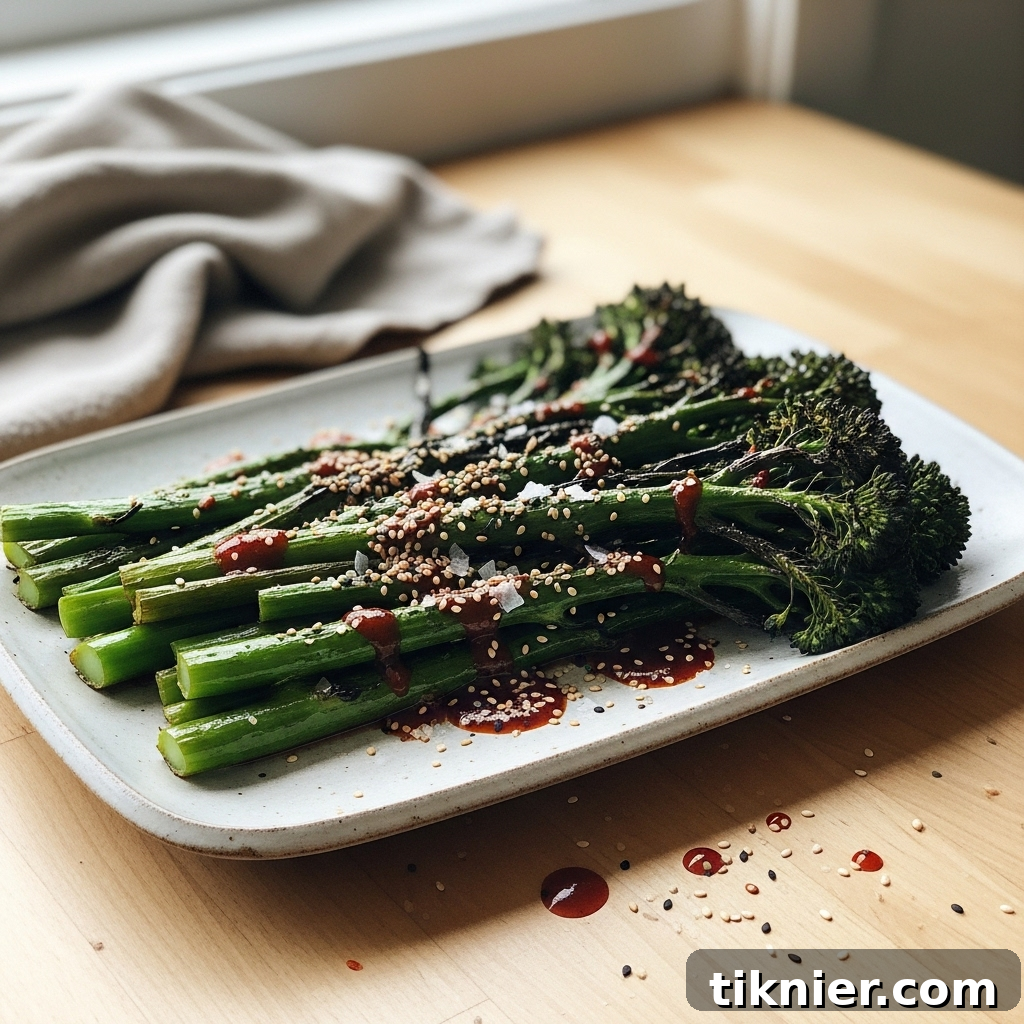
Description: A showstopping side dish featuring tender-crisp charred broccolini tossed in a rich, nutty, and spicy sauce made with brown butter, gochujang, and a secret ingredient: toasted black sesame paste.
Yield: 4 servings | Category: Side Dish | Cuisine: Modern American, Korean-inspired
Prep Time: 10 minutes | Cook Time: 20 minutes
Ingredients
- 1 lb broccolini, ends trimmed
- 1 tbsp avocado oil
- 1/2 tsp kosher salt
- 1/4 tsp black pepper
- 4 tbsp unsalted butter
- 2 cloves garlic, finely minced
- 2 tbsp gochujang (Korean chili paste)
- 1 tbsp toasted black sesame paste (neri goma)
- 1 tbsp soy sauce or tamari
- 1 tbsp rice vinegar
- 2 tsp honey or maple syrup
- 1/2 tsp toasted sesame oil
- Toasted white and black sesame seeds, for garnish
- Flaky sea salt, for garnish
Instructions
- Preheat oven to 425°F (220°C). Toss broccolini on a baking sheet with avocado oil, salt, and pepper. Arrange in a single layer and roast for 15-20 minutes, flipping once, until tender-crisp and charred.
- While broccolini roasts, melt butter in a light-colored saucepan over medium heat. Cook, swirling, for 4-6 minutes until milk solids turn nutty brown.
- Remove from heat and immediately stir in garlic. Whisk in gochujang, black sesame paste, soy sauce, rice vinegar, and honey until smooth.
- Transfer hot roasted broccolini to a large bowl. Pour the sauce over and toss to coat.
- Serve on a platter, drizzled with toasted sesame oil and garnished with sesame seeds and flaky salt.
Notes
For the best flavor, use a good quality butter. Watch the butter carefully as it browns, as it can go from perfect to burnt in a matter of seconds. Adjust the amount of gochujang to your preferred spice level.
Servings: 4 | Calories: 210 kcal | Fat: 16g | Carbohydrates: 14g | Protein: 5g
5 Frequently Asked Questions About Gochujang Brown Butter Charred Broccolini
Here are clear, comprehensive answers to the most common questions I receive regarding this sensational Gochujang Brown Butter Charred Broccolini recipe. These insights will help you achieve perfect results every time and understand the nuances of this unique dish.
What is the best way to prevent my brown butter from burning when making this Gochujang Brown Butter Charred Broccolini?
This is arguably the most critical question, as the margin between beautifully browned, nutty butter and a bitter, scorched mess is incredibly narrow. My absolute top tip is to use a light-colored saucepan—ideally stainless steel or enamel. A dark or nonstick pan makes it incredibly difficult to accurately monitor the color change of the milk solids as they toast, forcing you to rely solely on smell, which can be too late. By using a light-colored pan, you can visually track the progression.
Secondly, commit your full attention to the stove during this step. This is not the time to multitask or step away. Maintain a steady medium heat, avoiding high heat which accelerates burning. As the butter melts and then foams, swirl the pan frequently to ensure even cooking of the milk solids. Once you detect that distinctive nutty aroma and observe the specks at the bottom turning a lovely hazelnut or amber color, remove the pan from the heat immediately. The residual heat in the pan will continue the browning process for a few moments, so it’s always better to err on the side of pulling it off a second too early than a second too late. Having all your other sauce ingredients pre-measured and ready to add quickly will help stop the cooking process effectively once the butter is perfect.
Can I make this Gochujang Brown Butter Charred Broccolini ahead of time for a party or special occasion?
While this dish truly reaches its peak perfection when served immediately after preparation, with the broccolini still hot and crisp, you can certainly do a significant amount of prep work in advance to make entertaining easier. My recommendation is to prepare the components separately and then combine them just before serving. You can wash and trim the broccolini a day or two ahead of time and store it in an airtight container in the refrigerator. More importantly, the gochujang brown butter sauce can be made entirely in advance. Prepare the sauce as directed, let it cool completely, and then transfer it to an airtight container. It will keep beautifully in the refrigerator for up to three days.
When you’re ready to serve, simply roast the broccolini as outlined in the recipe. While the broccolini is in the oven, gently reheat the pre-made sauce in a small saucepan over very low heat, stirring occasionally, until it becomes liquid and warm. Be careful not to let it boil. Once the broccolini emerges from the oven, hot and charred, immediately toss it with the warmed sauce and garnish as usual. This method ensures that the broccolini retains its crucial crisp texture and inviting warmth, which are key to the dish’s overall appeal.
Where can I purchase toasted black sesame paste for this broccolini recipe?
Toasted black sesame paste, frequently labeled with its Japanese name “neri goma,” can sometimes require a bit of searching, but I promise the unique depth of flavor it imparts makes the effort entirely worthwhile. Your most reliable source will typically be a well-stocked Asian grocery store. Look for it in the aisle alongside other pastes like miso, or near the sesame oils and various sauces. It is commonly sold in small glass jars.
If you don’t have access to a local Asian market, many larger, international supermarkets are increasingly expanding their “international foods” sections and may carry it. Furthermore, the internet is an excellent resource; online retailers such as Amazon or specialty food purveyors often carry multiple brands. When purchasing, it is crucial to ensure the label specifically states “toasted” black sesame paste. This distinction is vital because it’s the toasting process that develops the deep, rich, nutty flavor we desire. It differs from black tahini, which is sometimes made from raw seeds and can have a milder, occasionally more bitter flavor profile. The toasted version is what contributes this dish’s signature, complex taste.
Is this Gochujang Brown Butter Charred Broccolini recipe very spicy?
I would characterize the spice level of this dish as a pleasant, well-balanced medium heat. It certainly offers a noticeable kick, but this heat is expertly mellowed and harmonized by the inherent richness of the brown butter, the natural sweetness of the honey or maple syrup, and the savory notes from the soy sauce. As such, it should be very enjoyable for most individuals who appreciate a moderate amount of spice without being overwhelmingly hot. However, it’s important to note that the actual heat intensity can vary considerably depending on the specific brand of gochujang you use, as different brands possess varying levels of spice, sweetness, and saltiness.
If you are particularly sensitive to spice or prefer a milder flavor, I recommend beginning with a slightly reduced amount of gochujang, perhaps starting with one and a half tablespoons instead of the full two. You always have the option to taste the sauce before tossing it with the broccolini and whisk in a little more gochujang if you desire additional heat. Conversely, if you are a dedicated chili enthusiast, feel free to incorporate an extra teaspoon of gochujang or even a pinch of gochugaru (Korean chili flakes) into the sauce to truly amplify the fiery notes. The beauty of this recipe is its excellent adaptability to your personal spice preferences.
What is the difference between broccolini and broccoli rabe?
This is an excellent and frequently asked question, as these two vegetables are often found near each other in grocery stores and can be a source of confusion. Broccolini is a hybrid vegetable, specifically a cross between standard broccoli and Chinese broccoli (also known as gai lan). It is characterized by its long, slender, tender stems and small, delicate florets. Its flavor profile is mild, slightly sweet, and earthy, very similar to traditional broccoli but with a more refined texture. It excels when roasted, as its stems become beautifully tender and its florets achieve a wonderfully crispy, charred finish.
Broccoli rabe, conversely, is not botanically related to broccoli at all. It is actually a member of the turnip family (Brassica rapa, var. ruvo). It features thinner stalks, much smaller florets, and a generous amount of leafy greens. The flavor of broccoli rabe is significantly distinct; it is considerably more pungent and possesses a pronounced, often bitter taste that can be an acquired preference for some palates. While it is technically possible to use broccoli rabe in a roasted vegetable recipe, its inherent bitterness would dramatically alter the intended flavor profile of this particular dish. For this Gochujang Brown Butter Charred Broccolini recipe, sticking to true broccolini is essential to achieve the desired sweet, nutty, and charred flavor harmony.
Explore More Delicious Recipes
If you thoroughly enjoyed the bold flavors and straightforward techniques featured in this recipe, I’m confident you’ll love these other culinary creations from my kitchen. They embody similar principles of vibrant flavor, innovative combinations, and satisfying results.
- Easy Charred Broccolini Recipe: For those who want to perfect the art of charring, this foundational recipe offers the simplest path to achieving beautifully tender and crisp broccolini every single time, serving as an excellent base for various sauces.
- Easy Brown Butter Miso Bok Choy Recipe: This dish leverages the same magical brown butter technique, but pairs it with the savory, umami-rich notes of miso for an equally incredible and deeply satisfying Asian-inspired side dish that’s both comforting and elegant.
- Easy Hasselback Sweet Potatoes with Brown Butter: Notice a theme developing? Brown butter truly elevates everything it touches! These beautifully sliced sweet potatoes are not only a feast for the eyes but also a true showstopper on any dinner table, showcasing how simple additions can create gourmet results.
I sincerely hope you derive as much pleasure and satisfaction from preparing and enjoying these dishes as I do!