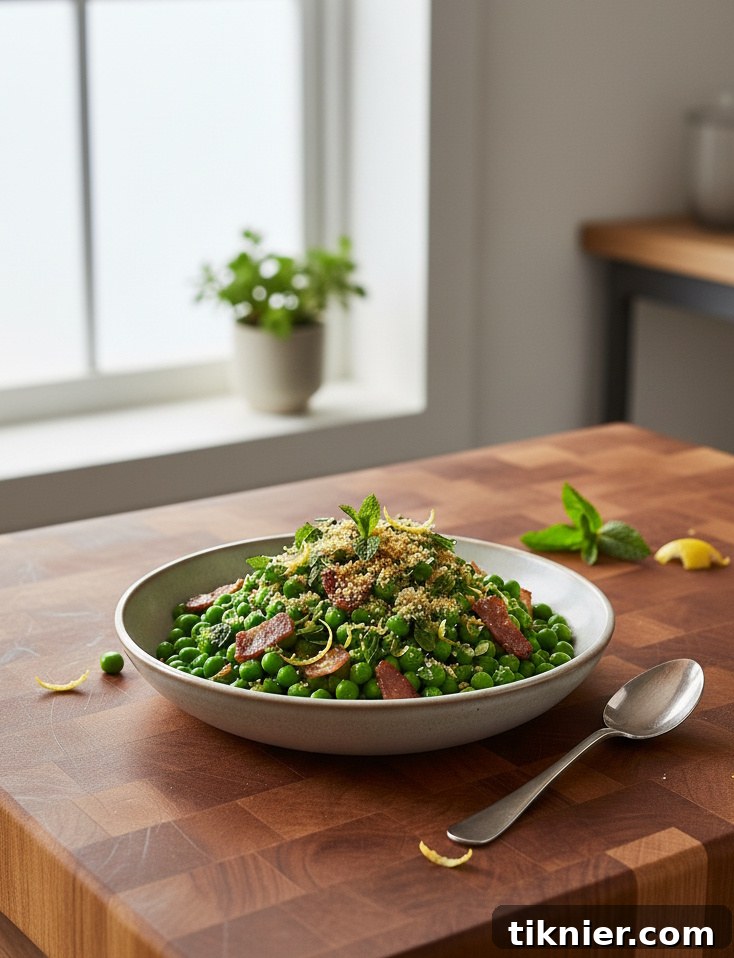
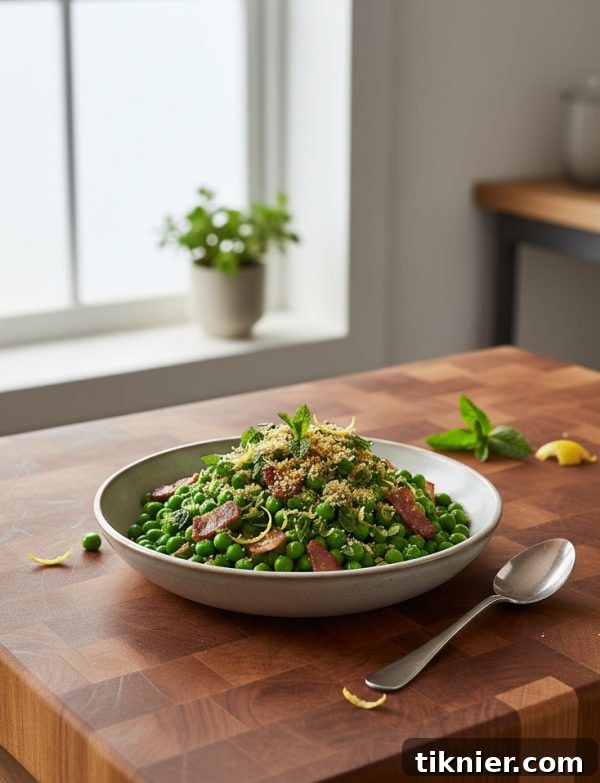
For many of us, sweet peas hold a special place in our culinary memories, often evoking images of childhood dinners. I distinctly recall the small bowl of boiled peas, always prepared in the simplest fashion with just a pat of melted butter, a staple on my plate thanks to my dear mother. While comforting and familiar, it was never a dish that sparked excitement or conversation at the dinner table. It was, quite simply, just peas.
As I ventured into hosting my own gatherings, I quickly realized the transformative power of a truly exceptional side dish. A well-crafted accompaniment doesn’t just fill space; it elevates the entire meal, turning a good dinner into an unforgettable experience. My gaze often fell upon that unassuming bag of frozen peas in my freezer, and a culinary challenge presented itself: how could I reimagine this humble vegetable into something people would genuinely crave? My goal was to create a sweet peas recipe that wasn’t merely fine, but truly spectacular.
My journey began by exploring how to introduce contrasting savory and salty notes to balance the natural sweetness of the peas. Crispy pancetta emerged as the perfect candidate, offering a delicate, rich flavor without overpowering the star ingredient. Yet, something was still missing – a vibrant burst of freshness and an intriguing textural counterpoint. This led to the inspired creation of the lemon-mint gremolata. This simple yet sophisticated topping, composed of perfectly toasted panko breadcrumbs, bright fresh mint, and zesty lemon peel, utterly transforms the dish. Friends, this isn’t just a side of peas; this is a culinary revelation, a testament to how thoughtful touches can breathe new life into classic ingredients.
Today, these Sweet Peas with Pancetta and Lemon-Mint Gremolata have become a beloved fixture at my spring gatherings, a non-negotiable for Easter dinner, and a wonderful way to infuse a special touch into any weeknight meal. It stands as a delicious reminder that even the most traditional dishes possess untapped potential, waiting to be unlocked with a dash of creativity and a sprinkle of passion. Prepare to amaze your guests and delight your family with this extraordinary sweet pea recipe.
Skip to My Special Recipe!
Why This Sweet Peas Recipe Will Become Your New Favorite Side Dish
Sweet peas have been a steadfast companion on American dinner tables for generations. Their inherent sweetness and ease of preparation have cemented their status as a comforting, reliable vegetable side. For decades, the standard preparation involved little more than a quick boil or steam, followed by a simple dressing of butter, salt, and pepper. And while this classic approach certainly has its merits – the natural sweetness of the peas truly does sing alongside the richness of butter – I firmly believe that even the most cherished traditions can benefit from a fresh, innovative perspective. This sweet peas recipe isn’t about discarding the classic; it’s about building upon that dependable foundation with thoughtful layers of flavor and texture that elevate it from a humble accompaniment to a truly unforgettable culinary statement.
The magic begins with the introduction of pancetta, a fundamental game-changer in this sweet peas dish. Unlike bacon, which is typically smoked, pancetta is a salt-cured pork belly that offers a cleaner, purer, and intensely savory pork flavor. This distinction is crucial because pancetta enhances the peas without overwhelming them with a smoky presence. When finely diced and rendered to a perfect crisp, these little morsels provide delightful bursts of salty, crunchy goodness that create an exquisite contrast with the tender, sweet peas. It’s a harmonious interplay that awakens the palate with every bite.
But the true secret weapon, the element that consistently elicits wide-eyed appreciation from anyone who tries this dish, is the exceptional lemon-mint gremolata. A traditional Italian gremolata typically combines fresh parsley, garlic, and lemon zest. My rendition, however, takes an exciting detour, swapping out the parsley for the bright, invigorating coolness of fresh mint and introducing toasted panko breadcrumbs for an utterly irresistible crunch. The mint contributes an unexpected yet delightful freshness that cleanses the palate, while the lemon zest infuses a zippy, acidic brightness that expertly cuts through the richness of the pancetta and butter. The toasted panko, lighter and flakier than regular breadcrumbs, delivers a wonderful, delicate crispness that adds a sophisticated textural dimension. Together, these meticulously chosen elements coalesce into a complex, exciting, and profoundly satisfying side dish that is truly greater than the sum of its parts. This sweet peas recipe isn’t just about ingredients; it’s about crafting an experience.
Essential Ingredients for Extraordinary Sweet Peas
One of the most appealing aspects of this sweet peas recipe is its reliance on a surprisingly short list of simple, high-quality ingredients to achieve something truly spectacular. You won’t need a convoluted shopping list; instead, the focus is on selecting each component thoughtfully and allowing its inherent flavor to shine, creating a symphony of balanced tastes that will impress even the most discerning palates.
At the heart of this dish are, of course, the humble sweet peas. For optimal results, I almost exclusively recommend using frozen peas. These are typically picked and flash-frozen at the absolute peak of their freshness and natural sweetness, often surpassing the quality of “fresh” peas found in most grocery stores, which may have lost some of their vitality during transit and storage. Frozen peas offer consistent quality, vibrant color, and perfect tenderness every single time, making them a reliable choice for this recipe.
The ingredient responsible for that irresistible savory crunch and depth of flavor is pancetta. For the best texture and control over the dice size, I strongly suggest purchasing pancetta from the deli counter as a single, thick slice. This allows you to finely dice it yourself, ensuring each piece crisps beautifully and contributes perfectly to the dish. For the gremolata, the choice of breadcrumb is paramount: insist on panko breadcrumbs. Panko’s unique, flaky structure results in a much lighter, crispier, and more delicate crunch when toasted compared to denser, regular breadcrumbs. Finally, the vibrant character of the gremolata demands fresh mint and fresh lemon zest. There is simply no substitute for the bright, aromatic, and invigorating flavors that these fresh ingredients provide. Dried herbs or bottled lemon juice simply won’t deliver the same captivating essence.
- 2 tablespoons olive oil, divided: Used for toasting panko and sautéing shallots, providing a healthy fat base.
- 1/4 cup panko breadcrumbs: The secret to the gremolata’s signature light, crispy texture.
- 1/4 cup finely chopped fresh mint: Adds an incredibly refreshing, aromatic counterpoint to the sweetness of the peas and richness of the pancetta.
- 1 teaspoon lemon zest: Provides a bright, zesty acidity that cuts through richness and invigorates the palate.
- 3 ounces pancetta, finely diced: Delivers savory depth and a delightful crispy texture.
- 1 medium shallot, finely minced: Offers a mild, sweet, and aromatic base, building foundational flavor without being overpowering.
- 1 (16-ounce) bag frozen sweet peas: The star of the dish, providing natural sweetness and vibrant color.
- 1/4 cup low-sodium chicken or vegetable broth: Helps to steam the peas to perfection and creates a light, flavorful sauce.
- 1 tablespoon unsalted butter: Adds a final touch of creamy richness and helps emulsify the sauce.
- 1/2 teaspoon kosher salt: Essential for seasoning and enhancing all the flavors.
- 1/4 teaspoon freshly ground black pepper: Provides a subtle peppery warmth.
Each ingredient plays a pivotal, carefully considered role, contributing to a harmonious balance of sweet, savory, fresh, and rich notes. From the mild, aromatic base of the shallot to the broth that gently steams the peas, and the finishing swirl of butter that unites everything with creamy elegance, this sweet peas recipe is a masterclass in balanced, flavorful simplicity.
Step-by-Step Instructions For Crafting Your Signature Sweet Peas
Despite its gourmet presentation and complex flavor profile, this sweet peas recipe comes together with surprising speed and ease, making it a perfect candidate for a weeknight indulgence while still being elegant enough for entertaining. The key to effortless execution lies in diligent preparation – a concept known as “mise en place” among chefs. Before you even think about turning on the stove, ensure all your ingredients are prepped: finely chop your fresh mint, zest your lemon, and dice your pancetta and shallot. This proactive approach will allow you to move seamlessly through each step, ensuring a stress-free cooking experience and perfect results every time.
1. Master the Lemon-Mint Gremolata
This vibrant topping is what truly sets this sweet peas dish apart, so let’s give it the attention it deserves. Begin by placing a small, dry skillet over medium heat. Once it’s adequately warm, add one tablespoon of olive oil, allowing it to shimmer gently. Introduce the panko breadcrumbs to the pan. This is a crucial moment where vigilance is key: panko can transition from perfectly golden to regrettably burnt in a matter of seconds. Stay at the stove, stirring frequently and consistently, until the panko achieves a beautiful, even golden-brown color. This transformation typically takes about 2 to 3 minutes. The instant it reaches this desired hue, immediately transfer the toasted panko into a small bowl. Leaving it in the hot pan, even for a moment, risks overcooking. To the warm, crispy panko, add your finely chopped fresh mint and bright lemon zest. Toss everything together gently to combine. Set this “magic dust” aside; it’s the finishing touch that will make your sweet peas famous.
2. Achieve Perfectly Crispy Pancetta
In a medium saucepan or a large skillet, add your finely diced pancetta. Place the pan over medium heat. There’s no need to add any extra oil at this stage; the goal is to allow the pancetta’s fat to slowly render out. This gentle rendering process is precisely what yields those wonderfully crisp, flavorful bits of pancetta. Continue cooking, stirring occasionally, for approximately 5 to 7 minutes, or until the pancetta is beautifully golden and irresistibly crispy. Once it’s reached perfection, use a slotted spoon to carefully transfer the crispy pancetta to a plate lined with a paper towel, allowing any excess fat to drain. Importantly, leave all that incredibly flavorful rendered fat behind in the pan – it is truly liquid gold and will form the delicious base for the next step of our sweet peas recipe.
3. Build the Aromatic Foundation with Shallots
Inspect the amount of rendered pancetta fat remaining in your saucepan. If it appears a little sparse, add the remaining tablespoon of olive oil to the pan. Now, add your finely minced shallot to the fragrant fat. Sauté the shallot over medium heat, stirring periodically, until it becomes wonderfully softened and translucent, which should take about 2 to 3 minutes. This step is fundamental to building the aromatic foundation of your sweet peas dish. The shallot will sweeten and become beautifully fragrant, infusing the cooking oil with its delicate, savory flavor, setting the stage for the peas themselves.
4. Cook the Sweet Peas to Perfection
It’s time for the star of our sweet peas dish! Add the entire bag of frozen sweet peas directly to the saucepan with the sautéed shallots and the flavorful broth. There’s no need to thaw them beforehand. Increase the heat to medium-high. The broth will quickly come to a gentle simmer, creating the perfect steamy environment to cook the peas evenly and tenderly. Stir the peas occasionally to ensure even cooking. They should be heated through and tender, typically within 4 to 5 minutes. Exercise caution to avoid overcooking; the ideal sweet pea should be tender with a slight pop when you bite into it, not mushy.
5. Finish with Butter and Seasoning
Once the sweet peas are perfectly cooked, remove the pan completely from the heat. This is a crucial step to ensure the butter melts beautifully without separating. Add the unsalted butter, kosher salt, and freshly ground black pepper to the peas. Stir gently until the butter is completely melted and has emulsified with the remaining broth, creating a light, glossy, and incredibly flavorful sauce that evenly coats every single pea, enhancing their natural sweetness and vibrancy.
6. Fold In the Crispy Pancetta
Now, gently fold the reserved crispy pancetta back into the perfectly cooked and seasoned sweet peas. We perform this step at the very end to preserve the pancetta’s delightful crispness. This ensures that every bite offers that wonderful textural contrast – tender peas, savory sauce, and the satisfying crunch of pancetta.
7. Garnish and Serve Immediately
Transfer your beautiful Sweet Peas with Pancetta to a warm serving dish. Just before presenting it at the table, generously sprinkle the vibrant lemon-mint gremolata over the top. Serving immediately is paramount; it ensures the panko breadcrumbs retain their delightful crunch and that the fresh mint and lemon zest are at their most fragrant and flavorful. Prepare for compliments and enjoy this exquisite side dish!
How To Serve Your Elevated Sweet Peas
These aren’t your grandmother’s plain boiled peas; they are a culinary triumph, so don’t hesitate to showcase them! While they are undoubtedly simple enough to whip up for a quick weeknight dinner, their vibrant green color and sophisticated flavor profile truly allow them to shine as a standout dish in a more elaborate, festive meal. Their elegance makes them an ideal accompaniment for special occasions and holidays, such as Easter, Thanksgiving, or Christmas, or simply for a luxurious Sunday supper enjoyed with cherished family and friends.
The exquisite balance of sweet, savory, and bright flavors in this sweet peas recipe makes it an incredibly versatile companion for a wide array of main courses. When planning your menu, consider how these peas can complement and elevate the star of your meal. Here are some of my most cherished pairings that truly highlight the dish’s versatility:
- Classic Roasted Chicken or Turkey: The savory notes from the crispy pancetta and the refreshing brightness of the mint create a classic and incredibly harmonious pairing with simply roasted poultry, adding depth and zest.
- Grilled Pork Chops or a Pork Loin Roast: Pork and peas are a timeless culinary combination, and the zesty lemon in the gremolata expertly cuts through the richness of grilled or roasted pork, creating a perfectly balanced bite.
- Pan-Seared Salmon or Halibut: The bright, fresh flavors of the mint and lemon zest are an absolute dream with flaky, delicate fish. For an elegant presentation, you can even serve the perfectly seared fish directly atop a generous bed of these vibrant sweet peas.
- Seared Scallops: For an undeniably elegant and impressive meal, the natural sweetness of perfectly seared scallops is wonderfully enhanced by the salty crunch of pancetta and the invigorating freshness of the herbs.
- Lamb Chops or Rack of Lamb: The robust flavors of lamb are beautifully complemented by the freshness of mint and the savory notes of pancetta, creating a sophisticated pairing.
- Ricotta-Stuffed Pasta (e.g., Manicotti or Lasagna): The lightness of the peas and the brightness of the gremolata provide a wonderful textural and flavor contrast to rich, creamy pasta dishes.
Beyond traditional main course pairings, these sweet peas also lend themselves to creative culinary experimentation. Consider stirring any delicious leftovers into a creamy risotto for an easy, flavorful lunch the next day, or folding them into an orzo pasta salad for a vibrant side dish. They are also absolutely fantastic piled onto toasted crostini that has been spread with a layer of creamy ricotta or goat cheese for a simple yet elegant appetizer that will truly impress. No matter how you choose to serve them, these Sweet Peas with Pancetta and Lemon-Mint Gremolata are unequivocally guaranteed to be a crowd-pleaser and a memorable addition to any meal.
How To Store & Reuse Sweet Peas Leftovers for Maximum Enjoyment
While these sweet peas are truly at their pinnacle of flavor and texture when served immediately after preparation, any leftovers can still be incredibly delicious if stored and reheated with a little strategic foresight. The primary challenge, and one we can easily overcome, is preserving the wonderful contrasting textures we worked so hard to create – specifically, the crispy pancetta and the delightful crunch of the gremolata. A small amount of planning goes a long way in ensuring your leftovers remain just as satisfying.
The golden rule for storing these leftovers is to keep the various components separate whenever possible. If you anticipate having extra portions, it’s best to set aside some of the cooked peas before you incorporate the crispy pancetta and, crucially, before you garnish them with the gremolata. Storing the gremolata separately is absolutely essential to maintaining its crispy integrity.
- Storing the Peas and Pancetta: Once cooled, place the leftover peas and pancetta mixture (if already combined) in an airtight container. Store this in the refrigerator, where it will remain fresh and delicious for up to 3 days.
- Storing the Gremolata: This is a key step! Keep the lemon-mint gremolata in a separate, small, airtight container at room temperature. Storing it in the refrigerator can introduce moisture, which is the nemesis of crispy panko, rendering it soggy. Stored properly at room temperature, the gremolata will retain its satisfying crunch for at least a day or two.
- Reheating the Peas: The best method for reheating the peas is gently in a skillet over medium-low heat. To prevent them from drying out and to help create a little steam, add a splash of water or low-sodium chicken/vegetable broth to the pan. Stir the peas gently and continuously until they are thoroughly warmed through. I generally advise against using the microwave for reheating, as it tends to make peas tough and can create undesirable mushy spots.
Once your sweet peas are perfectly reheated, you can then sprinkle them with your reserved, crunchy gremolata and savor them anew. Even if you have leftover peas that were already mixed with the gremolata (and thus have lost some of their crunch), they will still taste wonderfully flavorful. Don’t stop there, though; get creative and give them a delightful second life! Try mashing them lightly with a fork and spreading them on a piece of toasted sourdough bread with a drizzle of high-quality olive oil for a simple, rustic appetizer. They are also fantastic folded into a savory omelet or frittata, perhaps with a touch of creamy goat cheese, for a gourmet breakfast or light lunch. The possibilities for delicious reuse are truly endless!
Creative Substitutions & Flavorful Variations for Your Sweet Peas
I always advocate that a truly great recipe functions much like an excellent road map: it guides you efficiently to your destination while simultaneously allowing for exciting detours and personalized explorations along the way. This sweet peas recipe is wonderfully forgiving and incredibly adaptable, making it easy to adjust based on the ingredients you have readily available, your dietary requirements, or simply your personal culinary preferences. Don’t hesitate to experiment and make this dish uniquely your own; the kitchen is a playground for creativity!
Whether you need to transform it into a vegetarian offering, cater to specific dietary needs, or simply wish to explore different flavor profiles, there are abundant simple swaps that work beautifully without compromising on taste or texture. Here are some of my favorite ideas to inspire your own delicious variations:
- Craft a Vegetarian or Vegan Delight: To easily make this dish vegetarian, simply omit the pancetta. To replace its savory depth and crispy texture, I recommend sautéing about 4 ounces of finely chopped cremini or shiitake mushrooms in a tablespoon of olive oil until they are deeply browned and satisfyingly crispy. For an additional crunchy element, a handful of toasted pine nuts, slivered almonds, or even shelled pistachios, folded in at the very end, works wonderfully. For a fully vegan version, ensure you use olive oil or a plant-based butter alternative instead of traditional dairy butter, and opt for vegetable broth instead of chicken broth.
- Explore Protein Swaps: If pancetta isn’t available or if you’re seeking an alternative, both crispy prosciutto or classic smoked bacon are excellent substitutes. Be mindful that bacon will lend a distinct smokier flavor profile to the dish. If using bacon, remember to drain most of the rendered fat, as bacon fat can be more potent and flavorful than pancetta drippings. For a lean protein boost, consider flaking in some smoked salmon or grilled chicken at the very end.
- Herbaceous Gremolata Variations: While I adore the refreshing and bright flavor of mint in the gremolata, this topping is remarkably versatile with other fresh herbs. Experiment by substituting the mint with an equal amount of fresh basil for a delightful Italian flair, or use classic flat-leaf parsley for a more traditional gremolata taste. A combination of parsley and chives can also offer a lovely, subtle oniony note.
- Amplify the Richness: For a truly decadent side dish, you can stir in a splash of heavy cream, about 2 to 3 tablespoons, or a generous handful of freshly grated Parmesan cheese along with the butter at the very end. This addition creates a wonderfully creamy, luscious sauce that clings beautifully to the sweet peas, enhancing their richness.
- Infuse a Gentle Heat: If you appreciate a subtle kick of warmth in your dishes, consider adding a tiny pinch of red pepper flakes to the pan along with the shallots. This will introduce a delicate warmth that provides a fantastic contrast to the natural sweetness of the peas and the cool freshness of the mint.
- Add More Vegetables: For a more substantial side or to sneak in extra greens, consider adding thinly sliced asparagus spears or green beans to the pan along with the peas, ensuring they cook until just tender-crisp.
Think of these suggestions as exciting starting points for your culinary adventure. Cooking should always be an enjoyable and creative process, so feel free to use this sweet peas recipe as a flexible template. Let your taste buds be your ultimate guide – you might just discover your very own signature version of this fantastic and versatile side dish!
Sweet Peas with Pancetta and Lemon-Mint Gremolata
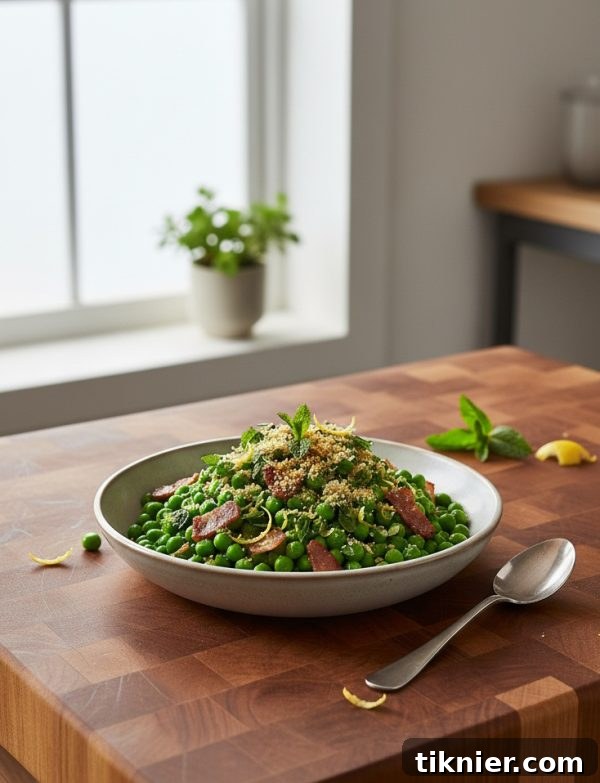
Description: Elevate humble sweet peas into a show-stopping side dish with crispy, savory pancetta and a bright, crunchy lemon-mint gremolata. Perfect for holiday feasts, special occasions, or simply to make a weeknight meal feel extraordinary.
Yield: 4-6 servings | Category: Side Dish | Cuisine: American
Prep Time: 10 minutes | Cook Time: 15 minutes
Ingredients
- 2 tablespoons olive oil, divided
- 1/4 cup panko breadcrumbs
- 1/4 cup finely chopped fresh mint
- 1 teaspoon lemon zest
- 3 ounces pancetta, finely diced
- 1 medium shallot, finely minced
- 1 (16-ounce) bag frozen sweet peas
- 1/4 cup low-sodium chicken or vegetable broth
- 1 tablespoon unsalted butter
- 1/2 teaspoon kosher salt
- 1/4 teaspoon freshly ground black pepper
Instructions
- Prepare the Gremolata: In a small, dry skillet over medium heat, add 1 tablespoon of olive oil. Once shimmering, add the panko breadcrumbs and toast, stirring constantly, until they turn a beautiful golden brown (about 2-3 minutes). Immediately transfer the toasted panko to a small bowl and toss with the finely chopped fresh mint and lemon zest. Set aside.
- Crisp the Pancetta: In a medium saucepan or large skillet, cook the finely diced pancetta over medium heat. Stir occasionally until it becomes wonderfully crispy and golden, typically 5-7 minutes. Use a slotted spoon to remove the crispy pancetta, transferring it to a plate lined with a paper towel. Leave the rendered fat in the pan.
- Sauté the Shallot: If needed, add the remaining 1 tablespoon of olive oil to the pan with the rendered pancetta fat. Add the finely minced shallot and sauté, stirring, until it softens and becomes translucent, about 2-3 minutes.
- Cook the Sweet Peas: Add the entire bag of frozen sweet peas and the low-sodium broth directly to the saucepan. Increase the heat to medium-high. Cook, stirring occasionally, until the peas are heated through and tender-crisp, usually 4-5 minutes. Avoid overcooking to maintain their vibrant color and texture.
- Finish and Season: Remove the pan from the heat. Stir in the unsalted butter, kosher salt, and freshly ground black pepper until the butter is completely melted and coats the peas.
- Fold in Pancetta: Gently fold the reserved crispy pancetta back into the seasoned peas. This step ensures the pancetta retains its crisp texture.
- Serve: Transfer the sweet peas to a serving dish. Just before serving, generously sprinkle the lemon-mint gremolata over the top. Serve immediately for the best flavor and crunch.
Notes
For the ultimate crunchy texture, it is crucial to add the gremolata topping just before serving. If you anticipate leftovers, store the cooked peas separately from the gremolata to maintain its crispness. Reheat peas gently in a skillet.
Servings: 6 | Calories: 185 kcal | Fat: 11g | Carbohydrates: 15g | Protein: 8g
5 Frequently Asked Questions About This Sweet Peas Recipe
Here are clear, comprehensive answers to the most common inquiries I receive about preparing and enjoying this delightful sweet peas recipe.
1. Can I use fresh sweet peas instead of frozen for this recipe?
Absolutely, you can certainly use fresh sweet peas, especially if you are fortunate enough to have them straight from your garden or can source them locally at a farmers market during spring. There’s an undeniable sweetness and delicate texture to a truly fresh, recently shelled pea! However, there are a few important considerations. “Fresh” peas purchased from a standard grocery store have often endured a significant journey and may have been sitting for a period. During this time, their natural sugars begin to convert into starch, which can result in a less sweet and somewhat mealier texture compared to frozen peas. Frozen peas are typically flash-frozen within hours of being picked at their peak, locking in their optimal flavor and texture.
If you opt for fresh peas, particularly larger ones, you might need to blanch them first. To do this, bring a pot of generously salted water to a rolling boil. Drop the peas into the boiling water for just 1 to 2 minutes, or until they turn a vibrant, bright green. Immediately transfer them to a bowl of ice water to halt the cooking process and preserve their color and crispness. Once cooled, drain them thoroughly and then proceed with the recipe from the step where you add them to the pan with the sautéed shallot. Keep in mind that their cooking time in the pan will likely be slightly reduced since they are already partially cooked from the blanching process.
2. What is pancetta, and how does it differ from bacon in this sweet peas recipe?
This is an excellent and frequently asked question, as pancetta and bacon often share shelf space in the grocery store and can appear similar. Both are indeed derived from pork belly, but their distinct preparation methods are what set them apart and make a significant difference in their flavor profile. The key differentiator is that bacon undergoes a smoking process after it’s cured, which imparts its characteristic smoky flavor. Pancetta, conversely, is simply cured with salt and a blend of spices (such as black pepper, garlic, and bay leaf) and then dried, without any smoking. This results in pancetta having a much cleaner, purer, and more straightforward savory pork flavor.
For this specific sweet peas recipe, I intentionally call for pancetta because its flavor is more nuanced and less dominant than bacon. It provides a wonderful salty, umami counterpoint to the sweet peas without overshadowing their delicate taste with smokiness. This allows the bright freshness of the mint and the zesty tang of the lemon to truly shine through, creating a more sophisticated and balanced dish. While you can certainly substitute bacon in a pinch, it’s important to understand that it will fundamentally alter the flavor profile, resulting in a dish with a distinctly different, smokier essence.
3. My gremolata wasn’t crunchy. What might have gone wrong with my sweet peas topping?
A soggy gremolata is indeed a common disappointment, but it’s usually a very straightforward problem to diagnose and rectify! There are primarily two culprits when your topping loses its desirable crunch. The first likely issue lies in the toasting process of the panko. It is absolutely crucial to toast the panko breadcrumbs until they achieve a deep, even, and beautiful golden brown color. If they are under-toasted, they will possess more residual moisture and will absorb environmental moisture (from the peas or steam) much more readily, leading to sogginess. Furthermore, it’s imperative to immediately remove the toasted panko from the hot pan the moment it’s ready. Allowing it to linger in the pan will cause it to continue cooking and potentially burn, or it might steam and lose its crispness.
The second, and perhaps most common, reason for a non-crunchy gremolata is improper timing during serving. This delicate topping must be added at the very last minute, literally right before the dish is presented at the table. If you sprinkle it on while the peas are still actively steaming in the serving bowl, or if you mix it in and allow the dish to sit for even a few minutes before serving, the panko will inevitably absorb that moisture and quickly forfeit its delightful crispness. For consistently crispy and flavorful results, always keep the gremolata in a separate, dry bowl and sprinkle it generously over the sweet peas just as you are about to serve them.
4. How can I easily make this sweet peas recipe vegetarian or vegan?
It is remarkably easy to adapt this sweet peas dish into a truly delicious vegetarian or even vegan version without sacrificing flavor or texture. The pancetta contributes two key elements: savory umami flavor and a crispy texture. Both of these can be beautifully replicated with plant-based ingredients. My preferred method for replacing the pancetta is by using mushrooms. Finely dice about 4 ounces of cremini or shiitake mushrooms and sauté them in a tablespoon of olive oil over medium-high heat until they are deeply browned, wonderfully flavorful, and crispy. Once they reach this stage, remove them from the pan and set them aside, treating them just as you would the crispy pancetta.
To add another layer of texture and a touch of richness that complements the peas, you can also incorporate a quarter cup of toasted pine nuts, slivered almonds, or even shelled pistachios, folding them into the peas at the very end. To ensure the entire dish is vegetarian, remember to use vegetable broth instead of chicken broth. For a completely vegan dish, simply substitute the unsalted butter with a high-quality vegan butter alternative or an extra drizzle of excellent olive oil. The result will be a side dish that is every bit as complex, satisfying, and bursting with flavor, proving that deliciousness knows no dietary bounds.
5. Is it possible to prepare these sweet peas ahead of time for a dinner party or holiday?
Yes, absolutely! You can certainly undertake a significant amount of preparation in advance to make the day-of assembly incredibly smooth and stress-free, which is a true lifesaver when you’re hosting a dinner party or a holiday meal. While I wouldn’t recommend making the entire dish completely ahead of time (as the peas are undeniably best when freshly cooked and hot), preparing all the individual components in advance is an excellent strategy. This is actually my preferred method when I’m serving this sweet peas recipe for a special occasion.
You can prepare the entire lemon-mint gremolata up to a full day in advance. Simply store it in a small, airtight container at room temperature to keep it perfectly dry and crunchy. Similarly, you can cook the pancetta ahead of time. Once it’s crispy, allow it to cool completely before transferring it to an airtight container and storing it in the refrigerator. On the day you plan to serve, all you’ll need to do is quickly sauté the shallot, cook the peas with the broth, stir in the butter and seasoning, and then gently fold in your pre-crisped pancetta. Transfer the warm peas to a serving bowl, top with your pre-made gremolata, and your guests will be none the wiser that you didn’t just whip it all up from scratch in minutes!
Explore More Delicious Recipes
If you’ve thoroughly enjoyed this delightful and innovative twist on a classic side dish, you’re in for a treat with some of the other flavorful and comforting recipes featured here on the blog. These dishes are crafted with the same philosophy of elevating everyday ingredients into something truly special.
- Easy Stout Shepherd’s Pie Recipe: This recipe is the epitome of comfort food, featuring a rich, deeply savory filling made even more extraordinary with a splash of stout beer, which adds incredible depth and complexity of flavor. It’s a hearty meal that warms the soul.
- Crispy Prosciutto & Chicken Fried Rice Recipe: Take your fried rice game to an entirely new level with this inventive recipe. It incorporates crispy prosciutto, providing a wonderful salty and crunchy element that is absolutely irresistible and elevates a familiar dish.
- The Best Tuna Casserole Recipe: Forget the tired, canned-soup versions of the past! This from-scratch tuna casserole is a revelation – luxuriously creamy, delightfully cheesy, and crowned with a buttery, golden, and crunchy topping that will make you fall head-over-heels in love with this comforting classic all over again.
I genuinely hope you’ll give these fantastic recipes a try and share your thoughts. Happy cooking!