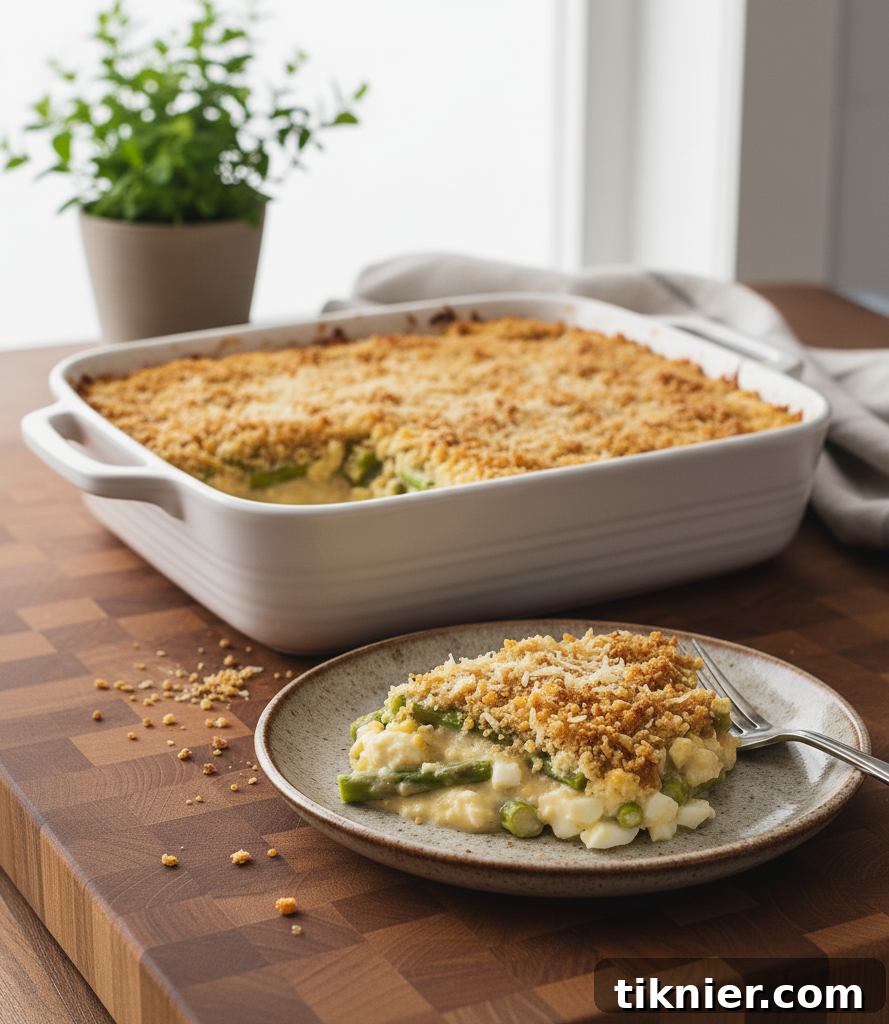
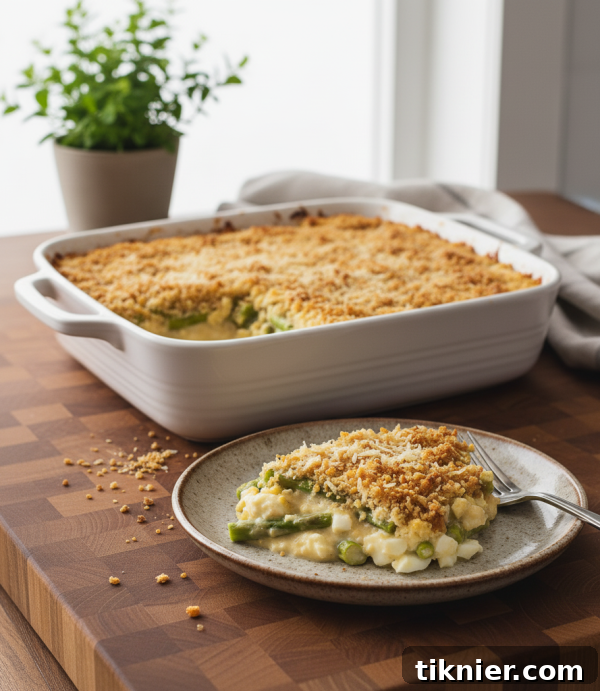
The first time the magic of an old-fashioned asparagus casserole graced my palate was at a vibrant Easter gathering, long before I even said “I do” to my wonderful husband. His Aunt Carol, a culinary wizard with an uncanny ability to transform humble ingredients into unforgettable dishes, presented a bubbling, golden casserole dish overflowing with creamy, cheesy asparagus. It was a revelation, a dish so comforting and heartwarming that it vanished from the table almost as quickly as it arrived. That afternoon, amidst laughter and family stories, I knew I had to have the recipe. It instantly felt like home, a taste of tradition, and it has been a cherished family staple ever since.
For many years, I faithfully recreated Aunt Carol’s original recipe, and it never failed to conjure those precious early memories of joyful celebrations and abundant second helpings. This classic dish, with its familiar textures and comforting flavors, held a special place in my heart. However, as my own culinary skills and confidence in the kitchen grew, I began to envision subtle enhancements. I wanted to take the core essence of what I loved about her casserole—the profound comfort, the luxurious creaminess, the rich tradition—and infuse it with a touch more refinement and freshness. My goal was to create a version that still resonated with the beloved spirit of Aunt Carol’s dish, yet offered a slightly more sophisticated appearance and an elevated flavor profile, making it truly worthy of a grand Easter feast or any elegant spring gathering.
This journey of culinary evolution led to the creation of this elevated rendition: a dish that beautifully pays homage to its nostalgic roots while embracing modern culinary sensibilities, featuring fresh, vibrant ingredients and a few thoughtful techniques that make all the difference. It’s a testament to how even the most cherished traditions can be gently refined to shine even brighter.
Skip to My Special Recipe!
How I Elevated Each Part Of The Old Fashioned Asparagus Casserole Recipe
If your childhood memories of asparagus casserole involve layers of mushy canned asparagus, a thick sauce from condensed cream of mushroom soup, and a crumbly saltine topping, then prepare for a delightful surprise. This reimagined version retains the comforting soul of the original but meticulously rebuilds it from the ground up, utilizing real, wholesome ingredients and refined culinary techniques. Every single modification serves a deliberate purpose: to intensify flavor, perfect texture, and deliver a fresher, more vibrant dish that truly celebrates the delicate essence of asparagus, rather than concealing it behind heavy, processed ingredients. It’s an homage to comfort food, elevated to its peak potential.
1. Fresh Asparagus Instead of Canned
While canned asparagus offered unparalleled convenience in the mid-20th century, it sacrificed nearly all its vibrant color and crisp, tender bite in the preservation process, resulting in a muted flavor. In stark contrast, this recipe champions fresh asparagus. A brief blanch in boiling salted water ensures the asparagus emerges tender-crisp and brilliantly green, bursting with the authentic taste of spring. The immediate plunge into an ice water bath is a critical step, halting the cooking process precisely at the ideal texture and locking in that gorgeous, verdant hue. This method guarantees that every bite of your casserole is infused with the genuine, fresh flavor and satisfying snap of real asparagus.
2. Real Cream Sauce Instead of Condensed Soup
The traditional casserole leaned heavily on a can of condensed cream of mushroom soup for its creamy base, a shortcut that often introduced an artificial flavor and excessive sodium. This elevated version, however, embraces the timeless art of French cooking by constructing a proper béchamel sauce from scratch. Starting with a golden roux of butter and flour, then gradually whisking in whole milk and a touch of heavy cream, yields a smooth, rich, and truly luxurious base. This homemade sauce offers a clean, pure taste, free from the metallic notes or over-salting often associated with canned soups. Moreover, it grants you complete control over its thickness and seasoning, allowing you to tailor the sauce perfectly to your preferences and enhance the natural flavors of the other ingredients.
3. Layered Cheeses for Depth and Creaminess
Classic casserole recipes often settled for a single, mild cheese, typically cheddar, which could result in a somewhat monotonous flavor profile. My updated approach employs a sophisticated blend of cheeses to create a truly multi-dimensional taste experience. Sharp cheddar is chosen for its distinctive tangy bite, while Gruyère introduces a delightful nutty undertone and exceptional melting quality. A final touch of finely grated Parmesan in the topping not only contributes a salty, savory kick but also helps form that irresistible golden, crispy crust. The synergy of these cheeses results in a perfectly balanced, complex flavor that offers far more than just one-note richness, transforming each spoonful into a journey of savory delight.
4. Horseradish and Dijon for Brightness
Often, rich, creamy casseroles can feel a bit heavy without an element to cut through their decadence. This is where the unexpected brilliance of prepared horseradish and Dijon mustard comes into play. A carefully measured spoonful of each adds just the right amount of piquant sharpness and subtle tang. This small but incredibly powerful upgrade elevates the casserole, providing a vibrant counterpoint that prevents the dish from feeling overly rich. It introduces a nuanced dimension of flavor—a delightful brightness you notice after the first bite, yet one that’s subtly integrated, leaving you wondering what exactly makes the dish so utterly captivating.
5. Shallot Instead of Onion for Subtle Sweetness
Traditional casseroles frequently incorporate a heavy hand of onion, which, while flavorful, can sometimes overpower the more delicate notes of other ingredients. For this refined version, a single minced shallot is used as the aromatic foundation. Shallots offer a milder, sweeter, and more sophisticated flavor than regular onions, melting seamlessly into the sauce to provide a delicate sweetness and aromatic depth without any harshness. This subtle swap ensures that the shallot complements rather than competes with the fresh asparagus and rich cheese, allowing each component to shine harmoniously within the overall symphony of flavors.
6. A Crispy, Buttery Panko Topping
The old-school asparagus casserole typically featured a topping of crushed saltine crackers, which could sometimes become soggy or unevenly textured. For a truly superior crunch and golden finish, this recipe opts for Panko breadcrumbs. These Japanese-style breadcrumbs are celebrated for their exceptionally light, airy, and crisp texture. When tossed with melted butter and a sprinkle of Parmesan cheese, Panko breadcrumbs bake into a gloriously crunchy, evenly browned crust that provides a delightful textural contrast to the creamy, velvety interior. Every forkful promises that satisfying crispness on top, perfectly complementing the rich and tender layers beneath.
7. Real Cooking Technique, Not Just Mixing and Dumping
Many traditional casserole recipes are built on the premise of minimal effort – essentially, opening a few cans, mixing ingredients, and baking. This elevated asparagus casserole, however, embraces a more intentional culinary approach. Each step is designed to build flavor thoughtfully and purposefully. From sautéing the shallots to creating a precise béchamel, whisking, tasting, and carefully layering the components, every action contributes to the final masterpiece. While it may require a few more minutes of active cooking time compared to its shortcut predecessor, the result is a dish that tastes profoundly special, showcasing genuine craftsmanship and attention to detail, far removed from any quick assembly.
8. A Cleaner, More Balanced Finish
The traditional old-fashioned asparagus casserole could often feel quite heavy and overly salty due to its reliance on canned and processed ingredients. This refined version, in contrast, achieves a remarkable balance. The carefully crafted cream sauce, brightened by horseradish and Dijon, ensures richness without being cloying. A subtle hint of freshly grated nutmeg adds warmth and depth, while the vibrant fresh asparagus maintains its natural zest and verdant flavor. The overall effect is a dish that is deeply comforting and satisfying, yet surprisingly fresh and lively on the palate—a true celebration of springtime comfort that tastes authentically delicious.
In essence, this casserole stands as a proud tribute to the nostalgic flavor memories of the original, while intelligently shedding its reliance on shortcuts and processed ingredients. It embodies what the old-fashioned dish implicitly aspired to be all along: a warm, exquisitely creamy, and universally pleasing side dish, lovingly crafted from real, wholesome foods, delivering an authentic taste of springtime comfort and elegance to your table.
Ingredients for Old Fashioned Asparagus Casserole
Here’s the full ingredients list:
- 2 lbs fresh asparagus, tough ends trimmed
- 4 large eggs, hard-boiled and coarsely chopped
- 4 tbsp unsalted butter, divided
- 1 small shallot, finely minced
- 3 tbsp all-purpose flour
- 1 ½ cups whole milk
- ½ cup heavy cream
- 1 ½ cups sharp cheddar cheese, freshly grated
- ½ cup Gruyère cheese, freshly grated
- 1 ½ tbsp prepared horseradish
- 1 tsp Dijon mustard
- ½ tsp salt, or to taste
- ¼ tsp black pepper, freshly ground
- Pinch of freshly grated nutmeg
- ¾ cup Panko breadcrumbs
- ¼ cup grated Parmesan cheese
Step-by-Step Instructions For Making Old Fashioned Asparagus Casserole
Assembling this elevated asparagus casserole is a truly rewarding experience, with each deliberate step meticulously building upon the last to create magnificent layers of flavor and irresistible texture. Follow these instructions closely, and I guarantee you’ll produce a perfect, show-stopping dish that will impress everyone at your table. Remember, patience is a virtue, especially when preparing the rich, velvety sauce – a little extra care here goes a very long way in achieving culinary excellence!
Step 1: Preheat Oven and Prepare Baking Dish
To begin, ensure your oven is preheating to a precise 375°F (190°C). Reaching the correct temperature before your casserole enters the oven is absolutely crucial for achieving that irresistible bubbly, golden sauce and a perfectly crisp topping. While the oven preheats, take a moment to thoroughly grease your 2-quart baking dish. You can use a knob of unsalted butter for a rich flavor base, or a quick spray of non-stick cooking spray for convenience. This simple yet vital step guarantees that your decadent casserole will not stick, making both serving and cleanup wonderfully effortless later on.
Step 2: Blanch the Asparagus
This stage is paramount for preserving the vibrant color and achieving the ideal tender-crisp texture of your asparagus. Bring a large pot of generously salted water to a rolling boil. Carefully add the trimmed fresh asparagus and blanch for precisely 2-3 minutes. This brief cooking period is just enough to soften the asparagus slightly while enhancing its natural sweetness and maintaining its bright green hue. Immediately after blanching, transfer the asparagus to a large bowl filled with ice water. This rapid cooling halts the cooking process, preventing overcooked, mushy, or dull, olive-green asparagus. Once completely chilled, drain the asparagus meticulously and pat it thoroughly dry with a clean kitchen towel or paper towels. Removing excess moisture is key to preventing a watery casserole sauce.
Step 3: Sauté the Shallot
In a large, heavy-bottomed saucepan set over medium heat, melt three tablespoons of the unsalted butter. Once the butter is shimmering, add your finely minced shallot. The shallot is chosen specifically for its milder, more delicate, and subtly sweet flavor profile, which will not overpower the nuanced flavors of the asparagus or the rich cheeses, unlike a stronger onion might. Sauté the shallot, stirring occasionally, for about 2-3 minutes, until it becomes wonderfully soft and deeply fragrant. Avoid browning, as we want to preserve its gentle sweetness.
Step 4: Make the Roux
With the softened shallots still in the pan, uniformly sprinkle the all-purpose flour over the melted butter and shallots. Immediately whisk the mixture continuously for about one minute. This essential step creates a roux, which is the foundational thickening agent for our exquisite cheese sauce. Cooking the flour for this short duration is vital; it toasts the flour slightly and cooks out any raw, pasty taste, ensuring your sauce will be smooth, flavorful, and perfectly integrated without any starchy aftertaste.
Step 5: Create the Cream Sauce
Now, for the magic of a velvety smooth sauce! Begin slowly, gradually pouring in the cold whole milk and rich heavy cream into the roux while vigorously whisking without interruption. This steady, gradual incorporation is the absolute secret to preventing lumps and achieving a flawlessly smooth sauce. Once all the liquid has been added and the mixture is uniform, increase the heat slightly and bring it to a gentle simmer. Continue to cook, stirring frequently to prevent sticking, until the sauce visibly thickens and is substantial enough to gracefully coat the back of a spoon. This should take approximately 5-7 minutes, rewarding you with a luscious, creamy base.
Step 6: Stir in the Cheeses
Once your béchamel has reached its perfect consistency, immediately remove the saucepan from the heat. This is a critical step because adding cheese to a sauce that is actively boiling can cause it to separate, become oily, or develop an undesirable grainy texture. Add the freshly grated sharp cheddar and nutty Gruyère cheeses to the warm sauce. Stir gently but consistently until both cheeses are completely melted, thoroughly incorporated, and the sauce transforms into a magnificently velvety and homogenous mixture. The residual heat from the sauce will be ample to melt the cheeses to perfection.
Step 7: Season the Sauce
Now, it’s time to infuse the sauce with its signature flavor profile! Stir in the prepared horseradish, vibrant Dijon mustard, salt, freshly ground black pepper, and a tiny, fragrant pinch of freshly grated nutmeg. Nutmeg is a classic, often overlooked, addition to cream sauces, imparting a wonderfully warm and subtle complexity that elevates the entire dish. Thoroughly mix all the seasonings, then take a small taste. Adjust the salt and pepper as needed, ensuring the flavors are perfectly balanced to your liking, with the horseradish and Dijon providing just the right amount of zest.
Step 8: Assemble the Casserole
In your meticulously prepared 2-quart baking dish, gently combine the vibrant, chopped blanched asparagus and the coarsely chopped hard-boiled eggs. These two components form the delightful core of your casserole. Next, pour that glorious, rich, and zesty cheese sauce generously over the asparagus and eggs. Using a spoon or spatula, give everything a gentle stir to ensure that every piece of asparagus and every egg chunk is thoroughly and evenly coated in the luxurious sauce. The goal is a harmonious distribution of all components.
Step 9: Prepare the Topping
In a separate, small bowl, melt the remaining one tablespoon of unsalted butter until it’s liquid and clear. Add the light and airy Panko breadcrumbs along with the finely grated Parmesan cheese to the melted butter. Toss these ingredients together thoroughly until the Panko breadcrumbs are lightly and evenly coated in the butter. This buttery coating is essential for achieving that sought-after extra crispy, golden-brown crust when baked, providing a delightful textural contrast to the creamy interior.
Step 10: Top the Casserole
Once your Panko mixture is ready, evenly sprinkle it over the entire surface of the assembled casserole. Be generous and ensure the topping is distributed from edge to edge. An even layer is key to guaranteeing that every single serving receives a delightful portion of that wonderful, crunchy texture, which is a hallmark of a truly exceptional asparagus casserole. The golden crumbs will soon form an irresistible crust.
Step 11: Bake to Perfection
Carefully place the casserole into your preheated 375°F (190°C) oven. Allow it to bake for approximately 20 to 25 minutes. During this time, you’ll want to observe the transformation: the sauce should be hot, bubbly, and visibly simmering around the edges, while the Panko topping should achieve a gorgeous, appetizing golden brown hue. The incredible aromas that will soon fill your kitchen are your well-deserved reward and a sure sign that culinary perfection is at hand!
Step 12: Let It Rest
This final step, though perhaps the most challenging due to the enticing aroma, is absolutely non-negotiable for optimal results! Once baked, remove the casserole from the oven and allow it to rest on a wire rack for a minimum of 10 minutes before attempting to serve. This crucial resting period permits the rich cheese sauce to properly set and firm up slightly. This makes for much cleaner, easier serving and prevents the casserole from being too molten hot, ensuring a pleasant eating experience while still being wonderfully warm and comforting when you finally dig in.
How To Serve Old Fashioned Asparagus Casserole
This Old Fashioned Asparagus Casserole is far more than just a simple side dish; it’s a versatile culinary star that effortlessly finds its place on any table. It feels perfectly at home amidst the festive bounty of a holiday buffet, yet its straightforward elegance makes it equally capable of elevating a casual weeknight meal into something truly special. Its luxurious creamy texture, combined with its bright and zesty flavor profile, renders it an exceptional companion to an extensive array of main courses. When I’m meticulously planning a grand holiday feast for occasions like Easter or Christmas, this casserole consistently ranks among the very first side dishes on my list, precisely because of its remarkable ability to beautifully complement both rich, indulgent flavors and lighter, simpler main attractions.
The inherent beauty of this Old Fashioned Asparagus Casserole is its self-sufficiency; it truly requires no additional adornment once it emerges from the oven. The meticulously baked, golden, and satisfyingly crunchy Panko topping serves as its own exquisite garnish. There’s no need for fancy flourishes—simply carry the bubbling baking dish directly to the table, allowing everyone to admire its golden glory before serving themselves. The vibrant, fresh green of the asparagus, peeking enticingly through the velvety, creamy sauce, creates a naturally stunning presentation. It’s a dish that commands attention and admiration without even trying, a true showstopper by its very nature.
For a complete, harmonious, and utterly satisfying meal, consider pairing this magnificent casserole with these thoughtfully chosen main dishes:
- Holiday Ham: The delightful interplay of salty and sweet in a beautifully baked ham creates a perfect counterpoint to the rich, creamy, and cheesy casserole. The subtle zest and piquant notes from the horseradish in the sauce expertly cut through the inherent richness of the ham, balancing the flavors exquisitely.
- Roasted Chicken or Turkey: A classic, perfectly roasted poultry, whether it’s a succulent chicken or a grand turkey, finds a natural and harmonious partner in this casserole. The dish adds a touch of indulgent luxury and sophisticated flavor to an otherwise simple and wholesome main course, transforming it into a more celebratory meal.
- Pork Loin Roast: A meticulously roasted pork loin, infused with fragrant herbs like rosemary and thyme, pairs exquisitely with the complex cheese blend. The nutty undertones of Gruyère and the sharp bite of cheddar in the sauce enhance the savory depth of the pork, creating a truly memorable dining experience.
- Grilled Steak: For a meal that strikes a balance between casual elegance and robust flavor, serve a generous portion of this creamy casserole alongside a perfectly juicy grilled steak. It offers a fantastic, more exciting alternative to the ubiquitous baked potato, adding a layer of creamy indulgence that perfectly complements the steak’s char.
Regardless of what main course you choose to pair it with, this asparagus casserole is unequivocally destined to be a resounding success. It brings an undeniable sense of warmth, cherished tradition, and contemporary flair to your table, with its subtle modern twist ensuring that everyone will undoubtedly be asking for the recipe. There’s truly no greater satisfaction for a cook than seeing the baking dish return to the kitchen utterly empty, every single time.
How To Store & Reuse Old Fashioned Asparagus Casserole Leftovers
While this delectable Old Fashioned Asparagus Casserole is frequently devoured in its entirety, leaving not a crumb behind, should you be fortunate enough to have leftovers, they truly are an absolute delight the very next day. Storing and reheating them with proper care is paramount to ensuring that you enjoy them just as much, if not more, the second time around. The flavors, having had extra time to meld and deepen, often become even more complex and satisfying, and with the right technique, you can beautifully revive that wonderful texture.
First and foremost, allow the freshly baked casserole to cool down completely to room temperature on your kitchen counter. This cooling process should take no more than one to two hours to ensure food safety. Once cooled, either cover the original baking dish tightly with several layers of plastic wrap or sturdy aluminum foil, or, for optimal storage, transfer the leftovers into an airtight container. Properly stored, it will maintain its deliciousness and quality in the refrigerator for an impressive period of up to three to four days. However, I strongly advise against freezing this particular casserole. The delicate dairy-based sauce, unfortunately, has a tendency to separate and become watery upon thawing, and the tender texture of the asparagus can suffer significantly, resulting in a less than ideal eating experience.
When the craving for this delightful casserole strikes again, here are my preferred methods for reheating, designed to bring your leftovers back to life with maximum flavor and texture:
- Oven Reheating (My Recommended Method): To preserve the integrity of the creamy sauce and, most importantly, restore that desirable crispy topping, reheating in the oven is unequivocally the best approach. Preheat your oven to a moderate 350°F (175°C). Place the portioned leftovers in an oven-safe dish, cover it loosely with aluminum foil to prevent drying, and bake for approximately 15 to 20 minutes, or until the casserole is thoroughly warmed through to the center. For the final 5 minutes of reheating, remove the foil to allow the Panko topping to wonderfully crisp up again, achieving that perfect crunch.
- Microwave Reheating (The Quickest Method): If time is of the essence and you’re in a hurry, the microwave offers a convenient alternative. Place an individual serving on a microwave-safe plate and heat in short, 1-minute increments. Stir the casserole gently between each interval to ensure even heating and prevent hotspots, continuing until it is piping hot throughout. While the topping may not regain its original crispness with this method, the flavors will undeniably still be fantastic and comforting.
- Creative Reuse Ideas: Don’t limit yourself to just reheating! Think outside the box for exciting new meal possibilities. One of my favorite quick and indulgent lunches is to spoon a generous amount of leftover casserole over a piece of perfectly toasted sourdough bread, creating a decadent open-faced sandwich. Alternatively, you can thin out the leftover sauce with a splash of milk or vegetable broth, then toss it with some freshly cooked pasta for an entirely new, incredibly comforting, and satisfying meal that repurposes the flavors beautifully.
Discovering you have leftovers of this Old Fashioned Asparagus Casserole truly feels like receiving a delightful little gift. It serves as a delicious reminder of a wonderful meal enjoyed and offers a swift, effortless solution for a satisfying lunch or dinner the very next day. A small investment of effort in proper reheating genuinely pays off in a big way, ensuring every bite is as enjoyable as the first.
Substitutions & Variations For Old Fashioned Asparagus Casserole
One of the most cherished aspects of a truly classic recipe, such as this Old Fashioned Asparagus Casserole, is its incredible versatility. It provides a magnificent canvas upon which you can unleash your own culinary creativity and tailor the dish to your specific tastes or dietary needs. While I absolutely adore this Old Fashioned Asparagus Casserole precisely as it is written, it is also remarkably forgiving and wonderfully adaptable. Whether you need to accommodate a particular dietary restriction, are simply looking to utilize ingredients you already have on hand, or wish to infuse it with new and exciting flavors, there are abundant ways to personalize this timeless dish and truly make it your own.
Do not hesitate to experiment with different cheese combinations or introduce additional savory elements to enhance its depth. The fundamental core of this recipe—its luxurious, creamy sauce and perfectly tender asparagus—serves as an incredibly robust and adaptable base for an endless array of flavor combinations. Just be mindful to generally maintain the proportions of sauce to fillings to preserve that perfect, desirable consistency that makes this casserole so beloved. This is also a fantastic opportunity to clear out your cheese drawer by using up various odds and ends, or to transform leftover cooked meats from a previous meal into something entirely new and delicious.
Here are some of my favorite and most successful substitutions and exciting variations you might like to try:
- Cheese Swaps: If sharp cheddar or Gruyère aren’t readily available, or if you simply wish to explore different flavors, feel completely free to substitute with other excellent melting cheeses. Varieties such as Colby, Monterey Jack, creamy fontina, or even a subtly smoked Gouda would be absolutely delicious and add their unique character. Often, a thoughtful blend of two or three different types of cheeses can yield the most complex and satisfying flavor profile.
- Vegetable Variations: While asparagus undeniably reigns as the star of this casserole, the robust and flavorful base works exceptionally well with a variety of other fresh vegetables. Consider trying blanched broccoli florets for a different green crunch, tender green beans for a classic touch, or even a colorful medley of blanched cauliflower and sweet carrots for a distinct and appealing spin on the dish. Ensure any new vegetables are pre-cooked to tender-crispness before adding.
- Make it Gluten-Free: Adapting this recipe to be gluten-free is remarkably straightforward! For the roux, simply substitute your favorite high-quality all-purpose gluten-free flour blend in an equal measure for the standard all-purpose flour. I’ve found that blends containing xanthan gum work particularly well, as they aid in achieving that perfect thickening and binding. For the crispy topping, readily available gluten-free Panko breadcrumbs are an ideal choice, or you can crush gluten-free crackers for a similar effect.
- Add Some Protein: To transform this delightful side dish into a heartier, all-encompassing main meal, consider stirring in some pre-cooked, crumbled bacon for a smoky flavor, finely diced ham, or shredded chicken along with the asparagus and hard-boiled eggs. These additions introduce a satisfying boost of protein and turn the casserole into a substantial and comforting entrée.
- Spice It Up: If your palate enjoys a bit more heat and a lively kick, a small addition can make a big difference. Stir in a quarter teaspoon of fiery cayenne pepper or a generous dash of your favorite hot sauce into the cheese sauce alongside the horseradish and Dijon mustard. This will add an exciting layer of warmth and complexity.
- Crumb Topping Alternatives: No Panko breadcrumbs on hand? No problem at all! You have several excellent alternatives to achieve that desired crunchy topping. Crushed buttery Ritz crackers, classic saltines, or even savory, butter-toasted croutons pulsed in a food processor can all create a wonderfully flavorful and crispy crust that perfectly complements the creamy interior.
Embrace the joy of cooking and feel empowered to mix and match these wonderful ideas to craft your absolutely perfect, personalized version of this timeless side dish. Let your taste buds be your ultimate guide and enjoy the delicious process of culinary experimentation!
My Special Old Fashioned Asparagus Casserole
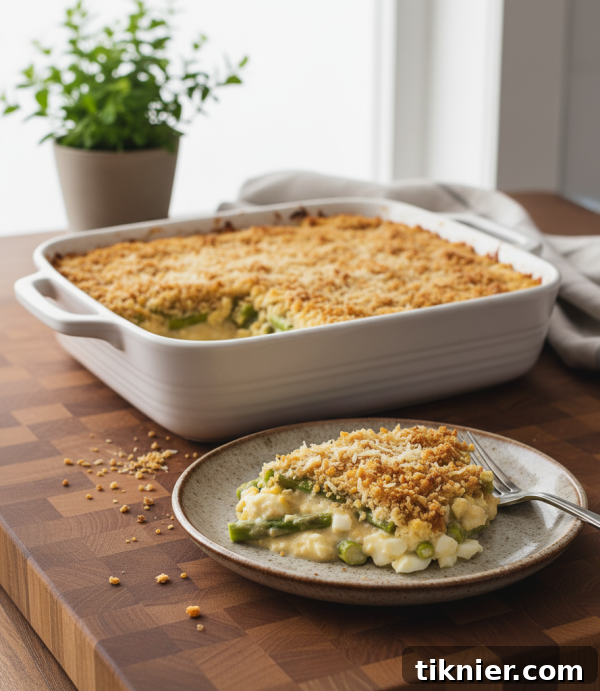
Description: A beloved classic, creamy asparagus casserole gets a sophisticated and zesty upgrade with the subtle warmth of horseradish, a rich blend of sharp cheeses, and an irresistibly crispy Panko topping. This perfect side dish is ideal for memorable holidays or any special meal where comfort meets elegance.
Yield: 8-10 servings | Category: Side Dish | Cuisine: Southern, American
Prep Time: 20 minutes | Cook Time: 25 minutes
Ingredients
- 2 lbs fresh asparagus, tough ends trimmed
- 4 large eggs, hard-boiled and coarsely chopped
- 4 tbsp unsalted butter, divided
- 1 small shallot, finely minced
- 3 tbsp all-purpose flour
- 1 ½ cups whole milk
- ½ cup heavy cream
- 1 ½ cups sharp cheddar cheese, freshly grated
- ½ cup Gruyère cheese, freshly grated
- 1 ½ tbsp prepared horseradish
- 1 tsp Dijon mustard
- ½ tsp salt, or to taste
- ¼ tsp black pepper, freshly ground
- Pinch of freshly grated nutmeg
- ¾ cup Panko breadcrumbs
- ¼ cup grated Parmesan cheese
Instructions
- Preheat oven to 375°F (190°C) and generously grease a 2-quart baking dish.
- Blanch asparagus in boiling salted water for 2-3 minutes. Immediately transfer to an ice bath. Drain thoroughly, pat dry, and cut into 1-inch pieces.
- Melt 3 tablespoons of butter in a large saucepan over medium heat. Sauté the finely minced shallot until soft and fragrant, about 2-3 minutes.
- Whisk in the all-purpose flour and cook for 1 minute, stirring constantly, to create a roux. Gradually whisk in the whole milk and heavy cream until the mixture is smooth. Bring to a gentle simmer and cook, stirring frequently, until the sauce thickens enough to coat the back of a spoon, about 5-7 minutes.
- Remove the saucepan from the heat. Stir in the freshly grated sharp cheddar and Gruyère cheeses until they are completely melted and the sauce is velvety smooth.
- Stir in the prepared horseradish, Dijon mustard, salt, black pepper, and a pinch of freshly grated nutmeg. Taste and adjust seasonings as desired.
- In the prepared baking dish, gently combine the chopped blanched asparagus and the coarsely chopped hard-boiled eggs. Pour the glorious cheese sauce evenly over the top and stir gently to ensure everything is well coated.
- In a separate small bowl, melt the remaining 1 tablespoon of butter. Add the Panko breadcrumbs and grated Parmesan cheese, tossing them together until the breadcrumbs are lightly coated.
- Evenly sprinkle the Panko mixture over the entire surface of the casserole.
- Bake for 20-25 minutes in the preheated oven, or until the sauce is hot and bubbly around the edges and the topping is beautifully golden brown and crispy.
- Allow the casserole to rest on a wire rack for at least 10 minutes before serving. This allows the sauce to set slightly, making it easier to serve.
Notes
Blanching the asparagus is absolutely critical for maintaining its vibrant green color and achieving that perfect tender-crisp texture. For the creamiest, smoothest sauce, always grate your own cheese from a block rather than using pre-shredded varieties. Do not skip the 10-minute rest time after baking; it is essential for the sauce to set properly, ensuring clean, elegant servings.
Servings: 8 | Calories: 350 | Fat: 25g | Carbohydrates: 15g | Protein: 18g
5 FAQs About Old Fashioned Asparagus Casserole
Here are some comprehensive and straightforward answers to the most frequently asked questions I receive about this cherished Old Fashioned Asparagus Casserole recipe, designed to help you achieve perfect results every time.
Can I make Old Fashioned Asparagus Casserole ahead of time?
Absolutely, and this make-ahead flexibility is precisely why this casserole is an ideal choice for holiday entertaining or any special event, offering a significant time-saving advantage! You can comfortably assemble the entire casserole up to a full day in advance. Simply follow all the preparation steps exactly as written, right up until the point of baking. Assemble the casserole in your baking dish, ensuring it’s beautifully layered. However, it’s crucial to keep the Panko breadcrumb topping separate; store it in a small airtight container or a zip-top bag. Adding the topping too early, especially if refrigerating overnight, will result in soggy, unappealing crumbs.
Once assembled (without the topping), cover the baking dish tightly with plastic wrap or aluminum foil and store it securely in the refrigerator for up to 24 hours. When you’re ready to bake, remove the casserole from the fridge about 30 minutes prior to baking to allow it to come closer to room temperature. This crucial step helps ensure more even heating and baking. Just before placing it into the preheated oven, evenly sprinkle the Panko topping over the casserole. You may find it necessary to add an additional 5 to 10 minutes to the total baking time to guarantee that the casserole is heated thoroughly and bubbling throughout.
Why did my Old Fashioned Asparagus Casserole turn out watery?
A watery casserole is a common frustration, typically stemming from one of two primary issues: either excessive moisture from the asparagus or a cheese sauce that wasn’t adequately thickened. Firstly, and most importantly, it is incredibly vital to thoroughly drain and meticulously pat your blanched asparagus dry after it has cooled in the ice bath. Any lingering water droplets on the asparagus will release into the sauce during baking, diluting it and inevitably leading to a soupy, undesirable result. I highly recommend spreading the blanched and cooled asparagus spears on a clean kitchen towel or several layers of paper towels to absorb as much moisture as humanly possible before you proceed to chop them.
The second common culprit for a watery consistency is an improperly thickened cheese sauce. It is paramount that you allow the béchamel sauce to simmer and thicken properly *before* you incorporate the cheeses. The sauce should be robust enough to generously coat the back of a spoon. Rushing this step means the sauce won’t have the necessary body or structure to hold all the ingredients together, resulting in a thin, watery texture. Additionally, using freshly grated cheese from a block can make a difference; pre-shredded cheeses often contain anti-caking starches that can sometimes interfere with the sauce’s smooth, creamy consistency, further contributing to a less stable and potentially watery outcome.
Can I use frozen or canned asparagus in this Old Fashioned Asparagus Casserole?
While fresh asparagus will consistently deliver the absolute best flavor, brightest color, and most desirable texture for this recipe, you can certainly use frozen asparagus in a pinch, though with some caveats. If opting for frozen, you must thaw it completely first. After thawing, it’s critical to press out as much excess water as humanly possible using paper towels, as frozen asparagus tends to retain a lot of moisture. You can skip the blanching step since frozen asparagus is already partially cooked. However, be aware that the final texture of the casserole will be noticeably softer and lack the crisp-tender bite that fresh asparagus provides, which might subtly alter the overall experience.
On the other hand, I would strongly, strongly advise against using canned asparagus for this particular recipe. Canned asparagus is typically very soft, almost mushy, and possesses a distinct, often overpowering briny flavor that simply does not meld well with the rich, creamy, and sophisticated cheese sauce we are striving for. It tends to become even mushier during baking and can impart a lackluster, somewhat off-putting taste to the entire casserole. For the best, most vibrant, and truly delicious Old Fashioned Asparagus Casserole, investing in fresh asparagus is undeniably the way to go.
What’s the best way to prepare the hard-boiled eggs for the Old Fashioned Asparagus Casserole?
Achieving perfectly cooked hard-boiled eggs is crucial for this casserole, ensuring beautiful yolks that are fully cooked without any chalky texture or grey ring, and whites that are firm yet not rubbery. My tried-and-true method is wonderfully simple and yields consistent results every time. Begin by carefully placing your large eggs in a single layer at the bottom of a saucepan. Cover the eggs with approximately one inch of cold water, ensuring they are fully submerged. Place the saucepan over high heat and bring the water to a rapid, rolling boil. As soon as the water reaches a vigorous boil, immediately turn off the heat, cover the pot tightly with a lid, and let the eggs sit undisturbed in the hot water for precisely 12 minutes.
Once the 12 minutes are up, without delay, use a slotted spoon to transfer the eggs directly into a large bowl filled with ice water. This immediate chilling serves two vital purposes: it rapidly halts the cooking process, preventing overcooked eggs, and it causes the egg white to slightly contract, which significantly helps the shells separate from the egg, making them much easier to peel cleanly. Allow the eggs to cool completely in the ice bath before peeling. For this casserole, a coarse chop is preferred. This ensures you get nice, substantial pieces of flavorful egg in every bite, which contributes wonderful texture and additional richness to the final, comforting dish.
How can I make my Old Fashioned Asparagus Casserole gluten-free?
Transforming this delicious recipe into a gluten-free masterpiece is remarkably simple and, happily, does not require any compromise on flavor or the luxurious texture. There are just two key components within the recipe that require specific adjustments to make it entirely gluten-free: the roux, which forms the base of your creamy sauce, and the crispy breadcrumb topping. For the roux, you can confidently substitute the regular all-purpose flour with an equal measure of a high-quality, cup-for-cup gluten-free flour blend. I have personally experienced excellent results with blends that explicitly contain xanthan gum, as this ingredient significantly aids in proper thickening and binding, ensuring your sauce remains smooth and luscious.
For the delightful crispy topping, the solution is equally straightforward: simply use gluten-free Panko breadcrumbs. These are now widely available in the dedicated gluten-free section of most major grocery stores. If gluten-free Panko isn’t accessible, you have other fantastic options; you can crush gluten-free crackers, use gluten-free cornflakes, or even savory pork rinds (for a low-carb, crunchy alternative) as a substitute for that wonderful, crunchy texture. The remaining ingredients in the recipe—such as fresh asparagus, eggs, cheeses, horseradish, and Dijon mustard—are naturally gluten-free. However, it’s always a prudent practice to double-check the labels on any pre-packaged items, including your cheeses and prepared horseradish, to ensure there are no hidden gluten-containing additives or cross-contamination warnings.
Try These Recipes Next
If you absolutely adored this creamy, comforting asparagus casserole, I have a strong feeling you’ll equally enjoy exploring some of my other cherished Southern-inspired side dishes. Each recipe is crafted with the same dedication to flavor and homestyle warmth.
- Classic Southern Squash Casserole: A quintessential summertime staple that’s wonderfully creamy, perfectly cheesy, and finished with an irresistible buttery cracker crust. It’s sunshine in a dish!
- Easy Green Bean Casserole from Scratch: Ditch the canned soup for good! This homemade version is infinitely superior in taste and surprisingly simple to prepare, elevating a holiday classic.
- Over 25 Thanksgiving Casserole Recipes: Your ultimate, comprehensive guide to discovering the perfect comforting casseroles, guaranteed to grace any holiday table with warmth and flavor.
Happy cooking, and it is my sincerest hope that these recipes bring as much joy and deliciousness to your table as they consistently do to mine!