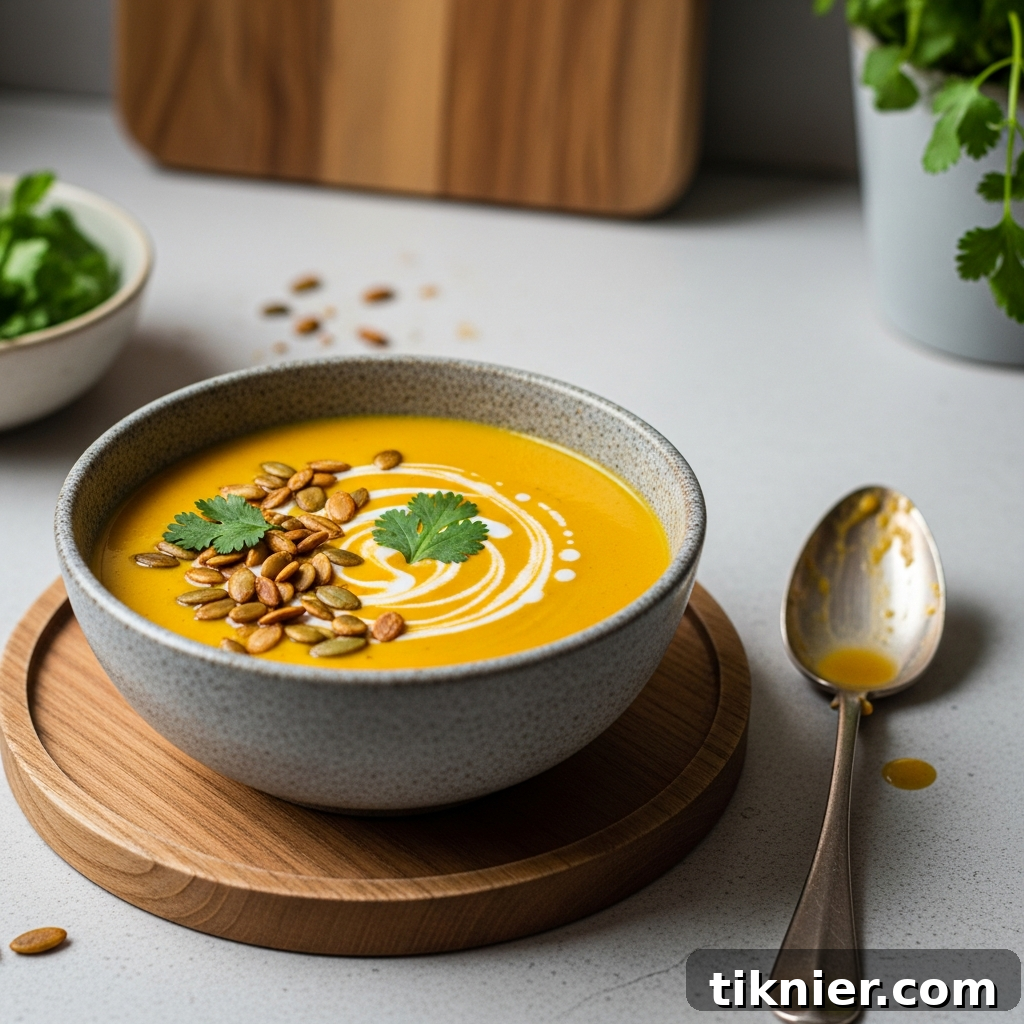
There are certain flavors that evoke a deep sense of comfort, a feeling akin to coming home. For many, especially as the crisp air of autumn settles in, pumpkin embodies this warmth. For years, my experience with pumpkin soup, while comforting, was somewhat predictable. It was a reliable, cozy dish, but lacked a certain spark, a vibrant complexity that I yearned for. This all changed one memorable, chilly autumn evening at my friend Caroline’s house. She had just returned from an inspiring trip to Thailand and was enthusiastically trying to recreate a mesmerizing curry she had encountered on her travels.
As I stepped into her home, an intoxicating aroma enveloped me – a captivating blend of pungent ginger, bright lemongrass, and rich coconut milk. While Caroline’s curry was undeniably delicious, my culinary imagination began to wander. My thoughts kept returning to the cans of pumpkin puree patiently waiting in my own pantry. A culinary lightbulb flickered on: what if I could infuse the beloved, earthy essence of pumpkin with the exotic, aromatic vibrancy of Thai-inspired spices? The very next day, driven by this newfound inspiration, I embarked on a creative experiment in my kitchen.
My initial attempts at crafting what I envisioned as Pumpkin Curry Soup were promising, yet something was undeniably missing. There was a subtle void, a savory undertone, a depth that I couldn’t quite pinpoint. The soup was good, but not extraordinary. Then, serendipitously, while preparing a simple vinaigrette, my hand instinctively reached for a tub of white miso paste. Miso, with its incredible power to infuse dishes with that sought-after “umami” flavor, seemed like a potential game-changer. On a whim, I stirred a spoonful into my simmering pumpkin and curry concoction. The transformation was instantaneous and profound. This was the missing link, the magic touch. The miso paste beautifully rounded out the natural sweetness of the pumpkin and the gentle spice of the curry, elevating the soup to a deeply flavorful, complex, and utterly irresistible culinary masterpiece. It was everything I had hoped for and more.
Skip to My Special Recipe!
Unlocking the Magic: Why This Pumpkin Curry Soup Recipe Stands Out
Pumpkin soup has long been a cherished staple, especially when autumn leaves signal the return of cooler weather. Its enduring popularity stems from its comforting simplicity and its ability to showcase the seasonal bounty of squash. Traditionally, this heartwarming soup is often seasoned with classic spices like nutmeg, cinnamon, and ginger, creating a sweet and savory profile that evokes pure nostalgia. While undeniably beloved, I always felt there was an untapped potential for a more adventurous and complex flavor journey beyond the traditional. My goal was to create something familiar yet extraordinary, a soup that resonated with comfort but also surprised the palate with exciting, global influences.
This quest for culinary innovation led to the vibrant world of Thai-inspired flavors. By thoughtfully integrating elements such as fragrant red curry paste, zesty fresh ginger, and luxurious coconut milk, we elevate this humble pumpkin soup from a simple pleasure to a spectacular experience. The red curry paste, a cornerstone of Thai cuisine, introduces a complex bouquet of aromatic spices – often including chili, lemongrass, galangal, and kaffir lime – that impart a gentle, warming heat and an incredible depth of flavor. Coconut milk is another transformative ingredient, providing an unparalleled silky, creamy texture that dairy creams simply cannot replicate. Its subtle sweetness and richness beautifully complement and mellow the spices, creating a harmonious balance that is both indulgent and refreshing. The interplay of these ingredients ensures every spoonful is a delightful dance of sweet, spicy, and creamy notes.
However, the true secret, the element that truly distinguishes this particular Pumpkin Curry Soup recipe and renders it utterly unforgettable, is the strategic inclusion of white miso paste. While it might seem an unconventional addition to a pumpkin soup, trust me when I say it’s a stroke of culinary genius. Miso, a traditional Japanese seasoning produced by fermenting soybeans with salt and koji (a type of fungus), is the undisputed master of adding “umami.” Often referred to as the “fifth taste,” umami provides a deep, savory, and profoundly satisfying quality to food. Crucially, its role here is not to make the soup taste like traditional miso soup. Instead, it works subtly in the background, a quiet powerhouse that adds an incredible depth, richness, and complexity. It harmonizes the sweetness of the pumpkin, the creaminess of the coconut, and the spice of the curry, tying all the flavors together in a cohesive, balanced, and remarkably sophisticated way. It’s this nuanced addition that consistently prompts guests to ask, “What is in this? It’s absolutely incredible!”—a testament to its transformative power.
Essential Ingredients for Crafting Your Perfect Pumpkin Curry Soup
One of the aspects I appreciate most about this recipe is its elegant use of readily available pantry staples to create something that tastes incredibly special and gourmet. The magic lies in building layers of flavor, which means that using quality ingredients, where it genuinely counts, will make a profound difference in the final taste profile. You won’t need anything exotic or overly expensive; simply good, fresh components allow the distinct flavors to truly shine through.
At the very heart of our rich and velvety soup is, naturally, the pumpkin puree. It is absolutely crucial to select pure pumpkin puree, rather than pumpkin pie filling. Pumpkin pie filling is pre-sweetened and pre-spiced, which would entirely throw off the delicate balance of flavors we are aiming to create. Always double-check the label to ensure you’re getting 100% pure pumpkin. For the luxurious, creamy base, full-fat canned coconut milk is an absolute non-negotiable. Its rich texture and high-fat content provide a decadent body and mouthfeel that simply cannot be replicated by lighter versions or other dairy creams. The fats in full-fat coconut milk are also essential for effectively carrying and enhancing the flavors of the spices, resulting in a more robust and satisfying soup. For me, fresh aromatics like garlic and ginger are also paramount; their bright, pungent, and zesty flavors are significantly more vibrant and potent than their dried, powdered counterparts, adding an irreplaceable freshness to the soup.
And now for my acclaimed secret weapon: **white miso paste**. This isn’t just an addition; it’s the pivotal twist that elevates the entire dish from excellent to extraordinary. White miso, also known as shiro miso, is typically milder, slightly sweeter, and lighter in flavor compared to red or brown miso varieties. Its delicate profile makes it perfectly suited for this soup, allowing it to enhance without overpowering. It dissolves beautifully into the warm broth, seamlessly integrating its savory depth – that incomparable umami – that I discussed earlier. It acts as a masterful unifier, tying together the sweetness of the pumpkin, the richness of the coconut, and the warmth of the curry spices in the most wonderfully harmonious and complex manner. You can typically locate white miso paste in the refrigerated section of most well-stocked grocery stores, often alongside tofu, kimchi, or other fermented products. Don’t underestimate this humble tub; it holds the key to an unparalleled depth of flavor, I promise you.
- 1 tbsp coconut oil
- 1 large yellow onion, chopped
- 2 cloves garlic, minced
- 1 tbsp fresh ginger, grated
- 2 tbsp red curry paste
- 1 tsp ground turmeric
- ½ tsp ground coriander
- 2 (15-ounce) cans pure pumpkin puree (not pie filling)
- 4 cups vegetable broth (low sodium preferred)
- 1 (13.5-ounce) can full-fat coconut milk
- 2 tbsp white miso paste
- 1 tbsp lime juice, freshly squeezed
- Salt and freshly ground black pepper to taste
- For Garnish (Optional but Recommended):
- Toasted pumpkin seeds (pepitas)
- A delicate swirl of extra coconut milk or coconut cream
- Fresh cilantro leaves, roughly chopped
- A drizzle of chili oil for an extra kick
Step-by-Step Instructions: Crafting Your Exquisite Pumpkin Curry Soup
One of the many joys of this particular recipe is that it effortlessly comes together in a single pot – a definite win in my culinary playbook for minimizing cleanup. The entire process is meticulously designed around building layers of flavor, one step at a time. It’s important not to rush; instead, allow each ingredient to fully develop and integrate. By respecting each stage, you will be generously rewarded with a soup that is profoundly delicious and exquisitely balanced. For optimal results, I highly recommend using a heavy-bottomed pot or a Dutch oven, as these vessels ensure even heat distribution and effectively prevent any scorching on the bottom, allowing for gentle, consistent cooking.
Step 1: Gently Sauté the Essential Aromatics
To begin, warm the coconut oil in your chosen pot over medium heat. Once the oil has melted and begins to shimmer slightly, signifying it’s ready, add the finely chopped yellow onion. Cook the onion, stirring occasionally, until it transforms into a soft, translucent, and slightly golden state. This process typically takes about 5 to 7 minutes. This initial step is crucial as it gently coaxes out the natural sweetness from the onion, establishing a foundational layer of flavor that will underpin the entire soup.
Step 2: Awaken and Bloom the Spices
Next, introduce the minced garlic and freshly grated ginger into the pot. Stir them together with the softened onion for a mere minute or so, just until their intoxicating fragrance fills your kitchen. Be careful not to burn the garlic. Following this, add the vibrant red curry paste, ground turmeric, and ground coriander. Stir these spices constantly for one full minute, allowing them to gently toast in the hot oil. This technique, known as “blooming” the spices, is absolutely vital. Toasting them in the heat releases their essential oils, significantly deepening and intensifying their flavor profile, making the soup much more aromatic and complex. Do not skip this transformative step!
Step 3: Combine Ingredients and Simmer to Perfection
Now, it’s time to incorporate the main liquid ingredients. Pour in the pure pumpkin puree and the vegetable broth. Using a sturdy whisk, stir vigorously until the pumpkin puree is completely dissolved into the broth and the mixture is entirely smooth, free of any lumps. Bring this concoction to a lively simmer over medium-high heat. As soon as it reaches a gentle boil, immediately reduce the heat to low, ensuring the soup maintains a gentle, barely-there simmer. Place a lid securely on the pot and allow it to quietly simmer for approximately 15 to 20 minutes. This essential simmering time allows all those beautiful, diverse flavors to thoroughly meld, deepen, and get to know each other, resulting in a cohesive, richly flavored soup.
Step 4: Introduce the Creaminess and Umami Boost
Here’s where the real magic happens, adding the distinctive character to our soup. In a small, separate bowl, place the white miso paste. Ladle in a few tablespoons of the warm soup broth from the main pot into the bowl with the miso. Whisk this mixture thoroughly until the miso paste is completely dissolved and forms a smooth, lump-free slurry. This clever trick prevents the miso from clumping when you add it to the larger volume of soup. Once smooth, stir both the dissolved miso mixture and the entire can of full-fat coconut milk into the simmering soup, integrating them fully.
Step 5: Blend for a Silky-Smooth Texture
To achieve that coveted, velvety-smooth texture, it’s time to blend. The simplest and most convenient method is to use an immersion blender; you can effortlessly stick it directly into the pot. Blend the soup until it is completely smooth, creamy, and free of any fibrous bits. If you don’t own an immersion blender, a traditional stand blender works perfectly well, though with a bit more care. Carefully transfer the soup in batches to your blender. Be sure not to fill the blender more than halfway, as hot liquids expand. Crucially, remove the small cap from the blender lid and cover the opening with a folded kitchen towel. This allows steam to safely escape, preventing pressure buildup and potential splatters. Blend each batch until perfectly smooth, then return the blended soup to the pot.
Step 6: Final Adjustments and Serving Presentation
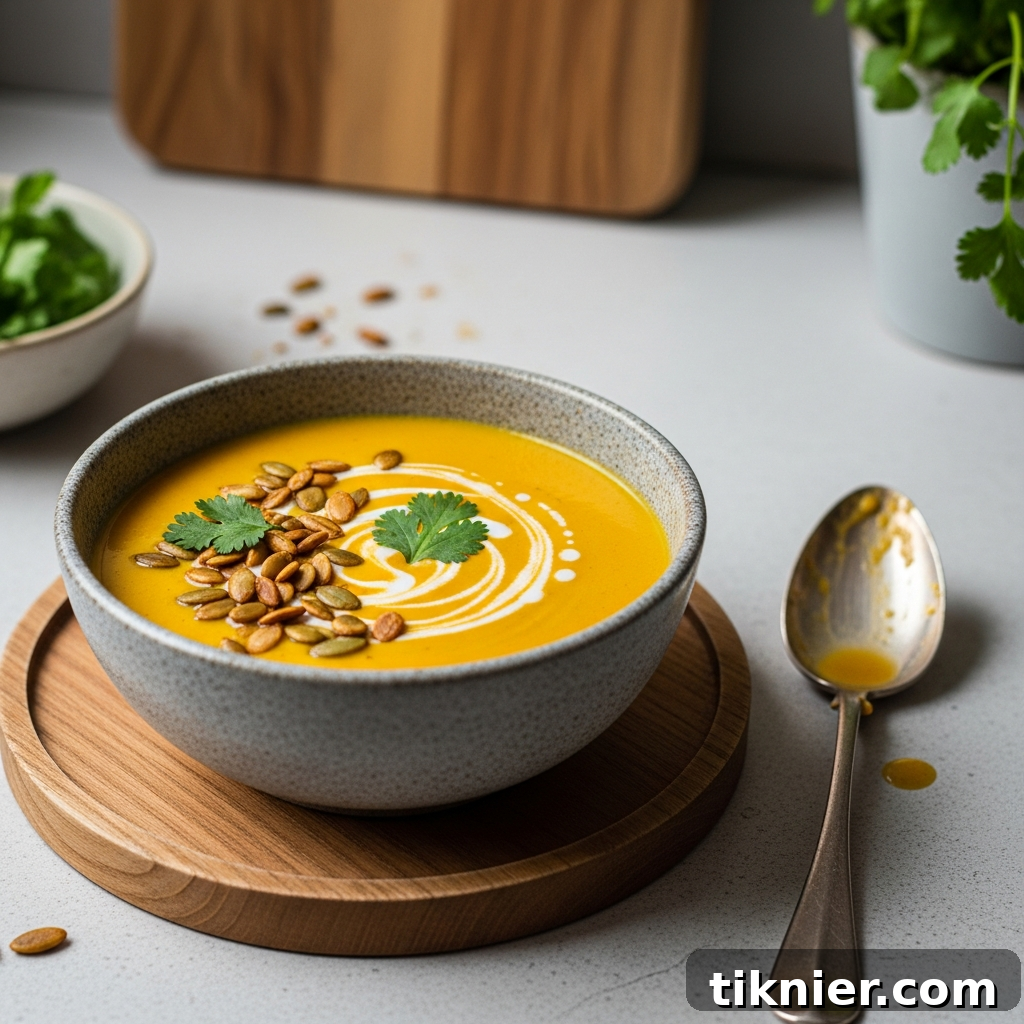
The final touches are what truly make this soup shine and bring all the flavors to life. Stir in the freshly squeezed lime juice. This bright, acidic element acts as a crucial counterpoint, cutting through the richness and elevating all the savory flavors. Give the soup a taste, and adjust the seasoning as needed with salt and freshly ground black pepper. Serve it piping hot. For an enhanced culinary experience and beautiful presentation, add your desired garnishes: a delicate swirl of extra coconut milk for visual appeal and added creaminess, a sprinkle of crunchy toasted pumpkin seeds (pepitas) for textural contrast, and a scattering of vibrant fresh cilantro leaves for a burst of herbaceous freshness. Enjoy every spoonful!
Elevating the Experience: How To Serve Your Pumpkin Curry Soup
Serving this vibrant and richly flavored Pumpkin Curry Soup is almost as delightful as the process of making it. Its bold, aromatic profile allows it to stand beautifully on its own as a fulfilling meal, but pairing it with the right accompaniments can effortlessly transform a simple bowl of soup into a truly memorable dining experience. The addition of varied textures and a touch of fresh brightness goes an incredibly long way in enhancing the overall enjoyment.
My preferred way to present this soup, especially when entertaining, is to set out a selection of garnishes. This interactive approach allows everyone to personalize their bowl, creating a fun and engaging meal. The perfect balance, in my opinion, involves a little crunch for contrast, a touch of extra creaminess for indulgence, and a hint of fresh herbs to brighten everything up. These finishing touches not only add visual appeal but also introduce new dimensions of flavor and texture to each spoonful.
Here are some of my most cherished serving suggestions to inspire your next meal:
- Artisan Bread for Dipping: You can never go wrong with a delicious bread to soak up every last drop of this creamy soup. Warm, fluffy naan bread, perhaps brushed with a little garlic butter, is an absolute dream accompaniment, perfectly complementing the curry flavors. Alternatively, a crusty baguette, slices of artisanal sourdough, or even warm pita bread are wonderful choices for their ability to absorb the rich broth and provide a satisfying chew.
- A Swirl of Creamy Goodness: A delicate drizzle of extra full-fat coconut milk or a dollop of rich coconut cream on top not only creates a beautiful visual swirl but also adds another layer of luxurious creaminess. For those who appreciate a tangy contrast, a spoonful of plain Greek yogurt or sour cream (if not strictly vegan) provides a delightful counterpoint to the soup’s richness. A swirl of cashew cream can also be made for a dairy-free, nutty alternative.
- Textural Toppings for Crunch: Introducing crunch is key to preventing the soup from feeling one-dimensional. Toasted pumpkin seeds (pepitas) are a classic and natural choice, adding a nutty, earthy crunch. Other fantastic options include crispy roasted chickpeas for a protein boost and satisfying texture, thinly sliced and fried shallots for an exquisite savory crispness, or even some toasted coconut flakes for a subtle hint of sweetness and tropical flavor. Homemade croutons or spiced nuts also work wonderfully.
- Fresh Herbs and a Hint of Extra Spice: A generous sprinkle of fresh cilantro leaves is a must; its bright, herbaceous flavor beautifully cuts through the richness of the soup and adds a burst of freshness. For those who revel in extra heat, offering a small dish of red pepper flakes or a vibrant drizzle of chili oil on the side allows guests to customize their spice level to perfection. Fresh mint or basil can also provide intriguing alternative herbaceous notes.
For a more substantial and complete meal, consider serving this soup alongside a simple green salad dressed with a light, zesty vinaigrette, or perhaps a warm, gooey grilled cheese sandwich made with sharp cheddar. Its versatility means it can gracefully transition from an elegant starter at a dinner party to a comforting, easy-to-prepare weeknight dinner.
Maximizing Your Meal: How To Store & Reuse Pumpkin Curry Soup Leftovers
This Pumpkin Curry Soup holds a special place in my heart as one of those magical dishes that often tastes even better the next day. The flavors are given ample time to mingle, deepen, and truly harmonize, resulting in an even more exquisite experience. So, if you find yourself with any leftovers, consider it a wonderful bonus! Storing this Pumpkin Curry Soup is remarkably simple, and it reheats beautifully, making it an ideal candidate for effortless lunches or quick, satisfying dinners later in the week.
The most crucial aspect of storing any soup safely is to ensure it cools down properly and relatively quickly before it’s transferred to the refrigerator. Leaving a large, hot pot of soup on the counter to cool slowly for an extended period can inadvertently create an environment conducive to bacterial growth, posing a food safety concern. To expedite the cooling process safely, I recommend pouring the hot soup into shallower containers, which allows for a larger surface area and faster cooling. Alternatively, you can place the pot, uncovered, into a sink filled with ice water for a few minutes, stirring occasionally, before transferring it.
Here’s my recommended approach for storing and reheating your delicious leftovers:
- Refrigeration: Once your soup has cooled sufficiently, ideally to around room temperature (within two hours of cooking), pour it into clean, airtight containers. It will maintain its excellent quality and freshness in the refrigerator for up to 4 or 5 days. When you’re ready to enjoy it again, simply reheat it gently on the stovetop over medium-low heat, stirring periodically until it is thoroughly warmed through. Alternatively, for a quicker option, you can portion it into a microwave-safe bowl and heat it in the microwave, stirring halfway through, until steaming hot.
- Freezing: This soup is an absolute superstar when it comes to freezing! Its dairy-free base means it holds up exceptionally well without any textural changes. Let the soup cool completely before freezing. Then, carefully pour it into freezer-safe airtight containers or heavy-duty freezer bags. If using bags, I suggest laying them flat on a baking sheet to freeze; once solid, they can be stacked vertically, saving valuable freezer space. Always remember to leave about an inch of headspace at the top of your containers to allow for expansion as the soup freezes. It will keep beautifully in the freezer for up to 3 months. To reheat from frozen, the best method is to allow it to thaw overnight in the refrigerator. Once thawed, warm it gently on the stovetop. If you’re in a pinch and need to reheat directly from frozen, place the frozen block of soup in a pot over very low heat, stirring frequently and breaking it up as it thaws, until it’s heated through.
As for repurposing, a simple bowl of leftover soup is fantastic on its own. However, you can also unleash your creativity and use it as a flavorful base for entirely new dishes. Try ladling it generously over some steamed basmati or jasmine rice, perhaps adding some cooked shredded chicken, pan-seared tofu, or an assortment of roasted vegetables for a completely revitalized meal. It also makes a wonderfully rich and aromatic sauce for pasta or grains like quinoa, transforming a basic side into a main course with minimal effort. Don’t be afraid to experiment!
Personalizing Your Pot: Substitutions & Variations for Pumpkin Curry Soup
One of the most appealing qualities of a robust and flavorful recipe like this is its inherent flexibility and adaptability. This Pumpkin Curry Soup serves as a truly magnificent canvas for culinary creativity, allowing you to easily adjust it to suit your personal tastes, dietary needs, or simply what ingredients you happen to have readily available in your kitchen. Whether you need to accommodate a specific dietary restriction, want to experiment with different flavor profiles, or just feel like injecting some novelty, there are countless simple swaps and exciting additions you can incorporate.
Don’t hesitate to play around with the spices, adjust the main ingredients, or introduce new elements. Cooking should be an enjoyable and exploratory process, and this particular recipe is incredibly forgiving, encouraging experimentation. The golden rule, however, is always to taste as you go, especially when you’re making significant changes or adding new spices, to ensure the balance of flavors remains just right for your palate. Trust your instincts and your taste buds!
Here are a few inspiring ideas to help you get started on your customization journey:
- Exploring Different Squashes: While pumpkin puree is central, if you don’t have it on hand, an equal amount of pureed roasted butternut squash or sweet potato works beautifully as a substitute. Both offer that delightful sweet, earthy quality that harmonizes so well with the complex curry spices. You could also try other winter squashes like Kabocha or Acorn squash for slightly different nuances in flavor and texture.
- Customizing the Heat Level: The spice level of red curry paste can vary considerably between brands, so it’s always wise to exercise caution. If you prefer a milder soup, begin with just one tablespoon of red curry paste. You can always taste the soup after it has simmered and add an additional half or full tablespoon if you desire more warmth. For spice enthusiasts looking to amplify the heat, feel free to add more curry paste, a pinch of cayenne pepper, a few dashes of your favorite hot sauce, or even some finely chopped fresh chilies (like bird’s eye chilies) at the sautéing stage.
- Enhancing with Protein: To transform this hearty soup into an even more substantial, all-in-one meal, consider integrating a source of protein. A can of drained and rinsed chickpeas or some red lentils can be simmered directly along with the soup, absorbing the flavors beautifully. Cooked, shredded chicken, pan-seared shrimp, or even cubed firm tofu or tempeh (added towards the end of cooking) would also make delicious and fulfilling additions.
- Addressing Dietary Considerations: This soup is inherently vegetarian and naturally dairy-free, making it suitable for many diets. To ensure it is fully vegan, simply double-check the ingredients list of your chosen red curry paste, as some brands regrettably contain shrimp paste. For a certified gluten-free version, ensure that both your vegetable broth and white miso paste explicitly state “gluten-free” on their labels, as some brands may contain wheat or barley.
- Venturing into Flavor Variations: Don’t limit yourself to red curry! Try swapping the red curry paste for green or yellow curry paste to experience a distinctly different flavor profile. For an added layer of richness and a subtle, satay-like flavor, stir in a tablespoon of smooth peanut butter or almond butter with the coconut milk. A splash of tamari (gluten-free soy sauce) or a small amount of fish sauce (if not strictly vegan) can deepen the umami further. Experiment with a squeeze of fresh orange juice instead of lime for a different citrusy bright note, or a pinch of cardamom for an exotic warmth.
Julie’s Special Pumpkin Curry Soup
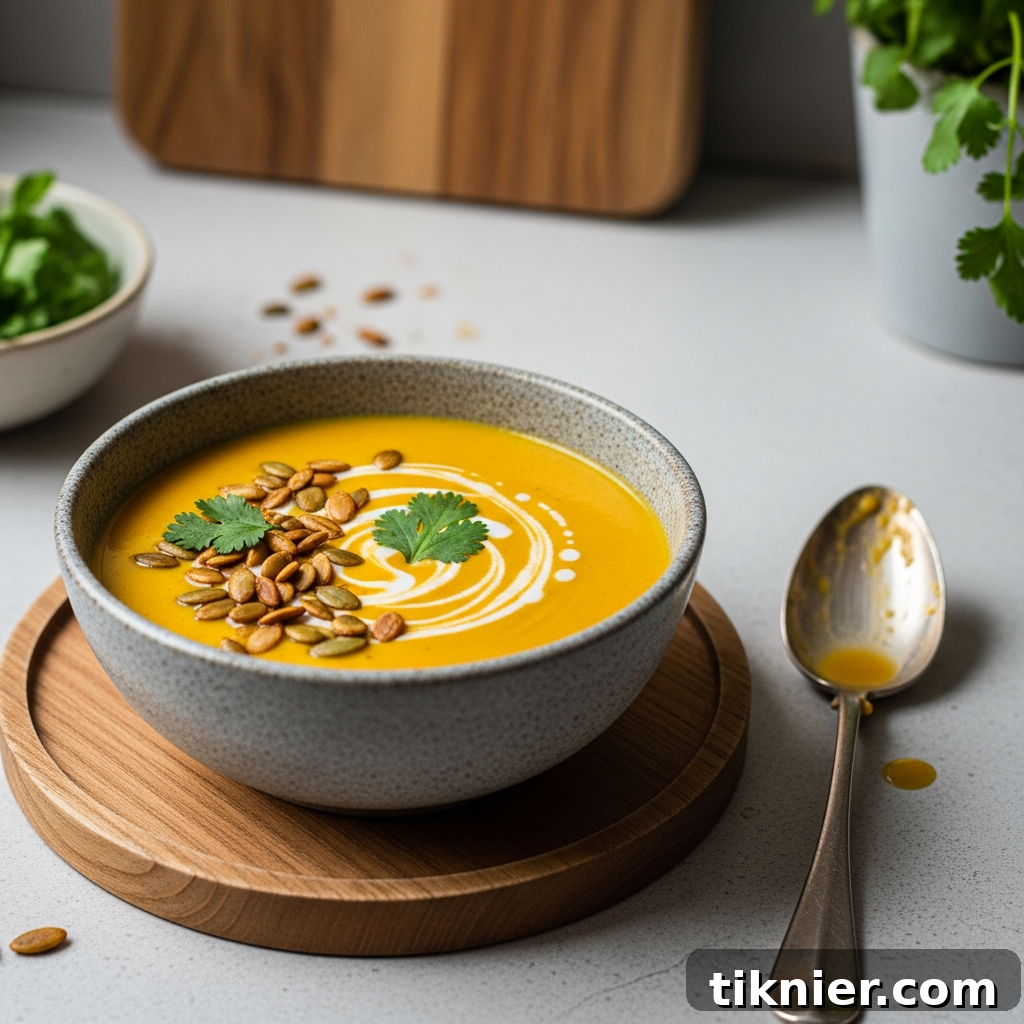
Description: A velvety, rich pumpkin soup with a modern, fusion twist. Aromatic red curry, luxurious full-fat coconut milk, and the secret umami boost from white miso paste combine to create a soup with incredible depth and complex flavor. It’s the perfect comforting dish for a cozy autumn day or any time you crave something uniquely delicious.
Yield: 6-8 servings | Category: Soup | Cuisine: Fusion (Thai-inspired)
Prep Time: 10 minutes | Cook Time: 30 minutes
Ingredients
- 1 tbsp coconut oil
- 1 large yellow onion, chopped
- 2 cloves garlic, minced
- 1 tbsp fresh ginger, grated
- 2 tbsp red curry paste
- 1 tsp ground turmeric
- ½ tsp ground coriander
- 2 (15-ounce) cans pure pumpkin puree (ensure it’s not pie filling)
- 4 cups vegetable broth (low sodium recommended)
- 1 (13.5-ounce) can full-fat coconut milk
- 2 tbsp white miso paste
- 1 tbsp lime juice, freshly squeezed
- Salt and freshly ground black pepper to taste
- Garnish (Optional): Toasted pumpkin seeds (pepitas), a swirl of extra coconut milk or cream, fresh cilantro leaves
Instructions
- Heat coconut oil in a large pot over medium heat. Add the chopped yellow onion and sauté, stirring occasionally, until it softens and becomes translucent (about 5-7 minutes).
- Stir in the minced garlic and grated fresh ginger and cook for 1 minute until fragrant. Add the red curry paste, ground turmeric, and ground coriander. Stir constantly for 1 minute to “bloom” the spices, deepening their flavor.
- Whisk in the pure pumpkin puree and vegetable broth until the mixture is completely smooth and lump-free. Bring the soup to a lively simmer, then immediately reduce the heat to low. Cover the pot and let it gently simmer for 15-20 minutes, allowing the flavors to meld.
- In a small, separate bowl, whisk the white miso paste with a few tablespoons of the warm soup broth until it forms a completely smooth paste. This prevents clumping.
- Stir both the dissolved miso mixture and the entire can of full-fat coconut milk into the soup in the pot, mixing until well combined.
- Use an immersion blender to puree the soup directly in the pot until it is completely smooth and creamy. If using a standard blender, carefully transfer the soup in batches, blending until smooth (remember to vent the lid to allow steam to escape).
- Stir in the freshly squeezed lime juice. Taste the soup and season generously with salt and freshly ground black pepper as needed, adjusting to your preference.
- Serve the Pumpkin Curry Soup hot, garnished with toasted pumpkin seeds, a swirl of coconut milk, and fresh cilantro leaves for an added burst of flavor and visual appeal.
Notes
Always ensure you use 100% pure pumpkin puree from a can, not pumpkin pie filling, which contains added sweeteners and spices. For the most luxuriously creamy soup texture, do not substitute full-fat coconut milk with a light or reduced-fat version; the fat content is crucial for richness and mouthfeel.
Servings: 8 | Calories: 220 kcal | Fat: 15g | Carbohydrates: 20g | Protein: 4g
5 Frequently Asked Questions About This Pumpkin Curry Soup
Here are clear, concise, and helpful answers to the most common questions I receive regarding this flavorful Pumpkin Curry Soup recipe. These insights will help you confidently prepare and enjoy this unique dish.
Can I use fresh pumpkin for this Pumpkin Curry Soup recipe instead of canned puree?
Absolutely, you can! While canned pumpkin puree offers unparalleled convenience for a quick weeknight meal, opting for a fresh sugar pie pumpkin will impart an even fresher, more nuanced, and subtly sweeter flavor to your soup. It does require a bit more preparation, but many find the effort well worth it for the enhanced taste. To prepare fresh pumpkin, you’ll need one small sugar pie pumpkin, which is typically smaller and naturally sweeter than the larger carving pumpkins. Begin by carefully cutting the pumpkin in half and thoroughly scooping out all the seeds and stringy fibrous bits. You can save the seeds for roasting later for a delicious snack! Lightly brush the cut surfaces of the pumpkin halves with a little bit of olive or coconut oil and place them cut-side down on a baking sheet. Roast in a preheated 400°F (200°C) oven for approximately 30 to 45 minutes, or until the pumpkin flesh is exceptionally tender when pierced with a fork. Allow it to cool until it’s comfortable enough to handle, then scoop the soft, roasted flesh out of the skin. Puree this roasted flesh in a food processor or blender until it is completely smooth and lump-free. You will need roughly 4 cups of this homemade puree to substitute for the two 15-ounce cans specified in the recipe. Once pureed, you can proceed with the recipe instructions as written, incorporating your fresh pumpkin puree.
What makes this Pumpkin Curry Soup incredibly creamy without any dairy products?
The exquisite creaminess of this soup is achieved through a perfect synergy of two primary ingredients, working in harmony to create a luxurious texture without any traditional dairy. The first key ingredient is full-fat canned coconut milk. This essential component provides a rich, velvety texture and a subtle, natural sweetness that impeccably complements the vibrant curry spices. It is crucial to use the full-fat variety from a can, as “light” coconut milk or the kind sold in cartons is much thinner, largely water-based, and simply won’t yield the same decadent, thick, and satisfying result. The higher fat content in full-fat coconut milk is fundamental for achieving that coveted velvety mouthfeel and for effectively emulsifying and carrying the flavors throughout the soup. The second contributing element is the pumpkin puree itself. When the soup undergoes its final blending stage, the starches naturally present in the pumpkin break down and help to naturally thicken the soup, imparting a lovely, substantial body. The final and critical step of pureeing the entire soup, whether you utilize a convenient immersion blender or a traditional stand blender, is what truly brings it all together. This thorough blending process emulsifies all the ingredients, ensuring that every single spoonful is perfectly smooth, consistently thick, and wonderfully creamy, all without requiring a single drop of dairy.
Is this Pumpkin Curry Soup recipe suitable for freezing, and how should I do it?
Yes, this Pumpkin Curry Soup is an absolutely fantastic recipe for preparing in advance and freezing for later enjoyment! Soups that are free of dairy (like this one) and potatoes tend to freeze exceptionally well without any significant changes to their texture or flavor upon thawing, and this recipe is no exception. It’s an ideal solution for ensuring you have a delicious, homemade, and healthy meal readily available on those particularly busy evenings. To freeze it correctly and preserve its quality, the first and most important step is to allow the soup to cool down completely to room temperature. This is a critical step to prevent the formation of large ice crystals, which can negatively impact texture, and to ensure the soup freezes evenly. Once the soup has thoroughly cooled, portion it into freezer-safe airtight containers or heavy-duty zip-top freezer bags. If you opt for freezer bags, a clever trick is to lay them flat on a baking sheet to freeze; once solid, they become remarkably easy to stack, saving a considerable amount of freezer space. Be diligent about labeling each container or bag with the name of the soup and the date it was frozen. It will maintain its delicious quality beautifully in the freezer for up to three months. To enjoy, simply transfer the frozen soup to the refrigerator and allow it to thaw overnight. Once thawed, gently reheat it on the stovetop over medium-low heat, stirring occasionally, until it is thoroughly warmed through and steaming. You can also reheat directly from frozen on low heat, stirring frequently.
How can I effectively adjust the spice level of my Pumpkin Curry Soup to my preference?
Adjusting the heat level in this Pumpkin Curry Soup is quite straightforward, allowing you to perfectly tailor it to your household’s preference, whether you prefer it mild or with a fiery kick. The primary source of heat in this recipe comes directly from the red curry paste. It’s important to note that different brands of red curry paste can vary significantly in their spice intensity, so it’s always a good practice to start with a smaller amount if you’re uncertain about a particular brand. The two tablespoons called for in the recipe are generally designed to yield a soup with a pleasant, medium warmth that is noticeable but won’t overpower the nuanced flavors of the other ingredients. If your preference leans towards a milder soup, I strongly recommend starting with just one tablespoon of red curry paste. You can always taste the soup after it has simmered for a while and easily add an additional half or full tablespoon if you feel it requires more heat. Conversely, if you are a true spice aficionado and wish to significantly escalate the heat, you can increase the amount of curry paste, or you could incorporate a pinch of cayenne pepper, a few generous dashes of your favorite chili sauce (like Sriracha), or even some fresh, thinly sliced bird’s eye chilies directly into the pot during the sautéing stage. Another excellent method for individual customization is to offer a swirl of Sriracha or a drizzle of chili oil on top when serving, allowing each person to add extra heat to their own bowl.
Why is white miso paste included in your Pumpkin Curry Soup recipe? What does it contribute?
This is undeniably my favorite question to answer because it delves right into the heart of what makes this particular recipe so uniquely special and truly exceptional! The addition of white miso paste is my signature secret ingredient, specifically incorporated to infuse the soup with a deep, savory flavor known as umami. Umami is widely recognized as the fifth basic taste, alongside sweet, sour, salty, and bitter. It’s that wonderfully satisfying, almost meaty or brothy richness you often encounter in foods like aged Parmesan cheese, gourmet mushrooms, and soy sauce. It introduces a profound complexity and an incredible depth of flavor that is often challenging to achieve through other means, elevating the overall taste profile significantly. In this particular Pumpkin Curry Soup, the white miso paste plays a subtle yet profoundly impactful background role. It does not, contrary to what some might expect, make the soup taste distinctly like traditional miso soup. Instead, its magic lies in its ability to beautifully balance the inherent sweetness derived from the pumpkin and the coconut milk, while simultaneously rounding out and harmonizing the warming spice notes from the red curry paste. It acts as a masterful culinary bridge, seamlessly tying all the diverse flavors together, resulting in a more cohesive, deeply satisfying, and wonderfully balanced final product. It’s precisely that understated “something extra” that consistently causes people to pause after their very first spoonful, pondering what extraordinary element makes this soup taste so incredibly good and memorable.
Continue Your Culinary Journey: Try These Recipes Next
If you thoroughly enjoyed the comforting, flavorful, and uniquely complex experience of this Pumpkin Curry Soup, I’m confident you’ll appreciate these other cherished recipes from my kitchen that share similar qualities of warmth, depth, and ease of preparation. They are perfect for expanding your repertoire of delicious and comforting meals.
- Vegan Pumpkin Cream Sauce: Discover another ingenious way to utilize pumpkin in this incredibly versatile and creamy savory sauce. It’s perfectly designed for tossing with your favorite pasta, creating another easy, satisfying, and comforting meal that celebrates the flavors of fall.
- Thai Coconut Curry Chicken: If the vibrant and aromatic curry flavors in this soup captivated your palate, you will absolutely adore this classic Thai curry. Featuring tender chicken bathed in a rich, fragrant coconut broth, it’s a staple for any lover of Southeast Asian cuisine.
- Crock Pot Thai Chicken Soup: For those seeking another effortlessly easy, “set-it-and-forget-it” meal solution, this slow cooker soup is an absolute winner. It’s brimming with authentic Thai flavors and boasts an unbelievably simple preparation process, making it ideal for busy days when you crave a homemade, flavorful dish.
I genuinely hope you find as much joy and satisfaction in preparing and savoring these recipes as I do!