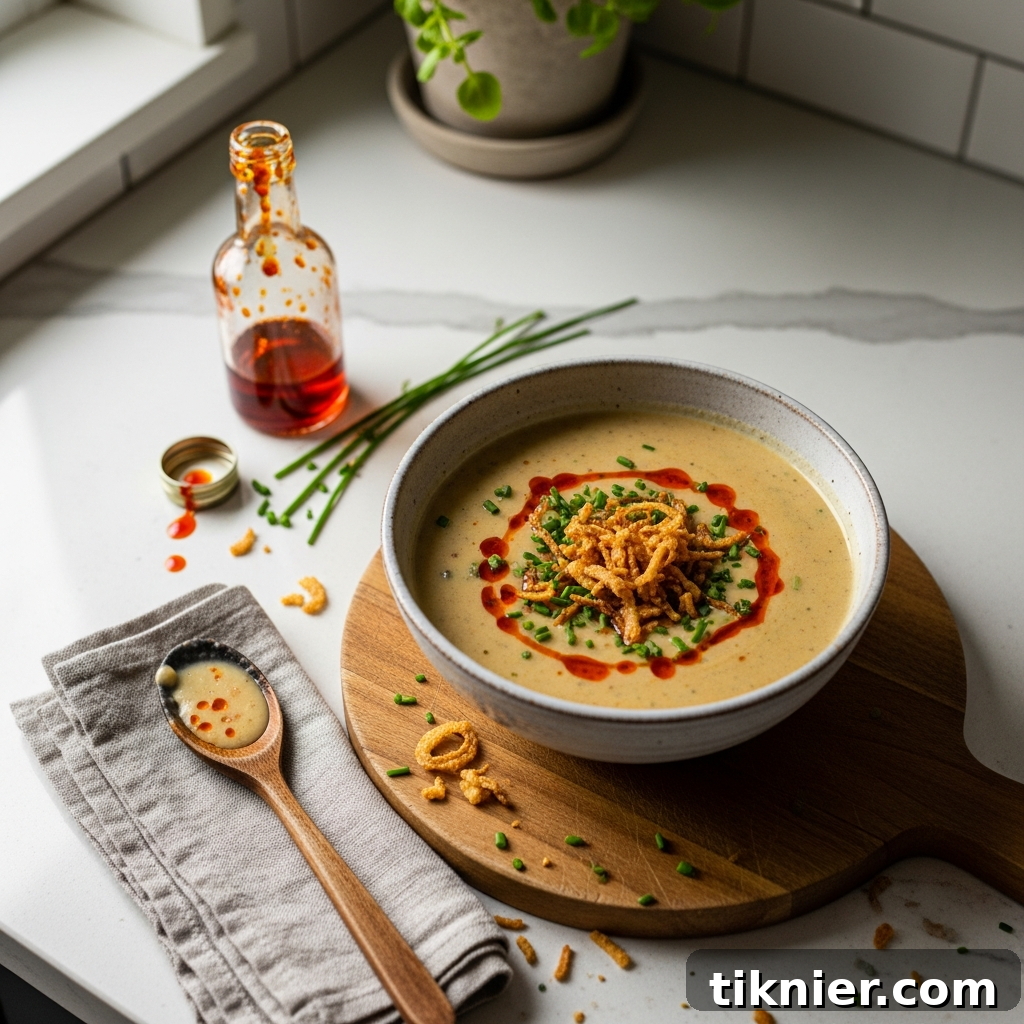
The memory is still vivid: my sister-in-law, a dedicated vegan for years, was coming to stay for a whole week. My immediate thought, as any good host knows, was food. The air outside had a definite bite, whispering promises of cozy evenings, and my mind instantly conjured images of a rich, warm pot of potato soup. The only problem? My cherished family recipe was undeniably dairy-heavy, brimming with cream and bacon – delicious, but decidedly not vegan-friendly.
I dove headfirst into the internet’s vast ocean of recipes, trying various vegan potato soup iterations. While many promised creaminess, often achieved through cashews or coconut milk, they consistently fell short. They were *fine*, but they lacked that profound, savory depth, that inexplicable “oomph” that transforms a simple soup into a soul-satisfying experience. You know the feeling – that comforting warmth that makes you instinctively close your eyes and let out a little contented hum with the first spoonful. They were missing that magic.
Determined to crack the code, I began my own kitchen experiments. I understood that mere creaminess wasn’t enough; the soup needed complexity, a savory, almost cheesy backbone that could genuinely impress even the most ardent dairy aficionados. After a few creative attempts, I finally stumbled upon my culinary secret weapon, a humble ingredient that elevated this straightforward soup into something truly extraordinary. It’s the subtle touch of brilliance that will have everyone at your table clamoring for the recipe.
Skip to My Special Recipe!
Unlocking the Secret: Why This Vegan Potato Soup Recipe Stands Out
Potato soup holds a revered place in culinary traditions worldwide for good reason. It’s the ultimate comfort food, a culinary embrace on a brisk day, a dish that transcends generations and cultures. Its enduring appeal lies in its humble origins, crafted from simple, accessible ingredients that yield a hearty and deeply satisfying meal. Historically, its signature richness and profound savory notes have been attributed to dairy components like cream, milk, or cheese, often augmented by the smoky, salty kick of cured meats such as bacon.
The inherent challenge in crafting a truly exceptional vegan potato soup lies in artfully recreating this indulgent depth of flavor without relying on those traditional, animal-based ingredients. Many plant-based recipes ingeniously utilize soaked cashews to establish a luscious, creamy base, which is undoubtedly a brilliant starting point for texture. However, my experience revealed a crucial limitation: relying solely on cashews, while achieving a superb mouthfeel, can sometimes result in a flavor profile that feels somewhat one-dimensional. It delivers creaminess, yes, but often lacks that intricate, savory complexity that makes you want to scrape every last drop from the bowl.
This is precisely where my unique culinary innovation takes center stage: the unassuming yet incredibly potent white miso paste. This fermented soybean paste is an absolute powerhouse of umami – that elusive, savory fifth taste that adds a profound richness to food. Incorporating just a couple of tablespoons of white miso, stirred in at the culmination of the cooking process, bestows an incredible, subtly salty, and deeply satisfying depth. This nuanced flavor beautifully mirrors the complexity typically derived from aged cheeses or meats that have been slow-cooked to perfection. Crucially, the miso operates in the background, enhancing the natural sweetness of the potatoes and the delicate allium notes of the leeks without ever dominating the soup with a distinct “miso” flavor. It’s this “secret weapon” that transforms my vegan potato soup recipe from merely a good substitute into an authentically incredible, standalone culinary masterpiece.
Essential Ingredients for Your Perfect Vegan Potato Soup
The inherent charm and genius of this soup lie in its ability to transform a handful of simple, wholesome ingredients into something truly extraordinary. While the ingredient list may appear straightforward, the quality and preparation of each component significantly contribute to the harmonious symphony of flavors in the final dish. Let’s explore the building blocks of this comforting creation.
Here is the complete roster of ingredients you’ll need to create this deeply satisfying and comforting soup:
- 2 tablespoons high-quality olive oil
- 2 large leeks, carefully cleaned with only the white and light green parts thinly sliced
- 2 cloves fresh garlic, finely minced
- 6 cups robust vegetable broth (low-sodium preferred, to control seasoning)
- 2 pounds Yukon Gold potatoes, peeled and uniformly cubed
- 1 teaspoon dried thyme (or 1 tablespoon fresh thyme, finely chopped)
- 1/2 cup raw cashews, soaked in piping hot water for a minimum of 30 minutes (essential for creaminess)
- 1/4 cup nutritional yeast (for that distinct cheesy, umami depth)
- 2 tablespoons white miso paste (the unparalleled secret ingredient!)
- 1 tablespoon apple cider vinegar (a bright finishing touch)
- Salt and freshly ground black pepper to taste
- Optional garnishes: fresh chopped chives, crispy fried onions or shallots, a vibrant drizzle of chili oil, toasted pumpkin seeds, or even homemade vegan croutons.
Without a doubt, the undisputed star and my signature twist in this recipe is the white miso paste. Please, do not be tempted to omit this ingredient! White miso, also known as shiro miso, is celebrated for its milder, slightly sweeter profile compared to its red or brown counterparts. This makes it an ideal choice for imparting a subtle, yet profound, savory depth without overshadowing the delicate, earthy flavors of the leeks and potatoes. You’ll typically discover it in the refrigerated section of most well-stocked grocery stores, often conveniently located near the tofu or other Asian specialty ingredients.
When it comes to selecting your potatoes, I cannot stress enough the recommendation for Yukon Golds. Their inherent buttery flavor and exceptionally creamy texture are perfectly suited for this particular soup. They possess the ideal starch content to break down just enough to naturally thicken the broth while simultaneously retaining some of their structural integrity, resulting in that coveted blend of smooth and wonderfully chunky. While Russet potatoes can technically be used, their higher starch content can sometimes lead to a slightly grainy or mealy texture when blended, which isn’t what we’re aiming for here.
Finally, a crucial note on the raw cashews: the step of soaking them in hot water is absolutely non-negotiable. This process meticulously softens the nuts, allowing them to transform into an incredibly silky, impeccably smooth cream when blended. Attempting to blend dry cashews will inevitably result in a rather unappetizingly gritty texture in your finished soup, a culinary mishap we are determined to avoid!
Step-by-Step Culinary Journey: Crafting Your Vegan Potato Soup
Preparing this soup is a wonderfully comforting and surprisingly straightforward process. It’s a favorite activity for a leisurely Sunday afternoon, allowing the enticing aromas to slowly permeate and fill the entire kitchen. We’ll meticulously build layers of exquisite flavor right from the very beginning. For optimal results, grab a sturdy, large pot or, ideally, a Dutch oven. Its heavy bottom is superb for even heat distribution, which is key to preventing any unwelcome scorching.
Step 1: Gently Sauté the Aromatic Base
Begin by heating your olive oil in the Dutch oven or large pot over a steady medium heat. Once the oil begins to shimmer subtly, signifying it’s ready, add the thoroughly cleaned and thinly sliced leeks. Leeks contribute a unique, delicate oniony flavor that is far milder and sweeter than traditional onions, laying a perfect foundation. Sauté them for approximately 5 to 7 minutes, stirring occasionally, until they become beautifully soft and translucent, slightly wilted. Next, add the finely minced garlic and continue to cook for just one more minute, until its intoxicating fragrance becomes evident. Exercise caution here to prevent the garlic from browning, as it can quickly turn bitter and detract from the overall flavor profile.
Step 2: Simmer to Perfection – Building the Soup Base
With the aromatics fragrant, carefully pour in your vegetable broth. Be sure to scrape up any delicious browned bits that may have adhered to the bottom of the pot, as these are concentrated pockets of flavor. Add the uniformly peeled and cubed Yukon Gold potatoes, along with the aromatic dried thyme. Give everything a good, thorough stir to combine. Increase the heat slightly and bring the mixture to a rolling boil. Once it’s bubbling merrily, reduce the heat significantly to low, cover the pot with its lid, and allow it to gently simmer for approximately 15 to 20 minutes. The objective here is to cook the potatoes until they are undeniably tender; you should be able to effortlessly pierce a piece with the tines of a fork.
Step 3: The Art of Creating Silky Cashew Cream
While your soup base is simmering away, turn your attention to preparing the luxurious creamy element. Meticulously drain the hot water from your thoroughly soaked cashews. Carefully transfer the now-softened cashews into a high-speed blender. Now, with utmost care, ladle about one cup of the steaming hot broth directly from your soup pot into the blender, alongside the cashews. Blending with hot liquid is a crucial technique that aids in breaking down the cashews even more smoothly and efficiently. Blend on the highest setting for a full minute or two, until the mixture achieves an absolutely silky, impeccably smooth consistency, with not even a hint of graininess remaining. This step is key to a restaurant-quality creamy texture.
Step 4: Achieve Your Desired Texture – Blending and Combining
Once your potatoes have reached that perfect fork-tender stage, it’s time to sculpt the soup’s ideal texture. I personally adore a soup that is wonderfully creamy yet retains some delightful chunks of potato for textural interest. The simplest and most efficient tool for achieving this is an immersion blender. Gently insert it into the pot and pulse a few times, moving it around, until you’ve reached your desired consistency – smooth but with inviting potato pieces. If an immersion blender isn’t part of your kitchen arsenal, you can meticulously transfer about half of the cooked soup to your regular blender, blend until flawlessly smooth, and then carefully pour it back into the main pot with the remaining chunky soup.
Step 5: The Magic of Finishing Touches
Now, for the transformative magic! Gently pour the impeccably smooth cashew cream into the pot and stir it in lovingly. Next, add the nutritional yeast, which imparts that characteristic cheesy, umami depth, followed by the star ingredient, the white miso paste. Stir everything together very gently over a low heat for a few minutes, allowing all these incredible flavors to meld and harmonize. It is profoundly important that you do not allow the soup to boil after the miso has been added, as high heat can unfortunately diminish its delicate flavor profile and compromise its beneficial probiotics.
Step 6: Seasoning and The Grand Reveal
Finally, remove the pot from the heat. Stir in the apple cider vinegar. This seemingly small addition of acid at the very end is a game-changer; it beautifully brightens all the nuanced flavors and expertly balances the richness of the soup, adding a subtle tang. Give the soup a taste and adjust the seasoning with salt and freshly ground black pepper as needed, aiming for perfect harmony. Ladle your magnificent vegan potato soup into warm bowls, lavishly garnish with your preferred toppings, and prepare to savor every single, comforting spoonful!
Mastering the Art of Serving Your Vegan Potato Soup
The moment of serving this exquisite soup is where you can truly unleash your creativity and infuse it with your own personal flair. A generous bowl of this creamy vegan potato soup isn’t just a meal; it’s a blank canvas eagerly awaiting the perfect artistic touches. The right garnish does more than just enhance visual appeal; it introduces contrasting textures and complementary flavors that elevate each bite to an entirely new level of enjoyment. In our home, a “toppings bar” is always a huge hit, allowing everyone to custom-design their own perfect bowl.
While the soup is undeniably delicious on its own, thoughtful accompaniments can transform it into a complete, deeply satisfying culinary experience. Think about what traditionally pairs wonderfully with a classic potato soup, and then seek out its equally delightful vegan counterpart!
Here are some of my most cherished ways to present and enjoy this incredible soup:
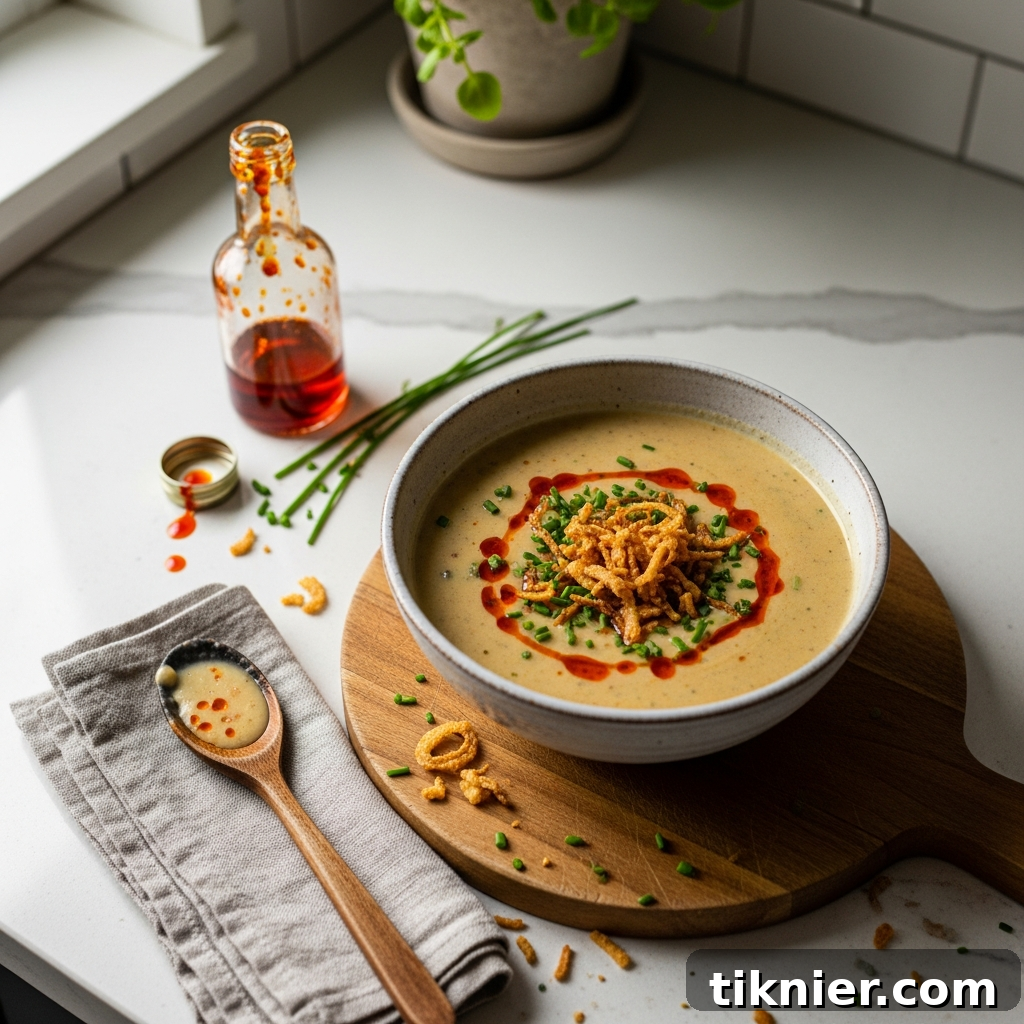
- Embrace Creative Toppings: Dare to go beyond a simple sprinkle of pepper. Freshly chopped chives offer a mild, verdant onion essence. Crispy fried onions or delicate shallots provide a delightful textural crunch and a burst of savory flavor. For those who appreciate a touch of warmth, a delicate drizzle of chili oil is absolutely phenomenal. You might also consider adding store-bought or homemade vegan bacon bits (perhaps crafted from seasoned tofu or tempeh), crunchy toasted pumpkin seeds, or rustic homemade croutons for extra character.
- Pair with Artisanal Bread: It’s almost sacrilege to enjoy potato soup without a superb piece of bread for dipping! A robust, crusty baguette, a thick slice of tangy sourdough bread, or warm, subtly sweet vegan cornbread are all ideal candidates for expertly sopping up every last, precious drop from the bottom of your bowl.
- Complement with a Fresh, Vibrant Salad: To perfectly balance the rich, deeply comforting nature of the soup, serve it alongside a simple, crisp green salad. A light, zesty vinaigrette dressing – perhaps one featuring lemon or apple cider vinegar – will beautifully cut through the soup’s creaminess, adding a refreshing counterpoint and rounding out the meal flawlessly.
- Elevate with a Bread Bowl Presentation: For a truly show-stopping and fun presentation, consider serving your magnificent soup nestled within a hollowed-out bread bowl. It’s a wonderfully rustic and interactive way to enjoy your meal, with the added bonus of being able to devour your edible bowl once the soup is gone! This option is perfect for a special gathering, a cozy date night in, or simply to add a touch of whimsy to your dinner.
Regardless of how you choose to serve it, this soup is unequivocally meant to be enjoyed warm and fresh. It embodies the very essence of a meal that encourages you to slow down, find comfort, and truly savor the present moment. So, assemble your favorite toppings, procure a wonderful loaf of bread, and prepare yourself for an unparalleled experience in cozy, plant-based comfort.
Preserving the Deliciousness: Storing & Reusing Vegan Potato Soup Leftovers
One of the many joys of dedicating time to prepare a generous pot of homemade soup is the delightful anticipation of enjoying delicious leftovers the following day, or even throughout the week. This particular vegan potato soup is a champion in the realm of leftovers; it stores beautifully, and its complex flavors can often deepen and become even more exquisite overnight. Mastering proper storage techniques is paramount to ensuring that your soup remains just as delectable and fresh the second time around.
Whether your intention is to streamline your lunch preparations for the upcoming work week or to strategically stash a batch away for a future busy weeknight, this soup is an ideal candidate for meal prepping. By adhering to a few straightforward steps, you can confidently ensure your soup retains its freshness and full-bodied flavor for days to come.
Here are my tried-and-true recommendations for effectively storing and perfectly reheating your leftover vegan potato soup:
- Refrigerating: Prior to storing, always allow the soup to cool down to a safe room temperature. Once cooled, transfer it into an airtight container. Secure the lid tightly and place it in the refrigerator. Stored correctly, your soup will remain wonderfully fresh and flavorful for up to 4 days. It’s perfectly normal to observe the soup thickening slightly once it has been chilled; this is a natural consequence of the potatoes and cashews settling.
- Reheating on the Stovetop: This is my unequivocally preferred method for reheating, as it affords you the greatest control over the temperature and consistency. Pour the desired portion of leftover soup into a clean saucepan and gently warm it over medium-low heat. Stir the soup frequently to prevent any sticking to the bottom of the pan and to ensure even heating. If you find the soup has become too thick to your liking, you can easily stir in a splash of additional vegetable broth or water until it achieves your preferred, inviting consistency.
- Reheating in the Microwave: For those moments when time is of the essence, perhaps during a swift lunch break, the microwave offers a perfectly acceptable solution. Transfer a single serving of soup into a microwave-safe bowl and cover it (a microwave-safe lid or even a plate works well) to prevent any potential splatters. Heat the soup in 1-minute intervals, pausing to stir thoroughly between each interval, until it is heated through to your satisfaction. Again, if the soup appears too thick, a small amount of broth or water can be added to thin it out.
- Freezing: This robust soup also freezes remarkably well, making it excellent for long-term meal planning! After allowing it to cool completely, carefully pour the soup into freezer-safe containers or robust zip-top bags. When filling, be sure to leave approximately an inch of headspace at the top of the container or bag to accommodate for expansion during freezing. The soup can be safely frozen for up to 3 months. To reheat from frozen, the best practice is to first let it thaw overnight in the refrigerator. Once thawed, you can then proceed to warm it on the stovetop as detailed above, ensuring a consistent and delicious result.
Having a ready container of this wonderfully cozy soup nestled in your fridge or freezer truly feels like a thoughtful gift to your future self. It promises an incredibly easy, deeply comforting, and nourishing meal on those days when your energy or time to cook from scratch is simply limited. Just reheat, adorn with your favorite fresh toppings, and immerse yourself in its delightful warmth.
Customizing Your Comfort: Substitutions & Variations for Vegan Potato Soup
While I hold an unwavering affection for this recipe exactly as it is written, I fully understand and embrace the culinary spirit of every home cook who enjoys infusing dishes with their unique personal touch. This vegan potato soup, at its heart, is a wonderfully versatile and adaptable creation, making it an ideal canvas for experimentation based on your pantry staples, dietary needs, or evolving taste preferences. It truly serves as an exceptional foundation recipe upon which to build your own culinary masterpieces.
Whether your goal is to thoughtfully accommodate a specific dietary restriction, or you simply find yourself in the mood to explore new flavor dimensions, here are a few carefully tested and enthusiastically approved substitutions and creative variations you can confidently try.
Unleash your inner chef and get creative in the kitchen with these simple, impactful swaps:
- Crafting a Nut-Free Version: For those navigating a cashew allergy or intolerance, rest assured – a similar luxurious creaminess is entirely achievable! Instead of cashews, you can blend 1 cup of full-fat canned coconut milk (primarily the thick, solid part from the top of the can) or 1/2 block of soft silken tofu directly with the soup broth. These alternatives provide a fantastic richness and velvety texture. Another excellent and often overlooked option is to create a cream from raw sunflower seeds; simply soak and blend them in the same manner as you would the cashews.
- Enriching with More Vegetables: Feel absolutely free to enhance the nutritional value and flavor complexity of the soup’s base by incorporating additional vegetables. A cup of finely diced carrots and celery, sautéed alongside the leeks in Step 1, will add another exquisite layer of earthy flavor and a boost of vitamins. For a touch of vibrant color and added greens, stir in a few generous handfuls of fresh spinach or hearty kale during the final stages of cooking, allowing them to gently wilt into the steaming soup.
- Exploring Diverse Herbs and Spices: While dried thyme offers a classic and comforting aroma, a broader spectrum of herbs and spices can also work beautifully. A delicate touch of dried rosemary or a pinch of fragrant sage, added when the potatoes go in, would impart a lovely, woodsy depth. For a subtle hint of warmth and intrigue, consider incorporating a pinch of freshly grated nutmeg or a whisper of smoky paprika when you add the potatoes to the pot.
- Transforming into “Loaded” Potato Soup: To perfectly capture the indulgent essence of a classic loaded baked potato, elevate your finished soup with a generous array of toppings! Think dollops of creamy vegan sour cream, a liberal sprinkle of store-bought vegan bacon bits (or homemade crispy bits crafted from seasoned tofu or tempeh), and a hearty handful of vegan shredded cheddar cheese. This decadent variation truly exemplifies plant-based comfort food at its absolute finest.
Never be apprehensive about making this recipe uniquely your own. Cooking should fundamentally be a joyous, creative, and exploratory endeavor, and this soup provides the perfect, forgiving playground for all your burgeoning culinary ideas. I genuinely encourage you to share your delightful new variations in the comments below – I’m always eager to learn and be inspired!
Creamy Vegan Potato Soup with a Savory Twist
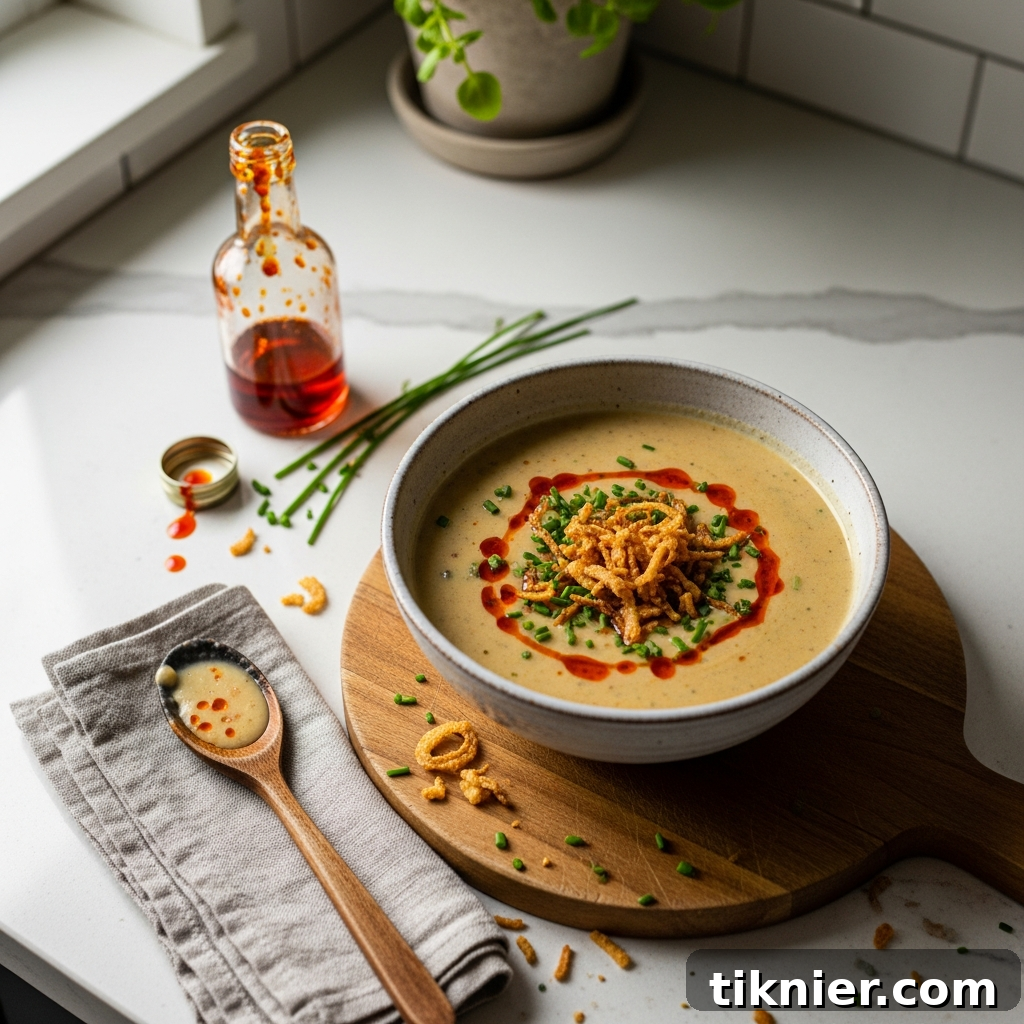
Description: A remarkably rich, velvety, and profoundly satisfying vegan potato soup. This exceptional recipe masterfully employs a secret ingredient – white miso paste – to create an unparalleled depth of savory, umami flavor that distinctly sets it apart from other vegan versions. It is the epitome of a cozy, comforting meal, perfect for warming you on the chilliest of days.
Yield: 6-8 servings | Category: Soup | Cuisine: American (with an Asian-inspired twist)
Prep Time: 15 minutes | Cook Time: 30 minutes
Ingredients
- 2 tablespoons olive oil
- 2 large leeks, white and light green parts only, cleaned and thinly sliced
- 2 cloves garlic, finely minced
- 6 cups high-quality vegetable broth
- 2 pounds Yukon Gold potatoes, peeled and uniformly cubed
- 1 teaspoon dried thyme
- 1/2 cup raw cashews, soaked in very hot water for 30 minutes
- 1/4 cup nutritional yeast
- 2 tablespoons white miso paste
- 1 tablespoon apple cider vinegar
- Salt and freshly ground black pepper to taste
- Optional garnishes: fresh chopped chives, crispy fried onions, a drizzle of chili oil
Instructions
- Heat the olive oil in a large pot or Dutch oven over medium heat. Add the cleaned and sliced leeks and cook until they are softened and slightly wilted, about 5-7 minutes. Stir in the minced garlic and cook for 1 more minute until fragrant.
- Pour in the vegetable broth, then add the cubed potatoes and dried thyme. Bring the mixture to a boil, then reduce the heat to low, cover the pot, and simmer for 15-20 minutes, or until the potatoes are completely tender when pierced with a fork.
- While the soup simmers, drain the hot water from your soaked cashews. Transfer the softened cashews to a high-speed blender along with 1 cup of the hot soup broth from the pot. Blend on high until the mixture is completely silky smooth, without any graininess.
- Once the potatoes are tender, use an immersion blender directly in the pot to partially blend the soup. Blend until you achieve a creamy consistency while leaving some delightful potato chunks intact for texture. Alternatively, carefully transfer half of the soup to a regular blender, blend smooth, and return to the pot.
- Stir the smooth cashew cream, nutritional yeast, and white miso paste into the soup. Gently heat for a few minutes over low heat to allow the flavors to meld. It is crucial NOT to let the soup boil after adding the miso, as high heat can diminish its delicate flavor.
- Remove the pot from the heat and stir in the apple cider vinegar. Taste the soup and season generously with salt and freshly ground black pepper as needed to achieve perfect balance.
- Serve the creamy vegan potato soup hot, garnished with fresh chives, crispy fried onions, or a drizzle of chili oil if desired, and savor every comforting spoonful.
Notes
Soaking the raw cashews in hot water for at least 30 minutes is an absolutely critical step for achieving that luxuriously smooth, velvety texture in your cashew cream. Furthermore, it is paramount that you do not allow the soup to come to a boil once the white miso paste has been incorporated, as excessive heat can unfortunately degrade its delicate flavor and beneficial probiotic qualities. For the most consistently rich and creamy results, the use of Yukon Gold potatoes is highly recommended.
Servings: 6 | Calories: 285 kcal | Fat: 12g | Carbohydrates: 36g | Protein: 8g
Frequently Asked Questions About Vegan Potato Soup (FAQs)
To ensure your vegan potato soup experience is nothing short of perfection, here are straightforward, comprehensive answers to the most common questions I encounter regarding this particular recipe.
What kind of potatoes are truly best for making vegan potato soup?
This is indeed a foundational question, as your choice of potato significantly influences the ultimate texture of your finished soup. For this specific recipe, I enthusiastically recommend opting for a waxy, naturally creamy potato variety, with Yukon Golds being my top choice. These potatoes boast a delightfully buttery natural flavor and possess a lower starch content compared to other varieties. This characteristic means they maintain their shape admirably when boiled, yet simultaneously blend into an exquisitely smooth and creamy consistency without ever becoming gluey or unpleasantly grainy, which is precisely what we aim for.
Red potatoes also present a very good alternative for similar reasons; they will yield a soup with slightly more distinct chunks of potato, as they tend to hold their structure even more firmly. If your preference leans towards a more rustic, chunky soup, red potatoes would be an excellent choice. Conversely, I generally advise against employing very starchy potatoes, such as Russets, for this particular recipe. While Russets are undeniably superb for dishes like baked potatoes or crispy french fries, their elevated starch content can sometimes impart a rather mealy flavor and, when blended, has a propensity to create an undesirable gummy texture in soup. Stick with the magnificent Yukon Golds to achieve that perfectly luxurious and creamy result that truly sings.
Is it possible to prepare this vegan potato soup without the aid of a blender?
Yes, absolutely, you can certainly make this soup without a blender, although it’s important to note that the final texture will naturally diverge from the recipe’s intended creaminess. The blender serves two primary functions in this recipe: the creation of the luscious cashew cream and the partial blending of the soup itself. If you find yourself without any form of blender, you will need to implement a couple of strategic adjustments. For the creamy element, you would need to bypass the cashews entirely. Instead, you can achieve a delightful richness by stirring in about one cup of full-fat canned coconut milk (prioritizing the thick, solid cream) or a pre-made, high-quality vegan cream alternative towards the culmination of the cooking process. This approach will provide the desired richness without necessitating a blender.
Regarding the soup’s overall texture, in lieu of blending, you can effectively utilize a simple potato masher. Once the potatoes have reached a very tender consistency, simply use the masher directly in the pot to break them down to your preferred level. Mash until you achieve a consistency you find appealing. This technique will, as expected, result in a more rustic, wonderfully chunky soup rather than one that is completely smooth and velvety. However, it will be every bit as delicious and comforting, offering a more traditional, old-fashioned appeal that is inherently satisfying.
Why isn’t my cashew cream achieving a perfectly smooth consistency?
The pursuit of a silky-smooth cashew cream is undeniably the key to unlocking a luxuriously textured soup, and it can be quite disheartening when it turns out unexpectedly grainy. Typically, there are two primary culprits behind this common issue. The first, and most frequently encountered, is either not soaking the cashews for a sufficiently long duration or not soaking them in water that is hot enough. Soaking is a critical preparatory step that effectively softens the nuts, rendering them significantly easier to break down into a fine emulsion. A rapid 30-minute soak in very hot, freshly boiled water is absolutely essential for optimal results. If you only have the luxury of a room temperature soak, plan to let them sit for a more extended period, ideally at least 2 to 4 hours, to ensure thorough softening.
The second influential factor is the power and efficiency of your blending equipment. A standard, conventional blender might struggle to completely pulverize the cashews to the desired degree of fineness. A high-speed blender (such as a Vitamix or Blendtec) is genuinely the best and most effective tool for this particular task, consistently delivering unparalleled smoothness. If you do not possess a high-speed blender, you may need to extend the blending duration significantly, perhaps for 3 to 5 minutes, pausing periodically to scrape down the sides of the blender jar to ensure all cashews are incorporated. Additionally, blending the cashews with a portion of the hot soup broth, as meticulously directed in the recipe, markedly assists in their breakdown, making the process much more efficient than blending them with cold liquid.
Is nutritional yeast an absolutely necessary component in this vegan potato soup?
While nutritional yeast is not, strictly speaking, an indispensable ingredient for the structural integrity or basic functionality of the soup, I emphatically recommend its inclusion if you have access to it. It plays a highly specific and exceptionally important role in meticulously building the complex flavor profile of this vegan potato soup. Nutritional yeast is celebrated for its distinctive savory, nutty, and unmistakably cheesy flavor, which is fundamental for expertly mimicking the taste of dairy cheese in sophisticated vegan culinary applications. Within the context of this soup, it collaborates synergistically with the white miso paste to forge a deep, intricate, and umami-rich background flavor that is simply unattainable through the sole application of salt and pepper.
Should you find yourself without nutritional yeast, or if you are unable to source it, the soup will undoubtedly still be delicious, but it will noticeably lack that signature cheesy, profoundly savory undertone that elevates it. If you must omit it, you might consider judiciously adding a little more white miso paste to partially compensate for the loss of umami – perhaps an extra teaspoon. Alternatively, you could experiment with adding a dash of onion powder or garlic powder to subtly boost the overall savory characteristic of the soup. However, for the absolute finest result, one that truly tastes rich, complex, and deeply satisfying, I would strongly advise against skipping the nutritional yeast.
What is the most effective method to properly clean leeks for soup preparation?
This question highlights an exceptionally crucial step in leek preparation, one that often gets overlooked but can significantly impact your dining experience! Leeks are naturally grown in sandy soil, and that fine, stubborn grit possesses a pesky propensity to become firmly lodged between their delicate, tightly packed layers. There is arguably nothing more unpleasant than encountering a gritty spoonful of otherwise perfectly prepared soup. The most effective and reliable method for cleaning them thoroughly is to first prepare them as directed in the recipe: trim off the tough, dark green tops (which you can wisely save for future vegetable stock endeavors) and the very root end. Subsequently, slice the white and pale green parts of the leeks into thin, uniform rounds.
Once sliced, transfer all the leek pieces into a large bowl and generously fill it with cold water. Use your hands to vigorously swish and agitate the leeks within the water. This action dislodges and releases all the trapped dirt and sand from between their layers. Allow the leeks to settle in the water for a minute or two; you will visibly observe the grit and sediment sinking gracefully to the bottom of the bowl. Using a slotted spoon or your hands, carefully lift the now-clean leeks out of the water and place them onto a clean kitchen towel to thoroughly dry, ensuring that the gritty water remains behind. This meticulous method guarantees that every last speck of sand is gone, promising a perfectly smooth and enjoyable soup experience.
Explore More Delicious Plant-Based Creations
If the comforting, soul-warming flavors of this creamy vegan potato soup resonated with you, I am confident you’ll find immense joy in these other carefully curated plant-based recipes.
- Vegan Smoked Potato Soup: A wonderfully smoky, incredibly hearty rendition of a classic, this soup is absolutely ideal for those moments when you crave something profoundly savory and uniquely flavorful.
- Slow Cooker Moroccan Lentil Soup: Let your slow cooker effortlessly handle the preparation with this exquisitely fragrant, warmly spiced, and remarkably flavorful soup, generously packed with wholesome lentils.
- Smoky Vegan Quinoa Chili: A deeply satisfying and protein-rich chili that serves as the perfect hearty meal for game day gatherings or any wonderfully chilly evening.
My sincere hope is that these additional recipes bring as much warmth, culinary inspiration, and sheer happiness to your kitchen and dining table as they consistently do to mine!