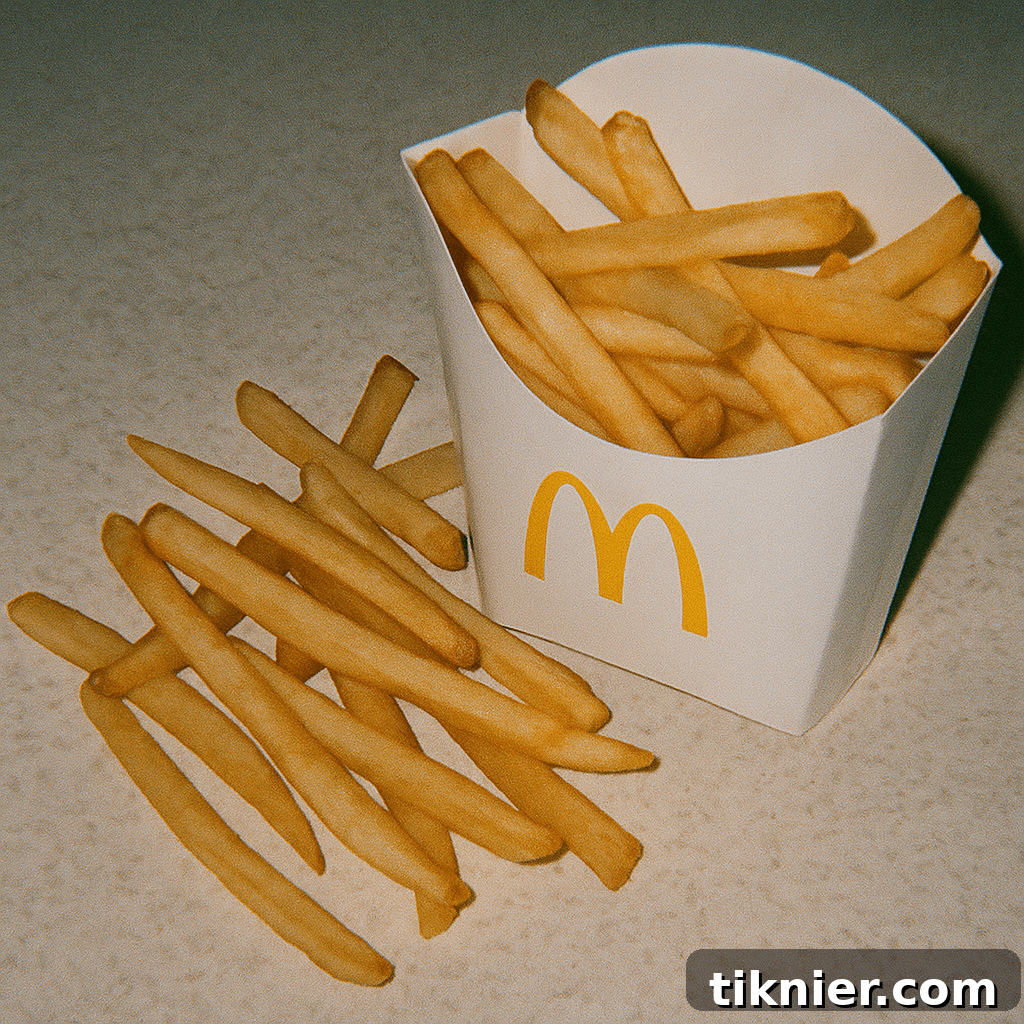
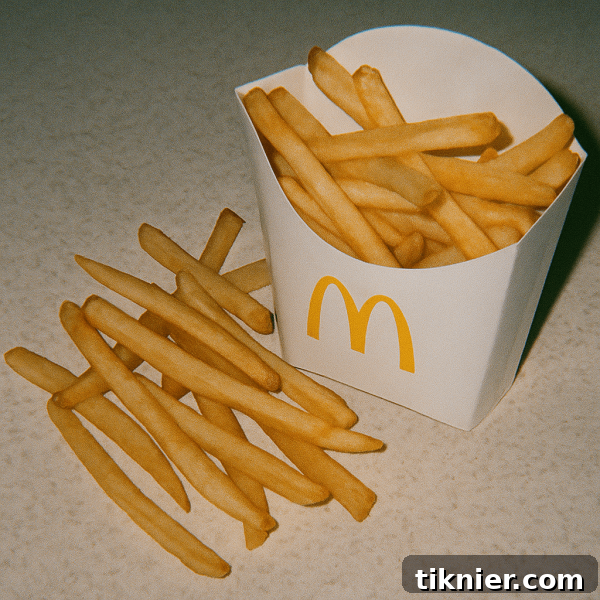
There’s an undeniable magic to a perfectly cooked French fry – hot, salty, and exquisitely crispy. It’s a simple pleasure that evokes comfort and nostalgia for many. I vividly recall family road trips with my children, where the mere glimpse of those iconic Golden Arches promised a moment of peace and deliciousness. For them, it meant a Happy Meal; for me, a carton of those unmistakable fries, a little culinary escape before we even reached our destination.
For years, I attempted to replicate that specific, satisfying flavor and impossibly crisp texture of McDonald’s French Fries at home. I experimented endlessly with various potatoes, different oils, and countless cooking times. While my homemade versions were certainly good, they never quite hit that authentic mark. It always felt like a crucial piece of the puzzle was missing from my kitchen.
Then, during a casual read through an old community cookbook, I stumbled upon a forgotten technique detailing how classic diners prepared their potatoes. That was my ‘aha!’ moment. The true secret wasn’t solely in the potato variety or the popular double-frying method; it was fundamentally in the fat used for cooking. I began rendering my own beef tallow, and darling, that was the game-changer. That rich, savory depth of flavor was the missing element I had been searching for. When combined with a strategic sugar-corn syrup soak and a finely ground seasoned salt blend, this isn’t just a mere copycat recipe. It’s a loving homage to that classic taste we all cherish, elevated and perfected right in your own kitchen.
Unlocking the Secret to Perfect Homemade McDonald’s French Fries
The enduring global popularity of McDonald’s fries isn’t accidental. Their unique flavor and texture combination is a culinary marvel. For decades, the authentic secret ingredient behind this iconic taste was beef tallow. Up until 1990, McDonald’s cooked their fries in a blend that prominently featured beef tallow, imparting an incredibly rich, savory flavor that pure vegetable oil simply cannot replicate on its own.
When the switch to vegetable oil occurred, “natural beef flavor” was added to the oil to attempt to mimic the original taste profile. My recipe for Homemade McDonald’s French Fries deliberately returns to those authentic roots. It achieves its exceptional results by not just mimicking the flavor but by building it from the ground up, utilizing high-quality beef tallow. This provides an authentic, deeply satisfying taste that will transport your taste buds directly back to those cherished childhood memories.
The Science Behind Unrivaled Crispiness and Flavor
Beyond the choice of fat, this recipe masterfully replicates the signature texture by employing a multi-step process revered by food scientists and professional chefs alike. We begin by soaking precisely cut Russet potatoes in a solution of sugar and corn syrup. This crucial step aids in achieving that beautiful, uniform golden-brown color during frying without risking premature burning, and contributes a subtle depth of flavor.
Following this, the potatoes undergo the essential double-fry method. The first fry, conducted at a lower temperature (325°F), thoroughly cooks the potato through, ensuring a wonderfully fluffy interior. After a vital quick freeze to draw out additional surface moisture, the second fry at a higher temperature (375°F) works its magic, creating that legendary crispy, crunchy exterior that remarkably stays crisp long after they’ve been removed from the oil. While it requires a bit more effort than simply baking frozen fries, the phenomenal payoff in taste and texture is absolutely enormous and undeniably worth it.
Essential Ingredients for Authentic McDonald’s French Fries
The true genius of this copycat recipe lies in its reliance on a few simple, high-quality ingredients combined with a meticulous technique. The undisputed star of this show, the ingredient that truly defines that unforgettable, classic flavor, is the beef tallow.
- 4 large Russet potatoes, approximately 2.5 to 3 pounds – your foundation for perfect fries.
- 8 cups water, for the crucial pre-frying soak.
- 1/4 cup corn syrup – a secret weapon for color and subtle sweetness.
- 2 tablespoons granulated sugar – enhances browning and balances flavor.
- 8 cups beef tallow, for frying (or enough to achieve 3-4 inches of depth in your chosen pot) – the heart and soul of the recipe.
- 2 teaspoons fine sea salt – for optimal adhesion and classic flavor.
- 1/2 teaspoon onion powder – adds savory depth.
- 1/2 teaspoon garlic powder – contributes aromatic richness.
- 1/4 teaspoon paprika – for a hint of color and mild spice.
Key Ingredient Insights: Don’t Skip These Details!
- Russet Potatoes: The Only Choice. Please, for the sake of truly crispy fries, do not substitute these! Russet potatoes are uniquely high in starch and low in moisture, which is the absolute perfect combination for fries that achieve an internal fluffiness while boasting an incredibly crispy exterior. Waxy varieties like red or Yukon Gold potatoes contain too much moisture and will result in sadly limp, greasy, and dense fries.
- Beef Tallow: The Authentic Flavor Enhancer. This is the secret weapon that elevates these fries from good to legendary. You can render your own beef tallow from beef suet (your local butcher can often help you with this!) or easily purchase high-quality, grass-fed beef tallow online or at specialty grocery stores. Tallow possesses a high smoke point, making it ideal for deep frying, and, more importantly, it imparts a distinct, savory, and rich flavor that is the absolute essence of this recipe. If, for any reason, you absolutely cannot use beef tallow, refined peanut oil is the next best alternative due to its high smoke point and neutral flavor, but be aware that the final flavor profile will be noticeably different.
- Corn Syrup and Sugar: The Browning Agents. While this combination in the soaking water might seem unconventional, it is absolutely critical. This sugar solution helps the fries achieve that uniform, beautiful golden-brown color during frying, preventing them from burning while ensuring a consistent finish. It also contributes a very subtle sweetness that expertly balances the savory tallow and salt, mimicking the blanching processes used in large-scale commercial fry production.
Step-by-Step Instructions: Crafting the Best Homemade McDonald’s French Fries
Follow these detailed steps precisely, and I guarantee you’ll produce the finest homemade fries of your life. Do not skip the soaking or freezing stages, as these are fundamental to achieving that perfect, iconic result! While a dedicated deep fryer is convenient, a heavy-bottomed Dutch oven paired with a candy or frying thermometer works just as effectively.
- Prep the Potatoes with Precision: Begin by thoroughly washing and peeling your Russet potatoes. Using a sharp knife or, ideally, a mandoline slicer with a fry attachment, cut them into uniform long, thin matchsticks, approximately 1/4-inch thick. Uniformity is key here, as it ensures all your fries cook evenly.
- Soak and Blanch for Perfection: In a large bowl, whisk together the 8 cups of water, corn syrup, and granulated sugar until fully dissolved. Submerge the cut potatoes in this solution and allow them to soak for a minimum of 30 minutes, or for up to 2 hours if refrigerated. This crucial step effectively draws out excess starch, which contributes to crispiness and aids in consistent browning. After soaking, drain the potatoes thoroughly and pat them completely dry with paper towels. Remember, moisture is the arch-nemesis of crispy fries!
- The First Fry (Blanching Fry): Carefully heat the beef tallow in your deep fryer or large Dutch oven to a precise 325°F (163°C). Working in small batches to prevent overcrowding, gently add the dried potatoes. Fry for 5 to 7 minutes; they should become tender and cooked through but remain very pale, with no browning. Use a spider strainer or slotted spoon to remove the blanched fries and allow them to drain thoroughly on a wire rack positioned over a baking sheet.
- The Critical Freeze: Allow the blanched fries to cool completely on the wire rack, which typically takes about 20-30 minutes. Once cooled, arrange them in a single layer on a baking sheet and transfer to the freezer for at least 1 hour. For convenience, they can be stored in a freezer-safe bag for several weeks. This freezing step is absolutely vital as it dehydrates the exterior of the fry, which is the ultimate secret to achieving an extra-crispy, shatteringly delicate finish.
- The Second Fry (Finishing Fry): When you are ready to serve, increase the temperature of your beef tallow to a higher 375°F (190°C). Again, working in small batches to maintain oil temperature, fry the frozen potatoes for 2 to 4 minutes, or until they achieve a glorious golden-brown color and become wonderfully crisp.
- Season Immediately and Serve Hot: While the fries are undergoing their final fry, whisk together the fine sea salt, onion powder, garlic powder, and paprika in a small bowl. The very instant the fries emerge from the hot tallow, transfer them to a large bowl and immediately sprinkle them generously with your prepared seasoning mix. Toss vigorously to ensure every single fry is perfectly coated. The residual hot oil on the surface is what allows the seasoning to adhere. Serve these magnificent fries piping hot for the ultimate experience!
Serving Your Legendary McDonald’s French Fries
Once you’ve successfully pulled these golden, crispy beauties from the fryer and tossed them with that irresistible savory seasoning, the real fun truly begins. Serving these Homemade McDonald’s French Fries hot and fresh is non-negotiable, but how you choose to accompany them can be as classically simple or as creatively adventurous as your palate desires.
Of course, there’s the timeless approach. A small puddle of classic ketchup, perhaps some tangy mustard, or a dollop of creamy mayonnaise for dipping is often all you need to be instantly transported. But why stop there? Think of these perfectly crafted fries as the ultimate canvas for an array of delicious possibilities.
Creative Serving Suggestions to Elevate Your Fries:
- The Ultimate Dip Bar: Go beyond the basics. Set out small bowls of classic condiments like rich ketchup, vibrant yellow mustard, and creamy mayonnaise. Then, introduce a few gourmet extras such as a high-quality barbecue sauce, a sweet and tangy honey mustard, or a Southern-inspired comeback sauce for an extra kick.
- Loaded “Animal Style” Fries: Embrace West Coast culinary flair! Pile a generous platter of hot fries with luscious melted American cheese, a generous layer of deeply caramelized onions, and a drizzle of a homemade Thousand Island-style sauce. It’s gloriously messy and absolutely heavenly.
- Hearty Chili Cheese Fries: A true champion of comfort food. Ladle your favorite homemade or quality canned chili generously over the hot fries, then finish with a blanket of freshly shredded sharp cheddar cheese. For an extra touch, a dollop of cool sour cream and some thinly sliced jalapeños on top are highly recommended.
- The Perfect Companion: These exceptional fries are the quintessential accompaniment to a juicy, homemade burger, a comforting classic meatloaf, or a basket of crispy fried chicken. They effortlessly elevate any simple main dish into a restaurant-worthy meal, making every bite feel special.
However you choose to present them, do so with immense pride and confidence. You’ve just mastered the art of making legendary fries from scratch, and they deserve to be the undisputed star of your table. Place them in a large, inviting bowl at the center of your gathering, and watch them disappear with delightful speed.
Storing and Reheating McDonald’s French Fries Leftovers
In my household, the concept of leftover fries is a rare phenomenon, but it can happen! The most common mistake people make is improper storage or, worse, reheating them in a microwave, which inevitably leads to a sad, soggy outcome. However, with the correct technique, you can successfully revive your leftover Homemade McDonald’s French Fries to be almost as good as freshly made.
Optimal Storage Techniques for Crispy Revival:
First and foremost, let’s discuss proper storage. This is absolutely critical for giving your fries a fighting chance at a crispy comeback. Never just leave them in the original paper bag or carton.
- Cool Completely: Before you even consider storing them, allow the fries to cool down entirely to room temperature. Storing them while still warm will create trapped steam, which is the mortal enemy of crispiness and will guarantee a soggy result.
- Use an Airtight Container: Once completely cool, transfer the fries to an airtight container. For an extra measure, you can line the container with a paper towel to help absorb any residual moisture or condensation that might accumulate.
- Refrigerate Promptly: Store the sealed container in your refrigerator for up to two days. Beyond this timeframe, they tend to lose too much of their textural integrity to be truly revived effectively.
Best Reheating Methods for Maximum Crispness:
When you’re ready to enjoy them again, the reheating method is paramount. Absolutely avoid the microwave at all costs! Your best options are methods that utilize dry heat to effectively drive off moisture and re-crisp their exterior. The air fryer is, hands down, my top recommendation. Just a few minutes at around 375°F (190°C) and they emerge beautifully crispy. Alternatively, you can spread them in a single layer on a baking sheet and pop them into a preheated 400°F (200°C) oven or toaster oven for 5-10 minutes, checking frequently. For a quick stovetop method, heat a dry, non-stick skillet over medium-high heat and toss the fries for a few minutes until they are heated through and regain their crispness. If your leftover fries seem a little past their prime for a full revival, don’t discard them! Chop them up and use them in a delicious breakfast hash with some sautéed onions, peppers, and a perfectly fried egg on top. Delicious and resourceful!
Substitutions & Variations for Your Custom McDonald’s French Fries
While I firmly believe this recipe is exceptionally close to perfection as it stands, I understand that every home cook enjoys adding their unique touch. Whether you have specific dietary needs or simply wish to experiment with different flavor profiles, there are numerous ways to adapt this incredible copycat McDonald’s French Fries recipe to suit your preferences.
It’s important to note that the core methodology – including the soaking, double frying, and freezing steps – is what creates the signature, crave-worthy texture, so I highly recommend adhering to those foundational techniques. However, the choice of frying fat and the seasonings you select are fantastic areas where you can truly play around and make this recipe distinctly your own.
Explore These Adaptations:
- For a Vegetarian Option: The beef tallow is undeniably central to the classic, authentic flavor. However, if you require a strictly vegetarian alternative, you can substitute it with a high-smoke-point vegetable oil. Refined peanut oil is often considered the best choice here due to its relatively neutral flavor and its ability to reach very high temperatures, which is essential for producing a genuinely crispy fry. Refined coconut oil or high-quality canola oil are also viable alternatives.
- Experiment with Different Frying Fats: If you don’t have beef tallow on hand but are not strictly vegetarian, you could use lard for a distinct yet equally delicious savory flavor profile. A combination of lard and a neutral vegetable oil can also yield excellent results, blending the best of both worlds.
- Potato Swaps (Use Caution!): While Russet potatoes are the gold standard for this recipe, Idaho potatoes are a very close relative and will perform beautifully. Crucially, always avoid waxy potatoes such as red bliss or new potatoes, as their low starch content and high moisture will inevitably result in disappointingly greasy, dense, and limp fries.
- Creative Seasoning Variations: My provided seasoning blend is a classic for a reason, but feel free to unleash your culinary creativity! For those who enjoy a bit of heat, consider adding a pinch of cayenne pepper to the mix. To introduce a smoky depth, use smoked paprika instead of the regular variety. You could also toss the hot fries with some finely chopped fresh herbs like aromatic parsley and fragrant rosemary alongside the salt, or even a delicate sprinkle of truffle salt for an exquisite gourmet twist.
Don’t hesitate to experiment with these ideas. The joy of cooking lies in creating food that you and your loved ones genuinely adore, so embrace the opportunity to try something new. You might just uncover your new favorite way to prepare French fries!
5 FAQs About Mastering McDonald’s French Fries at Home
Here are concise, straightforward answers to the most common questions I encounter regarding this authentic copycat McDonald’s French Fries recipe, designed to help you achieve perfect results every time.
Why are my homemade McDonald’s French Fries not crispy?
This is arguably the most common and frustrating issue when attempting homemade fries! If your fries turn out limp, soggy, or excessively greasy, it’s almost invariably attributable to one or more key factors in the preparation process. Firstly, the potato choice is paramount. Opting for a waxy potato instead of a starchy one like a Russet is a recipe for disappointment, as waxy varieties have high moisture content and simply cannot develop a truly crispy exterior.
Secondly, and most critically, skipping the double-fry and intermediate freeze method is a guaranteed path to non-crispy fries. The initial fry at a lower temperature gently cooks the potato’s interior. The subsequent freezing step then plays a vital role by drawing a significant amount of moisture from the potato’s surface. When these partially dehydrated, frozen fries are plunged into hot oil for the second fry, that dry surface immediately crisps up into a beautifully sturdy crust. Finally, always ensure your oil maintains the correct, high temperature (375°F / 190°C) for that crucial second fry. If the oil isn’t hot enough, the fries will absorb it rather than crisping, resulting in a greasy product. Overcrowding the pot can also cause the oil temperature to drop drastically, so always fry in small, manageable batches.
What kind of potatoes are best for this McDonald’s French Fries recipe?
For this specific recipe, and indeed for achieving truly exceptional French fries in general, the potato variety you select is absolutely paramount. You must use a potato that is high in starch and low in moisture. The undisputed king for this application is the Russet potato. You might also find them labeled as Idaho potatoes, which are essentially Russets grown in Idaho and share the same desirable characteristics.
The scientific rationale is straightforward. The high starch content in Russets is what contributes to that wonderfully fluffy, floury, almost mashed-potato-like interior texture. When cooked, the starch granules swell and separate, creating a light, airy consistency. Equally important is their low moisture content, as less water within the potato means a greater potential for a crispier, crunchier exterior. A potato saturated with water will essentially steam itself from the inside out, making it incredibly difficult to achieve a truly crisp fry. Waxy potato varieties, such as red or Yukon Gold, possess a lower starch content and tend to hold their shape well (which is excellent for roasting or potato salads), but this characteristic results in a denser, often waxy or greasy fry when deep-fried. Therefore, stick with the humble Russet for perfectly authentic McDonald’s French Fries every single time.
Can I make these copycat McDonald’s French Fries in an air fryer?
While you can certainly adapt aspects of this recipe for an air fryer, and many individuals do so for a perceived healthier alternative, it’s crucial to manage your expectations regarding the outcome. An air fryer functions essentially as a compact convection oven, circulating intensely hot air to cook food. It will not, however, produce the exact same texture or flavor profile as traditional deep-frying in beef tallow. You will achieve fries that are browned and somewhat crisp, but they will lack that characteristic shatteringly crisp shell and the rich, deep flavor imparted by the tallow.
To adapt the recipe for an air fryer, follow the initial steps for cutting and soaking the potatoes. After soaking, ensure they are thoroughly dried. Instead of blanching them in oil, toss the dried potatoes with a tablespoon or two of a neutral, high-heat oil. You can then pursue two methods. You can air fry them once at approximately 380°F (195°C) for 15-20 minutes, remembering to shake the basket vigorously halfway through. Alternatively, to better mimic the double-fry process, you can air fry them initially at 350°F (175°C) for about 10 minutes, remove them, let them cool (you can even freeze them briefly at this stage), and then finish them at 400°F (200°C) for another 5-8 minutes until they reach a golden, crisp perfection. While you will still produce a delicious homemade potato stick, it will offer a distinct experience compared to a true deep-fried McDonald’s French Fries copycat.
What is the secret ingredient in McDonald’s French Fries?
This is an excellent question with a rich historical context! For many decades, the genuine “secret ingredient” that made McDonald’s fries legendary was a proprietary blend consisting of approximately 93% beef tallow and 7% cottonseed oil. This unique combination was responsible for imparting their incredibly rich, distinctively meaty, and profoundly savory flavor that captivated consumers worldwide. Individuals who fondly recall the fries from before 1990 will invariably attest to a noticeable and significant difference in taste – the tallow was undeniably the magic touch.
In the early 1990s, responding to increasing public health concerns regarding saturated fats, McDonald’s transitioned to using 100% vegetable oil. To compensate for the significant loss of flavor caused by this change, they began incorporating what they now list as “natural beef flavor” into their oil. This flavoring agent, derived from wheat and milk derivatives, is what provides the modern-day fries with their current signature taste. Therefore, the “secret” in my particular recipe is that we consciously revert to the original secret: we utilize real beef tallow. This isn’t an artificial flavoring; it’s the authentic ingredient, providing a depth of flavor that is simply unparalleled and truly recaptures the essence of those classic, old-school fries we remember and adore.
How do I get the salt to stick to my McDonald’s French Fries?
There’s nothing more disheartening than meticulously seasoning your beautifully cooked fries, only to find most of the salt accumulating at the bottom of the bowl. The key to successful seasoning adhesion lies in two critical factors: impeccable timing and the appropriate type of salt. The absolute most important rule is to season your fries the very second they emerge from the hot oil. When they are still glistening with that fresh coating of hot tallow, their surface is perfectly primed for the seasoning to adhere. If you delay even a minute or two, that oil will begin to soak into the potato, and the surface will dry out, leaving nothing for the salt to cling to effectively.
The second crucial element is employing a very fine-grained salt. In my recipe, I specifically recommend using fine sea salt and grinding it thoroughly with the other seasonings. A fine grain offers a significantly larger surface area for contact and has a much better chance of sticking to the fry compared to coarse kosher salt or larger salt flakes. Consider the finely powdered salt that typically comes out of a shaker at a classic diner – this consistency is ideal. Therefore, the one-two punch for perfectly seasoned fries is to use a fine salt mixture and apply it liberally the moment the fries are transferred from the fryer to a bowl. A vigorous toss will then ensure that every single fry receives a perfect, even, and satisfying salty coating.
Craving more? Check out these recipes:
- 100 Delicious, Easy Breakfast Ideas & Recipes You Should Try This Year
- 50 Cheap Meal Ideas That Actually Taste Good (Budget-Friendly Recipes for Every Meal)
- 110 Easy Dinner Ideas That Taste Great (Easy Dinner Recipes You Can Do At Home)