My first attempt at crafting homemade sushi was, to put it mildly, a culinary comedy of errors. My husband and I were exploring creative ways to enjoy date nights on a budget, and I thought, “How challenging could sushi really be?” Armed with beautiful tuna, crisp nori, and an array of vibrant fillings, I felt ready. However, I made one critical oversight: the rice. I casually cooked a batch of long-grain rice we had in the pantry, and the result was an unmitigated disaster—a sticky, mushy mess that refused to hold its form for rolling, and its flavor was disappointingly bland. It was a truly humbling initiation into the art of sushi.
That initial failure didn’t deter me; instead, it ignited a passionate quest. I was determined to master the undisputed heart of all exceptional sushi: the meticulously prepared and perfectly seasoned sushi rice. My research led me down a fascinating rabbit hole, revealing the crucial steps of thorough rinsing, proper soaking, and the almost magical ratio of vinegar, sugar, and salt. After numerous experimental batches and a fair share of edible but imperfect results, I finally achieved that elusive, ideal texture and classic, delicate flavor. But for those who know me, “good enough” is rarely sufficient. I craved an extra touch, a signature element that would elevate my homemade sushi from good to truly gourmet, rivaling the offerings of a high-end Japanese restaurant.
The secret to this sophisticated enhancement came from an unexpected source: a small bottle of yuzu juice I had purchased on a whim. The addition of just a single teaspoon to my carefully balanced vinegar seasoning transformed the rice entirely. It introduced an incredibly bright, floral, and complex citrus note that elegantly cuts through the richness of fatty fish and creamy avocado without ever overpowering the delicate flavors. It’s a subtle adjustment, yet it makes an astonishing difference, adding a layer of aromatic freshness that is both intriguing and utterly delicious. This recipe transcends the simple act of cooking rice; it’s about building the most exquisite and flavorful foundation for all your sushi and Japanese-inspired culinary adventures.
Skip to My Special Recipe!
Unlocking the Magic of Perfect Sushi Rice: Why This Recipe Stands Out
Crafting perfect sushi rice, revered in Japanese cuisine as *shari*, is often considered an art form. However, I am here to assure you that it is an art form entirely within your grasp to master in your own kitchen. The tradition of seasoning steamed rice with vinegar dates back centuries in Japan, originally serving as a method for preserving fish. Over time, this practical technique evolved into the refined culinary staple we cherish today, forming the literal and figurative foundation of every exquisite piece of sushi.
The true genius of traditional sushi rice lies in its delicate and intricate balance of flavors. The rice vinegar contributes a bright, tangy acidity that cleanses the palate, while the sugar introduces a subtle hint of sweetness, which surprisingly enhances and complements the natural umami of seafood. A touch of salt then rounds out these flavors, bringing everything into perfect harmony. This meticulous balance ensures the rice is far more than just a sticky grain; it transforms into an active, flavorful, and indispensable component of the entire dish, capable of holding its own while gracefully supporting other ingredients.
So, what exactly makes my particular sushi rice recipe uniquely superior and truly stand out? It’s all about honoring those time-honored traditions while infusing them with a modern, sophisticated, and incredibly aromatic twist. While the core techniques—from rinsing to fanning—remain classically authentic, the strategic addition of yuzu juice to the seasoning blend is my secret weapon. Yuzu is a highly prized East Asian citrus fruit, often described as possessing a complex flavor profile that hints at a delightful fusion of grapefruit, mandarin orange, and a touch of delicate floral notes. Its complexity and fragrant aroma are simply unmatched by common citrus fruits like lemon or lime juice, offering a depth that is truly distinctive.
Incorporating just a single teaspoon of yuzu juice elevates the entire flavor experience of the rice. It introduces a fragrant, zesty aroma and a bright, nuanced acidity that harmonizes exquisitely with the traditional rice vinegar. This seemingly small detail makes the rice taste noticeably lighter, cleaner, and remarkably more refreshing. It pairs exceptionally well with an extensive range of sushi fillings, from the rich, buttery texture of fatty tuna to the crisp simplicity of cucumber and avocado. This yuzu-infused rice transcends merely “good” homemade sushi, transforming it into an unforgettable, restaurant-quality masterpiece. It’s the subtle, sophisticated detail that will undoubtedly have your guests not only savoring every bite but also eagerly asking for your special secret.
Essential Ingredients for Crafting Exquisite Sushi Rice
The foundation of truly fantastic sushi rice rests squarely on starting with the correct ingredients, and equally important, using high-quality versions of each. While the list itself is refreshingly simple, the integrity and type of each component are absolutely critical. Resist any temptation to substitute with whatever random items you might have lurking in your pantry; using the precise type of rice and vinegar is non-negotiable for achieving that authentic, coveted texture and the perfectly balanced flavor profile.
Here’s the precise list of ingredients you’ll need to embark on your journey to perfect sushi rice:
- 2 cups Japanese short-grain sushi rice
- 2 cups cold water, plus additional for thorough rinsing
- 1 (4-inch) square of kombu (dried kelp)
- 1/2 cup unseasoned rice vinegar
- 3 tablespoons granulated sugar
- 1 1/2 teaspoons fine sea salt
- My Signature Twist: 1 teaspoon yuzu juice
Let’s delve a little deeper into a few of these crucial players. First and foremost, the rice. You absolutely, unequivocally, must use Japanese short-grain rice. Well-regarded brands such as Nishiki, Kokuho Rose, or Tamanishiki are exemplary choices, specifically cultivated and processed for sushi. This particular variety of rice boasts a high starch content, primarily amylopectin, which is responsible for giving it that characteristic plump, slightly sticky, yet wonderfully distinct texture once perfectly cooked and seasoned. Attempting to use long-grain rice (like Basmati or Jasmine) or even medium-grain rice will simply not yield the desired results, as their different starch compositions prevent them from clinging together properly for sushi applications.
Next up, kombu. This is a type of dried sea kelp, typically found in the international or Asian food aisles of most well-stocked grocery stores, or, ideally, at an Asian specialty market. While it is technically possible to prepare sushi rice without it, I wholeheartedly and strongly recommend including it. Soaking the kombu with the rice infuses the cooking water with a subtle yet profound savory umami flavor. This contributes an incredible depth and complexity to the rice that, while perhaps not overtly identifiable, would be sorely missed if absent. It’s a background note that elevates the entire dish.
Finally, we come to my special, signature twist: the yuzu juice. Bottled yuzu juice is increasingly available at specialty food stores, dedicated Asian markets, and can be conveniently purchased online. Remember, a little goes an impressively long way with this ingredient, and even a single teaspoon imparts a bright, highly aromatic citrus flavor that genuinely elevates the finished rice from excellent to extraordinary. It is this specific touch that makes this sushi rice recipe uniquely mine, and very soon, uniquely yours.
Step-by-Step Guide: Mastering the Art of Making Sushi Rice
Achieving truly perfect sushi rice is less about innate talent and more about meticulous technique and careful attention to detail at each stage. By following these steps precisely and resisting the urge to rush, you will master the craft. Every single stage, from the initial rinsing to the final fanning, plays an integral and crucial role in achieving that coveted glossy, perfectly seasoned, and wonderfully textured result. So, grab your apron, clear your workspace, and let’s begin cooking!
Step 1: Rinse and Soak the Rice for Optimal Texture
This initial step is unequivocally the most critical for ensuring your sushi rice achieves the ideal, non-gummy texture. Place your two cups of Japanese short-grain rice into a large, sturdy bowl. Cover the rice generously with cold water and, using your hand, vigorously swirl the grains around. You will immediately observe the water turning a cloudy, milky white; this is the excess surface starch, which we absolutely must remove to prevent the cooked rice from becoming overly sticky and mushy. Carefully pour off this cloudy water. Repeat this rinsing process approximately four to five times. Your objective is for the water to appear mostly clear, though it doesn’t need to be perfectly crystal-clear. Once you’ve achieved this, thoroughly drain the rinsed rice in a fine-mesh sieve for several minutes, allowing all excess water to escape.
Step 2: Prepare and Cook the Rice with Kombu
Transfer the meticulously drained rice into the pot of your rice cooker, or, if cooking on the stovetop, into a medium-sized, heavy-bottomed saucepan equipped with a tight-fitting lid. Add precisely two cups of fresh, cold water. Before incorporating the kombu, take a moment to gently wipe any white powder or fine grit from its surface using a slightly damp cloth – crucially, do not wash it under running water, as this delicate white film is where much of its flavor resides. Submerge the kombu square directly into the water with the rice. Now, allow the rice and kombu to soak together undisturbed for a minimum of 30 minutes. This soaking period is vital as it permits the individual rice grains to hydrate evenly, which is paramount for ensuring a uniform and perfectly tender cook.
Step 3: Precise Simmering and Essential Steaming
If you are utilizing a rice cooker, the process is wonderfully straightforward: simply press the “cook” button, and the appliance will expertly manage the remainder of the cooking cycle. For the stovetop method, bring the water containing the rice to a rapid, rolling boil over high heat. The very instant it reaches a full boil, use tongs to carefully remove and discard the kombu. Immediately affix the lid tightly onto the pot, then promptly reduce the heat to the absolute lowest setting your stove can maintain. Allow the rice to simmer undisturbed for exactly 15 minutes. It is crucial: do not, under any circumstances, peek or lift the lid during this cooking phase. After the 15 minutes have elapsed, turn off the heat completely and let the pot remain undisturbed, still covered, for an additional 10 minutes to steam. This final steaming period is indispensable for achieving perfectly fluffy, distinct grains that are fully cooked through.
Step 4: Crafting the Aromatic Yuzu-Vinegar Seasoning
While your rice is undergoing its crucial steaming phase, you can efficiently prepare the seasoning mixture. In a small saucepan (ensure it is non-reactive, such as stainless steel or enamel, as vinegar can react adversely with metals like aluminum or copper), combine the unseasoned rice vinegar, granulated sugar, and fine sea salt. Gently warm this mixture over very low heat, stirring continuously, just until both the sugar and salt crystals have completely dissolved into the vinegar. It is important not to let the mixture simmer or boil. Once all solids have dissolved, remove the saucepan from the heat and stir in that exquisite teaspoon of yuzu juice, integrating its bright, floral notes.
Step 5: Seasoning, Cutting, and Fanning for Perfect Sheen
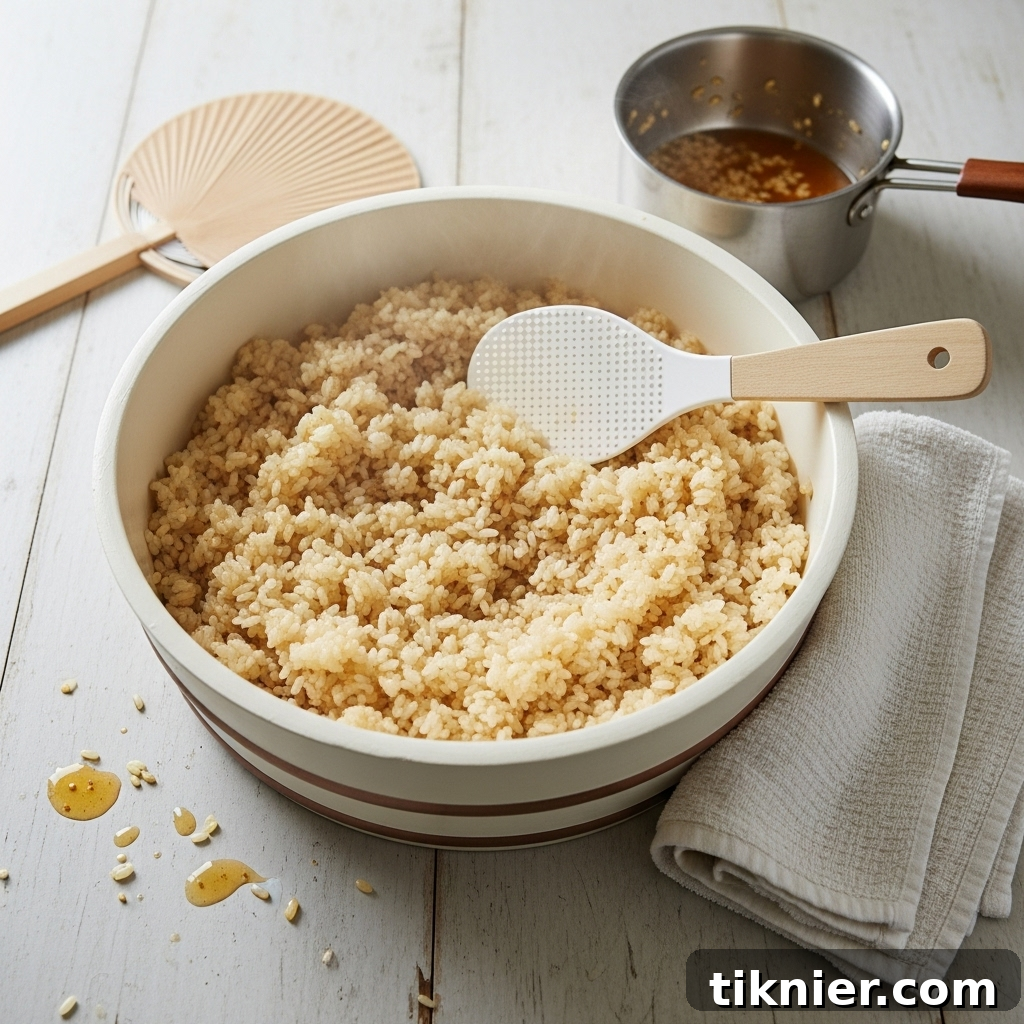
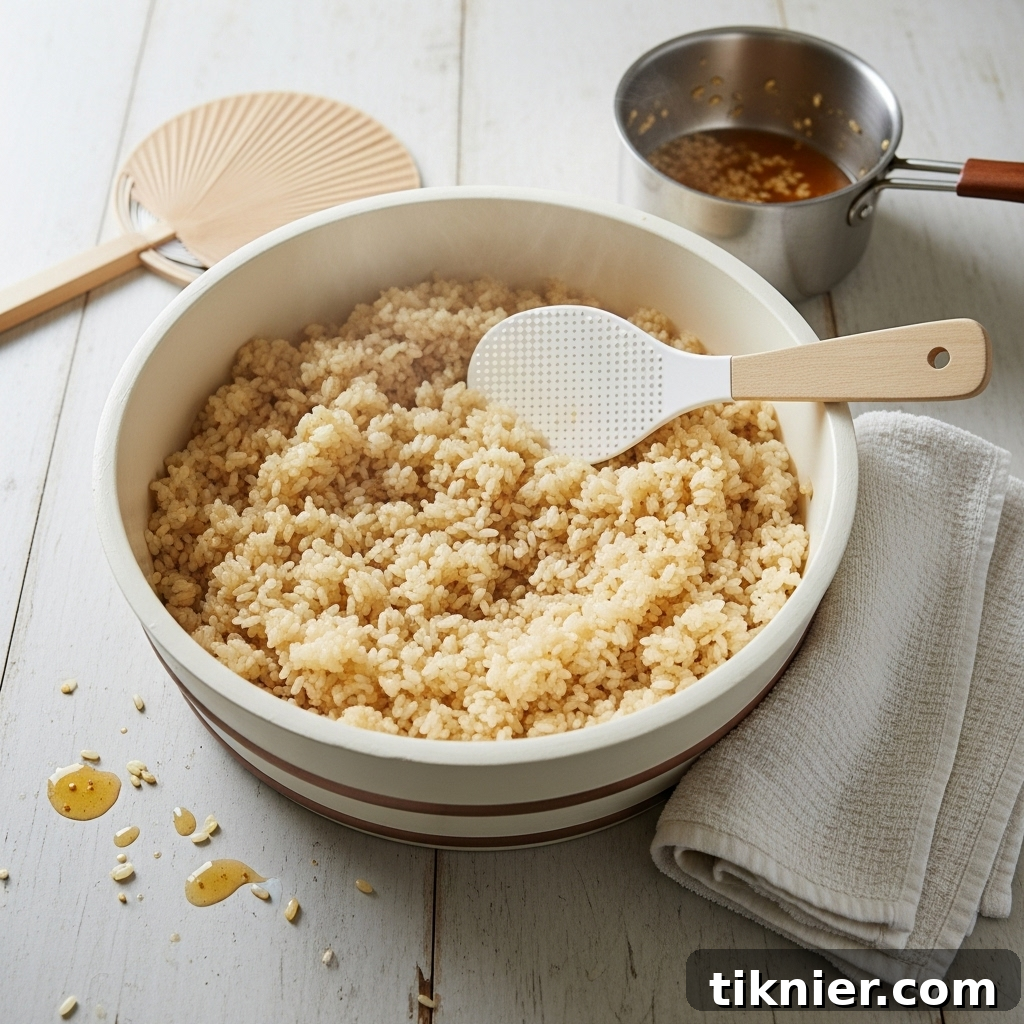
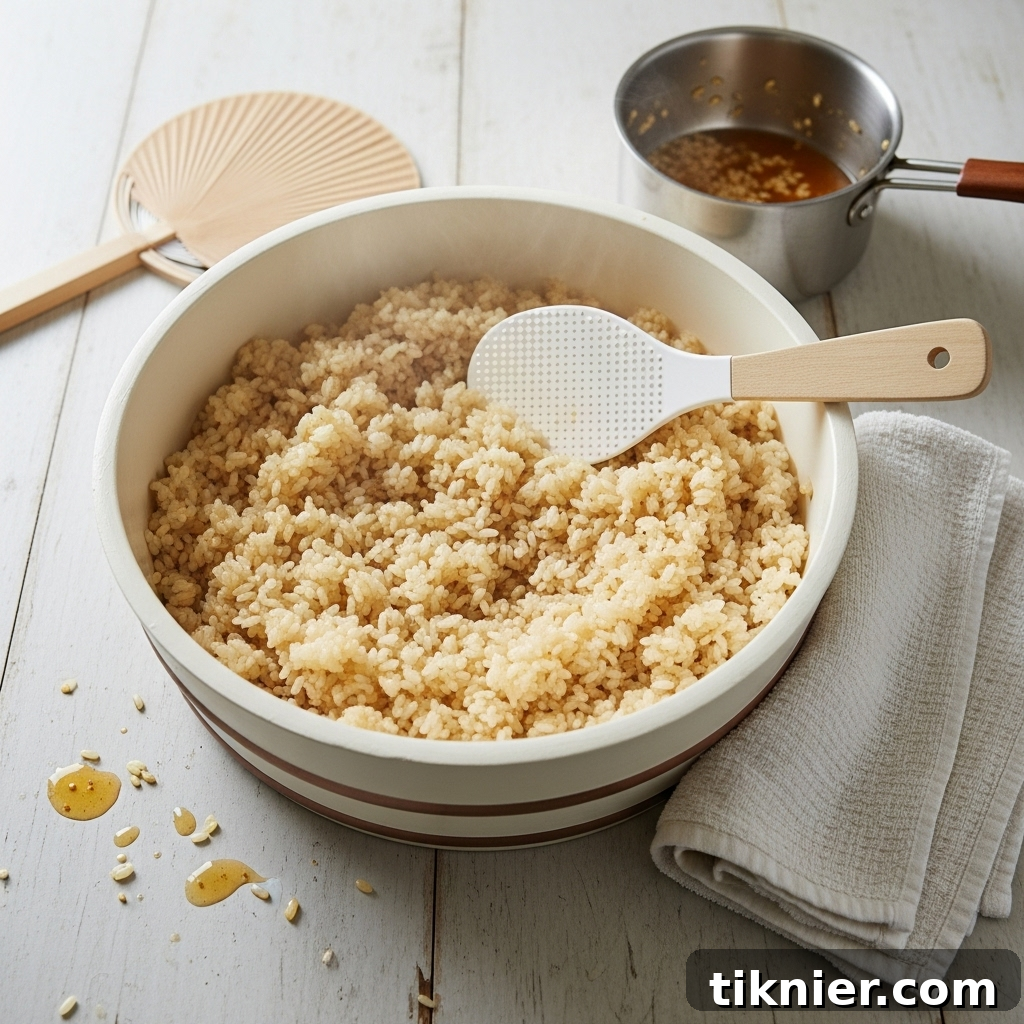
This is the exciting, final transformative stage! Immediately after the rice has completed its steaming, carefully transfer (or “dump”) it into a large, non-metallic bowl. Traditionally, a wooden bowl known as a *hangiri* is ideal because its porous wood helps absorb any excess moisture, contributing to a superior texture. However, a large glass or ceramic bowl will also yield excellent results. Use a dedicated rice paddle or a flat spatula to gently spread the hot rice out evenly within the bowl. Generously drizzle the prepared yuzu-vinegar seasoning mixture all over the surface of the rice.
Now, using your rice paddle, begin to incorporate the seasoning with a gentle “cutting” or slicing motion. The goal is to delicately fold the rice over itself to evenly distribute the seasoning, rather than stirring or mashing, which can break the grains. As you perform this cutting and folding motion, simultaneously use your other hand to fan the rice vigorously with a traditional fan, a magazine, or a sturdy piece of cardboard. This rapid fanning serves multiple crucial purposes: it quickly cools the rice down, effectively halting the cooking process and preventing mushiness; it helps to evaporate any lingering excess moisture; and most importantly, it imparts the rice with its signature, beautiful, glossy sheen. Continue this process until the seasoning is uniformly distributed and the rice has cooled to approximately body temperature. Finally, cover the seasoned rice with a slightly damp kitchen towel to keep it from drying out until you are ready to use it for your sushi creations.
Creative Ways to Serve Your Exquisite Sushi Rice
Congratulations! You’ve successfully mastered the creation of this beautiful, glossy, and perfectly seasoned sushi rice. Now, the culinary possibilities that open up before you are truly endless! Of course, the most classic and rewarding application is for making sushi. Having such a meticulously prepared rice base will elevate your homemade sushi rolls and nigiri to an entirely new level of deliciousness, making them taste a thousand times better than any average attempt. Don’t be intimidated by the idea of rolling; with a simple bamboo mat and a little practice, it’s far easier than you might imagine to craft stunning maki rolls filled with your preferred ingredients, from crisp cucumber and creamy avocado to savory crab or vibrant spicy tuna.
But your culinary journey with this exceptional rice doesn’t have to stop at traditional sushi. One of my personal favorite solutions for a quick, satisfying, and easy weeknight meal is a deconstructed sushi bowl, often referred to as a Chirashi bowl. This ingenious approach offers all the delightful flavors and textures of sushi without any of the intricate rolling. Simply scoop a generous portion of your aromatic, yuzu-seasoned rice into a bowl, and then let your creativity soar with a medley of colorful and flavorful toppings.
Here are a few inspiring ideas to get you started on serving your perfectly prepared sushi rice:
- Classic Maki Rolls: Place a sheet of nori on a bamboo rolling mat, spread a thin, even layer of your sushi rice over it, add your chosen fillings (such as fresh salmon, creamy avocado, and a touch of cream cheese for a fusion twist), and then roll it up tightly and evenly. Slice into bite-sized pieces and serve with traditional accompaniments like soy sauce, a dab of wasabi, and a few slices of pickled ginger.
- Elegant Nigiri: This represents the simplest yet most refined form of sushi. Gently form a small, oblong mound of the seasoned rice in your hand, and then delicately top it with a thin slice of exceptionally high-quality, sushi-grade fish like luscious tuna, rich salmon, or delicate yellowtail.
- Vibrant Sushi Bowls (Chirashi): Create a stunning and satisfying meal by topping a generous bowl of your prepared sushi rice with beautifully cubed sashimi (tuna, salmon, or mixed), vibrant edamame, elegantly sliced avocado, delicate cucumber ribbons, finely shredded carrots, and a light sprinkle of toasted sesame seeds. For an extra kick, drizzle with a little spicy mayo or a sweet-savory eel sauce to complete this wholesome meal.
- Handy Onigiri (Japanese Rice Balls): Using hands moistened with water and lightly salted to prevent sticking, form the rice into appealing triangles or compact balls. You can tuck a small, delicious filling inside, such as flaked salted salmon, tangy pickled plum (umeboshi), or even a touch of tuna mayo, and then wrap it with a small strip of nori for grip and flavor. These make perfect portable snacks, delightful picnic additions, or a unique packed lunch.
You can even utilize this flavorful rice as an exceptional base for a vibrant poke bowl. The bright, distinct citrusy notes imparted by the yuzu in the rice wonderfully complement the marinated fish and fresh ingredients typically found in a poke bowl, adding another layer of complexity. No matter how you ultimately choose to serve it, this meticulously prepared rice provides a delicious, impressive, and versatile foundation for a multitude of culinary delights.
Smart Storage and Creative Reuse for Leftover Sushi Rice
Let’s be candid: when it comes to sushi rice, freshness is undeniably paramount. The texture, aroma, and nuanced flavor are always at their absolute peak on the very day it is prepared. While the vinegar seasoning does offer a mild preservative effect, once refrigerated, the starches within the rice inevitably begin to retrograde, leading to the grains becoming noticeably harder and drier. This process, unfortunately, causes the rice to lose that wonderful soft, fluffy, and slightly sticky texture that you painstakingly worked so hard to achieve.
For this reason, I consistently recommend striving to prepare only the precise amount of rice you anticipate needing for your meal. However, we all occasionally misjudge quantities, and it would truly be a shame to waste any of this delicious, expertly prepared rice. If you do find yourself with leftovers, there’s no need to despair! While its texture won’t be quite suitable for making delicate sushi rolls or nigiri again, there are still several fantastic and creative ways to savor and enjoy it.
Here’s the optimal approach for storing and creatively reviving your leftover sushi rice:
- Storage Best Practices: The primary objective is to prevent the rice from drying out as much as possible. First, allow the cooked rice to cool completely to room temperature. Then, transfer it into an airtight container or wrap it very tightly with plastic wrap, ensuring minimal air exposure. Stored this way, it can be kept in the refrigerator for a maximum of two days. Crucially, avoid leaving cooked rice out at room temperature for more than a couple of hours, as this can pose a food safety risk.
- Effective Reheating Techniques: To breathe new life into hardened, refrigerated rice, you’ll need to gently re-steam it. The simplest and most convenient method is typically in the microwave. Place the rice in a microwave-safe bowl, cover the bowl with a slightly damp paper towel (this creates a steaming effect), and heat it in short 30-second intervals. After each interval, fluff the rice with a fork to break up clumps and redistribute heat, continuing until it is thoroughly warmed through and has regained a softer, more palatable texture.
- Creative Reusing Ideas: Once reheated, the texture of leftover sushi rice is best suited for dishes where it functions as a delicious component rather than the singular star. It makes truly fantastic fried rice! The seasoned flavor is already perfectly infused, so you simply need to add your preferred vegetables, a scrambled egg, and a protein of choice (chicken, shrimp, or tofu). You can also use it to add substance and flavor to soups or stews, or even form it into small patties and pan-fry them until beautifully crispy to create delightful little rice cakes, perfect for snacking or as a side dish.
So, while your leftover sushi rice may not be destined for another round of pristine nigiri, a little culinary creativity ensures it can still be transformed into another equally delicious and effortless meal, ensuring nothing goes to waste in your kitchen.
Adaptations and Flavor Adventures: Substitutions & Variations for Sushi Rice
While this particular sushi rice recipe has been meticulously crafted to achieve a very specific and authentic outcome, there’s always a little room for culinary experimentation and personal adaptation. This is especially true if you find yourself in a pinch with missing ingredients, or if you simply wish to explore different and exciting flavor profiles. The most crucial understanding lies in discerning which ingredients are absolutely fundamental to the technique and which offer flexibility for substitution or creative variation.
The Japanese short-grain rice remains the singular, non-negotiable ingredient. Its unique starch composition and resulting texture are utterly essential for achieving the correct, iconic sushi rice mouthfeel. However, when it comes to the seasoning and aromatics, you do have several thoughtful options. These substitutions can be incredibly helpful if you’re missing an ingredient or need to accommodate a specific dietary requirement, while the variations provide exciting avenues to add new dimensions of flavor and texture to your rice.
Here are some practical substitutions and delightful variations to consider for your sushi rice:
- For the Rice Vinegar: If unseasoned rice vinegar is genuinely unavailable, you can substitute it with apple cider vinegar in a pinch. Be aware that apple cider vinegar possesses a slightly fruitier and more assertive flavor profile, which will subtly alter the final taste, but it will function as an acid. Crucially, avoid using any heavily flavored or pre-seasoned vinegars (unless you adjust or omit other seasoning ingredients entirely), as they will undoubtedly overpower the delicate balance of flavors intended for sushi rice.
- For the Sugar: If your aim is to reduce or eliminate refined sugar, you can successfully substitute it with an equal amount of natural sweeteners such as honey or maple syrup. However, do note that these will impart their own distinct, subtle flavors to the rice. For a truly sugar-free option, a granulated monk fruit sweetener can also work exceptionally well; simply ensure it is fully dissolved into the vinegar mixture just as you would with regular granulated sugar.
- For the Kombu: Should you be unable to locate kombu, you can simply omit it from the recipe. Your rice will still be delicious and perfectly functional, though it will naturally be missing that subtle yet profound layer of umami depth. Do not attempt to substitute kombu with other seaweeds like nori, as their flavor profiles are vastly different and will not achieve the desired effect.
- Exciting Flavor Variations: Once your sushi rice is perfectly seasoned and has cooled to the appropriate temperature, this is a fantastic opportunity to fold in some additional ingredients for extra layers of flavor and intriguing texture. Toasted black or white sesame seeds are a beloved, classic addition, offering a nutty counterpoint. Finely chopped shiso leaf introduces a wonderful, unique minty-basil note that is both refreshing and aromatic. You can also sprinkle in some furikake, a popular Japanese seasoning blend that often includes a delightful mix of dried seaweed, sesame seeds, and dried fish flakes, providing an instant flavor boost. For a touch of heat, a tiny pinch of Japanese seven-spice (shichimi togarashi) can also be gently folded in.
Always remember that the overarching goal is to create a balanced, harmonious, and utterly delicious foundation for your sushi. Feel completely free to make small, iterative adjustments to the sugar or salt levels within the seasoning to perfectly align with your personal taste preferences. Cooking, at its heart, is an art form of making a recipe uniquely your own, and this meticulously crafted sushi rice recipe provides an ideal and versatile canvas for a little bit of creative flair.
Perfect Sushi Rice with a Yuzu Twist
Description: A foolproof recipe for classic sushi rice, perfected with authentic Japanese techniques and elevated with a bright, aromatic, and sophisticated twist of yuzu juice. This rice serves as the ideal foundation for all your homemade sushi rolls, delicate nigiri, and vibrant poke or sushi bowls.
Yield: Approximately 6 cups cooked rice | Category: Side Dish, Staple | Cuisine: Japanese
Prep Time: 40 minutes (includes 30 min soak) | Cook Time: 25 minutes
Ingredients
- 2 cups Japanese short-grain sushi rice
- 2 cups cold water, plus additional for comprehensive rinsing
- 1 (4-inch) square of kombu (dried kelp)
- 1/2 cup unseasoned rice vinegar
- 3 tablespoons granulated sugar
- 1 1/2 teaspoons fine sea salt
- 1 teaspoon yuzu juice (for the signature twist)
Instructions
- Rinse Rice: Place rice in a large bowl. Cover with cold water, vigorously swirl the grains, and drain the cloudy water. Repeat this process 4-5 times until the water runs mostly clear. Drain the rice very well in a fine-mesh sieve for several minutes.
- Soak with Kombu: Combine the well-drained rice, 2 cups of fresh cold water, and the gently wiped kombu square in your rice cooker pot or a heavy-bottomed saucepan. Let the rice and kombu soak undisturbed for 30 minutes.
- Cook Rice: If using a rice cooker, simply press “cook.” For stovetop: bring to a rolling boil over high heat, immediately remove and discard kombu, cover tightly, reduce heat to the absolute lowest setting, and simmer for exactly 15 minutes. Do not lift the lid.
- Steam Rice: After cooking, remove the pot from heat (or let the rice cooker finish its cycle) and allow the rice to steam, still covered, for an additional 10 minutes. This step is crucial for fluffiness.
- Prepare Seasoning: While rice steams, combine vinegar, sugar, and salt in a small, non-reactive saucepan. Warm over low heat, stirring continuously, just until sugar and salt are completely dissolved. Do not boil. Remove from heat and stir in the yuzu juice.
- Season Rice: Immediately transfer the hot, steamed rice into a large non-metallic bowl (a wooden hangiri is ideal). Drizzle the yuzu-vinegar seasoning evenly over the rice.
- Cut & Fan: Using a rice paddle, gently “cut” and fold the seasoning into the rice with a slicing motion, avoiding mashing. Simultaneously, vigorously fan the rice with a fan or piece of cardboard to cool it quickly and impart a glossy sheen. Continue until the seasoning is evenly distributed and the rice is cooled to body temperature.
- Serve: Cover the seasoned rice with a damp kitchen towel until ready to use. For best texture and flavor, use the same day it is made.
Notes
Using a traditional wooden bowl (hangiri) is highly recommended as its porous nature helps absorb excess moisture, resulting in superior rice texture. The fanning step is not merely for cooling; it is absolutely crucial for achieving the distinct, beautiful glossy sheen characteristic of authentic, restaurant-quality sushi rice.
Servings: 8 | Calories: 250 kcal | Fat: 0g | Carbohydrates: 55g | Protein: 4g
Frequently Asked Questions (FAQs) About Perfect Sushi Rice
Here are comprehensive and straightforward answers to the most common questions I consistently receive regarding this sushi rice recipe and the process of making it.
What is the absolute best kind of rice for making sushi rice?
This is arguably the single most important question, as the type of rice you select is the predominant factor dictating your success. The only rice you should, without exception, use is a Japanese-style short-grain white rice. Specific brands such as Nishiki, Calrose (a Californian variety often used for sushi), Kokuho Rose, or Tamanishiki are all excellent choices and are specifically cultivated for this distinct culinary purpose. The fundamental reason behind this strict recommendation lies in the rice’s starch composition. These varieties possess a high concentration of amylopectin, a specific type of starch that, when cooked and seasoned correctly, results in grains that are plump, slightly translucent, wonderfully sticky, yet still distinct, and capable of clinging together perfectly—precisely what is required for sushi.
You should unequivocally avoid using other types of rice. Long-grain varieties, such as Basmati or Jasmine, cook up into separate, fluffy grains that possess no cohesive stickiness and simply will not hold their shape for delicate sushi preparations. Medium-grain rice, like Arborio (famously used for risotto), is also unsuitable as it creates a much creamier, softer texture rather than the desired distinct-yet-sticky consistency. While brown rice can technically be used for sushi, it has a significantly firmer texture and requires different water ratios and considerably longer cooking times, making it far from a simple one-to-one swap for this white sushi rice recipe. For truly authentic, restaurant-quality results, always, always stick with Japanese short-grain white rice.
Can I make sushi rice without a dedicated rice cooker?
Absolutely, yes, you can! While a high-quality Japanese rice cooker is indeed designed to cook short-grain rice to absolute perfection with minimal effort and offers unparalleled convenience, you can undoubtedly achieve fantastic results on the stovetop. The key to stovetop success lies in using a good, heavy-bottomed saucepan or pot that features a very tight-fitting lid. The heavy bottom of the pot is crucial because it facilitates more even heat distribution across the base, which is instrumental in preventing the rice at the bottom from scorching prematurely before the rice at the top has had sufficient time to cook through.
The core tenets of the stovetop method are precise heat management and, critically, resisting the irresistible urge to peek! Adhering to the instructions provided in the recipe is paramount: bring the water to a rolling boil, then immediately drop the heat to the absolute lowest setting your stove can manage, and allow it to simmer undisturbed without lifting the lid for the full 15 minutes. Furthermore, the final 10-minute steaming period off the heat is not merely optional; it is mandatory. This crucial resting phase allows the residual moisture and heat to redistribute evenly throughout the entire pot, ensuring that every single grain is perfectly cooked, plump, and tender. As long as you possess a suitable pot and diligently follow the timing instructions, your stovetop sushi rice will be every bit as excellent as any prepared in a specialized machine.
Why is my sushi rice either mushy or hard? What went wrong?
The texture of perfect sushi rice is a delicate and finely tuned balance, and it is relatively common to end up with a batch that is either too mushy or noticeably too hard. If your rice turns out mushy, the most probable culprits are either using too much water during cooking or, more commonly, insufficient rinsing of the raw rice. If you don’t rinse the rice thoroughly enough, the excess surface starch (amylose) will gelatinize excessively during cooking, leading to a gummy, paste-like consistency. Similarly, if your rice-to-water ratio is even slightly off, it can easily transform the rice into an undesirable mush. Always measure your ingredients with precision and rinse the rice until the draining water appears mostly clear.
Conversely, if your rice is hard, crunchy, or unpleasantly firm in the center, this is typically attributable to either an inadequate amount of water during cooking or, critically, not allowing the rice to soak and steam properly. The initial 30-minute soaking period for the raw rice and kombu is absolutely crucial, as it allows the individual grains to absorb sufficient water before the actual cooking process begins. If you skip or shorten this vital step, the exterior of the grain can cook and seal before the interior has had an opportunity to fully hydrate, resulting in a hard core. Likewise, omitting the final 10-minute steaming period means the rice does not have adequate time to finish cooking through in the gentle, residual heat, leaving you with undercooked, firm grains. For consistently perfect results, meticulously follow the specified water ratios and cooking times.
Do I absolutely have to use rice vinegar in sushi rice?
For achieving the most authentic, balanced, and traditional flavor profile, unseasoned rice vinegar is truly the gold standard and the undisputed choice for making sushi rice. It is specifically preferred for its mild, clean acidity, which is significantly less harsh and aggressive than many other types of vinegar. This delicate acidity allows it to gracefully complement the subtle flavors of the rice and any accompanying fish or fillings without overpowering them. It’s chosen precisely for its gentle and nuanced flavor profile. It’s also vital to ensure you purchase “unseasoned” rice vinegar. “Seasoned” rice vinegar already contains added sugar and salt, so if you mistakenly use it, you will need to completely omit or significantly adjust the sugar and salt quantities from this recipe, losing direct control over the precise balance of flavors.
If you find yourself in a rare situation where unseasoned rice vinegar is genuinely unavailable, you *could* consider substituting it with apple cider vinegar or white wine vinegar as a last resort. However, please be acutely aware that both of these alternatives are inherently more acidic and possess much stronger, more distinct flavor profiles. You may find it necessary to use a slightly lesser quantity and adjust the sugar content upwards to help balance their increased sharpness. I strongly advise against using plain white distilled vinegar, as its flavor is far too harsh, sharp, and one-dimensional for the delicate and intricate nature of sushi.
What is the precise purpose of fanning the sushi rice?
Fanning the rice vigorously while you meticulously mix in the vinegar seasoning is not merely a traditional flourish; it is a critical and classic step in the sushi rice preparation process, serving two exceptionally important functions. Firstly, it rapidly cools the rice down. This rapid cooling is paramount because it immediately halts the rice from continuing to cook in its own residual heat, which is a common cause of mushiness. Simultaneously, this active fanning helps to evaporate any lingering excess surface moisture, both from the freshly cooked rice and from the liquid seasoning you have just added.
Secondly, and arguably even more importantly, this combination of rapid cooling and moisture evaporation is precisely what imparts authentic sushi rice with its characteristic and highly prized beautiful sheen or glossy luster. As the starchy surface of each individual rice grain cools quickly and dries slightly, it develops an appealing, almost iridescent finish. This crucial step concurrently seasons the rice to perfection, cools it to the optimal temperature required for comfortable and effective sushi preparation, and bestows upon it the ideal cosmetic finish. While it might feel a little dramatic or seem like an extra effort, do not, under any circumstances, skip the fanning; it genuinely makes a palpable difference in the final product’s quality and aesthetic appeal.
Explore These Delicious Recipes Next!
Now that you’ve confidently become a master at crafting perfect sushi rice, here are a few other incredibly delicious recipes where you can proudly put your newly acquired skill to excellent use!
- Spicy California Sushi Bowl: All the beloved, classic flavors of a California roll, thoughtfully deconstructed into an effortless, incredibly satisfying, and vibrant bowl meal.
- A Really Good Salmon Rice Bowl: A simple, nutritious, and incredibly flavorful bowl featuring perfectly cooked, flaky salmon served over a generous bed of your amazing, yuzu-kissed sushi rice.
- Teriyaki Salmon with Sesame Asparagus: While not a traditional sushi dish, this delectable teriyaki salmon offers a perfect savory-sweet counterpoint and serves as an exceptional partner for a side of your delicate, citrus-infused sushi rice.
I sincerely hope you enjoy preparing and savoring these delightful dishes just as much as my family and I do.