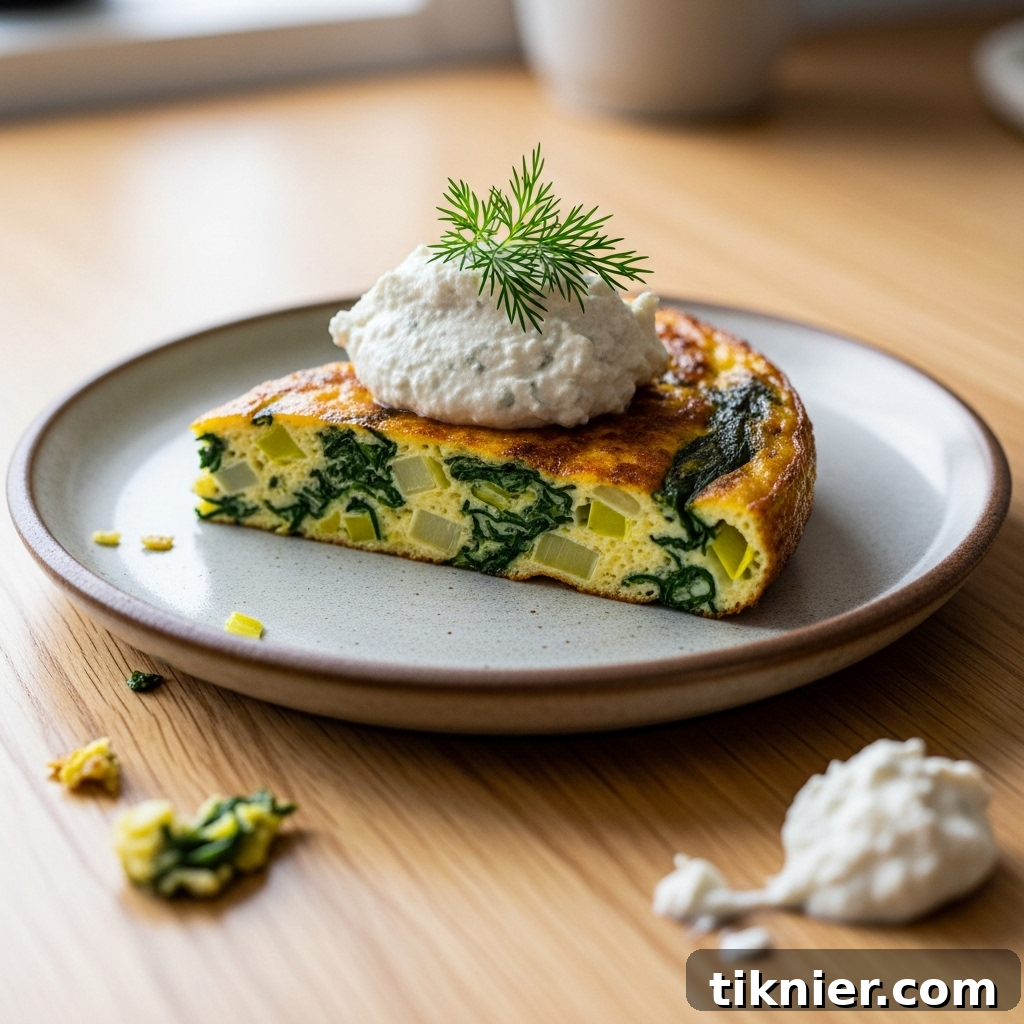
Get ready to elevate your breakfast, brunch, or even a light dinner with this absolutely delightful Leek and Spinach Frittata with a Whipped Feta Twist. This isn’t just any frittata; it’s a culinary experience designed to impress with its layers of flavor, effortless elegance, and a surprising ingredient that will have everyone asking for the recipe.
My journey to perfecting the frittata began years ago during a romantic anniversary trip with my husband. We discovered a charming little bistro where a simple frittata stole my heart. Its understated elegance and versatility for using up fresh ingredients instantly captivated me. Back home, it quickly became my trusted ally for busy mornings, a reliable way to transform leftover vegetables and cheeses into a wholesome, satisfying meal that made me feel incredibly organized and accomplished.
However, as any passionate home cook knows, there’s always room for improvement, always a way to transform “good” into “truly unforgettable.” I wanted to infuse my frittata with that special “wow” factor, a unique element that would make guests pause, savor each bite, and wonder about its secret.
The inspiration struck during a separate culinary adventure, when a dollop of cool, tangy whipped feta graced a savory lamb dish. The contrast of creamy, salty brightness against the rich meat was a revelation. A lightbulb moment flashed: what if this vibrant whipped feta could complement the warm, earthy flavors of a classic frittata? The following Sunday, I experimented, pairing my fluffy egg creation—brimming with sweet leeks and nutty Gruyère—with this zesty, chilled feta. The result? Pure magic! It was the unexpected twist that transformed a humble breakfast staple into an absolutely extraordinary dish, a true match made in culinary heaven.
Jump to the Full Recipe Card!
Why This Leek and Spinach Frittata Recipe Stands Out
A frittata is far more than just scrambled eggs; it’s a versatile, wholesome, and incredibly satisfying dish with rich Italian roots. Derived from the Italian word “friggere,” meaning “to fry,” frittatas were traditionally a resourceful and delicious way to utilize leftover ingredients like pasta, meats, and an array of fresh vegetables, all bound together by the comforting embrace of eggs. Think of it as Italy’s brilliant answer to a crustless quiche—offering all the flavor and elegance without the fuss of preparing a pie crust.
This inherent simplicity is precisely why the frittata has become a beloved staple in kitchens worldwide, adaptable enough for a quick weeknight supper, a hearty make-ahead breakfast, or an impressive centerpiece for a leisurely weekend brunch. Its ease of preparation—requiring only a skillet for cooking fillings, followed by pouring in an egg mixture, and a quick bake—makes it accessible for cooks of all skill levels.
What truly sets this particular Leek and Spinach Frittata apart and elevates it beyond the ordinary is the thoughtful layering of premium ingredients and, of course, that incredible whipped feta twist. We start with a foundation of beautifully softened leeks and perfectly wilted baby spinach, providing a sweet, mild, and earthy base. Then, nutty, melt-in-your-mouth Gruyère cheese and fragrant fresh herbs like chives and dill are folded directly into the custardy egg mixture, ensuring a burst of flavor in every single forkful. Even without the topping, this is a solid, undeniably delicious frittata.
However, the real showstopper, the element that transforms this from a good recipe into a truly memorable one, is the Whipped Feta Twist. Imagine a dollop of cool, tangy, and subtly salty feta, whipped until impossibly smooth and creamy. This luxurious spread provides a magnificent counterpoint to the warm, rich, and savory frittata. Its bright acidity and creamy texture cut through the richness of the eggs and cheese, introducing a refreshing zest that cleanses the palate and brightens the entire dish. It’s an unexpected yet harmonious pairing that feels both modern and sophisticated, turning a simple egg creation into a gourmet culinary experience that will undoubtedly become a new favorite in your repertoire.
Essential Ingredients for Your Perfect Frittata
The secret to an outstanding frittata lies in the quality and freshness of its components. While the dish itself is simple, choosing excellent ingredients will undoubtedly make it shine. Here’s a detailed look at what you’ll need to create this masterpiece, including the star players for the frittata itself and the game-changing whipped feta topping.
For the Fluffy Leek and Spinach Frittata:
- 8 Large Eggs: The foundation of our frittata. Opt for farm-fresh eggs if possible; their richer yolks and superior flavor truly make a difference in the final taste and vibrant color of your frittata.
- 1/4 Cup Heavy Cream: This is crucial for achieving that wonderfully rich, tender, and custardy texture that defines a perfect frittata. It adds depth and prevents the eggs from becoming rubbery.
- 1/4 Cup Whole Milk: Working in harmony with the heavy cream, whole milk contributes to the ideal consistency of the egg base, ensuring a fluffy yet firm frittata.
- 1/2 Cup Grated Gruyère Cheese: Please, take the extra minute to grate your own! Pre-shredded cheeses often contain anti-caking agents that hinder smooth melting. Gruyère offers a delightful nutty, slightly sweet, and earthy flavor that complements the leeks beautifully, melting into pockets of cheesy goodness.
- 2 Tbsp Chopped Fresh Chives: These delicate herbs provide a subtle, mild oniony note that enhances the savory profile without overpowering other flavors.
- 1 Tbsp Chopped Fresh Dill: This is a key herb in this recipe. Its distinctively fresh, slightly sweet, and aromatic flavor pairs exceptionally well with both the eggs and the tangy whipped feta, adding a layer of sophisticated brightness.
- 1/2 Tsp Kosher Salt: Essential for seasoning and bringing out the natural flavors of all the ingredients.
- 1/4 Tsp Black Pepper: Freshly ground black pepper adds a subtle kick and aromatic depth.
- 1 Tbsp Unsalted Butter: Used to sauté the vegetables, butter adds a rich, delectable flavor to the base.
- 1 Tbsp Olive Oil: Combining olive oil with butter helps prevent the butter from burning at higher temperatures, ensuring a golden, not browned, sauté.
- 1 Large Leek: Use only the white and light green parts. It’s imperative to slice them thinly and rinse them meticulously. Leeks are notorious for trapping grit and sand between their layers, so a thorough cleaning is non-negotiable for a pleasant eating experience. Cooked slowly, they transform into a wonderfully sweet and tender ingredient.
- 3 Cups Packed Baby Spinach: This leafy green wilts down significantly. Baby spinach is preferred for its tender leaves and mild flavor. It adds essential nutrients and a lovely green hue to the frittata.
For the Game-Changing Whipped Feta Twist:
- 4 Oz Block Feta Cheese: This is the undeniable star of our topping. For the creamiest, most authentic, and flavorful whipped feta, always opt for a block of feta cheese packed in brine. Avoid the pre-crumbled varieties, which are often drier and lack the desired creaminess.
- 3 Tbsp Full-Fat Greek Yogurt or Cream Cheese: This ingredient acts as a binder and creamy enhancer, helping the feta achieve that incredibly smooth, luscious, and spreadable consistency. Full-fat is essential here for the best texture and richness.
- 1 Tbsp Freshly Squeezed Lemon Juice: Acidity is vital to cut through the richness of the frittata and the feta, adding a bright, zesty tang that enlivens the entire dish.
- 1 Tsp Lemon Zest: For an aromatic citrus punch! The zest contains essential oils that provide a more intense lemon flavor and fragrance than juice alone.
- 1 Tbsp Good Quality Olive Oil: A high-quality extra virgin olive oil contributes a subtle fruity or peppery note and aids in achieving a perfectly smooth blend for your whipped feta.
- Fresh Dill for Garnish: A final flourish of fresh dill not only adds a pop of color but also reinforces the fresh, aromatic notes of the dish, tying the flavors together beautifully.
Step-by-Step Instructions: Crafting Your Perfect Frittata
Making a show-stopping frittata is a surprisingly straightforward process that beautifully transitions from your stovetop to the oven. By carefully following these detailed steps, you’ll achieve a consistently puffed, golden-brown, and utterly delicious result every single time. The most critical piece of equipment you’ll need is a 10-inch oven-safe skillet—a well-seasoned cast iron pan or a high-quality non-stick pan will serve you wonderfully.
1. Preheat Oven and Prepare the Egg Mixture
Begin by preheating your oven to a precise 375°F (190°C). Position an oven rack in the middle of your oven; this ensures even cooking and perfect browning. In a spacious mixing bowl, crack your eight large eggs. Whisk them vigorously until the yolks and whites are thoroughly combined and the mixture is uniform in color and texture. Next, pour in the heavy cream and whole milk. Continue whisking until you have a single, slightly frothy, cohesive mixture. Now, gently fold in the grated Gruyère cheese, the finely chopped fresh chives, dill, kosher salt, and freshly ground black pepper. Give it a final gentle stir to distribute the ingredients evenly. Set this flavorful egg mixture aside while you prepare your vegetables.
2. Expertly Sauté the Vegetables
Place your 10-inch oven-safe skillet over medium heat. Add the unsalted butter and olive oil to the pan and allow them to melt together. The addition of olive oil helps to raise the smoke point of the butter, preventing it from browning too quickly and ensuring a gentle sauté. Add your thinly sliced and meticulously rinsed leeks to the skillet. This is a crucial step for flavor development: cook the leeks slowly, stirring occasionally, for approximately 5 to 7 minutes. The goal is to soften them until they become wonderfully tender and release their natural sweetness, not to brown them. Rushing this process will result in a harsh, raw onion flavor rather than the delicate, sweet notes we desire. Once the leeks are perfectly softened, add the packed baby spinach in handfuls. It will initially appear to be an overwhelming mountain of greens, but it will quickly wilt down dramatically in just a couple of minutes. Continue stirring until all the spinach has completely wilted and any released liquid has evaporated. Then, use your spoon or spatula to spread the cooked vegetables evenly across the bottom of the pan, forming a consistent base for your frittata.
3. Cook on Stovetop, Then Bake to Perfection
Give your reserved egg mixture one last quick stir to re-incorporate any settled cheese or herbs. Carefully and evenly pour this mixture over the sautéed vegetables in your skillet. Allow it to cook on the stovetop, undisturbed, for 3 to 4 minutes. During this initial stovetop cooking phase, you’ll observe the edges of the frittata just beginning to set. This vital step helps to establish the frittata’s structure and prevents it from spreading too much in the oven. Once the edges are visibly set, carefully transfer the entire skillet directly into your preheated oven. Bake for an additional 15 to 20 minutes. You’ll know your frittata is perfectly done when it’s beautifully puffed up, golden brown on top, and the center appears mostly set. A very slight wobble in the absolute center is perfectly normal and even desirable, as the residual heat will continue to cook it to perfection as it rests outside the oven.
4. Master the Whipped Feta Twist
While your gorgeous frittata is baking to golden perfection, you have the ideal amount of time to prepare the star topping. In a small food processor or a high-powered blender, combine the crumbled block feta cheese, full-fat Greek yogurt (or cream cheese), freshly squeezed lemon juice, aromatic lemon zest, and a tablespoon of good quality olive oil. Blend these ingredients until the mixture is completely smooth, airy, and luxuriously creamy. You may need to pause and scrape down the sides of the bowl or blender a couple of times to ensure all ingredients are thoroughly incorporated. The final result should be a silky, bright, and tangy spread with an irresistible texture.
5. Rest, Slice, Serve, and Garnish
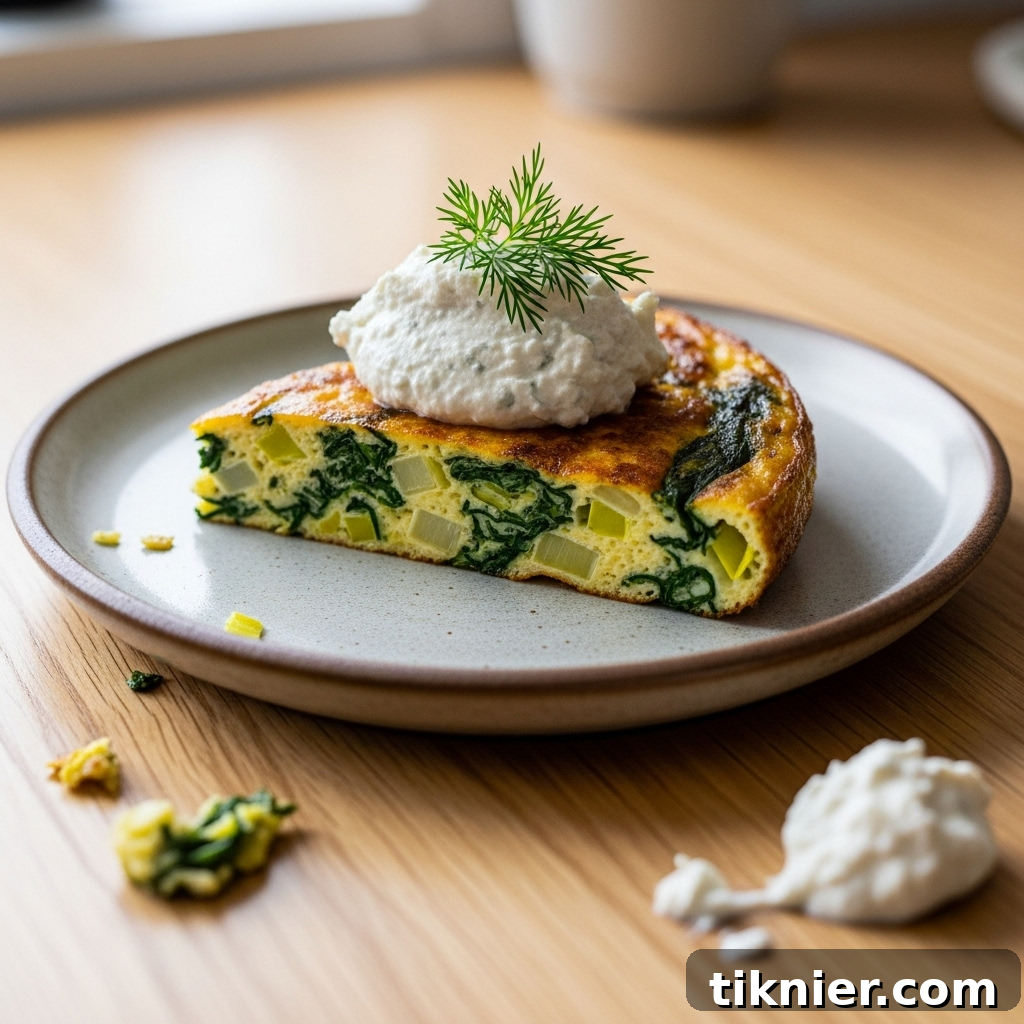
Once you triumphantly pull the puffed, golden frittata from the oven, exercise a little patience. Resist the immediate urge to slice into it. Instead, allow it to rest in the skillet for at least 5 minutes. It’s entirely normal for the frittata to deflate slightly during this resting period. This crucial step allows the eggs to finish setting up properly, making it much easier to slice into clean, beautiful wedges without crumbling. Once rested, cut your frittata into neat portions. Serve it warm, perhaps alongside a vibrant green salad, and crown each slice with a generous, luscious dollop of that cool, creamy whipped feta. A final delicate sprinkle of fresh dill will add a burst of color and reinforce the fresh herbal notes, making the dish look every bit as amazing as it tastes.
How to Serve Your Elegant Leek and Spinach Frittata
The remarkable versatility of a frittata is truly one of its greatest assets. This Leek and Spinach Frittata, especially with its unique whipped feta topping, is equally at home gracing a sophisticated brunch table or serving as a swift, nourishing weeknight dinner. The way you choose to present it can dramatically influence its personality, transforming it to suit any occasion.
For a show-stopping brunch spread, this frittata truly shines as the main event. Its elegant appearance and the gourmet touch of the whipped feta deserve to be celebrated. I love to build a complementary spread around it, balancing its richness with fresh, bright, and textural elements. Consider these delightful pairings:
- A Crisp Green Salad: A simple yet elegant lightly dressed arugula, mixed greens, or butter lettuce salad with a bright lemon vinaigrette provides the perfect refreshing counterpoint. The peppery notes of the greens and the zing of citrus dressing beautifully cut through the richness of the eggs and cheese, offering a palate cleanse with every bite.
- Golden Crispy Potatoes: To add a satisfying heartiness and textural contrast, a side of perfectly roasted breakfast potatoes, seasoned home fries, or ultra-crispy hash browns are an ideal companion. Their comforting warmth and crisp exterior make the meal feel more substantial and complete.
- Seasonal Fresh Fruit: A vibrant bowl of seasonal berries (strawberries, blueberries, raspberries), perfectly sliced melon, or a simple, colorful fruit salad introduces a wonderful sweetness, refreshing juiciness, and a pop of color to your table.
- Artisan Bread or Pastries: You can never go wrong with slices of warm, crusty sourdough toast, fluffy English muffins, or delicate croissants. They’re excellent for soaking up any lingering whipped feta or egg goodness on your plate, adding an extra layer of comfort and indulgence.
- Smoked Salmon: For an extra touch of luxury, thinly sliced smoked salmon makes a fantastic accompaniment, offering a briny, delicate contrast to the frittata’s savory profile.
For a lighter lunch or effortless dinner, a generous wedge of this frittata can stand proudly on its own. Perhaps simply accompanied by a side of creamy sliced avocado, ripe heirloom tomatoes, or a quick side of steamed green beans. One of its most appealing qualities is that it’s absolutely delicious served at room temperature, making it an excellent candidate for potlucks, picnics, packed lunches, or convenient meal prep throughout the week. You can even cut cooled frittata into small, elegant squares and serve them as sophisticated appetizers at your next gathering. No matter the occasion or temperature, that irresistible dollop of cool, tangy whipped feta is non-negotiable – it truly is the element that elevates this dish from delicious to extraordinary.
Storing & Reheating Your Delicious Frittata Leftovers
One of the many joys of this Leek and Spinach Frittata with Whipped Feta is that it tastes just as fantastic, if not better, the next day! If you’re fortunate enough to have leftovers, knowing how to properly store and reheat them is key to extending their deliciousness. This makes it an absolute winner for convenient meal prep and quick, satisfying meals throughout the week.
First and foremost, allow the frittata to cool down completely to room temperature before storing. Attempting to store it while still warm can create condensation inside the container, which can lead to a soggy texture—and nobody wants a soggy frittata! Once cooled, you have a couple of excellent options for storage:
- Whole Frittata Storage: If you plan to serve the entire frittata again, you can leave it in its oven-safe skillet (if it has a lid) and wrap the skillet tightly with plastic wrap or aluminum foil. Alternatively, gently slide the whole frittata onto a plate or cutting board and cover it securely.
- Individual Portion Storage (Recommended): For ultimate convenience, I highly recommend slicing the cooled frittata into individual wedges or squares. Place these portions in an airtight container. This method is fantastic for grab-and-go lunches or quick breakfasts, as each portion is perfectly sized and ready to enjoy.
Refrigeration: The cooked frittata will maintain its freshness and deliciousness in the refrigerator for up to 4 days. It’s best to store the whipped feta separately in its own airtight container; it will also remain fresh for about 4 days.
Here’s how to best enjoy your leftovers:
- Enjoying Cold: Don’t knock it ’til you try it! A slice of cold frittata, straight from the fridge, is surprisingly dense, savory, and incredibly satisfying. Pack a wedge with a small container of the whipped feta for an effortlessly gourmet work lunch or a quick snack.
- Reheating in the Microwave (Quick Option): For the fastest reheat, place an individual slice of frittata on a microwave-safe plate. Heat it in short 30-second intervals, checking in between, until it is just warmed through. Be cautious not to overdo it, as microwaved eggs can quickly become rubbery if heated too long.
- Reheating in the Oven or Toaster Oven (Best for Texture): For the absolute best texture revival, reheating in a conventional oven or toaster oven is your best bet. Place individual slices on a baking sheet (or directly in the toaster oven tray) and warm them at 325°F (160°C) for approximately 10-15 minutes, or until thoroughly heated through. This gentle, indirect heat helps the frittata remain tender and avoids the rubbery outcome sometimes associated with microwave reheating.
Leftover frittata is remarkably versatile. Consider chopping it up and adding it to a breakfast burrito, crumbling it over a fresh salad for a protein-packed boost, or even incorporating it into a creative sandwich. It’s a dish that truly keeps on giving, making your meal planning a breeze!
Creative Substitutions & Delicious Variations for Your Frittata
While this Leek and Spinach Frittata with Whipped Feta recipe is meticulously crafted for perfection, the inherent beauty of a frittata lies in its forgiving nature and its invitation to culinary creativity. It’s a truly fantastic canvas for using up ingredients you have on hand or adapting to seasonal availability and personal preferences. Feel empowered to mix and match elements to make this recipe uniquely your own!
Here are some inspiring substitutions and delicious variations that pair wonderfully with the core frittata method and that delightful whipped feta topping:
- Cheese Alternatives: If Gruyère isn’t available or you’re seeking a different flavor profile, numerous other melting cheeses will work beautifully. Experiment with sharp white cheddar for a bolder, tangier flavor, Fontina for an exceptionally creamy and mild melt, or crumbled goat cheese stirred into the egg mixture for a distinctive tangy kick. Parmesan or even a good quality mozzarella could also be used, depending on the desired richness.
- Exploring Different Vegetables: While leeks and spinach are a classic and harmonious duo, the frittata welcomes a vast array of other vegetables. Consider seasonal favorites such as sautéed mushrooms and tender asparagus spears in the spring, vibrant bell peppers and zucchini ribbons in the summer, or caramelized onions and roasted butternut squash in the fall and winter. Remember the golden rule: thoroughly cook down any watery vegetables (like zucchini, mushrooms, or tomatoes) to release their excess moisture before adding the eggs. This prevents a watery or soggy frittata.
- Herb Garden Adventures: Fresh herbs are absolutely essential for injecting vibrancy and depth of flavor into your frittata. If dill isn’t your favorite, or if you simply want to experiment, fresh parsley (flat-leaf or curly), fragrant basil, delicate chervil, or even a touch of earthy thyme would make wonderful substitutes or additions. A blend of Mediterranean herbs can also be particularly enticing.
- Making it Dairy-Free: For those following a dairy-free diet, this recipe can be easily adapted. Substitute the heavy cream and whole milk with an equal amount of unsweetened, full-fat oat milk, almond milk, or cashew milk. For the Gruyère, seek out a good quality dairy-free cheese alternative that melts well. For the whipped feta, the market now offers several excellent dairy-free feta alternatives (often made from coconut or soy) that can be whipped just as smoothly with dairy-free yogurt or cream cheese substitutes.
- Boosting with Protein (Meat Additions): To transform your frittata into an even heartier, more substantial meal, feel free to incorporate cooked, crumbled bacon, savory breakfast sausage, diced ham, or even shredded chicken to the vegetable mixture before pouring in the eggs. Just ensure any meat additions are fully cooked and any excess grease is drained before combining with the vegetables.
- Adding a Spicy Kick: If you enjoy a bit of heat, consider adding a pinch of red pepper flakes to your sautéed vegetables or a dash of hot sauce to the egg mixture. A finely diced jalapeño or serrano pepper could also provide a fresh, spicy edge.
Regardless of the fillings you choose, the core cooking method remains consistent: sauté your chosen ingredients until tender and any excess moisture is gone, pour over the seasoned egg custard, and bake until beautifully set. That delightful whipped feta topping, with its tangy and creamy profile, is surprisingly versatile and complements almost any savory frittata combination you can dream up. So, unleash your inner chef, have fun experimenting, and truly make this versatile Leek and Spinach Frittata recipe your very own signature dish!
Leek and Spinach Frittata with a Whipped Feta Twist
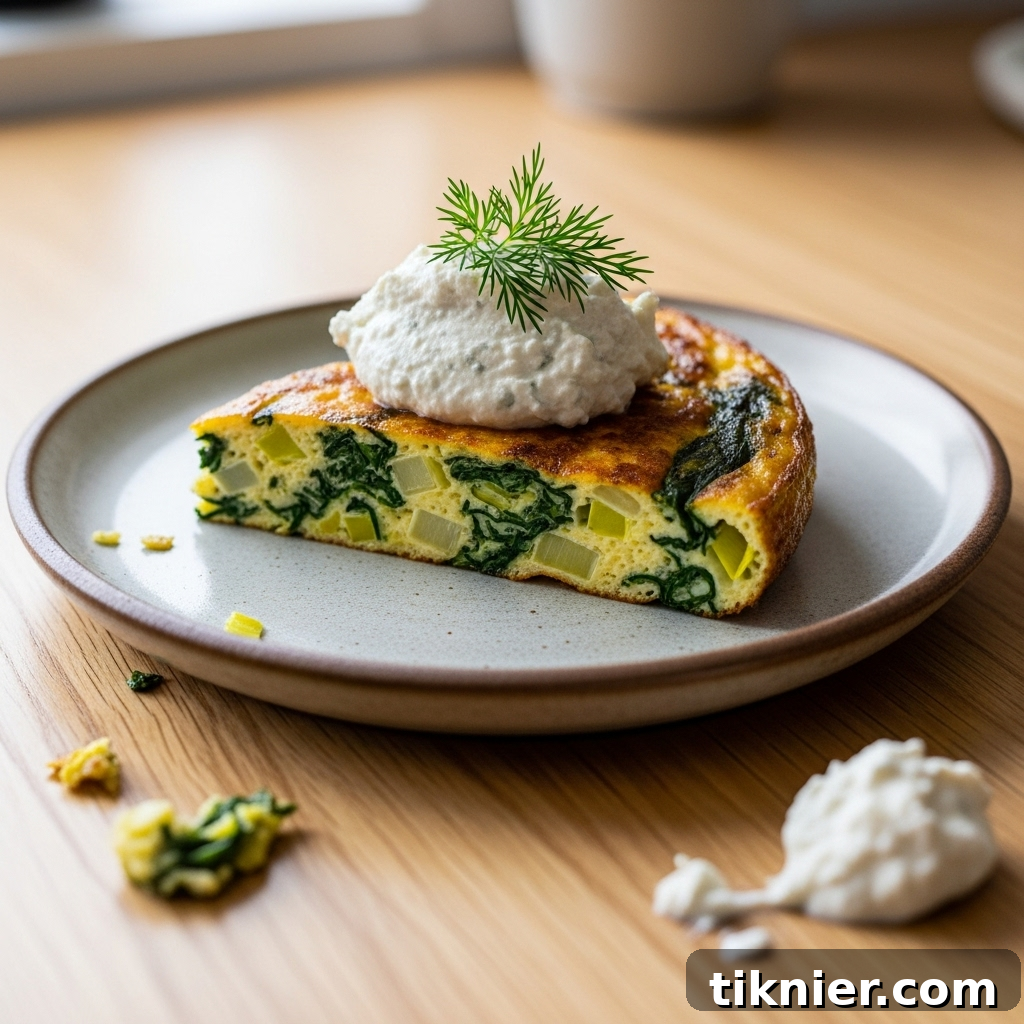
Description: A fluffy, savory leek and spinach frittata made with nutty Gruyère cheese, elevated with a cool, tangy, and unbelievably creamy whipped feta topping. The perfect dish for an elegant brunch or a simple weeknight meal.
Yield: 6 Servings | Category: Breakfast | Cuisine: American / Italian
Prep Time: 15 minutes | Cook Time: 25 minutes
Ingredients
- 8 large eggs
- 1/4 cup heavy cream
- 1/4 cup whole milk
- 1/2 cup grated Gruyère cheese
- 2 Tbsp chopped fresh chives
- 1 Tbsp chopped fresh dill
- 1/2 tsp kosher salt
- 1/4 tsp black pepper
- 1 Tbsp unsalted butter
- 1 Tbsp olive oil
- 1 large leek, white and light green parts only, thinly sliced
- 3 cups packed baby spinach
- 4 oz block feta cheese
- 3 Tbsp full-fat Greek yogurt
- 1 Tbsp lemon juice
- 1 tsp lemon zest
- 1 Tbsp olive oil
- Fresh dill for garnish
Instructions
- Preheat oven to 375°F (190°C).
- Whisk together eggs, cream, milk, Gruyère, chives, dill, salt, and pepper until well combined.
- In a 10-inch oven-safe skillet, melt butter and olive oil over medium heat. Add sliced leeks and sauté for 5-7 minutes until soft and translucent, not browned. Stir in baby spinach until completely wilted and any liquid has evaporated. Spread vegetables evenly.
- Pour the whisked egg mixture evenly over the cooked vegetables in the skillet. Cook on the stovetop, undisturbed, for 3-4 minutes until the edges just begin to set.
- Carefully transfer the skillet to the preheated oven. Bake for 15-20 minutes, or until the frittata is puffed, golden brown, and the center is set with a slight wobble.
- While the frittata bakes, prepare the whipped feta. In a small food processor or high-powered blender, combine the block feta cheese, Greek yogurt, freshly squeezed lemon juice, lemon zest, and olive oil. Blend until the mixture is completely smooth and creamy, scraping down the sides as needed.
- Remove frittata from oven and let it rest in the skillet for at least 5 minutes before slicing into wedges. Serve warm, topped generously with the cool, creamy whipped feta and a sprinkle of fresh dill for garnish.
Notes
Ensure your leeks are meticulously rinsed to remove all grit. For the smoothest, most flavorful whipped feta, always use block feta packed in brine, avoiding pre-crumbled varieties. Adjust salt and pepper to your taste.
Servings: 6 | Calories: 350 kcal | Fat: 28g | Carbohydrates: 6g | Protein: 19g
5 Frequently Asked Questions About This Frittata Recipe
Here are detailed, straightforward answers to the most common questions I receive about crafting this delicious Leek and Spinach Frittata with a Whipped Feta Twist, ensuring your success in the kitchen.
What is the absolute best pan for making a frittata?
The choice of pan significantly impacts the success and presentation of your frittata. The ideal pan is a 10-inch oven-safe skillet. This specific size is perfect for an 8 to 10-egg frittata, ensuring it achieves the perfect thickness—not too thin and not overly thick—allowing for even cooking throughout. My personal top recommendation is a well-seasoned cast iron skillet. Cast iron excels at heating evenly and retaining heat exceptionally well, which helps create a beautiful golden-brown crust on the bottom and sides of your frittata. Its seamless transition from stovetop to oven is indispensable for this recipe. Another excellent option is a high-quality oven-safe, non-stick skillet. The non-stick surface makes releasing the cooked frittata an absolute breeze, guaranteeing perfect, clean wedges without any sticking. It’s crucial to ensure your pan’s handle is indeed oven-safe; avoid pans with plastic or rubber handles that can melt or release harmful fumes at high oven temperatures.
Why might my frittata turn out watery or soggy?
A watery or soggy frittata is a common, and understandably frustrating, issue, but it’s almost always preventable. The primary culprit is invariably excess moisture from your fillings, especially from vegetables. Vegetables such as spinach, mushrooms, zucchini, and tomatoes naturally release a significant amount of water as they cook. It is absolutely paramount to thoroughly cook these vegetables down before you incorporate the egg mixture. For this Leek and Spinach Frittata recipe, ensure the baby spinach is completely wilted and that any liquid it releases has entirely evaporated from the pan before adding the eggs. If you’re using other high-moisture vegetables, sauté them until they are tender and all excess liquid has visibly cooked off. If using frozen spinach, you must thaw it completely and then meticulously squeeze out as much water as humanly possible, either with your hands or by pressing it in a clean kitchen towel. Another important tip: adhere to the specified ratios of milk and cream in the recipe. Adding too much liquid to the egg custard itself can also hinder its ability to set properly, leading to a runny or watery consistency.
What are the key differences between a frittata and a quiche?
This is a fantastic question, as frittatas and quiches are often mistakenly thought to be the same due to their similar appearances! However, there are several distinct differences. The most immediately noticeable distinction is that a quiche always features a crust, typically a rich, buttery pastry crust, while a frittata is inherently crustless. This makes the frittata a quicker, often lighter, and naturally gluten-free option. Beyond the crust, other key differentiators include:
- Dairy-to-Egg Ratio: Quiches generally have a higher dairy-to-egg ratio, resulting in a significantly creamier, more delicate, and richer custard filling. Frittatas, on the other hand, contain less dairy, which gives the egg flavor a more pronounced presence and results in a slightly firmer, more compact texture.
- Cooking Method: For a frittata, the fillings (like our leeks and spinach) are usually cooked directly in an oven-safe skillet, the egg mixture is poured over, and then the entire dish is started on the stovetop before finishing in the oven. Quiches typically involve layering fillings into a pre-baked (or partially baked) crust, then pouring the custard over, and baking the entire dish exclusively in the oven.
- Origin and Purpose: While both are egg-based, frittatas are rooted in Italian cuisine as a resourceful dish for leftovers, cooked in one pan. Quiches hail from French (and originally German) cuisine, often seen as a more refined, oven-baked tart.
Understanding these distinctions helps appreciate the unique qualities and versatility of both delightful dishes.
How can I tell when my frittata is perfectly cooked?
Achieving the perfect texture—tender, fluffy, and fully set, without being dry or rubbery—is crucial for an exceptional frittata. Knowing precisely when to remove your Leek and Spinach Frittata from the oven is key. An overcooked frittata can become dry and dense, while an undercooked one will be disappointingly runny in the center. Visual cues are your most reliable guide:
- Puffed Edges and Golden Top: The frittata should be beautifully puffed up, especially around its edges, indicating the eggs have properly set and risen. The surface should exhibit a lovely golden-brown color, signifying caramelization and a perfectly cooked exterior.
- Center Firmness: The center of the frittata is the most critical area to assess. It should appear mostly set. It’s perfectly normal, and even desirable, for there to be a very slight jiggle or wobble right in the middle when you gently shake the pan. This indicates that the frittata is cooked through but still moist. The residual heat from the pan and the frittata itself will continue to cook it for a few minutes after you remove it from the oven (this is called carryover cooking), so pulling it out with that slight wobble ensures it won’t be overdone and dry.
- Knife Test (Optional): If you’re still unsure, you can carefully insert a thin knife or a wooden skewer into the very center of the frittata. If it comes out clean with no raw egg clinging to it, your frittata is ready.
The total baking time usually falls between 15 and 20 minutes, but remember that oven temperatures can vary significantly, so always start checking around the 15-minute mark.
Can this Leek and Spinach Frittata be made ahead of time?
Absolutely, yes! This Leek and Spinach Frittata with Whipped Feta is an outstanding make-ahead dish, which is one of the primary reasons it’s so beloved for entertaining guests or simplifying your weekly meal prep. You have a couple of excellent options for preparing it in advance:
- Fully Baked Frittata (1-2 Days Ahead): You can completely bake the frittata a day or two in advance. Once it’s finished baking, allow it to cool down completely to room temperature. Then, cover it tightly with plastic wrap or aluminum foil and store it in the refrigerator. When you’re ready to serve, you can enjoy it chilled, at room temperature, or reheat individual slices as needed (refer to the reheating instructions above for best results). The whipped feta topping can also be prepared ahead of time and stored separately in its own airtight container in the fridge for up to 4 days.
- Component Prep (Day Before): Another fantastic option is to prep all the individual components ahead of time. You can sauté the leeks and spinach, let them cool, and store them in an airtight container in the fridge. Separately, whisk together the egg, cream, milk, cheese, and herb mixture and keep that covered in another container in the refrigerator. When you’re ready to cook, simply spread the pre-cooked vegetables in your skillet, pour the prepared egg mixture over the top, and bake as directed. This method allows you to enjoy a freshly-baked frittata with significantly reduced prep time on the day you plan to serve it.
Making this frittata ahead of time allows you to savor more moments with your guests or simply enjoy a hassle-free, gourmet meal whenever you desire. It’s perfect for busy schedules without compromising on flavor or elegance.
Explore More Delicious Recipes
If you’ve fallen in love with the effortless elegance and incredible flavors of this Leek and Spinach Frittata with Whipped Feta, I’m confident you’ll adore some of my other hand-picked recipes. Whether you’re planning your next morning meal, seeking innovative yet budget-friendly dinner solutions, or simply looking for fresh culinary inspiration, I’ve got a collection of favorites designed to delight your palate and simplify your kitchen adventures.
- For even more delightful morning meal ideas, be sure to explore my comprehensive collection of Easy Breakfast Ideas and Recipes. You’ll find everything from sweet treats to savory delights to kickstart your day.
- This frittata perfectly exemplifies how an affordable meal can still be incredibly impressive and flavorful. Discover more ingenious ways to eat well without breaking the bank in my detailed guide to Cheap Meal Ideas & Budget-Friendly Recipes.
- A frittata serves wonderfully as a light yet satisfying dinner. If you’re continually searching for simple, delicious supper solutions that taste homemade, dive into my extensive roundup of 110 Easy Dinner Ideas That Taste Great.