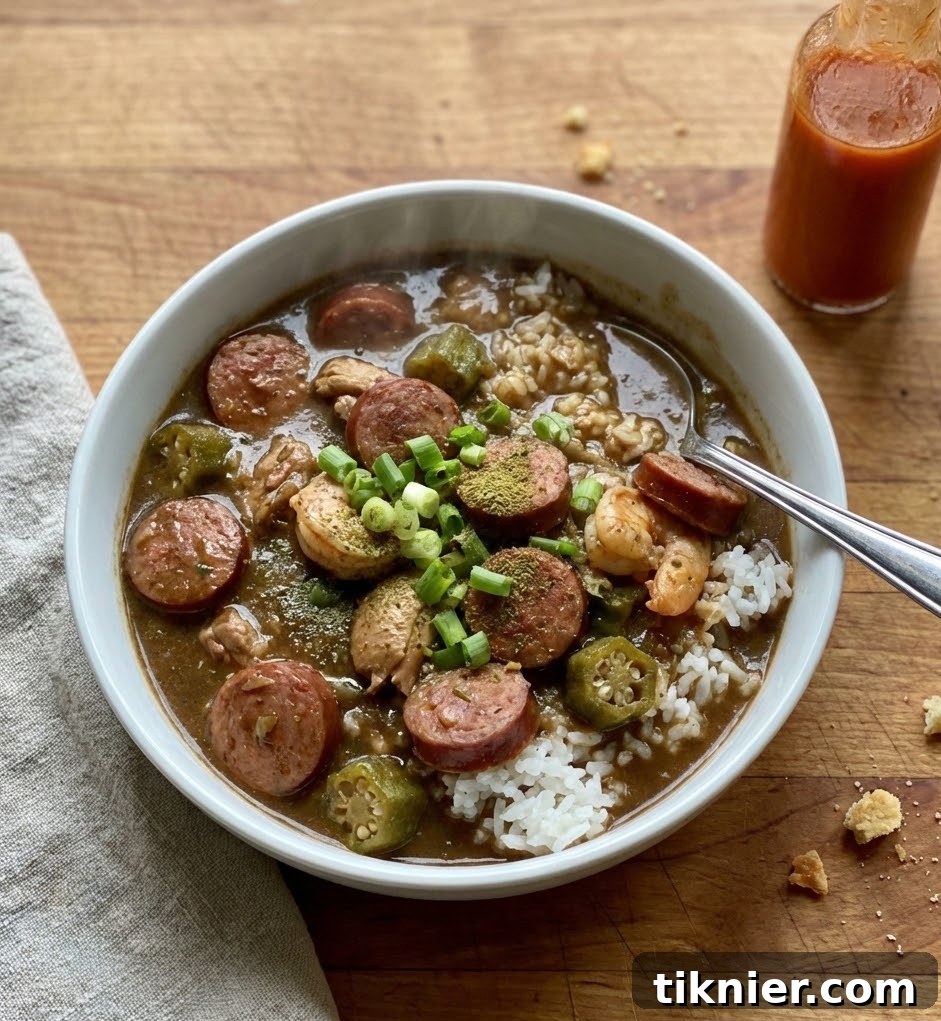

My culinary journey with gumbo began not in a renowned New Orleans eatery, but in the cozy kitchen of my dear friend, Caroline. It was a crisp, rainy Tuesday, and the air in her home was thick with an intoxicating aroma – a deep, smoky, and spicy fragrance that enveloped you like the warmest embrace. Caroline, with an expression of intense focus, meticulously stirred a pot on the stove, a process she affectionately dubbed her “patience pot.”
And indeed, it was a labor of love. That gumbo was a revelation. Its flavor profile was incredibly complex: smoky from the succulent sausage, rich from the tender chicken, and underpinned by the mysterious, dark roux. I was instantly captivated. For years, I pursued that elusive perfection in my own kitchen, experimenting with countless recipes, fine-tuning spice levels, and trying various sausages. I came close, very close, yet something was always missing. My gumbo was delicious, savory, but it lacked that final, brilliant spark that made Caroline’s truly unforgettable.
Then, one evening, while preparing a simple pan sauce, I instinctively reached for a splash of sherry vinegar to brighten the flavors. A culinary lightbulb illuminated! The next time I prepared my gumbo, right at the very end of the cooking process, I stirred in a couple of tablespoons of that same vinegar. The transformation was immediate and profound. That was it—the magic ingredient! A delicate touch of bright acidity that effortlessly cut through the gumbo’s inherent richness, allowing every single flavor in the pot to sing in perfect harmony.
Today, I’m thrilled to share this secret with you. This isn’t just another gumbo recipe; it’s the one that will leave your guests utterly amazed, eagerly asking for your special trick. Prepare to elevate your gumbo game to an unparalleled level.
Skip to My Signature Gumbo Recipe!
The Enduring Appeal of Gumbo: Why This Recipe Shines
Gumbo is far more than a mere dish; it is a profound cornerstone of Louisiana cuisine, boasting a history as rich and layered as its distinctive flavor. It stands as a magnificent culinary melting pot, harmoniously blending French, West African, Spanish, and Choctaw influences, all simmered together to create an unparalleled gastronomic experience. From the French, we inherited the foundational roux – a precise blend of flour and fat that not only thickens but also imbues the dish with a deep, nutty flavor. West African culinary traditions introduced us to okra, a classic natural thickener, while the indigenous Choctaw people contributed filé powder, crafted from ground sassafras leaves, adding another layer of earthy complexity.
This vibrant history is precisely why gumbo is so universally cherished. It embodies pure comfort, a dish that demands time, patience, and meticulous care in its preparation, and you can genuinely taste that dedication in every soul-warming spoonful. My particular recipe pays homage to these revered traditions while introducing an innovative twist. We meticulously build the flavor profile, beginning with a slow-toasted, dark roux – patiently cooked to a profound richness – which offers an unmatched depth of nutty, savory undertones. We then introduce the iconic “holy trinity” of Southern cooking: onions, bell peppers, and celery, forming the aromatic heart of our gumbo.
However, what truly distinguishes this specific gumbo recipe is my unique secret: a splash of sherry vinegar. Traditional gumbo, while incredibly rich, smoky, and deeply savory, can sometimes feel a touch heavy on the palate. The strategic addition of sherry vinegar at the very end works wonders. It doesn’t impart a sour or vinegary taste whatsoever. Instead, its bright acidity brilliantly cuts through the richness derived from the dark roux and the smoked sausage, meticulously lifting all those deep, complex flavors. This creates a more distinct, vibrant, and incredibly sophisticated profile, awakening every element of the dish. It adds a final, elegant layer of complexity that transforms this gumbo into an utterly unforgettable culinary masterpiece.
This recipe achieves a perfect harmony, honoring the time-honored traditions of gumbo while infusing a modern touch that elevates the entire dish to new heights. This is the gumbo that will truly captivate and impress anyone fortunate enough to savor it.
Essential Ingredients for Your Ultimate Gumbo Soup
Crafting an exceptional gumbo soup hinges on the meticulous layering of flavors, a process that begins with selecting high-quality ingredients. Each component plays a pivotal role in creating that final, soul-satisfying bowl. Here’s a detailed breakdown of what you’ll need to assemble, ensuring you’re fully equipped to embark on this delicious culinary adventure.
The true measure of success in gumbo-making lies in granting each ingredient the respect it deserves, allowing its individual character to contribute fully to the overall symphony of taste. Avoid the temptation to rush the process; savor each step. Let’s introduce the star performers for this remarkable gastronomic production:
- For the Heart of the Gumbo:
- 1 cup all-purpose flour: The foundation for our rich roux, providing both thickening and a nutty depth when toasted.
- ¾ cup vegetable oil: The essential fat for our roux, crucial for achieving that perfect dark color and flavor.
- 2 large yellow onions, chopped: A critical component of the “holy trinity,” contributing a sweet and savory aromatic base.
- 1 large green bell pepper, chopped: Another vital member of the trinity, offering a fresh, slightly bitter counterpoint.
- 2 celery stalks, chopped: Completing the aromatic trinity, adding earthy notes and a subtle crunch.
- 6 cloves garlic, minced: A generous amount for pungent, aromatic depth that permeates the entire dish.
- 1 lb smoked sausage (such as high-quality kielbasa, andouille, or a Hungarian Debrecener), sliced into ¼-inch coins: Choose a sausage with robust smoky flavor; this is key to gumbo’s distinctive character.
- 1 lb boneless, skinless chicken thighs, cut into 1-inch pieces: Thighs are superior to breasts here, remaining moist and tender even after extended simmering.
- 8 cups chicken stock, warmed: The liquid base for our soup; warming it prevents the roux from seizing up.
- 2 bay leaves: Infuse a subtle, herbaceous note that deepens the overall aroma.
- 1 tablespoon smoked paprika: Enhances the smoky profile and adds a lovely reddish hue.
- 1 teaspoon dried thyme: A classic herb that complements the savory meats and vegetables beautifully.
- ½ teaspoon cayenne pepper, or to taste: Provides a gentle, warming heat; adjust based on your preference for spice.
- Salt and freshly ground black pepper to taste: Essential for seasoning every layer of flavor throughout the cooking process.
- 2 cups sliced okra (fresh or frozen): A traditional thickener and flavor enhancer, contributing its unique texture and earthy taste.
- 1 lb large shrimp, peeled and deveined: Added at the very end for succulent, perfectly cooked seafood.
- The Twist Ingredient: 2 tablespoons of sherry vinegar: Our secret weapon! This brightens and harmonizes all the rich flavors without making the gumbo taste vinegary.
- For Serving:
- Cooked long-grain white rice: The essential accompaniment, perfect for soaking up the rich broth.
- Freshly sliced green onions: A vibrant garnish offering a fresh, sharp bite.
- Filé powder: An optional, traditional sassafras-based thickener and flavor enhancer, often served on the side.
A quick, essential note on a few of these crucial items. For the smoked sausage, prioritize quality and a genuinely robust smoky flavor. While Andouille is traditionally favored in some gumbo styles, I find that a high-quality Kielbasa or even a Hungarian Debrecener sausage introduces an incredibly delicious and unique flavor profile. Regarding the chicken, I strongly advocate for boneless, skinless chicken thighs. Their higher fat content ensures they remain wonderfully moist and tender, even after hours of simmering, unlike leaner chicken breasts which tend to dry out quickly.
And then, there’s our transformative twist ingredient, the sherry vinegar. This is not interchangeable with white or apple cider vinegar. Sherry vinegar possesses a distinct, complex nutty quality that magnificently complements the deep, toasted notes of the dark roux. It is this precise finishing touch that elevates this gumbo from merely great to truly spectacular, making it a masterpiece of Southern comfort.
Mastering Your Gumbo: Step-by-Step Instructions
Crafting gumbo is an immersive journey, not a hurried race. Embrace the process: put on some soulful music, perhaps pour yourself a beverage, and truly savor the experience of building these magnificent flavors from the very foundation. We will navigate this culinary adventure one deliberate step at a time.
1. The Soul of Gumbo: Preparing the Roux
This is arguably the most critical step, the very heart and soul of your gumbo soup. In a large, heavy-bottomed Dutch oven or a sturdy stockpot, gently heat your vegetable oil over medium heat. Once it shimmers, gradually whisk in the flour until the mixture is completely smooth and lump-free. Now, significantly reduce the heat to medium-low. Your singular mission, should you choose to accept it, is to stir this mixture continuously and patiently for 30 to 45 minutes. You are aiming for a deep, rich color resembling melted dark chocolate, accompanied by a wonderfully nutty, toasted aroma. Utilize a flat-edged wooden spoon or a heatproof spatula to diligently scrape the entire bottom of the pot, preventing any flour from sticking and scorching. Do not, under any circumstances, walk away or allow yourself to be distracted. A burnt roux is irrevocably bitter, and regrettably, you would have to begin the entire process anew.
2. Sautéing the Sacred Trinity
Once your roux has achieved its perfect, glossy dark chocolate hue, immediately add the chopped yellow onions, green bell pepper, and celery. This triumvirate forms the “holy trinity” of authentic Cajun and Creole cooking. The cool vegetables will instantly arrest the cooking process of the roux, preventing any further darkening or potential burning. Stir the vegetables frequently for approximately 8 to 10 minutes, until they soften significantly and become wonderfully fragrant, absorbing all that glorious, toasty roux flavor. Finally, stir in the minced garlic and cook for just one more minute, until its pungent aroma becomes unmistakably present.
3. Preparing and Browning the Meats
While your holy trinity is gently sautéing, preheat a separate large skillet over medium-high heat. Add your sliced smoked sausage and cook until the edges become delightfully crispy and browned. This crucial step renders out the flavorful fat, enriching the gumbo immensely. Using a slotted spoon, carefully transfer the browned sausage to a plate, leaving behind all the savory drippings in the skillet. Next, season your cubed chicken thigh pieces generously with salt and pepper. Sear them in that same skillet until they are lightly browned on all sides, developing a beautiful crust. They do not need to be cooked through at this stage. Set the seared chicken aside with the sausage.
4. Uniting and Simmering the Flavors
Return to your Dutch oven where the roux and vegetables await. It’s time to bring all the elements together. Slowly and carefully, pour the warmed chicken stock into the roux and vegetable mixture. Whisk continuously as you pour to ensure a smooth, lump-free liquid forms. Bring the entire mixture to a gentle simmer, then reintroduce your browned sausage and seared chicken into the pot. Stir in the bay leaves, smoked paprika, dried thyme, and cayenne pepper. Give it a final, thorough seasoning with salt and freshly ground black pepper to taste.
5. The Patient Slow Cook
Now comes the most forgiving and rewarding part. Reduce the heat to low, securely place the lid on your pot, and allow that magnificent gumbo to simmer gently for at least one and a half hours, though two hours is even better if time allows. The longer it simmers, the more profoundly the individual flavors will meld, deepen, and harmonize. Remember to give it a stir every 20 minutes or so, just to ensure nothing is adhering to the bottom of the pot and all the flavors are circulating evenly.
6. Incorporating Okra and Shrimp
After the extended, patient simmer, stir in your sliced okra. Whether you opt for fresh or frozen, okra acts as a natural thickener (alongside the roux) and imparts a quintessential gumbo flavor and texture. Let it cook for an additional 30 minutes, allowing the okra to become tender but not mushy. In the final few minutes of cooking – typically the last 3 to 5 minutes – add the peeled and deveined shrimp. Shrimp cook remarkably fast. As soon as they turn pink, become opaque, and curl into a delicate “C” shape, they are perfectly done. Exercise caution to avoid overcooking them, as they will quickly become tough and rubbery.
7. The Grand Finale: The Sherry Vinegar Twist
Here it is, the moment of transformation! Remove the pot completely from the heat. Pour in your two tablespoons of sherry vinegar and give the gumbo a final, gentle stir. This crucial addition will beautifully brighten and lift all the rich, deep flavors, adding that spark of complexity. Before serving, carefully fish out and discard the bay leaves.
8. Serving Your Masterpiece
Ladle your gorgeous, aromatic gumbo soup generously into wide, shallow bowls, traditionally served over a generous scoop of fluffy white rice. Garnish each serving with a sprinkle of freshly sliced green onions for a fresh, sharp contrast. Offer a small bowl of filé powder at the table, allowing guests to add a dash to their own bowls if they desire, enhancing both flavor and thickness.
How To Serve Gumbo Soup: A Ritual of Southern Hospitality
Serving gumbo soup is more than just plating a meal; it’s a cherished ritual, and a few thoughtful touches can elevate the entire experience into something truly memorable. The way you present this dish is the final, essential step in honoring the significant time, effort, and love you poured into its creation. It’s all about fostering a warm, comforting, and communal atmosphere around the table.
Traditionally, gumbo is universally served with rice. The rice acts as the perfect, absorbent base, exquisitely soaking up the rich, complex broth while providing a delightful textural contrast. My preference leans towards a simple, long-grain white rice, cooked to a light and fluffy perfection. I recommend serving it as a welcoming mound in the center of the bowl, with the savory gumbo generously ladled all around it, allowing the rice to become infused with every delicious drop.
Beyond the fundamental rice accompaniment, here are a few refined ways to present and enjoy your magnificent gumbo soup:
- The Classic Garnishes for Flair: Never underestimate the transformative power of fresh garnishes. A delicate sprinkle of thinly sliced green onions provides a sharp, fresh bite that beautifully cuts through the inherent richness of the gumbo, adding visual appeal and a burst of flavor. And then, of course, there’s filé powder. This unique, traditional thickener, derived from finely ground sassafras leaves, should always be offered at the table. Guests can sprinkle it over their individual bowls, adding an earthy, distinctive flavor. It’s crucial to add filé powder *after* the gumbo has been served and removed from the heat, as boiling it can unfortunately cause it to become stringy and unappealing.
- Crusty Bread for Sopping: While not strictly a traditional element, a basket of warm, crusty French bread on the table is always a brilliant addition. Its sturdy texture is absolutely perfect for soaking up every last, precious drop of that liquid gold from the bottom of your bowl. No one wants to let a single bit of that incredible flavor go to waste!
- A Simple, Refreshing Side Salad: Gumbo, by its very nature, is a profoundly rich and hearty one-pot meal, meaning it requires very little in terms of elaborate accompaniments. However, if you wish to introduce a fresh element, a crisp, simple green salad tossed with a light vinaigrette is the ideal choice. It offers a refreshing, cool counterpoint to the warm, deeply complex flavors of the gumbo soup, balancing the meal beautifully.
When you proudly bring that steaming pot of gumbo to your table, you are offering more than just a meal. You are presenting a tangible piece of culinary history, a bowl brimming with profound comfort, and a testament to the magical artistry of slow cooking. Encourage everyone to serve themselves, fostering that cherished, cozy, communal feeling that only an truly great gumbo can so effortlessly provide.
Storing and Reheating Gumbo Soup: Savoring the Second Day
One of the most gratifying aspects of preparing a substantial pot of gumbo soup is the sheer delight of its leftovers, which are often just as good, if not superior, the following day. As the gumbo rests overnight in the refrigerator, its diverse flavors continue to intertwine and deepen, culminating in an even richer, more complex, and harmonized taste. Proper storage is paramount to ensure you can fully enjoy every last drop of this culinary treasure.
First and foremost, it is crucial to allow the gumbo to cool down sufficiently before transferring it to storage. Leaving a large, hot pot on the countertop for an extended period poses a significant food safety risk. To expedite the cooling process, you can carefully transfer the gumbo into smaller, shallower containers, which dissipate heat more rapidly. Alternatively, placing the pot in an ice bath in your kitchen sink for a period can also help bring down its temperature quickly and safely.
Here’s my recommended approach for storing and reheating your delectable gumbo leftovers:
- Refrigeration for Short-Term Enjoyment: Once completely cooled, transfer your gumbo into airtight containers and store them securely in the refrigerator. It will maintain its exquisite quality for up to four days. When you’re ready to indulge again, simply reheat it gently on the stovetop over medium-low heat, stirring occasionally, until it is thoroughly warmed through. I find that the stovetop method preserves the delicate texture of the ingredients, particularly the shrimp, far better than a microwave, which can sometimes render seafood rubbery.
- Freezing for Future Feasts: Gumbo soup is an outstanding candidate for freezing, making it perfect for meal prepping. I often prepare a double batch specifically so I can freeze half for those busy weeknights when cooking from scratch isn’t feasible. Ensure the gumbo has cooled completely before freezing. Ladle it into freezer-safe containers or robust, heavy-duty freezer bags, leaving about an inch of headspace at the top to accommodate expansion during freezing. Properly stored, it will remain perfectly delicious in the freezer for up to three months. To reheat from frozen, transfer it to the refrigerator to thaw overnight, then warm it up on the stovetop following the method described above.
- A Crucial Note on Rice: I strongly advise storing the gumbo and the rice separately. Cooked rice, when submerged in the liquid of the gumbo, tends to absorb too much moisture and can become unpleasantly mushy upon reheating. It is always best to prepare a fresh batch of fluffy white rice to serve with your leftover gumbo. This simple step takes only a few minutes and makes an incredible difference in the overall enjoyment of your reheated meal.
Having a container of this magnificent gumbo nestled in your freezer is akin to possessing a secret culinary weapon for an impromptu cozy night in. It’s a complete, deeply satisfying meal that tastes as if you’ve spent an entire day simmering, even when all you’ve done is gently warm it up. Truly, it’s the gift that keeps on giving.
Substitutions & Variations for Your Signature Gumbo Soup
While my gumbo soup recipe holds a cherished place as a tried-and-true favorite in my home, one of the most beautiful and liberating aspects of gumbo is its inherent versatility. Consider this recipe not as a rigid rulebook, but rather as a robust and inspiring starting point. Once you’ve confidently mastered the fundamental techniques, especially the art of the roux, you’re empowered to playfully experiment with ingredients, adapting the dish to your personal preferences or making use of what you have readily available in your pantry.
Do not shy away from experimentation! Gumbo has always been a dynamic dish, historically evolving to reflect the unique local ingredients and the distinctive personal touch of each cook. Here are some thoughtful swaps and creative variations you might consider exploring:
- Diverse Protein Swaps: The classic pairing of chicken and sausage is undoubtedly delicious and difficult to surpass, but feel completely free to introduce your own protein combinations. For instance, instead of Kielbasa, opt for traditional Andouille sausage to impart a more pronounced, spicier kick. You could ingeniously utilize leftover shredded turkey following a holiday feast, giving it a delicious second life. For an opulent, seafood-centric version, consider adding succulent crabmeat or even a handful of plump, shucked oysters alongside the shrimp during the final stages of cooking for an incredible oceanic depth.
- Adjusting the Spice Level (Hotter or Milder): My recipe provides a gentle, welcoming warmth from the cayenne pepper, but the heat level is entirely customizable. For those who crave more fiery intensity, incorporate a finely diced jalapeño or serrano pepper alongside the holy trinity, or simply increase the amount of cayenne to your liking. Conversely, if you prefer a milder gumbo soup, feel free to reduce or even completely omit the cayenne pepper.
- Creative Vegetable Additions: While the holy trinity (onion, bell pepper, celery) is undeniably non-negotiable for authentic gumbo flavor, you can certainly introduce other vegetables to enhance complexity. Some cooks enjoy adding a can of diced tomatoes (often found in Creole-style gumbos) or a cup of corn for a touch of sweetness. Just be aware that adding tomatoes will subtly alter the flavor profile and color of the gumbo, but it can create a wonderfully delicious iteration in its own right.
- Gluten-Free Roux Option: For those requiring a gluten-free alternative, you can successfully prepare the roux using a high-quality, all-purpose gluten-free flour blend. While it may not darken quite as deeply or achieve the exact same glossy sheen as a traditional wheat flour roux, you will still achieve a fantastic flavor and effective thickening power. When using gluten-free flour, keep a closer eye on it, as it may cook and darken slightly faster.
Always remember that the true heart of this dish lies in its technique. As long as you dedicate the necessary time and unwavering attention to perfecting your roux and patiently building your layers of flavor, you possess the freedom to customize the specific ingredients to your heart’s desire. Enjoy the gratifying process of making this timeless classic gumbo soup uniquely your very own culinary masterpiece.
Julie’s Secret Gumbo Soup: A Flavorful Twist

Description: Experience the ultimate Southern comfort with this rich, smoky chicken, sausage, and shrimp gumbo soup. Crafted with a traditional dark roux and finished with a unique secret ingredient – sherry vinegar – this recipe makes all the classic flavors intensely pop, creating an unforgettable meal!
Yield: 10-12 servings | Category: Soup | Cuisine: Southern, Creole
Prep Time: 30 minutes | Cook Time: 2 hours 30 minutes
Ingredients
- 1 cup all-purpose flour
- ¾ cup vegetable oil
- 2 large yellow onions, chopped
- 1 large green bell pepper, chopped
- 2 celery stalks, chopped
- 6 cloves garlic, minced
- 1 lb smoked sausage, sliced (e.g., kielbasa or andouille)
- 1 lb boneless, skinless chicken thighs, cut into 1-inch cubes
- 8 cups chicken stock, warmed
- 2 bay leaves
- 1 tablespoon smoked paprika
- 1 teaspoon dried thyme
- ½ teaspoon cayenne pepper (adjust to taste)
- Salt and black pepper to taste
- 2 cups sliced okra (fresh or frozen)
- 1 lb large shrimp, peeled and deveined
- Secret Ingredient: 2 tablespoons sherry vinegar
- For Serving: Cooked long-grain white rice, freshly sliced green onions, filé powder (optional)
Instructions
- Prepare the Roux: In a large Dutch oven, create a dark chocolate-colored roux by whisking the oil and flour over medium-low heat, stirring constantly for 30-45 minutes until nutty and fragrant.
- Sauté Trinity: Immediately add chopped onion, bell pepper, and celery to the roux. Cook for 8-10 minutes until softened. Stir in minced garlic and cook for 1 minute more.
- Brown Meats: In a separate skillet, brown sliced sausage until crispy. Remove. Season chicken with salt/pepper and sear in the same skillet until lightly browned. Set aside with sausage.
- Combine & Simmer: Gradually whisk warm chicken stock into the roux mixture until smooth. Add browned sausage, seared chicken, bay leaves, smoked paprika, dried thyme, and cayenne pepper. Season with salt/pepper. Bring to a simmer, then reduce heat to low, cover, and cook for 1 ½ hours.
- Add Okra & Shrimp: Stir in the sliced okra and cook for another 30 minutes until tender. In the last 3-5 minutes, add the shrimp and cook until they turn pink and opaque.
- The Twist: Remove the pot from heat. Stir in the 2 tablespoons of sherry vinegar. Remove and discard bay leaves.
- Serve: Ladle the rich gumbo soup over cooked white rice. Garnish with fresh green onions and offer filé powder at the table.
Notes
Patience is paramount when making the roux; rushing it can lead to bitterness. Aim for a rich, dark chocolate color and a nutty aroma. Using chicken thighs ensures the chicken remains incredibly moist and tender throughout the long simmering process. The sherry vinegar is crucial for balancing the richness and brightening all the deep flavors.
Servings: 10-12 | Calories (per serving): 560 kcal | Fat: 35g | Carbohydrates: 28g | Protein: 32g
Frequently Asked Questions About Authentic Gumbo Soup
Here are concise, straightforward answers to the most common inquiries I receive regarding this rich and flavorful gumbo soup recipe.
What defines an truly exceptional gumbo soup?
An truly exceptional gumbo soup is characterized by its profound, layered flavors and a wonderfully satisfying consistency. It’s not attributed to a single element but rather a masterful combination of key components executed flawlessly. The absolute bedrock of any great gumbo is the roux. A dark roux, meticulously cooked low and slow until it achieves the color of deep, dark chocolate, provides an incredibly nutty, toasted, and profoundly savory base that is simply unattainable through any other method. Rushing or, worse yet, burning the roux is the most common mistake that can utterly compromise a gumbo’s quality.
Beyond the fundamental roux, a superb gumbo derives its aromatic soul from the “holy trinity” of onion, celery, and green bell pepper. The quality of your proteins also plays an immense role: a well-smoked sausage imparts a tremendous amount of flavor, and opting for chicken thighs over breasts ensures the meat remains tender and succulent throughout the long cooking process. Ultimately, patience is the secret ingredient. A proper gumbo soup necessitates simmering for at least two hours, allowing all those individual flavors to deeply meld into one cohesive, complex, and immensely comforting dish. It is unequivocally a labor of love, and that dedication is palpable in every single spoonful.
Is it possible to prepare gumbo soup without okra?
Absolutely, you can certainly make a delicious gumbo soup without incorporating okra. Okra traditionally serves a dual purpose in gumbo: it contributes a distinctive, somewhat grassy flavor profile, and it acts as a natural thickening agent. If you are not particularly fond of the flavor or the slightly viscous texture that okra can impart, you have excellent alternatives. The other venerable, traditional gumbo thickener is filé powder, which is skillfully crafted from dried and finely ground sassafras leaves.
Should you choose to omit the okra, you can simply rely on your meticulously prepared roux to provide all the necessary thickness, which will result in a slightly thinner, yet still profoundly flavorful gumbo. Alternatively, you can utilize filé powder as a finishing touch. It’s vital to note that filé should always be added at the very end of cooking, off the heat, or ideally, sprinkled individually over servings at the table. Boiling filé powder can cause it to become unpleasantly stringy. Therefore, feel free to exclude the okra and either embrace a slightly looser gumbo or use filé powder to achieve your desired consistency and unique earthy flavor.
What is the definitive secret to crafting a perfect dark roux for gumbo soup?
The definitive secret to creating a perfect dark roux lies in a combination of two critical elements: consistent, low-to-medium heat and unwavering, patient stirring. There are no viable shortcuts on this path to culinary perfection. You will require a heavy-bottomed pot, such as a high-quality cast-iron Dutch oven, as its superior heat distribution capabilities are essential for preventing scorching. The ideal ratio typically involves roughly equal parts fat (oil) and flour by weight, which translates to approximately ¾ cup of oil to 1 cup of all-purpose flour by volume for our recipe. The most crucial aspect, however, is the stirring technique: you must continuously use a flat-edged wooden spoon or a heatproof spatula to diligently scrape every inch of the pot’s bottom. This ensures that the flour toasts uniformly and prevents any particles from sticking and burning, which would impart a bitter taste.
You must commit to being a dedicated guardian of your roux for a substantial period—typically 30 to 45 minutes, sometimes even longer. The color will gradually evolve from a pale blonde to the hue of peanut butter, then progress to a coppery penny, and finally culminate in a deep, rich dark chocolate brown. Concurrently, the aroma will transform, becoming wonderfully nutty and deeply toasted. Resist the powerful temptation to increase the heat to accelerate the process; high heat is the ultimate adversary of a good roux, as it will inevitably burn the flour and render the entire gumbo bitter and unpalatable. Consistent low heat and continuous motion are the undisputed keys to achieving roux mastery and, by extension, a phenomenal gumbo.
How can I accurately determine when my gumbo soup has finished cooking?
Determining when your gumbo soup is truly done is more a matter of sensory evaluation – taste and texture – than strictly adhering to a clock, although the recipe provides excellent time guidelines. After the initial, crucial long simmer of at least one and a half hours, the primary flavors will have fully melded and deepened. Therefore, the key indicators for completion emerge after you’ve introduced the final ingredients. Once the okra has been added, you want to cook it just long enough for it to become tender and lose its inherent sliminess, but without turning mushy. This typically takes about 30 minutes, during which the okra also contributes to the gumbo’s overall thickening.
The ultimate cue for doneness is the shrimp. Shrimp cook with remarkable speed. Once they are added to the hot gumbo, they will be perfectly cooked within a mere 3 to 5 minutes. You’ll recognize their readiness when they transform from translucent to pink and opaque, curling into a distinct “C” shape. An overcooked shrimp, conversely, will curl into a tight “O” and possess an unpleasantly tough texture. The very moment the shrimp are perfectly cooked, the gumbo is ready to be removed from the heat for its final, transformative touch of sherry vinegar. At this point, the broth should be rich, dark, beautifully thickened, and its aroma complex and profoundly savory, signaling a dish ready for enjoyment.
Should gumbo soup possess a thick or thin consistency?
The ideal consistency of gumbo soup is a frequent point of discussion and, frankly, it varies based on personal preference and regional styles. It should definitely not be as thick as a heavy gravy or a dense stew, but equally, it should not be thin and watery like a clear broth. The optimal consistency resides somewhere in the middle: it should be substantial enough to elegantly coat a spoon and cling beautifully to rice, yet still fluid enough to be unequivocally categorized as a “soup.”
The thickness of a gumbo originates from its primary thickening agents: the roux, okra, and/or filé powder. A gumbo thickened predominantly by a dark roux will generally be somewhat thinner than one that also incorporates okra. Okra, due to its natural mucilage, adds a significant amount of body and viscosity. My specific recipe utilizes both a deep, dark roux and tender okra, resulting in a perfectly balanced, medium-bodied consistency. Ultimately, you possess the control over the final thickness. If you find your gumbo is too dense, you can gently stir in a little more warm chicken stock until your desired fluidity is achieved. Conversely, if it appears too thin, you can allow it to simmer uncovered for a bit longer to reduce, or rely on a finishing sprinkle of filé powder at the table to slightly tighten its consistency.
Expand Your Southern Culinary Horizons: Try These Next!
If you were captivated by the deep, complex, and soul-satisfying flavors found in this gumbo soup, you are bound to absolutely adore these other Southern-inspired recipes from my kitchen. They offer similarly comforting and rich tastes that are sure to delight your palate.
- Easy Paprika Chipotle Gumbo: Discover a distinct take on gumbo that features a quicker, “cheater’s” roux and receives a vibrant, smoky kick from chipotle peppers. It’s an ideal choice for a flavorful weeknight meal when time is of the essence!
- Classic Jambalaya: Dive into another magnificent Louisiana one-pot wonder. This iconic rice dish is generously packed with tender chicken, savory sausage, and succulent shrimp, all bursting with an incredible depth of flavor.
- Smoky & Spicy Homemade Cajun Seasoning: Elevate your entire Southern cooking repertoire to an exceptional level by crafting your very own bespoke seasoning blend. It’s surprisingly easy to make and offers a far more aromatic and flavorful punch than any store-bought alternative.
Happy cooking, and I sincerely hope these carefully curated recipes bring a generous dose of authentic Southern comfort and culinary delight to your cherished table.