Are you searching for the ultimate homemade apple cider recipe? Look no further. This isn’t just another fall beverage; it’s a soul-warming experience, elevated by a secret ingredient that transforms it into something truly extraordinary. Get ready to discover the best homemade apple cider you’ll ever taste, a recipe destined to become your cherished autumn tradition.
The memory of my first truly authentic homemade apple cider is etched forever in my mind. It wasn’t amidst the rustic charm of an apple orchard or the lively bustle of a seasonal festival. Instead, it unfolded in the cozy sanctuary of my Aunt Carol’s kitchen on a crisp October afternoon when I was just a child. The entire house was enveloped in an intoxicating perfume – a symphony of warm cinnamon, fragrant cloves, and the sweet, comforting essence of apples simmering gently on the stove. It felt like a warm embrace, a prelude to pure autumnal bliss.
Aunt Carol, with her knowing smile, allowed me to participate in the magic. My small hands, clumsy yet eager, wrestled with her large wooden spoon, mashing the softened fruit. That inaugural warm sip was nothing short of a revelation. It bore no resemblance to the clear, saccharine liquid from a grocery store jug. This was a complex elixir, rich in flavor, robust in aroma, and imbued with the very essence of autumn comfort, all cradled within a humble mug.
For countless years, Aunt Carol’s classic recipe remained my go-to for autumn. It was, by all accounts, perfect. Yet, as is often my nature, I couldn’t resist the urge to explore, to imagine what might elevate it further, making it even cozier, even more unforgettable. I envisioned a cider with a luxuriously velvety texture and a subtle, earthy sweetness – a nuanced note that would complement the apples rather than overshadow them. My thoughts drifted to a beloved Southern staple: the humble sweet potato.
The first time I introduced this unexpected ingredient, a nervous anticipation filled the air. My husband, ever the skeptic, offered a questioning glance. But with that very first sip, all doubts vanished. The sweet potato was the missing piece, the unexpected hero. It bestowed upon the cider an unbelievable smoothness and an incredible depth of flavor that was both familiar and entirely new. This unique twist is what transforms a beloved classic into something truly special, and I am absolutely thrilled to share this culinary gem with you all. Prepare to have your autumn beverage experience completely redefined!
Skip to My Special Recipe!
Why This Homemade Apple Cider Recipe Is a Must-Try
There’s an inherent charm and profound comfort in preparing a generous pot of homemade apple cider. It’s more than just a drink; it’s a time-honored tradition stretching back centuries, a delightful method to utilize the bounty of the fall apple harvest and craft a warming elixir that expertly combats the crisp chill in the air. The very act of making it is an integral part of its allure – a slow, gentle simmer that permeates your entire home with the most heavenly and inviting aroma of fragrant spices and luscious fruit, instantly evoking the spirit of autumn.
Traditionally, classic apple cider is crafted by simmering a medley of apples with an array of quintessential mulling spices. Think of the warm embrace of cinnamon sticks, the fragrant intensity of whole cloves, and the subtle warmth of allspice. This iconic combination isn’t a classic by accident; it perfectly hits all the desired notes of sweet, spicy, and tart, creating the quintessential flavor profile of the autumn season that is universally adored. My recipe proudly honors and deeply respects this rich culinary heritage.
However, my rendition ventures beyond tradition, taking this beloved beverage to an entirely new level. The true secret behind what makes this particular homemade apple cider recipe so incredibly unforgettable, so distinctly superior, is the thoughtful and deliberate inclusion of a sweet potato. Now, I can almost hear your thoughts – “A sweet potato? In apple cider?” I urge you to set aside any reservations and trust me wholeheartedly on this one; it is an absolute game-changer in the most delightful way imaginable.
The sweet potato works its magic in two remarkable ways, transforming the cider into an experience rather than just a drink. Firstly, as it slowly simmers and softens, its natural starches begin to break down and release, imparting a beautifully silky, almost luxurious body to the cider. The result is a velvety mouthfeel that is incredibly rich and substantially more satisfying than a cider made solely from fruit. Secondly, and equally important, it contributes a deep, grounding, and subtly earthy sweetness. This complex sweetness masterfully balances the bright tartness of the apples and the vibrant warmth of the spices. It’s not an overpowering flavor, but rather a subtle, intriguing background note that leaves you contemplating its origin, prompting another sip and a moment of appreciative wonder. This unexpected addition elevates a simple, rustic autumn drink into an elegant, truly special beverage that will leave a lasting impression.
Essential Ingredients for the Perfect Homemade Apple Cider
The inherent beauty of this homemade apple cider recipe truly lies in its simplicity and the wholesomeness of its ingredients. You won’t need to hunt down anything exotic or fancy; just fresh, high-quality produce and whole, aromatic spices are all that’s required to craft the most comforting and delightful drink of the entire season. Here’s a precise list of everything you’ll need to have readily available on hand to embark on this delicious journey.
- 8-10 medium apples (approximately 4 pounds), ideally a thoughtful mix of sweet and tart varieties such as Honeycrisp, Gala, Fuji, and Granny Smith.
- 1 medium sweet potato, thoroughly peeled and carefully cut into uniform 1-inch chunks.
- 1 large orange, quartered, peel and all.
- ½ cup packed dark brown sugar (alternatively, pure maple syrup can be used, adjusted to your personal taste preference).
- 4 whole cinnamon sticks, providing their iconic warmth.
- 1 teaspoon whole cloves, for a potent aromatic spice note.
- 1 teaspoon whole allspice berries, offering complex notes of cinnamon, nutmeg, and clove.
- 2 whole star anise pods, for a subtle, intriguing licorice-like aroma.
- ⅛ teaspoon fine sea salt, a small but mighty ingredient to enhance all the other flavors.
- 12-14 cups cold water, or sufficient quantity to ensure all ingredients are generously covered.
Without a doubt, the most pivotal ingredient in this recipe is the apples themselves. I cannot emphasize enough the importance of utilizing a diverse range of varieties! The intentional combination of sweet apples, such as the crisp Honeycrisp, the mellow Gala, or the fragrant Fuji, with a bright, tart apple like the classic Granny Smith, is fundamental. This creates a far more complex, multi-layered, and exquisitely balanced flavor profile in your finished cider. Don’t be overly concerned if your apples aren’t cosmetically perfect; this recipe offers a fantastic opportunity to make excellent use of those slightly bruised or less-than-perfect apples lingering at the bottom of your fruit basket, ensuring nothing goes to waste.
Now, for my secret weapon, the magnificent sweet potato. This is the star ingredient that single-handedly bestows upon the cider its signature velvety texture and that subtle, yet profound, earthy sweetness. It’s absolutely crucial that you peel the sweet potato, as its skin can introduce an unwanted hint of bitterness. Just one perfectly sized medium sweet potato is all that’s needed to miraculously transform your cider from merely good to absolutely extraordinary and unforgettable.
Regarding the spices, utilizing whole spices rather than their ground counterparts is a critical distinction for the best results. Ground spices tend to make your cider appear murky, gritty, and cloudy in an undesirable way. In contrast, whole cinnamon sticks, whole cloves, allspice berries, and star anise will gracefully infuse the liquid with pure, clean, and vibrant flavor as the mixture slowly simmers. A measured amount of dark brown sugar contributes a lovely, deep molasses note that perfectly complements the fruit, but if you prefer, feel free to substitute it with pure maple syrup for a different kind of rich sweetness. The tiny pinch of sea salt might seem insignificant, but it plays a crucial role in amplifying and harmonizing all the beautiful flavors, making them truly pop.
Step-by-Step Guide to Crafting Incredible Homemade Apple Cider
Preparing this exquisite homemade apple cider is less about grappling with difficult culinary techniques and more about embracing a meditative process. It’s a journey of patience, allowing simple, wholesome ingredients to slowly and gently simmer, coaxing out their full spectrum of wonderful, aromatic flavors. So, grab your largest, most robust pot, and let’s begin this delightful endeavor. I can unequivocally promise that your home is about to be filled with the most incredibly inviting and comforting fragrance imaginable.
Step 1: Meticulously Prep the Fruit and Sweet Potato
Begin by thoroughly washing your apples and orange under cool, running water. There’s no necessity to peel the apples, as their skins are rich in beneficial pectin, essential flavors, and contribute significantly to the beautiful amber color of the cider. Simply remove the cores and then cut each apple into quarters. For the sweet potato, as noted earlier, you must peel it completely, then chop it into rough, uniformly sized 1-inch chunks. Finally, quarter the orange, keeping the peel intact, as it adds a bright citrus zest during the simmering process.
Step 2: Thoughtfully Combine All Ingredients in a Large Pot
Select the largest stockpot or Dutch oven you possess. A heavy-bottomed pot is particularly advantageous here, as it ensures superior heat distribution, preventing scorching and promoting an even simmer. Carefully place your quartered apples, the prepared sweet potato chunks, and the orange quarters into the pot. Evenly sprinkle in the dark brown sugar (or maple syrup, if preferred). Then, introduce your whole spices: the fragrant cinnamon sticks, pungent whole cloves, aromatic allspice berries, exotic star anise, and that crucial tiny pinch of sea salt. Remember, the salt is not intended to make your cider salty; rather, it’s a culinary secret that expertly balances and enhances all the other magnificent flavors, making them truly sing.
Step 3: Add Water and Initiate a Gentle Simmer
Pour enough cold water into the pot to ensure all the ingredients are fully submerged by at least one inch. Depending on the specific dimensions of your pot and the volume of fruit, this will typically require approximately 12 to 14 cups of water. Position the pot on your stove over high heat and bring the mixture to a vigorous rolling boil. The moment it reaches this energetic boil, immediately reduce the heat to the absolute lowest setting possible. Cover the pot securely with a lid, and allow it to gently simmer for a full 2 hours. It’s vital to avoid a continuous hard boil; a gentle, slow simmer is precisely what’s needed to delicately coax out and meld all the complex flavors from the fruit and spices.
Step 4: Vigorously Mash the Softened Ingredients
After the initial two hours of simmering, your kitchen will undoubtedly be enveloped in the most unbelievably inviting aroma. Carefully lift the lid. By now, the fruit and sweet potato should be incredibly soft and tender. Utilize a sturdy potato masher or the back of a robust wooden spoon to thoroughly mash everything against the sides and bottom of the pot. This step is absolutely crucial for rupturing the cell walls of the fruit and sweet potato, thereby releasing all their concentrated juices and deep flavors into the liquid. Exercise gentleness and caution to prevent any splashing of the hot liquid, ensuring your safety.
Step 5: Continue Simmering and Expertly Strain the Cider
Once all the ingredients are thoroughly mashed and incorporated, replace the lid firmly on the pot and allow the mixture to continue simmering on low heat for an additional hour. This extended simmer provides an invaluable opportunity for the flavors to deepen, meld further, and intensify. Following this final hour of simmering, it’s time for the straining process. Position a fine-mesh sieve over a large, heatproof bowl or another clean, empty pot. For those desiring an exceptionally clear and brilliant cider, you have the option to line the sieve with a double layer of cheesecloth. Carefully and slowly ladle the cider mixture into the sieve, using your spoon to press down firmly on the softened solids. This pressing action is essential to extract every precious drop of flavorful liquid. Once all the liquid has been collected, responsibly discard the leftover pulp.
Step 6: Taste, Adjust, and Beautifully Serve Warm
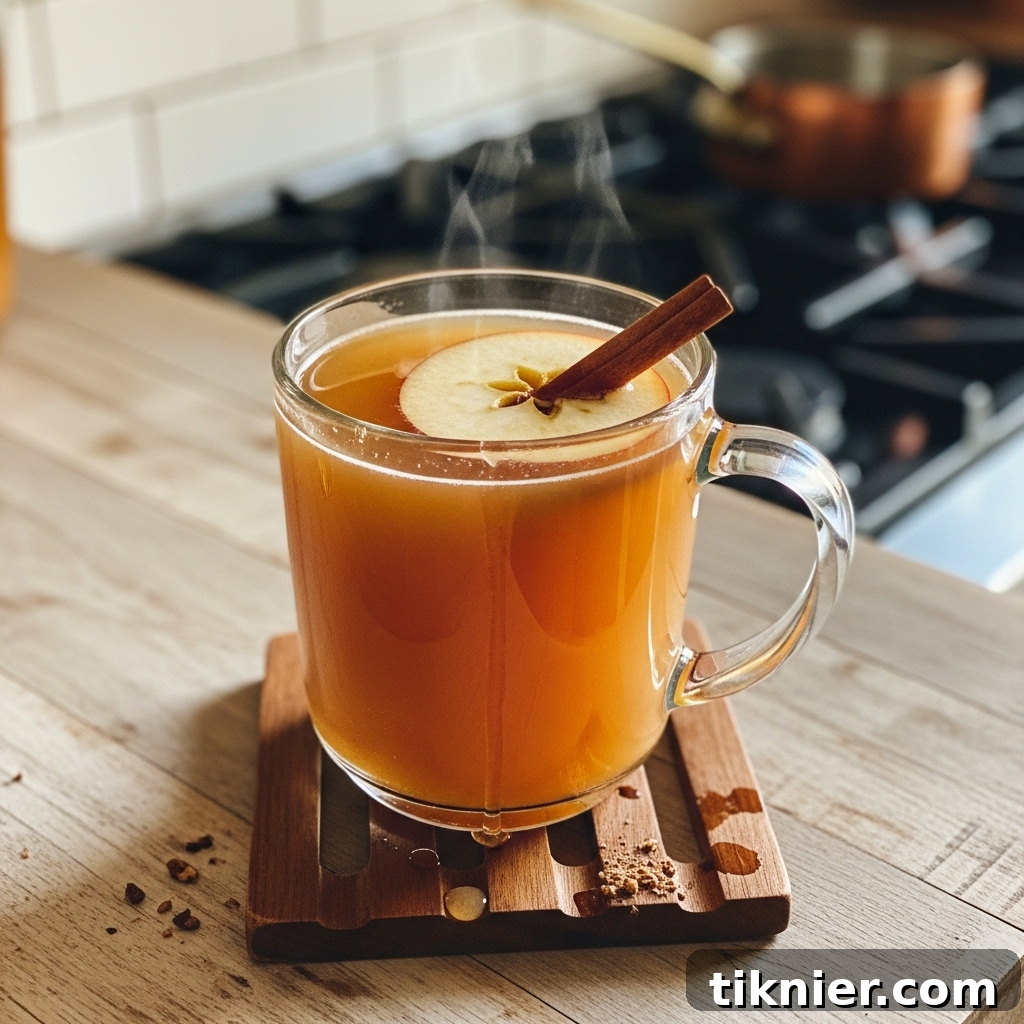
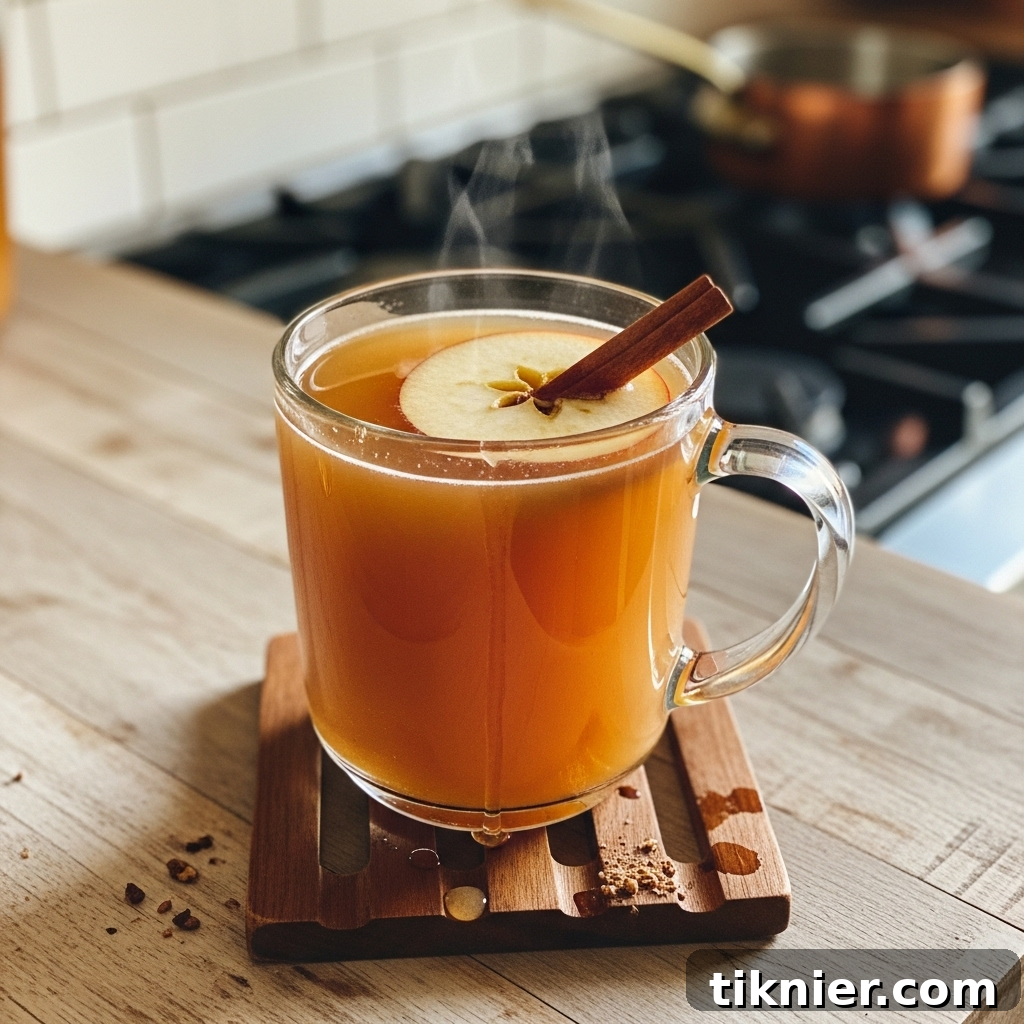
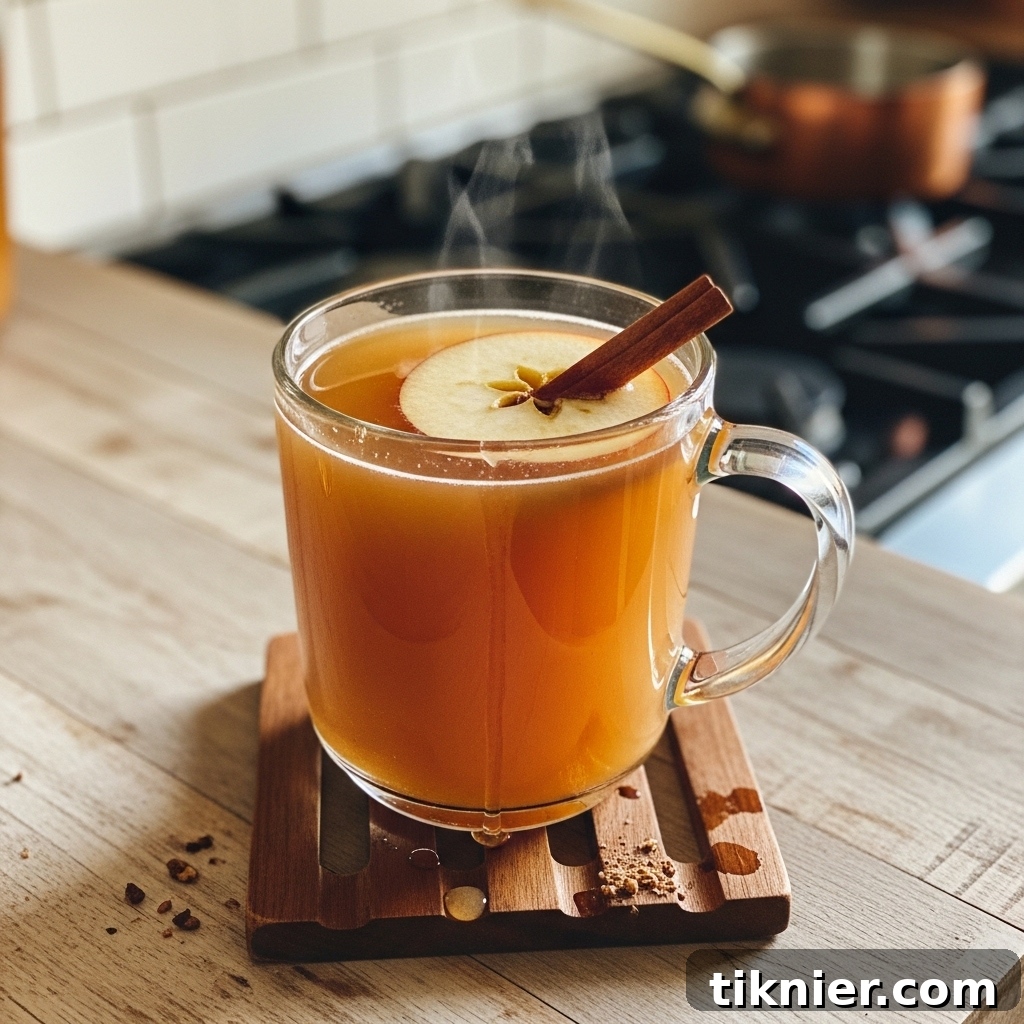
Now, comes the moment of truth: taste your magnificent, freshly made homemade apple cider. If, after tasting, you feel it could benefit from a touch more sweetness to perfectly suit your palate, now is the ideal time to stir in a bit more brown sugar or maple syrup, a tablespoon at a time, until it reaches your desired level of perfection. Serve this delightful elixir warm in your favorite mugs, enhancing the experience with a festive garnish such as a thin slice of fresh apple, a vibrant orange wheel, or a fragrant cinnamon stick for an added touch of seasonal charm and aroma.
The Art of Serving Homemade Apple Cider with Style
The act of serving this homemade apple cider is, in itself, half the enjoyment. There’s an unparalleled warmth and satisfaction in presenting a guest with a steaming mug of something you’ve meticulously simmered with care and love for hours. The quintessential way to savor it, in my considered opinion, is simply warm, straight from the comforting embrace of the pot. Ladle it generously into sturdy, inviting mugs and allow the rich, comforting aroma to work its subtle magic, captivating the senses even before the first blissful sip is taken.
However, you absolutely can, and should, unleash your creativity to dress it up for any conceivable occasion. Envisioning a dedicated “cider bar” is a truly magnificent idea for a festive fall gathering, a lively autumn brunch, or an elegant holiday party. To facilitate this, keep the freshly strained cider perfectly warm in a slow cooker, set thoughtfully to its “warm” setting. Alongside, arrange an enticing array of garnishes and thoughtful additions, empowering your guests to personalize and elevate their drinks. This setup transforms serving into a fun, interactive, and memorable experience for everyone involved.
Here are some of my most cherished and favorite ways to garnish and serve this remarkable cider, designed to impress and delight:
- Classic Garnishes for Timeless Elegance: You can never err by sticking to the beloved classics. Allow a delicate, thin slice of fresh apple, a vibrant orange wheel, or a whole, star-shaped star anise to float gracefully atop each mug. A whole cinnamon stick not only offers a visually appealing touch but also doubles as a wonderfully fragrant stirrer, infusing more spice with every swirl.
- A Decadent Dollop of Cream: For those seeking an extra touch of indulgence, crown each serving with a generous spoonful of lightly sweetened whipped cream. Finish with a delicate dusting of ground cinnamon or freshly grated nutmeg. This transforms your cider into a comforting, dessert-like experience in a cup.
- Expertly Spiked for the Adults: This luxurious cider forms an absolutely superb foundation for a sophisticated adult beverage. To create a warming and festive cocktail, simply add a splash (approximately 1.5 to 2 ounces) of your preferred spirit to each individual mug. Bourbon, with its vanilla and oak notes, is a phenomenal choice. Dark rum lends a lovely sweetness and deep warmth, while an apple brandy, such as Calvados, will amplify the inherent apple flavor to new heights. Remember, a little goes a long way to achieve that perfect balance.
- Chilled and Refreshingly Crisp: Don’t overlook the delightful possibility of enjoying apple cider cold! Allow the cider to cool completely to room temperature, then transfer it to airtight containers and store it in the refrigerator. Serve it generously over ice for a wonderfully crisp, invigorating, and refreshing drink, particularly pleasant on those unexpectedly warmer autumn days.
Regardless of how you ultimately choose to serve it, this homemade apple cider is unequivocally destined to be a resounding success. It represents a simple, yet deeply heartfelt way to share the cozy, inviting flavors of the season with the people you cherish most. It’s more than just a drink; it’s an invitation to slow down, settle into comfort, and truly savor the precious moments shared.
Smart Storage and Creative Reuse of Leftover Homemade Apple Cider
Crafting a substantial batch of this homemade apple cider is an absolutely wonderful practice, ensuring you have a comforting beverage readily available. However, it’s quite likely you might find yourself with some delicious leftovers. Fortunately, this cider stores exceptionally well and can be savored for several days, tasting just as delightful as the moment it was first made. Proper storage techniques are paramount to maintaining its fresh taste and exquisite flavor.
Firstly, it is crucial to allow the freshly made cider to cool down completely to room temperature on your counter. Pouring hot liquid directly into a sealed container and immediately placing it in the refrigerator is strongly discouraged, as this can inadvertently raise the internal temperature of your fridge and create undesirable condensation. Once the cider has thoroughly cooled, carefully pour it into clean, airtight containers. Large glass jars with secure, tight-fitting lids or sturdy pitchers are ideally suited for this purpose, preserving its freshness beautifully.
You can confidently store your homemade apple cider in the refrigerator for an impressive duration of up to one week. In fact, many find that the flavors continue to meld and deepen even further after a day or two of refrigeration, enhancing its complexity. When you’re ready to enjoy another warm, comforting mug, you can simply reheat it gently on the stovetop over low heat until it’s perfectly warmed through. Alternatively, for a quick single serving, pour it into a microwave-safe mug and heat it to your desired temperature.
If you discover you have more cider than you anticipate drinking within a week, rest assured that it also freezes exceptionally well, extending its usability and enjoyment for months. Here are a few ingenious ideas for both storing and creatively reusing your precious cider:
- Freezing in Convenient Portions: Pour the completely cooled cider into freezer-safe containers, being mindful to leave approximately an inch of headspace at the top. This crucial step accounts for the liquid’s expansion as it freezes, preventing containers from cracking. It will maintain its superb quality in the freezer for up to 3 months. When ready to enjoy, simply transfer it to the refrigerator to thaw overnight before gently reheating.
- Crafting Delightful Cider Ice Cubes: For a uniquely fun and practical twist, pour any leftover cider into standard ice cube trays and freeze until solid. These flavorful cider cubes are absolutely perfect for chilling a fresh glass of cider without the undesirable dilution that regular water ice cubes would cause. They are also fantastic for infusing a splash of rich fall flavor into iced tea, sparkling water, or even your favorite cocktails.
- Creating a Rich Glaze or Versatile Syrup: Don’t hesitate to unleash your culinary creativity in the kitchen! You can gently simmer leftover cider on the stovetop over medium-low heat until it naturally reduces and thickens into a wonderfully concentrated, delicious syrup. This versatile syrup is absolutely fantastic drizzled generously over stacks of fluffy pancakes, crisp waffles, or even a scoop of creamy vanilla ice cream for a dessert indulgence. Beyond sweet applications, it can also be brilliantly utilized as a savory glaze for roasted pork or chicken, adding an unexpected depth of flavor.
With these straightforward and effective storage tips, you can extend the enjoyment of your labor of love long after you’ve savored that first incredibly cozy pot. Nothing needs to go to waste, and you’ll have the delightful taste of autumn ready and waiting whenever that comforting craving strikes, making every sip a pleasure.
Creative Substitutions & Exciting Variations for Your Homemade Apple Cider
One of the most gratifying aspects of crafting homemade apple cider from scratch is the incredible ease with which you can personalize and customize it. While this recipe provides a truly fantastic and reliable starting point, I wholeheartedly encourage you to playfully experiment with it and truly make it your own. Whether you need to adapt it to accommodate specific dietary preferences or simply wish to explore new and exciting flavor dimensions, there is an abundance of simple swaps and inspired additions you can incorporate.
To begin, the choice of sweetener in this recipe is remarkably flexible. While I personally adore the deep, rich molasses notes imparted by dark brown sugar, you can effortlessly substitute it with other options. Pure maple syrup is a truly wonderful alternative, contributing a distinct, woodsy sweetness that complements the apple and spice flavors beautifully. High-quality honey or even coconut sugar would also work admirably, each offering its own unique profile. Crucially, always feel free to adjust the amount of sweetener to perfectly match your personal taste preference, or, if your chosen apples are exceptionally sweet, you might even consider omitting added sugar entirely.
Perhaps you don’t have the exact blend of apple varieties I’ve recommended readily available? There’s absolutely no need for concern. The most significant factor is to utilize a harmonious combination of sweet and tart apples to achieve that essential balance. Feel completely at ease using whatever varieties are fresh, in season, and easily accessible at your local market or orchard. Excellent choices include Jonagold, Braeburn, Pink Lady, or even classic Rome apples, all of which will yield a delicious result.
Here are a few more exciting and fun variations you might consider trying, to further ignite your culinary creativity:
- Amplify the Spice Profile: If you are a devoted enthusiast of warm, invigorating spices, feel empowered to increase their quantity or introduce new ones. A few thin slices of fresh ginger root, added during the simmering, will lend a lovely, zesty, and slightly piquant kick. A couple of cracked cardamom pods can impart an exquisitely fragrant, almost floral, and subtly exotic note that will surprise and delight.
- Festive Cranberry Apple Cider: For a vibrant, holiday-inspired twist, consider adding a cup of fresh or frozen cranberries to the pot alongside the other ingredients at the outset. This addition will not only bestow upon the cider a gorgeous rosy hue but also introduce a delightful tartness that perfectly balances the sweetness, creating a truly festive beverage.
- The Convenient Slow Cooker Version: This recipe is, by its very nature, an ideal candidate for slow cooking, making it an excellent “set it and forget it” method. Simply combine all the prepared ingredients – apples, sweet potato, orange, spices, sugar, and water – directly into the basin of your slow cooker. Give everything a quick, thorough stir. Cook on the low setting for 6-8 hours or on the high setting for 3-4 hours. Remember to mash the fruit and sweet potato with a potato masher about an hour before the cooking time is complete. Afterwards, simply strain and serve. It’s perfect for entertaining!
- Delicate Pear and Apple Cider: For a truly unique and subtly different flavor, try swapping out a portion of the apples for ripe, fragrant pears. Pears introduce a delicate, elegant, and subtly floral sweetness that beautifully complements the robust apple flavors. Bosc or Anjou pears are particularly excellent choices as they tend to hold their shape well during the simmering process, contributing both flavor and a pleasant texture if you choose not to mash them entirely.
The culinary possibilities are genuinely boundless when you approach this recipe with an open mind. Think of this detailed recipe as a friendly guide, a foundation upon which to build. Never be afraid to experiment, to tweak, and to infuse your own personal touch. After all, cooking should always be an enjoyable and exploratory journey, and adapting a recipe to perfectly suit your unique tastes is, without doubt, one of the greatest joys and most rewarding experiences of being in the kitchen.
My Signature Sweet Potato Apple Cider
Description: A warming homemade apple cider elevated by a secret ingredient – sweet potato – for a velvety texture and rich, earthy sweetness. Perfect for cozy fall days and memorable holiday gatherings, this recipe is a true game-changer.
Yield: about 12 cups | Category: Beverage | Cuisine: American
Prep Time: 15 minutes | Cook Time: 3 hours
Ingredients
- 8-10 medium apples (about 4 pounds), a mix of sweet (Honeycrisp, Gala) and tart (Granny Smith) varieties
- 1 medium sweet potato, peeled and cut into 1-inch chunks
- 1 orange, quartered
- ½ cup packed dark brown sugar (or maple syrup, to taste)
- 4 cinnamon sticks
- 1 tsp whole cloves
- 1 tsp whole allspice berries
- 2 star anise
- ⅛ tsp fine sea salt
- 12-14 cups cold water, or enough to cover all ingredients
Instructions
- Wash and core the apples, then quarter them. Quarter the orange. Place apples, orange, and peeled, chunked sweet potato in a large stockpot.
- Add dark brown sugar, cinnamon sticks, whole cloves, allspice berries, star anise, and sea salt to the pot.
- Pour in enough cold water to ensure all ingredients are covered by at least one inch.
- Bring the mixture to a full boil over high heat, then immediately reduce heat to the lowest setting, cover the pot, and let it gently simmer for 2 hours.
- Carefully remove the lid. Use a potato masher or the back of a sturdy spoon to thoroughly mash the softened fruit and sweet potato against the sides of the pot.
- Replace the lid and allow the mixture to continue simmering on low heat for 1 more hour, to deepen the flavors.
- Strain the entire mixture through a fine-mesh sieve set over a large heatproof bowl or clean pot. Press down firmly on the solids with your spoon to extract every last drop of liquid. Discard the leftover pulp.
- Taste the finished cider. If desired, stir in more brown sugar or maple syrup, a little at a time, until the sweetness is just right for your preference. Serve warm.
Notes
For an exceptionally clear cider, line your fine-mesh sieve with a double layer of cheesecloth before straining. This will effectively catch any smaller bits of pulp and sediment, yielding a brighter result.
Servings: 12 | Calories: 120 kcal | Fat: 0g | Carbohydrates: 30g | Protein: 0g
5 Essential FAQs About Crafting Homemade Apple Cider
Here are clear, concise, and highly informative answers to the most frequently asked questions I receive about this particular homemade apple cider recipe, designed to address any curiosities you may have.
What are the absolute best apples to use for homemade apple cider?
This is undeniably the most common question I encounter, and my advice is always straightforward: a thoughtful mix of apple varieties consistently yields the finest results! It is genuinely advisable to steer clear of using just a single type of apple. By combining different varieties, you’ll create a cider with a far more complex, nuanced, and truly captivating flavor profile, striking an ideal balance between sweet, tart, and wonderfully aromatic notes.
For the sweet component, I highly recommend using apples such as the famously crisp Honeycrisp, the mildly sweet Gala, the intensely sweet Fuji, or the classic Golden Delicious. These varieties tend to break down beautifully during simmering and provide a fantastic, natural sweetness that forms the essential base of the cider’s flavor. For the crucial tart element, Granny Smith remains the gold standard for excellent reason; it delivers that indispensable tangy kick that prevents the cider from becoming overly sweet or cloying. Other superb tart options include Braeburn or Pink Lady. Don’t hesitate to experiment with whatever fresh, seasonal apples you can procure from your local farmers’ market or grocery store. The key takeaway here is to aim for a general two-to-one ratio of sweet apples to tart apples to achieve a perfectly balanced and harmonious brew.
Can I successfully make this homemade apple cider recipe in a slow cooker?
Absolutely, yes! This specific recipe is exceptionally well-suited for preparation in a slow cooker, offering a fantastic, largely hands-off method. An added bonus is that it will infuse your entire home with its incredible aroma for hours on end, creating an inviting atmosphere. The preparation process is virtually identical to the stovetop method. You will simply combine all the ingredients—the quartered apples, peeled and chunked sweet potato, quartered orange, all the aromatic spices, the chosen sweetener, and the water—directly into the basin of your slow cooker. Give everything a quick, thorough stir to ensure it’s well combined.
You can then proceed to cook it on the low setting for a duration of 6 to 8 hours, or, if you’re in a bit more of a hurry, on the high setting for 3 to 4 hours. Approximately one hour before the total cooking time is complete, you’ll want to gently go in with your potato masher and thoroughly mash up the softened fruit and sweet potato. This crucial step helps to release all their concentrated juices and flavors. Then, simply allow it to finish that last hour of gentle simmering. Once it’s fully cooked, strain it using the exact same method as you would for the stovetop version. This slow cooker approach is an especially brilliant option if you are preparing the cider for a party or gathering, as you can easily strain it and then return the finished, warm cider to the slow cooker on the “warm” setting for convenient, self-serve enjoyment throughout your event.
What is the fundamental difference between homemade apple cider and apple juice?
This is an excellent and frequently asked question, as the terms “apple cider” and “apple juice” are often, albeit incorrectly, used interchangeably. However, they are quite distinct beverages, particularly when we’re discussing the homemade variety. The primary distinctions boil down to the processing methods and the level of filtration applied. Apple juice is, by definition, juice that has undergone rigorous filtration to meticulously remove all traces of pulp and sediment. Furthermore, it is typically pasteurized (heat-treated) to significantly extend its shelf life. This comprehensive processing results in a product that is perfectly clear, light in body, and consistently sweet in flavor.
Homemade apple cider, on the other hand, is a much more rustic, authentic, and delightfully unrefined beverage. It is crafted by simmering the whole fruit, including the peels (which are packed with flavor and beneficial compounds), which are then thoroughly mashed and subsequently strained. The resulting liquid is characteristically opaque, or beautifully cloudy, precisely because it still retains fine, flavorful particles of apple pulp and sediment. This natural cloudiness contributes to a much richer, deeper, and profoundly more complex apple flavor than that found in commercial apple juice. My particular recipe, with the inspired addition of the sweet potato and the infusion of whole, aromatic spices, pushes that complexity and depth of flavor even further, creating a truly unparalleled experience. Think of homemade cider as the raw, unadulterated, wonderfully unfiltered, and significantly more flavorful cousin to clear apple juice.
Why did my homemade apple cider turn out cloudy, and is that normal?
If your homemade apple cider has a cloudy appearance, congratulations – you’ve done it exactly right! Cloudiness is not only a natural characteristic but also a highly desirable trait of authentic, traditionally made homemade cider. As I elucidated previously, that beautiful cloudiness is directly caused by the presence of fine particles of apple pulp, along with other natural solids or sediment, that gracefully remain suspended in the liquid even after it has undergone the straining process. These minute particles are actually bursting with concentrated flavor and contribute significantly to the cider’s signature full-bodied texture and rich mouthfeel.
In contrast, store-bought apple juice is crystal clear precisely because it has undergone an extensive and rigorous filtration process specifically designed to eliminate all of these natural solids. If, however, you have a strong preference for a slightly clearer final product, you can certainly take an extra step during the straining process. After initially straining your cider through a fine-mesh sieve, you can then strain it a second time through the same sieve, but this time lined with a few layers of clean, high-quality cheesecloth. This additional filtration will effectively catch more of the very fine sediment, resulting in a brighter, though still richly flavored, cider. Regardless, please do not fret about a little cloudiness; it is, in fact, a definitive sign that your cider is unprocessed, brimming with authentic flavor, and truly homemade.
Can I add alcohol to this homemade apple cider to make it “spiked”?
You absolutely can, and it’s a fantastic idea! This homemade apple cider serves as an incredibly versatile and absolutely wonderful base for a wide variety of warming autumn cocktails. Its rich, deeply spiced flavor profile pairs exquisitely with a number of different spirits, creating delightful adult beverages. The crucial point to remember, however, is to add the alcohol to individual servings rather than incorporating it into the entire pot while it’s simmering. If you add alcohol to the whole batch while it’s heating on the stovetop or in a slow cooker, the alcohol will largely cook off due to evaporation, and the delicate balance of flavors will regrettably change.
For a classic spiked cider, I highly recommend adding a standard shot, which is approximately 1.5 ounces (about 45 ml), of your chosen spirit to each individual mug of hot cider just prior to serving. Bourbon is an outstanding choice, as its inherent vanilla and oak notes beautifully complement the apple and spice flavors, creating a harmonious blend. Dark rum introduces a lovely sweetness and a deep, comforting warmth. Alternatively, an apple brandy, such as Calvados, will magnificently amplify the inherent apple flavor, taking it to another level. Simply stir in the alcohol, garnish as you prefer, and enjoy a wonderfully cozy and festive drink for the adults at your gathering. Always remember to consume responsibly.
Explore More Delicious Recipes
If you cherished the cozy, comforting experience of preparing this homemade apple cider, I am confident that I have a few other exceptional recipes you will find just as delightful and rewarding. These culinary creations are perfectly suited for sharing with cherished family and friends during the festive holiday season or any time you seek a little extra warmth and comfort in your kitchen.
- Thanksgiving Dinner Ideas: Are you meticulously planning a grand holiday feast? This exquisite apple cider makes for a perfect and incredibly festive addition to any Thanksgiving menu. Furthermore, this comprehensive collection offers everything else you’ll need, from the centerpiece turkey to an array of delectable side dishes, ensuring your holiday meal is a resounding success.
- Easy Breakfast Ideas: Imagine waking up to the comforting aroma of a warm slice of cinnamon-spiced coffee cake or a savory, delicious casserole. These collection of easy breakfast and brunch recipes are absolutely perfect for a leisurely weekend morning, and many of them pair wonderfully with a steaming mug of leftover cider, transforming your morning into a delightful culinary experience.
- 110 Easy Dinner Ideas: For those busy weeknights when you desperately need a delicious, straightforward, and satisfying meal, this extensive list will quickly become your culinary best friend. You’ll discover a wealth of inspiration for simple, incredibly satisfying dinners that the entire family will undoubtedly love, making mealtime stress-free and enjoyable.