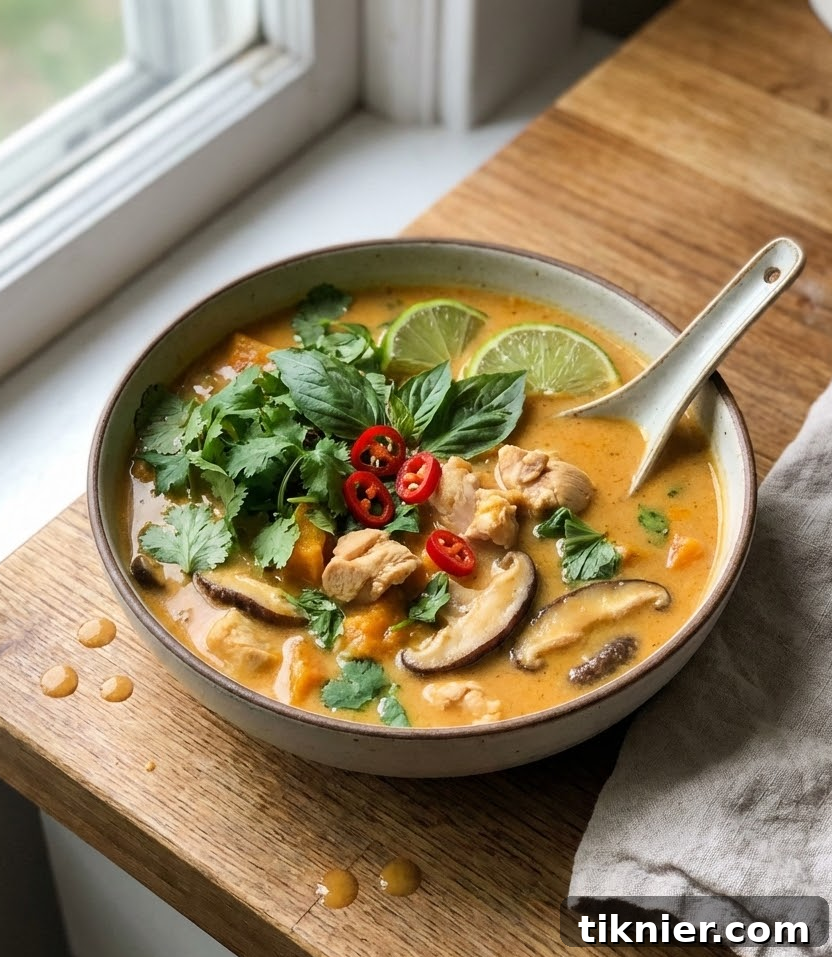
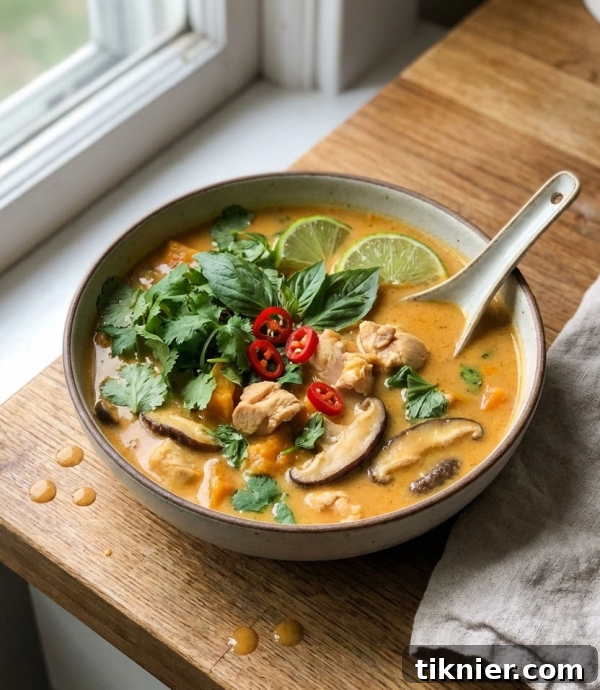
The first time I experienced truly authentic Thai chicken soup, it was during a rare date night with my husband. We discovered a tiny, unassuming restaurant we’d passed countless times. The moment that first spoonful touched my tongue, I was utterly captivated. The rich, creamy coconut broth, the vibrant zest of lime and lemongrass, and that subtle, comforting warmth created an unforgettable flavor revelation.
I returned home that night with a clear mission: I had to recreate that culinary magic in my own kitchen. I dedicated weeks to experimenting with various recipes, yet something always felt missing. While the attempts were good, they lacked the velvety texture and unique, earthy sweetness I vividly remembered from that perfect evening.
Then, one crisp fall afternoon, as I was planning our Thanksgiving menu, a brilliant idea sparked. I was roasting a kabocha squash, one of my favorite autumn vegetables, and I adored its creamy, almost chestnut-like flavor. I pondered, “What if I incorporated some of that roasted squash puree into the soup?” It was an unconventional Southern twist on a classic Thai dish, and let me tell you, it was the game-changer. This addition imparted an incredible body to the broth and a nuanced sweetness that perfectly harmonized with the sour, salty, and spicy notes. This is the very recipe that finally mirrored that perfect memory, and in fact, elevated it.
This isn’t merely another Thai chicken soup recipe. It’s my distinctive version, meticulously perfected through numerous delicious trials, and I am confident you will absolutely adore it.
Jump to the Full Recipe Card!
Why This Creamy Thai Chicken Soup Recipe Stands Out
This luxurious soup is my personal rendition of the beloved Thai classic, Tom Kha Gai, which translates to “chicken galangal soup.” It’s celebrated globally for its extraordinary flavor harmony. Traditionally, Tom Kha Gai achieves a delicate balance of spicy, sour, salty, and sweet notes, all enveloped within a rich, aromatic coconut milk broth. It’s truly the kind of soup that offers profound comfort, warming you from the inside out.
The true essence of any exceptional Tom Kha Gai lies in its vibrant aromatics. Lemongrass, galangal, and makrut lime leaves are indispensable components. They establish a fragrant foundation that is utterly intoxicating. As these ingredients gently simmer in the broth, your entire kitchen will be infused with an aroma reminiscent of the finest Thai restaurant. These core ingredients collaborate to forge a flavor profile that is profoundly layered, complex, and irresistibly delicious.
So, what truly sets my version apart from other Thai chicken soup recipes? It’s all thanks to my unique secret ingredient: roasted kabocha squash puree. While this addition might seem unconventional, I urge you to trust this ingenious twist. Roasting the kabocha squash initially enhances its natural sugars and deepens its inherent flavor. When this velvety puree is stirred into the creamy coconut broth, a truly magical transformation occurs.
The kabocha squash contributes a beautiful, creamy thickness to the soup, eliminating the need for any starches or artificial thickeners. Furthermore, it imparts a subtle, earthy sweetness that elegantly mellows the sharper acidity of the lime juice and the savory saltiness of the fish sauce. The outcome is a Thai chicken soup boasting unparalleled richness, a magnificent sunny hue, and a more substantial, satisfying texture. It transforms a lighter soup into a truly hearty and fulfilling meal, perfect for any season.
Essential Ingredients for the Best Thai Chicken Soup
Gathering the correct, high-quality ingredients is the crucial first step in crafting this extraordinary Thai chicken soup. While some items might require a visit to a specialized Asian market or a very well-stocked international grocery store, I assure you that the effort is incredibly rewarding, yielding an exceptional depth of flavor that is simply unmatched. The true magic originates from the thoughtful combination of these fresh, aromatic components.
My special culinary innovation, of course, is the inclusion of roasted kabocha squash. This Japanese pumpkin variety boasts a naturally sweet, nutty flavor profile and a wonderfully dense, creamy texture. Roasting the squash before adding it is paramount, as this process caramelizes its natural sugars, bringing out a profound depth of flavor that cannot be achieved through mere boiling. This roasted kabocha puree is the specific ingredient that bestows upon this Thai chicken soup its signature creaminess, body, and subtle sweetness.
For the essential aromatics, it is highly recommended to seek out fresh galangal, lemongrass, and makrut lime leaves whenever possible. Galangal, though visually similar to ginger, possesses a distinctly sharper, more citrusy, and slightly pine-like flavor that is absolutely fundamental to the authentic taste of this soup. The use of full-fat coconut milk is equally critical. It provides the luxurious richness and luscious creaminess that defines this iconic dish. Opting for light coconut milk will simply not deliver the same indulgent, velvety result. Here is a comprehensive list of everything you’ll need to create this amazing creamy Thai chicken soup:
- 1 small kabocha squash (approximately 2 lbs)
- 1 tablespoon coconut oil (for squash)
- 1 teaspoon kosher salt (for squash)
- 1/2 teaspoon black pepper (for squash)
- 2 tablespoons coconut oil (for sautéing)
- 1 lb boneless, skinless chicken thighs, cut into 1-inch pieces
- 6 cups high-quality chicken broth
- 2 stalks lemongrass, tough outer layers removed, bruised and cut into 2-inch pieces
- 1 (2-inch) piece fresh galangal, thinly sliced
- 6 makrut lime leaves, bruised
- 1 (13.5 oz) can full-fat coconut milk
- 8 oz shiitake mushrooms, stemmed and thinly sliced
- 2 tablespoons premium fish sauce
- 1 tablespoon coconut sugar or light brown sugar
- 2 Thai bird’s eye chilies, thinly sliced (optional, for authentic heat)
- 1/4 cup fresh lime juice, squeezed from ripe limes
- For Garnish:
- 1/2 cup fresh cilantro, roughly chopped
- 1/4 cup fresh Thai basil leaves
- Extra lime wedges for serving
- Additional sliced red chili for vibrant color and optional extra heat
Step-by-Step Instructions: Crafting Your Perfect Thai Chicken Soup
Preparing this creamy Thai chicken soup is a truly delightful sensory experience. The methodical process of building layers of flavor, from roasting the kabocha squash to infusing the aromatic broth, will fill your home with the most incredible and enticing aromas. For optimal results and even heat distribution, I highly recommend using a heavy-bottomed pot or a Dutch oven, which also helps prevent scorching.
1. Prepare and Roast the Kabocha Squash
Begin by preheating your oven to a precise 400°F (200°C). Kabocha squash can be quite firm, so use a large, sharp knife and exercise caution when cutting it. Once halved, carefully scoop out all the seeds and fibrous strands. Cut the squash into manageable wedges. Place these wedges on a baking sheet, then toss them thoroughly with 1 tablespoon of coconut oil, 1 teaspoon of kosher salt, and 1/2 teaspoon of black pepper. Roast for approximately 20 to 25 minutes, or until the squash is perfectly tender and exhibits slight caramelization around its edges. Allow the roasted squash to cool just enough to handle comfortably, then carefully peel off the skin. Transfer the cooked squash flesh to a food processor or blender and puree until it is exceptionally smooth and creamy. This velvety puree is the crucial secret to the soup’s incomparable texture and body.
2. Sauté the Chicken to Golden Perfection
Next, heat the remaining 2 tablespoons of coconut oil in your Dutch oven or large pot over medium-high heat. Add the chicken thigh pieces, ensuring not to overcrowd the pan. Cooking in batches if necessary will allow the chicken to develop a beautiful golden-brown sear on all sides. This initial sautéing step is vital as it builds a fundamental layer of savory flavor directly within the pot. Once the chicken is lightly browned and partially cooked, remove it from the pot and set it aside for later incorporation.
3. Infuse the Broth with Fragrant Aromatics
This is truly where the aromatic magic of your Thai chicken soup begins. To the same pot, add your chicken broth, the bruised lemongrass stalks, thinly sliced galangal, and the bruised makrut lime leaves. It is paramount to “bruise” the lemongrass and lime leaves before adding them; you can achieve this by gently pressing them with the back of your knife or a rolling pin. This action helps to release their potent essential oils and maximize flavor extraction. Bring this fragrant mixture to a rolling boil, then immediately reduce the heat to a gentle simmer. Allow it to simmer undisturbed for a good 15 minutes. Your kitchen will soon be filled with an absolutely heavenly aroma.
4. Combine Creaminess and Infused Broth
After the simmering period, it’s time to strain out the aromatics. They have generously imparted their flavors to the broth, but their fibrous texture makes them unsuitable for eating. Use a fine-mesh sieve to carefully strain the broth, discarding the lemongrass, galangal, and lime leaves. Pour the now beautifully infused and clear broth back into your clean pot. Now, gently stir in the full-fat coconut milk and your luscious roasted kabocha squash puree. Whisk these ingredients together until the soup is completely smooth, uniformly creamy, and free of any lumps.
5. Gently Simmer with Chicken and Mushrooms
Return the soup to a gentle simmer over medium heat. It is crucial to be vigilant and avoid letting the soup come to a vigorous, rolling boil at this stage, as high heat can cause the coconut milk to separate or curdle. Carefully add the previously browned chicken pieces back into the pot, along with the sliced shiitake mushrooms. Allow everything to cook together for approximately 5 to 7 minutes, or just until the mushrooms are tender and the chicken is thoroughly cooked through and heated.
6. Master the Art of Seasoning
The final and most crucial step is to meticulously balance the complex flavors of your Thai chicken soup. Before proceeding, turn off the heat. Stir in the fish sauce, which provides the essential salty umami; the coconut sugar, for a delicate touch of sweetness; and the optional Thai chilies, if you desire an authentic spicy kick. The very last ingredient to incorporate is the fresh lime juice. Adding it off the heat preserves its bright, vibrant, and fresh flavor profile. Now, take a taste. This is your opportunity to tailor the soup perfectly to your palate. It might benefit from an additional splash of lime juice for brightness, a bit more fish sauce for depth, or a small pinch more sugar to balance the heat.
7. Serve with Generous Garnishes
Ladle your exquisite, creamy Thai chicken soup into individual serving bowls. Now comes the truly enjoyable part: the garnishes! Be generous here, as they not only enhance the visual appeal but also add crucial fresh flavors and textures. A large handful of freshly chopped cilantro and fragrant Thai basil leaves, an extra squeeze of vibrant lime juice from a fresh wedge, and a few more slices of red chili for both color and an additional hint of heat will elevate this already incredible soup to an unforgettable culinary experience.
How to Serve Your Delicious Thai Chicken Soup
Serving this homemade creamy Thai chicken soup is almost as enjoyable as the cooking process itself. Given the soup’s inherent fragrance and depth of flavor, it proudly stands alone as a perfectly complete and satisfying meal. I personally love to ladle it into large, wide bowls to beautifully showcase its vibrant color and all the delectable ingredients suspended in that luscious, creamy broth.
The secret to an astonishing presentation truly lies in the garnishes. Fresh herbs are not merely decorative; they contribute a final, invigorating layer of bright, fresh flavor that brilliantly cuts through the richness of the coconut milk. A generous scattering of freshly chopped cilantro and whole, fragrant Thai basil leaves is an absolute must. I also consistently serve this creamy Thai chicken soup with extra lime wedges on the side, empowering each diner to add additional acidity to their individual taste preferences.
For a truly complete and deeply satisfying dining experience, here are a few of my most cherished suggestions for serving this delightful soup:
- With Fluffy Steamed Jasmine Rice: This pairing is the absolute classic. Spooning the rich, creamy soup over a bed of light, fluffy jasmine rice allows every last drop of that incredible broth to be savored. The subtle, delicate fragrance of the rice provides the perfect complement to the soup’s bold and complex flavors.
- As a Hearty Noodle Bowl: For those who prefer a more substantial, noodle-centric experience, you can add pre-cooked rice noodles directly to the serving bowls before generously ladling the hot soup over them. This transformation turns the dish into something reminiscent of a delectable Thai laksa.
- Alongside Fresh Spring Rolls: To create an elegant, multi-course meal, serve smaller, appetizer-sized bowls of the soup as a flavorful starter, followed by crisp fresh spring rolls accompanied by a rich peanut dipping sauce. The delightful contrast in textures between the creamy soup and crunchy rolls is simply wonderful.
- The Ultimate Dinner Party Main: Elevate your dinner party by setting up an attractive garnish bar on your table. Offer small, separate bowls filled with fresh cilantro, Thai basil, thinly sliced chilies, additional lime wedges, and perhaps even some crunchy chopped peanuts or crispy fried shallots. This interactive setup allows your guests the pleasure of customizing their own bowls, making for a fun and engaging meal.
Regardless of how you ultimately choose to serve it, this creamy Thai chicken soup is an undeniable showstopper. It possesses an elegance suitable for entertaining guests, yet remains simple enough for a cozy and comforting weeknight dinner. Its vibrant colors and intoxicating aroma ensure it’s a true feast for all the senses.
How to Store & Reheat Leftover Thai Chicken Soup
One of the many fantastic aspects of this creamy Thai chicken soup is that the leftovers are every bit as delicious, if not even more so, the next day. As the soup rests, the intricate flavors have additional time to meld and deepen, evolving into an even more complex and wonderful creation. Properly storing the soup is essential to fully enjoying its enhanced flavors in subsequent meals.
The most critical point to remember is to allow the soup to cool down completely before you attempt to store it. Placing hot soup directly into the refrigerator can significantly raise the internal temperature of your fridge, potentially compromising the safety of other foods. I typically let it sit on the countertop for about an hour, stirring occasionally, before transferring it to an airtight container. To maintain the best possible texture and vibrant flavor, always keep your fresh garnishes separate and add them only when you reheat the soup.
Here are my top recommendations for effectively storing and creatively reusing this incredibly flavorful soup:
- Refrigerating for Short-Term Storage: Store the thoroughly cooled creamy Thai chicken soup in a sealed, airtight container in the refrigerator for a period of up to 3 to 4 days. It is quite common for the coconut milk components to separate slightly upon chilling; however, there’s no need for concern, as the soup will effortlessly return to its perfectly smooth and creamy consistency once gently reheated.
- Freezing for Longer Preservation: This delightful soup freezes remarkably well, making it an excellent option for meal prepping. Pour the cooled soup into freezer-safe containers or robust, heavy-duty freezer bags, ensuring you leave a small amount of headspace at the top to allow for expansion during freezing. The soup will maintain its quality in the freezer for an impressive duration of up to 3 months. To thaw, simply transfer it to the refrigerator and allow it to defrost overnight.
- Gentle Reheating Techniques: The optimal method for reheating this creamy Thai chicken soup is gently on the stovetop over medium-low heat. Actively avoid bringing it to a vigorous boil, as intense heat can unfortunately cause the coconut milk to curdle or separate. Simply heat the soup until it is warmed through, stirring it occasionally to ensure even heating and to re-emulsify the coconut milk. If you find yourself pressed for time, the microwave can be used, but opt for a lower power setting and heat in short intervals, stirring thoroughly between each burst.
- Creative Culinary Reuse: Should you find yourself with just a small amount of leftover broth, absolutely do not discard it! This concentrated, flavorful broth can serve as a fantastic base for cooking jasmine rice, imparting a wonderful coconut-lime essence to your grains. It also functions beautifully as a poaching liquid for delicate fish fillets or as an incredibly flavorful starter for a quick, Thai-inspired curry.
Having a container of this incredible soup readily available in your refrigerator or freezer is truly like possessing a secret culinary weapon for a busy week. It offers a quick, comforting, and intensely flavorful meal that is ready to be enjoyed in mere minutes.
Substitutions & Variations for Your Thai Chicken Soup
While I wholeheartedly adore this particular Thai chicken soup recipe exactly as it is written, one of the greatest joys of home cooking is the freedom to personalize a dish and truly make it your own. This creamy Thai chicken soup is exceptionally versatile, offering numerous avenues to adapt it to perfectly suit your individual tastes, dietary needs, or whatever ingredients you currently have on hand in your pantry. Never hesitate to experiment and explore new flavor combinations!
The most important principle to uphold is maintaining that classic, intricate balance of sweet, sour, salty, and spicy flavors that defines authentic Thai cuisine. As long as you keep these fundamental flavor profiles firmly in mind, your creative substitutions and variations are very likely to result in something beautifully delicious. Whether you need to accommodate a specific dietary restriction, are looking to use up ingredients, or simply wish to try a novel flavor combination, here are some inspiring ideas to get you started on your culinary journey.
Feel empowered to mix and match any of these suggestions to craft your ultimate, personalized bowl of Thai chicken soup:
- Protein Alternatives: While I personally favor the rich, succulent flavor of chicken thighs, boneless, skinless chicken breast can certainly be used effectively. Just exercise caution to avoid overcooking it, as breast meat can dry out more easily. For a delightful seafood rendition, add raw shrimp during the last few minutes of cooking; they will cook through remarkably quickly. To transform this into a vegetarian or vegan Thai chicken soup, simply swap the chicken for firm tofu (cubed and pan-fried until golden is particularly delicious) or incorporate an increased quantity of mushrooms, along with other complementary vegetables such as vibrant bell peppers, crisp broccoli florets, or tender baby corn. Ensure you use vegetable broth and a high-quality vegan fish sauce alternative for a fully plant-based version.
- Aromatic Ingredient Swaps: In instances where fresh galangal is absolutely unavailable, fresh ginger can be used as a serviceable substitute in a pinch. Be aware that the flavor profile will differ slightly, leaning more peppery and less citrusy, but it will still contribute a delicious warmth. If fresh makrut lime leaves are difficult to source, dried makrut lime leaves are an acceptable alternative, and lemongrass paste can serve as a decent stand-in for fresh stalks when necessary.
- Creative Vegetable Additions: Feel completely free to enhance the heartiness and nutritional value of your soup by incorporating a wider array of vegetables. Thinly sliced carrots, sweet baby corn, crisp snow peas, or tender bok choy would all make wonderful and colorful additions. To ensure they retain a pleasant crisp-tender texture, add these extra vegetables during the last 5 to 7 minutes of the simmering process.
- Squash Alternatives for Creaminess: If kabocha squash happens to be out of season or difficult to find, you can achieve a very similar creamy effect by utilizing roasted butternut squash or even roasted sweet potato puree. Each of these alternatives will lend a slightly different, yet equally delicious, flavor nuance, but both will successfully contribute that desirable body and subtle sweetness to the soup.
- Adjusting the Heat to Your Preference: You have complete and absolute control over the spice level of your Thai chicken soup. For a milder, gentler soup, you can choose to omit the Thai bird’s eye chilies entirely. For those who crave a more pronounced spicy kick, feel free to add additional chilies, or stir in a spoonful of sambal oelek or authentic Thai chili paste when you are in the final seasoning stage of the soup.
No matter which modifications or substitutions you decide to implement, always remember to taste your soup as you go. The art of cooking is intrinsically about adjusting and finding the perfect balance of flavors that brings you the most culinary delight. This versatile recipe serves as an excellent foundational starting point for your own inspired culinary creativity.
Creamy Kabocha Squash Thai Chicken Soup
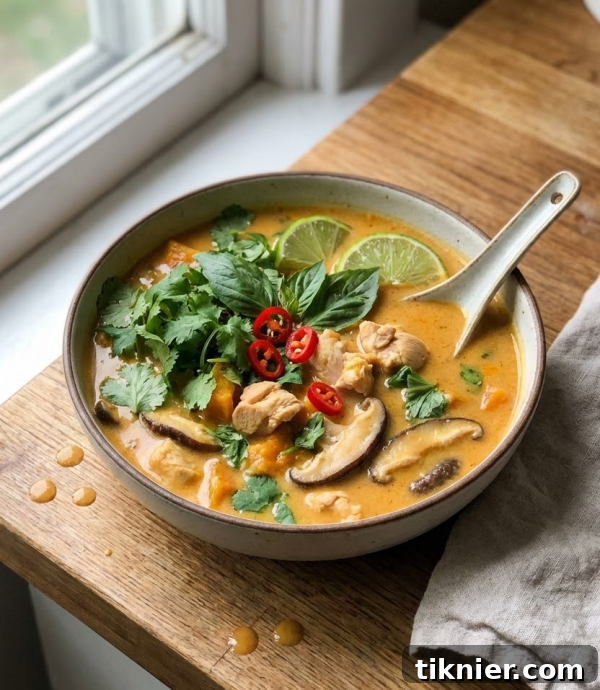
Description: A rich, aromatic, and comforting Thai chicken soup featuring a unique Southern-inspired twist. Velvety roasted kabocha squash puree imparts an incredible creamy texture and a subtle sweetness that perfectly balances the classic spicy, sour, and salty Thai flavors.
Yield: 6-8 servings | Category: Soup | Cuisine: Thai-Inspired
Prep Time: 20 minutes | Cook Time: 40 minutes
Ingredients
- 1 small kabocha squash (about 2 lbs)
- 1 tablespoon coconut oil (for squash)
- 1 teaspoon kosher salt (for squash)
- 1/2 teaspoon black pepper (for squash)
- 2 tablespoons coconut oil (for chicken)
- 1 lb boneless, skinless chicken thighs, cut into 1-inch pieces
- 6 cups chicken broth
- 2 stalks lemongrass, bruised and cut into 2-inch pieces
- 1 (2-inch) piece galangal, thinly sliced
- 6 makrut lime leaves, bruised
- 1 (13.5 oz) can full-fat coconut milk
- 8 oz shiitake mushrooms, stemmed and sliced
- 2 tablespoons fish sauce
- 1 tablespoon coconut sugar or brown sugar
- 2 Thai bird’s eye chilies, thinly sliced (optional)
- 1/4 cup fresh lime juice
- For Garnish: Fresh cilantro, Thai basil, lime wedges, sliced red chili
Instructions
- Preheat oven to 400°F (200°C). Toss kabocha squash wedges with 1 tbsp coconut oil, salt, and pepper. Roast for 20-25 minutes until tender. Cool, remove skin, and puree the flesh until smooth. Set aside.
- In a large pot or Dutch oven, heat 2 tbsp coconut oil over medium-high heat. Brown the chicken pieces on all sides, then remove and set aside.
- Add chicken broth, bruised lemongrass, sliced galangal, and bruised makrut lime leaves to the pot. Bring to a boil, then reduce heat and simmer for 15 minutes to infuse the broth with aromatics.
- Strain the broth, discard the solids, and return the beautifully infused broth to the pot. Stir in the full-fat coconut milk and the smooth kabocha squash puree until well combined and creamy.
- Bring the soup to a gentle simmer over medium heat (do not boil vigorously). Add the cooked chicken and sliced shiitake mushrooms. Cook for 5-7 minutes until mushrooms are tender and chicken is thoroughly heated through.
- Remove the pot from the heat. Stir in the fish sauce, coconut sugar, thinly sliced chilies (if using for heat), and the fresh lime juice. Taste and adjust seasonings as needed to achieve your preferred balance of sweet, sour, salty, and spicy.
- Serve the creamy Thai chicken soup hot, garnished generously with fresh cilantro, Thai basil leaves, extra lime wedges, and additional chili slices for a vibrant presentation and enhanced flavor.
Notes
For the most authentic and robust flavor, always strive to use fresh lemongrass, galangal, and makrut lime leaves. Utilizing full-fat coconut milk is absolutely essential for achieving a rich, luxurious, and creamy broth texture. Remember to avoid boiling the soup vigorously after adding the coconut milk, as this can cause it to separate or curdle.
Servings: 6 | Calories: 450 kcal | Fat: 30g | Carbohydrates: 25g | Protein: 22g
5 Frequently Asked Questions About Thai Chicken Soup
Here are clear and concise answers to the most common questions I receive regarding this delightful creamy Thai chicken soup recipe.
What is the core difference between Tom Yum and this Thai chicken soup?
That is an excellent question, as Tom Yum and Tom Kha Gai are arguably the two most famous soups from Thailand, and they do share some common aromatic ingredients. The primary distinction lies in the base of the broth and the overall flavor profile. My Thai chicken soup recipe is a variation of Tom Kha Gai. The “Kha” in its name specifically refers to galangal, and the defining characteristic of this soup is its creamy, luscious coconut milk-based broth. This gives Tom Kha Gai a rich, subtly sweet, and generally milder flavor profile when compared to its fiery counterpart.
Tom Yum, conversely, typically features a clear, intensely hot and sour broth. Its name literally translates to “boil” and “mixed,” referencing a spicy and sour salad-like preparation. Tom Yum derives its signature fiery kick from a generous amount of fresh Thai chilies and often incorporates a savory, roasted chili paste known as nam prik pao. While it also utilizes lemongrass, galangal, and lime, the focus in Tom Yum is squarely on the pronounced spicy and sour notes, without the moderating and creamy influence of coconut milk. Think of Tom Kha Gai as the creamy, comforting, and more mellow soup, while Tom Yum is the zesty, invigorating, and powerfully hot one.
Can I successfully make this creamy Thai chicken soup in a slow cooker?
Yes, you can certainly adapt this recipe for preparation in a slow cooker, which offers a fantastic hands-off approach for a busy day. However, to achieve the best possible results, you will need to adjust the steps somewhat. I would not recommend simply adding all the ingredients at once. Start by placing the chicken broth, bruised lemongrass, thinly sliced galangal, and bruised makrut lime leaves into your slow cooker. Allow these aromatics to infuse on a low setting for approximately 2-3 hours to fully develop that essential fragrant base.
After this initial infusion period, carefully strain the broth to remove the solids and return the infused broth to the slow cooker. At this point, you can stir in the pre-browned chicken pieces, sliced mushrooms, and the luscious roasted kabocha squash puree. Continue to cook on low for an additional 2-3 hours, or until the chicken is thoroughly cooked through and wonderfully tender. The crucial step is to add the full-fat coconut milk, fish sauce, coconut sugar, and fresh lime juice only during the final 30 minutes of cooking. Adding coconut milk too early in a slow cooker can sometimes lead to it separating. This methodical approach ensures you achieve a beautifully infused broth and a perfectly creamy, uncurdled finish.
Where can I reliably find specialty ingredients like galangal and makrut lime leaves for my Thai chicken soup?
Locating these specific, specialty ingredients is often the biggest initial hurdle for individuals new to preparing authentic Thai cuisine at home, but fortunately, it is becoming increasingly easier with time. Your absolute best resource will be a local Asian market or a well-stocked international grocery store. These establishments will almost invariably carry fresh galangal, lemongrass, and makrut lime leaves in their produce sections. They also frequently offer frozen versions of these ingredients, which serve as an excellent substitute for fresh and can be conveniently stored in your freezer for several months.
If you don’t have an Asian market conveniently located nearby, many larger, more expansive supermarkets are now stocking these items in their international or specialty produce aisles. I’ve had considerable success finding fresh lemongrass and occasionally even galangal at higher-end grocery stores. For makrut lime leaves, you might need to broaden your search to online retailers. Several reputable suppliers sell them either dried or frozen. While fresh is always the gold standard for flavor, frozen leaves retain their aromatic qualities remarkably well, and dried ones will work effectively in a pinch if you rehydrate them in warm water prior to use.
Is this creamy Thai chicken soup recipe considered healthy?
I would wholeheartedly consider this creamy Thai chicken soup to be a genuinely healthy and deeply nourishing dish. It is generously packed with wholesome, real-food ingredients. The flavorful broth is expertly infused with potent aromatics such as galangal and lemongrass, both of which are widely recognized in traditional medicine for their beneficial anti-inflammatory properties. The inclusion of chicken thighs provides an excellent source of lean protein, while the shiitake mushrooms contribute a variety of essential vitamins and minerals.
The innovative addition of kabocha squash offers a significant nutritional boost. Kabocha is rich in vital vitamins A and C, dietary fiber, and powerful antioxidants. While using full-fat coconut milk is essential for achieving the soup’s characteristic rich flavor and luxurious texture, it’s important to note that it contains saturated fat. However, this is a plant-based fat composed of medium-chain triglycerides (MCTs), which are metabolized differently by the body compared to other fats. As with any food, moderation is always key, but a warm, comforting bowl of this soup is brimming with nutrients and provides a highly satisfying and well-balanced meal. It’s a truly wonderful and delicious way to incorporate a diverse range of vegetables and lean protein into your diet.
Why did my coconut milk curdle in my Thai chicken soup?
This is a very common concern when cooking with coconut milk, but it is, fortunately, quite easily preventable with proper technique. The primary reason coconut milk tends to curdle or separate is exposure to excessively high heat. If you allow the soup to come to a rapid, vigorous boil after you’ve added the coconut milk, the fats and proteins within the milk can separate from the water component, resulting in an undesirable grainy, curdled, or oily texture. This is precisely why the instructions specifically emphasize bringing the soup to a “gentle simmer” rather than a rolling boil.
To effectively prevent curdling, always add the coconut milk when the heat is set to medium or medium-low, and stir it in gently and thoroughly until fully incorporated. Once added, maintain the heat at a low setting and absolutely do not allow the soup to boil vigorously. Furthermore, utilizing a good quality, full-fat coconut milk can also be beneficial. Brands that include natural stabilizers like guar gum are generally less prone to separation, but even pure coconut milk will remain smooth and creamy if you exercise care with the heat level. If, by chance, it does separate slightly, don’t panic. Sometimes, a vigorous whisking off the heat can help to re-emulsify it, but the most effective strategy is always prevention through careful, gentle heating.
Explore These Delicious Thai-Inspired Recipes Next!
If you thoroughly enjoyed the warm, comforting, and complex flavors of this creamy Thai chicken soup, I have a few other exceptional recipes from my kitchen that I am confident you will equally savor and appreciate.
- Crock Pot Thai Chicken Soup: For those especially busy weeknights, this is a wonderfully simplified, set-it-and-forget-it version that still delivers incredible Thai-inspired flavor with minimal active effort.
- Recipe for Thai Coconut Curry Chicken: If you fell in love with the rich coconut curry aspect of the soup, this dish takes those flavors to an elevated level with tender pieces of chicken simmered in a profoundly rich and fragrant red curry sauce.
- Coconut Curry Chicken Thighs: This particular recipe focuses on utilizing succulent bone-in, skin-on chicken thighs, which are slowly braised until they are incredibly fall-off-the-bone tender, all within a delectable and aromatic coconut curry broth.
I sincerely hope you have an enjoyable time exploring and discovering these other delightful Thai-inspired dishes from my culinary collection. Happy cooking!