There are some dishes that simply captivate your senses, instantly transporting you to another place with every spoonful. For me, that dish is jambalaya. It’s a culinary masterpiece that embodies the vibrant spirit and rich heritage of Louisiana. While I’ve enjoyed making it many times over the years, a recent encounter rekindled my passion for this incredible meal. Just last Friday, my boyfriend and I were out for dinner, and his chosen soup—a delightful chicken and Cajun rice—was an unexpected journey down memory lane. One bite was all it took; the flavors immediately reminded me of the hearty, spicy goodness of jambalaya. Right then and there, the decision was made: the very next night, I was going to make a fresh, flavorful batch of jambalaya. And so, I did. This recipe isn’t just about cooking; it’s about recreating a beloved memory and sharing a taste of Southern comfort with you. Prepare to embark on a culinary adventure that will fill your home with irresistible aromas and your table with a dish that’s truly special.
Authentic Louisiana Jambalaya: A Culinary Journey from Pot to Plate
Jambalaya is more than just a rice dish; it’s a celebration of culture, flavor, and history, deeply rooted in the heart of Louisiana. This iconic one-pot meal is a symphony of diverse ingredients, typically featuring a medley of meats—like succulent chicken, smoky sausage, and tender shrimp—all simmered with the “Holy Trinity” of vegetables (onions, celery, and bell peppers), a rich tomato base, and seasoned rice. It’s a dish that tells a story, blending French, Spanish, African, and Native American influences into a uniquely American creation.
There are two main styles of jambalaya: Creole and Cajun. While both are incredibly delicious, they have distinct characteristics. Creole jambalaya, often associated with New Orleans, typically includes tomatoes, giving it a reddish hue and a brighter, slightly sweeter flavor profile. Cajun jambalaya, hailing from the swampy regions of Louisiana, traditionally omits tomatoes, resulting in a browner dish with a deeper, earthier taste, often achieved by browning the meat directly in the pot to create a rich “fond.” My recipe, with its generous use of crushed tomatoes, leans firmly into the Creole tradition, offering that characteristic rich color and complex flavor that many adore.
The Heart of Louisiana Cooking: Understanding Jambalaya’s Ingredients
The magic of jambalaya lies in its carefully selected components, each playing a crucial role in building its signature flavor profile. Let’s delve into what makes this dish so extraordinary.
Andouille Sausage: The Smoky Soul
Andouille sausage is not just a filler; it’s the backbone of authentic jambalaya. This smoked, spiced pork sausage brings a depth of flavor that is irreplaceable. Its rich, peppery notes infuse the entire dish, creating a robust base that complements the other meats beautifully. When cooked, it releases flavorful oils that are essential for developing the deep, savory character of the jambalaya. Opt for a good quality, authentic andouille for the best results.
Chicken and Shrimp: Complementary Proteins
Boneless, skinless chicken breast, cubed, provides lean protein and a tender texture. It absorbs the spices and flavors of the pot, becoming incredibly juicy as it cooks. Large shrimp, peeled and deveined, add a touch of seafood elegance and a delightful briny sweetness that cuts through the richness of the sausage and chicken. Cooking these proteins individually before adding them to the main pot ensures they are perfectly seared and cooked to perfection without overcooking or becoming tough.
The Holy Trinity: Aromatic Foundation
No true Louisiana dish is complete without the “Holy Trinity”—a combination of diced onion, green bell pepper, and celery. This aromatic base is sautéed until tender, releasing its sweet and savory essence, forming the fundamental flavor layer upon which the rest of the dish is built. Garlic, minced to perfection, is the fourth essential aromatic, providing a pungent counterpoint that rounds out the savory profile.
Tomatoes: The Creole Signature
Sixteen ounces of crushed tomatoes provide the characteristic reddish hue and tangy sweetness of Creole jambalaya. They add moisture, body, and a slight acidity that balances the rich meats and spices. The tomatoes simmer down, creating a luscious sauce that coats every grain of rice and piece of protein.
Spice and Seasoning: The Soulful Kick
Jambalaya isn’t shy on flavor, and a careful blend of spices is key. Red pepper flakes, ground black pepper, and hot pepper sauce deliver a warming heat that can be adjusted to your preference. Salt enhances all the flavors, while Worcestershire sauce adds a savory, umami depth. File powder (ground sassafras leaves) is a traditional Creole and Cajun ingredient that acts as a thickener and imparts a unique, earthy flavor, often described as a subtle root beer or tea-like note. And of course, a generous tablespoon of Cajun seasoning ties all these wonderful flavors together, providing that unmistakable Louisiana zest.
Rice and Broth: The Hearty Base
Uncooked white rice, specifically long-grain, is crucial for the texture of jambalaya. It cooks directly in the flavorful chicken broth, absorbing all the wonderful spices and juices from the pot. The broth provides the necessary liquid for the rice to expand and become tender, creating a cohesive and satisfying meal. Peanut oil, divided into portions, is used for searing the meats and sautéing the vegetables, contributing to the rich flavor without overpowering it.
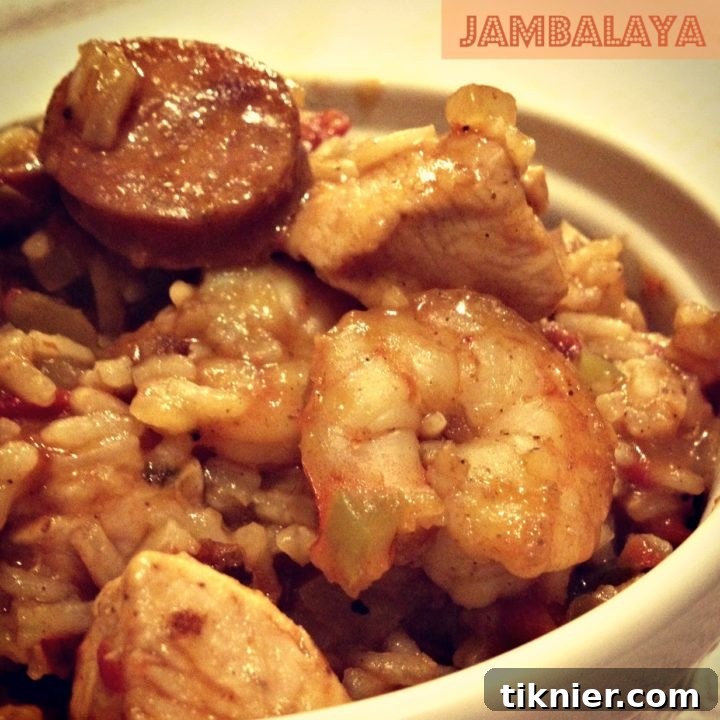
Classic Chicken, Sausage, and Shrimp Jambalaya
6 generous servings
15 minutes
30 minutes
45 minutes
Ingredients You’ll Need
- 12 oz of andouille sausage, sliced into rounds
- 1 lb of boneless skinless chicken breast, cubed
- 1/2 lb of large shrimp, peeled and deveined
- 1 onion, diced
- 1 green bell pepper, diced
- 3 cloves of garlic, minced
- 3/4 cup of diced celery
- 16 oz of crushed tomatoes
- 1/2 tsp of red pepper flakes (adjust to your spice preference)
- 1 tsp of salt
- 1/2 tsp of ground black pepper
- 1/2 tsp of hot pepper sauce (like Tabasco or Louisiana hot sauce)
- 1 tsp of file powder (optional, for authentic flavor and thickening)
- 2 tsp Worcestershire sauce
- 2 1/2 cups of chicken broth
- 1 1/4 cups of uncooked long-grain white rice
- 1 tbsp of Cajun seasoning
- 3 tbsp of peanut oil, divided
Step-by-Step Cooking Instructions
- Prepare the Meats: Begin by seasoning the cubed chicken breast, sliced andouille sausage, and peeled and deveined shrimp generously with the Cajun seasoning. Ensure each piece is well coated. Keep these seasoned meats separate for individual cooking. This step is crucial for building layers of flavor.
- Sear the Proteins: Heat 1 tablespoon of peanut oil in a large, heavy-bottomed pot or Dutch oven over medium-high heat. Add the seasoned chicken and cook until nicely browned on all sides, about 3-5 minutes. Remove the chicken from the pot and set aside. Add another tablespoon of oil to the pot, then cook the andouille sausage rounds until they are slightly crispy and have rendered some of their fat, about 4-6 minutes. Remove the sausage and set aside. Finally, add the last tablespoon of oil and quickly cook the seasoned shrimp until they just turn pink, which usually takes only 1-2 minutes per side. Be careful not to overcook the shrimp, as they can become rubbery. Remove the shrimp and set aside with the other cooked meats. Leaving the flavorful browned bits (fond) in the pot is essential for the next step.
- Sauté the Holy Trinity: In the same pot, reduce the heat to medium. Add the diced onion, green bell pepper, and celery (the “Holy Trinity”) along with the minced garlic. Sauté these vegetables, stirring occasionally, until they are tender and fragrant, typically about 5-7 minutes. Scrape up any browned bits from the bottom of the pot with your spoon; these bits are packed with flavor.
- Build the Flavor Base: Stir in the crushed tomatoes, red pepper flakes, ground black pepper, salt, hot pepper sauce, Worcestershire sauce, and file powder (if using). Mix all these ingredients thoroughly to combine the spices and tomatoes, allowing them to simmer for a minute or two. Return all the cooked meats (chicken, sausage, and shrimp) to the pot. Mix everything together well, ensuring the meats are coated in the flavorful tomato base. Continue to cook this mixture for another 10 minutes, stirring occasionally, to allow the flavors to meld and deepen.
- Add Rice and Simmer: Stir in the uncooked long-grain white rice and chicken broth. Mix well, making sure the rice is evenly distributed and submerged in the liquid. Bring the mixture to a rolling boil over medium-high heat. Once boiling, immediately reduce the heat to low, cover the pot tightly with a lid, and let it simmer undisturbed for 20-30 minutes. The exact time will depend on your rice; it’s cooked when the rice is tender and has absorbed all the liquid. It’s crucial to resist the urge to lift the lid during this simmering period, as this allows the steam to escape, which is vital for proper rice cooking.
- Rest and Serve: Once the rice is cooked, turn off the heat and let the jambalaya rest, still covered, for another 5-10 minutes. This allows the flavors to settle and the rice to fully fluff up. Finally, remove the lid, gently fluff the jambalaya with a fork, and serve hot.
Chef’s Notes & Tips for the Perfect Jambalaya
This recipe is an adaptation, drawing inspiration from classic Creole Jambalaya, and designed to bring authentic Louisiana flavors to your home kitchen. Here are some extra tips to ensure your jambalaya is a showstopper:
- Quality Ingredients Matter: Using fresh, high-quality ingredients, especially for your proteins and vegetables, will make a significant difference in the final taste.
- The Holy Trinity is Non-Negotiable: The combination of onion, bell pepper, and celery truly forms the foundational flavor of this dish. Don’t skip it!
- Don’t Rush the Browning: Searing the meats and sautéing the vegetables properly develops a rich “fond” at the bottom of the pot, which is essential for deep flavor. Deglaze the pot with a splash of broth or water if needed to scrape up all those flavorful bits.
- Rice Type is Key: Long-grain white rice is traditional and recommended for jambalaya. Avoid using parboiled, instant, or short-grain rice, as they will yield a different texture.
- Resist the Urge to Stir: Once the rice and broth are added and the pot is covered, do not stir the jambalaya during the simmering phase. Stirring releases starch, which can make the rice gummy.
- Adjust Spice to Your Liking: The amount of red pepper flakes and hot pepper sauce can be adjusted. If you prefer a milder dish, reduce them. For extra heat, a pinch of cayenne pepper can be added with the other spices.
- File Powder: While optional, file powder adds an authentic taste and helps thicken the dish slightly. If you can find it, it’s worth including for that true Louisiana experience. Add it at the end, after cooking, or with the other dry spices.
- Leftovers are Fantastic: Jambalaya often tastes even better the next day as the flavors continue to meld. Store leftovers in an airtight container in the refrigerator for up to 3-4 days.
Nutrition Information:
Yield: 6 servings
Serving Size: 1
Amount Per Serving (Approximate):
Calories: 608
Total Fat: 27g
Saturated Fat: 8g
Trans Fat: 0g
Unsaturated Fat: 16g
Cholesterol: 181mg
Sodium: 2391mg
Carbohydrates: 46g
Fiber: 3g
Sugar: 6g
Protein: 44g
Serving Suggestions: What to Pair with Your Jambalaya
A hearty bowl of jambalaya is often a complete meal in itself, but a few simple additions can elevate the dining experience. For a classic Southern spread, consider serving your jambalaya alongside a crisp green salad with a light vinaigrette to provide a refreshing contrast to the rich flavors. A side of warm, buttery cornbread is also an excellent companion, perfect for soaking up any extra sauce. Don’t forget to offer a bottle of your favorite hot sauce on the table for those who crave an extra kick! A simple steamed vegetable, such as green beans or collard greens, can also round out the meal beautifully. For drinks, iced tea or a cold beer complements the robust flavors of this Louisiana classic.
Embrace the Flavors of Louisiana in Your Kitchen
Jambalaya is truly a dish that embodies warmth, comfort, and a vibrant culinary history. It’s a versatile meal, perfect for a cozy family dinner or a festive gathering with friends. The process of making it, from searing the meats to sautéing the aromatics and simmering the rice, is a rewarding experience that fills your home with the most incredible aromas. Each spoonful offers a harmonious blend of savory, spicy, and earthy notes that are utterly irresistible. I encourage you to try this recipe and experience the joy of bringing a piece of Louisiana’s rich culinary tradition into your own kitchen. This isn’t just food; it’s a story, a feeling, and an invitation to savor the delicious complexities of Creole cuisine. Enjoy the process, and most importantly, enjoy the incredible flavors of this timeless dish!