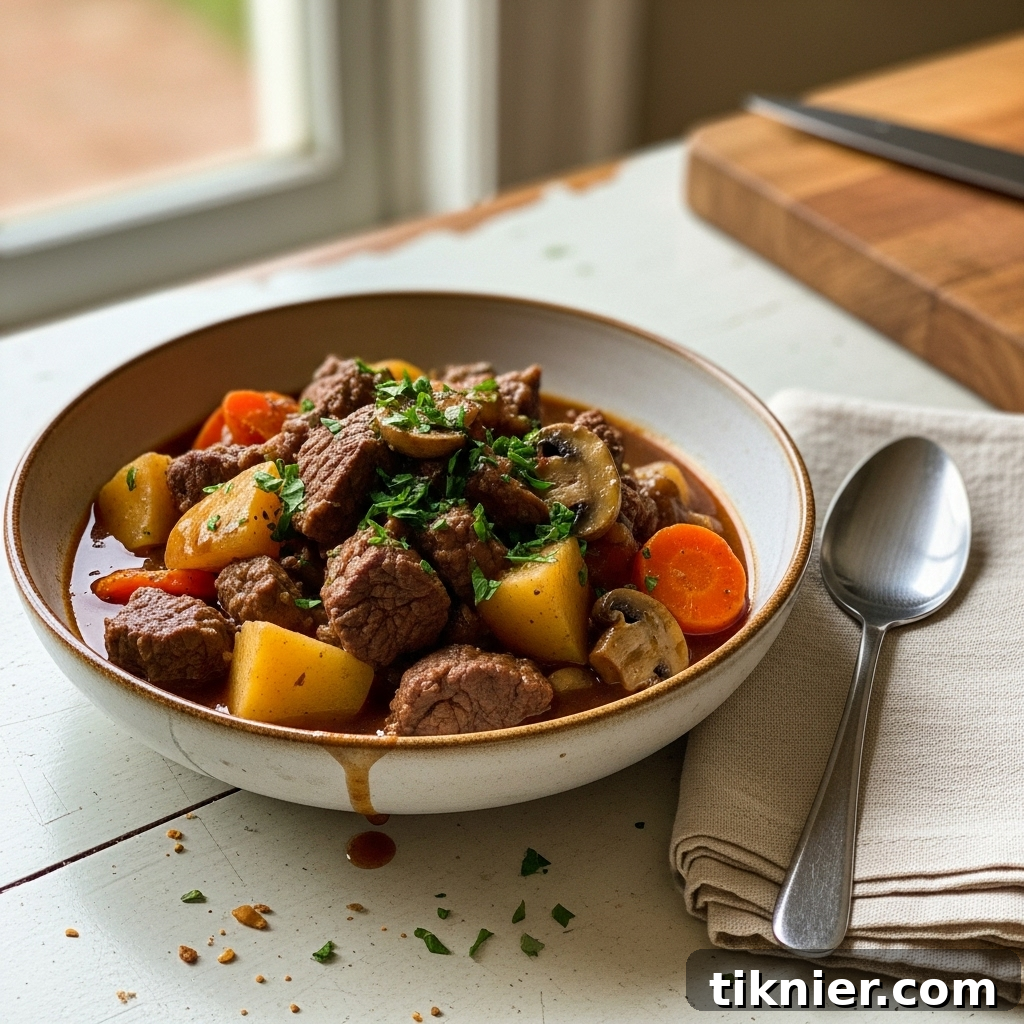
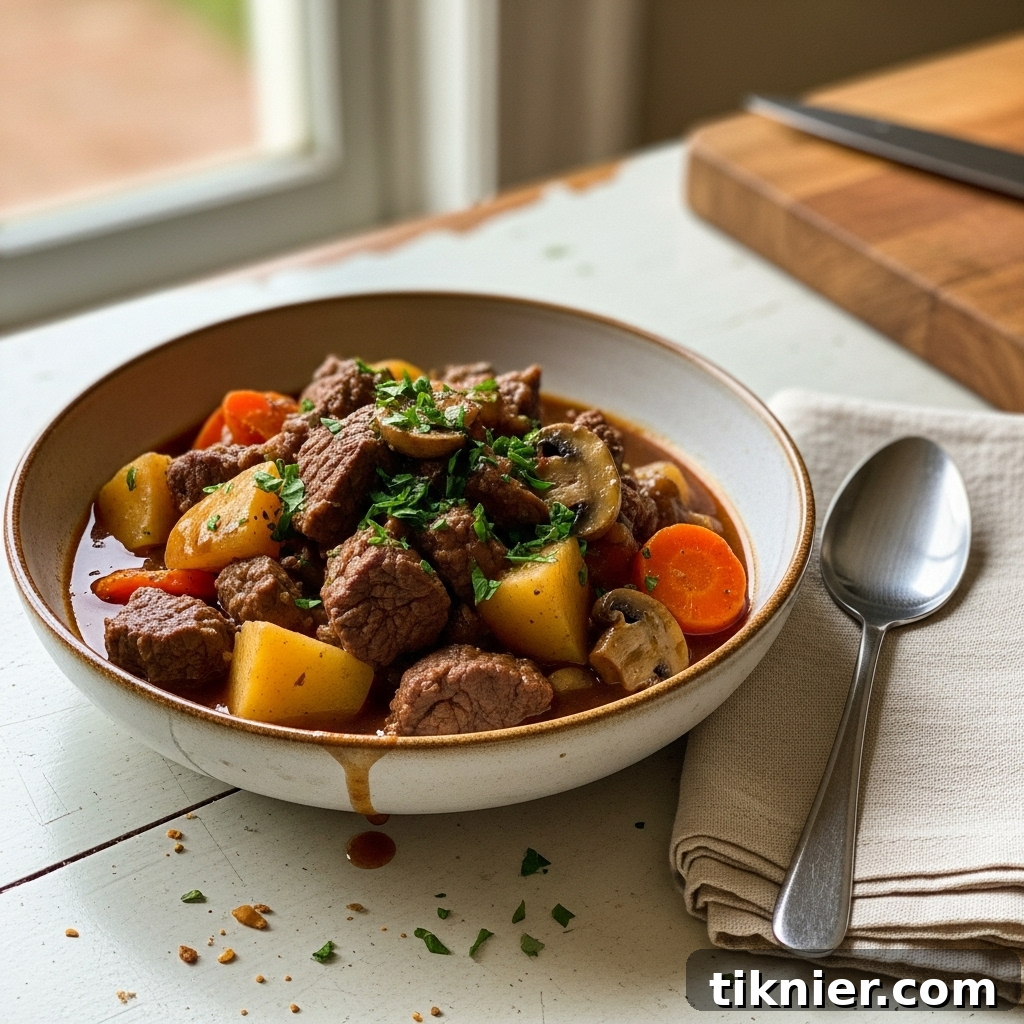
There’s nothing quite like a truly satisfying bowl of beef stew to envelop you in warmth and comfort from the very first spoonful. It’s the kind of meal that feels like a hug on a chilly evening, a timeless classic that brings families together around the dinner table. My journey to crafting what I believe is the ultimate beef stew recipe is one of tradition, curiosity, and a little bit of serendipitous discovery.
I initially learned the fundamental techniques of a robust beef stew from my incredible mother-in-law. She is an exceptional cook, deeply rooted in classic culinary traditions. Her stew recipe was, without a doubt, delicious and impeccably prepared, embodying everything you’d expect from a cherished family dish. For many years, I faithfully recreated it her way, yet a subtle intuition always lingered—a feeling that it held the potential for an even deeper, more profound flavor experience.
While the stew was always good, it lacked that elusive, show-stopping quality, a certain depth of savory richness I couldn’t quite pinpoint. It was missing an “oomph,” an unforgettable note that would elevate it from a comforting meal to an extraordinary culinary event.
Then, during a delightful weekend getaway to Asheville with my husband, our exploration led us into a charming specialty food market. Amidst a myriad of exotic ingredients, my eyes landed on a container of dark, inviting red miso paste. I was familiar with the lighter, sweeter white miso used in delicate soups, but this variety was strikingly different. On a complete impulse, driven by a culinary hunch, I purchased it, trusting that inspiration would strike on how to incorporate this intriguing ingredient into my cooking.
The perfect opportunity arose on the next cold evening that called for a hearty beef stew. I decided to introduce my new secret weapon. Just before I poured in the beef broth, I stirred two generous spoonfuls of that red miso paste directly into the pot, mingling it with the bubbling tomato paste. The transformation was instant and utterly remarkable. The miso seamlessly dissolved into the aromatic base, and as the stew slowly simmered, it began to develop the most profoundly rich, savory, and complex gravy I had ever encountered. It had an almost magical effect, intensifying the beef’s natural flavor and making the vegetables taste more robust and deeply satisfying. This, I realized, was the secret ingredient I had been searching for all along.
What you’ll find here is that very recipe. It harmonizes all the beloved, classic elements of a traditional beef stew with a revolutionary twist that makes it truly unforgettable. Prepare for a rich, tender, and deeply savory experience that will quickly become a cherished favorite in your home.
Skip to My Special Recipe!
Unlocking the Magic: Why This Beef Stew Recipe Stands Out
Beef stew is more than just a meal; it’s a culinary institution, a timeless comfort food that resonates deeply with generations. Its enduring appeal lies in its inherent practicality, rich flavor, and the sheer satisfaction it delivers. Born from the ingenious tradition of transforming tougher, more economical cuts of meat into succulently tender morsels through slow cooking, it truly epitomizes a one-pot wonder. This dish masterfully balances rustic charm with an understated elegance, making it a staple in kitchens worldwide.
The popularity of beef stew isn’t just a testament to its deliciousness; it’s also incredibly forgiving, economical, and a fantastic way to feed a crowd. The beauty of this dish is that its flavors only deepen and become more complex with time, making leftovers often even more coveted than the initial serving. Every family often holds its own treasured version, a unique blend of herbs or a preferred mix of vegetables, carefully passed down through the ages, creating a tapestry of culinary heritage.
So, what sets my particular rendition apart in a vast sea of beef stew recipes? The answer lies in a single, yet remarkably transformative, ingredient: red miso paste. This isn’t just an addition; it’s an elevation.
While traditional beef stew recipes meticulously build their flavor profiles using classic aromatics like onions, carrots, and celery, along with the rich tang of tomato paste and a splash of Worcestershire sauce, the inclusion of red miso paste introduces an entirely new dimension of savory depth. Miso, a fermented soybean paste, is an undisputed powerhouse of umami. Often referred to as the “fifth taste,” umami is that deeply satisfying, rich, meaty, and brothy flavor found in ingredients like aged cheeses, mushrooms, cured meats, and soy sauce. It provides a profound savory foundation that amplifies all other flavors.
By carefully cooking, or “blooming,” the red miso paste alongside the tomato paste, we intensify its inherent savory notes. This critical step ensures that the miso’s complex flavors are fully unleashed and seamlessly integrated into the stew’s base. It enriches the beefy essence of the broth, harmonizes beautifully with the malty sweetness and subtle bitterness of dark stout beer, and creates a gravy so lusciously complex, your dinner guests will undoubtedly be captivated, trying to uncover your secret ingredient all evening long. This recipe doesn’t just taste good; it tells a story with every mouthful.
Essential Ingredients for the Ultimate Beef Stew
The extraordinary depth and unforgettable flavor of this beef stew originate from a thoughtful layering of quality ingredients. While the list may appear comprehensive, each component plays an indispensable role in forging that rich, velvety gravy and achieving the melt-in-your-mouth tenderness of the beef that makes this recipe a true standout. And, of course, central to our mission is our “secret weapon” – the ingredient responsible for that unparalleled umami explosion.
Here’s a detailed breakdown of everything you’ll need to create this culinary masterpiece:
- 2 ½ lbs beef chuck, expertly cut into 1 ½-inch cubes. Chuck is ideal for its marbling and connective tissue.
- Kosher salt and freshly ground black pepper to season the beef and enhance overall flavor.
- ⅓ cup all-purpose flour for coating the beef, crucial for browning and thickening the stew.
- 3 tbsp olive oil, divided, used for searing the beef and sautéing the aromatics.
- 1 large yellow onion, precisely chopped, forming the aromatic foundation.
- 3 large carrots, peeled and cut into 1-inch pieces, adding sweetness and earthy notes.
- 3 celery stalks, cut into 1-inch pieces, contributing to the classic mirepoix base.
- 4 cloves garlic, finely minced, for that irresistible fragrant punch.
- 2 tbsp tomato paste, providing concentrated tomato flavor and acidity.
- 2 tbsp red miso paste, our star secret ingredient for unparalleled umami depth.
- 1 (12-ounce) bottle Guinness or another robust dark stout beer. Its malty bitterness balances richness.
- 4 cups low-sodium beef broth, forming the liquid base; low-sodium allows for seasoning control.
- 1 tbsp Worcestershire sauce, adding savory, tangy, and slightly sweet complexity.
- 1 tsp brown sugar, to subtly enhance sweetness and balance flavors.
- 2 bay leaves, for a subtle, herbaceous backdrop that infuses during simmering.
- 4 sprigs fresh thyme, imparting an earthy, peppery, and slightly floral aroma.
- 1 ½ lbs Yukon Gold potatoes, peeled and cut into 1 ½-inch chunks, for creamy texture and heartiness.
- 8 oz cremini mushrooms, halved or quartered if large, adding earthy, savory notes and texture.
- 2 tbsp fresh parsley, finely chopped, for a bright, fresh garnish and burst of color.
Let’s delve deeper into a few crucial ingredients. For the beef, I cannot emphasize enough the superior results of purchasing a whole beef chuck roast and cutting it into cubes yourself. Pre-cut “stew meat” found in many grocery stores often comprises a medley of different cuts with varying textures and cooking times, leading to inconsistent results. Chuck, sourced from the shoulder, boasts exceptional marbling and abundant connective tissue. This composition is precisely what you desire, as slow cooking masterfully breaks it down, yielding incredibly tender meat and contributing immensely to a luxuriously rich, naturally thickened sauce.
The undeniable star of this culinary show is the red miso paste. This is the game-changing secret that transforms an already good stew into something truly extraordinary. Typically, you’ll locate it in the refrigerated section of your supermarket, often adjacent to tofu products or within the international foods aisle. Its addition introduces an unparalleled depth of savory, umami flavor—a richness you simply cannot achieve through salt alone. It’s a flavor amplifier, making everything taste more intensely like itself.
Furthermore, selecting a high-quality dark stout beer like Guinness is paramount. Its characteristic malty, slightly bitter, and subtly roasted notes are vital for perfectly balancing the inherent richness of the stew. This not only adds another layer of complexity to the gravy but also enhances the overall depth. And always, always opt for low-sodium beef broth. This allows you complete control over the final saltiness of your dish, a particularly important consideration given that miso paste also contributes a significant savory, salty element.
Step-by-Step Mastery: Crafting Your Signature Beef Stew
Creating a truly magnificent beef stew is a gratifying culinary journey that rewards patience and precise technique. Each carefully orchestrated step in this recipe is designed to meticulously build layers of profound flavor, commencing with achieving that perfect, deep sear on the beef and culminating in a rich, velvety, and deeply aromatic gravy. Resist the urge to rush; instead, savor the process, perhaps pour yourself a nice beverage, and take pleasure in transforming simple ingredients into a true masterpiece. For optimal results, I highly recommend using a heavy-bottomed Dutch oven, as its superior heat retention and distribution are ideal for this kind of slow-cooked magic.
1. Prepare the Beef: Pat, Season, and Flour
This initial step is absolutely critical for developing the robust foundation of flavor. Begin by using paper towels to meticulously pat your beef cubes completely dry. Any residual moisture on the surface will hinder proper browning, leading to steaming rather than searing. Once thoroughly dry, generously season the beef on all sides with kosher salt and freshly ground black pepper. Then, working in batches, toss the seasoned cubes in the all-purpose flour until each piece is lightly and evenly coated. This flour coating serves a dual purpose: it aids in achieving that beautiful brown crust during searing and also acts as the foundational thickening agent for our exquisite stew gravy.
2. Achieve the Perfect Sear: Brown the Beef in Batches
Heat two tablespoons of the olive oil in your Dutch oven over medium-high heat until it shimmers, indicating it’s hot enough. Carefully place about half of the floured beef cubes into the pot in a single, uncrowded layer. This is a crucial instruction: never overcrowd the pot. If you add too much meat at once, the temperature of the pot will drop, causing the beef to steam and grey instead of developing that coveted deep, dark, flavorful crust. Allow the beef to brown, undisturbed, for several minutes on each side until a rich, dark crust forms. This crust, known as the Maillard reaction, is where incredible flavor develops. Transfer the perfectly browned beef to a plate and repeat this process with the remaining beef, adding a little more oil if necessary.
3. Build the Flavor Base: Cook the Aromatics
With the beef browned and resting, add the last tablespoon of olive oil to the pot, scraping up any delicious browned bits (fond) stuck to the bottom. Add your chopped onion, carrots, and celery – this classic trio, known as mirepoix, is the irreplaceable flavor foundation for countless savory dishes. Sauté them, stirring occasionally, for approximately 8 to 10 minutes. You want them to soften considerably and acquire a slight golden color, which sweetens them and deepens their flavor profile.
4. Unleash Umami: Add Garlic and Pastes
Stir in the minced garlic and cook for just about one minute, or until its wonderfully fragrant aroma fills your kitchen. Now comes a pivotal flavor-building step that truly elevates this stew. Add both the tomato paste and our secret weapon, the red miso paste, to the pot. Stir constantly and cook them together for about two minutes. This process, often referred to as “blooming” or “toasting,” significantly deepens their flavors, cooks out any raw, metallic taste from the tomato paste, and most importantly, unlocks the incredible, complex umami notes of the miso, embedding them deeply into the stew’s foundation.
5. Deglaze and Concentrate: Stout Beer Magic
Pour in the entire bottle of dark stout beer. As the cold liquid meets the hot pot, it will sizzle and steam dramatically. Immediately use a sturdy wooden spoon or spatula to thoroughly scrape up all those flavorful browned bits (the “fond”) stuck to the bottom of the pot. This fond is pure, concentrated flavor and essential for the depth of your gravy. Let the beer come to a robust simmer and reduce by about half, which should take only a few minutes. This reduction concentrates the malty, slightly bitter notes of the beer, infusing them deeply into the sauce.
6. Assemble the Broth: Bringing It All Together
Now, pour in the low-sodium beef broth, Worcestershire sauce, and brown sugar, stirring everything until well combined. Return the previously browned beef, along with any savory juices that have collected on the plate, back into the pot. Finally, nestle in the bay leaves and the sprigs of fresh thyme, ensuring they are submerged in the liquid to infuse their herbaceous goodness.
7. The Long Simmer: Achieving Tenderness
Bring the stew to a gentle simmer, then immediately reduce the heat to low, cover the pot with a tight-fitting lid, and let it cook. The secret to fork-tender beef lies in maintaining a *very* gentle simmer, not a vigorous rolling boil. You should see only a bubble or two gently break the surface every few seconds. This low, slow, moist cooking environment is precisely what gradually breaks down the tough connective tissues in the beef, transforming them into succulent gelatin. Allow it to cook undisturbed for one and a half hours, giving it a gentle stir every now and then to prevent sticking.
8. Incorporate Final Vegetables: Potatoes and Mushrooms
After an hour and a half of simmering, the beef will be well on its way to achieving perfect tenderness. Carefully uncover the pot and stir in your potato chunks and the cremini mushrooms. We introduce these later in the cooking process to ensure the potatoes cook through beautifully without disintegrating into mush, and the mushrooms retain their pleasant texture. Place the lid back on the pot and continue to simmer for an additional 45 to 60 minutes, or until both the beef is meltingly tender and the potatoes are easily pierced with a fork.
9. Final Adjustments: Finish and Season to Taste
Your magnificent stew is ready when the beef yields effortlessly to a fork and the potatoes are perfectly tender. Before serving, carefully fish out the bay leaves and the woody thyme sprigs, as they have now imparted all their flavor. This is the crucial moment to taste your creation. It might be perfectly seasoned, or it might benefit from another pinch of salt or a few more grinds of fresh black pepper. Adjust the seasoning until the flavors are perfectly harmonious and satisfying to your palate.
10. Garnish and Serve: A Final Flourish
Ladle your beautiful, rich beef stew into warm, deep bowls. A final sprinkle of fresh, vibrant chopped parsley adds a wonderful touch of color, a burst of fresh flavor, and a herbaceous note that beautifully contrasts and cuts through the richness of the stew. Serve it immediately and prepare for an abundance of compliments on this truly exceptional dish.
Mastering the Presentation: How To Serve Beef Stew
Once your truly magnificent beef stew has simmered to perfection and your kitchen is filled with an absolutely divine aroma, it’s time for the most rewarding part: serving it up. This stew is inherently hearty and wonderfully complete, making it an excellent standalone meal simply served in a deep, comforting bowl. There’s an undeniable charm in this classic approach, but if you’re looking to elevate the experience and explore its versatility, there are numerous delightful ways to present it.
The most important accompaniment to serve alongside beef stew is something robust and absorbent, designed to capture every last, precious drop of that incredible, umami-rich gravy. You’ve invested time and effort into building that complex flavor, so absolutely none of it should go to waste! My husband, for one, steadfastly believes that no beef stew experience is complete without a substantial piece of bread on the side – a sentiment I wholeheartedly agree with.
Here are some of my most cherished ways to serve this extraordinary beef stew recipe:
- Crusty Artisan Bread: A warm, freshly baked baguette, a thick, chewy slice of artisan sourdough, or even a simple yet satisfying loaf of Italian bread serves as the quintessential vehicle for mopping up that luscious gravy. A side of perfectly softened, salted butter is an optional but highly recommended indulgence.
- Creamy Mashed Potatoes: For the epitome of comfort food pairings, generously ladle the rich beef stew over a mound of ethereal, creamy, and buttery mashed potatoes. The contrasting textures of the tender beef, soft vegetables, and silky potatoes create a truly heavenly combination that satisfies on every level.
- Al Dente Egg Noodles: Wide, tender egg noodles provide another fantastic and classic base for this hearty stew. Cook them according to package directions, toss lightly with a knob of butter and a sprinkle of fresh parsley, then serve the stew generously piled right on top. The noodles absorb the gravy beautifully.
- Southern-Style Cornbread: As a true Southern gal, my personal favorite accompaniment is a warm wedge of classic, savory cornbread. Its slightly crumbly texture and distinct corn flavor offer a perfect counterpoint and complement to the deep richness of the stew, creating a delightful harmony of regional flavors.
- Simple Green Salad: To elegantly cut through the richness of the stew and introduce a refreshing, bright element to the meal, consider serving it with a light side salad. Toss crisp greens with a sharp, tangy vinaigrette to provide a palate-cleansing contrast.
Regardless of how you choose to serve it, ensure your bowls are warmed and your company is cherished. This particular beef stew is designed to be a shared experience, savored slowly on a crisp evening, fostering wonderful memories around the dinner table.
Preserving Perfection: How To Store & Reuse Beef Stew Leftovers
One of the true joys of preparing a large pot of beef stew is the undeniable fact that the leftovers are often even more delectable the following day. As the stew rests in the refrigerator overnight, all the individual flavors have ample time to meld and deepen, resulting in an even richer, more complex, and wonderfully harmonious taste. So, do not hesitate to make a full batch, even if you’re cooking for just one or two; you’ll undoubtedly be grateful for those waiting leftovers.
Properly storing your stew is paramount to ensuring it maintains its exquisite taste, if not improves, upon reheating. Here’s my tried-and-true method for handling and enjoying those precious leftovers:
- Cooling Safely: First and foremost, allow the stew to cool down significantly before transferring it to the refrigerator. Placing a large, hot pot directly into a cold fridge can elevate the internal temperature of the appliance, potentially putting other perishable foods at risk. I typically let it sit on the counter for about an hour, stirring occasionally to help it cool faster, before proceeding to storage.
- Refrigerating for Freshness: Once cooled, transfer the stew into airtight containers. This protects it from absorbing other refrigerator odors and prevents spoilage. Stored correctly, your beef stew will maintain its beautiful quality in the refrigerator for up to 4 days, making it perfect for convenient weeknight meals.
- Freezing for Future Feasts: Beef stew is an excellent candidate for freezing, allowing you to enjoy its comforting flavors months down the line. For optimal results, ladle the cooled stew into freezer-safe containers or robust, heavy-duty freezer bags. Be sure to leave about an inch of headspace at the top of containers or bags to accommodate expansion during freezing. It will retain its quality for up to 3 months in the freezer. A minor note: the texture of potatoes can sometimes become slightly grainier or softer after being frozen and thawed, but rest assured, the overall deliciousness of the stew remains intact.
When you’re ready to indulge in your stored stew, reheating is wonderfully straightforward. For refrigerated portions, you can gently warm them in a saucepan over medium-low heat on the stovetop, stirring occasionally until thoroughly heated through. If the stew has thickened too much overnight, simply add a small splash of beef broth or water to achieve your desired consistency. Individual servings also reheat perfectly in the microwave. For frozen stew, the best practice is to thaw it overnight in the refrigerator before reheating gently on the stovetop.
As for creative reuse, the possibilities are exciting. Leftover beef stew makes an absolutely fantastic and flavorful filling for a savory pot pie. Just pour it into a baking dish, top it with a flaky sheet of puff pastry or a homemade biscuit crust, and bake until it’s golden brown and bubbling with goodness. You can also use it as a filling for hearty hand pies or even a rich base for Shepherd’s pie if you have some mashed potatoes on hand.
Creative Culinary Adventures: Substitutions & Variations for Beef Stew
While I firmly believe this particular beef stew recipe, with its secret miso ingredient, is exceptionally close to culinary perfection, I also understand that one of the most delightful aspects of cooking is the freedom to personalize and make a recipe truly your own. This stew serves as an outstanding foundational recipe and is remarkably forgiving, so please feel encouraged to experiment based on your personal preferences, dietary needs, or simply what you happen to have readily available in your pantry and fridge. The essence of a truly great stew is its slow-cooked comfort, so embrace the opportunity to infuse your own unique touch.
Whether you need to adapt for specific dietary preferences or are simply craving a novel flavor combination, here are some simple yet impactful swaps and creative variations you can confidently explore:
- Swap the Beer for Wine: If dark beer isn’t to your taste or isn’t available, you can effortlessly substitute it with a dry red wine. Approximately a cup and a half of a full-bodied red, such as a Cabernet Sauvignon, Merlot, or a robust Côtes du Rhône, would be magnificent for deglazing the pot, introducing a different kind of acidic depth, and adding a classic richness that is equally delicious.
- Explore Different Root Vegetables: The traditional combination of carrots and potatoes is undeniably hard to beat, but the stew is wonderfully amenable to the addition or substitution of other hearty root vegetables. Parsnips will introduce a lovely, subtle sweetness and a hint of spice. Turnips or rutabagas can provide a slightly more peppery, earthy flavor and a satisfying texture. For a touch of vibrant color and a creamy sweetness, chunks of sweet potato would also make a delicious and nutritious addition.
- Make it Gluten-Free: Adapting this beef stew for a gluten-free diet is straightforward. Simply swap the all-purpose flour used to coat the beef with a gluten-free all-purpose blend or even a tablespoon or two of cornstarch (added as a slurry later) for thickening. Additionally, you’ll need to ensure you use a certified gluten-free stout beer or, as mentioned above, substitute it entirely with a dry red wine, as traditional beers contain gluten.
- Introduce a Hint of Heat: For those who appreciate a gentle warmth or a spicy kick, incorporating some heat is very simple. A pinch of red pepper flakes or a dash of cayenne pepper, added along with the minced garlic and pastes, will imbue the stew with a subtle, comforting warmth. For a deeper, smokier heat, consider adding a finely chopped chipotle pepper in adobo sauce, which also contributes a fantastic smoky depth.
- Experiment with Aromatic Herbs: While fresh thyme is a classic and indispensable herb for beef stew, other woody herbs also perform beautifully in a long-simmered dish. A sprig or two of fresh rosemary, added alongside the thyme, would offer a fragrant, piney counterpoint. For a different finishing touch, you could stir in other fresh, finely chopped herbs at the very end, such as fresh dill or chives, instead of or in addition to parsley, for a brighter, more distinct aromatic lift.
Regardless of the small adjustments or creative flourishes you decide to make, the core techniques — thoroughly browning the meat, meticulously building layers of flavor, and allowing it to simmer low and slow — will consistently yield a rich, tender, and deeply satisfying beef stew. Don’t be afraid to make this recipe your own!
My Secret Ingredient Beef Stew
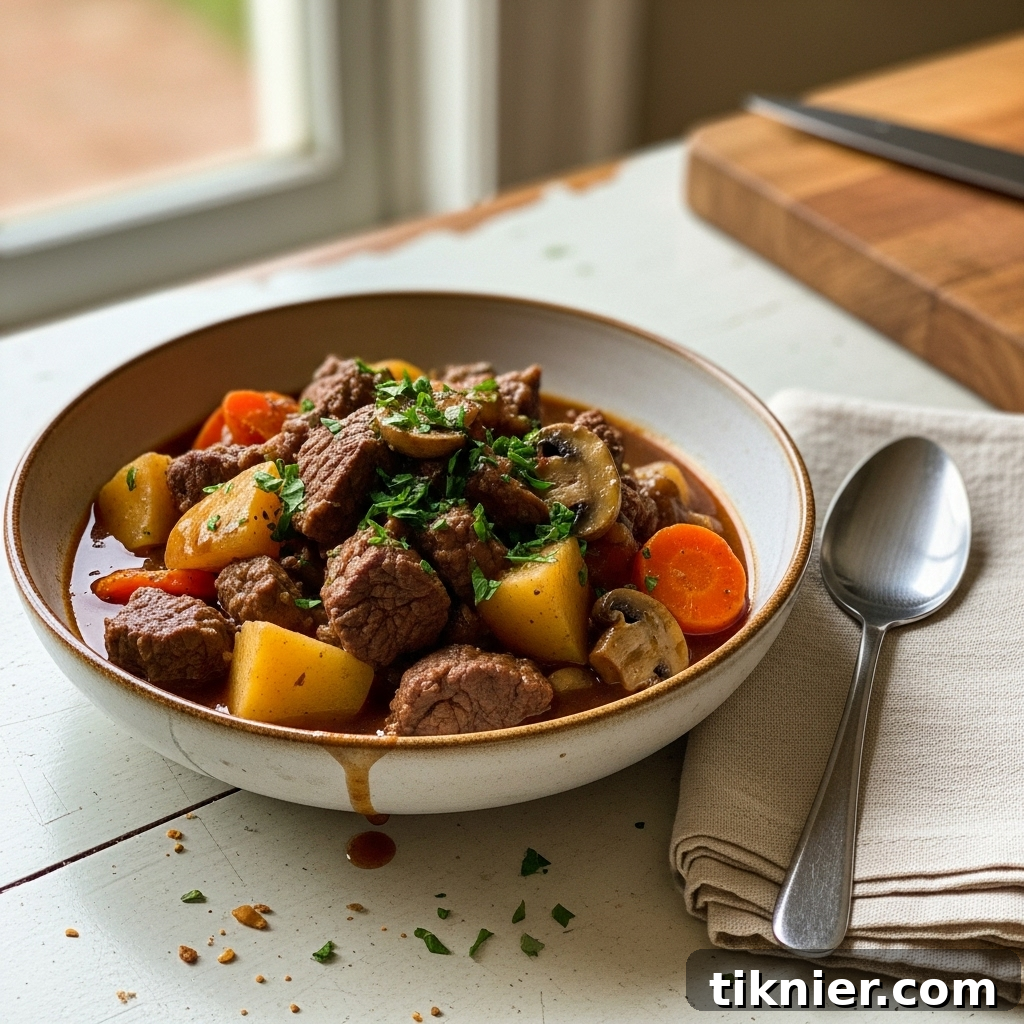
Description: A rich, deeply flavorful beef stew made with tender beef chuck, hearty vegetables, and a secret ingredient (miso paste!) that creates an unforgettable umami-packed gravy.
Yield: 6-8 servings | Category: Main Course | Cuisine: American
Prep Time: 25 minutes | Cook Time: 2 hours 45 minutes
Ingredients
- 2 ½ lbs beef chuck, cut into 1 ½-inch cubes
- Kosher salt and freshly ground black pepper
- ⅓ cup all-purpose flour
- 3 tbsp olive oil, divided
- 1 large yellow onion, chopped
- 3 large carrots, peeled and cut into 1-inch pieces
- 3 celery stalks, cut into 1-inch pieces
- 4 cloves garlic, minced
- 2 tbsp tomato paste
- 2 tbsp red miso paste
- 1 (12-ounce) bottle Guinness or other dark stout beer
- 4 cups low-sodium beef broth
- 1 tbsp Worcestershire sauce
- 1 tsp brown sugar
- 2 bay leaves
- 4 sprigs fresh thyme
- 1 ½ lbs Yukon Gold potatoes, peeled and cut into 1 ½-inch chunks
- 8 oz cremini mushrooms, halved or quartered if large
- 2 tbsp fresh parsley, chopped, for garnish
Instructions
- Pat beef dry, season with salt and pepper, and toss with flour.
- In a large Dutch oven over medium-high heat, heat 2 tbsp oil. Brown beef in batches until a deep crust forms. Transfer to a plate.
- Add remaining 1 tbsp oil to the pot. Sauté onion, carrots, and celery until softened, about 8-10 minutes.
- Stir in garlic and cook for 1 minute. Add tomato paste and red miso paste, cooking and stirring for 2 minutes until darkened.
- Pour in stout beer to deglaze, scraping up browned bits. Simmer and reduce by half.
- Stir in beef broth, Worcestershire sauce, and brown sugar. Return beef and any juices to the pot. Add bay leaves and thyme.
- Bring to a simmer, then reduce heat to low, cover, and cook for 1 ½ hours.
- Uncover and stir in potatoes and mushrooms. Cover and continue to simmer for another 45-60 minutes, until beef is fork-tender.
- Remove bay leaves and thyme sprigs. Taste and adjust seasoning as needed.
- Garnish with fresh parsley and serve hot.
Notes
For the best flavor, do not skip the browning step and be sure to do it in batches. This creates the foundation for the rich gravy. Patting the beef completely dry before seasoning is crucial for getting a good sear.
Servings: 8 | Calories: 550 kcal | Fat: 25g | Carbohydrates: 35g | Protein: 45g
Frequently Asked Questions About The Best Beef Stew
Here are some straightforward and comprehensive answers to the most common questions I often receive about this hearty and flavorful beef stew recipe, designed to help you achieve perfect results every time.
What is the best cut of meat for a truly tender beef stew?
Without a doubt, the absolute best cut of meat for achieving a classic, rich, and incredibly tender beef stew is a chuck roast. You might also find it labeled as a shoulder roast, chuck eye, or simply “pot roast” at your butcher or grocery store. Chuck comes from the shoulder of the cow, a muscle group that endures considerable work, which means it is rich in connective tissue and boasts wonderful marbling of fat. This might initially sound counterintuitive for tenderness, but it is precisely what makes it ideal for slow-cooked dishes.
As the beef stew gently simmers at a low temperature for several hours, that tough connective tissue, primarily composed of collagen, slowly and magically melts away. This transformation yields rich, luscious gelatin that imparts an incredible body to the gravy and contributes to a silky, luxurious mouthfeel. Simultaneously, the fat marbling renders down, continuously basting the meat from within and ensuring each bite remains moist, succulent, and bursting with flavor. The ultimate outcome is chunks of beef so tender they practically dissolve with the gentle pressure of a fork. I strongly advocate for purchasing a whole chuck roast and cubing it yourself, as the pre-cut “stew meat” packages often contain a mix of leaner, tougher cuts like round or sirloin, which lack the necessary connective tissue to break down beautifully and can remain stubbornly chewy even after extended cooking times.
Why is my homemade beef stew still tough after cooking?
This is an incredibly common query, and the answer almost always boils down to one of two critical factors: insufficient cooking time or an improper cooking temperature. More often than not, if you find your beef in the stew is still tough, it simply means you haven’t given it enough time to cook. The collagen within a chuck roast requires a significant duration to fully break down and convert into gelatin. During the cooking process, there’s an intermediate stage where the muscle fibers will seize up and feel tough before they eventually relax and become exquisitely tender. If you sample a piece and find it chewy, your best course of action is to confidently replace the lid and allow the stew to continue simmering for another 30 to 60 minutes, checking periodically.
The other primary culprit for tough beef is an incorrect cooking temperature. If you allow your stew to maintain a vigorous, rolling boil instead of a gentle simmer, the intense, high heat can cause the muscle proteins in the beef to constrict excessively. This constriction squeezes out all the vital moisture, leaving the meat dry and fibrous. A proper beef stew should never be at a rapid boil. You are aiming for a “lazy” simmer, where you observe only a single bubble or two gently breaking the surface every few seconds. This methodical “low-and-slow” approach is the true secret to achieving that coveted, fall-apart, meltingly tender beef texture that defines a perfect stew.
How can I thicken my beef stew to achieve a perfect gravy consistency?
Achieving a perfectly thick, rich, and gravy-like consistency for your beef stew is easily attainable through several effective methods. This particular recipe incorporates a couple of natural thickening agents right from the start. Firstly, coating the beef in flour before the browning step is not just for searing; it creates a foundational roux-like element that helps to thicken the sauce as it simmers. Secondly, as the potatoes cook and soften in the stew, they release some of their natural starches into the liquid, which also contributes to the stew’s natural thickening process.
Should you reach the end of the designated cooking time and find your stew’s consistency is still thinner than your preference, you have a few simple and reliable options. The most straightforward method is to remove the lid from the Dutch oven and allow the stew to continue simmering uncovered for an additional 15 to 20 minutes. This allows some of the excess liquid to gently evaporate, thereby concentrating the flavors and naturally thickening the sauce. Another highly effective and popular technique is to create a cornstarch slurry: simply whisk one tablespoon of cornstarch with two tablespoons of cold water until completely smooth, then gradually stir this mixture into your simmering stew. Allow it to cook for just a couple more minutes, and you will observe it thicken beautifully. Finally, for a more rustic approach, you can use a fork or the back of a spoon to gently mash a few of the cooked potato chunks against the side of the pot. This releases more of their starches, contributing to a thicker, heartier stew.
Can I prepare this flavorful beef stew in a slow cooker or an Instant Pot?
Absolutely! This incredibly versatile beef stew recipe adapts beautifully to both a slow cooker and an Instant Pot, offering convenient alternatives for busy schedules. However, it’s crucial that you do not skip the initial, essential flavor-building steps that are performed on the stovetop; these are vital for the stew’s deep taste. For preparation in a slow cooker: begin by executing the first five steps of the recipe (browning the beef, sautéing the vegetables, blooming the tomato and miso pastes, and deglazing with beer) in a separate skillet or directly in your slow cooker insert if it is stovetop-safe. Once these steps are complete, transfer all the contents to your slow cooker crock. Add the beef broth, the seasoned beef, and the remaining seasonings, then cook on the “Low” setting for 6 to 8 hours or on the “High” setting for 3 to 4 hours. To ensure optimal texture and prevent the potatoes and mushrooms from becoming overly mushy, I recommend adding them during the last 2 hours of cooking on low, or the final hour on high.
For preparation in an Instant Pot, you have the convenience of performing all steps directly in the appliance. Utilize the “Sauté” function to complete the first five crucial steps, ensuring thorough browning and flavor development. After deglazing with the stout beer, return the browned beef and all remaining liquids and seasonings to the pot. Secure the lid, set the steam release valve to the “Sealing” position, and cook on “High Pressure” for 35 minutes. Allow the pressure to release naturally for at least 15 minutes before performing a quick release of any remaining pressure. Then, carefully add the potato chunks and mushrooms, reseal the pot, and cook on “High Pressure” for an additional 5 minutes, followed by a quick release. The result is a delicious, tender beef stew in a significantly reduced cooking time.
What unique contribution does the miso paste make to this beef stew recipe?
The red miso paste is indeed my not-so-secret secret ingredient, and its unique contribution is precisely what elevates this beef stew from merely great to truly exceptional. Miso is a traditional Japanese seasoning, meticulously produced through the fermentation of soybeans, often with rice or barley. It is an undeniable powerhouse of umami, the celebrated “fifth basic taste” that stands alongside sweet, sour, salty, and bitter. Umami is best described as a savory, meaty, or brothy flavor, a deeply satisfying sensation that significantly enhances the overall complexity and deliciousness of food.
In this particular beef stew recipe, the red miso paste introduces a profound layer of savory depth that is simply unattainable with salt alone. It acts as a magnificent flavor enhancer, complementing and intensely amplifying the natural beefy flavor of the meat and the inherent richness of the broth. When the miso paste is cooked with the tomato paste in the initial stages, its flavors deepen and become even more pronounced, integrating seamlessly into the stew. It doesn’t impart an overtly “Asian” flavor in this context; rather, it subtly blends into the background, providing an almost indescribable richness that makes the entire gravy taste more complex, more well-rounded, and reminiscent of restaurant-quality depth. It’s that mysterious, deeply satisfying note that will leave everyone wondering what your special ingredient could possibly be.
Continue Your Culinary Journey: Try These Recipes Next!
If you thoroughly enjoyed the warm, comforting, and deeply satisfying experience of this secret ingredient beef stew, I have a few more cherished recipes from my kitchen that I believe you will absolutely adore. Each one offers a different, yet equally delicious, take on tender, savory beef, making them perfect candidates for a comforting weeknight dinner or a special Sunday supper.
Dive into these hearty dishes and discover new family favorites:
- Easy Beef Stroganoff: This creamy, dreamy classic features exquisitely tender beef and earthy mushrooms enveloped in a rich sauce, traditionally served over wide egg noodles. It’s the embodiment of pure comfort food, perfect for a cozy evening.
- Easy Hungarian Goulash: Prepare for a deeply satisfying experience with this rich and smoky goulash. Boasting a profound paprika flavor and tender beef, it’s wonderfully hearty and incredibly flavorful, transporting you straight to the heart of Hungary.
- Crock Pot Beef Burgundy: For an elegant yet incredibly convenient meal, this “set it and forget it” Crock Pot Beef Burgundy is a must-try. The slow cooking in red wine renders the beef unbelievably tender and infuses it with a luxurious, complex flavor profile that feels gourmet with minimal effort.
I can’t wait to hear which delightful beef recipe you decide to try first!