Revitalize Your Space: Transforming an IKEA Lack Coffee Table into a Chic Upholstered Bench
The humble IKEA Lack coffee table is a staple in many homes, known for its minimalist design and unbeatable price. However, its simple aesthetic can sometimes feel out of place with evolving decor styles. If you find yourself with a Lack table that no longer matches your vision, don’t relegate it to the attic! This guide will walk you through an inspiring DIY project to transform an espresso-colored IKEA Lack coffee table into a beautiful, custom upholstered bench, perfectly complementing a white-themed room without adding more stark white furniture.
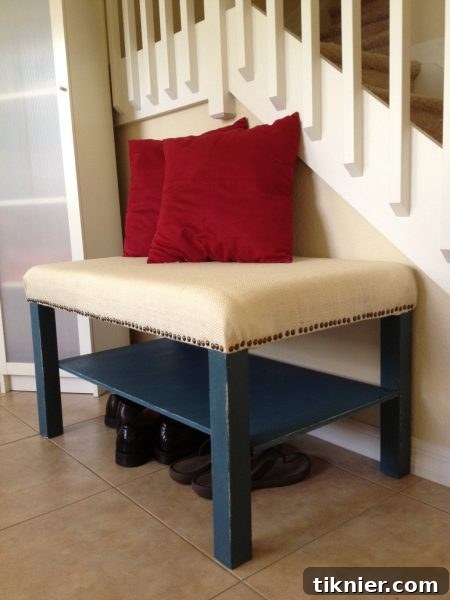
The stunning transformation: a functional and stylish upholstered bench.
The Journey from Mismatched Table to Custom Decor
My front room, adorned predominantly with white furniture, presented a common design dilemma: a dark espresso IKEA Lack coffee table stood out like a sore thumb. My initial thought was simple – paint it white. However, a moment of reflection made me realize that more white would only create an overwhelming, sterile environment. The room already had plenty of brightness; what it needed was texture, depth, and a touch of warmth. This realization sent me down the rabbit hole of furniture hacking blogs, particularly inspiring sites like IKEA Hackers and the endless visual feast of Pinterest. It was there that the idea of converting the coffee table into a functional and stylish bench truly took root.
An IKEA Lack hack offers a fantastic opportunity for personalization. These tables are renowned for their lightweight construction and ease of modification, making them perfect canvases for DIY enthusiasts. Transforming it into a bench not only solved the aesthetic mismatch but also introduced a versatile seating option, perfect for an entryway, the foot of a bed, or as an accent piece in a living area. This project promises to be a rewarding experience, culminating in a unique piece of furniture that tells a story.
Planning Your Furniture Hack: Essential Considerations
Before diving into any DIY project, especially one involving painting and upholstery, careful planning is paramount. A clear vision and a well-organized workspace can make all the difference between frustration and a fulfilling creative endeavor.
1. Envision Your Design
Even if you’re following a guide, take a moment to visualize your end product. Consider the colors, textures, and the overall feel you want to achieve. For this project, the goal was to complement a white room without adding more white. This led to choices like Paris Grey, Old White, and Aubusson Blue for the base, providing subtle contrasts, and burlap for the top, introducing natural texture.
2. Gather Your Materials and Tools
Having everything at hand before you begin will streamline the process. For this specific IKEA Lack bench transformation, you will need:
- IKEA Lack Coffee Table: The foundation of our project.
- Chalk Paint: Annie Sloan Chalk Paint (ASCP) in Paris Grey, Old White, and Aubusson Blue. These paints are excellent for a distressed, vintage look.
- Wax: Clear wax and a small amount of dark wax (for sealing and antiquing).
- Brushes: Good quality chalk paint brushes and wax brushes.
- Sandpaper/Distressing Sponge: Fine-grit sandpaper for mild distressing.
- Foam Pads: Two 2″x22″x22″ foam pads (adjust size based on your table dimensions).
- Cutting Tool for Foam: A sharp utility knife or electric carving knife.
- Hot Glue Gun & Glue Sticks: For adhering foam to the tabletop.
- Batting Material: A roll or pack of upholstery batting, ensuring it’s larger than your tabletop dimensions.
- Staple Gun & Staples: Heavy-duty upholstery staple gun.
- Fabric for Upholstery: Burlap (2 yards recommended, though 1.5 yards may suffice depending on table size and pattern repeats).
- Iron & Ironing Board: Essential for smoothing out creases in fabric.
- Upholstery Tacks: Decorative tacks to enhance the bench’s aesthetic.
- Tack Hammer or Rubber Mallet: For applying upholstery tacks.
- Measuring Tape and Scissors.
- Protective Gear: Gloves, dust mask (especially for sanding).
- Drop Cloths/Newspaper: To protect your work surface.
3. Prepare Your Workspace
Choose a well-ventilated area, preferably outdoors or in a garage, to avoid inhaling paint fumes and to minimize dust. Lay down drop cloths to protect your floor and surrounding items. Ensure you have ample space to move around the table comfortably during all stages of the transformation.
Step-by-Step Transformation: The Painted and Distressed Base
The first stage involves giving the legs and bottom shelf of the Lack table a beautiful, layered finish using Annie Sloan Chalk Paint (ASCP). This will create a rustic, shabby-chic aesthetic that complements the planned burlap top.
1. Prepare the Surface
While ASCP is famous for requiring minimal prep, a quick wipe down with a damp cloth to remove any dust, dirt, or grease is always a good idea. Ensure the table is completely dry before painting.
2. The Layered Paint Application
For this project, a multi-layered approach was chosen to achieve depth and character, providing an interesting base for future distressing. While it might seem like many coats, each layer contributes to the final aged effect:
- First Coat: ASCP Paris Grey. Apply one even coat of Paris Grey to all visible surfaces of the legs and bottom shelf. This provides a cool, neutral base color. Allow ample drying time between coats (typically 30 minutes to an hour, depending on humidity).
- Second Coat: ASCP Old White. Once the Paris Grey is dry, apply a coat of Old White. This soft white layer will peek through later during distressing, adding to the multi-tonal effect.
- Third Coat: ASCP Aubusson Blue. Finally, apply one coat of Aubusson Blue. This rich, deep blue will be the dominant color of the base, offering a sophisticated contrast to the rustic top. The previous layers ensure that when distressed, various colors will subtly emerge, creating a more authentic, aged appearance. For a first-time user of ASCP, applying multiple coats can be part of the learning curve, and in this case, it worked to build a beautiful, complex finish.
Tip for Chalk Paint: Don’t overload your brush. Thin, even coats are best. If the paint feels too thick, you can add a small amount of water to your paint for a smoother application.
3. Mild Distressing for an Aged Look
Once all the paint layers are completely dry and cured (at least 24 hours is recommended before distressing vigorously), it’s time to add character through distressing. The goal here is a “mild distress” to gently reveal the underlying paint colors and the original espresso finish in certain areas.
- Using fine-grit sandpaper (around 180-220 grit) or a distressing sponge, lightly sand the edges, corners, and areas that would naturally show wear and tear over time.
- Focus on the prominent edges of the legs and the rim of the bottom shelf.
- Don’t overdo it initially; you can always remove more paint but you can’t easily add it back without repainting.
- Once satisfied with the distressed look, wipe away any sanding dust with a clean, dry cloth.
4. Sealing and Antiquing with Wax
Waxing is a crucial step for chalk paint, as it seals and protects the finish while also enhancing its appearance.
- Clear Wax: Apply a generous coat of clear wax over all painted and distressed surfaces using a wax brush or a lint-free cloth. Work in small sections, rubbing the wax into the paint. Remove any excess wax immediately with a clean cloth. The clear wax provides a durable, protective layer.
- Dark Wax: For an aged, antiqued effect, apply a small amount of dark wax sparingly. Focus on recessed areas, corners, and along the distressed edges to emphasize details and create shadows. Work in small sections and immediately buff away excess with a clean cloth, or use clear wax on your cloth to “pull back” the dark wax if you apply too much. This step truly adds depth and character to the piece, giving it that coveted vintage appeal.
Allow the wax to cure for several days (or even weeks) to achieve maximum hardness and durability. During this time, handle the piece gently.
Crafting the Comfortable and Stylish Upholstered Top
With the base beautifully painted and waxed, the next stage focuses on creating the soft, inviting upholstered seat for your new bench. This involves careful foam placement, batting, and fabric application.
1. Disassemble the Tabletop
Before upholstering, it’s essential to remove the legs from the Lack tabletop. This allows for easier manipulation of the tabletop and ensures clean, professional edges when stapling the fabric underneath. Simply unscrew the legs and set them aside.
2. Adding the Foam Padding for Comfort
The foam is what gives your bench its primary comfort and shape.
- Foam Selection: For this project, two 2″x22″x22″ foam pads were used. The thickness (2 inches) provides a good balance of comfort and support without making the bench too high. Ensure the foam’s dimensions either match or are slightly larger than your tabletop.
- Cutting to Fit: If your foam pads are too large or you need to combine them, carefully cut one of the pads to fit the exact dimensions of your tabletop. A sharp utility knife or an electric carving knife works best for clean, straight cuts.
- Adhering the Foam: Place the foam pads onto the tabletop. Use a hot glue gun to secure them firmly in place. Apply hot glue to the tabletop and press the foam down, ensuring full coverage and no shifting. Allow the glue to cool and set completely.
3. Layering with Batting Material
Batting serves several important purposes: it smooths out the edges of the foam, adds an extra layer of softness, and helps to give the upholstered top a professional, rounded look.
- Choosing Batting: Opt for a pack of upholstery batting that is inexpensive but large enough to fully cover your tabletop with several inches of overhang on all sides. This excess is crucial for stapling.
- Applying Batting: Lay the batting material over the foam-covered tabletop. Position it centrally.
- Stapling Technique: Flip the tabletop over so the underside is facing up. Start by stapling the batting to the underside of the tabletop, beginning in the middle of each side. Pull the batting taut as you staple, working your way outwards towards the corners. The key is to ensure a secure, snug fit without creating wrinkles or puckers on the top surface. Overlap your staples slightly for extra security. Neatly fold and staple the corners, ensuring minimal bulk.
4. Upholstering with Burlap Fabric
Burlap offers a wonderful rustic texture and is a durable, cost-effective choice for upholstery. Its natural look beautifully complements the distressed base.
- Fabric Quantity: Two yards of burlap were purchased for this project, with about 1.5 yards likely being sufficient for a standard Lack table. Always err on the side of having too much rather than too little.
- Ironing the Burlap: Burlap often comes with creases, especially if folded. It is absolutely crucial to iron the burlap thoroughly before application. A prominent crease down the middle, as experienced in this project, would be very noticeable on the finished bench. Iron out all wrinkles for a smooth, professional finish.
- Positioning and Stapling: Lay the ironed burlap over the batting, ensuring it’s centered and the pattern (if any) is straight. Just like with the batting, flip the tabletop over and begin stapling the burlap to the underside. Start in the middle of each side, pulling the burlap very taut as you staple. The goal is another snug fit, ensuring no slack or wrinkles on the top surface. Pay extra attention to the corners, folding and trimming the excess fabric neatly to create crisp, clean folds. Overlap staples for maximum durability.
5. The Defining Touch: Upholstery Tacks
This is where the bench truly comes alive and gains its distinctive character. Decorative upholstery tacks elevate the entire look from homemade to custom designer.
- Selection: Choose upholstery tacks that complement your fabric and paint colors. Brass or antique bronze tacks often look fantastic with burlap and distressed wood.
- Application: Carefully space the upholstery tacks evenly along the edges of the upholstered top. Use a measuring tape or a spacer tool to ensure consistent spacing. Gently tap each tack into place using a tack hammer or a rubber mallet. Ensure they are straight and fully embedded.
- Impact: Believe me, the upholstery tacks made the look of the bench. They add a sophisticated, finished touch that draws the eye and enhances the overall craftsmanship, transforming a simple upholstered top into a statement piece.
Reassembling and Styling Your New Bench
Once the upholstered top is complete, carefully reattach the painted and waxed legs to the tabletop. Ensure all screws are tight and the bench is stable. Now comes the exciting part: integrating your new custom furniture piece into your home decor!
This DIY upholstered bench is incredibly versatile. Consider placing it:
- In an entryway, offering a convenient spot to sit while putting on shoes or a surface for a decorative tray.
- At the foot of a bed, providing both seating and a touch of elegance.
- As an accent piece in a living room, perhaps under a window or against a wall, adorned with throw pillows and a cozy blanket.
- As additional seating for a dining table, especially if you have an eclectic or rustic theme.
Accessorize your bench with coordinating cushions, a textured throw, or a stack of your favorite coffee table books to truly make it your own and blend seamlessly with your existing decor.
Maintenance and Care for Your Upcycled Bench
To ensure your newly transformed bench remains beautiful for years to come, a little care is necessary:
- Painted Base: For the chalk-painted and waxed base, simply wipe with a damp cloth as needed. Avoid harsh chemical cleaners, which can strip the wax. Reapply clear wax every few years or as needed to maintain protection.
- Upholstered Top: For the burlap top, spot clean any spills immediately with a mild soap and water solution, blotting gently. For general cleaning, a lint roller or a vacuum cleaner with an upholstery attachment can remove dust and debris.