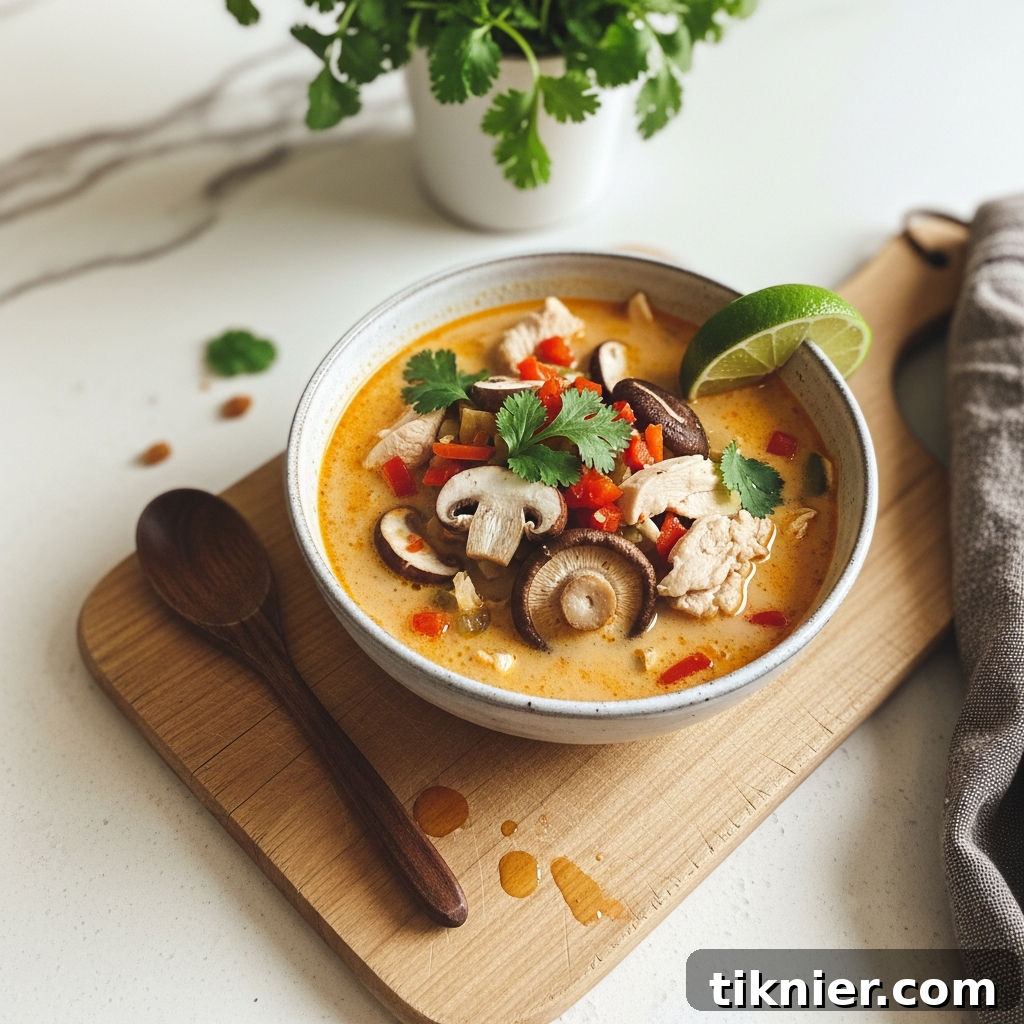
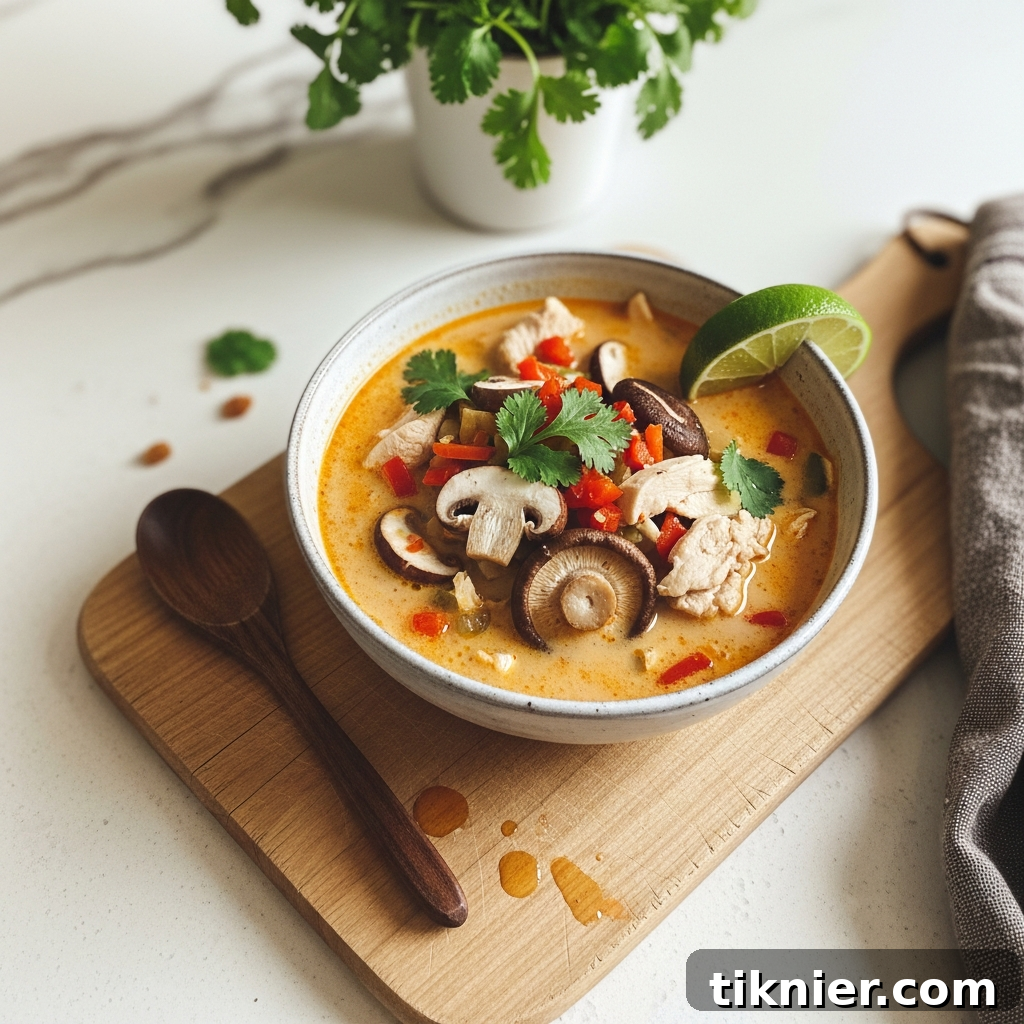
Authentic Thai Coconut Soup (Tom Kha Gai) with a Delightful Secret Twist
There are some culinary experiences that etch themselves into your memory, forever changing how you view food. For me, that moment arrived on a double date with my future husband, years before we tied the knot. It was my very first encounter with authentic Thai cuisine, and I distinctly recall the mix of excitement and apprehension as I scanned a menu filled with unfamiliar, exotic names. Our more adventurous friends took the reins, ordering a selection of dishes for the table, and the first to arrive was nothing short of a revelation: a fragrant, creamy white soup that instantly captivated my senses.
That exquisite soup was Tom Kha Gai, famously known as Thai coconut soup. It was a symphony of flavors – spicy, sour, salty, and subtly sweet – all harmonizing in a way I had never experienced before. From that very first spoonful, I was utterly smitten. I spent years chasing that elusive magic, experimenting with countless recipes in my own kitchen. While many were good, they consistently fell short of replicating the profound depth and restaurant-quality taste that had initially enchanted me. There was always a subtle element missing, a nuance that I couldn’t quite pinpoint.
Then, serendipity struck one lazy afternoon. I was preparing a completely different dish and found myself with a small jar of roasted red peppers leftover. On a pure whim, I decided to chop some finely and stir them into my simmering Tom Kha Gai. The transformation was instantaneous and profound. That was it! That was the missing piece, the subtle “something extra” that elevated the soup from good to absolutely sublime. The roasted peppers introduce a delicate, smoky sweetness that perfectly complements the rich coconut milk, the bright tang of lemongrass, and the zesty notes of galangal. It’s my unique, Southern-inspired touch on a timeless Thai classic, and it genuinely makes all the difference. This special ingredient doesn’t overpower; instead, it deepens the existing flavors, adding an extra layer of complexity that has everyone asking for the recipe.
Skip to My Special Recipe!
Why This Homemade Thai Coconut Soup Recipe Stands Out
Thai coconut soup, authentically known as Tom Kha Gai, is a culinary jewel celebrated worldwide. Its name, translating literally to “chicken galangal soup,” elegantly points to two of its foundational ingredients. The genius of this soup lies in its meticulously balanced flavor profile: the lush, creamy richness of full-fat coconut milk, the vibrant sourness from fresh lime juice, a hint of savory saltiness provided by fish sauce, and the exquisitely complex, citrusy perfume released by essential aromatics like galangal and lemongrass. It’s truly a masterclass in contrasting yet complementary tastes.
What solidifies Tom Kha Gai as a global favorite is its remarkable ability to be both deeply comforting and exhilaratingly vibrant simultaneously. It wraps you in a warm, flavorful embrace, yet each spoonful awakens your taste buds with its bright, exotic notes. It’s the kind of dish that feels sophisticated enough to grace a special dinner party table, yet surprisingly straightforward to prepare for a quick and satisfying weeknight meal. It embodies the essence of Thai hospitality and culinary artistry in a single, inviting bowl.
My particular rendition pays homage to the revered traditional roots of this magnificent soup while introducing a subtle, game-changing secret ingredient: finely chopped roasted red peppers. This unassuming addition infuses the broth with a whisper of smoky sweetness that’s hard to pinpoint, yet undeniably transformative. It’s not an ingredient that shouts for attention; rather, it weaves itself seamlessly into the existing tapestry of flavors, enhancing their depth and complexity. The roasted red peppers bridge the gap between the zesty, herbaceous aromatics and the velvety coconut base, creating a more cohesive, harmonious, and ultimately more satisfying soup. This small, unconventional twist revitalizes a familiar classic, making it feel fresh and new again, and it’s precisely why anyone who tries it invariably asks for the recipe.
Essential Ingredients for the Perfect Thai Coconut Soup
The inherent magic of this Thai coconut soup recipe springs from a carefully selected ensemble of ingredients, each playing a crucial role in the symphony of flavors. While some key aromatics might require a dedicated trip to a specialty Asian grocery store, I assure you that the effort invested will be richly rewarded by the extraordinary depth and authenticity of flavor you’ll achieve. Here’s a detailed look at what you’ll need to craft my signature Tom Kha Gai:
- 1 tablespoon coconut oil: For sautéing and adding another layer of coconut flavor.
- 1 pound boneless, skinless chicken thighs, cut into bite-sized pieces: Thighs are preferred for their tenderness and flavor.
- 2 shallots, thinly sliced: Milder and sweeter than onions, they form a delicate aromatic base.
- 4 cloves garlic, minced: A pungent aromatic that adds depth.
- 1-inch piece of galangal, thinly sliced: The cornerstone of Tom Kha Gai, offering a sharp, citrusy, and pine-like flavor.
- 2 stalks lemongrass, tough outer layers removed and bruised: Releases a bright, lemony, and floral aroma when bruised.
- 4 cups chicken broth: The liquid base, choose a good quality low-sodium broth.
- 1 (13.5 ounce) can full-fat coconut milk: Absolutely essential for the soup’s characteristic creaminess and richness.
- 8 ounces mixed mushrooms (shiitake, cremini, oyster), sliced: Adds an earthy umami dimension and texture.
- 1 tablespoon fish sauce: A non-negotiable Thai condiment providing crucial salty, savory, and umami depth.
- 1 tablespoon brown sugar: Balances the sour and spicy notes with a touch of sweetness.
- 1/4 cup finely chopped roasted red peppers (the twist): My secret ingredient for a subtle smoky sweetness.
- 2 tablespoons fresh lime juice: Added at the end for a bright, essential sour tang.
- 1/4 cup fresh cilantro, chopped: For garnish and a burst of herbaceous freshness.
- 2 Thai chilies, thinly sliced (optional, for heat): Also known as bird’s eye chilies, they offer potent heat.
- Lime wedges for serving: For an extra squeeze of brightness at the table.
Key Ingredient Notes and Tips for Success:
For achieving that truly luxurious, velvety texture that defines a great Tom Kha Gai, the choice of **full-fat coconut milk** from a can is non-negotiable. Carton varieties are typically diluted and simply won’t deliver the rich body and mouthfeel required for this dish. When it comes to the distinctive aromatics, making an effort to find fresh **galangal** is paramount. While it superficially resembles ginger, its flavor profile is uniquely sharper, more citrusy, and has a subtle pine-like quality that is absolutely fundamental to the authentic taste of Tom Kha Gai. Ginger, while delicious, is not a direct substitute and will alter the traditional flavor significantly.
Regarding the protein, I wholeheartedly endorse using **boneless, skinless chicken thighs**. Their higher fat content ensures they remain incredibly moist, tender, and flavorful throughout the gentle simmering process, far surpassing the tendency of chicken breast to dry out. And, of course, the star of my secret twist: **jarred roasted red peppers**. The trick is to chop them very finely, allowing them to melt almost imperceptibly into the soup, imparting a nuanced, smoky sweetness to every spoonful without overpowering the classic Thai flavors. This unconventional addition truly elevates the entire dish, making it undeniably special.
Step-by-Step Instructions For Crafting Thai Coconut Soup at Home
Despite its complex flavor profile, this Thai coconut soup comes together with surprising speed, provided you approach it by building layers of flavor methodically. By adhering to these steps precisely, you’ll be able to create a restaurant-quality Tom Kha Gai right in the comfort of your own kitchen. I highly recommend using a Dutch oven or any other heavy-bottomed pot to ensure optimal and even heat distribution, which is key to preventing the coconut milk from scorching or separating.
Step 1: Expertly Brown the Chicken
Begin by placing your Dutch oven or chosen pot over medium-high heat and adding the coconut oil. Allow the oil to heat until it shimmers, indicating it’s ready. Carefully add the bite-sized chicken thigh pieces to the hot oil. It’s crucial not to overcrowd the pan; if necessary, work in batches to ensure each piece gets adequate space. Your goal is to achieve a beautiful, golden-brown sear on all sides of the chicken. This browning step is not just for color; it’s fundamental for developing a deep, savory foundation, known as the Maillard reaction, which adds immense flavor. Once thoroughly browned, use a slotted spoon to remove the chicken from the pot and set it aside on a clean plate, leaving any flavorful rendered fat and browned bits in the pot.
Step 2: Sauté the Fragrant Aromatics
With the chicken removed, reduce the heat slightly if needed. In the same pot, add the thinly sliced shallots. Cook them gently, stirring occasionally, until they become translucent and begin to soften, which typically takes about 3 minutes. Next, add your minced garlic, thinly sliced galangal, and the bruised lemongrass stalks. To bruise lemongrass effectively, simply give each stalk a few firm whacks with the back of your knife or a rolling pin. This action breaks down the fibers, allowing the fragrant oils to release more readily into the soup. Continue to cook for just another minute, stirring constantly, until you can smell their incredible, unmistakable aroma. Be vigilant and careful not to let the garlic brown or burn, as burnt garlic can impart a bitter taste to your delicate soup.
Step 3: Deglaze the Pot and Initiate the Simmer
Pour the chicken broth into the pot. Immediately use a wooden spoon to firmly scrape up all the flavorful browned bits that have adhered to the bottom of the pot. This crucial technique is called deglazing, and it’s where a tremendous amount of concentrated flavor resides, enriching your broth significantly. Bring the broth to a lively simmer, ensuring all those flavorful fond bits are fully incorporated into the liquid.
Step 4: Combine Ingredients and Gently Simmer
Once the broth is simmering, carefully return the browned chicken pieces to the pot. Now, pour in the full-fat coconut milk, add the sliced mixed mushrooms, the fish sauce, and the brown sugar. Stir all the ingredients together gently to combine them thoroughly. Reduce the heat to low, ensuring that the soup maintains only a very gentle simmer. This gentle heat is vital. Allow the soup to simmer for 15 to 20 minutes, giving the flavors time to meld and the chicken to become perfectly tender. It is extremely important to monitor the heat and prevent the soup from coming to a rolling boil, as vigorous boiling can cause the delicate coconut milk emulsion to break and curdle, resulting in a grainy or separated texture.
Step 5: Introduce the Twist and Finish Flavoring
Now, it’s time to incorporate our special secret ingredient. Stir in the finely chopped roasted red peppers. Let the soup continue its gentle simmer for an additional 5 minutes. This brief period is just enough for the subtle smoky sweetness of the peppers to infuse into the broth, adding that unique layer of complexity. Finally, remove the pot completely from the heat. Stir in the fresh lime juice and the chopped fresh cilantro. If you appreciate a touch of heat, now is the moment to add the thinly sliced Thai chilies, adjusting the quantity to your preferred spice level.
Step 6: Prepare for Serving
Before you begin ladling this exquisite soup into bowls, it’s a good practice to fish out the larger, tougher pieces of lemongrass stalks and galangal slices. While they have diligently infused the soup with all their wonderful aroma and flavor, they are not meant to be eaten. Alternatively, as I often do with my family, you can simply advise your guests to eat around them. Serve the Thai coconut soup immediately, providing extra fresh lime wedges on the side for squeezing, allowing each diner to add an additional burst of brightness to their bowl.
How To Beautifully Serve Thai Coconut Soup
Serving this Thai coconut soup is an art form in itself, emphasizing both elegant presentation and delightful personalization. A soup as rich and aromatic as this deserves to be showcased beautifully. I particularly love to present it in wide, shallow bowls, which not only look sophisticated but also allow all the vibrant ingredients floating in that creamy, luscious broth to be admired. Adding a final flourish of fresh, colorful toppings right before the soup reaches the table transforms it into an extra special culinary experience.
My preferred method for serving Tom Kha Gai is to create a small, inviting toppings bar. This approach empowers each diner to customize their own bowl precisely to their liking, making the meal interactive and fun for guests, while simultaneously easing the pressure on you as the host. Here are some of my go-to toppings that always receive rave reviews:
- Fresh Cilantro: A generous sprinkle of freshly chopped cilantro provides a final burst of bright, herbaceous flavor and a beautiful green contrast.
- Sliced Thai Chilies: For those who truly appreciate a fiery kick, offering extra fresh or bird’s eye chilies on the side is an absolute must, allowing individual spice adjustment.
- Lime Wedges: An additional squeeze of fresh lime juice just before eating significantly brightens all the complex flavors, lifting the entire profile of the soup.
- Crispy Fried Shallots: These can be easily found in most Asian markets and contribute a fantastic, savory crunch that adds wonderful texture and flavor.
- Chili Oil: A delicate drizzle of chili oil not only adds a beautiful visual sheen but also introduces another nuanced layer of heat and depth.
While this Thai coconut soup is undoubtedly hearty enough to constitute a complete meal on its own, it also pairs exquisitely with a side of perfectly steamed fluffy jasmine rice. The rice serves as an ideal accompaniment, soaking up every last drop of that incredibly flavorful, creamy broth. Should you wish to expand this into a more elaborate Thai feast, the soup harmonizes beautifully with fresh, delicate spring rolls or a light and crunchy green papaya salad. Regardless of how you choose to serve it, this Tom Kha Gai recipe is undeniably guaranteed to be a showstopper at your next meal.
Storing and Reheating Thai Coconut Soup Leftovers
One of the delightful aspects of preparing this Thai coconut soup is that, like many great stews and curries, its flavors continue to deepen and meld overnight. This often makes the leftovers taste even more extraordinary the following day. Proper storage is crucial to ensuring you can fully savor it again. As with most cream-based soups, a little gentleness is required during the reheating process to maintain its luxurious texture.
Always allow the soup to cool down completely to room temperature before transferring it for storage. Once cool, transfer the entire batch to an airtight container. It’s important to ensure the container is well-sealed not only to maintain freshness but also to prevent the soup from absorbing any other ambient odors from your refrigerator. Here’s my recommended approach for storing and reheating:
- In the Refrigerator: The soup will keep beautifully and safely in the refrigerator for up to 4 days. It is entirely normal for the coconut fat to solidify and form a thick layer on top when chilled; this is a natural occurrence and will melt seamlessly back into the soup as soon as it is gently reheated.
- In the Freezer: Freezing this soup is also an option, though it’s worth noting that coconut milk can sometimes undergo a slight textural change after freezing and thawing, potentially becoming a little grainy. To freeze, pour the completely cooled soup into a freezer-safe container or a heavy-duty zip-top bag, ensuring you leave a small amount of headspace to allow for expansion. It can be stored this way for up to 3 months.
- Reheating: The absolute best way to reheat this Thai coconut soup is slowly and gently on the stovetop. Pour the desired portion of soup into a saucepan and warm it over medium-low heat, stirring occasionally, until it is heated through evenly. Absolutely avoid bringing it to a rolling boil, for the same reason you avoided it during the initial cooking process: rapid boiling can cause the coconut milk to curdle and separate. If reheating from a frozen state, I strongly advise thawing it in the refrigerator overnight first for the best results.
When you serve the reheated leftovers, I highly recommend revitalizing the flavors with another fresh squeeze of lime juice and a sprinkle of freshly chopped cilantro. This small but significant step will instantly brighten the flavors, making the soup taste nearly as vibrant and fresh as the day you first made it. It transforms it into a perfect, eagerly anticipated lunch.
Substitutions & Variations for Your Thai Coconut Soup Adventure
While I firmly believe this specific Thai coconut soup recipe, with its unique roasted red pepper twist, is perfectly balanced as is, I completely understand that culinary exploration often calls for flexibility. Whether you need to adapt to available ingredients or cater to diverse dietary preferences, the good news is that this recipe is incredibly versatile. You can confidently make several delicious swaps and additions without compromising the essential soul of the dish. It truly serves as an excellent canvas for your own creative kitchen endeavors.
From making it entirely vegetarian to enhancing it with additional vegetables or swapping out the protein, there are numerous delightful ways to customize this soup to your personal taste. Here are some of my favorite and most effective substitutions and variations to inspire your next cooking session:
- Protein Swaps: If chicken isn’t what you’re craving, this soup is absolutely fantastic with shrimp. Simply add raw, peeled, and deveined shrimp during the last 5 minutes of simmering; they cook very quickly and become tender. For a vegetarian or even vegan version, substitute the chicken with firm or extra-firm tofu, cut into cubes. For the best texture, I recommend pan-frying or air-frying the tofu cubes until golden and slightly crispy before adding them to the soup. Alternatively, you can simply increase the quantity and variety of mushrooms for a wonderfully earthy, protein-rich option.
- Vegan & Vegetarian Options: To transform this soup into a fully vegan delight, replace the chicken broth with a high-quality vegetable broth. For the savory depth traditionally provided by fish sauce, opt for a good tamari (which is also gluten-free) or a dedicated vegan fish sauce substitute, readily available in most Asian markets or health food stores. All other ingredients in this recipe are naturally plant-based.
- Galangal Substitute: Locating fresh galangal can sometimes be a challenge, depending on your geographic location. If it proves absolutely impossible to find, you can substitute it with fresh ginger. However, be aware that ginger will lend a different flavor profile—it’s spicier and less citrusy than galangal. If using ginger, I recommend adding an extra squeeze of fresh lime juice at the very end to help compensate for the missing citrus notes of galangal.
- Add More Veggies: Feel free to generously bulk up the soup with an array of additional vegetables. Sliced bell peppers (beyond the roasted red ones), crisp snap peas, tender baby corn, or crunchy bamboo shoots would all be wonderful additions. Introduce these along with the mushrooms to allow them sufficient time to soften and integrate into the broth.
- Spice It Up or Down: You are the master of the heat level in this recipe. For a milder soup, simply omit the Thai chilies entirely. The soup will still be incredibly flavorful from all the other aromatics. For those who adore a spicier kick, feel free to add more chilies than specified, or for even greater potency, you can chop them finely instead of just slicing them, or even leave some of the seeds in (where most of the heat resides). A swirl of chili crisp or a dash of Sriracha added directly to individual bowls at the table is also a fantastic way to offer adjustable heat without altering the main pot.
Don’t hesitate to experiment with these suggestions. Cooking should be an enjoyable and creative process, and this Thai coconut soup recipe provides a fantastic, flavorful canvas for your culinary imagination. No matter what small adjustments you decide to make, the core, exquisite flavors of coconut, lime, and vibrant aromatics are guaranteed to shine through, creating a truly memorable meal.
My Favorite Thai Coconut Soup (Tom Kha Gai) with a Surprising Twist
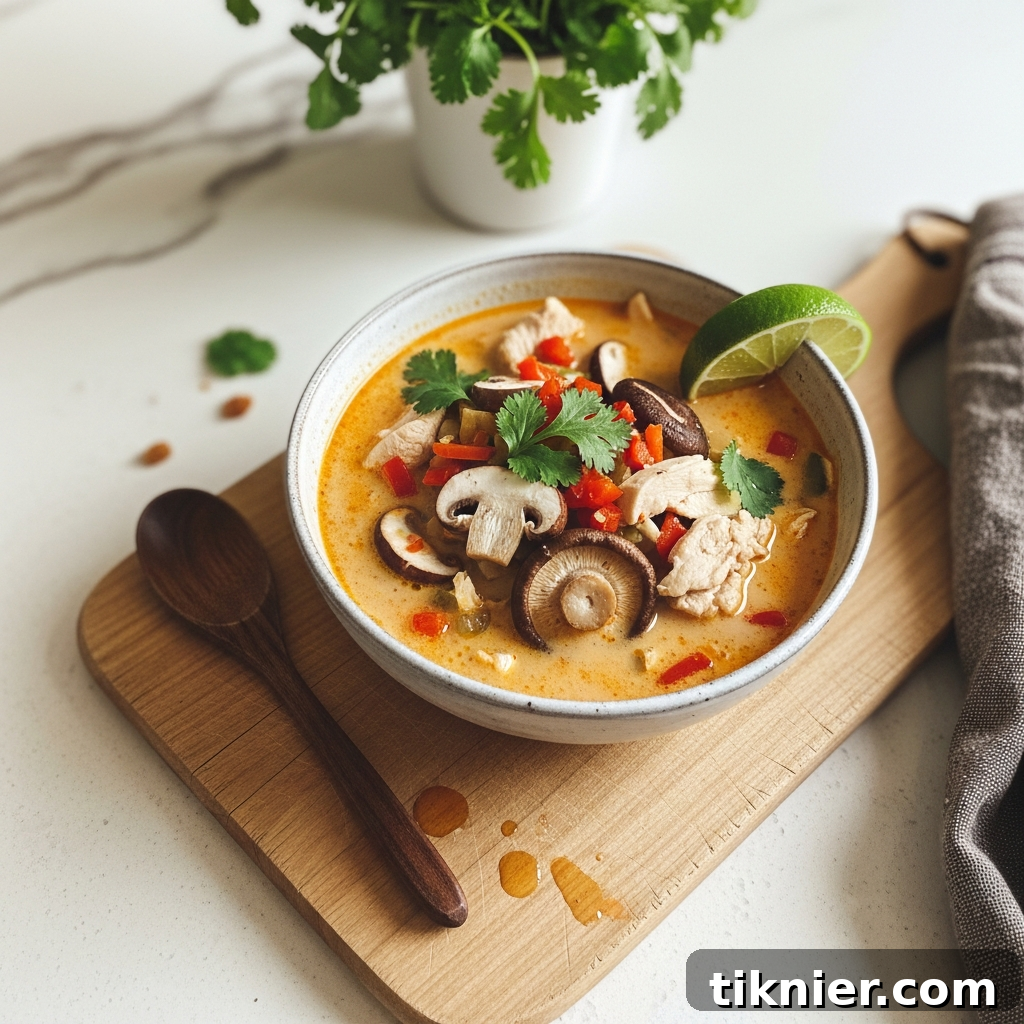
Description: A creamy and aromatic Thai coconut soup featuring tender chicken, mushrooms, and a special twist of roasted red peppers for a subtle, smoky sweetness. It’s a comforting yet vibrant dish that’s perfect for any occasion.
Yield: 6 servings | Category: Soup | Cuisine: Thai
Prep Time: 15 minutes | Cook Time: 30 minutes
Ingredients
- 1 tablespoon coconut oil
- 1 pound boneless, skinless chicken thighs, cut into bite-sized pieces
- 2 shallots, thinly sliced
- 4 cloves garlic, minced
- 1-inch piece of galangal, thinly sliced
- 2 stalks lemongrass, tough outer layers removed and bruised
- 4 cups chicken broth
- 1 (13.5 ounce) can full-fat coconut milk
- 8 ounces mixed mushrooms (shiitake, cremini, oyster), sliced
- 1 tablespoon fish sauce
- 1 tablespoon brown sugar
- 1/4 cup finely chopped roasted red peppers (the twist)
- 2 tablespoons fresh lime juice
- 1/4 cup fresh cilantro, chopped
- 2 Thai chilies, thinly sliced (optional, for heat)
- Lime wedges for serving
Instructions
- Heat coconut oil in a large pot over medium-high heat. Brown the chicken on all sides, then remove and set aside.
- In the same pot, cook shallots until softened. Add garlic, galangal, and lemongrass and cook for 1 minute until fragrant.
- Pour in chicken broth, scraping up any browned bits. Bring to a simmer.
- Return chicken to the pot. Add coconut milk, mushrooms, fish sauce, and brown sugar. Reduce heat to low and gently simmer for 15-20 minutes. Do not boil.
- Stir in the chopped roasted red peppers and simmer for 5 more minutes.
- Remove from heat. Stir in fresh lime juice, cilantro, and Thai chilies (if using).
- Remove lemongrass and galangal pieces before serving. Ladle into bowls and serve with lime wedges.
Notes
For the best flavor, use fresh galangal and lemongrass. Full-fat coconut milk is essential for a creamy texture. Adjust Thai chilies to your preferred level of spice.
Servings: 6 | Calories: 380 kcal | Fat: 28g | Carbohydrates: 10g | Protein: 24g
5 Frequently Asked Questions About Thai Coconut Soup (Tom Kha Gai)
Here are clear and concise answers to the most common questions I receive regarding this delightful Thai coconut soup recipe. I hope these insights provide you with even greater confidence as you embark on your culinary journey to recreate this dish in your own kitchen.
What is the primary difference between Tom Yum and Thai Coconut Soup (Tom Kha Gai)?
This is arguably the most common and excellent question people have, as both are iconic soups from Thailand. While they share some aromatic ingredients, such as lemongrass and galangal, they are distinctly different in their core profiles. The fundamental distinction lies in their base: Tom Kha Gai, the recipe we’re exploring, is a luxurious, coconut milk-based soup. This foundation imparts a characteristic rich, creamy, and subtly sweet quality that beautifully balances its inherent sour and spicy notes, resulting in a comforting yet vibrant experience.
In contrast, Tom Yum is a hot and sour soup primarily built on a clear broth. Its dominant flavors are typically intensely spicy from a generous use of chilies and strikingly sour from fresh lime juice, often complemented by tamarind. While some contemporary versions of Tom Yum (known as Tom Yum Nam Khon) may incorporate a splash of coconut milk for a touch of creaminess, the traditional Tom Yum remains a clear, fiery, and zesty broth. So, to summarize, envision Tom Kha Gai as the creamy, soothing, and slightly sweet cousin, while Tom Yum is its fiery, bright, and intensely sour counterpart. Both are undeniably delicious, but they offer wonderfully distinct culinary journeys.
Can I prepare Thai coconut soup in advance?
Absolutely, preparing this soup ahead of time is not only possible but highly recommended! It makes Tom Kha Gai an excellent candidate for meal prepping or getting a significant head start when hosting a dinner party. The magical truth about this soup is that its complex flavors actually have a chance to meld, deepen, and harmonize even further as it rests overnight, often tasting even better the next day. You can easily prepare the entire soup from start to finish. Once cooked, allow it to cool completely to room temperature before transferring it into an airtight container. It will keep beautifully in the refrigerator for up to four days.
When you’re ready to serve, simply reheat it gently on the stovetop over medium-low heat. Remember the golden rule: never allow it to come to a rolling boil during reheating, as this can cause the delicate coconut milk to separate and curdle. Reheating it slowly and patiently will ensure the coconut milk emulsion remains stable and the chicken stays wonderfully tender. For the freshest possible taste, I always recommend waiting to add the final fresh cilantro and an additional squeeze of lime juice until just before serving. This revives all the bright, aromatic notes, making it taste as vibrant and delicious as when it was freshly made.
Why did my Thai coconut soup curdle or separate during cooking?
The dreaded separation of coconut milk is a common concern, and the culprit is almost invariably excessive heat. Coconut milk is a delicate emulsion of fat and water. When this emulsion is subjected to overly high or prolonged boiling temperatures, it can break down, causing the soup to appear curdled, grainy, or to have a distinct layer of oil on top. The leading cause of this phenomenon is boiling the soup vigorously after the coconut milk has been incorporated. This is precisely why my instructions consistently emphasize maintaining a very gentle simmer and never allowing the soup to reach a rolling boil once the coconut milk is added.
To effectively prevent this, ensure that you reduce the heat to low as soon as you add the coconut milk. You should only see a few lazy, occasional bubbles on the surface, not a rapid, active boil. Gentle, infrequent stirring while it simmers can also help maintain the emulsion. If, despite your best efforts, your soup does happen to separate slightly, don’t despair entirely. Sometimes, immediately removing the pot from the heat and whisking the soup vigorously for a minute or two can help to partially bring it back together. While the texture might not be perfectly smooth, the flavor will almost certainly remain delicious and enjoyable.
Where can I find specialty ingredients like galangal and lemongrass for Thai coconut soup?
Sourcing these distinctive aromatic ingredients is often the biggest hurdle for home cooks embarking on authentic Thai cuisine, but fortunately, they are becoming increasingly accessible. Your absolute best resource will almost always be a local Asian market or international grocery store. These establishments typically stock fresh galangal, lemongrass, and Thai chilies in abundance, often at very reasonable prices. These markets are also excellent places to find high-quality fish sauce and a wider selection of full-fat coconut milk brands.
If there isn’t an Asian market conveniently located nearby, many larger, well-stocked mainstream grocery stores are now expanding their international or produce sections to include these items. Look for fresh lemongrass near the other fresh herbs. Sometimes, you might even discover frozen galangal in these markets, which works perfectly well and is a great option if fresh isn’t available. As a last resort, some brands offer galangal and lemongrass in paste form, but it’s important to note that the fresh ingredients truly deliver a superior and more vibrant flavor that is worth seeking out if at all possible.
Is this Thai coconut soup recipe inherently spicy?
The wonderful thing about this Thai coconut soup recipe is that you are in complete control of its spice level. The heat in this particular soup comes from the inclusion of Thai chilies, also widely known as bird’s eye chilies. These small peppers are quite potent, so a little truly goes a long way. As written, with two thinly sliced chilies added towards the end of the cooking process, the soup will possess a pleasant, mild to medium background warmth. This level of heat is generally well-tolerated by most palates and serves to complement the creamy coconut milk rather than overwhelm it.
If you prefer a very mild soup, you can simply omit the Thai chilies altogether. The soup will still be incredibly flavorful, brimming with the rich aromas of galangal, lemongrass, and lime. Conversely, if you are a dedicated spice enthusiast, feel free to increase the number of chilies added. For an even more intense kick, you can finely chop the chilies instead of just slicing them, or even leave some of the seeds in, as the seeds contain the majority of the capsaicin (the compound responsible for the heat). My personal favorite method, and one I highly recommend, is to serve the sliced chilies on the side, allowing each person at the table to customize their bowl with as much or as little heat as they desire.
Continue Your Culinary Journey: Try These Related Recipes Next
If you thoroughly enjoyed the warm, complex, and comforting flavors found in this Thai-inspired soup, I have a few other recipes in my collection that I am confident you will adore just as much. These dishes build on similar aromatic profiles and creamy textures, offering new ways to savor the essence of Thai cuisine.
- Crock Pot Thai Chicken Soup: For those bustling days when you crave maximum flavor with minimal effort, this slow cooker rendition delivers all the beloved Thai flavors. Simply set it and forget it for a delicious, comforting meal waiting for you.
- Thai Coconut Curry Chicken: This recipe takes the familiar flavor palette of Tom Kha Gai but transforms it into a rich, hearty, and deeply satisfying curry. It’s perfect when served generously over a bed of fragrant jasmine rice, creating a complete and fulfilling meal.
- Coconut Curry Chicken Thighs: Discover the magic of a one-pan meal where succulent chicken thighs are braised slowly in a luscious coconut curry sauce. The result is fall-off-the-bone tender chicken infused with incredible flavor, making for an effortless yet impressive dinner.
I sincerely hope these suggestions provide you with delightful inspiration for your next culinary adventure and help you continue exploring the vibrant world of Thai-inspired cooking!