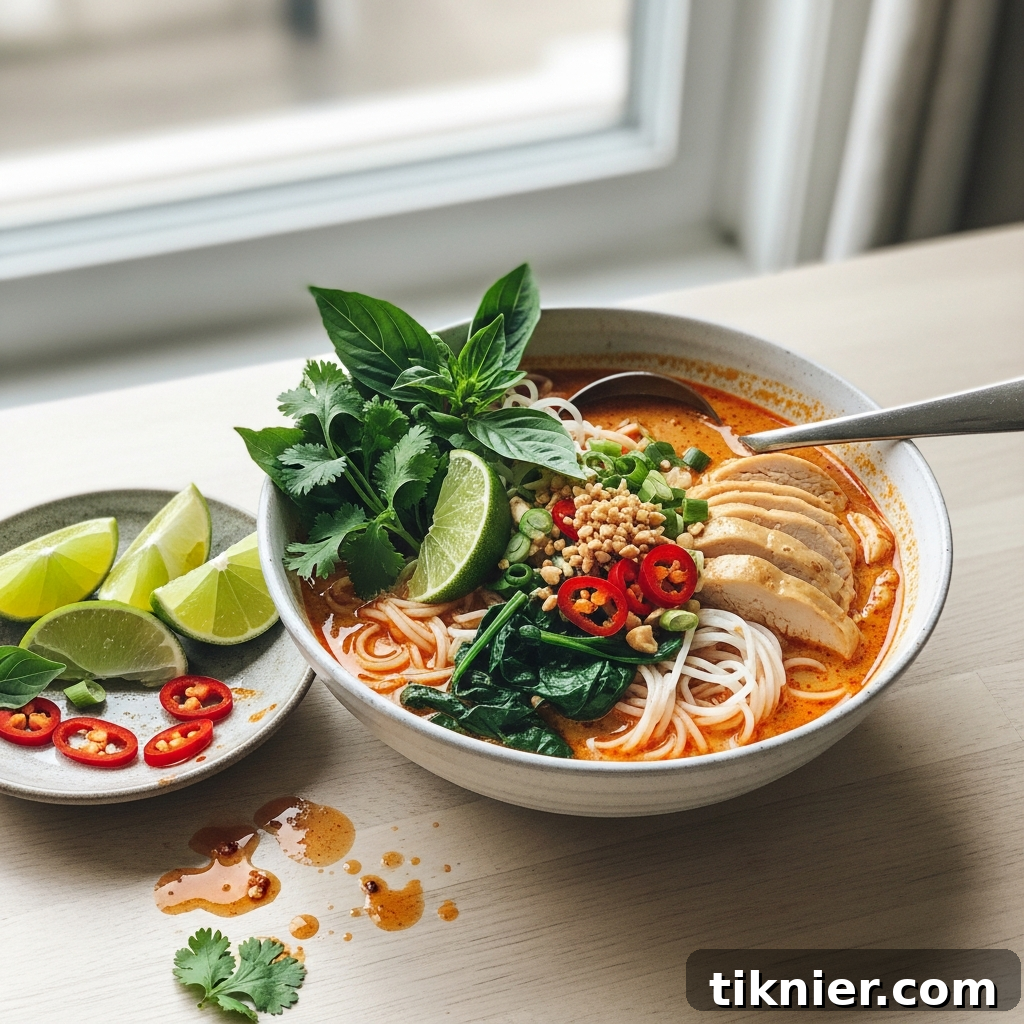
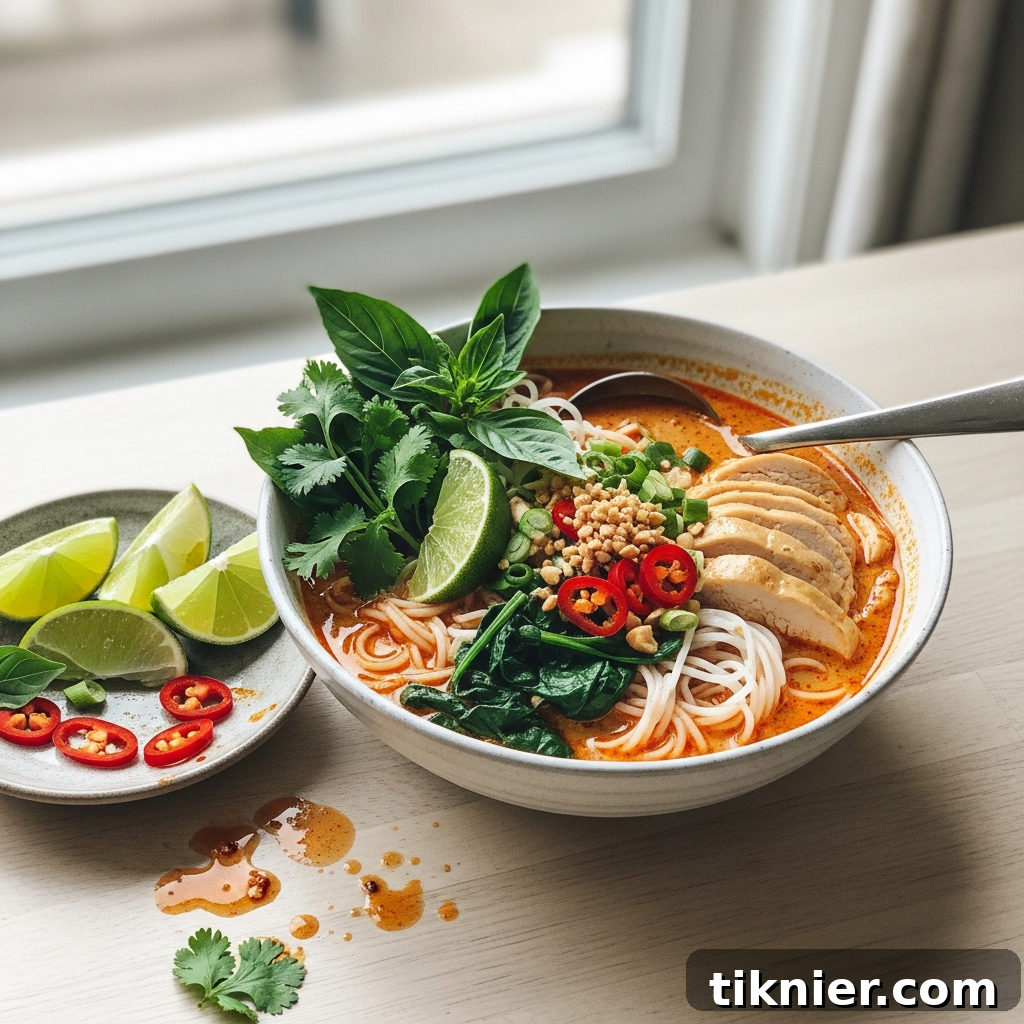
A few years ago, my husband and I celebrated our anniversary with a romantic getaway to Charleston, South Carolina. One afternoon, an unexpected downpour caught us off guard, sending us scrambling for the nearest shelter. We ducked into a small, unassuming Thai restaurant, drawn in by the intoxicating aromas wafting from within. The moment we stepped inside, we were enveloped by a symphony of fragrant spices – lemongrass, ginger, and coconut – promising a culinary adventure. We both ordered the house special: a creamy chicken noodle soup. With the first spoonful, I knew we had stumbled upon something truly magical. It was rich, incredibly flavorful, and offered the perfect warmth and comfort needed on that damp, chilly day. That bowl of Thai noodle soup left an indelible mark on my memory, a taste I yearned to recreate.
Upon returning home, that exquisite soup became an obsession. For weeks, I experimented, attempting to capture its elusive depth and complexity. Each attempt, while good, lacked that certain something – a profound richness that I couldn’t quite pinpoint. Then, during a late-night cooking session for an entirely different dish, inspiration struck. My go-to secret for adding savory depth to countless recipes, white miso paste, might just be the missing ingredient for my perfect Thai chicken noodle soup.
I understand that incorporating Japanese miso paste into a traditional Thai dish might raise an eyebrow or two, but it proved to be the transformative twist this classic recipe needed. The white miso paste, with its delicate yet profound umami profile, provided the rich, savory backdrop that allowed the vibrant coconut and aromatic red curry flavors to truly sing. It’s my little Southern gal’s secret, an unconventional yet remarkably effective addition that elevates this homemade Thai noodle soup to an extraordinary level, making it taste deeply authentic yet uniquely my own.
This is the perfected recipe, the culmination of those culinary experiments, capturing the essence of that rainy Charleston afternoon. It’s a dish that not only warms the body but also transports the soul, bringing a taste of distant memories right into the comfort of my home, with my special touch that makes it truly unforgettable.
Jump to My Signature Recipe Card!
Unlocking the Magic: Why This Thai Noodle Soup Recipe Stands Out
Thai cuisine is renowned globally for its intricate balance of sweet, sour, salty, and spicy notes, creating dishes that are both exhilarating and deeply comforting. Noodle soups, a beloved cornerstone of this culinary tradition, boast diverse regional variations such as the iconic Khao Soi from Chiang Mai or the bracingly hot and sour Tom Yum. These vibrant dishes have captivated palates worldwide, offering a wholesome, engaging meal that truly stimulates all the senses.
My unique rendition of creamy Thai noodle soup respectfully honors this rich tradition while infusing it with an unexpected, yet harmonious, twist. The primary goal was to craft a broth that was extraordinarily creamy and profoundly savory, without feeling heavy or overwhelming. This delicate balance is precisely where my secret ingredient, premium white miso paste, comes into play. This ingenious trick, honed over years of cooking, consistently works wonders in enhancing the complexity and depth of various soups and stews.
White miso paste, a lightly fermented soybean paste traditionally used in Japanese cooking, effortlessly dissolves into the luscious coconut milk and chicken broth base. The result is an incredible layer of umami – that elusive fifth taste characterized by a deeply satisfying, savory richness. This umami quality is what makes you crave another spoonful, drawing you back for more, long after your first taste. It masterfully rounds out the fiery kick from the red curry paste and perfectly complements the subtle sweetness of the coconut milk, creating a synergy that feels nothing short of magical. This simple addition allows the broth to achieve a complexity and depth of flavor that typically requires hours of slow simmering to develop.
This subtle, yet impactful, twist is the defining characteristic that makes my Thai noodle soup with chicken truly exceptional. It delivers that coveted restaurant-quality depth of flavor directly to your kitchen, all accomplished in under an hour. It’s a familiar enough dish to provide ultimate comfort, yet possesses a special, intriguing touch that will undoubtedly have your family and friends eager to uncover your culinary secret.
Essential Ingredients for Crafting Your Perfect Thai Noodle Soup
The enchanting flavor profile of this soup is born from the thoughtful layering of fresh, aromatic ingredients. While the ingredient list might appear somewhat extensive, I assure you that each component plays a crucial, irreplaceable role in constructing that magnificent flavor. Resist the urge to cut corners, especially with the fresh produce and aromatics, as their quality profoundly impacts the final taste!
My star ingredient, the secret weapon that truly sets this recipe apart, is the white miso paste. It imparts a subtle, yet deeply savory umami that transcends what mere salt can offer. This is my cherished secret to creating a broth that tastes as if it has been lovingly simmered for an entire day, effortlessly. You can typically locate white miso paste in the refrigerated section of most well-stocked grocery stores, often alongside tofu, other fermented products, or in the international foods aisle.
Here’s a comprehensive list of everything you’ll need to create this incredibly flavorful and comforting Thai noodle soup:
- 8 oz Rice Noodles: Flat rice noodles (like Pad Thai noodles) are ideal for their texture and ability to absorb broth without becoming mushy.
- 1 tbsp Coconut Oil: Used for sautéing, it adds a subtle tropical note that complements the other flavors beautifully.
- 1 lb Boneless, Skinless Chicken Thighs, thinly sliced: I highly recommend using thighs over breasts here. Their slightly higher fat content ensures they remain wonderfully tender, juicy, and flavorful even after simmering in the soup, preventing any dryness.
- 1 Medium Yellow Onion, thinly sliced: Provides a foundational sweetness and aromatic base when sautéed.
- 2 Carrots, julienned: Adds natural sweetness, vibrant color, and a pleasant textural contrast.
- 1 Red Bell Pepper, thinly sliced: Contributes a mild sweetness, beautiful color, and a slight crispness to the vegetable medley.
- 4 Cloves Garlic, minced: Fresh garlic is paramount! The pre-minced jarred variety simply lacks the pungent, vibrant punch that fresh cloves deliver.
- 1 tbsp Fresh Ginger, grated: Just like the garlic, use fresh ginger root for that invigoratingly zesty, warm, and slightly peppery spice.
- 2 tbsp Red Curry Paste: This is where much of the soup’s characteristic heat and Thai flavor comes from. Be mindful that brand-to-brand spice levels can vary, so starting with two tablespoons is a safe bet; you can always add more later if you prefer a hotter soup.
- 2 tbsp White Miso Paste: My signature twist! This fermented soybean paste introduces an unparalleled umami depth, transforming the broth and elevating the entire dish to a new dimension of flavor.
- 4 Cups Chicken or Vegetable Broth: The liquid base for your nourishing soup. Use a high-quality broth for the best flavor.
- 1 (13.5 oz) can Full-Fat Coconut Milk: Absolutely essential for achieving that luxuriously creamy, rich, and authentic broth texture. Using “light” coconut milk will result in a significantly thinner, less satisfying soup.
- 1 tbsp Fish Sauce: A non-negotiable ingredient in authentic Thai cooking. It adds a crucial salty, savory, and complex umami dimension that rounds out the flavors. Don’t omit it!
- 1 tbsp Brown Sugar: A small amount to beautifully balance the saltiness of the fish sauce and the spice of the curry, enhancing the overall harmony of the dish.
- 2 Cups Fresh Spinach: Stirred in at the very end, it wilts quickly, adding a burst of fresh green, vitamins, and a gentle earthy note.
- 1 Lime, juiced: A final squeeze of fresh lime juice brightens all the flavors, adding a necessary tangy, zesty finish that lifts the entire soup.
- For Garnish:
- Fresh Cilantro, chopped: Adds a fresh, herbaceous, and slightly citrusy finish.
- Fresh Thai Basil Leaves: Offers a distinct anise-like flavor, characteristic of many Thai dishes.
- Lime Wedges: For an additional burst of fresh acidity at the table.
- Sliced Red Chilies: For those who love an extra fiery kick, allowing individual customization.
- Chopped Peanuts: Provides a delightful crunch and nutty flavor, enhancing the texture profile.
The garnishes are far more than mere decoration; they are integral components that introduce layers of fresh, bright flavors, vibrant colors, and wonderful textural contrasts that complete the soup. I wholeheartedly recommend preparing them all and setting them out in small, separate bowls. This creates an inviting ‘topping bar’ experience, allowing everyone to personalize their bowl of Thai noodle soup to their exact preference, making each serving a unique culinary creation.
Mastering Your Kitchen: Step-by-Step Instructions for Making Thai Noodle Soup
Get ready to create something truly delicious! This flavorful Thai noodle soup comes together surprisingly quickly, making it an ideal choice for a satisfying weeknight meal or a special weekend treat. The secret to a smooth and enjoyable cooking process lies in proper preparation, a technique professional chefs refer to as ‘mise en place’. Before you even turn on the stove, ensure all your vegetables are sliced, garlic minced, ginger grated, and every ingredient is measured and ready. This organized approach guarantees a seamless cooking experience, letting you focus on the delightful aromas and flavors.
I find that a large Dutch oven is my preferred vessel for this recipe. Its excellent heat retention properties and ample space allow for comfortable stirring without the worry of splashing broth all over your stovetop. However, any large, heavy-bottomed pot will yield equally fantastic results.
Step 1: Perfectly Prepare Your Rice Noodles
Begin by cooking your rice noodles precisely according to the package instructions. This step is critically important: always cook the noodles separately and *never* directly in the soup pot. If you cook them in the broth, they will inevitably absorb too much liquid, becoming unpleasantly gummy and overcooked, ruining their texture. Once fully cooked, drain them thoroughly, then rinse them with cool water. This stops the cooking process and prevents them from sticking together. For an extra measure, a light toss with a teaspoon of sesame or coconut oil can ensure they remain perfectly separate and ready for serving.
Step 2: Expertly Brown the Chicken
Place your Dutch oven or large pot over medium-high heat and add the coconut oil. Once the oil is shimmering and hot, add your thinly sliced chicken thighs. It’s crucial not to overcrowd the pan; you may need to cook the chicken in two batches to ensure proper browning. Allow the chicken to sear undisturbed until it develops a beautiful golden-brown crust on all sides. This browning step is absolutely vital for building foundational flavor; those caramelized bits that adhere to the bottom of the pot are pure flavor gold. Once perfectly cooked, remove the chicken using a slotted spoon and set it aside.
Step 3: Sauté the Vibrant Vegetables
Using the same pot with any remaining oil and delicious chicken drippings, add your thinly sliced onion, julienned carrots, and red bell pepper. Sauté these vegetables for approximately 5 to 7 minutes, stirring occasionally. You’re aiming for them to soften slightly and begin to develop a hint of color, which will contribute a wonderful natural sweetness and depth to your soup base.
Step 4: Infuse with Aromatic Powerhouses
Now, add your minced garlic and grated fresh ginger to the softened vegetables. Stir them continuously for about one minute. You’ll know they are ready when their intoxicating aromas become wonderfully fragrant and fill your kitchen. Be vigilant during this step; garlic can burn quickly, and burnt garlic will impart an undesirable bitter taste to your entire dish, so keep it moving!
Step 5: Bloom the Flavorful Pastes
Reduce the heat slightly to medium-low. Add the red curry paste and my secret ingredient, the white miso paste, to the pot. Stir these pastes constantly into the vegetables for about one minute. This essential technique, known as “blooming,” gently toasts the pastes, which profoundly enhances their inherent flavors and releases their full aromatic potential. It’s a small, quick step that makes an enormous difference in the depth and complexity of your Thai chicken noodle soup broth.
Step 6: Craft the Silky Broth Base
Carefully pour in the chicken broth and the full-fat coconut milk. Immediately grab a whisk and vigorously stir everything together, making sure to scrape up any of those delectable browned bits that might be clinging to the bottom of the pot. Continue whisking until both the curry paste and the miso paste are completely dissolved into the liquid, creating a beautifully smooth, uniform, and rich broth.
Step 7: Gentle Simmer and Perfect Seasoning
Bring the soup to a gentle simmer. Once simmering, immediately reduce the heat to low. It’s important to avoid a rolling boil, as vigorous boiling can cause the delicate coconut milk to separate, resulting in an oily texture. A light, lazy simmer is all that is required. Stir in the fish sauce and brown sugar. Allow the soup to continue simmering gently for at least 5 to 7 minutes. This crucial time allows all those wonderful flavors to meld, deepen, and truly harmonize.
Step 8: Reintroduce and Infuse the Chicken
Carefully return the previously cooked chicken back into the pot, nestling it into the simmering broth. Let the chicken gently simmer in the flavorful liquid for at least 10 minutes. This ensures that the chicken becomes incredibly tender and succulent while fully absorbing all the delicious, nuanced flavors of the soup it’s bathing in.
Step 9: Finish with Freshness and Zest
Just moments before you are ready to serve, stir in the fresh spinach and the freshly squeezed lime juice. The residual heat from the broth will gently wilt the spinach in just a minute or two, maintaining its vibrant color and fresh texture. Adding these delicate ingredients at the very end preserves their bright, fresh flavors and nutritional integrity, ensuring they aren’t overcooked.
Step 10: Artful Assembly and Serving
To serve your exquisite Thai noodle soup, place a generous portion of the perfectly cooked rice noodles into each individual serving bowl. Ladle the hot, fragrant, and creamy soup generously over the noodles, ensuring each bowl receives a good amount of tender chicken and vibrant vegetables. Now comes the most enjoyable part: arranging all the prepared garnishes in little bowls and allowing everyone at the table to customize their own perfect, flavor-packed bowl!
The Art of Presentation: How to Serve Thai Noodle Soup
Serving this magnificent creamy Thai noodle soup is nearly as rewarding as the cooking process itself. Given that the garnishes contribute so significantly to both the flavor and texture, I absolutely adore transforming dinner into an interactive, communal experience. This approach instantly makes the meal feel special and engaging, even on an ordinary Tuesday evening.
My preferred method for serving involves creating a delightful ‘toppings bar’ either on the kitchen counter or directly in the center of the dining table. I arrange all the garnishes in small, separate bowls, allowing each person the freedom to customize their soup precisely to their liking. This simple, thoughtful touch genuinely elevates the meal, fostering engagement and enhancing everyone’s dining pleasure, turning a simple soup into a personalized culinary event.
Here are some of my favorite garnishes and thoughtful serving suggestions to elevate your Thai noodle soup experience:
- An Interactive Toppings Bar: Lay out small bowls filled with an abundance of fresh, chopped cilantro, fragrant Thai basil leaves (their distinctive anise-like scent is heavenly), extra lime wedges for a burst of fresh acidity, thinly sliced red chilies or jalapeños for those who crave extra heat, and crunchy chopped peanuts for a delightful textural contrast. Fresh bean sprouts are another excellent addition, offering a crisp, refreshing crunch.
- Thoughtful Presentation: Serve your soup in wide, shallow bowls. This not only creates a visually appealing presentation but also makes it considerably easier for diners to gather a perfect spoonful, ensuring a harmonious blend of noodles, chicken, vegetables, and all their chosen toppings in every single bite.
- Perfect Beverage Pairings: For an ideal beverage companion, a crisp, light beer such as a lager or a pilsner provides a refreshing contrast, beautifully cutting through the richness of the coconut milk. If wine is your preference, a dry Riesling or a zesty Sauvignon Blanc are superb choices, as their bright acidity and aromatic profiles perfectly complement the soup’s complex spices.
- Non-Alcoholic Refreshment: For those preferring a non-alcoholic option, a sparkling limeade offers a wonderfully refreshing, tangy counterpoint. Alternatively, a simple iced green tea, perhaps garnished with a fresh sprig of mint, provides a soothing and palate-cleansing accompaniment.
Regardless of how you choose to present it, the key is to savor and enjoy the entire experience. The vibrant colors of the soup and its array of fresh toppings create a truly stunning visual feast. It’s a meal designed to be enjoyed not only by the palate but also by the eyes, fostering connection and creating cherished memories with loved ones.
Maximizing Your Meal: How to Store & Reheat Leftover Thai Noodle Soup
One of the many joys of preparing a large pot of delicious soup is the promise of wonderful leftovers for the days that follow. This creamy Thai noodle soup is particularly fantastic the next day, as the flavors within the broth have even more time to intermingle and deepen, creating an even more harmonious profile. However, there’s a crucial trick to storing it correctly to ensure that your second serving is just as delightful and texturally perfect as the first.
The golden rule for preserving the quality of any noodle soup is to store its primary components separately. If you store the noodles directly in the broth, they will continue to absorb liquid, inevitably becoming soft, swollen, and unpleasantly mushy. Nobody desires a bowl of gummy noodles! Taking a couple of extra minutes to store everything properly makes an immense difference, guaranteeing a perfectly satisfying round two.
Here’s my proven method for effectively storing and reheating your leftover Thai noodle soup:
- Separate the Broth: Allow the flavorful soup base (which includes the rich broth, tender chicken, and vibrant vegetables) to cool down completely to room temperature. Once cooled, transfer it into an airtight container. Stored this way, it will keep beautifully in the refrigerator for up to 4 days, with flavors often improving overnight.
- Isolate the Noodles: Any leftover cooked rice noodles should be stored in a completely separate airtight container in the refrigerator. To prevent them from clumping together into an unappealing noodle brick, I highly recommend tossing them with just a teaspoon of a neutral oil, such as canola, vegetable, or even a little extra coconut oil.
- Maintain Garnish Freshness: Store any leftover fresh garnishes, like chopped cilantro, Thai basil, or sliced chilies, separately as well. To keep them vibrant and prevent wilting, wrap them loosely in a slightly damp paper towel and place them inside a zip-top bag before refrigerating.
- Reheating for Perfection: When you’re ready to enjoy your leftovers, gently reheat the soup base on the stovetop over medium-low heat until it is thoroughly warmed through. Avoid bringing it to a rolling boil, as this can still cause the coconut milk to separate. While the soup base is reheating, you can quickly refresh the stored noodles. Place them in a colander and pour a little hot water over them for just a few seconds, then drain them exceptionally well. Finally, assemble your bowl precisely as you did the first time: place the refreshed noodles at the bottom, then ladle the hot, aromatic soup generously over the top.
Should you find yourself with leftover broth but no noodles, do not let that liquid gold go to waste! The broth alone is a flavor powerhouse. You can repurpose it as a fantastic, aromatic base for cooking rice or quinoa, infusing your grains with wonderful Thai-inspired flavors. It also makes an incredibly delicious and healthy poaching liquid for delicate fish like cod or salmon, creating a quick, light, and incredibly flavorful meal.
Creative Culinary Swaps: Substitutions & Variations for Thai Noodle Soup
One of the aspects I truly cherish about this Thai noodle soup recipe is its remarkable adaptability. It serves as a fantastic culinary template, allowing you to effortlessly tweak it to align with your personal taste preferences, accommodate dietary needs, or simply make use of whatever fresh ingredients you happen to have on hand in your refrigerator. Please, do not hesitate to experiment, play around, and truly make this recipe your own unique creation!
Whether your goal is to change the protein, convert it into a vegetarian or vegan delight, or simply adjust the spice level, there are numerous straightforward swaps you can implement without compromising on that incredible flavor profile. Think of this recipe not as a rigid set of rules, but rather as an inspiring starting point for your own culinary creativity and exploration.
Here are some of my favorite and most frequently used substitutions and variations for this versatile Thai noodle soup:
- Protein Power Plays: If chicken isn’t calling your name, this soup is absolutely sensational with shrimp. For shrimp, simply add the raw, peeled, and deveined shrimp during the last few minutes of the soup’s simmering time; they will turn perfectly pink and tender in no time. For a wonderfully satisfying vegetarian or vegan alternative, consider pan-frying some firm, well-pressed tofu cubes until they are beautifully golden brown and crispy, then stir them into the soup at the very end. Shredded pork or beef also make excellent additions for a heartier meal.
- Crafting a Vegan Masterpiece: To transform this already delicious recipe into a completely vegan dish, make a few simple yet effective substitutions. Replace the chicken broth with an equal amount of high-quality vegetable broth. For the fish sauce, swap it out for an equal measure of tamari or soy sauce, which provides a similar savory depth. Your main protein can then be pan-fried tofu, tempeh, or an abundance of extra vibrant vegetables.
- Vegetable Ventures: This soup offers an ideal opportunity to clear out your crisper drawer! Sliced shiitake or cremini mushrooms, tender baby bok choy, crisp snap peas, or robust broccoli florets would all make incredibly delicious and nutritious additions. Simply add these extra vegetables alongside the bell peppers and carrots during the sautéing stage to ensure they cook to your desired tenderness.
- Spice It Up (or Down) to Perfection: The primary source of heat in this soup originates from the red curry paste. If you are a fervent lover of spicy food, feel free to boldly add another tablespoon (or even more, to taste!) of curry paste, or generously garnish your bowl with extra fresh, thinly sliced chilies. Conversely, if you are sensitive to heat, you can easily reduce the amount of curry paste you use, perhaps starting with just one tablespoon, or opt for a mild brand of red curry paste, which are readily available in most stores.
- Noodle Novelty: While traditional flat rice noodles are the classic choice and work beautifully, you are certainly not limited to just one type. Thin rice vermicelli noodles offer a lighter, more delicate texture if you prefer. In a pinch, or for a different culinary experience, ramen noodles (discarding their seasoning packets) or even whole wheat spaghetti can be successfully used. The crucial point, regardless of your noodle choice, is always to cook them separately according to their specific package directions and add them directly to your serving bowls just before ladling in the hot soup.
Embracing experimentation with recipes is an inherent part of the joy and discovery in cooking. These simple, thoughtful changes can empower you to create a version of this exceptional Thai noodle soup that is perfectly tailored and deliciously suited for you and your beloved family.
Julie’s Creamy Thai Noodle Soup with a Secret Twist
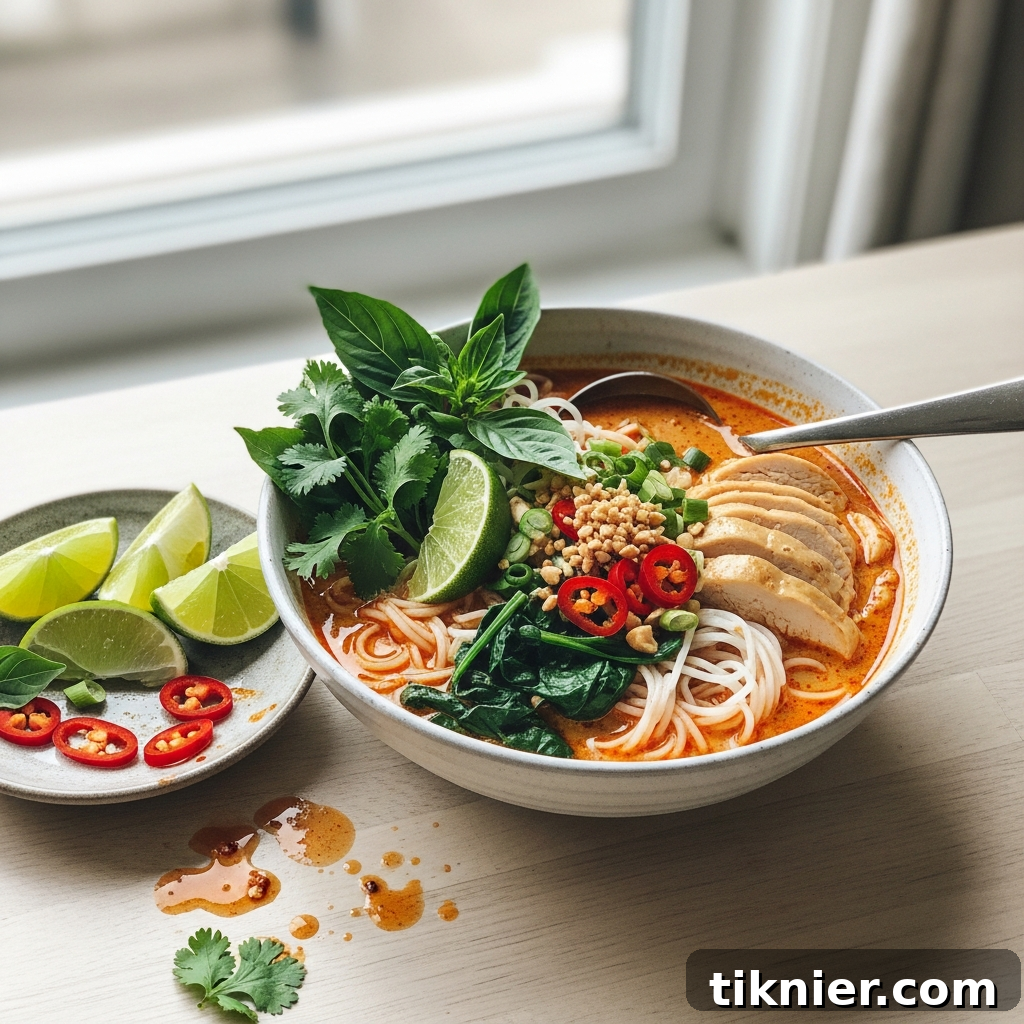
Description: A rich and exceptionally creamy Thai-inspired noodle soup featuring tender chicken, fresh, vibrant vegetables, and a unique, secret ingredient – white miso paste – which delivers an incredible depth of umami flavor. This comforting, aromatic meal comes together quickly, in under an hour, making it perfect for any day of the week!
Yield: 4-6 servings | Category: Soup | Cuisine: Thai-Inspired
Prep Time: 15 minutes | Cook Time: 30 minutes
Ingredients
- 8 oz flat rice noodles
- 1 tbsp coconut oil
- 1 lb boneless, skinless chicken thighs, thinly sliced
- 1 medium yellow onion, thinly sliced
- 2 carrots, julienned
- 1 red bell pepper, thinly sliced
- 4 cloves garlic, minced
- 1 tbsp fresh ginger, grated
- 2 tbsp red curry paste
- 2 tbsp white miso paste (key secret ingredient!)
- 4 cups chicken or vegetable broth
- 1 (13.5 oz) can full-fat coconut milk
- 1 tbsp fish sauce
- 1 tbsp brown sugar
- 2 cups fresh spinach
- 1 lime, juiced
- For Garnish: Fresh cilantro (chopped), Thai basil leaves, lime wedges, sliced red chilies, chopped peanuts
Instructions
- Cook rice noodles according to their package directions. Drain thoroughly, rinse with cool water to prevent sticking, and set aside.
- In a large pot or Dutch oven, heat coconut oil over medium-high heat. Add the thinly sliced chicken thighs and brown them nicely on all sides. Remove the cooked chicken from the pot and set it aside.
- To the same pot, add the sliced onion, julienned carrots, and red bell pepper. Sauté for 5-7 minutes, stirring occasionally, until the vegetables begin to soften.
- Stir in the minced garlic and grated ginger, cooking for just 1 minute until fragrant. Be careful not to burn the garlic.
- Reduce heat to medium-low. Add the red curry paste and white miso paste, stirring constantly into the vegetables for about 1 minute to “bloom” the flavors.
- Pour in the chicken (or vegetable) broth and the full-fat coconut milk. Whisk vigorously until the curry and miso pastes are fully dissolved and the broth is smooth. Bring the mixture to a gentle simmer.
- Stir in the fish sauce and brown sugar. Return the browned chicken to the pot. Reduce heat to low and simmer gently for 10 minutes, allowing the flavors to meld and the chicken to tenderize.
- Just before serving, stir in the fresh spinach and the fresh lime juice. Cook for 1-2 minutes until the spinach has wilted.
- To serve, divide the cooked rice noodles among individual bowls. Ladle the hot, fragrant creamy Thai noodle soup over the noodles. Garnish generously with fresh cilantro, Thai basil, lime wedges, sliced chilies, and chopped peanuts as desired.
Notes
For optimal flavor and texture, store any leftover soup base (broth, chicken, and vegetables) and cooked noodles in separate airtight containers in the refrigerator. When reheating, gently warm the soup base on the stovetop; avoid bringing it to a rolling boil, as this can cause the coconut milk to separate. A gentle simmer is all that is needed to warm it through.
Servings: 6 | Calories: 550 kcal | Fat: 30g | Carbohydrates: 40g | Protein: 35g
Frequently Asked Questions About This Unique Thai Noodle Soup
Here, I’ve compiled straightforward and comprehensive answers to the most common inquiries I receive about this distinctive Thai noodle soup recipe, ensuring you have all the information you need for a successful culinary journey.
What makes this Thai noodle soup recipe truly unique and special?
What truly sets this creamy Thai noodle soup recipe apart, elevating it beyond traditional versions, is the clever and strategic inclusion of white miso paste. While admittedly not a traditional ingredient in authentic Thai culinary practices, it’s my secret twist that imparts an unparalleled layer of savory depth, often referred to as umami, directly into the broth. Classic Thai soups are celebrated for their masterful balance of sweet, sour, spicy, and salty flavors. The white miso paste specifically amplifies and enriches the salty and savory elements in a remarkably complex way, creating a harmonious counterpoint to the luscious coconut milk and the piquant red curry paste.
Essentially, this single, simple ingredient performs a culinary miracle: it bestows upon the broth a deep, “long-simmered” taste and body in just a fraction of the time typically required. It contributes to a richer, more velvety, and utterly satisfying soup base without making it heavy or overly salty. It’s a subtle yet impactful addition that transforms a perfectly good homemade soup into something that tastes profoundly sophisticated and truly restaurant-quality. It’s my small, but mighty, secret for making this comforting classic truly unforgettable and distinctively delicious.
Can I prepare this Thai noodle soup in advance for meal prep or entertaining?
Absolutely! This Thai noodle soup with chicken is an excellent candidate for advance preparation, making it perfect for efficient meal prepping during the week or for effortlessly entertaining guests. The key to successful make-ahead preparation lies in correctly storing the individual components. The best approach is to fully prepare the soup base – meaning the flavorful broth, tender chicken, and vibrant vegetables. Once cooked, allow it to cool down completely to room temperature. Then, transfer the soup base into an airtight container and refrigerate it for up to 3 days. You’ll often find that the flavors actually meld and deepen beautifully overnight, enhancing the soup’s overall deliciousness.
It is crucial to withhold adding the noodles and the final fresh ingredients (such as spinach and lime juice) until you are just moments away from serving. Cook the rice noodles fresh, following their package directions, immediately before your meal. When it’s time to eat, gently reheat the soup base on the stovetop over medium-low heat until it is piping hot. Once simmering, stir in the fresh spinach and a squeeze of lime juice, then ladle this vibrant, hot soup over your freshly cooked noodles. This method ensures that your noodles remain perfectly al dente and your fresh garnishes retain their bright, zesty character and nutritional value.
How can I effectively adjust the spice level of my Thai noodle soup?
Controlling the heat in this creamy Thai noodle soup recipe is remarkably straightforward and entirely customizable. The primary source of the soup’s characteristic spice comes from the red curry paste. It’s important to note that different brands of curry paste can possess varying levels of heat; what one brand labels “mild” another might consider quite spicy. The 2 tablespoons of red curry paste specified in this recipe are designed to deliver what I consider a pleasant, medium heat level – warm, deeply flavorful, but not overwhelmingly fiery.
If you have a preference for a milder soup, I recommend starting with just 1 tablespoon of red curry paste. You can always taste the broth after it has simmered and, if desired, add more curry paste incrementally until it reaches your preferred level of warmth. For those who adore a significant amount of heat, feel free to increase the curry paste to 3 tablespoons, or even more, to achieve a robust kick. Another fantastic and highly effective method for controlling the spice on an individual basis is through the strategic use of garnishes. By providing a small bowl of thinly sliced fresh red chilies or vibrant jalapeños alongside the other toppings, each diner can easily customize the exact amount of extra fire they desire in their own bowl, ensuring everyone enjoys their soup precisely to their liking.
What are the best types of noodles to use for this Thai noodle soup?
For a soup of this style, the classic and highly recommended choice is flat rice noodles, which are frequently labeled as “pad thai noodles” in most Asian markets or international aisles. These noodles are available in various widths, and any size will integrate beautifully into this soup. They offer a delightful, slightly chewy texture that holds up exceptionally well within the broth without succumbing to mushiness, provided you cook them separately and add them to the bowl just before serving. Their porous nature also allows them to absorb the rich flavors of the broth wonderfully.
However, you should never feel constrained to just one type of noodle. Thin rice vermicelli noodles present another excellent option if you prefer a lighter, more delicate texture in your soup. Should you find yourself without rice noodles, or if you simply wish to experiment, you could very easily substitute ramen noodles (remembering to discard their seasoning packets) or even thin soba noodles for a different, yet equally delicious, textural experience. The most crucial rule, irrespective of the noodle variety you select, is to always cook them separately according to their specific package directions and to assemble the soup by placing them in the bowl just prior to eating, ensuring optimal texture and flavor.
Is this Thai noodle soup recipe considered a healthy meal option?
This creamy Thai noodle soup is undoubtedly a wonderfully balanced and wholesome meal-in-a-bowl, which I would confidently classify as a healthy choice for most diets. It provides a fantastic array of nutrients: lean protein from the chicken, a generous assortment of essential vitamins and dietary fiber contributed by the fresh vegetables such as carrots, vibrant bell peppers, and nutrient-rich spinach, alongside healthy fats derived from the full-fat coconut milk. Furthermore, the incorporation of fresh, potent aromatics like garlic and ginger also offers numerous well-documented health benefits, enhancing both flavor and wellness.
It’s important to acknowledge that the term “healthy” can have varied interpretations depending on individual dietary needs and goals. This recipe does utilize full-fat coconut milk, which is naturally higher in calories and saturated fat, but it is absolutely essential for achieving the authentic, luxuriously creamy, and rich texture that defines this soup. If you are closely monitoring your fat intake, you certainly have the option to substitute light coconut milk; however, be aware that this will result in a significantly thinner and less rich soup. Overall, because this is a homemade dish, you retain complete control over every ingredient. You can generously load it with extra vegetables, moderate the amount of added sugar, and control the sodium content, making it a considerably healthier and more customizable option than many restaurant or takeout versions.
Explore More Global Flavors: Try These Recipes Next
If you’ve thoroughly enjoyed the comforting, warm, and exquisitely aromatic flavors discovered in this Thai noodle soup, I am confident you will also adore some of my other favorite Thai-inspired culinary creations.
- Crock Pot Thai Chicken Soup – A delightfully effortless, “set-it-and-forget-it” version that allows your slow cooker to perform all the magic, delivering a delicious meal with minimal fuss.
- Thai Coconut Curry Chicken – A rich, deeply savory, and incredibly satisfying curry that pairs perfectly when served over a fragrant bed of fluffy jasmine rice, creating a complete and flavorful meal.
- Thai Peanut Sauce with Whole Wheat Noodles – A truly satisfying and vibrant noodle dish featuring a creamy, utterly addictive peanut sauce that you’ll undoubtedly want to drizzle over everything imaginable.
I sincerely hope you embark on trying these additional recipes and that they swiftly become new, cherished favorites in your home, bringing more delicious moments to your kitchen!