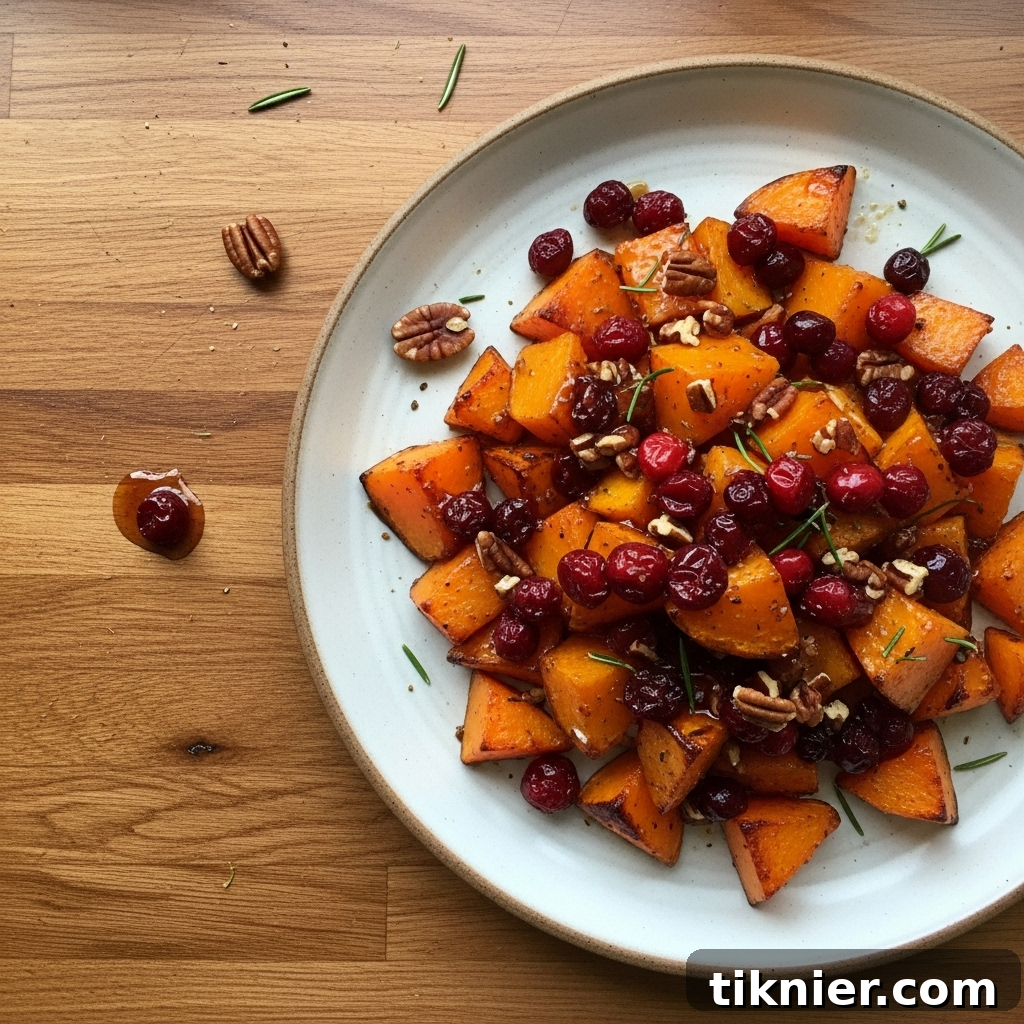
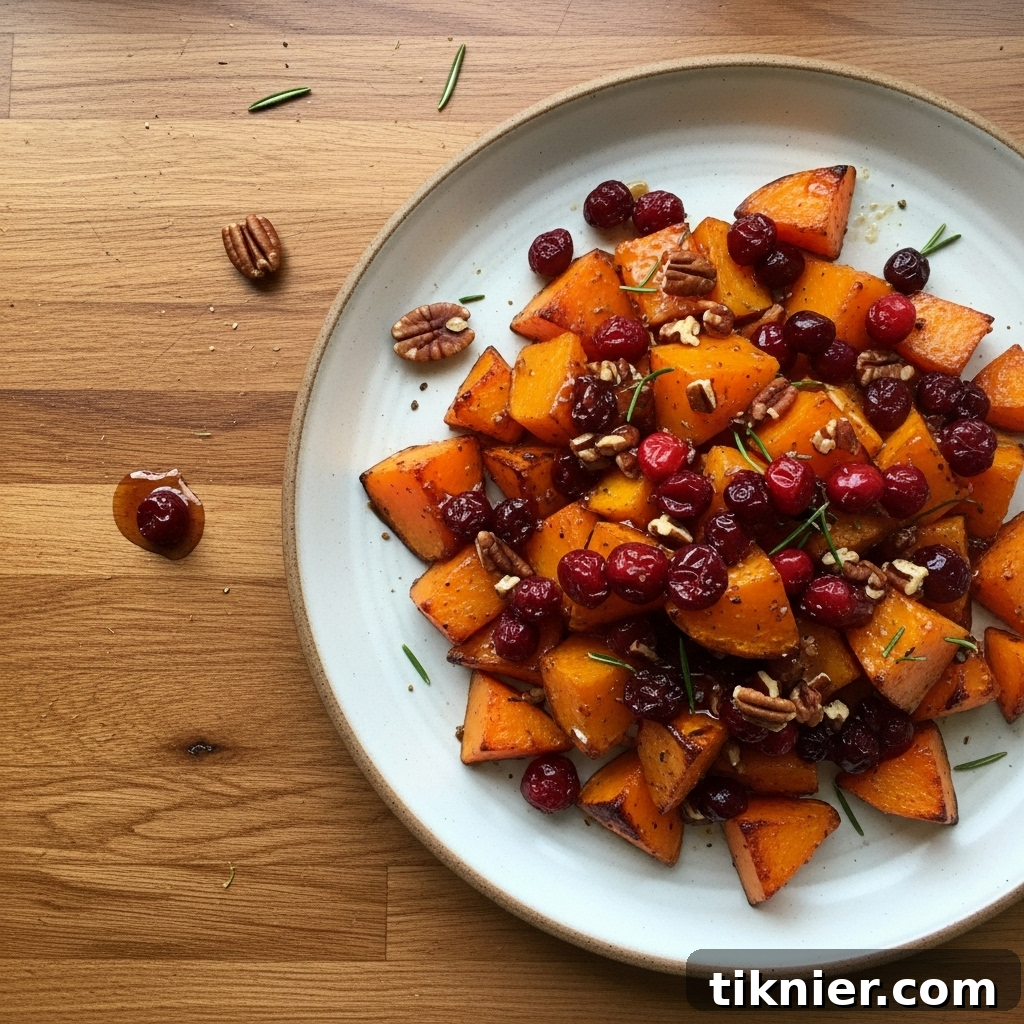
Holidays are a time for cherished traditions, family gatherings, and, of course, unforgettable food. While the turkey or ham often takes center stage, it’s the vibrant and flavorful side dishes that truly complete the festive feast. Many families have their go-to staples, but sometimes, a classic needs a little something extra to truly shine. I remember one Thanksgiving, my mother-in-law, bless her heart, tried to elevate her roasted butternut squash with a dollop of store-bought cranberry sauce. It was a sweet gesture, but the dish itself felt one-dimensional – sweet, yes, but lacking depth and that “wow” factor.
That culinary moment sparked a quest within me. The combination of roasted squash and tangy cranberries is undeniably a match made in heaven, a hallmark of fall and winter flavors. But I knew it could be so much more. I envisioned a dish that was both deeply comforting and surprisingly exciting, a side that would hold its own among the most elaborate holiday spreads. After much experimentation, my signature Cranberry Glazed Roasted Butternut Squash with a Balsamic Twist was born. It captures all the beloved cozy flavors you expect, yet introduces a secret ingredient that elevates it from simply good to absolutely unforgettable.
My special touch, the ingredient that transforms this humble vegetable into a showstopper, is a subtle splash of balsamic vinegar in the glaze. Before you imagine a salad dressing, let me assure you: it’s perfectly balanced. Just a tablespoon of quality balsamic vinegar works wonders, cutting through the natural sweetness of the maple syrup and the butternut squash. It doesn’t overpower but instead adds a layer of deep, tangy complexity that harmonizes every element. This isn’t just another roasted vegetable side; it’s a dish that will have your guests raving and eagerly asking for the recipe. It has become an indispensable part of our holiday menu, and I am confident it will soon become one of yours, too.
Jump Straight to the Recipe Card!
Why This Cranberry Glazed Roasted Butternut Squash Recipe Will Be Your New Favorite Holiday Side
Roasted butternut squash stands as a quintessential staple of fall and winter cuisine, celebrated for its naturally sweet, slightly nutty flavor and delightfully creamy texture. For generations, home cooks have intuitively paired this versatile squash with other seasonal treasures like tart cranberries, rich maple syrup, and warming spices. It’s a flavor profile that evokes the feeling of a warm embrace on a crisp autumn day, solidifying its place as a beloved fixture on holiday tables from Thanksgiving to Christmas.
While the traditional preparation of roasted butternut squash is undeniably delicious, I’ve always felt there was potential for a deeper, more nuanced flavor experience. The inherent sweetness from the squash and maple syrup, while pleasant, can sometimes dominate the palate, leading to a single-note profile that overshadows other delicate components. This is precisely where my signature twist, the “secret ingredient,” comes into play. By carefully incorporating just one tablespoon of balsamic vinegar into the vibrant cranberry glaze, we unlock a depth of flavor that transforms this classic into something truly extraordinary.
The balsamic vinegar is the unsung hero, the crucial element that harmonizes and elevates the entire dish. Its bright, acetic acidity masterfully cuts through the richness of the butter and the pronounced sweetness of the maple syrup, preventing the glaze from becoming cloying or overly sugary. Beyond just balancing, it also intensifies the natural tartness of the cranberries, making their flavor more pronounced, vibrant, and incredibly fresh. This seemingly small addition creates a sophisticated sweet-and-sour profile, an “umami” for vegetables, that complements the earthy, mellow notes of the butternut squash in a spectacular fashion. The result is a Cranberry Glazed Roasted Butternut Squash that feels both deeply familiar and refreshingly new, bridging the gap between time-honored tradition and modern culinary sophistication.
This recipe distinguishes itself because it masterfully pays homage to classic flavors while significantly enhancing them. It’s wonderfully straightforward to prepare, making it a viable option for an elevated weeknight dinner. Yet, its elegant presentation and complex flavor profile ensure it’s more than worthy of being the star side dish at your most important holiday gatherings. Every bite offers a perfect balance of flavors, a delightful contrast of textures, and its stunning, jewel-toned colors promise to add a touch of festive brilliance to any table.
Essential Ingredients for the Perfect Cranberry Glazed Roasted Butternut Squash
The culinary magic of this extraordinary side dish hinges on a collection of simple, high-quality ingredients that, when brought together, create a symphony of harmonious flavors. While many items on this list might seem familiar, it’s the thoughtful addition of one key ingredient that truly makes all the difference, elevating the entire experience. Let’s explore each component that contributes to this show-stopping recipe.
Here’s a comprehensive list of what you’ll need to create this delectable Cranberry Glazed Roasted Butternut Squash:
- 1 large butternut squash (approximately 3 pounds): Ensure it’s peeled, seeded, and uniformly cut into 1-inch cubes. Uniformity is key for even roasting.
- 2 tablespoons olive oil: A good quality extra virgin olive oil helps the squash crisp up and caramelize beautifully.
- 1 teaspoon kosher salt: Essential for seasoning the squash evenly and enhancing its natural sweetness.
- ½ teaspoon black pepper: Adds a subtle warmth and balances the flavors.
- 1 cup fresh or frozen cranberries: Both work perfectly, providing that signature tartness.
- ⅓ cup pure maple syrup: Choose Grade A or B for rich, authentic sweetness, not artificial pancake syrup.
- 3 tablespoons unsalted butter: Creates a rich, velvety base for the glaze.
- 1 tablespoon balsamic vinegar: This is our secret weapon! Crucial for balancing sweetness and adding depth.
- 1 tablespoon fresh rosemary, finely minced: Provides a fragrant, piney aroma; plus more for an elegant garnish.
- ½ cup toasted pecans or walnuts, roughly chopped: Adds a delightful crunch and nutty finish (for garnish).
The undisputed star and my special twist in this ingredient lineup is the balsamic vinegar. For the best results, I strongly recommend using a decent quality balsamic. You don’t need an expensive 25-year-aged bottle, but steer clear of the very watery, overly acidic, inexpensive versions. A good mid-range balsamic vinegar will possess a delightful tang and a subtle, natural sweetness that genuinely elevates the complex flavor profile of the glaze, transforming it from merely sweet to exquisitely balanced.
Beyond the balsamic, the quality of your other ingredients also plays a vital role. Opt for pure maple syrup – a non-negotiable for its rich, woody sweetness that cannot be replicated by artificial pancake syrups, which are predominantly corn syrup and artificial flavors. When selecting your butternut squash, look for one that feels remarkably heavy for its size, with smooth, unblemished skin, indicating freshness and ripeness. And while dried rosemary can be used in a pinch, fresh rosemary imparts a potent, aromatic piney fragrance that truly brings this dish to life, making an undeniable world of difference in the final taste and aroma. For the nuts, toasting them beforehand amplifies their flavor and crunch, making the garnish truly impactful.
Step-by-Step Guide: Crafting Your Cranberry Glazed Roasted Butternut Squash
This Cranberry Glazed Roasted Butternut Squash recipe is designed to be wonderfully straightforward, making it accessible for cooks of all skill levels. However, a few precise techniques are key to ensuring your squash emerges perfectly tender, beautifully caramelized, and coated in that irresistible glaze. Follow these detailed steps, and you are guaranteed a show-stopping side dish every single time.
Step 1: Prepare and Initial Roast the Butternut Squash
Begin by preheating your oven to a robust 400°F (200°C). A high oven temperature is absolutely critical for achieving those coveted golden-brown, caramelized edges on your butternut squash cubes, rather than just steaming them. Line a large, rimmed baking sheet with parchment paper. This is my absolute top tip for effortless cleanup, as the maple-balsamic glaze, while delicious, can become quite sticky on the pan. In a spacious mixing bowl, gently toss your uniformly cut butternut squash cubes with the olive oil, kosher salt, and black pepper. Ensure that every single piece is lightly and evenly coated – this ensures consistent seasoning and browning. Next, spread the seasoned squash in a single, even layer across your prepared baking sheet. It is vital not to overcrowd the pan; if the squash pieces are too close, they will steam rather than roast, preventing that desirable caramelization. Roast for an initial 20-25 minutes, or until the squash just begins to tenderize and you observe some lovely color developing on the edges.
Step 2: Master the Balsamic Cranberry Glaze
While your butternut squash is undergoing its first roast in the oven, it’s the perfect moment to create the star of the show: the exquisite cranberry glaze. In a small saucepan, combine the cranberries (whether fresh or frozen, both work beautifully), the pure maple syrup, unsalted butter, that all-important balsamic vinegar, and the finely minced fresh rosemary. Place the saucepan over medium heat. Bring the mixture to a gentle simmer, stirring occasionally to ensure everything is well combined and the butter melts evenly. You’ll notice the cranberries will begin to pop and soften as they cook, gracefully releasing their vibrant juices into the glaze. This simmering process should take approximately 5 to 7 minutes. The glaze will thicken slightly as it reduces and the cranberries break down. The inviting aroma that will fill your kitchen at this stage is nothing short of heavenly and a true testament to the flavors developing.
Step 3: Glaze and Final Roast for Perfection
Once the initial roasting time for the squash is complete, carefully remove the baking sheet from the oven. Gently pour the warm, bubbly, and aromatic cranberry glaze generously all over the partially cooked squash. Using a sturdy spatula, delicately toss everything together directly on the baking sheet until all the butternut squash cubes are beautifully coated in the shimmering glaze. Ensure they are once again spread back into a single, even layer. Now, return the pan to the oven and continue roasting for an additional 10 to 15 minutes. During this final phase, you are aiming for the squash to become completely fork-tender and for the glaze to be visibly bubbly, rich, and wonderfully caramelized. Crucially, keep a close eye on it during these last few minutes, as the high sugar content of the glaze means it can go from perfectly caramelized to burnt quite quickly.
Step 4: Garnish and Present with Flair
Once the Cranberry Glazed Roasted Butternut Squash is cooked to perfection, remove it from the oven. Allow it to cool on the pan for just a minute or two – this slight cooling period helps the glaze set beautifully before transferring. Carefully scoop the vibrant squash into your chosen serving dish. For a stunning final flourish, generously sprinkle the toasted pecans or walnuts over the top, which will introduce a delightful textural crunch and nutty complement to the sweet and tangy squash. A little extra sprinkle of fresh, finely minced rosemary not only adds a final pop of green color but also a fresh, aromatic finish. Serve it warm, and prepare to receive a cascade of compliments from your appreciative guests.
How to Serve Your Exquisite Cranberry Glazed Roasted Butternut Squash
This Cranberry Glazed Roasted Butternut Squash with a Balsamic Twist is undeniably a showstopper, and it truly deserves to be presented in a way that highlights its vibrant beauty and delicious appeal. Its rich, jewel-toned colors – the warm orange of the squash, the ruby red of the cranberries, and the deep green of the rosemary – make it an exceptionally stunning addition to any table, especially during the festive holiday season. I personally love serving it in a wide, shallow serving bowl or artfully arranged on a rustic platter, allowing the magnificent contrast of colors to truly pop and catch the eye.
What makes this dish even more remarkable is its incredible versatility. It pairs wonderfully with an impressive array of main courses, making it a truly flexible recipe for various occasions. It’s a quintessential fit for a traditional holiday spread, nestling perfectly alongside a succulent roasted turkey, a beautifully baked ham, or a luxurious prime rib. The harmonious blend of sweet, tangy, and savory flavors provides an exquisite contrast to rich, hearty meats, making it an ideal companion. Without a doubt, it stands as one of the best and most impressive Thanksgiving side dishes you can create.
But please, don’t reserve this delightful squash solely for holiday celebrations! Its versatility means it can elevate everyday meals as well. Here are several other inventive ways I love to incorporate this glazed butternut squash into my cooking:
- As a Hearty Salad Topper: Allow the squash to cool slightly, then spoon it generously over a bed of peppery arugula or mixed greens. The warm, flavorful glaze doubles as a delicious dressing. For an added touch of creamy, salty goodness, crumble some fresh goat cheese or feta over the top.
- With Roasted Chicken or Pork: For a quick yet sophisticated weeknight meal, serve this squash alongside a simple roasted chicken breast or perfectly pan-seared pork chops. It effortlessly transforms a simple dinner into something special and memorable.
- In a Nutrient-Rich Grain Bowl: Create a wholesome and incredibly flavorful grain bowl by layering fluffy quinoa or chewy farro with the glazed squash, a handful of protein-packed chickpeas, and a generous quantity of fresh spinach.
- As a Satisfying Vegetarian Main: This dish is substantial and flavorful enough to stand alone as a delightful vegetarian main course. Serve it alongside a generous portion of wild rice and some perfectly steamed green beans for a complete, nutritious, and incredibly satisfying meal.
Regardless of how you choose to serve it, the irresistible combination of tender, caramelized squash, bright, tangy cranberries, and crunchy pecans or walnuts is guaranteed to be a resounding success. It’s a dish that not only tastes as incredible as it looks but also brings an unmistakable touch of elegance and warmth to any dining occasion.
Storing & Repurposing Leftovers: Cranberry Glazed Roasted Butternut Squash
If you’re fortunate enough to have any leftovers of this truly delicious Cranberry Glazed Roasted Butternut Squash, consider yourself in for a delightful treat! This dish stores remarkably well and can be creatively repurposed into an array of incredibly tasty new meals. Proper storage is absolutely essential to ensure it retains its wonderful flavor and texture for subsequent enjoyment.
First and foremost, allow the Cranberry Glazed Roasted Butternut Squash to cool completely to room temperature before storing. This crucial step prevents condensation from forming inside your storage container, which can lead to soggy squash – something we definitely want to avoid! Once thoroughly cooled, transfer the leftovers to an airtight container and store them in the refrigerator, where they will keep beautifully for up to 4 days.
When you’re ready to savor it once more, you have a couple of reheating options. You can gently reheat it in the microwave in 30-second intervals until it’s warmed through. However, my personal preferred method for reheating, which helps to revive that lovely caramelized texture, is to spread the squash in a single layer on a baking sheet and pop it into a 350°F (175°C) oven for about 10-15 minutes. This method helps the glaze re-caramelize slightly and prevents the squash from becoming mushy. Now, let’s dive into some exciting ways to repurpose those flavorful leftovers!
- Whip Up a Velvety Soup: Transform your leftovers into a comforting and flavorful soup. Simply add the cooled squash and cranberries to a pot with vegetable or chicken broth. Use an immersion blender or transfer to a regular blender to puree it into a silky-smooth, vibrant soup. For an extra touch of richness, stir in a splash of cream or coconut milk just before serving.
- Toss it with Pasta: Roughly chop any larger pieces of leftover squash and cranberries. Toss them with hot cooked pasta (orecchiette or penne work beautifully), a drizzle of good olive oil, and a generous amount of freshly grated Parmesan or Pecorino cheese. The sweet and savory notes create an incredible, satisfying pasta dish.
- Craft a Savory Tart: Elevate your lunch or appetizer game by making an elegant savory tart. Press a store-bought puff pastry sheet into a tart pan. Spread a thin layer of creamy goat cheese or crème fraîche on the bottom, then arrange the leftover squash evenly over it. Bake until the pastry is golden brown and puffed, and the squash is warmed through.
- Enhance an Omelet or Frittata: Chop the leftover squash into smaller pieces and fold it into an omelet or mix it into a frittata batter. Add some fresh spinach and crumbled feta cheese for a fantastic, hearty brunch or light dinner dish that’s packed with flavor and nutrients.
With such a variety of delicious options, you might find yourself intentionally making a double batch of this Cranberry Glazed Roasted Butternut Squash, just to guarantee you have plenty of leftovers to experiment with and enjoy throughout the week. It truly is the holiday side dish that keeps on giving!
Creative Substitutions & Delicious Variations for Your Glazed Butternut Squash
One of the aspects I cherish most about this Cranberry Glazed Roasted Butternut Squash recipe is its remarkable adaptability. Whether you’re catering to specific dietary restrictions, simply using what you have on hand, or eager to explore new flavor combinations, this dish serves as an excellent canvas for culinary creativity. The core elements – perfectly roasted squash and a dynamic sweet-tart glaze – provide a robust foundation for an endless array of delicious variations.
Feel empowered to experiment and tailor this recipe to your personal preferences and the ingredients available in your pantry. These simple swaps allow you to personalize this incredible side dish to your exact tastes, ensuring that every time you make it, it feels uniquely yours. Here are some of my favorite ideas to spark your inspiration and guide your delicious journey:
- Different Types of Squash: While butternut squash is a classic for its sweet flavor and creamy texture, this recipe works beautifully with other seasonal winter squashes. Try it with acorn squash (which you don’t even need to peel, just cut into wedges for a rustic look), delicate delicata squash rings (also with edible skin!), or even vibrant sweet potatoes for a slightly different yet equally delightful flavor profile and texture. Adjust roasting times as needed for denser squashes.
- Make it Vegan-Friendly: This dish can be effortlessly transformed into a vegan masterpiece. Simply substitute the unsalted butter in the glaze with your favorite high-quality plant-based butter alternative. Alternatively, an equal amount of coconut oil can be used for a slightly different, subtly tropical, and equally delicious flavor base.
- Introduce More Warmth and Spice: For those who appreciate a warmer, spicier note, integrate a pinch of ground cinnamon, nutmeg, or even a tiny dash of cayenne pepper into the glaze mixture. These spices add another layer of complexity and depth that beautifully complements the fall flavors. A little bit of fresh orange zest added to the glaze during simmering is also absolutely fantastic, brightening the overall profile.
- Experiment with Herbs: If fresh rosemary isn’t to your liking or you’re simply looking for a different aromatic twist, fresh thyme or sage would be wonderful and equally fitting substitutes. Both herbs possess earthy, slightly peppery notes that pair exquisitely with the sweetness of squash and the tartness of cranberries.
- Nut-Free Option: For guests with nut allergies or simply for a nut-free version, easily omit the pecans or walnuts from the garnish. Instead, consider substituting them with toasted pumpkin seeds (pepitas) or sunflower seeds, which offer a similar satisfying crunch and a lovely visual appeal.
- Sweetener Swaps: While pure maple syrup offers a unique depth, if you don’t have it on hand, other natural sweeteners can work. Honey can be used as a direct substitute, though it will impart a more floral sweetness. Brown sugar is another excellent option, which will lend the glaze a deeper, more caramel-like taste. Adjust to your preferred sweetness level.
Remember, cooking should be an enjoyable and creative process. Don’t be afraid to experiment and truly make this recipe your own. The winning combination of sweet, tender roasted squash and a tangy, aromatic glaze is a formula for success, no matter which delicious path you choose to explore.
Cranberry Glazed Roasted Butternut Squash with a Balsamic Twist
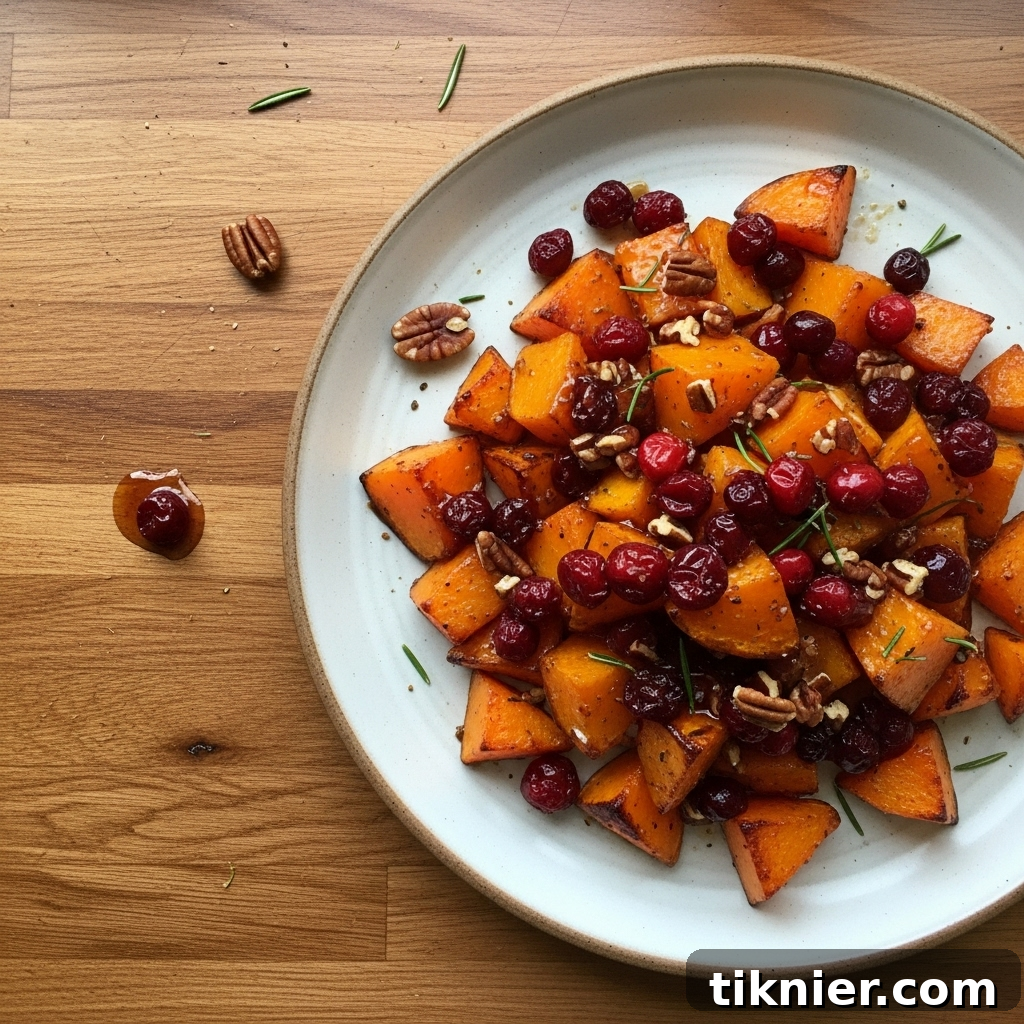
Description: Elevate your holiday table with this stunning and flavorful side dish. Tender roasted butternut squash cubes are bathed in a vibrant, sweet, and tangy cranberry-balsamic glaze, perfectly balanced with fresh rosemary and finished with a satisfying crunch of toasted pecans. It’s a show-stopping addition to any festive meal, especially Thanksgiving or Christmas dinner.
Yield: 6-8 servings | Category: Side Dish | Cuisine: American
Prep Time: 15 minutes | Cook Time: 40 minutes
Ingredients
- 1 large butternut squash (about 3 lbs), peeled, seeded, and cut into 1-inch cubes
- 2 tablespoons olive oil
- 1 teaspoon kosher salt
- ½ teaspoon black pepper
- 1 cup fresh or frozen cranberries
- ⅓ cup pure maple syrup
- 3 tablespoons unsalted butter
- 1 tablespoon balsamic vinegar
- 1 tablespoon fresh rosemary, finely minced, plus more for garnish
- ½ cup toasted pecans or walnuts, roughly chopped (for garnish)
Instructions
- Preheat oven to 400°F (200°C). Line a large, rimmed baking sheet with parchment paper for easy cleanup.
- In a large bowl, toss the squash cubes with olive oil, salt, and pepper until evenly coated. Spread the seasoned squash in a single layer on the prepared baking sheet. Roast for 20-25 minutes, or until the squash is tender-crisp and lightly colored on the edges.
- While the squash roasts, prepare the glaze. In a small saucepan, combine the cranberries (fresh or frozen), pure maple syrup, unsalted butter, balsamic vinegar, and finely minced fresh rosemary. Bring the mixture to a gentle simmer over medium heat, stirring occasionally. Cook for 5-7 minutes, until the cranberries begin to pop, soften, and the glaze thickens slightly.
- Carefully remove the baking sheet from the oven. Pour the warm, bubbly cranberry glaze evenly over the partially roasted squash. Use a spatula to gently toss everything together directly on the baking sheet until all the squash cubes are beautifully coated. Spread them back into a single layer.
- Return the pan to the oven and roast for an additional 10-15 minutes. Continue roasting until the butternut squash is fully fork-tender and the glaze is wonderfully bubbly, glistening, and caramelized. Keep a close eye during the last few minutes to prevent burning.
- Transfer the Cranberry Glazed Roasted Butternut Squash to your desired serving dish. Garnish generously with the toasted pecans or walnuts and an extra sprinkle of fresh rosemary for color and aroma. Serve warm and enjoy immediately!
Notes
Using parchment paper is highly recommended for this recipe. The maple-balsamic glaze can become quite sticky and caramelized on the baking sheet, making cleanup significantly easier with parchment.
Servings: 8 | Calories: 250 kcal | Fat: 15g | Carbohydrates: 30g | Protein: 3g
5 Frequently Asked Questions About Cranberry Glazed Roasted Butternut Squash
To help you perfect this delicious Cranberry Glazed Roasted Butternut Squash, here are some comprehensive answers to the most common questions I receive about this recipe. I’ve designed these tips to ensure your cooking experience is smooth and your dish is absolutely flawless.
1. Can I prepare Cranberry Glazed Roasted Butternut Squash ahead of time?
Absolutely, and this is precisely why it makes such a fantastic and stress-free holiday side dish! You can strategically complete a significant amount of the prep work in advance, which will save you precious time on the actual day of your event. I highly recommend peeling and cubing your butternut squash up to two days before you plan to cook it. Store the raw, prepped cubes in an airtight container or a large zip-top bag in the refrigerator until you’re ready to proceed with roasting. This single step alone is a huge time-saver.
Additionally, the cranberry-balsamic glaze can also be prepared a day or two in advance. Simply follow the instructions for making the glaze, let it cool completely, and then transfer it to an airtight container for refrigeration. When it’s time to assemble the dish, you can gently reheat the stored glaze on the stovetop over low heat or in the microwave until it’s warm and pourable again, then drizzle it over your partially roasted squash. For even more convenience, you can roast the squash completely, store it in the fridge, and then just reheat it in the oven (covered with foil to prevent drying) until warmed through before garnishing and serving.
2. What’s the easiest way to peel and cut a butternut squash?
Peeling and cutting a butternut squash can indeed seem a bit daunting at first, given its tough skin and awkward shape. However, with the right approach and tools, it’s quite manageable! First, ensure you have a stable cutting board and a very sharp, sturdy chef’s knife. I always start by trimming off the very top stem and the very bottom end of the squash. This creates two flat, stable surfaces, making it much safer to handle. Next, use a sturdy vegetable peeler (a Y-peeler often works best for this task) to carefully remove the tough outer skin. Peel downwards from one end to the other, rotating the squash as you go until all the skin is removed.
Once peeled, cut the squash in half crosswise, separating the long, cylindrical neck from the round, bulbous bottom. Stand the neck section on one of its flat ends and cut it into thick planks, then into sticks, and finally into uniform 1-inch cubes. For the bottom, round part, cut it in half lengthwise from top to bottom. Use a spoon to easily scoop out the seeds and any stringy bits. Then, you can cut this section into planks, sticks, and cubes just like the neck. Tackling it one section at a time makes the entire process much less intimidating and more efficient.
3. Can I use frozen butternut squash for this recipe?
Yes, absolutely! Using pre-cut frozen butternut squash cubes is a fantastic shortcut, particularly when you’re short on time or making this dish for a weeknight meal. It will certainly save you significant prep time. However, there are a couple of considerations to keep in mind. Frozen squash naturally contains more moisture than fresh squash, which means it will release more water during the cooking process. As a result, it may not achieve quite the same level of browning or caramelization as fresh squash, and the final texture might be a little softer.
To achieve the best possible results when using frozen squash, I recommend roasting it directly from the freezer; do not thaw it first. Spreading the frozen cubes in a single, even layer on the baking sheet is crucial to allow ample space for them to roast rather than steam. You will likely need to adjust the initial roasting time, adding an extra 5-10 minutes to ensure the squash is cooked through and tender before you introduce the glaze. Keep an eye on it to ensure it cooks evenly.
4. My glaze didn’t thicken enough. What did I do wrong?
If your cranberry-balsamic glaze seems a little on the thin side, there’s no need to worry – it’s a very common and easily fixable issue! The glaze for this Cranberry Glazed Roasted Butternut Squash thickens due to a combination of the natural pectin present in the cranberries and the reduction (evaporation) of the maple syrup and other liquids. The most frequent reason for a glaze that’s too thin is simply not simmering it for a sufficient amount of time.
The solution is straightforward: allow the glaze mixture to continue simmering gently on the stovetop over medium-low heat for an additional 3 to 5 minutes, stirring occasionally. As more of the liquid evaporates and the cranberries continue to break down, the glaze will naturally become thicker and more concentrated. Remember that the glaze will also thicken further as it cools and, more importantly, when it caramelizes in the oven during the final roasting stage with the squash. Therefore, you don’t want it to be overly thick when it’s still on the stovetop. It should be thick enough to coat the back of a spoon but still easily pourable and glossy.
5. How do I prevent my Cranberry Glazed Roasted Butternut Squash from burning?
The delicious high sugar content from the maple syrup and the balsamic vinegar in the glaze means that this dish can transition from beautifully caramelized to unfortunately burnt quite quickly. The absolute key to preventing scorching is to maintain a vigilant watch over your squash, particularly during that critical final 10-15 minute roast after the glaze has been added. Every oven has its own quirks and hot spots, so it’s wise to start checking the dish around the 8-minute mark of the final roast. You’re looking for the glaze to be actively bubbling, glistening, and just beginning to deepen in color at the edges of the pan and on the squash pieces.
Another crucial tip, as mentioned earlier, is to use parchment paper to line your baking sheet. This provides a protective barrier between the sugary glaze and the hot metal surface of the baking sheet, which significantly helps to prevent the glaze from sticking and scorching. Additionally, always ensure your butternut squash is spread in a single, even layer on the baking sheet. If the pieces are piled up, the glaze at the bottom of the pile can pool and burn much faster than the squash on top can finish cooking. If you notice the glaze browning too rapidly during the final stage, you can loosely tent the baking sheet with aluminum foil for the remaining few minutes of cooking to slow down the browning process.
Continue Your Culinary Journey: Try These Delicious Recipes Next!
If you’ve fallen in love with the cozy, complex, and utterly delicious flavors of this Cranberry Glazed Roasted Butternut Squash, then you’re in for another treat! Here are a few more recipes that I think you’ll enjoy just as much, each offering unique twists on comforting classics.
- Easy Spicy Maple Glazed Delicata Squash Rings: Experience a similar sweet-and-savory profile, but with an exciting kick of spice and the added convenience of delicata squash, whose skin is perfectly edible!
- Roasted Butternut Squash and Sage Tortellini Soup: This incredibly creamy, comforting, and hearty soup utilizes roasted butternut squash as its rich base, making it the perfect warming meal for a chilly evening.
- 56 Thanksgiving Side Ideas: For those who believe sides are the true stars of the Thanksgiving show, I’ve compiled an extensive collection of ALL my favorite festive side dishes in one convenient place, ensuring your holiday feast is nothing short of spectacular.
I sincerely hope you discover a new favorite among these delightful dishes and continue to explore the wonderful world of fall and winter flavors!