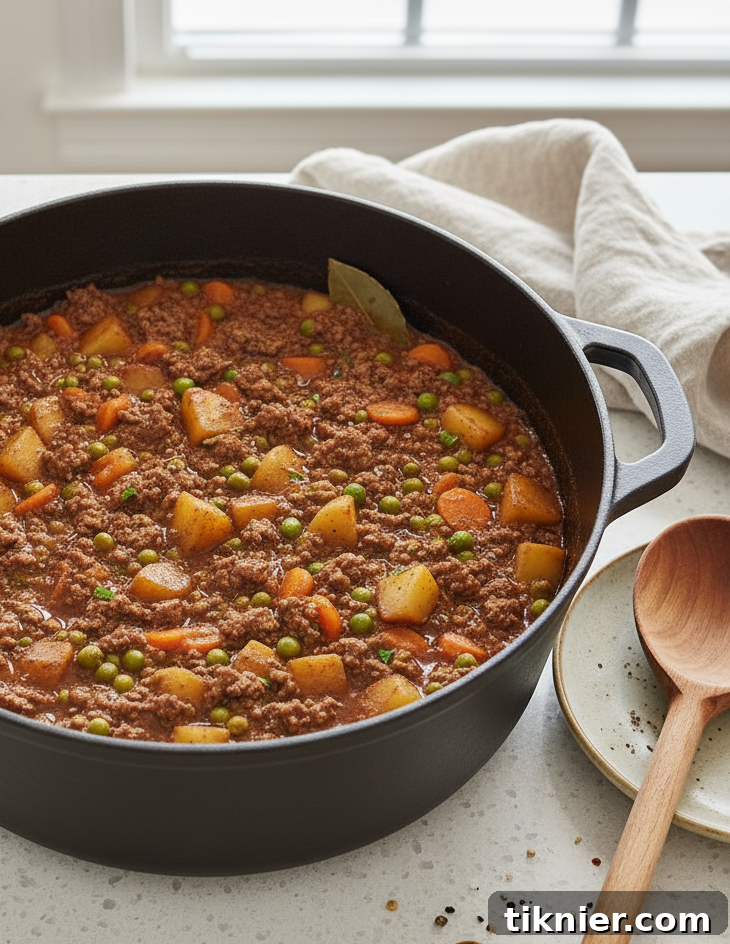
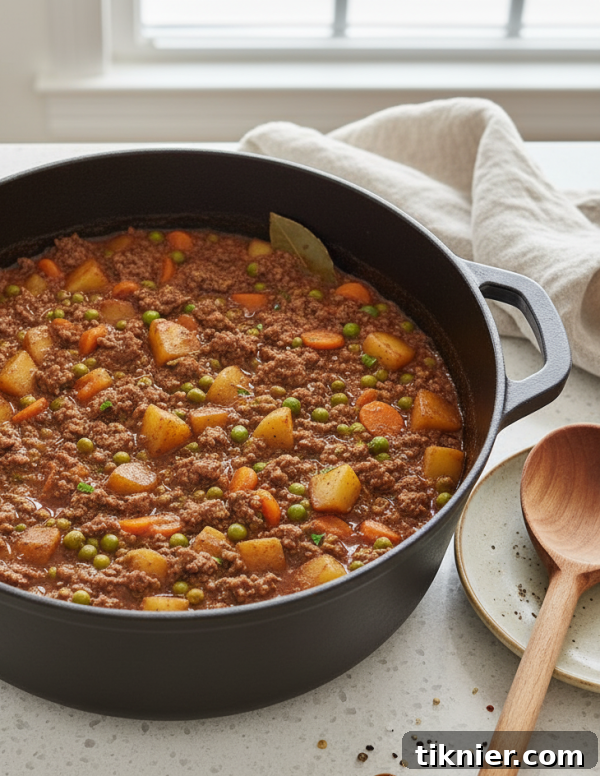
Some of the most cherished recipe creations often stem from pure necessity, born out of a moment of inspiration when a specific craving strikes and time is of the essence. I remember one crisp autumn evening a few years ago; the kind where the air holds a distinct chill, hinting at winter’s approach, and all you desire is a deep, soul-warming bowl of something incredibly hearty. My mind instantly conjured images of classic beef stew, a timeless comfort food. However, the traditional preparation, involving large cuts of chuck roast, demands hours of slow simmering to achieve that coveted fall-apart tenderness. On that particular evening, such a luxury of time simply wasn’t available.
It was then that an idea sparked: why not adapt the essence of a comforting beef stew into a quicker, more accessible version using an ingredient I always keep on hand—ground beef? My initial attempt was certainly good, providing much-needed comfort against the evening chill, but it lacked a certain vibrancy, a distinctive flavor that would elevate it beyond a simple weeknight meal into something truly memorable. After a little experimentation and playful tinkering in the kitchen, I unearthed my secret weapon. This perfected Ground Beef Stew recipe is the delicious culmination of that chilly evening’s culinary quest, and I confidently promise you, it’s an absolute game-changer for your dinner rotation.
The culinary twist, while remarkably simple, introduces an astonishing depth and brightness that makes all the difference. It layers a subtle complexity into the stew, prompting everyone at your table to inquire about your special secret. This is the kind of deeply satisfying, soul-warming meal that boasts the rich, developed taste of having simmered lovingly all day, yet it miraculously comes together from start to finish in just over an hour. Prepare to impress your family and friends with a dish that combines speed, simplicity, and gourmet flavor.
Skip to My Special Recipe!
Why This Ground Beef Stew Recipe Will Become Your Weeknight Favorite
Beef stew stands as a truly timeless culinary classic, a dish with roots reaching deep into global food history. Originating often as a humble peasant dish, it served as an ingenious method to transform tougher, more economical cuts of meat into incredibly tender, flavorful meals through the magic of slow cooking. It’s a dish born out of resourcefulness, designed to nourish and comfort, which explains its enduring popularity across generations and cultures. The very act of preparing it fills your home with an irresistible aroma, promising warmth and satisfaction long before the first bite.
This Ground Beef Stew recipe respectfully honors that rich tradition of comfort and heartiness, while brilliantly updating it for the demands of modern weeknight cooking. By opting for ground beef instead of more fibrous stew meat, we dramatically reduce the overall cooking time without sacrificing any of that rich, savory beef flavor we all crave. The meat is inherently tender, allowing you to achieve all the satisfaction and depth of a slow-simmered stew in just a fraction of the time. It’s the perfect solution for when you desire a deeply flavorful meal without the extensive wait.
But the true marvel, the subtle secret that truly sets my version apart and elevates it from merely good to extraordinary, lies in the addition of balsamic vinegar. While it might initially strike you as an unconventional ingredient for a stew, I urge you to trust this process. A strategic few tablespoons of balsamic vinegar incorporated during the cooking process, followed by a final bright splash right before serving, utterly transforms the entire dish. The deep, complex, and slightly sweet acidity of the vinegar masterfully cuts through the inherent richness of the beef and broth. It brightens and enhances the natural sweetness of the tomatoes and vegetables, introducing an incredible, almost indefinable complexity that will leave everyone captivated. This simple addition elevates the entire flavor profile of the stew, making the individual components taste deeper, richer, and more distinctly defined. It’s the crucial, often-overlooked ingredient that turns a perfectly good stew into an unforgettable culinary experience.
Essential Ingredients for Your Perfect Ground Beef Stew
The inherent beauty of this comforting stew lies in its reliance on simple, wholesome ingredients—items you likely already have nestled in your pantry and refrigerator. It’s a testament to how everyday components, when thoughtfully combined and prepared, can yield something truly extraordinary. You won’t find any exotic or hard-to-source elements here; just pure, unadulterated comfort served in a bowl.
As with any recipe built on simplicity, the secret to outstanding flavor begins with using good quality ingredients. A robust beef broth, vibrant fresh vegetables, and lean ground beef form the foundational layers of a magnificent flavor profile. However, the one ingredient that truly makes this recipe sing, adding that distinctive sparkle, is the balsamic vinegar. Please do not omit it. It is the very twist that makes all the difference, transforming a standard stew into something truly special and memorable.
- 2 tablespoons olive oil
- 1.5 pounds lean ground beef (85/15 or 90/10 recommended)
- 1 large yellow onion, finely chopped
- 2 large carrots, peeled and sliced into uniform rounds
- 2 celery stalks, thoroughly chopped
- 3 cloves garlic, freshly minced
- 1/4 cup all-purpose flour
- 4 cups beef broth (low-sodium preferred)
- 1 (14.5 ounce) can diced tomatoes, undrained (fire-roasted for extra depth)
- 2 tablespoons tomato paste
- 3 tablespoons balsamic vinegar, precisely divided (2 tbsp for simmering, 1 tbsp for finishing)
- 1 tablespoon Worcestershire sauce
- 1 teaspoon dried thyme
- 1 bay leaf
- 1.5 pounds Yukon Gold potatoes, peeled and cut into 1-inch cubes
- 1 cup frozen peas
- Salt and freshly ground black pepper to taste
- 2 tablespoons fresh parsley, chopped (for vibrant garnish)
A few thoughtful notes on these specific ingredients will help you achieve the best possible results. For the ground beef, I consistently recommend using a lean blend, such as 90/10 or 85/15. This choice minimizes the need to drain off excessive grease after browning, allowing those flavorful drippings to remain in the pot, contributing depth to your stew. When it comes to potatoes, Yukon Golds are my absolute favorite due to their ability to hold their shape beautifully during extended simmering, coupled with their wonderfully creamy, buttery texture. If possible, opt for a low-sodium beef broth; this gives you precise control over the final salt content of your stew. And for the undeniable star of our show, the balsamic vinegar, choose a brand whose taste you genuinely enjoy. It doesn’t necessitate an expensive, long-aged bottle, but a decent quality balsamic will undoubtedly offer a far superior and more complex flavor profile that truly shines in this dish.
Mastering Your Ground Beef Stew: Step-by-Step Instructions
Let me guide you through each essential step in crafting this incredibly hearty and flavorful stew. We’ll meticulously build layers of rich flavor, beginning with the crucial browning of the meat and culminating with that final, bright touch that makes all the difference. The ideal vessel for this culinary endeavor is a large Dutch oven or any heavy-bottomed pot, as these distribute heat remarkably evenly, creating the perfect environment for slow, gentle simmering.
Step 1: Achieve Perfect Browning on Your Ground Beef
Our journey begins with heating your olive oil in the Dutch oven over a steady medium-high heat. Once the oil glistens invitingly, indicating it’s ready, add your ground beef. The primary objective here is to develop a beautiful, deep brown crust on the meat. These caramelized, browned bits, often called fond, are concentrated pockets of pure, savory flavor that will enrich the entire stew. Use a sturdy wooden spoon or spatula to break the meat into smaller crumbles as it cooks. Once it’s uniformly browned and nicely caramelized, carefully use a slotted spoon to transfer it from the pot and set it aside. Resist the urge to clean the pot! Those remaining drippings and browned bits are precious and essential for the next steps.
Step 2: Expertly Sauté Your Aromatic Vegetables
Into the same pot, now graced with the savory beef drippings, add your precisely chopped onion, carrots, and celery. This classic trio, known as a mirepoix, forms the aromatic and flavorful foundation for countless exquisite soups and stews. Cook these vegetables, stirring occasionally to ensure even cooking, until they have softened considerably and the onion has become delightfully translucent. This process typically takes about 5 to 7 minutes. Following this, stir in your freshly minced garlic and continue to cook for just one additional minute, until its irresistible, fragrant aroma fills your kitchen. Exercise caution here to prevent the garlic from burning, which can introduce a bitter taste.
Step 3: Crafting the Stew’s Velvety Thickener
Now, it’s time to create the roux, which will provide our stew with its appealing, comforting thickness. Evenly sprinkle the all-purpose flour over the softened vegetables in the pot. Stir continuously and vigorously for approximately one minute. This critical step serves two purposes: it cooks out the raw, pasty taste of the flour, and it slightly toasts the flour, imparting a subtle, nutty flavor that adds another layer of complexity to your stew.
Step 4: Deglaze for Unrivaled Flavor Depth and Add Broth
This is a truly pivotal step in our flavor-building process. While stirring constantly, slowly and gradually pour in the beef broth. As you pour, actively use your spoon to scrape up all those magnificent browned bits and fond that are adhering to the bottom of the pot. This technique, known as deglazing, is where a significant portion of the stew’s deep, complex, and savory flavor originates. Ensure you meticulously scrape up every last particle, incorporating it fully into the liquid.
Step 5: Harmonizing the Primary Flavor Makers
Gently return the previously cooked ground beef to the pot, nestling it into the simmering liquid. Stir in the undrained diced tomatoes, the concentrated tomato paste, 2 tablespoons of the balsamic vinegar, the Worcestershire sauce (for an umami kick), the fragrant dried thyme, and the aromatic bay leaf. Thoroughly stir all these components together until the tomato paste is completely dissolved and smoothly incorporated into the broth, ensuring an even distribution of flavor.
Step 6: Allow Flavors to Gently Simmer and Meld
Increase the heat slightly to bring the entire mixture to a lively, gentle simmer. Once you observe steady bubbling, reduce the heat to a low setting, securely place the lid on the pot, and allow the stew to quietly simmer for a full 30 minutes. This essential period provides ample time for all the individual flavors to intermingle, deepen, and meld into a rich, harmonious, and cohesive taste profile, truly transforming the dish.
Step 7: Introduce and Cook the Potatoes to Tender Perfection
After the initial 30 minutes of simmering, carefully add your cubed potatoes to the pot. Give the stew a good, gentle stir to ensure the potatoes are submerged in the flavorful liquid. Replace the cover and allow the stew to continue its gentle simmer for an additional 20 to 25 minutes. You’ll know the potatoes are perfectly cooked and ready when they are undeniably fork-tender, easily pierced without resistance.
Step 8: The Grand Finale: Adding the Finishing Touches
Now, for the final, invigorating burst of flavor and a touch of fresh color. Stir in the vibrant frozen peas and the crucial remaining 1 tablespoon of balsamic vinegar. The residual heat within the stew will perfectly cook the peas in approximately 5 minutes, ensuring they remain bright green and tender-crisp. That final splash of balsamic vinegar is a stroke of genius; it truly wakes up and brightens all the complex flavors just moments before serving, adding an unexpected zesty lift.
Step 9: Seasoning to Perfection and Preparing to Serve
Before serving, carefully fish out the bay leaf; you certainly wouldn’t want anyone to encounter that in their bowl! Give the stew a thorough taste test and adjust the seasoning with salt and freshly ground black pepper as needed. The precise amount you’ll require will depend significantly on the initial saltiness of your beef broth and personal preference.
Step 10: Garnish, Appreciate, and Savor Your Creation
Ladle the steaming, hot stew generously into individual serving bowls. For a final flourish, garnish each portion with a sprinkle of vibrant, freshly chopped parsley. The green parsley not only adds a lovely pop of color but also contributes a fresh, herbaceous note that complements the richness of the stew beautifully. All that’s left is to sit back, appreciate your homemade culinary masterpiece, and enjoy your truly delicious Ground Beef Stew!
Perfect Pairings: How To Serve Your Ground Beef Stew
A beautifully prepared bowl of this hearty Ground Beef Stew is, without a doubt, a complete and satisfying meal all on its own. However, selecting the right accompaniment can effortlessly elevate it to an even higher plane of comfort and culinary delight. The most crucial element you’ll need is something wonderfully absorbent to soak up every last, precious drop of that incredible, rich, and savory gravy. Wasting even a speck of its deliciousness would be an absolute travesty!
In my household, the undisputed favorite way to relish this stew is alongside something warm, inviting, and possessing a lovely crusty exterior. It’s a combination that is both simple and classic, always proving to be a resounding winner at the dinner table. Whether your preference leans towards a rustic loaf of artisan bread or a batch of light, fluffy homemade biscuits, the pure joy of dipping it into the savory, deeply flavored broth is nothing short of pure bliss and deeply satisfying.
Here are a few of my most cherished and reliable serving suggestions to enhance your stew experience:
- Crusty Artisan Bread: A warm, thick slice of a fresh French baguette, a robust sourdough, or a rustic country loaf serves as the quintessential vehicle for mopping up every bit of the stew’s luscious gravy. A delicate smear of butter on top certainly doesn’t detract from the experience.
- Fluffy Buttermilk Biscuits: Light, tender, and utterly delightful buttermilk biscuits are a beloved Southern staple for very good reason. They are heavenly when gently split open and utilized to scoop up the tender meat and flavorful vegetables, adding a distinct textural contrast.
- Creamy Mashed Potatoes: For an extra dose of unparalleled comfort and indulgence, consider serving your stew generously ladled over a mound of velvety, creamy mashed potatoes. The harmonious combination of the rich, savory stew and the buttery, smooth potatoes is truly divine and utterly soul-satisfying.
- Wide Egg Noodles: Broad, tender egg noodles offer another fantastic base for this stew. Their shape is perfect for catching and cradling the rich gravy, transforming the dish into a comforting meal reminiscent of a classic beef and noodles preparation.
- Sweet Cornbread: A slightly sweet, wonderfully crumbly piece of cornbread provides a delightful textural and flavor contrast to the savory depth of the stew. My own recipe for skillet cornbread, with its golden-brown crust, is an absolutely perfect and harmonious companion.
For an added touch of luxury and flavor, you can also include a simple topping in each bowl. A generous dollop of cool sour cream or a sprinkle of sharp cheddar cheese can introduce a lovely creamy or tangy element that beautifully complements the stew’s robust flavors. Regardless of how you choose to present it, this stew is destined to be a memorable and much-requested hit.
Smart Storage & Creative Reimagining for Ground Beef Stew Leftovers
One of the most remarkable benefits of preparing a generous pot of this Ground Beef Stew is that the leftovers are often just as delectable, if not even more so, than the freshly cooked meal. As the stew rests and cools in the refrigerator, all those wonderful flavors have additional time to intermingle, deepen, and fully meld, making the next day’s lunch or dinner something truly anticipated and satisfying. Proper storage techniques are absolutely essential to ensure it remains fresh, safe, and delicious for future enjoyment.
Once your stew has cooled down to room temperature, which should ideally be within two hours of cooking, it’s ready for storage. I strongly advise against leaving it out on the counter for longer than this timeframe to maintain food safety. Correctly storing your stew ensures it stays fresh and perfectly edible for several days, and it also freezes beautifully, acting as a convenient, ready-made meal for those particularly busy nights down the road.
Here’s my comprehensive guide to storing and creatively reheating your leftover stew:
- Refrigeration for Freshness: Once the stew has completely cooled, transfer it into an airtight container. It can then be safely stored in the refrigerator for up to 4 days. When you’re ready to enjoy it again, the best method for reheating is gently on the stovetop over medium-low heat, stirring occasionally, until it’s thoroughly warmed through. While a microwave can be used for convenience, I find the stovetop method superior for preserving the stew’s original texture and preventing certain vegetables from becoming overly soft.
- Freezing for Future Meals: This stew is an excellent candidate for freezing, making it perfect for meal prepping. Allow it to cool completely before portioning it into freezer-safe containers or heavy-duty freezer bags. Be sure to leave a little headspace if using containers, as liquids expand when frozen. It will maintain its quality in the freezer for up to 3 months. To serve, the best approach is to thaw it overnight in the refrigerator, then reheat it on the stovetop as described above. You might find it has thickened slightly after freezing; if so, add a small splash of beef broth or water to achieve your desired consistency.
- Creative Reusing: Shepherd’s Pie Twist: If you’re looking to ingeniously transform your leftovers into an entirely new and exciting dish, consider using the stew as a flavorful base for a quick and easy shepherd’s pie. Simply pour the leftover stew into a baking dish, top it with a generous, even layer of creamy mashed potatoes, and bake in a preheated oven until the stew is bubbly and the potato topping is gloriously golden brown. It’s an incredibly delicious and resourceful way to give your stew a fantastic second life, offering a comforting meal with minimal effort.
Having a container of this scrumptious stew readily available in your fridge or freezer truly feels like possessing a secret culinary weapon for those hectic weeknights. It’s a complete, deeply satisfying meal that’s ready whenever hunger strikes, offering warmth and flavor without the fuss.
Creative Twists: Substitutions & Variations for Your Ground Beef Stew
While I hold an absolute adoration for this Ground Beef Stew recipe precisely as it’s written, it’s also wonderfully adaptable and forgiving. Consider this recipe not just a set of rigid instructions, but rather a fantastic starting point—a canvas upon which you can easily paint your family’s unique preferences or ingeniously utilize any lingering vegetables from your crisper drawer. Don’t hesitate to embrace your inner chef and get wonderfully creative in the kitchen!
Whether your aim is to accommodate a specific dietary restriction, or you simply feel like exploring a different flavor profile, there are numerous simple swaps and additions you can make. This stew is exceptionally forgiving, so have fun in the process of making it truly your own signature dish. Here are some of my most favored substitutions and exciting variations to spark your culinary imagination.
- Diverse Meat Options: If ground beef isn’t what you’re craving, this recipe transitions beautifully with other ground meats. You could effortlessly substitute ground turkey, ground chicken, or even a richly flavored ground pork or sausage. The key is to ensure you brown the chosen meat thoroughly to develop that essential, deep flavor base, just as you would with beef.
- Abundant Vegetable Add-Ins: This recipe is a stellar vehicle for clearing out your vegetable drawer! Feel free to incorporate about a cup of other hearty vegetables along with the potatoes. Sliced fresh mushrooms (sautéed briefly first), vibrant corn kernels, crisp green beans, or even diced butternut squash would all make utterly delicious and nutritious additions, enhancing both flavor and texture.
- Aromatic Herb Swaps: While dried thyme is a quintessential and classic choice for stews, many other herbs can also contribute beautifully. A teaspoon of dried rosemary or a pinch of dried sage would introduce a lovely, earthy depth. If you prefer using fresh herbs, remember the general guideline: use approximately three times the amount of fresh herbs compared to their dried counterparts to achieve a similar intensity of flavor.
- Effortless Gluten-Free Option: To easily transform this stew into a gluten-free meal, you can swap out the all-purpose flour. Instead, create a simple slurry by whisking together 2 tablespoons of cornstarch with 2 tablespoons of cold water until completely smooth. Stir this slurry into the simmering stew during the last few minutes of cooking, allowing it to gently simmer until it has thickened to your desired consistency.
- A Hint of Invigorating Spice: If you appreciate a subtle kick of heat in your dishes, consider adding a pinch of red pepper flakes into the pot along with the minced garlic. This addition will infuse the stew with a delightful, subtle warmth that is incredibly comforting and satisfying, particularly on a chilly day.
Hearty Ground Beef Stew with a Balsamic Twist
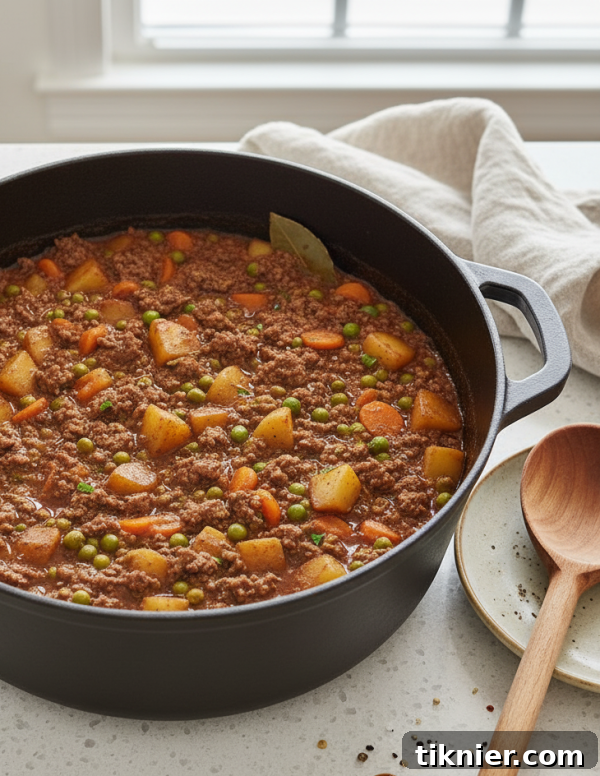
Description: A rich and savory ground beef stew that tastes like it simmered all day but comes together in just over an hour. A secret ingredient, balsamic vinegar, adds a wonderful depth and brightness that makes this classic comfort food truly special.
Yield: 6-8 servings | Category: Main Course | Cuisine: American
Prep Time: 15 minutes | Cook Time: 1 hour 5 minutes
Ingredients
- 2 tablespoons olive oil
- 1.5 pounds lean ground beef
- 1 large yellow onion, chopped
- 2 large carrots, peeled and sliced
- 2 celery stalks, chopped
- 3 cloves garlic, minced
- 1/4 cup all-purpose flour
- 4 cups beef broth
- 1 (14.5 ounce) can diced tomatoes, undrained
- 2 tablespoons tomato paste
- 3 tablespoons balsamic vinegar, divided
- 1 tablespoon Worcestershire sauce
- 1 teaspoon dried thyme
- 1 bay leaf
- 1.5 pounds Yukon Gold potatoes, cut into 1-inch cubes
- 1 cup frozen peas
- Salt and freshly ground black pepper to taste
- 2 tablespoons fresh parsley, chopped
Instructions
- Heat olive oil in a Dutch oven over medium-high heat. Brown the ground beef, then remove with a slotted spoon and set aside.
- Sauté onion, carrots, and celery in the beef drippings until softened (5-7 minutes). Stir in garlic and cook for 1 minute.
- Sprinkle flour over vegetables and stir for 1 minute.
- Slowly pour in beef broth, scraping the bottom of the pot.
- Stir in cooked beef, tomatoes, tomato paste, 2 tbsp balsamic vinegar, Worcestershire sauce, thyme, and bay leaf.
- Bring to a simmer, then cover and cook on low for 30 minutes.
- Add potatoes, cover, and simmer for another 20-25 minutes, until tender.
- Stir in frozen peas and remaining 1 tbsp balsamic vinegar. Cook for 5 more minutes.
- Remove bay leaf, season with salt and pepper, and serve garnished with parsley.
Notes
For a richer flavor, use a good quality beef broth. Yukon Gold potatoes are recommended as they hold their shape well. The final splash of balsamic vinegar at the end is key to brightening the flavors.
Servings: 6 | Calories: 450 kcal | Fat: 20g | Carbohydrates: 35g | Protein: 32g
Frequently Asked Questions About Ground Beef Stew
Here are clear, concise, and helpful answers to the most common inquiries I receive about this comforting and versatile Ground Beef Stew recipe. These tips will help you master the dish and troubleshoot any concerns.
Can I prepare this ground beef stew in a slow cooker?
Absolutely! This recipe is wonderfully adaptable and transitions beautifully into a slow cooker, making it an even more convenient option for those particularly hectic days. To achieve the best flavor, you’ll still want to complete the crucial initial steps on the stovetop. Begin by browning the ground beef in a large skillet, then remove it. In the same skillet, sauté the chopped onions, carrots, and celery until softened. Stir in the minced garlic for about a minute, then sprinkle in the flour and cook for another minute to create a roux.
Next, transfer the browned beef and cooked vegetables into your slow cooker insert. Whisk the beef broth into the skillet, diligently scraping up all those delicious browned bits (the “fond”), and then pour this flavorful liquid into the slow cooker as well. Finally, add the diced tomatoes, tomato paste, 2 tablespoons of balsamic vinegar, Worcestershire sauce, thyme, bay leaf, and the cubed potatoes. Give everything a good, thorough stir, cover, and cook on low for 6 to 8 hours or on high for 3 to 4 hours. Approximately 15 minutes before you’re ready to serve, stir in the frozen peas and the final tablespoon of balsamic vinegar. It’s a truly fantastic “set-it-and-forget-it” meal that yields incredible results.
What if my ground beef stew is too thin? How can I thicken it?
If your stew turns out thinner than your desired consistency, there are a couple of straightforward and effective methods to thicken it. My preferred approach is using a cornstarch slurry, as it’s quick, easy, and doesn’t introduce any additional flavors that might compete with the stew’s existing profile. Simply mix one tablespoon of cornstarch with two tablespoons of cold water in a small bowl until it forms a completely smooth, lump-free mixture. Slowly whisk this slurry into the simmering stew. Allow it to gently bubble for a couple of minutes, and you’ll observe it thickening up beautifully.
Another excellent option is to simply let the stew simmer a little longer with the lid off. This allows some of the excess liquid to evaporate naturally, which will not only thicken the broth but also concentrate and deepen the flavors. Be sure to stir it occasionally to prevent anything from sticking to the bottom of the pot. As a bonus tip, you could also gently mash a few of the cooked potato cubes against the side of the pot with your spoon; the starches released from the potatoes will naturally contribute to a thicker stew consistency.
Which type of ground beef is best for this stew recipe?
The choice of ground beef can significantly influence the final outcome of your stew. I highly recommend using a leaner ground beef blend, such as 85/15 (85% lean, 15% fat) or 90/10 (90% lean, 10% fat). These blends offer an ideal balance: they contain enough fat to impart excellent flavor and keep the meat moist during cooking, but not so much that your stew becomes overly greasy. Using a leaner beef also means you’ll likely avoid the need to drain off much, if any, excess fat after browning, allowing you to retain all those delicious drippings that are crucial for sautéing your vegetables and building the stew’s flavor base.
If you happen to only have ground beef with a higher fat content, like 80/20, on hand, that’s perfectly acceptable to use. It will still contribute a rich, robust flavor. However, with fattier blends, it’s important to drain off most of the excess grease after browning the meat, leaving just about a tablespoon or two in the pot to sauté your vegetables. This step prevents the final stew from having an undesirable layer of oil floating on top.
Can I substitute different types of potatoes in this ground beef stew?
Yes, you certainly can use other varieties of potatoes in this stew. I specify Yukon Gold potatoes in the recipe because, in my experience, they offer the absolute best texture for stews. They are wonderfully waxy, which means they hold their shape exceptionally well even during extended simmering times, preventing them from disintegrating into mush. Moreover, they possess a naturally creamy, buttery flesh that is incredibly delicious and complements the stew’s flavors beautifully, without becoming mealy.
If Yukon Golds are not available, red potatoes make an excellent substitute. They are also a waxy potato variety and will maintain their structural integrity nicely throughout the cooking process. Russet potatoes, which are starchier, will also work in a pinch. However, be aware that russets tend to break down more significantly during cooking. This can actually be a desirable outcome if you prefer a thicker, heartier stew, as their released starches will naturally help to thicken the broth. Just be prepared for the potato pieces to be much softer and less distinctly shaped in the final dish.
Is it possible to make this ground beef stew ahead of time for a party or gathering?
This Ground Beef Stew is an absolutely perfect dish to prepare in advance for a party, family gathering, or simply for convenient meal prep throughout the week. In fact, many people, myself included, find that the flavors taste even better the day after it’s made, as they’ve had more time to meld and deepen. You can easily prepare the entire recipe from start to finish one or even two days before you plan to serve it. Once cooked, allow the stew to cool completely at room temperature (within two hours), then transfer it to an airtight container and store it securely in the refrigerator.
When you’re ready to serve your make-ahead stew, simply transfer it to a large pot and reheat it gently over medium-low heat on the stovetop. Stir it occasionally to ensure even heating and to prevent sticking, until it is thoroughly warmed through. If the stew appears too thick after refrigeration, you can add a small splash of beef broth or water to loosen it to your preferred consistency. Making this stew ahead of time is a brilliant strategy that frees you up to enjoy your guests and the festivities, rather than being confined to the kitchen, and your friends will undoubtedly be impressed by its deep, developed flavor.
Explore More Hearty Recipes Next
If you thoroughly enjoyed the rich, comforting flavors and satisfying heartiness of this stew, I’m confident you’ll adore these other robust beef-centric recipes from my kitchen. Each one is crafted to deliver maximum flavor and comfort, making them ideal for cozy family dinners or special occasions.
- Easy Beef Stew Recipe: My cherished take on the classic, slow-simmered stew, featuring incredibly tender chunks of beef and a rich, savory broth.
- Easy Hungarian Goulash: A truly rich and deeply savory stew highlighting tender beef, enhanced by a generous and aromatic amount of sweet paprika for authentic flavor.
- Easy Beef Stroganoff Recipe: A wonderfully creamy, comforting classic featuring tender strips of beef and earthy mushrooms, utterly perfect when served over a bed of wide egg noodles.
Each of these dishes is a guaranteed crowd-pleaser and promises a delightful, satisfying experience, making them perfect additions to your repertoire of cozy family dinners.