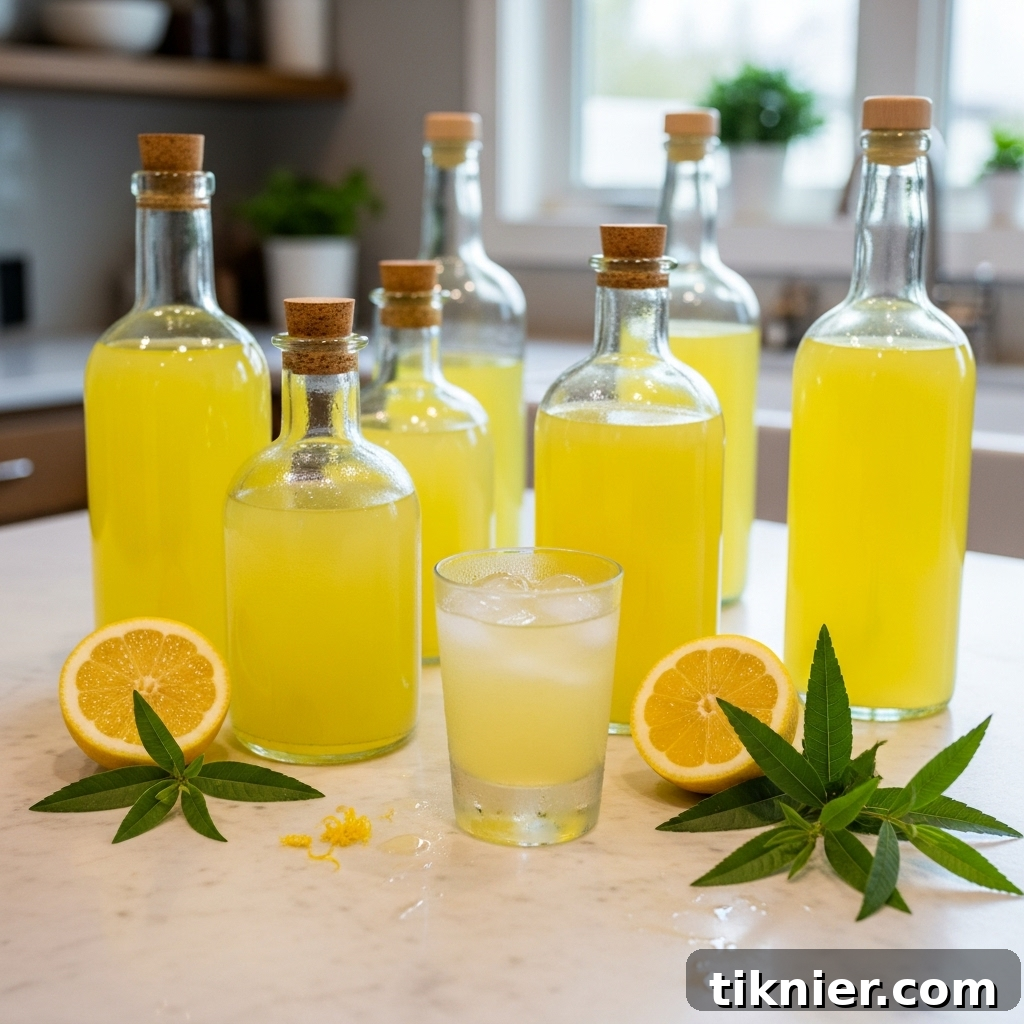
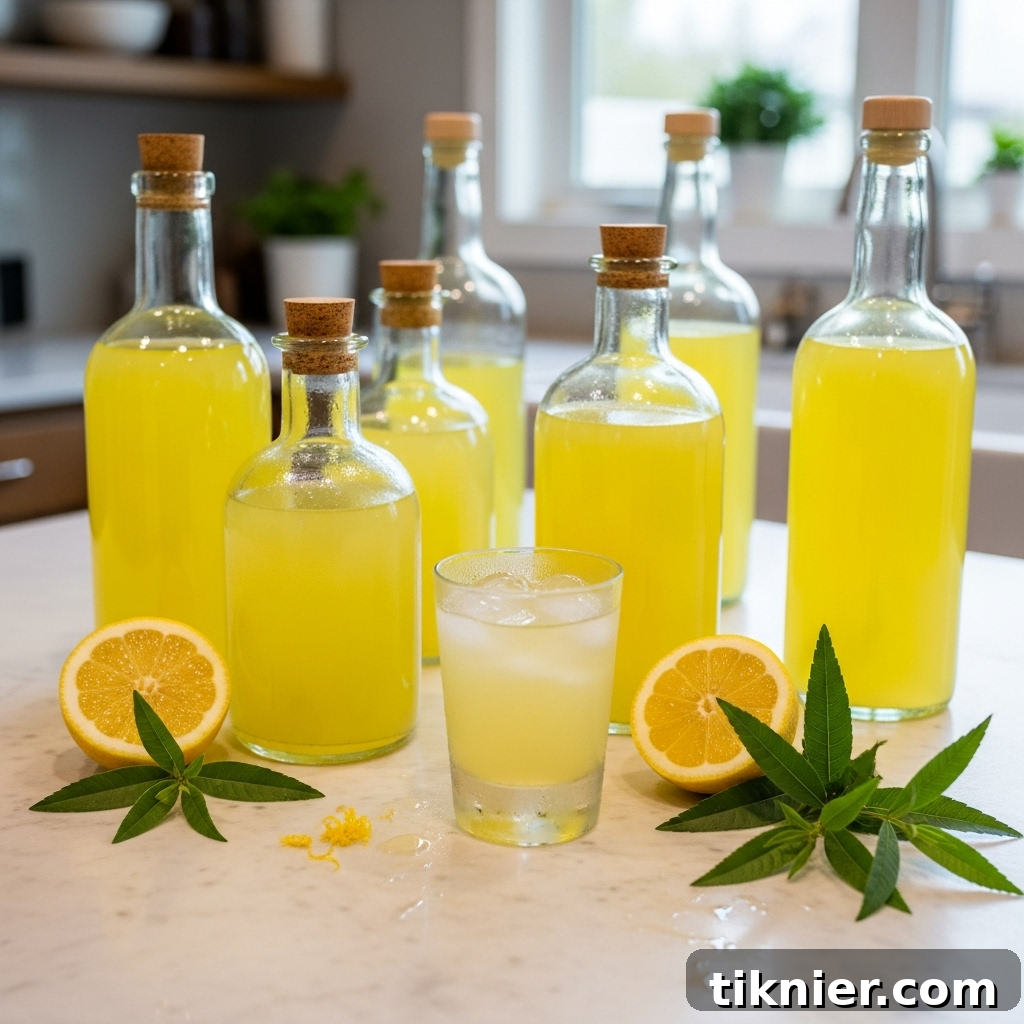
Homemade Lemon Verbena Limoncello: A Southern Twist on an Italian Classic
There are certain flavors that possess an almost magical ability to transport you to another place, and for me, the bright, zesty essence of lemon is undeniably one of them. My introduction to authentic, soul-satisfying Limoncello remains a vivid memory. It was during a quiet anniversary trip, nestled in a charming, diminutive Italian eatery that exuded the comforting aromas of garlic and timeless tradition. After a truly memorable meal, the proprietor graciously presented two small, frosted glasses, each filled with a glowing, sun-kissed yellow liquid.
From the very first sip, I was utterly captivated. The flavor was an intense burst of pure lemon, yet it possessed a remarkable smoothness and a delightful sweetness. It felt like liquid sunshine, gently warming as it cascaded down. In that moment, I knew: I had to recreate this enchanting elixir at home. Upon returning, I eagerly embarked on a journey of experimentation with the classic Limoncello recipe. While the results were lovely, I sensed a subtle missing element – a unique signature, something that would elicit a distinct “Wow, what is that?” from anyone who tasted it.
The answer, serendipitously, was flourishing just outside my kitchen door: fresh lemon verbena. With its extraordinarily bright, uplifting, and floral-lemon fragrance, it proved to be the quintessential companion to the traditional lemon zest. This incredible herb doesn’t overshadow the vibrant citrus notes; instead, it gracefully dances alongside them, introducing a nuanced layer of fresh, green complexity. It transformed a simple, albeit beautiful, liqueur into something truly extraordinary. This Lemon Verbena Limoncello isn’t just a drink; it’s my personal rendition of the Amalfi Coast’s essence, infused with the subtle, aromatic charm of a Southern garden.
Jump to My Signature Recipe!
The Art of Limoncello: Why This Recipe Stands Out
Limoncello, a beloved classic Italian liqueur, traces its origins to the breathtaking, sun-drenched coasts of Southern Italy, most famously the iconic Amalfi Coast. It’s a cherished tradition, typically served chilled as a “digestivo” after a hearty meal, intended to aid digestion and conclude the evening with a delightful, sweet, and bright flourish. Its enduring popularity stems from its elegant simplicity: at its heart, it’s merely lemon zest, high-proof alcohol, sugar, and water. When crafted with care, it perfectly encapsulates the pure, unadulterated essence of fresh, vibrant lemons.
The true magic of Limoncello lies within its meticulous method. High-proof alcohol acts as a powerful solvent, meticulously drawing out the intensely fragrant essential oils from the lemon zest. These oils are the treasure trove of all that incredible, concentrated lemon flavor. Once the alcohol has fully absorbed these aromatic compounds, it is then carefully balanced with a precisely crafted simple syrup, culminating in a wonderfully smooth, sippable liqueur. This is a time-honored recipe that has transcended generations, cherished for its straightforward preparation and profoundly rewarding outcome.
So, one might ask, why introduce a variation to such a revered classic? My philosophy revolves around enhancement, not alteration. My carefully chosen secret ingredient, fresh lemon verbena, is precisely what elevates this homemade Limoncello recipe into a true masterpiece. Lemon verbena boasts an unparalleled aroma, often described as even more intensely lemony than the lemon itself, but with graceful undertones of floral sweetness and herbaceous freshness. It imparts a sophisticated complexity and a subtle whisper of green vitality to the final product.
Instead of a singular, albeit brilliant, note of lemon, this infusion orchestrates a beautiful symphony of citrus and delicate herbs. It transforms the drink from a delightful yet simple liqueur into a truly artisanal creation. This thoughtful twist yields a Limoncello that is notably smoother, more exquisitely aromatic, and wonderfully refreshing, ensuring that every single sip becomes a luxurious experience to be savored and remembered.
Essential Ingredients for Crafting Your Perfect Limoncello
The inherent beauty of this lemon verbena limoncello recipe lies in its refreshingly concise ingredient list. However, because there are so few components, the quality and integrity of each one are paramount. Resisting the temptation to compromise on quality here will profoundly impact the excellence of your final homemade Limoncello. Invest in the best ingredients you can source, and your efforts will be richly rewarded.
- 10 large organic lemons: The foundation of our Limoncello.
- 1 generous bunch fresh lemon verbena: Approximately 1 cup of tightly packed leaves, providing our signature herbaceous note.
- 1 (750 ml) bottle of 100-proof vodka or 151-proof grain alcohol: The crucial solvent for flavor extraction.
- 3 ½ cups filtered water: For creating a pristine simple syrup.
- 2 ½ cups granulated sugar: To perfectly balance the intense lemon flavor with sweetness.
Let’s delve a little deeper into these crucial players to ensure your Limoncello is nothing short of spectacular. For the lemons, opting for organic and unwaxed varieties is not merely a suggestion but an absolute necessity. Since we are meticulously extracting oils exclusively from the zest, it is imperative to avoid steeping undesirable pesticides and waxes into your exquisite liqueur. Seek out lemons with noticeably thick, vibrantly bright, and slightly oily skins, as these typically harbor the most fragrant and oil-rich zest. Varieties such as Eureka or Lisbon lemons are particularly well-suited for this purpose.
The undisputed star of my unique rendition is the fresh lemon verbena. This remarkably aromatic herb introduces the distinctive twist that elevates this homemade Limoncello recipe to unparalleled heights. If you are fortunate enough to cultivate it in your own garden, that’s ideal! Otherwise, it is frequently available at local farmers’ markets or in the fresh herb sections of well-stocked grocery stores. Look for leaves that are vividly green and exude a potent, captivating lemon scent when gently bruised between your fingers.
When selecting the alcohol, a higher proof consistently yields superior results. A 100-proof (50% ABV) vodka represents an excellent and widely accessible choice, performing admirably in the extraction process. If you are able to procure it, a 151-proof (75.5% ABV) grain alcohol, such as Everclear (though its availability can vary by region), is even more exceptionally efficient at drawing out those precious lemon oils. While a standard 80-proof (40% ABV) vodka can be used in a pinch, be aware that the infusion period may need to be extended, and the resulting lemon flavor might be slightly less vibrant and impactful.
Finally, for the essential simple syrup, the use of filtered water is highly recommended. This ensures a clean, neutral base that will not introduce any extraneous flavors, allowing the pure lemon and delicate herb notes to shine uninhibited. Plain granulated sugar, in its purest form, is precisely what is needed to achieve the perfect equilibrium of sweetness, ensuring a balanced and harmonious final product.
Step-by-Step Guide to Crafting Your Lemon Verbena Limoncello
Creating homemade Limoncello is less about intricate culinary skills and more about patience and precision. The process is remarkably simple and straightforward, essentially a rewarding waiting game. Follow these steps diligently, and you will be handsomely rewarded with a spectacular, artisan-quality liqueur. Gather your equipment, ensure everything is clean, and let’s begin this exciting journey.
Step 1: Meticulously Prepare Your Citrus and Herbs
Initiate the process by thoroughly washing your ten organic lemons and the entire bunch of fresh lemon verbena under cool, running water. Since the peels and leaves are the focal point of our flavor extraction, it’s paramount that they are impeccably clean. After washing, meticulously pat everything completely dry with a clean kitchen towel. Any residual water, no matter how minor, can dilute the alcohol and potentially hinder the efficiency and quality of the infusion process.
Step 2: Expertly Zest the Lemons, Avoiding Bitterness
Using a sharp vegetable peeler, such as a high-quality Y-peeler, carefully remove only the vibrant yellow zest from all ten lemons. This step demands attention to detail: the absolute key is to obtain only the outermost yellow layer, diligently avoiding any trace of the bitter white pith that lies directly underneath. The pith contains compounds that can impart an undesirable harshness to your delicate Limoncello. Aim for long, wide strips if possible, as these are generally easier to handle and strain out later.
Step 3: Combine the Aromatic Foundations for Infusion
Select a large glass jar, ideally with a capacity of at least a half-gallon, equipped with a tight-fitting, airtight lid. Gently place all the meticulously prepared lemon zest strips and the fresh lemon verbena leaves into the bottom of the jar. Distribute them evenly to ensure maximum contact with the alcohol.
Step 4: Introduce the High-Proof Alcohol
Carefully pour the entire 750 ml bottle of your chosen high-proof vodka or grain alcohol over the lemon zest and verbena within the jar. It is absolutely crucial to ensure that all the zest and verbena leaves are completely submerged in the liquid. This complete submersion is vital for an effective and thorough extraction of their precious essential oils.
Step 5: Begin the Patient Infusion Process
Securely seal the jar with its lid and give it a gentle, deliberate swirl to mix the contents. Now, the most challenging part of this recipe commences: the waiting game. Store the sealed jar in a cool, dark environment, such as a pantry, cupboard, or even a basement, away from direct sunlight and temperature fluctuations. Allow the mixture to infuse for a minimum of 10 days. From my experience, the optimal period for the most profound and balanced flavor extraction is typically between three to four weeks. Remember to give the jar a gentle shake every few days; this helps agitate the contents and encourages a more consistent and thorough infusion. You’ll observe the alcohol gradually transforming, acquiring a magnificent, brilliant yellow hue as it absorbs the vibrant colors and flavors from the zest.
Step 6: Prepare the Sweetening Simple Syrup
Once the dedicated infusion period is complete, it’s time to prepare the simple syrup, which will balance the intensity of your infused alcohol. In a medium-sized saucepan, combine the 3 ½ cups of filtered water and 2 ½ cups of granulated sugar. Place the saucepan over medium heat on your stovetop.
Step 7: Dissolve the Sugar Completely
Stir the water and sugar mixture continuously. Your objective is to ensure that all the sugar crystals completely dissolve into the water, forming a clear, syrupy liquid. It is important to prevent the mixture from coming to a rolling boil; you simply want to heat it enough to facilitate the sugar’s dissolution. Once transparent, remove from heat.
Step 8: Cool the Simple Syrup to Room Temperature
After the sugar has fully dissolved, promptly remove the saucepan from the heat and set it aside. This step is critical: you must allow the simple syrup to cool down completely to room temperature. Introducing warm or hot syrup into the cold, infused alcohol can trigger an effect known as “louching,” which can make your final Limoncello appear cloudy or opaque. While some prefer this visual characteristic, ensuring the syrup is cold will help maintain clarity if that is your preference.
Step 9: Strain the Aromatic Infused Alcohol
Carefully prepare for straining by placing a fine-mesh sieve over a large, clean, non-reactive bowl. For an even clearer result, line the sieve with a piece of cheesecloth (folded several times) or a clean coffee filter. Slowly and carefully pour the entire infused alcohol mixture through the prepared sieve. This process will effectively separate and remove all the spent lemon zest and verbena leaves. Crucially, resist the urge to press down on the solids; doing so can inadvertently release bitter compounds into your otherwise perfect liqueur. Simply allow the liquid to drain naturally and thoroughly.
Step 10: Masterfully Combine Syrup and Alcohol
With the strained, pure infused alcohol ready and the simple syrup thoroughly cooled, it’s time for the grand combination. Slowly pour the cooled simple syrup into the bowl containing the infused alcohol. Using a whisk or a large spoon, gently stir the two liquids together until they are completely and harmoniously combined. At this point, your homemade Lemon Verbena Limoncello is officially created!
Step 11: Elegantly Bottle Your Limoncello
Utilizing a clean funnel, meticulously transfer the freshly made Limoncello into clean, sterilized glass bottles that can be securely sealed. Swing-top bottles are an excellent choice, not only for their aesthetic appeal and airtight storage capabilities but also for their convenience if you plan on gifting your homemade creation.
Step 12: Allow Flavors to Mellow and Harmonize
For the most exceptional and well-rounded flavor profile, it is highly recommended to allow the bottled Limoncello to rest and mellow for an additional week or two. This secondary resting period can be done at room temperature or in the refrigerator. This crucial step permits all the vibrant flavors to fully integrate and meld together beautifully, culminating in a noticeably smoother, more harmonious, and exquisitely balanced taste experience.
Step 13: Chill Thoroughly and Serve with Delight
Finally, the moment of truth! Before serving your precious Lemon Verbena Limoncello, store the bottles in the freezer for a minimum of four hours, or ideally, overnight. This will ensure it reaches its optimal serving temperature. It should achieve a delightfully syrupy consistency, intensely ice-cold, and utterly delicious. Prepare to impress!
Savoring Your Homemade Limoncello: Serving Suggestions
The act of serving this exquisite homemade Lemon Verbena Limoncello is, in itself, a delightful ritual. The most classic, and arguably the most cherished, method of enjoyment is to serve it directly from the freezer, intensely ice-cold. The inherent high alcohol and sugar content prevent it from freezing solid, instead imparting a wonderfully thick, syrupy consistency that is nothing short of divine. Traditionally, it graces the table as a digestif after dinner, offering a perfect, sweet, and palate-cleansing conclusion to a rich meal.
For the ultimate experience, I highly recommend keeping a few small cordial glasses or shot glasses chilled in the freezer right alongside your bottle of Limoncello. Pouring the frosty liqueur into an equally frosted glass elevates the entire experience, making it feel extra special and ensuring it remains perfectly chilled as you slowly sip and savor its complex flavors. Remember, a little goes a long way with such a potent and flavorful spirit; small, 1-ounce pours are typically ideal.
While enjoying it straight is a time-honored tradition, this Lemon Verbena Limoncello possesses remarkable versatility. It can be creatively incorporated into a myriad of other drinks and desserts, adding a glorious splash of sunshine and sophisticated lemon flavor. Here are some of my personal favorite ways to utilize this golden elixir:
- Limoncello Spritz: This is my quintessential go-to for a refreshing summer afternoon. In a wine glass filled with ice, combine one part Limoncello with three parts crisp Prosecco or another favorite sparkling wine, and finish with a delicate splash of club soda for effervescence. Garnish with a vibrant lemon wheel and a fresh sprig of mint for an incredibly refreshing and visually appealing cocktail.
- Dessert Drizzle: Elevate simple desserts to gourmet status. Gently cascade a small amount of Limoncello over a scoop of premium vanilla bean ice cream, a slice of fluffy angel food cake, or even a warm pound cake. The liqueur gracefully soaks in, infusing the dessert with an unexpected burst of sophisticated, aromatic lemon flavor that is simply heavenly.
- Enhanced Lemon Drop Martini: Give this popular classic cocktail a remarkable upgrade. Substitute some of the traditional simple syrup or triple sec in your Lemon Drop Martini recipe with this homemade Limoncello. The result is a cocktail with a significantly more complex, deeply aromatic, and genuinely authentic lemon flavor that will impress connoisseurs.
- Fruit Salad Brightener: Transform an ordinary fruit salad into an extraordinary one. Add a tablespoon or two of Limoncello to a bowl of fresh berries, melon, or mixed fruit. The liqueur brilliantly brightens and accentuates the natural flavors of the fruit, imparting a lovely, sweet tang that harmoniously ties all the components together.
Regardless of how you choose to serve it, this homemade Limoncello is an ode to bright, fresh, and vibrant flavors. It’s perfectly suited for lively sharing with friends after an exquisite dinner party or for indulging in as a quiet, personal treat to unwind at the close of a long and demanding day.
Optimal Storage and Creative Reuses for Your Limoncello Elements
Properly storing your meticulously crafted homemade Limoncello is paramount to preserving its vibrant flavor profile and its captivating golden hue for the longest possible duration. The absolute premier location for your finished product is undoubtedly in the freezer. Thanks to its generous alcohol and sugar content, it will not solidify into ice; instead, it will attain a wonderfully thick, syrupy consistency, perfectly chilled and always ready for spontaneous serving. Storing it in the freezer also offers the added benefit of preserving its peak freshness for an extended period.
When securely sealed in clean glass bottles, your Limoncello will maintain its quality for at least a year in the freezer, although, in my experience, its flavor reaches its absolute zenith within the initial six months. While refrigeration is also an option, where it will comfortably last for several months, or even a cool, dark cabinet, bear in mind that cabinet storage won’t provide the ideal serving temperature. For both exceptional longevity and the quintessential syrupy-cold serving experience, the freezer unequivocally remains the superior storage solution.
Now, let’s address the notion of “leftovers” – specifically, the aromatic pile of alcohol-soaked lemon peels and verbena leaves that remain after you’ve strained your infused alcohol. It would be an absolute culinary oversight to simply discard them! Instead, they present fantastic opportunities for a second life. Here are a couple of ingenious ideas to give them purpose beyond the liqueur:
- Craft Exquisite Candied Lemon Peels: Take the strained lemon peels and immerse them in a freshly prepared simple syrup (using equal parts granulated sugar and water). Gently simmer them until they become tender, translucent, and beautifully infused. Once cooked, meticulously arrange them on a wire rack to dry, then toss them generously in granulated sugar for a sparkling finish. These make a truly fantastic and elegant garnish for cocktails, a sophisticated topping for cakes and pastries, or a delightful sweet treat to enjoy on their own.
- Create a Luxurious Lemon Sugar Scrub: Begin by thoroughly drying the spent lemon peels. This can be achieved in a low-temperature oven or a food dehydrator until they are completely crisp. Once dry, pulse them in a food processor alongside coarse sugar and a touch of coconut oil. The result is a wonderfully fragrant and invigorating exfoliating body scrub, making for an exceptional homemade gift or a luxurious personal indulgence.
- Infuse a Flavorful Simple Syrup: Place the leftover peels in a clean jar and cover them with a freshly made, still-warm simple syrup (again, equal parts sugar and water). Allow this to infuse for a day or two in the refrigerator, then strain out the peels. You will be left with a lightly alcoholic, intensely lemon-flavored syrup that is perfect for enhancing other cocktails, sweetening iced tea, or even drizzling over pancakes or fresh fruit.
By embracing a creative and resourceful mindset, you can ensure that every single facet of those beautiful organic lemons is utilized to its fullest potential – a philosophy deeply appreciated by this Southern cook. Achieving no waste while maximizing deliciousness is always an unequivocal win-win situation.
Unleashing Your Creativity: Limoncello Substitutions & Variations
One of the most appealing aspects of a fundamentally simple and versatile recipe like this Lemon Verbena Limoncello is its inherent adaptability. Once you’ve mastered this foundational creation, you’re perfectly poised to embark on an exciting journey of flavor exploration, experimenting with diverse ingredients to develop your own signature liqueurs. The core methodology – infusing a high-proof spirit with aromatic elements – remains consistent, providing a robust framework for your culinary creativity.
Should lemon verbena be unavailable, or if you simply wish to explore alternative flavor profiles, numerous other herbs beautifully complement lemon’s bright character. Fresh mint, for instance, can yield a wonderfully bright, mojito-inspired liqueur, offering a crisp and cooling sensation. Basil, with its sweet and subtly peppery notes, introduces a surprisingly delightful complexity. For a truly unique and sophisticated twist, consider a sprig of rosemary; its wonderful piney, savory complexity pairs astonishingly well with citrus. Simply substitute the lemon verbena with your chosen herb and meticulously follow the recipe as outlined.
Furthermore, your creativity doesn’t need to be confined solely to lemons. This potent infusion technique translates beautifully to a wide array of other citrus fruits, each offering its own distinct charm. Here are several exciting variations you might be eager to explore:
- Arancello (Orange Liqueur): Utilize the zest from vibrant organic oranges, particularly aromatic varieties like Valencia or the stunning blood oranges, to create a sweeter, warmer, and exquisitely fragrant liqueur. For a cozy winter variation, consider adding a cinnamon stick or a few whole cloves to the infusion jar.
- Pompelmocello (Grapefruit Liqueur): The zest of juicy pink or ruby red grapefruits will produce a striking coral-colored liqueur, distinguished by a wonderfully pleasant, bittersweet flavor profile that is both sophisticated and refreshing.
- Limecello (Lime Liqueur): Employing fresh lime zest results in a distinctively zesty, intensely tart liqueur. This vibrant creation is perfect for imparting a serious punch of flavor to margaritas, gin-based cocktails, or even a refreshing mojito.
- Crema di Limoncello (Creamy Limoncello): For a truly decadent, dessert-like indulgence, venture into making a “crema.” After you’ve prepared the simple syrup and allowed it to cool completely, gently whisk in whole milk or heavy cream before combining it with the strained, infused alcohol. Please note that this rich, creamy version must be stored in the refrigerator and, due to the dairy content, should be consumed within a few weeks for optimal freshness.
You also have the freedom to precisely tailor the sweetness level of your Limoncello to your exact personal preference. If you lean towards a more tart, less saccharine liqueur, you can confidently reduce the amount of sugar in the simple syrup to 2 cups. This adjustment will yield a drier, more spirit-forward Limoncello. Conversely, if you possess a pronounced sweet tooth and envision your Limoncello as a richer, dessert-style indulgence, feel free to increase the sugar content to 3 cups. Ultimately, this is your unique creation, so empower yourself to adjust and customize it exactly to your liking!
Lemon Verbena Limoncello: A Signature Homemade Liqueur
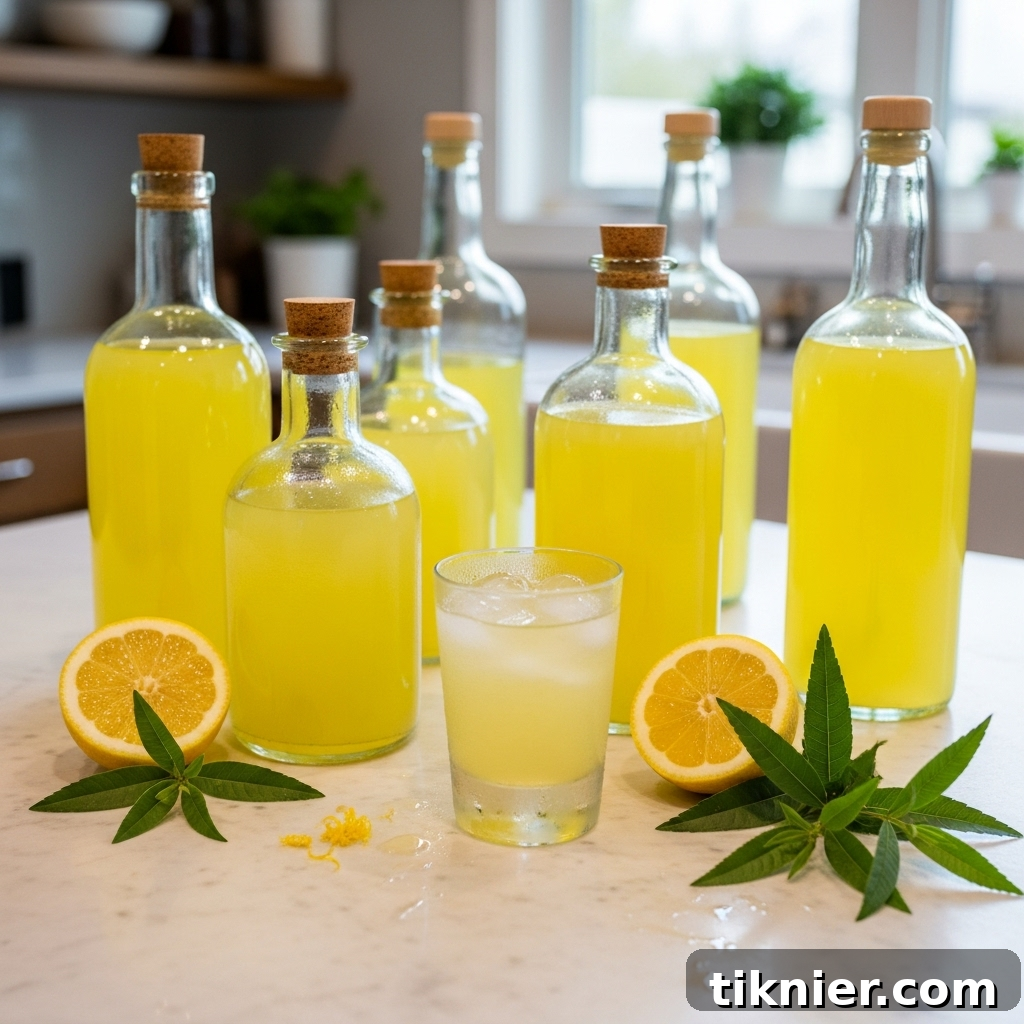
Description: Discover how to make a bright, intensely refreshing, and wonderfully aromatic homemade Limoncello, elevated with a unique twist. The thoughtful addition of fresh lemon verbena introduces a complex floral and herbaceous note, transforming the classic Italian liqueur into something truly extraordinary and memorable. Perfect for sipping ice-cold as a digestivo, crafting sophisticated cocktails, or presenting as a thoughtful, handcrafted gift to friends and loved ones.
Yield: Approximately 1.75 Liters | Category: Beverage | Cuisine: Italian-American Inspired
Prep Time: 20 minutes | Cook Time: 10 minutes
Additional Time: 10-30 days for optimal infusion & mellowing
Ingredients
- 10 large organic, unwaxed lemons
- 1 generous bunch fresh lemon verbena (approximately 1 cup of leaves)
- 1 (750 ml) bottle 100-proof vodka or 151-proof grain alcohol (Everclear, if available)
- 3 ½ cups filtered water
- 2 ½ cups granulated sugar
Instructions
- Prepare Citrus & Herbs: Thoroughly wash and completely dry all lemons and lemon verbena leaves.
- Zest Lemons: Using a vegetable peeler, carefully remove only the yellow zest from the lemons, strictly avoiding any bitter white pith.
- Combine for Infusion: Place the lemon zest and verbena leaves into a large (at least ½-gallon) sealable glass jar.
- Add Alcohol: Pour the high-proof alcohol over the zest and leaves, ensuring they are fully submerged.
- Infuse: Seal the jar tightly and store in a cool, dark place for 10 to 30 days, gently shaking every few days.
- Prepare Simple Syrup: After infusion, combine water and sugar in a saucepan and heat until sugar completely dissolves.
- Cool Syrup: Remove from heat and allow the simple syrup to cool completely to room temperature.
- Strain Alcohol: Strain the infused alcohol through a fine-mesh sieve (lined with cheesecloth, if desired), discarding solids. Do not press.
- Combine & Mix: Slowly pour the cooled simple syrup into the strained alcohol. Stir gently until fully combined.
- Bottle & Mellow: Transfer the Limoncello into clean bottles. Allow it to mellow for at least one week at room temperature or in the fridge for peak flavor.
- Chill & Serve: Store in the freezer for at least 4 hours (preferably overnight) before serving ice-cold.
Notes
For the best and purest flavor, always use organic, unwaxed lemons. The duration of the infusion directly impacts the intensity of the lemon and verbena flavors – longer infusions yield richer results. Crucially, ensure your simple syrup is completely cooled before mixing with the alcohol to help prevent a cloudy final product. Enjoy responsibly!
Servings: Approximately 50 (1-ounce servings) | Calories: 75 kcal | Fat: 0g | Carbohydrates: 8g | Protein: 0g
Frequently Asked Questions About Homemade Limoncello
Here are clear, comprehensive answers to the most common inquiries I receive about crafting this delightful homemade Lemon Verbena Limoncello.
Why might my homemade Limoncello appear cloudy? Is this normal?
A cloudy appearance in your homemade Limoncello is far from a sign of failure; in fact, it’s a perfectly natural phenomenon and often preferred by many enthusiasts! This intriguing effect is scientifically known as the “ouzo effect” or louching. It occurs when the essential oils, which you’ve so diligently extracted from the lemon peels and are readily soluble in high-proof alcohol, spontaneously come out of solution when the water-based simple syrup is introduced. This creates a fascinating micro-emulsion, transforming the previously clear liquid into a milky, elegantly opaque yellow.
Whether your Limoncello exhibits this cloudiness is influenced by several factors: the specific oil content of your chosen lemons (some varieties are richer than others), the proof of the alcohol you use, and critically, the temperature of your simple syrup when you combine it with the infused alcohol. A higher concentration of aromatic lemon oils naturally increases the likelihood of this visual effect. Furthermore, adding a warm or even room-temperature simple syrup to the cold infused alcohol can create a thermal shock, rapidly causing the oils to precipitate and leading to cloudiness. For those who prefer a clearer result, meticulously ensuring your simple syrup is thoroughly chilled before it’s combined with the strained alcohol is a key preventative measure.
What type of alcohol is best suited for making Limoncello?
The optimal alcohol for crafting truly exceptional Limoncello is a high-proof, neutral grain spirit. The fundamental principle here is that the higher the alcohol content, the more efficiently and completely it will extract the flavorful and aromatic essential oils from the lemon zest. Many traditional Italian recipes consider a 190-proof (95% ABV) pure grain alcohol, such as Everclear, to be the gold standard. However, it’s important to note that pure grain alcohol of this potency is not legally available for purchase in all regions and can be quite intense to work with.
A more widely accessible and equally excellent alternative is a 100-proof (50% ABV) vodka. This strength is perfectly robust enough to perform a fantastic job of oil extraction while offering a slightly smoother and less harsh profile than pure grain spirits. When selecting your vodka, opt for a clean, neutral brand without any added flavorings that could interfere with the delicate lemon and verbena notes. I generally advise against using standard 80-proof (40% ABV) vodka if superior alternatives are available. While it *will* technically work, its lower alcohol content is significantly less effective at extracting the maximum amount of oils, which means you’ll typically require a much longer infusion time, and the final lemon flavor may be noticeably less intense and potentially “watered down.”
What is the shelf life of homemade Limoncello, and how should I store it?
Thanks to its potent combination of high alcohol and substantial sugar content, homemade Limoncello is an incredibly stable and long-lasting liqueur. When stored correctly in a tightly sealed bottle, it will remain perfectly safe to consume for an extended period without spoiling. For optimal quality, vibrancy, and flavor preservation, my strongest recommendation is to store your finished Limoncello in the freezer. Here, it maintains a perfectly chilled, ready-to-serve temperature, and its unique composition prevents it from freezing solid. Stored in the freezer, your Limoncello will easily retain its peak flavor and color for at least a year, and often up to two years, without any significant degradation.
Alternatively, you can store it in the refrigerator, where it will still be excellent for many months. If you opt for storage at room temperature in a cool, dark cabinet, it will remain safe to drink for a year or even longer; however, you might observe a gradual fading of its vibrant yellow color over time due to light exposure. Crucially, for that iconic, syrupy-cold serving experience that Limoncello is famous for, the freezer undeniably stands as the superior storage method, offering both exceptional longevity and instant readiness for enjoyment.
Can I adjust the sugar content to make a less sweet Limoncello?
Absolutely! The amount of sugar incorporated into a Limoncello recipe is very much a matter of individual preference and palate. My Lemon Verbena Limoncello recipe is formulated to provide a beautifully balanced sweetness that is rich but not cloying, reflecting my personal preference. However, you are entirely free to adjust the simple syrup to perfectly suit your taste. If you prefer a more tart, exhilaratingly spirit-forward liqueur, you can confidently reduce the sugar quantity to 2 cups while maintaining the specified amount of water. This modification will result in a drier, more potent-tasting Limoncello, allowing the bright citrus notes to truly sing.
Conversely, if you possess a pronounced sweet tooth and envision your Limoncello as a truly indulgent, dessert-like libation, you can increase the sugar content to 3 cups. It’s important to remember that sugar plays a multifaceted role beyond merely sweetening the drink; it also significantly contributes to the liqueur’s luxurious body, its smooth mouthfeel, and its characteristic syrupy texture, particularly when served well-chilled. Experimenting with a smaller batch is an excellent way to discover your personal ideal sweetness level, empowering you to truly customize your creation.
Why might my Limoncello taste bitter, and how can I prevent this?
A bitter taste in homemade Limoncello is almost invariably attributable to a single, easily avoidable culprit: the pith. The pith is the distinct white, spongy layer that resides directly between the fragrant yellow zest and the actual lemon fruit. While the yellow zest is a treasure trove of delightful, aromatic oils, the pith is malheureusement packed with intensely bitter compounds. Therefore, it is absolutely paramount to meticulously avoid introducing even the smallest trace of pith into your infusion mixture. When you are carefully peeling your lemons, employ a light, deliberate touch, aiming to remove solely the very thin, outermost yellow layer of zest.
Another, less frequently encountered, cause of bitterness can stem from extreme over-infusion. While rare with lemon zest, if the peels were to remain steeped in the alcohol for many, many months (far beyond the recommended timeframe), some bitterness *could* potentially leach out. Finally, exercising excessive force by squeezing or pressing the spent peels when you are straining the infused alcohol can also inadvertently release undesirable bitter compounds. For the purest, cleanest, and most vibrant flavor profile, always allow the liquid to drain naturally and gently through the sieve, refraining from any aggressive pressing actions.
Beyond Limoncello: Explore More Bright & Zesty Recipes
If the exhilaratingly bright, vibrant, and zesty flavors of this Lemon Verbena Limoncello captured your culinary imagination, I am confident you will thoroughly enjoy these other delightful, lemon-forward recipes from my kitchen.
- The Best Lemon Drop Martini: Discover a flawlessly balanced cocktail, expertly crafted to be both sweet and delightfully tart – a timeless classic for a very good reason.
- Oh So Lemon Bars: Indulge in the ultimate lemon bars, featuring a perfectly buttery shortbread crust generously topped with a thick, irresistibly tangy lemon filling that promises pure citrus bliss.
- Lemon Coconut Pudding Cakes: Experience the magic of these enchanting little cakes that gracefully separate during baking into a light, airy sponge on top and a rich, creamy lemon pudding on the bottom – a truly captivating dessert.
I encourage you to give these recipes a try and infuse a little more sunshine and zest into your kitchen and your life!