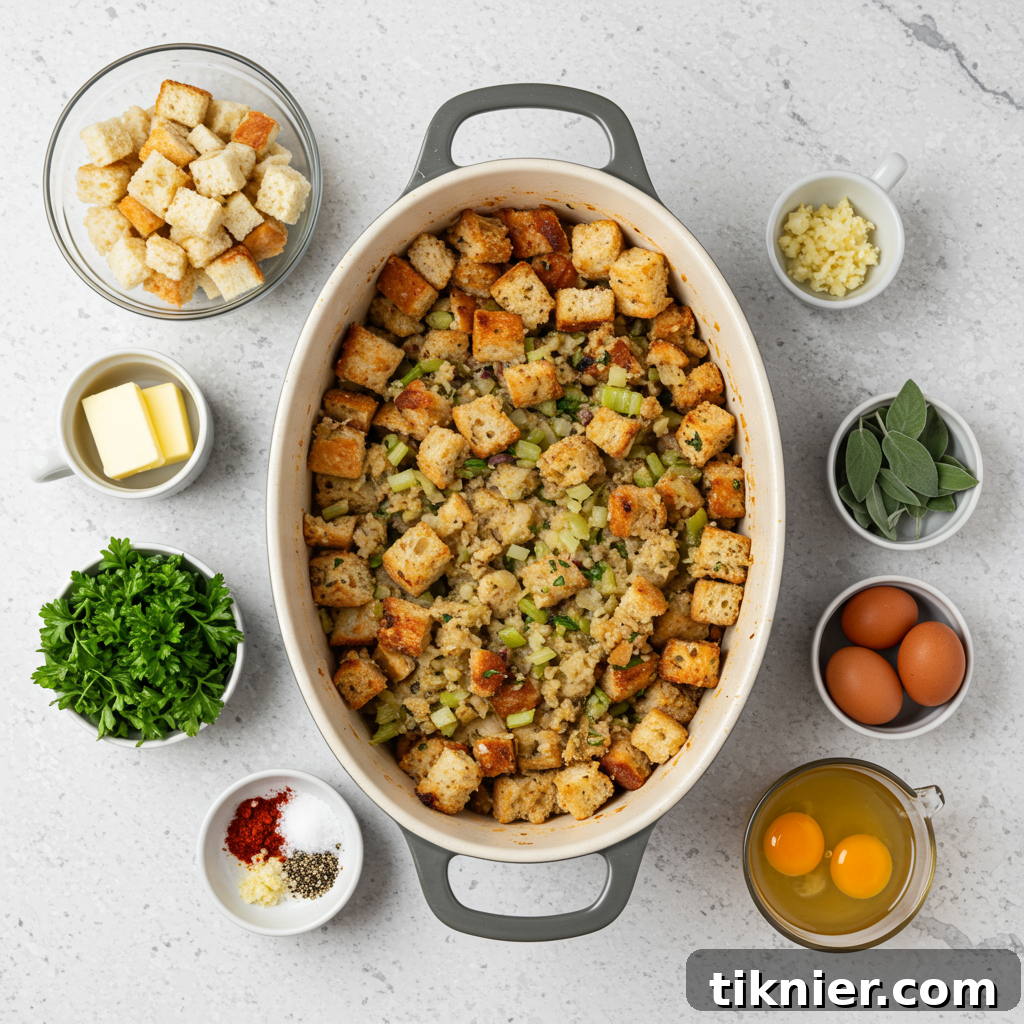
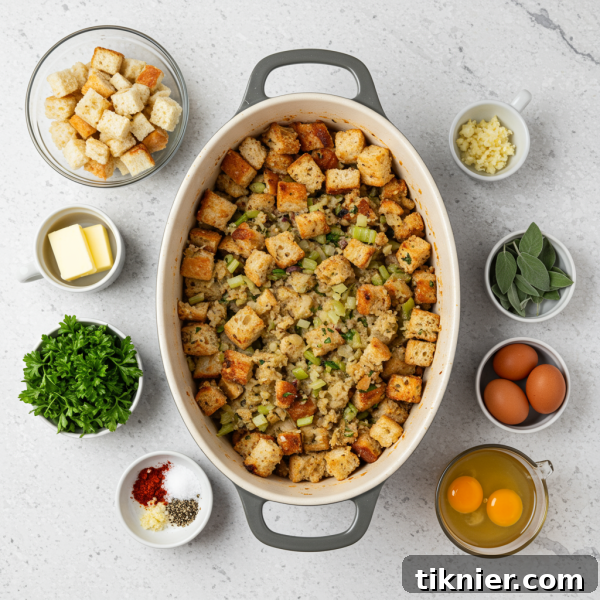
Few dishes evoke the spirit of Southern hospitality and holiday celebrations quite like a steaming, savory casserole of oyster stuffing. It’s a culinary tradition woven deep into the fabric of coastal gatherings, promising comfort and a taste of the sea with every forkful.
I distinctly recall my first Thanksgiving spent with my husband’s family along the charming Southern coast. His mother, a truly remarkable woman whose kitchen perpetually smelled of warming butter and culinary magic, was renowned for her expansive holiday feast. Among the many cherished dishes, the undeniable star, alongside the magnificent roasted turkey, was her legendary oyster stuffing. This wasn’t just any recipe; it was a generations-old heirloom, a tangible link to their family’s rich coastal heritage and a true reflection of the region’s bountiful waters.
From the very first bite, I fell in love with its comforting richness and deep savory notes. Yet, after several years of relishing this traditional delight, the enthusiastic cook within me began to stir. I sensed a subtle opportunity for enhancement, a chance to introduce a vibrant “pop” of flavor that could truly make the dish sing. Of course, I would never dream of altering her treasured family recipe directly, but this inspiration led me to experiment with my own distinct version at home, seeking to add a layer of personal culinary expression.
My goal was to infuse the stuffing with additional warmth and complexity without overshadowing the delicate, briny essence of the fresh oysters. After a few delightful culinary experiments, I discovered the perfect harmonious combination: a subtle whisper of smoked paprika and a generous splash of dry sherry. This unique twist was precisely what I had been searching for. The smoked paprika introduces an earthy, subtle smokiness that resonates beautifully with the briny oysters, creating an unexpected depth. Simultaneously, the dry sherry brightens the entire composition, lifting the flavors and adding a sophisticated, slightly acidic counterpoint. This recipe is my heartfelt interpretation of the classic, a respectful nod to tradition gracefully intertwined with a dash of my own kitchen personality and modern flair, destined to become a new holiday favorite.
Skip to My Special Recipe!
Why This Oyster Stuffing Recipe Will Become Your New Favorite
Oyster stuffing, often lovingly referred to as oyster dressing in various Southern locales, boasts a captivating and lengthy history. This cherished tradition originated from sheer practicality along the expansive Atlantic and Gulf coasts, where oysters were not only abundant but also incredibly affordable. These briny treasures became a natural and ingenious addition, serving to extend bread-based stuffings while simultaneously imparting a profound savory, umami-rich flavor that elevated the entire holiday table.
Over time, this distinct dish solidified its place as an indispensable fixture at Thanksgiving and Christmas celebrations, offering a delightful taste of the sea that beautifully complemented the robust flavors of roasted poultry and velvety gravies. Its enduring popularity is effortlessly explained: it is, quite simply, utterly delicious. The plump, tender oysters, as they cook, gracefully release their precious liquor, infusing the entire stuffing with a unique, unmistakable briny essence – a depth of flavor that is genuinely inimitable and impossible to replicate with any other ingredient.
This particular oyster stuffing recipe truly excels because it not only reveres that time-honored tradition but actively elevates the flavor profile to new heights. Its success lies in a masterful balance of components. The robust, day-old bread forms the ideal structural foundation, diligently soaking up the rich broth and complex flavors without ever succumbing to a mushy texture. The classic aromatic trio of finely chopped onion, crisp celery, and pungent garlic, tenderly softened in a generous amount of butter, establishes a deeply aromatic and savory base.
However, the genuine culinary alchemy stems from my two carefully chosen secret ingredients. The smoked paprika introduces a delicate whisper of smokiness, a nuanced background note that exquisitely complements the inherent brininess of the seafood. Following this, a judicious splash of dry sherry gracefully cuts through the stuffing’s richness, bestowing a bright, subtly acidic note that awakens and harmonizes all the other flavors. The result is a dish that is simultaneously sophisticated and profoundly comforting, tasting both timelessly traditional and remarkably fresh and new. It’s a culinary experience that promises to delight your senses and impress your guests, ensuring its place as a cherished centerpiece on your festive table for years to come.
Essential Ingredients for the Perfect Oyster Stuffing
The inherent beauty of this exceptional oyster stuffing recipe is found in its reliance on a thoughtfully selected array of simple, yet supremely high-quality ingredients. While each component plays a vital role, the one element that truly sets this recipe apart and makes it uniquely mine is the judicious inclusion of smoked paprika. This seemingly small addition creates an astonishing world of difference, bestowing a subtle yet profound smokiness that elevates the entire dish, transforming it from merely good to truly unforgettable. When you embark on your shopping expedition for this recipe, paying close attention to the quality of a few key items will unequivocally guarantee the most outstanding and delicious result for your oyster stuffing.
For the oysters themselves, a commitment to freshness is paramount. If your local seafood counter offers freshly shucked oysters, I wholeheartedly encourage you to choose them. Their superior flavor profile and delicate texture are simply unparalleled. Be sure to request that they are packed with their natural liquor, as this precious liquid gold is an invaluable addition to the stuffing, enriching its briny essence. Should fresh oysters prove to be an elusive option, do not despair. Seek out a high-quality brand of canned whole oysters, ensuring they are packed in water, not oil. These can provide a perfectly respectable substitute, maintaining the integrity of the dish’s flavor.
The bread, too, stands as another absolutely crucial component in achieving the ideal texture. You will want a sturdy, day-old white bread – varieties such as a classic French loaf, a rustic country loaf, or even a robust sourdough work beautifully. The fundamental key here is that the bread must be sufficiently dry and firm. This characteristic allows it to efficiently absorb the flavorful liquids without becoming soggy or disintegrating into a paste. Rigorously avoid soft, pre-sliced sandwich bread, as its texture is entirely unsuitable for creating the desired stuffing consistency.
- 1 loaf (about 1 pound) day-old sturdy white bread, such as French or country loaf, cut into 1-inch cubes
- 1/2 cup (1 stick) unsalted butter
- 1 large yellow onion, finely chopped
- 3 celery stalks, finely chopped
- 3 cloves garlic, minced
- 1 pint fresh shucked oysters, drained (reserve the liquor for later use)
- 1/4 cup fresh parsley, finely chopped
- 1 tablespoon fresh sage, finely chopped
- 1 teaspoon fresh thyme, finely chopped
- 1 teaspoon smoked paprika (do not substitute with regular paprika for best results)
- 2 tablespoons dry sherry
- 1 teaspoon kosher salt
- 1/2 teaspoon freshly ground black pepper
- 2 large eggs, lightly beaten
- 1 to 1 1/2 cups low-sodium chicken or turkey broth, warmed, plus the reserved oyster liquor (combined to total about 1 1/2 cups liquid)
Mastering the Art of Oyster Stuffing: Step-by-Step Instructions
Creating this exquisite oyster stuffing is a remarkably straightforward and enjoyable culinary endeavor, but the application of a few precise techniques will guarantee a perfect outcome every single time. Our collective aspiration is to achieve a stuffing that is consistently moist and bursting with flavor, while rigorously avoiding any hint of sogginess. The overarching goal is to meticulously build layers of rich, nuanced flavor, commencing with a perfectly sautéed, aromatic vegetable base that sets the stage for the rest of the dish.
I enthusiastically recommend utilizing a large, heavy-bottomed skillet – a seasoned cast iron pan is an ideal choice – for the crucial task of sautéing the vegetables. Such a pan excels at distributing heat with remarkable evenness and greatly assists in developing a delectable “fond,” those precious little browned bits that adhere to the bottom of the pan. This fond is a veritable treasure trove of concentrated flavor, which will later be released and incorporated into your stuffing, adding immense depth. Furthermore, when the moment arrives to introduce the delicate oysters, exercise the utmost gentleness. Our aim is to preserve their plump, whole integrity, rather than inadvertently breaking them apart and compromising their delightful texture.
- Preheat your oven to a precise 375°F (190°C). Generously grease a 9×13-inch baking dish. Evenly spread the bread cubes in a single layer across a large baking sheet. Toast them in the preheated oven for approximately 10-15 minutes, or until they are delightfully lightly golden and thoroughly dry. Once toasted, transfer the cubes to a very large mixing bowl.
- While the bread cubes are toasting, melt the unsalted butter in your large skillet over medium heat. Add the finely chopped yellow onion and celery, and cook, stirring periodically, until they are beautifully softened and translucent, a process that should take about 8-10 minutes. Introduce the minced garlic and continue to cook for just one more minute, until its fragrant aroma fills the kitchen.
- Stir in the freshly chopped parsley, sage, thyme, smoked paprika, kosher salt, and black pepper. Cook for merely 30 seconds to allow the aromatic herbs and spice to “bloom” and release their full fragrant potential. Pour in the dry sherry to elegantly deglaze the pan, meticulously scraping up any delightful browned bits from the bottom. Let it gently simmer for a minute or so to cook off the alcohol, concentrating the flavor.
- Carefully pour the fragrant vegetable mixture from the skillet over the toasted bread cubes in the large mixing bowl. Add the lightly beaten eggs and gently toss everything together until just combined. Be mindful not to overmix, as this can lead to a dense stuffing.
- Measure your reserved oyster liquor and add enough warmed low-sodium chicken or turkey broth until you achieve a total of 1 ½ cups of liquid. Begin by pouring 1 cup of this liquid mixture over the bread and gently toss. Continue to add more liquid, a little at a time, until the bread is uniformly moistened but noticeably not saturated. You might not need to use all of the liquid, as different breads absorb differently.
- With the utmost care and gentleness, fold in the shucked oysters. Again, avoid vigorous overmixing to keep the oysters intact and prevent them from becoming tough.
- Transfer the entire stuffing mixture to your prepared baking dish, spreading it into an even, level layer. Bake, uncovered, for 30-40 minutes, or until the top is a glorious golden brown and the center is thoroughly hot and set. Allow it to rest for a few minutes after removing from the oven before proudly serving. This brief rest allows the flavors to meld and the stuffing to firm up slightly.
- Alongside Roasted Chicken or Pork: Elevate a routine Sunday supper into an memorable event. A perfectly roasted chicken, its skin crisped to perfection, or a tender, expertly cooked pork loin transcends the ordinary when accompanied by a generous serving of this oyster stuffing. It’s an effortless way to introduce a touch of gourmet elegance to your meal.
- As Part of a Grand Seafood Feast: Create an truly magnificent coastal-inspired repast by thoughtfully pairing the oyster stuffing with an array of other exquisite seafood dishes. It performs wonderfully alongside baked white fish, succulent pan-seared scallops, or even a simple, garlic-infused shrimp scampi. The shared briny notes create a cohesive and deeply satisfying menu.
- A Satisfying Main Course: For a comforting and incredibly satisfying lunch or a lighter dinner option, a generous portion of this oyster stuffing, beautifully complemented by a simple green salad dressed with a bright, zesty lemon vinaigrette, is a revelation. The refreshing acidity of the vinaigrette expertly cuts through the richness of the stuffing, creating a perfectly balanced and delightful meal.
- Chic Appetizer Bites for Entertaining: For your next festive gathering or party, embrace creativity by baking the stuffing mixture in mini muffin tins. This technique yields charming individual stuffing bites that are both unexpected and utterly delicious. These delightful morsels are a wonderful and sophisticated appetizer that your guests will undoubtedly adore and remember.
- Craft Savory Stuffing Patties: This inventive method is an absolute favorite in my husband’s repertoire for enjoying leftovers. Gently form the cold stuffing into compact patties, roughly the size and shape of a burger. Pan-fry these patties in a small amount of butter or olive oil until they are beautifully golden brown and deliciously crispy on both sides. Serve them as an incredible, hearty breakfast or brunch, perhaps topped with a dollop of cooling sour cream or a perfectly fried egg.
- Elevate Other Casseroles as a Topping: Repurpose the leftover stuffing by crumbling it and utilizing it as a savory, flavorful topping for other casseroles. Its unique texture and taste are particularly well-suited for enhancing a creamy chicken and vegetable bake or a baked fish dish, providing a wonderful textural contrast and an additional layer of herbaceous, briny flavor.
- Creative Stuffed Vegetables: Transform your leftovers into an entirely new and exciting meal by using the stuffing as a delectable filling for large mushroom caps or hollowed-out bell peppers. Drizzle with a touch of good quality olive oil, sprinkle with some freshly grated Parmesan cheese, and bake until the vegetables are tender-crisp and the stuffing is gloriously hot and bubbling.
- Embrace a Cornbread Stuffing Base: For a truly authentic Southern regional twist that’s both comforting and flavorful, consider substituting the white bread cubes with an equal amount of crumbled, day-old cornbread. This will impart a stuffing with a slightly denser, wonderfully moist texture and the distinct, delightful sweet-savory flavor of corn. If opting for cornbread, you may find that you need to use a little less broth overall, so be sure to add the liquid slowly and incrementally, observing the bread’s absorption.
- Introduce Hearty Meats for Richness: To elevate the stuffing to an even richer and more substantial centerpiece, consider incorporating some cooked and crumbled sausage – a robustly seasoned spicy Italian sausage or a savory breakfast sausage works exceptionally well. Alternatively, crispy, finely chopped bacon can be added to the sautéed vegetable mixture. The smoky depth of bacon, in particular, harmonizes exquisitely with the briny undertones of the oysters, creating a truly irresistible flavor profile.
- Add a Delightful Crunch with Nuts: For a lovely and unexpected textural contrast that adds another layer of sophistication, consider folding in approximately a cup of toasted, roughly chopped pecans or walnuts. Introduce them at the very end of the mixing process, along with the delicate oysters. They contribute a delightful nutty flavor and a satisfying bite that pairs wonderfully with the other savory ingredients, enhancing the overall complexity.
- Make It Gluten-Free Friendly: Adapting this oyster stuffing to be gluten-free is remarkably simple and straightforward. Merely substitute the traditional white bread cubes with your favorite brand of high-quality gluten-free bread. The key remains ensuring that you toast the gluten-free bread cubes thoroughly, making them nice and dry before you begin to assemble the stuffing, which will prevent a soggy result.
- Experiment with Herb and Spice Variations: If sage or thyme are not your preferred herbs, or if you simply wish to explore different aromatic profiles, feel free to swap them out. Marjoram, fragrant rosemary, or even a subtle touch of tarragon would be absolutely delicious and offer a fresh perspective. For those who appreciate a gentle warmth and a subtle kick, you could also introduce a small pinch of cayenne pepper alongside the smoked paprika, adding an exciting layer of spice without overpowering the delicate oyster flavor.
- 1 loaf (about 1 lb) day-old sturdy white bread (French or country loaf), cut into 1-inch cubes
- 1/2 cup (1 stick) unsalted butter
- 1 large yellow onion, finely chopped
- 3 celery stalks, finely chopped
- 3 cloves garlic, minced
- 1 pint fresh shucked oysters, drained (reserve liquor) or high-quality canned whole oysters
- 1/4 cup fresh parsley, chopped
- 1 tablespoon fresh sage, chopped
- 1 teaspoon fresh thyme, chopped
- 1 teaspoon smoked paprika
- 2 tablespoons dry sherry
- 1 teaspoon kosher salt
- 1/2 teaspoon black pepper
- 2 large eggs, lightly beaten
- 1 to 1 1/2 cups low-sodium chicken or turkey broth, warmed, plus reserved oyster liquor (to total about 1 1/2 cups liquid)
- Preheat oven to 375°F. Grease a 9×13-inch baking dish. Spread bread cubes on a sheet pan and toast 10–15 minutes until dry and lightly golden. Transfer to a large bowl.
- Melt butter in a large skillet over medium heat. Add onion and celery, cook 8–10 minutes until softened. Stir in garlic, cook 1 minute.
- Add parsley, sage, thyme, smoked paprika, salt, and pepper. Cook 30 seconds to bloom.
- Deglaze with dry sherry, scraping up browned bits. Simmer 1 minute to reduce.
- Pour skillet mixture over toasted bread. Add beaten eggs and toss gently to combine.
- Measure reserved oyster liquor and add enough warm broth to total about 1 1/2 cups. Pour in 1 cup, toss, then add more a little at a time until bread is evenly moistened but not saturated.
- Gently fold in oysters. Transfer mixture to prepared baking dish, spread evenly.
- Bake uncovered 30–40 minutes until top is golden and center is hot and set. Rest 5 minutes before serving.
Versatile Ways to Serve Your Exquisite Oyster Stuffing
Undeniably, this magnificent oyster stuffing serves as a quintessential companion for a grand Thanksgiving turkey or a festive Christmas ham. It finds its perfect place on any holiday plate, nestled gracefully alongside creamy mashed potatoes and vibrant cranberry sauce. The intricate balance of its briny, savory notes provides an ideal counterpoint to the inherent richness of roasted meats and decadent gravies. Picture a large, beautifully golden casserole dish of this stuffing taking pride of place in the center of your table – it’s a truly welcoming and irresistible sight that promises warmth and culinary delight to all who gather.
However, it would be an absolute culinary disservice to relegate this extraordinary deliciousness solely to the major holidays. This dish is far too exceptional and versatile to be enjoyed only twice a year. Instead, consider it a spectacular and elevating side dish suitable for any special meal or even to transform a simple weeknight dinner into an occasion.
Here are some of my most cherished and favorite ways to serve this oyster stuffing, extending its enjoyment far beyond the traditional holiday bird:
Regardless of how you ultimately choose to present and serve it, this remarkable dish is guaranteed to garner rave reviews and effusive compliments. It possesses a unique ability to feel both profoundly comforting and subtly fancy all at once – a culinary combination that I, for one, absolutely adore and believe you will too.
Maximizing Enjoyment: Storing & Reusing Leftover Oyster Stuffing
If you find yourself in the fortunate position of having leftover oyster stuffing, consider yourself truly lucky! This savory delight is often just as delicious, if not even more so, on the subsequent day, as the myriad of flavors have had additional time to thoroughly mingle, marry, and deepen. Proper storage is absolutely paramount to ensure you can relish its deliciousness again and again. Always allow the stuffing to cool completely to room temperature before contemplating any storage, as this crucial step prevents it from becoming soggy or developing unwanted condensation.
Once it has reached room temperature, meticulously transfer the leftovers into an airtight container. Stored correctly in the refrigerator, it will maintain its excellent quality for up to 3 or 4 days, making it a wonderful post-holiday treat. For extended preservation, this oyster stuffing also freezes beautifully. Place it in a dedicated freezer-safe container or a heavy-duty zip-top freezer bag, and it will remain delicious for up to 2 months. Do be aware that the texture of the oysters might undergo a slight, subtle change upon thawing, but rest assured, the overall flavor will remain perfectly delicious and satisfying.
When the time comes for reheating, your oven is unequivocally your best ally. It excels at helping to recrisp the top layer while gently and evenly warming the interior. Place the refrigerated or thawed stuffing in an oven-safe dish, cover it securely with foil to prevent any undesirable drying out, and bake at 350°F (175°C) for approximately 20 to 25 minutes, or until it is thoroughly heated through to the center. For that coveted crispy top, you can remove the foil for the final 5 minutes of baking, allowing the surface to achieve a delightful golden crunch.
Beyond simple reheating, these leftovers present fantastic opportunities for culinary creativity:
With just a touch of thoughtful creativity, those precious leftovers can be effortlessly transformed into entirely new and tantalizing meals, ensuring that the delightful enjoyment of this wonderful oyster stuffing truly lasts even longer than the initial holiday feast.
Creative Substitutions & Delicious Variations for Oyster Stuffing
One of the most rewarding aspects of mastering a beloved classic recipe such as this oyster stuffing is its remarkable adaptability. It provides an exceptional canvas for you to effortlessly tailor it to your unique personal tastes, or simply to make the most of what you already have readily available in your pantry. This particular oyster stuffing recipe serves as an absolutely fantastic foundational starting point, but I wholeheartedly encourage you to playfully experiment and make it truly your own. After all, the joy of cooking lies in discovery and personal expression!
Whether you find yourself needing to accommodate a specific dietary restriction or are simply eager to explore an exciting new flavor combination, the following ideas are designed to inspire your culinary journey. Remember that any significant alteration to the ingredients might subtly affect both the cooking time and the final texture, so always keep a watchful eye on your dish as it bakes. The ultimate objective is to create a version of this timeless dish that your family will not only adore but will eagerly request, year after delightful year, forging new traditions along the way.
Here are some of my favorite and most delicious substitutions and fun variations:
Never be apprehensive about experimenting in your kitchen. The most memorable and cherished recipes are often the ones we bravely make our own. This oyster stuffing, with its perfect balance of tradition and innovation, provides an ideal culinary canvas for your creative inspiration to truly flourish.
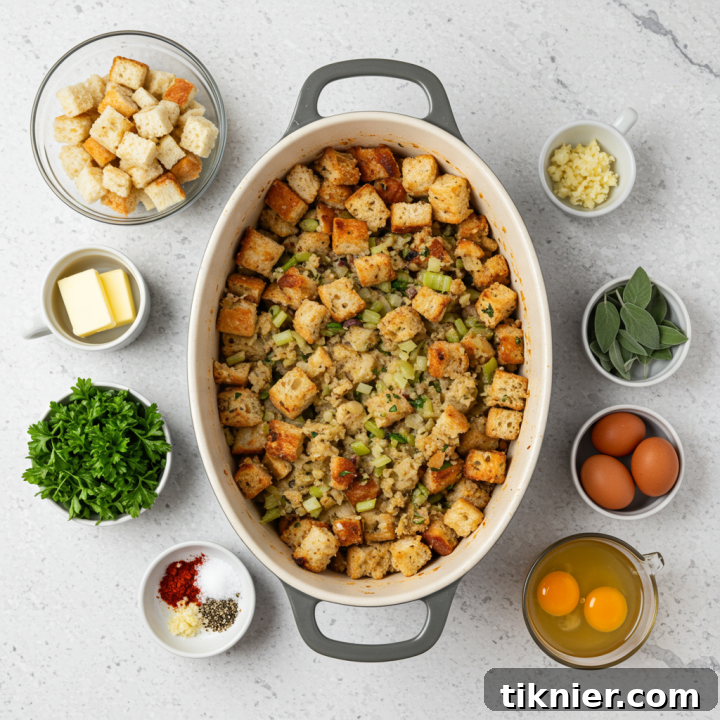
If You’ve Never Tried This Oyster Stuffing Recipe, You’re Missing Out!
1 (9×13-inch) pan
30 minutes
40 minutes
1 hour 10 minutes
A Southern coastal classic made modern, this oyster stuffing layers day-old sturdy bread with buttery aromatics, fresh oysters and their liquor, a dash of smoked paprika, and a splash of dry sherry for depth and brightness. Moist inside with a crisp, golden top.
Ingredients
Instructions
Notes
For the best texture and to prevent soggy stuffing, it is crucial to use very dry bread. Fresh, small-to-medium oysters generally yield the finest and most authentic flavor; always diligently reserve their natural liquor to enhance the stuffing’s depth. Remember, smoked paprika and a thoughtful splash of dry sherry are the key flavor boosters that elevate this recipe. If you opt to use an all-cornbread base, begin by incorporating slightly less liquid, then add more as needed. Always bake stuffing in a separate casserole dish to ensure optimal texture and adherence to food safety guidelines. To prepare ahead of time, assemble the entire dish without baking, cover it tightly, and refrigerate for up to 24 hours. When ready to bake, you may need to add an extra 10–15 minutes to the baking time if the stuffing is cold from the refrigerator.
Nutrition Information:
Yield: 10
Amount Per Serving:
Calories: 255 Total Fat: 13g Carbohydrates: 26g Protein: 8g
5 Frequently Asked Questions About Oyster Stuffing
Here are clear and comprehensive answers to the most common questions I often receive regarding this particular oyster stuffing recipe. These insights will help you prepare and enjoy your stuffing with confidence.
Can I prepare oyster stuffing in advance for convenience?
Absolutely, and proactively preparing this dish can be an immense time-saver, particularly during the hectic schedule of holiday cooking. You essentially have two excellent options for making it ahead of time. The first, and often preferred, method is to fully assemble the entire dish without actually baking it. You can meticulously follow the recipe instructions right up to the critical point of placing it into the oven. Once assembled, simply cover the baking dish tightly with a layer of plastic wrap or aluminum foil and carefully refrigerate it for a period of up to 24 hours.
When you are ready to proceed with baking, remove the dish from the refrigerator approximately 30 minutes prior to baking, allowing it to gently come closer to room temperature. This helps ensure more even cooking. You may find it necessary to add an additional 10 to 15 minutes to the specified baking time to ensure it is thoroughly heated through to its core. Your second viable option involves baking the stuffing completely, allowing it to cool down, and then refrigerating it. When reheating, cover it with foil and warm it in a 350°F (175°C) oven until it is piping hot.
Personally, I tend to favor the first method, as I believe it consistently results in a slightly superior texture, preserving that delightful crispness on top. However, both approaches are highly effective and will undoubtedly save you invaluable time on the day of your major meal or celebration.
What variety of oysters are best suited for oyster stuffing?
The specific type of oysters you select can indeed significantly influence the final flavor profile and overall quality of your stuffing. If you are fortunate enough to have access to them, freshly shucked oysters remain the paramount choice. They consistently deliver the freshest, cleanest, and most authentically briny sea flavor. When selecting fresh oysters, aim for small to medium-sized varieties, such as Blue Points, succulent Gulf oysters, or delicate Kumamotos, as their size ensures they distribute more evenly throughout the stuffing, providing a burst of flavor in every bite.
Should fresh oysters be unavailable or inconvenient, there’s no need for concern. High-quality canned or jarred oysters serve as a very commendable substitute and have been the trusted choice for many home cooks across generations. When purchasing canned options, always look for whole oysters packed purely in water, explicitly avoiding those packed in oil, which can alter the flavor. Be sure to drain them thoroughly, but critically, remember to reserve that intensely flavorful liquid, often referred to as “oyster liquor,” to incorporate into your broth. This adds an invaluable extra layer of deep, authentic oyster flavor.
Frozen shucked oysters represent yet another viable alternative. If opting for frozen, ensure they are thawed completely in the refrigerator overnight before use, and drain them well to remove excess water. Regardless of the oyster type you choose, the key technique is to fold them in very gently towards the end of the mixing process. This delicate handling helps them remain beautifully intact and prevents them from becoming tough or rubbery during cooking.
Why does my oyster stuffing sometimes turn out mushy?
Ah, the dreaded mushy stuffing – a common frustration that, thankfully, is usually quite preventable with a few careful considerations. The most frequent culprit behind a soggy result is often the use of bread that is either too fresh or excessively soft. The fundamental requirement for the bread in stuffing is that it must be very dry and ideally stale. This crucial characteristic allows the bread to act like an efficient sponge, meticulously soaking up the flavorful liquid components without collapsing into a disintegrated mess. Toasting the bread cubes as the very first step in the recipe is the most effective and reliable method to ensure they achieve the perfect level of dryness.
Another significant reason for an unappetizingly soggy outcome is quite simply the addition of too much liquid. It is absolutely essential to incorporate the broth mixture gradually and with careful observation. The bread should appear moist and fully hydrated, but under no circumstances should it be visibly swimming in liquid. Different types of bread possess varying capacities for liquid absorption, meaning you might not require the full amount specified in the recipe. Finally, vigorous overmixing can also contribute significantly to a mushy, undesirable texture. Once you have added the bread, gently toss all the ingredients together until they are just combined. Treat your stuffing kindly throughout the preparation, and you will be amply rewarded with a perfectly textured, delightful dish.
If you’ve already baked your stuffing and find it a bit softer than desired, don’t despair! You can try returning it to the oven for an additional 10-15 minutes, uncovered. This extended baking time can help some of the excess moisture evaporate and encourage the top layer to crisp up beautifully.
Is it safe to stuff a turkey with this oyster stuffing?
This is a question deeply rooted in tradition, as for generations, many home cooks prepared their stuffing directly inside the cavity of the turkey. However, modern food safety guidelines, particularly those issued by organizations such as the USDA, generally advise against this practice. The primary and most significant concern is that it is exceptionally challenging for the stuffing situated within the bird’s cavity to consistently reach a safe internal temperature of 165°F (74°C) without simultaneously overcooking the turkey meat itself to an undesirable degree. If the stuffing fails to achieve this critical temperature, harmful bacteria can potentially survive, posing a health risk.
For this crucial food safety reason, I strongly and unequivocally recommend baking this oyster stuffing in a separate casserole dish. This method is not only considerably safer but also offers the wonderful added benefit of allowing the top of the stuffing to achieve that gloriously golden brown and delightfully crispy crust – which, for many, is undeniably one of the most delicious aspects of any stuffing. You can simply place the casserole dish alongside the turkey in the oven during the final 30 to 40 minutes of its roasting time, or bake it separately if oven space is a concern.
Should you remain steadfastly committed to the traditional practice of stuffing the bird, it is absolutely imperative to use a reliable food thermometer. Stuff the turkey loosely and only immediately before commencing roasting, and ensure that the very center of the stuffing reaches a minimum internal temperature of 165°F (74°C) before you remove the bird and stuffing from the oven. This diligence is crucial for safety.
What does oyster stuffing actually taste like?
If you’ve never had the pleasure of trying oyster stuffing before, you might naturally envision something overwhelmingly “fishy” or intensely oceanic. However, I assure you, this perception couldn’t be further from the truth. A truly well-prepared oyster stuffing is a symphony of flavors: deeply savory, wonderfully rich, and remarkably complex. The predominant flavor profile is that of a classic, comforting Thanksgiving stuffing, replete with the aromatic presence of traditional herbs like earthy sage and fragrant thyme, complemented by the rich, foundational taste of butter-sautéed onions and crisp celery.
The oysters themselves contribute a unique and truly magnificent layer of flavor. They introduce a subtle yet distinct brininess and a profound, savory umami quality that is simply unobtainable from any other ingredient. It’s more of a sophisticated, rich seafood essence that permeates the dish, rather than a strong, overt “fishy” taste. When properly cooked, the oysters transform into tender, plump morsels, adding a lovely, soft textural contrast that plays beautifully against the firmer bread and crisp-tender vegetables.
In my specific rendition of this recipe, the smoked paprika is a game-changer. It weaves in a gentle, smoky background note that astonishingly complements the natural brininess of the oysters, creating an unexpected depth. The judicious splash of dry sherry then adds a touch of welcome brightness, elegantly cutting through the inherent richness of the dish and harmoniously tying all the diverse flavors together into a cohesive, memorable experience. It is, without exaggeration, a truly special and celebratory dish that tastes like a festive holiday gathering right on the enchanting coast.
Explore More Delicious Recipes
87 Thanksgiving Dinner Ideas Your Friends & Family Will LOVE
50 Cheap Meal Ideas That Actually Taste Good (Budget-Friendly Recipes for Every Meal)
110 Easy Dinner Ideas That Taste Great (Easy Dinner Recipes You Can Do At Home)