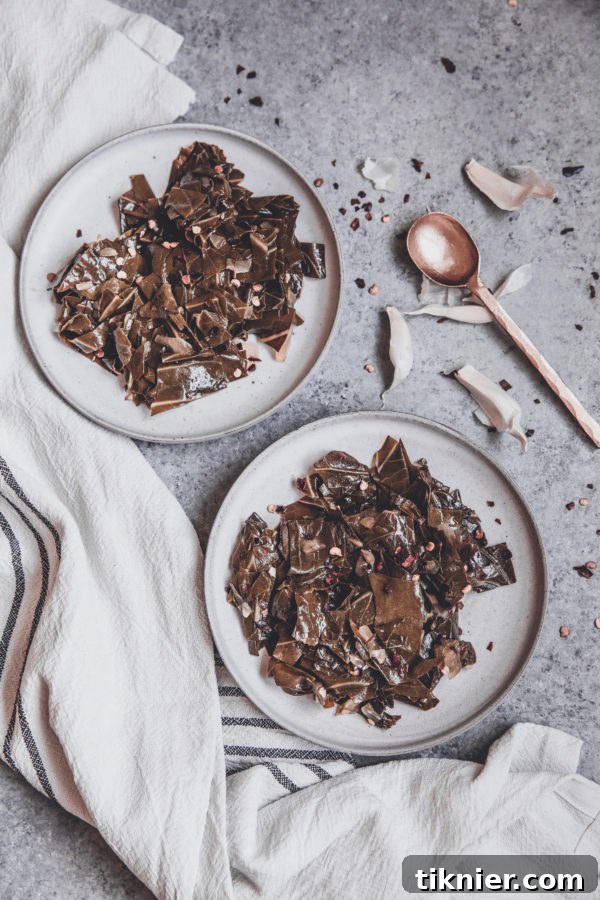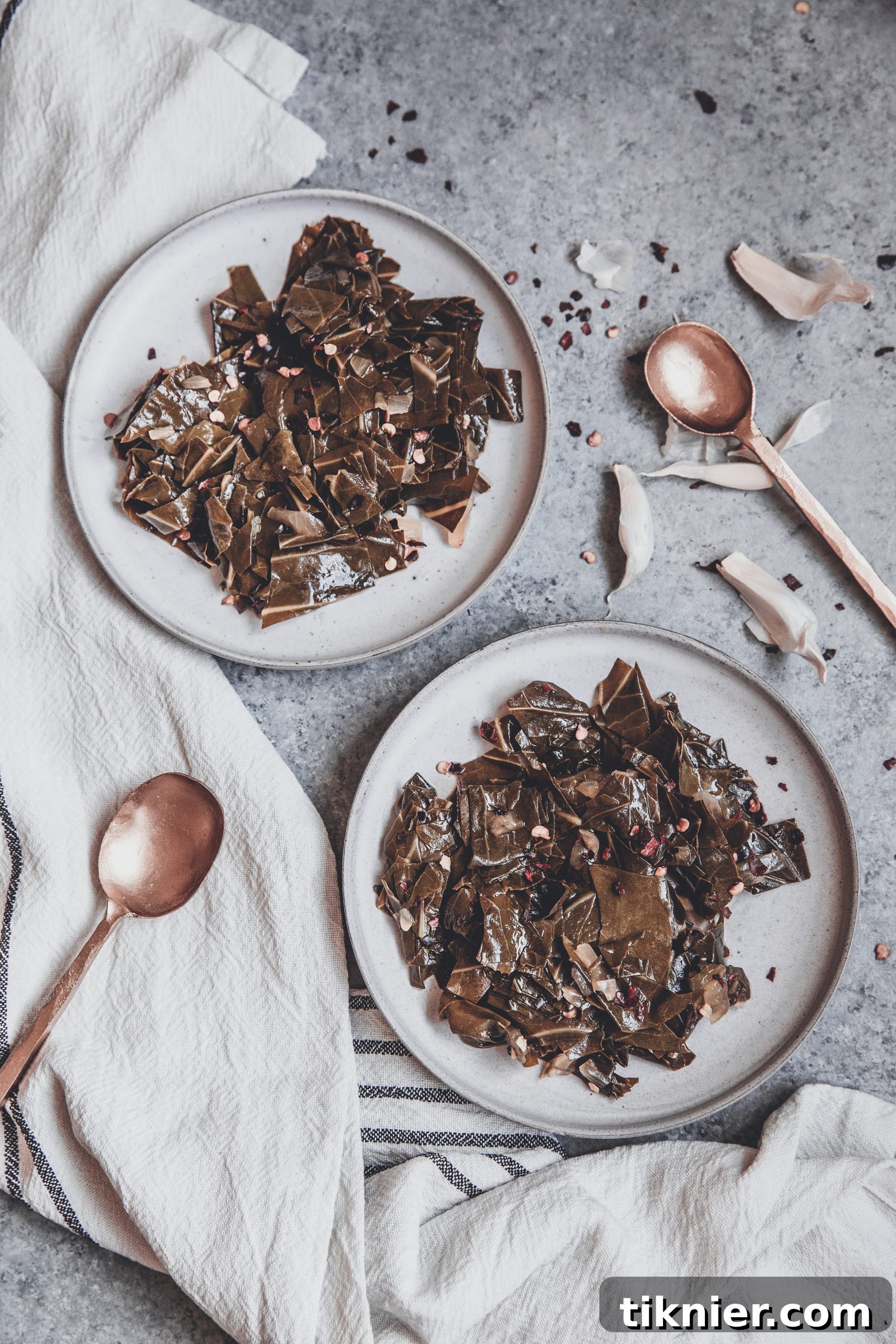
Welcome to the ultimate guide for crafting the most flavorful and tender vegan collard greens you’ve ever tasted. This cherished Southern staple, reimagined without meat, offers a symphony of savory, tangy, and subtly sweet notes, making it an indispensable side dish for any holiday feast, Sunday dinner, or backyard BBQ. Forget everything you thought you knew about collards needing smoked meat; this plant-based rendition proves that true comfort food can be both deeply satisfying and entirely vegan.
My journey to perfecting vegan collard greens began years ago, at a lively family reunion in the heart of Georgia. The air was thick with the scent of Southern cooking, each dish a testament to generations of culinary tradition. Among the spread, my husband’s Aunt Carol presented a colossal pot of collard greens. Having grown up with the firm belief that only smoked meat could give collards their signature character, I approached them with a healthy dose of skepticism. However, one bite was all it took to dismantle my preconceived notions. The greens were incredibly tender, infused with an indescribably rich, tangy, and slightly sweet broth – the famed “pot likker” – that left an indelible impression.
When Aunt Carol revealed her secret – that these magnificent greens were entirely plant-based – I was utterly astonished. That moment ignited a passion within me to replicate and refine that incredible experience, leading to the development of my own recipe for vegan collard greens. This recipe isn’t about simply omitting meat; it’s about a deliberate and thoughtful process of building complex layers of flavor, ensuring every spoonful delivers genuine Southern comfort without compromise. My version captures that elusive balance I first tasted, creating a pot likker so exquisite, you’ll be reaching for extra cornbread to savor every last drop. It’s a dish that has firmly cemented its place as a staple in my kitchen, bringing warmth and tradition to countless meals.
Jump to the Full Recipe Card Below!
Unveiling the Secret: Why This Vegan Collard Greens Recipe Excels
Collard greens hold a sacred place in Southern culinary heritage, traditionally simmered for hours alongside smoked pork, such as a ham hock or bacon. This time-honored method serves a dual purpose: it transforms the inherently tough collard leaves into a silky, tender texture and imbues them with a profound, smoky, and deeply savory flavor. For many, this taste embodies the very essence of home, a dish that evokes comfort, nostalgia, and hearty sustenance.
The true artistry in crafting a truly exceptional vegan version lies in replicating this depth and complexity without the traditional meat component. It’s far more than a simple omission; it demands an intentional and strategic reconstruction of those intricate flavor layers. And that, precisely, is the genius behind this recipe. It’s a culinary testament to the power of plant-based ingredients to deliver profound taste.
This recipe distinguishes itself by meticulously honoring the tradition of slow-simmering while ingeniously employing plant-based ingredients to forge a rich and multifaceted flavor profile. Our journey begins with a foundational layer of sweet onion and pungent garlic, sautéed to perfection, creating an aromatic base that sets the stage for the entire dish. A high-quality vegetable stock then steps in, providing the essential savory body of the magnificent broth, known affectionately as “pot likker.” This liquid gold is further enhanced by the vibrant tang of apple cider vinegar, which acts as a crucial counterpoint, cutting through richness and infusing the greens with a bright, lively note.
However, the genuine brilliance, the “secret sauce” that elevates this recipe from good to truly extraordinary, is the seemingly humble addition of granulated sugar. While it might appear unconventional in a savory dish, this small amount of sugar is nothing short of transformative. It doesn’t render the greens sweet; rather, it performs a delicate yet powerful balancing act. The sugar expertly counteracts the natural bitterness inherent in collard greens and harmonizes the sharp acidity of the vinegar. The result is a pot likker that is incredibly well-rounded, intensely flavorful, and utterly addictive. This thoughtful and precise balance is what makes these vegan collard greens stand out, captivating even the most discerning and traditional Southern palates, proving that plant-based cooking can deliver on taste and tradition.
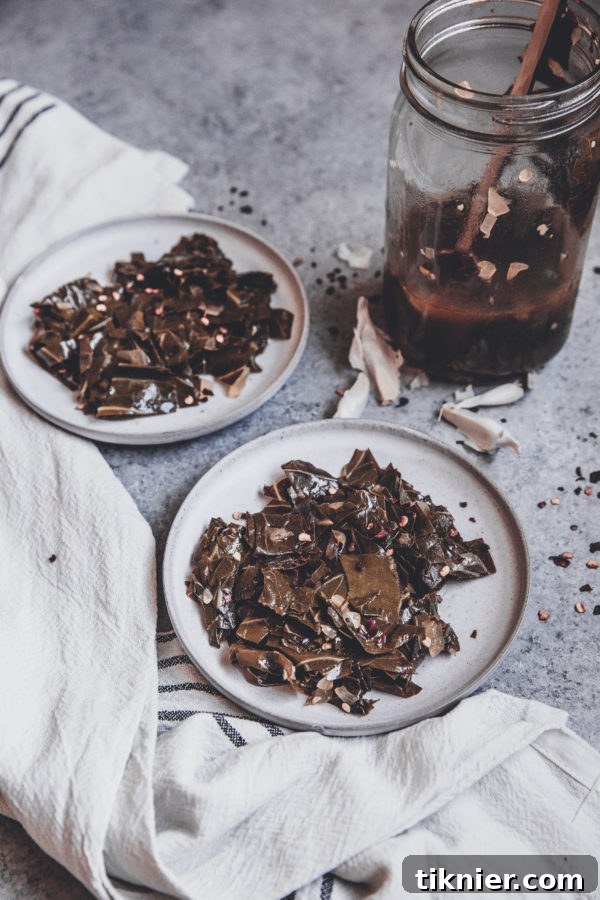
Essential Ingredients for Irresistible Vegan Collard Greens
The allure of this recipe lies in its elegant simplicity. We leverage a handful of readily available, straightforward ingredients to conjure a dish that is anything but ordinary. As is often the case with minimalist recipes, the caliber of your ingredients will profoundly influence the final outcome. Therefore, I wholeheartedly encourage you to select the freshest and highest-quality components you can source.
Undoubtedly, the star of this culinary show is the collard greens themselves. When selecting your collards, seek out bunches with deep, vibrant green leaves that possess a firm texture and are free from any signs of yellowing, wilting, or unsightly holes. For those moments when time is of the essence, pre-washed and pre-chopped collards, often found in the produce section, can be a magnificent convenience. Just be sure to diligently check the expiration date to ensure peak freshness and flavor.
For the essential broth, I strongly advocate for a premium, low-sodium vegetable stock. This choice empowers you with complete command over the final dish’s salinity, allowing you to season to your precise preference. Consider selecting a vegetable stock that boasts nuanced notes of mushrooms or roasted root vegetables; these elements can impart an additional layer of savory depth and umami, beautifully mimicking the richness traditionally associated with meat-based broths without compromising the vegan integrity of the dish.
- 2 bunches of collard greens, meticulously stemmed and chopped into uniform pieces. This ensures even cooking and tender results.
- 1 tbsp extra virgin olive oil. Opt for a good quality oil as its subtle fruitiness will contribute to the dish’s overall flavor.
- 1 small sweet onion, finely diced. Sweet onions caramelize beautifully and provide a crucial base of flavor.
- 4 cloves of garlic, freshly minced. Garlic is indispensable for its pungent aroma and savory depth.
- 4 cups of vegetable stock. Choose a robust, flavorful stock for the richest pot likker.
- 1 tbsp granulated sugar. This seemingly small addition is the secret ingredient for balancing bitterness and acidity.
- 2 tbsp apple cider vinegar. Its bright, tangy notes are essential for the classic Southern flavor profile.
- Sea salt and black pepper to taste. Freshly ground pepper is always preferred for its vibrant aroma.
The truly pivotal ingredient, the unassuming hero that masterfully orchestrates the flavors and brings everything into perfect harmony, is the granulated sugar. It’s my cherished culinary secret, guaranteeing perfectly balanced greens every single time. It deftly mutes the inherent bitterness of the collards and gracefully rounds out the sharp tang of the apple cider vinegar, culminating in a pot likker that is utterly irresistible. This seemingly minor touch yields a profound impact, transforming the entire dish into a memorable Southern delight.
Mastering the Art: Step-by-Step Instructions for Vegan Collard Greens
This recipe, while incredibly flavorful, is a testament to the power of patience rather than intricate culinary techniques. The magic largely unfolds through a deliberate, slow simmer, allowing simple ingredients to meld and transform into a profoundly delicious dish. For optimal results and even heat distribution, I highly recommend employing a large, heavy-bottomed pot or a Dutch oven. Such cookware is essential in preventing scorching, a critical factor given the extended cooking time required to achieve perfectly tender greens.
Step 1: Building the Aromatic Foundation
Begin by heating your extra virgin olive oil in your chosen pot over a medium-high flame. Once the oil glistens invitingly, introduce the finely diced sweet onion. Sauté the onion, stirring periodically, until it softens beautifully and transitions to a translucent state, a process that typically spans 5 to 7 minutes. The goal here is to gently coax out the onion’s natural sweetness, not to brown it. Next, reduce the heat to a gentle medium, add the freshly minced garlic, and stir continuously for a brief 30 to 60 seconds, until its intoxicating fragrance permeates the air. Exercise caution during this step, as burnt garlic can impart an undesirable bitter note, compromising the entire dish.
Step 2: Wilting the Verdant Bounty
Now, it’s time for the star of our dish: the collard greens. Upon initial addition, they will appear as an imposing mountain of foliage, filling your pot to the brim. Fear not; collards dramatically reduce in volume as they cook. Add the chopped collards to the pot, working in manageable batches if necessary to accommodate their bulk. Stir them thoroughly, ensuring each leaf is lovingly coated in the fragrant oil and intimately mixed with the softened onion and garlic. Continue to cook for just a couple of minutes, observing as they begin to darken in color and visibly wilt, creating more precious space within the pot.
Step 3: Initiating the Flavorful Simmer
Pour in the robust vegetable stock, the bright apple cider vinegar, and the crucial granulated sugar. Give all the ingredients a thorough stir to ensure they are well combined. At this stage, the liquid may not entirely submerge the greens, which is perfectly acceptable. Increase the heat to medium-high and bring the mixture to a lively, enthusiastic simmer. This initial heat helps to distribute the flavors efficiently.
Step 4: The Transformative Slow Cook
Once the liquid is actively simmering, reduce the heat to its lowest setting, maintaining just enough warmth to sustain a gentle, consistent bubble. Securely cover the pot with a tight-fitting lid and allow the greens to gently simmer for a full hour. This is where the culinary alchemy truly occurs. The collards will progressively become incredibly tender, soaking up every nuance of the deeply flavorful broth. Periodically, lift the lid to give the greens a gentle stir, ensuring even cooking and preventing any sticking.
Step 5: Perfecting the Seasoning and Serving
After the hour of simmering has passed, remove the lid and take a moment to taste the greens. They should possess a melt-in-your-mouth tenderness, and the pot likker should reveal a harmonious blend of savory, tangy, and subtly sweet notes. This is your moment to adjust the seasoning to perfection with sea salt and freshly ground black pepper. Begin with a modest addition, stir, and taste again, repeating until the flavor profile is exquisitely balanced and precisely to your liking. Serve these delectable greens piping hot, ensuring each portion includes a generous ladle of that precious, flavor-packed pot likker.
Savoring the South: How To Serve Vegan Collard Greens
The moment of serving these lovingly prepared collard greens is, for me, one of the most rewarding aspects of the entire cooking process. While they are undeniably a quintessential side dish, their profound depth of flavor means they are more than capable of shining as the centerpiece of a meal. The optimal way to serve them is straight from the pot, piping hot, with a lavish spoonful of that rich, savory pot likker generously spooned over each serving. This liquid gold is brimming with concentrated flavor, and not a single drop should be wasted!
Traditionally, collards grace the table as an integral component of a grand Southern spread. They are the perfect accompaniment to a diverse array of comforting dishes, offering a crucial balance to richer, heavier fare. Envision constructing a plate that harmonizes both flavors and textures. The characteristic subtle bitterness and bright tang of the greens provide a refreshing counterpoint, beautifully cutting through the richness of other dishes, thereby enhancing the overall enjoyment of the entire meal.
Here are some of my most cherished ways to serve these delightful vegan collard greens:
- The Quintessential Southern Plate: There is arguably no more iconic pairing than these greens alongside creamy, perfectly seasoned black-eyed peas, a hearty portion of decadent vegan mac and cheese, and a warm, crumbly slice of cornbread. The cornbread, in particular, is an absolute essential, serving as the perfect vehicle for sopping up every last drop of that glorious, flavorful broth at the bottom of your bowl.
- Wholesome Grain Bowls: For a nutritious and deeply satisfying lunch or lighter dinner, spoon a generous helping of the collards and their accompanying pot likker over a fluffy bed of quinoa or brown rice. Elevate this bowl by adding some roasted sweet potato cubes for sweetness and texture, and a sprinkle of toasted pecans to provide a delightful crunch and nutty undertone.
- Complementing Plant-Based Proteins: These savory greens are an exceptional partner for plant-based proteins, especially those with smoky profiles. Consider serving them alongside sizzling pan-fried vegan sausage, a savory and comforting lentil loaf, or crispy, oven-baked tofu. The greens provide a refreshing contrast to the heartiness of these proteins.
- A Zesty Kick with Heat: For those who appreciate a touch of spice, I always recommend placing a small bottle of hot pepper vinegar or your favorite hot sauce on the table. A modest dash or a few shakes adds a wonderful, piquant kick that impeccably complements the earthy flavors of the greens, awakening the palate and adding another layer of complexity.
Regardless of how you choose to present these magnificent vegan collard greens, they are guaranteed to be a resounding success. They effortlessly bring a taste of genuine Southern hospitality and profound comfort to any dining experience, triumphantly demonstrating that exquisite flavor and deep satisfaction do not require the presence of meat.
Preserving the Goodness: How To Store & Reuse Vegan Collard Greens Leftovers
One of the many delightful advantages of preparing a generous pot of collard greens is that the leftovers often surpass the initial serving in flavor. As the greens rest and cool in the refrigerator, the myriad flavors continue their harmonious marriage, deepening and intensifying, resulting in an even more delicious experience the following day. Proper storage is paramount to ensure you can savor these delectable greens for several days to come, minimizing waste and maximizing enjoyment.
Crucially, always allow your collard greens to cool completely to room temperature before contemplating storage. Attempting to store them while they are still warm can lead to excessive condensation forming within the container, which can adversely affect their delicate texture and freshness. Once thoroughly cooled, you have excellent options for preserving their quality and flavor, keeping them ready for your next culinary adventure.
Here are my recommended methods for storing your leftover vegan collard greens:
- Refrigeration for Short-Term Enjoyment: Transfer the collard greens, along with every precious drop of their wonderful pot likker, into an airtight container. When stored correctly, they will maintain their exquisite quality and flavor beautifully in the refrigerator for up to 5 days. This method is my personal preference, as it offers unparalleled convenience for quick reheating, making them an ideal side dish for a swift lunch or an effortless dinner addition.
- Freezing for Long-Term Preservation: These greens also demonstrate exceptional freezer-friendliness, making them perfect for meal prepping or future cravings. Portion the cooled collards into freezer-safe bags or rigid containers, ensuring to include a generous amount of the flavorful broth. Expel as much air as possible from bags before sealing to prevent freezer burn. They can be safely stored in the freezer for up to 3 months. To enjoy, simply transfer them to the refrigerator to thaw overnight before reheating.
When you’re ready to indulge in your stored leftovers, the gentlest and most effective method for reheating is on the stovetop. Place the collards in a small saucepan over medium-low heat and warm them gradually, stirring occasionally, until they are heated through completely. This method is superior to microwave reheating as it preserves their tender texture and prevents them from becoming rubbery. And don’t stop at just reheating! Embrace creativity with your leftover collards. They are a remarkably versatile ingredient that can elevate new dishes. Consider finely chopping them and incorporating them into a hearty bean soup, tossing them with pasta, garlic, and a hint of red pepper flakes for a quick meal, or even folding them into a savory vegan quiche for a unique twist.
Creative Twists: Substitutions & Variations for Vegan Collard Greens
While I hold a deep conviction that this recipe is a perfectly balanced and delightful culinary creation in its current form, one of the greatest joys of home cooking lies in the freedom to personalize a dish and make it uniquely your own. This vegan collard greens recipe serves as an exceptional and robust foundation that can be effortlessly adapted to cater to your specific taste preferences, dietary needs, or simply to utilize ingredients you already have readily available. Never shy away from a little experimentation; often, this is precisely how truly beloved new family favorites are discovered and born.
The fundamental methodology of slow-simmering sturdy, nutritious greens in a richly flavored broth is remarkably versatile and can be applied in a myriad of exciting ways. Whether your culinary curiosity leans towards introducing a nuanced layer of spice, a subtle hint of smokiness, or perhaps venturing to explore an entirely different variety of green altogether, there is an abundance of straightforward swaps and thoughtful additions you can integrate to customize this dish.
Here are a few inspiring variations and substitution ideas to ignite your culinary imagination and get your creativity flowing:
- Exploring Different Greens: Should collard greens be unavailable, or if you simply desire a different flavor profile, this recipe adapts beautifully to other robust leafy greens. Experiment with Lacinato kale (often known as dinosaur kale) for a slightly sweeter, earthier note, mustard greens for a delightful peppery kick and a touch of spice, or nutrient-rich turnip greens. Do bear in mind that you may need to subtly adjust the simmering time, as some greens, particularly younger kale leaves, tend to cook more rapidly than the heartier collard varieties.
- Infusing Smoky Undertones: To artfully replicate that iconic smoky essence traditionally imparted by ham hocks, consider incorporating about a teaspoon of smoked paprika when you add the vegetable stock. Alternatively, a few drops of liquid smoke can provide an intense smoky punch. For a more subtle, yet impactful smokiness, finishing the dish with a pinch of smoked sea salt offers a wonderful depth of flavor.
- Elevating the Heat Factor: For those who revel in a bit of fiery zest, a pinch of red pepper flakes added alongside the minced garlic will introduce a pleasant warmth. For a more deeply integrated heat, sautéing a finely minced jalapeño or serrano pepper with the sweet onion at the initial stage will infuse the entire dish with a vibrant, spicy character.
- Varying the Vinegar Profile: While apple cider vinegar remains the quintessential choice for its balanced tang, feel free to explore other acidic options. Red wine vinegar would impart a more robust, sophisticated tang, while a small splash of good quality balsamic vinegar, stirred in at the very end, can introduce a touch of complex sweetness and a darker, richer finish.
- Alternative Sweeteners: If you prefer to steer clear of granulated sugar, a tablespoon of pure maple syrup or coconut sugar can serve as excellent substitutes. Both will effectively balance the flavors of the dish while introducing their own subtle, natural sweetness, ensuring the harmonious interplay of sweet and sour notes.
Feel empowered to mix and match these innovative ideas to engineer your perfectly personalized pot of greens. The ultimate objective is to craft a dish that resonates deeply with your palate and becomes a beloved addition to your culinary repertoire, cherished by you and your entire family.
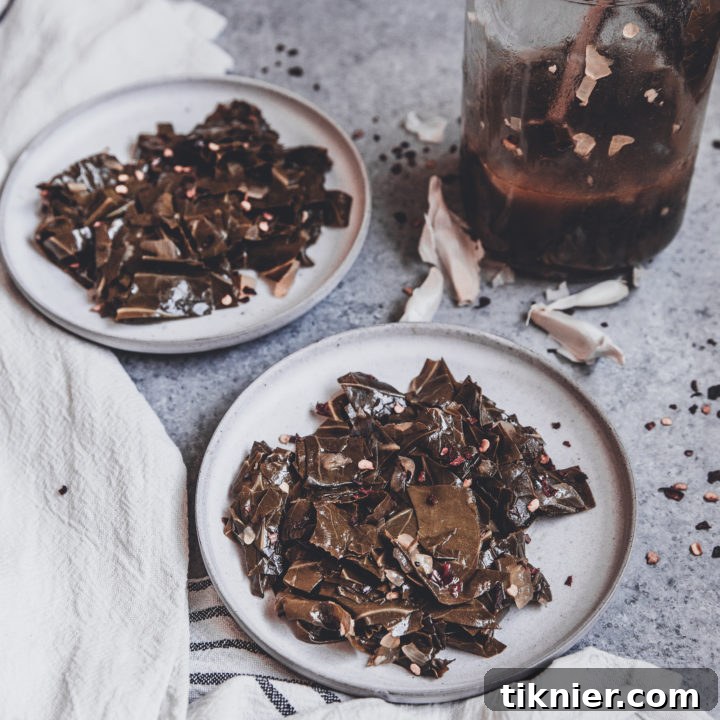
Vegan Collard Greens
6 servings
15 minutes
1 hour
1 hour 15 minutes
Fresh collard greens are simmered in vegetable broth with cider vinegar and spices, creating a wonderful side dish perfect for your holiday dinner or next BBQ, proving comfort food can be both vegan and delicious.
Ingredients
- 2 bunches of collard greens, stems removed and leaves chopped
- 1 tbsp extra virgin olive oil
- 1 small sweet onion, diced
- 4 cloves of garlic, minced
- 4 cups of vegetable stock
- 1 tbsp granulated sugar
- 2 tbsp apple cider vinegar
- Sea salt and black pepper to taste
Instructions
- In a large, heavy-bottomed pot (such as an enameled cast iron pot), heat the olive oil over medium-high heat. Add the diced sweet onion and cook, stirring occasionally, until it becomes tender and translucent, about 5-7 minutes.
- Reduce the heat to medium and add the minced garlic. Sauté for 30-60 seconds until the garlic is wonderfully fragrant, being careful not to burn it.
- Add the chopped collard greens to the pot. Stir well to coat the greens with the aromatics and oil. Cook for about 2 minutes, allowing them to begin wilting down. Then, pour in the vegetable stock, granulated sugar, and apple cider vinegar. Stir to combine.
- Bring the mixture to a gentle simmer, then reduce the heat to low. Cover the pot with a tight-fitting lid and simmer for 1 hour, or until the greens are very tender. Stir occasionally.
- Remove the lid, taste the greens and the pot likker. Adjust seasoning with sea salt and freshly ground black pepper as needed until the flavors are perfectly balanced. Serve hot.
Notes
This vegan collard greens recipe is expertly adapted from the “Braised Collards” found in The Faux Martha’s Minimalist Kitchen Cookbook, ensuring a delicious and heartwarming result.
Frequently Asked Questions About Vegan Collard Greens
Here are comprehensive and clear answers to the most common inquiries I receive regarding this delightful vegan collard greens recipe, ensuring you achieve perfect results every time.
How do you effectively remove or balance the bitterness from vegan collard greens?
Collard greens naturally possess a distinct bitterness, a characteristic that, when properly managed, contributes a pleasant, earthy depth to the dish. The key to taming this bitterness lies in a combination of meticulous preparation and intelligent cooking techniques. The first crucial step involves thoroughly prepping the greens by excising the thick, fibrous stem that runs down the center of each leaf. This central vein is where a significant concentration of bitter compounds resides. After chopping the leaves, a vigorous wash under cold running water further aids in rinsing away some of these compounds.
However, the real alchemy for bitterness reduction unfolds during the cooking process. A protracted, gentle simmer is absolutely essential. This slow cooking method systematically breaks down the tough cellular structures within the collard leaves, which not only renders them incredibly tender but also significantly mellows their inherent bitter flavor. In this specific recipe, the interplay of other ingredients is pivotal. The judicious addition of apple cider vinegar provides a crucial acidic counterpoint, effectively cutting through and mitigating the bitterness. Simultaneously, the small but mighty amount of granulated sugar acts as a masterful flavor balancer. It doesn’t transform the greens into a sweet dish; instead, it skillfully rounds out the overall flavor profile, ensuring the bitterness is transformed into a pleasant, grounding, and earthy note rather than an overwhelming or unpalatable taste. The result is a harmonious and exceptionally delicious pot likker where every flavor sings in unison.
Can I prepare these vegan collard greens using a slow cooker for a more hands-off approach?
Absolutely, adapting this recipe for a slow cooker is an excellent and highly recommended hands-off method, particularly ideal for achieving greens that are incredibly tender with minimal effort. A slow cooker is perfectly suited for the extended, low-temperature cooking required to tenderize collards to perfection. To successfully transition the recipe, you’ll want to retain the initial sautéing step, which is best performed on the stovetop. Begin by sautéing the diced sweet onion in a separate skillet until it becomes soft and translucent, then add the minced garlic and cook until it releases its fragrant aroma. This initial step is critical as it builds a fundamental layer of flavor that should not be skipped, as the slow cooker alone cannot achieve the same depth of caramelization.
Once your aromatics are prepared, transfer them to the basin of your slow cooker. Add the thoroughly chopped collard greens, along with the vegetable stock, apple cider vinegar, and granulated sugar. Give all the ingredients a good stir to ensure even distribution. Secure the lid firmly and set your slow cooker to cook on the low setting for a period of 4 to 6 hours, or, if time is a factor, on the high setting for 2 to 3 hours. The greens will emerge wonderfully tender and thoroughly infused with all the rich, complex flavors of the broth. This method is especially advantageous during busy holidays or when stovetop real estate is at a premium, allowing you to focus on other aspects of your meal while the greens slowly cook to perfection.
What gives these vegan collard greens such profound flavor without the inclusion of meat?
The secret to achieving such incredibly flavorful vegan collard greens lies in a sophisticated strategy of building flavor through meticulously crafted layers, rather than relying on a single, dominant ingredient. We consciously eschew meat while meticulously constructing a profound taste experience. Our culinary journey commences by establishing a robust and savory foundation, akin to a classic mirepoix, through the slow and gentle cooking of sweet onion and garlic in extra virgin olive oil. This process carefully coaxes out their inherent sweetness and creates an intensely aromatic base that acts as the bedrock for the entire dish, contributing a foundational umami.
Next, we incorporate a high-quality vegetable stock, which is paramount. A well-chosen stock provides a deep, savory backbone that forms the very essence of the renowned pot likker. The most impactful flavor enhancers in this recipe are the apple cider vinegar and the granulated sugar. The vinegar injects a bright, essential acidity and tanginess that prevents the dish from tasting flat or one-dimensional, lifting and awakening the other flavors. Concurrently, the sugar masterfully balances this acidity with the natural bitterness of the collard greens, creating a harmonious and well-rounded profile. The culmination of this careful layering is the long, slow simmer. This extended cooking period allows all these individual components to meld, intermingle, and transform into a unified, complex, and deeply satisfying broth that is every bit as rich and delicious as, if not more so than, any traditional meat-based version, proving the power of plant-forward cooking.
Are vegan collard greens a healthy dietary choice?
Yes, these vegan collard greens are unequivocally an incredibly healthy and nourishing dietary choice. Collard greens themselves are a genuine nutritional powerhouse, belonging to the esteemed family of cruciferous vegetables, which includes broccoli and kale. They are brimming with an abundance of essential nutrients vital for overall well-being. Collards are an exceptional source of Vitamin K, a critical nutrient for robust bone health and blood clotting. They also supply significant amounts of Vitamin A, which supports vision and immune function, and Vitamin C, a potent antioxidant known for boosting the immune system and promoting skin health. Furthermore, they are rich in dietary fiber, which aids in digestion, promotes satiety, and helps regulate blood sugar levels.
This particular recipe is designed to be exceptionally wholesome. By consciously omitting traditional cured meats like bacon or ham hocks, we effectively eliminate a substantial amount of saturated fat, cholesterol, and sodium often found in conventional collard greens. Instead, this recipe derives its magnificent flavor from a vibrant array of vegetables, aromatic herbs, and savory spices, utilizing heart-healthy extra virgin olive oil as its fat base. It represents a truly delightful and ingenious way to savor a classic Southern comfort food, now enhanced with an impressive profile of fiber, essential vitamins, and beneficial minerals, rendering it a delicious, deeply satisfying, and highly nourishing addition to any mindful meal plan.
Why are my vegan collard greens still tough after cooking?
If you find that your collard greens remain tough or have an unpleasantly chewy texture even after adhering to the recommended cooking time, the explanation is almost universally simple: they require additional cooking time. The one-hour simmer provided in the recipe serves as a general guideline, a good starting point, but the exact duration necessary for achieving melt-in-your-mouth tenderness can fluctuate based on several intrinsic factors. These include the age and maturity of the collard greens themselves; younger, more tender leaves will naturally soften more quickly than older, more fibrous ones, which demand a more prolonged cooking period.
Patience, truly, is an invaluable virtue when it comes to the art of cooking collard greens. If, upon tasting, they are not as exquisitely tender as you desire, simply replace the lid on the pot and allow them to continue simmering gently over low heat. Check their tenderness every 20 to 30 minutes, giving them a stir, until they achieve your preferred level of silken softness. It’s crucial to ensure that there is always sufficient liquid, the flavorful pot likker, remaining in the pot to prevent the greens from scorching or drying out. If you notice the liquid has reduced too much, simply add another splash of vegetable stock or a little water to maintain adequate moisture. Resist the urge to rush the process; that slow, deliberate cook is the very essence of what transforms firm collards into an incredibly tender, deeply flavorful, and melt-in-your-mouth delicious Southern delicacy.
Explore More Plant-Based Delights
If this recipe for vegan collard greens has captured your culinary heart, I am confident that you will thoroughly enjoy delving into some of my other cherished plant-based creations. Each recipe is crafted with flavor and wholesome ingredients in mind, promising delicious experiences.
- Vibrant & Healthy Green Recipes for Any Occasion: Discover a delightful array of colorful and nutritious green dishes that are perfect for St. Patrick’s Day celebrations or any time you wish to incorporate more vibrant greens into your diet.
- Comforting Vegan Smoked Potato Soup: Indulge in a rich, creamy, and deeply satisfying soup that boasts an incredible smoky flavor, all while being entirely plant-based. It’s the ultimate bowl of warmth for a chilly day.
- Hearty Smoky Vegan Quinoa Chili: A robust and immensely satisfying chili, packed with protein and an abundance of flavor. This is the perfect nourishing meal for a crisp evening, promising both comfort and culinary delight.
Don’t hesitate to share which one you decide to try first! I love hearing about your cooking adventures.