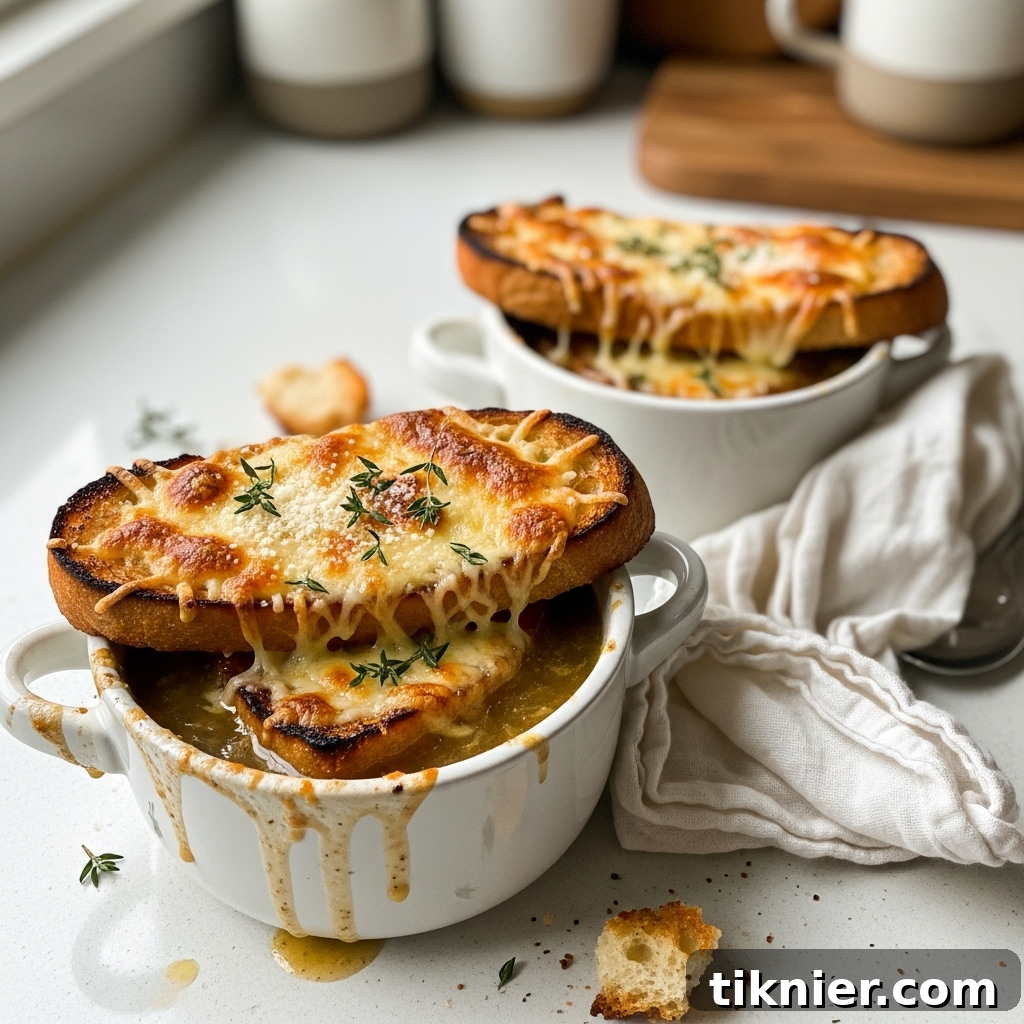
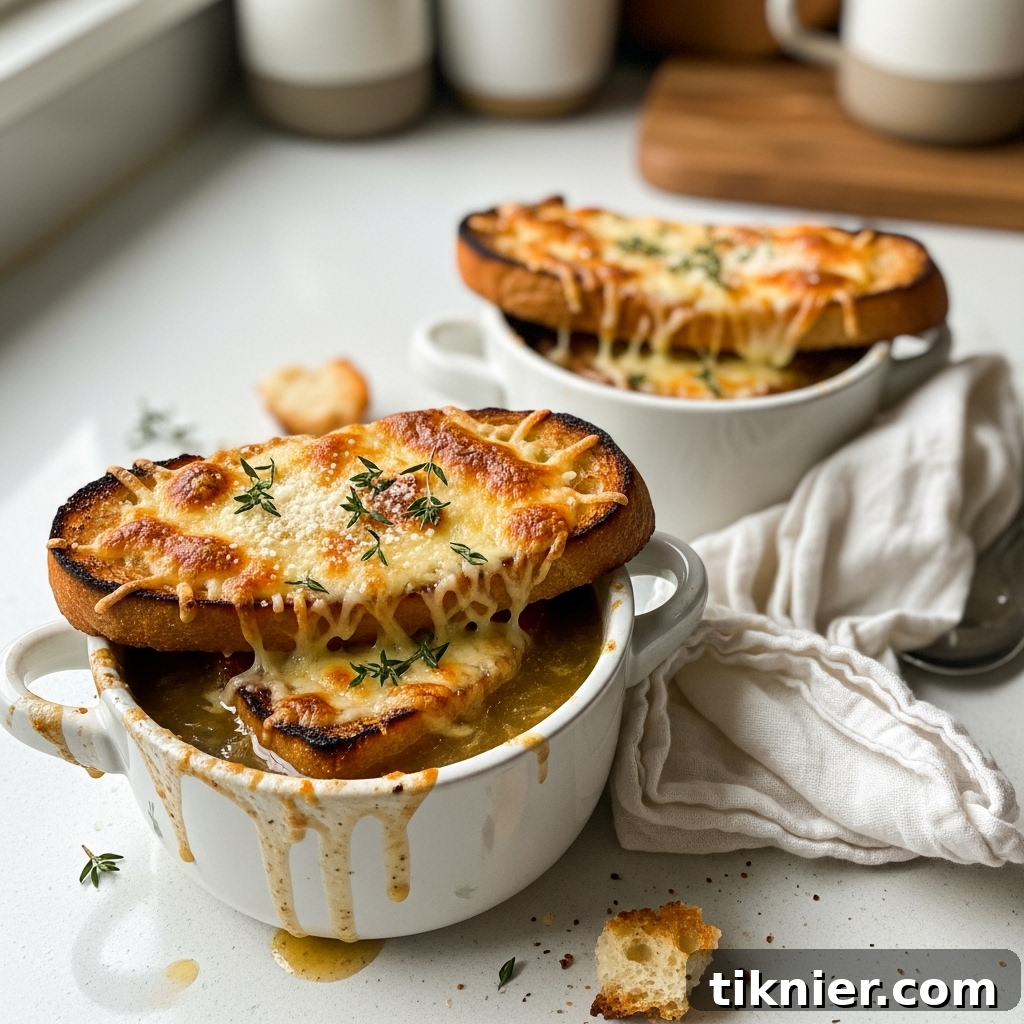
There are few culinary delights that capture the essence of comfort and sophistication quite like a truly spectacular French Onion Soup. It’s more than just a dish; it’s an experience, a warm embrace in a bowl that evokes cozy bistros and timeless culinary tradition. The aroma alone—a symphony of slowly caramelized onions, rich beef broth, and melting cheese—is enough to transport you.
I still vividly recall my inaugural encounter with the authentic version of this iconic soup. It was during a weekend getaway with my husband to the enchanting city of New Orleans. One particularly crisp, damp evening, we sought refuge from the chill in a charming, dimly lit bistro nestled within the historic French Quarter. The air inside was thick with the intoxicating scents of sautéed butter, fragrant garlic, and simmering broths. Almost without exception, every table featured patrons reverently enjoying a crock of that legendary soup, its cheesy lid glistening under the warm lights.
When my bowl arrived, it was a masterpiece. A glorious, golden-brown cap of blistered Gruyère cheese stretched in long, luxurious strings as I dipped my spoon. The first taste was revelatory. The broth was profoundly complex, far beyond a simple beefiness. It was an exquisite balance of sweet and savory, with an impossible depth that lingered on the palate. I spent the remainder of the meal, and indeed, the entire trip, trying to decipher the elusive magic that made it so extraordinarily special.
Inspired and determined, I returned to my own kitchen, embarking on a quest that spanned years to replicate that unforgettable flavor. My homemade versions were undoubtedly delicious, earning praise from family and friends. Yet, they consistently lacked that soulful, resonating depth, that certain je ne sais quoi that had captivated me in New Orleans. It felt akin to a beautiful musical chord missing a crucial, harmonious note.
Then, one serendipitous afternoon, while preparing a glaze for a salmon dish, I opened a tub of dark red miso paste. The moment its earthy, salty, and profoundly savory aroma wafted up, a metaphorical lightbulb illuminated in my mind. That was it! That was the missing umami, the foundational richness that had eluded my creations. With a surge of excitement, I tried adding a spoonful to my very next batch of French Onion Soup. The result was nothing short of pure magic. This simple addition, this subtle twist, transforms a classic from merely delicious into an absolutely unforgettable culinary masterpiece, elevating it to the realm of true perfection.
Jump Straight to My Special Recipe!
Why This French Onion Soup Recipe Stands Above the Rest
French Onion Soup, or Soupe à l’oignon gratinée, boasts a fascinating and humble lineage. Its origins can be traced back to the working-class kitchens of Paris, where it began as a simple, restorative dish, often made from pantry staples like onions, beef broth, and stale bread. It was a resourceful meal, designed to provide warmth and sustenance. Over the centuries, this modest soup underwent a remarkable transformation, evolving into the decadent, cheese-topped bistro classic that commands universal adoration today. Its journey from a peasant’s meal to a gourmet staple is a testament to the power of simple ingredients elevated through skillful preparation.
The enduring popularity of French Onion Soup stems from its incredible ability to transmute humble ingredients into something luxurious and profoundly satisfying. The true magic, the very soul of this soup, lies in the slow, patient caramelization of the onions. This painstaking process, which cannot be rushed, gently coaxes out the natural sugars hidden within the onions, transforming them from sharp and pungent to sweet, jammy, and intensely flavorful. This deeply sweet and savory onion base forms the indispensable foundation upon which all other flavors are built, giving the soup its characteristic depth and warmth. It’s a labor of love that is unequivocally worth every moment.
A classic French Onion Soup recipe is, in itself, a thing of undeniable beauty. It’s meticulously constructed upon layers of flavor: the complex notes derived from deglazing the pot with quality brandy and a crisp dry white wine, the aromatic infusion from simmering with fresh herbs like thyme and bay leaf, and the crowning glory of nutty, salty Gruyère cheese. These traditional elements combine to create a masterpiece of French country cooking, a testament to culinary heritage and time-honored techniques.
So, why, you might ask, would one even consider “messing” with such perfection? My philosophy isn’t about altering perfection, but rather about enhancing it, giving it an inspired boost that unlocks an even greater spectrum of flavor. My unique secret ingredient, dark red miso paste, is the key to achieving a level of profound, savory depth that typically demands days of simmering bone broth to develop. Miso, a fermented soybean paste, is the quintessential definition of umami, often described as the “fifth taste” or “pleasant savory taste.” It introduces a richness that complements and elevates the traditional flavor profile without overshadowing it.
Stirring just a couple of tablespoons of this dark red miso paste into the simmering broth introduces an incredible, almost indescribable savory depth. It perfectly harmonizes with the inherent sweetness of the caramelized onions and the robust richness of the beef broth. The miso amplifies the overall complexity of the soup, making it taste more robust, more nuanced, and ultimately, far more deeply satisfying. It’s a simple, modern twist that pays profound respect to the tradition and integrity of the dish while undeniably elevating it to an entirely new echelon of deliciousness. This addition transforms it from simply great to truly extraordinary, leaving a lasting impression on anyone who tastes it.
Essential Ingredients for Crafting the Perfect French Onion Soup
The inherent beauty of French Onion Soup lies in its ability to transform a handful of humble, everyday ingredients into something profoundly elegant and deeply satisfying. While the ingredient list might appear somewhat extensive at first glance, each component serves a critical purpose, contributing to the intricate layers of incredible flavor that define this iconic dish. For the very best results, it’s imperative to pay close attention to the quality of your ingredients, especially when it comes to the broth and, of course, the cheese. Investing in high-quality items here will genuinely elevate your final soup from good to truly exceptional.
And, naturally, we must highlight my secret weapon, the ingredient that I firmly believe makes this the most flavorful and unforgettable French Onion Soup you will ever prepare. Let’s delve into a detailed exploration of everything you’ll need to gather before you begin this delightful culinary journey.
- 6 tablespoons unsalted butter: Crucial for its rich flavor and for sautéing the onions without introducing excessive salt early on.
- 2 tablespoons olive oil: Helps prevent the butter from browning too quickly at higher heats, allowing for a more controlled caramelization process.
- 4 large yellow onions, halved and thinly sliced pole-to-pole: The backbone of the soup, providing the classic sweet, foundational flavor when caramelized. Their slicing method is key for texture.
- 1 large red onion, halved and thinly sliced pole-to-pole: Adds a beautiful, slightly more complex, and subtly piquant note, contributing to a richer overall flavor profile and a lovely color.
- 1 teaspoon granulated sugar: A gentle nudge to kickstart and deepen the caramelization process of the onions, enhancing their natural sweetness.
- 1 ½ teaspoons kosher salt, plus more to taste: Essential for seasoning and for drawing out moisture from the onions, aiding in their caramelization. Kosher salt provides a clean, pure taste.
- ½ teaspoon black pepper, freshly ground: Adds a subtle warmth and aromatic complexity.
- 4 cloves garlic, minced: Introduced at the perfect moment to infuse the soup with its pungent, savory aroma without burning.
- ¼ cup brandy or cognac: Used for deglazing, it adds a sophisticated depth and helps release all those flavorful browned bits (fond) from the bottom of the pot.
- 1 cup dry white wine, such as Sauvignon Blanc or Pinot Grigio: Provides essential acidity and fruit notes, cutting through the richness and further deglazing the pot, adding complexity to the broth.
- 3 tablespoons all-purpose flour: Creates a light roux that slightly thickens the soup, giving it a more luxurious mouthfeel and helping to bind flavors.
- 2 tablespoons dark red miso paste: *This is the game-changer!* The secret ingredient that infuses the broth with an unparalleled depth of umami, transforming the soup into an intensely savory and complex experience.
- 6 cups high-quality low-sodium beef broth: The primary liquid foundation. Low-sodium is crucial to control the saltiness as the broth reduces and flavors concentrate.
- 2 cups high-quality low-sodium chicken broth: A surprising but effective addition that adds a nuanced, lighter dimension to the broth, preventing it from being solely beef-heavy and creating a more balanced flavor.
- 4 sprigs fresh thyme: Infuses the broth with its earthy, herbaceous fragrance during simmering.
- 1 bay leaf: Contributes a subtle, almost medicinal depth that rounds out the savory notes in the broth.
- 8 (1-inch thick) slices of a sturdy baguette, cut to fit your bowls: Forms the essential edible raft for the cheese, providing texture and absorbing the rich broth.
- 1 whole garlic clove, peeled: Used to rub the toasted baguette slices, imparting a delicate, aromatic garlic flavor.
- 8 ounces Gruyère cheese, freshly grated: The quintessential cheese for French Onion Soup. Its nutty flavor and superior melting qualities create that iconic, bubbly, golden-brown crust.
- 2 ounces Parmesan cheese, freshly grated: A smaller addition that boosts the overall saltiness and umami, contributing to an even more flavorful cheese topping.
- Fresh thyme leaves for garnish: Adds a final touch of fresh aroma and visual appeal before serving.
A few crucial notes on selecting and preparing these ingredients will undoubtedly make a significant difference in your final product. For the onions, I enthusiastically recommend a combination of yellow and red. The yellow onions lay down the classic, sweet, and robust foundational flavor that is characteristic of the soup. The addition of a single red onion, however, introduces a delightful depth of color and a subtly more complex, slightly piquant note that elevates the overall onion profile. Regarding the broth, opting for a high-quality, low-sodium version is not merely a recommendation but a necessity. The soup simmers for an extended period, which naturally concentrates its flavors. Starting with an already salty broth can easily lead to an overwhelmingly salty and unpalatable final dish. Furthermore, the strategic combination of both beef and chicken broth yields a more balanced, nuanced flavor profile that is considerably more complex than relying solely on beef broth.
And now, for the undisputed star of the show, my unique secret twist: the dark red miso paste. I implore you, do not skip this ingredient. It is a revelation, adding an unbelievable depth of savory umami character that will leave your guests utterly mystified, wondering what your secret is. It’s the whisper of an ancient flavor that grounds the whole dish. Finally, and this is a non-negotiable tip for that picture-perfect, gooey, bubbly cheese cap: purchase a solid block of Gruyère cheese and grate it yourself just before use. Pre-shredded cheeses often contain anti-caking additives, such as potato starch or cellulose, which, while convenient, severely inhibit that perfect, smooth, melting texture we all crave. Freshly grated cheese melts beautifully, forming that glorious, golden crust that is synonymous with exceptional French Onion Soup.
Step-by-Step Guide to Crafting French Onion Soup with a Miso Twist
Creating truly great French Onion Soup is an exercise in both precise technique and, more importantly, unwavering patience. This is particularly true when it comes to the onions, which are the very heart and soul of this dish. Resist the urge to rush any stage of the process, especially the caramelization. Instead, transform the cooking experience into a meditative pleasure: pour yourself a glass of that dry white wine you’ll be using, put on some favorite music, and allow yourself to savor the incredible, aromatic smells that will soon permeate your kitchen. A heavy-bottomed Dutch oven or a sturdy, similarly constructed pot is your absolute best friend here, as its ability to distribute heat evenly is crucial for preventing scorching and achieving consistent caramelization.
Step 1: Gently Soften the Onions
Begin by melting the unsalted butter and olive oil together in your heavy-bottomed Dutch oven over a steady medium heat. The olive oil plays a crucial role here, helping to elevate the butter’s smoke point and prevent it from browning too quickly before the onions are ready. Once the fats are shimmering, add all of your thinly sliced onions to the pot. Give them a thorough stir, ensuring each strand is beautifully coated in the butter and oil. Allow them to cook, stirring periodically every few minutes, for approximately 15 minutes. During this initial stage, your primary objective is simply to soften the onions, encouraging them to release their natural moisture and begin their journey of transformation. You’ll notice their volume will reduce quite significantly, becoming more manageable.
Step 2: The Art of Caramelizing the Onions
Now, we embark on arguably the most critical and time-consuming part of the process. Stir in the granulated sugar, kosher salt, and freshly ground black pepper. The sugar serves as a catalyst, helping to kickstart and deepen the caramelization, while the salt continues to draw out moisture, intensifying the onion’s flavor. Immediately reduce the heat to medium-low. This phase demands patience above all else. You will need to cook the onions for an extended period, typically between 45 to 60 minutes, stirring diligently every 5 to 10 minutes. Your goal is for the onions to become incredibly soft, deeply jammy in texture, and achieve a rich, lustrous mahogany brown color. It’s essential not to abandon the pot for too long, as the onions can easily scorch and burn on the bottom, ruining the batch. Embrace the slow cook; it’s where the magic truly happens.
Step 3: Infuse Aromatics and Deglaze the Pot
Once your onions have reached that perfect, deep caramelization, stir in the minced garlic. Cook for just one more minute, allowing the fragrant aroma of the garlic to become potent and enticing. Be careful not to burn the garlic. Now, increase the heat to medium-high and carefully pour in the brandy or cognac. Immediately, use a sturdy wooden spoon or spatula to vigorously scrape up all those incredible browned bits – known as the “fond” – that have accumulated on the bottom of the pot. This fond is a treasure trove of concentrated flavor, and deglazing is paramount to incorporating it into your soup. Allow the brandy to cook down, simmering rapidly until it has almost completely evaporated, leaving behind only its rich essence.
Step 4: Incorporate Wine and Flour for Body
Next, pour in the dry white wine, continuing to scrape the bottom of the pot as it simmers. Let the wine bubble and reduce by about half, which typically takes around 3 to 5 minutes. This step adds crucial acidity and layers of flavor. Following this, uniformly sprinkle the all-purpose flour over the onions and stir constantly for one full minute. This brief cooking period for the flour is crucial; it not only helps to subtly thicken the soup but also cooks out any raw, pasty flour taste, ensuring a smooth and pleasant texture in the finished broth.
Step 5: Build the Profound Soup Broth
In a small, separate bowl, whisk the dark red miso paste with approximately a half cup of the warm beef broth until it forms a perfectly smooth, lump-free slurry. This pre-mixing step is vital for preventing the miso from clumping when it’s introduced to the larger volume of hot liquid in the pot. Once incorporated, pour the miso mixture into the Dutch oven, followed by the remainder of the beef broth, the chicken broth, the fresh thyme sprigs, and the bay leaf. Give everything a good, thorough stir to ensure all ingredients are well combined and the flavors begin to meld.
Step 6: Simmer and Precisely Season the Soup
Bring the soup up to a gentle boil, then immediately reduce the heat to low. Place the lid partially on the pot, allowing it to gently simmer for at least 30 minutes. This simmering period is essential for allowing all the wonderful, complex flavors to marry, meld, and deepen into a harmonious whole. After the simmering time, carefully remove and discard the thyme sprigs and the bay leaf. Now, taste the soup and adjust the seasoning as needed with additional salt and pepper. Remember, the flavors will have concentrated, so season judiciously.
Step 7: Prepare the Perfect Cheesy Toasts
While your glorious soup is simmering, it’s the ideal time to prepare your cheesy croutons. Turn on your oven’s broiler and position a rack approximately 6 inches from the heating element. Arrange your baguette slices in a single layer on a baking sheet. Broil for 1 to 2 minutes per side, watching them very closely, until they achieve a beautiful golden and crisp texture. As soon as they emerge from the broiler, immediately rub the surface of one side of each warm toast with a peeled whole garlic clove. The residual heat from the toast will gently melt the garlic, imparting a lovely, subtle, and aromatic flavor that is absolutely essential to the authentic French Onion Soup experience.
Step 8: Expertly Assemble and Broil for Perfection
For ease of handling and safety, carefully place your individual oven-safe soup bowls (traditional lion-head crocks work best) onto a sturdy baking sheet. Ladle the piping hot soup into each bowl, filling it generously. Next, top each bowl with one or two of your freshly garlic-rubbed toasts. In a separate bowl, gently toss your freshly grated Gruyère and Parmesan cheeses together to combine them evenly. Pile this cheese mixture generously over the bread, allowing it to spill slightly over the sides of the bowl. This strategic overflow is key to creating those wonderfully crispy, irresistible cheese edges that are a hallmark of a truly great French Onion Soup.
Step 9: Achieve the Final Melt and Serve with Flair
With utmost care, slide the baking sheet holding your assembled soup bowls under the preheated broiler. This step requires your undivided attention: watch the cheese like a hawk, as it can go from perfectly golden to burnt in a matter of seconds. It will typically take only 2 to 4 minutes for the cheese to become completely melted, gloriously bubbly, and beautifully browned in various spots, forming that iconic crust. Once achieved, carefully remove the baking sheet from the oven. Allow the bowls to rest on a heat-proof surface for at least 5 minutes before serving. This cooling period is critical not only because the bowls and soup will be incredibly hot, but also to allow the cheese to set slightly. Just before presenting, garnish each bowl with a delicate sprinkle of fresh thyme leaves for an aromatic finish and serve immediately. Prepare for gasps of delight!
How To Thoughtfully Serve French Onion Soup
Serving this exquisite French Onion Soup is an art form, centered on embracing its inherent cozy, rustic elegance. Its deep richness and profound satisfaction mean it stands beautifully on its own as a main course, particularly ideal for a chilly evening supper or a special, comforting lunch. The classic presentation in a ceramic, oven-safe crock or the traditional lion-head bowl is iconic for good reason; these vessels not only maintain the soup’s warmth for longer but also create a dramatic and inviting entrance at the dining table, signaling a truly special meal.
While the soup is undeniably a complete and fulfilling meal in a bowl, a carefully chosen side can perfectly round out the experience. The key is to select something light and fresh that won’t compete with the soup’s robust richness. My absolute favorite pairing is a simple, crisp green salad dressed with a sharp, tangy vinaigrette. The acidity from the dressing offers a refreshing contrast, cutting through the richness of the cheese and the savory depth of the beef broth, effectively cleansing the palate between spoonfuls and enhancing the overall enjoyment.
Here are a few other thoughtful ideas for serving and enhancing your French Onion Soup experience:
- A Complementary Protein: For those desiring a more substantial meal, consider serving a smaller portion of the soup as an elegant starter, followed by a simple pan-seared steak, a perfectly roasted chicken thigh, or even some flaky baked fish. The clean flavors of these proteins will complement, rather than overpower, the soup.
- Abundant Extra Bread: It is always a welcome gesture to provide a basket of warm, crusty bread on the side. Even with the cheesy toast adorning the soup, your guests will undoubtedly appreciate having extra bread available for dipping into that incredible, flavorful broth, ensuring not a single drop goes to waste.
- Ideal Wine Pairing: A glass of the same dry white wine you utilized in the soup, such as a crisp Sauvignon Blanc or Pinot Grigio, makes for an impeccable pairing, echoing the flavors within the dish. Alternatively, a light-bodied red wine, like a nuanced Beaujolais or a delicate Pinot Noir, can also work beautifully, offering a different but equally delightful complement.
When you bring the bowls to the table, remember to place each one on a small plate or saucer. This not only catches any potential drips but also provides a convenient resting place for your guests’ spoons. And, always, issue a gentle but firm warning that the bowls are extremely hot to ensure everyone’s safety. The true joy of this dish lies in the satisfying act of digging through that glorious, melted cheese cap to uncover the sweet, tender onions and the profoundly savory broth beneath. It is, without a doubt, comfort food at its absolute finest, promising a memorable culinary journey.
Mastering the Storage & Revival of Leftover French Onion Soup
Should you find yourself with the delightful dilemma of leftover French Onion Soup – and believe me, it’s a rare but welcome occurrence – consider yourself exceptionally fortunate! The flavors within the soup base actually have a magical tendency to deepen and improve considerably after a day or two in the refrigerator, making the leftovers often even more sublime than the freshly made batch. The absolute key to properly storing this exquisite soup, however, is to keep its distinct components entirely separate. Attempting to store the soup with the bread and cheese already assembled on top will inevitably lead to a rather sad, soggy, and unappealing mess, completely compromising the textural integrity of the dish.
For optimal food safety and quality, always allow the soup base to cool down completely to room temperature before transferring it to storage. Once thoroughly cooled, carefully pour the soup base into an airtight container. Be meticulous in storing any extra toasted baguette slices separately; these should be placed in a zip-top bag or a well-sealed container at room temperature to preserve their crucial crispness and prevent them from becoming stale or soggy.
Here’s a detailed guide on the best ways to store and enjoy your magnificent leftovers:
- In the Refrigerator: The prepared soup base, free of bread and cheese, can be safely stored in an airtight container in the refrigerator for up to 4 days. The separate, toasted baguette slices will maintain their crispness for a day or two, though they are best when freshly toasted for reheating.
- In the Freezer: This soup base is an excellent candidate for freezing, making it perfect for meal prep or unexpected cravings. Pour the completely cooled soup base into freezer-safe containers or heavy-duty freezer bags, ensuring you leave a little bit of headspace at the top to allow for expansion during freezing. It will retain its quality beautifully for up to 3 months. When ready to enjoy, simply thaw the soup base overnight in the refrigerator before proceeding to reheat.
To reheat and serve your magnificent French Onion Soup, the process is wonderfully straightforward. Simply pour the thawed or refrigerated soup base into a saucepan and gently reheat it on the stovetop over medium-low heat, stirring occasionally, until it is piping hot and simmering enticingly. While the soup base is warming, take the opportunity to prepare fresh cheesy toasts using any leftover baguette slices, or toast new ones if necessary. Ladle the hot soup into your oven-safe bowls, top with the freshly toasted bread, and adorn generously with freshly grated cheese. Then, slide the bowls under the broiler just as you did before, watching closely until the cheese is beautifully bubbly, melted, and golden brown. It will taste every bit as glorious and satisfying as the day you first made it, perhaps even better!
For those feeling a bit more adventurous in the kitchen, leftover French Onion Soup base makes a truly fantastic flavor-enhancer for a variety of other dishes. You can ingeniously use it as an incredibly rich, savory gravy to accompany a pot roast, succulent short ribs, or even simply spooned over creamy mashed potatoes. Its concentrated depth of flavor will elevate any dish it touches, adding an unexpected layer of gourmet taste and sophistication.
Ingenious Substitutions & Delightful Variations for French Onion Soup
While I firmly believe that this particular French Onion Soup recipe, enhanced with its secret miso twist, is pretty darn perfect as it stands, the true joy of cooking lies in the freedom to make a dish your own. There are myriad wonderful ways to tweak and adapt this recipe to perfectly align with your dietary needs, personal preferences, or simply to utilize ingredients you conveniently have on hand in your pantry. This recipe is remarkably flexible, offering ample room for creative experimentation, so please, feel empowered to explore and customize.
Whether your goal is to make it suitable for vegetarians, prepare an alcohol-free version, or simply experiment with different types of cheese, these thoughtful substitutions and variations will still reliably yield a delicious, comforting, and deeply satisfying bowl of soup. Just remember this golden rule: the foundational pillar of phenomenal flavor in French Onion Soup originates from those slowly, patiently caramelized onions. Under no circumstances should you rush that critical step, regardless of what other modifications you choose to make. That sweet, jammy base is non-negotiable for success.
Here are some of my favorite and most effective ways to gracefully switch things up:
- For a Hearty Vegetarian Version: Converting this recipe to vegetarian is a remarkably simple and effective swap. The primary change involves replacing both the beef and chicken broth with a high-quality, dark vegetable broth. To truly replicate some of the profound savory depth and umami that beef broth provides, I highly recommend opting for a mushroom-based vegetable broth, which naturally carries a richer, more earthy flavor. For an extra layer of umami complexity, consider adding a splash of soy sauce or tamari (for a gluten-free option) alongside the miso paste.
- Make It Completely Alcohol-Free: If you prefer not to cook with alcohol, rest assured, you can easily omit both the brandy and the dry white wine without sacrificing flavor. Simply replace the volume of these liquids with an equivalent amount of additional high-quality beef or vegetable broth. To effectively mimic the essential acidity that the wine contributes to the broth, stir in a teaspoon or two of good quality balsamic vinegar or red wine vinegar into the soup towards the very end of the simmering time. This will brighten the flavors beautifully.
- Delicious Cheese Variations: While Gruyère is the undisputed classic choice for its rich, nutty flavor and its unparalleled melting qualities that create that perfect bubbly crust, it is certainly not your only option. Other delightful choices include Provolone for a milder, creamier melt, Swiss cheese (such as Emmental or Jarlsberg) for similar nutty notes, or even a sharp white cheddar for a tangier profile. A combination of a few different kinds of cheeses is often an excellent idea, allowing you to create a unique flavor and texture blend.
- Exploring Onion Options: While I wholeheartedly advocate for the combination of yellow and red onions for their layered complexity, you can absolutely use all yellow onions if that’s what you have readily available. Sweet onions, such as Vidalia or Walla Walla, can also be utilized, but be mindful that they contain significantly more sugar and less water. This means they will caramelize faster, but also have the potential to make the final soup a touch too sweet for some palates. If using sweet onions, I would highly recommend omitting the granulated sugar called for at the beginning of the caramelization process.
- A Thoughtful Gluten-Free Option: To easily adapt this recipe for those following a gluten-free diet, simply swap the all-purpose flour for a reliable gluten-free all-purpose flour blend. Ensure that your chosen blend is suitable for thickening gravies and soups. For the topping, serve the soup with your favorite sturdy gluten-free bread or toast, ensuring it can withstand the broth and cheese.
Don’t be shy about experimenting with the fresh herbs either! A sprig of fresh rosemary or a few aromatic sage leaves added to the broth during the simmering stage can introduce another delightful layer of complex, aromatic flavor, inviting new dimensions to the classic profile. The ultimate goal, after all, is to craft a bowl of French Onion Soup that you, and all who share it, will absolutely adore and remember.
The Best French Onion Soup with a Secret Umami Twist
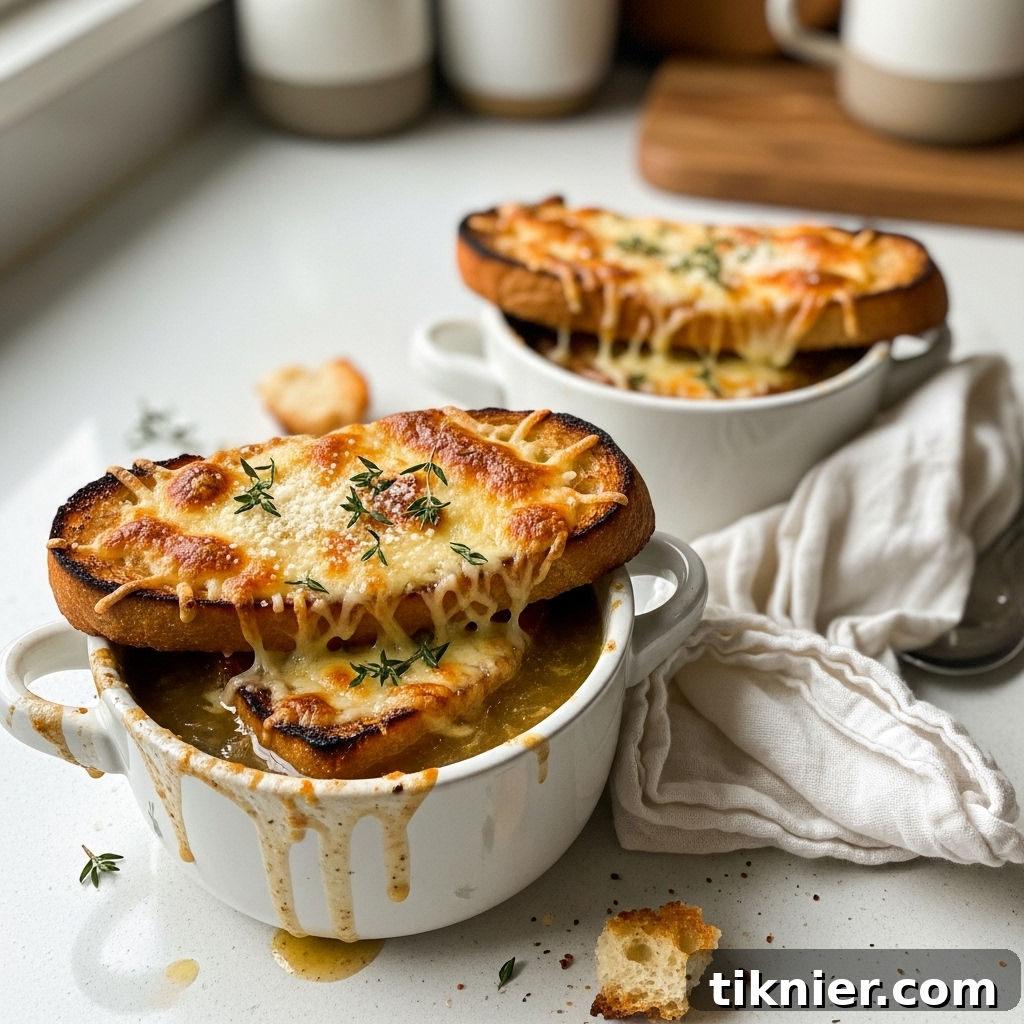
Description: A timeless French Onion Soup recipe masterfully elevated with a unique secret ingredient—dark red miso paste—for an incomparably deep, rich, and savory broth. This comforting classic is generously topped with garlic-rubbed baguette slices and a glorious cap of bubbly, golden-brown melted Gruyère and Parmesan cheese, promising the most flavorful and soul-warming soup you’ll ever have the pleasure of making.
Yield: 6-8 servings | Category: Soup | Cuisine: French-American Fusion
Prep Time: 25 minutes | Cook Time: 1 hour 45 minutes
Ingredients
- 6 tablespoons unsalted butter
- 2 tablespoons olive oil
- 4 large yellow onions and 1 large red onion, thinly sliced pole-to-pole
- 1 teaspoon granulated sugar
- 1 ½ teaspoons kosher salt, plus more to taste
- ½ teaspoon black pepper, freshly ground
- 4 cloves garlic, minced
- ¼ cup brandy or cognac
- 1 cup dry white wine (e.g., Sauvignon Blanc, Pinot Grigio)
- 3 tablespoons all-purpose flour
- 2 tablespoons dark red miso paste
- 6 cups high-quality low-sodium beef broth
- 2 cups high-quality low-sodium chicken broth
- 4 sprigs fresh thyme
- 1 bay leaf
- 8 (1-inch thick) slices sturdy baguette
- 1 whole garlic clove, peeled
- 8 ounces Gruyère cheese, freshly grated
- 2 ounces Parmesan cheese, freshly grated
- Fresh thyme leaves for garnish
Instructions
- In a heavy-bottomed Dutch oven, melt butter and olive oil over medium heat. Add all sliced onions and cook for 15 minutes, stirring occasionally, until thoroughly softened and reduced in volume.
- Stir in sugar, salt, and pepper. Reduce heat to medium-low and continue cooking for 45-60 minutes, stirring every 5-10 minutes, until the onions are deeply caramelized, jammy, and a rich mahogany brown. Patience is key here.
- Add minced garlic and cook for just 1 minute until fragrant. Increase heat to medium-high. Pour in brandy, using a wooden spoon to scrape up all delicious browned bits (fond) from the pot’s bottom. Cook until brandy has almost completely evaporated.
- Add dry white wine, continuing to scrape the pot, and let it simmer until reduced by about half (3-5 minutes). Sprinkle flour over onions and stir constantly for 1 full minute to cook out any raw flour taste.
- In a small bowl, whisk miso paste with ½ cup of warm beef broth until smooth. Pour this mixture into the pot, followed by the remaining beef broth, chicken broth, fresh thyme sprigs, and the bay leaf. Stir well to combine.
- Bring the soup to a gentle boil, then immediately reduce heat to low. Simmer, partially covered, for at least 30 minutes to allow flavors to meld. Remove and discard thyme sprigs and bay leaf. Taste and adjust seasoning with more salt and pepper if needed.
- Preheat broiler. Arrange baguette slices on a baking sheet. Broil for 1-2 minutes per side until golden and crisp. Immediately rub one side of each warm toast with the peeled raw garlic clove.
- Ladle hot soup into oven-safe bowls. Top each with 1-2 garlic toasts. In a separate bowl, toss grated Gruyère and Parmesan cheeses together, then pile generously over the bread, letting cheese spill over the edges.
- Carefully place soup bowls on a sturdy baking sheet and slide under the hot broiler. Broil for 2-4 minutes, watching constantly, until cheese is fully melted, bubbly, and beautifully browned in spots.
- Remove from broiler and let rest on the counter for at least 5 minutes before serving (bowls will be extremely hot). Garnish with fresh thyme leaves and serve immediately.
Notes
The profound secret to this recipe’s success lies in the patience and dedication applied during the onion caramelization process. This step is non-negotiable; do not rush it, as it meticulously builds the foundational flavor of the entire soup. Furthermore, the use of high-quality broth and freshly grated cheese will make a profoundly significant difference in the luxurious taste and texture of the final result.
Servings: 6-8 | Calories: Approximately 550 kcal | Fat: 30g | Carbohydrates: 40g | Protein: 25g (Nutritional values are estimates and may vary based on specific ingredients used.)
5 Frequently Asked Questions About French Onion Soup Answered
Here, I’ve compiled straightforward and comprehensive answers to the most common questions I consistently receive about preparing this French Onion Soup recipe, ensuring you have all the knowledge to achieve perfect results every time.
What are the absolute best onions for French Onion Soup?
This is an excellent and incredibly pertinent question, as the onions are, without a doubt, the undisputed star of this iconic dish. The most classic, reliable, and universally favored choice is the humble yellow onion. Yellow onions possess a magnificent balance of sweetness and a subtle astringency that, when meticulously caramelized, creates the perfect, foundational flavor profile for the soup. They break down beautifully and gracefully over the long cooking time, transforming into wonderfully jammy and intensely flavorful strands without becoming overly sugary or cloying. In my specific recipe, I find that a blend works wonders: I primarily use yellow onions but strategically incorporate one large red onion into the mix. The red onion contributes a subtle yet distinct layer of complexity, a nuanced piquancy, and a beautiful, deeper rosy hue that enhances the final color of the caramelized onions. While sweet onions, such as Vidalia or Walla Walla, can be used, exercise caution. They contain higher sugar content and less water, which means they caramelize more rapidly but can potentially render the final soup a touch too sweet for some palates. If you opt for sweet onions, I strongly advise omitting the teaspoon of granulated sugar specified in the recipe.
Why is my French Onion Soup broth cloudy instead of beautifully clear?
A truly exceptional French Onion Soup should boast a rich, deep brown broth that is remarkably clear, not murky or opaque. If you’re encountering a broth that appears somewhat cloudy, there are a few common culprits to investigate. The most probable reason is that the all-purpose flour was not cooked for a sufficient duration before the liquid was introduced. It is absolutely crucial to stir the flour into the caramelized onions and fat for a full minute. This essential step cooks out the raw starch taste from the flour and allows it to properly combine with the fat to create a nascent roux. If the broth is added too prematurely, the raw starch can indeed leach into the liquid, resulting in a noticeably cloudy soup. Another potential issue could be boiling the soup too vigorously. After you’ve added the broth and brought it to a boil, you must immediately reduce the heat to a very gentle simmer. A rapid, rolling boil can agitate the delicate proteins and fats present in the broth, causing them to emulsify and subsequently lead to a cloudy appearance. A slow, gentle simmer, on the other hand, allows the flavors to beautifully meld and deepen while preserving the clarity and inviting transparency of the broth.
Can I prepare French Onion Soup in advance for convenience?
Absolutely, and enthusiastically yes! In fact, French Onion Soup is one of those culinary marvels where the flavors paradoxically deepen, harmonize, and actually improve after spending a day or two mingling in the refrigerator. This characteristic makes it an absolutely perfect recipe for entertaining or for preparing ahead of time, as you can accomplish the vast majority of the work well in advance and simply handle the final, quick assembly and broiling just before serving. To do so, prepare the soup base completely, following all steps right through the simmering stage. Once finished, allow the soup base to cool down completely to room temperature. Then, transfer it to an airtight container and store it securely in the refrigerator for up to four days. When you are ready to serve, gently reheat the soup base on the stovetop until it is piping hot and simmering again. While it’s warming, you can quickly toast your baguette slices and grate your cheeses. Then, simply ladle the hot soup into your individual oven-safe bowls, top generously with the fresh toast and cheese, and pop them under the broiler for that glorious, final melt and perfect golden crust. No one will ever suspect you didn’t spend the entire day toiling away in the kitchen!
What is the most effective way to slice onions for French Onion Soup?
The manner in which you slice your onions for French Onion Soup can make a surprisingly significant difference in the final texture and presentation of your dish. For this particular soup, the ideal technique is to slice the onions “pole-to-pole,” or from the root end to the stem end. To execute this, first trim off the very tip of the stem end (but leave the root end intact for stability). Then, slice the onion in half directly through the root. Peel away the dry outer layers of skin, lay each onion half flat on your cutting board, and then make thin, vertical slices that meticulously follow the natural lines or grain of the onion from root to tip. Slicing them in this specific way helps to keep the onion’s cellular structure more intact. This structural integrity is crucial, as it allows the slices to hold their shape much better and maintain a desirable texture throughout the long caramelization process. They will soften into lovely, silky, tender strands rather than dissolving into an indistinguishable mush. Conversely, if you slice the onions crosswise into rings, you cut through significantly more of the cells, which can cause them to break down completely and largely disappear into the broth, resulting in a less satisfying texture.
My cheese didn’t get bubbly and beautifully browned on my French Onion Soup, what went wrong?
That glorious, blistered, golden-brown cap of melted cheese is, for many, arguably one of the most anticipated and satisfying elements of French Onion Soup, so it can be profoundly disappointing when it doesn’t turn out just right. The most common and frequent reason for a lackluster cheese topping is the use of pre-shredded, bagged cheese products. These commercially prepared cheeses contain anti-caking agents, such as potato starch or cellulose, which are added to prevent the shreds from clumping together in the bag. However, these very same additives inhibit the cheese from melting into a smooth, gooey, and perfectly uniform blanket. To achieve that impeccable, luxurious melt and bubbly crust, you must always buy a solid block of good quality Gruyère cheese and grate it yourself just before use. Another potential issue could stem from your broiler setup. Ensure your oven rack is correctly positioned, ideally about 6 inches from the heating element, to ensure the cheese receives direct, intense heat for rapid melting and browning. You also need to confirm that your broiler is fully preheated before you slide the soup bowls in. Finally, and crucially, be generous with the cheese! You need a good, thick, even layer to achieve that perfect, irresistible combination of a melted, gooey interior and a beautifully browned, bubbly, and slightly crispy top that makes French Onion Soup truly legendary.
Explore These Other Delicious Recipes Next
If you’ve fallen head over heels for the deep, comforting, and uniquely flavorful experience of this French Onion Soup, I am absolutely confident that you’ll thoroughly enjoy some of the other hearty, impressive, and deeply satisfying recipes I have carefully curated here on This Gal Cooks. These selections represent some of my most cherished and reliable go-to collections, perfect for those moments when I’m searching for a dish that is guaranteed to please everyone at the table and leave a lasting impression.
110 Easy Dinner Ideas That Taste Great
Sometimes, what you truly need is a fantastic, dependable dinner idea that doesn’t demand excessive fuss or complicated techniques. This extensive collection is brimming with an array of recipes perfectly suited for busy weeknights and relaxed weekends alike, all thoughtfully designed to be both utterly delicious and delightfully straightforward to prepare. Discover your next family favorite here!
Ultimate Thanksgiving Dinner Ideas
This sophisticated French Onion Soup makes a truly stunning and memorable starter for any holiday meal, especially a grand feast. If you’re meticulously planning an elaborate spread for Thanksgiving or any other special occasion that calls for culinary excellence, this comprehensive list encompasses everything you could possibly need, from the show-stopping main course to all the beloved classic sides and decadent desserts.
Cheap Meal Ideas & Budget Friendly Recipes
Much like this incredible soup, which masterfully transforms humble onions into something spectacularly gourmet, many of the finest and most satisfying meals are crafted from simple, affordable, and readily available ingredients. This insightful post is packed with an abundance of creative ideas that are wonderfully kind to your wallet without ever, for a moment, sacrificing an ounce of incredible flavor or culinary delight. Eat well, spend less!