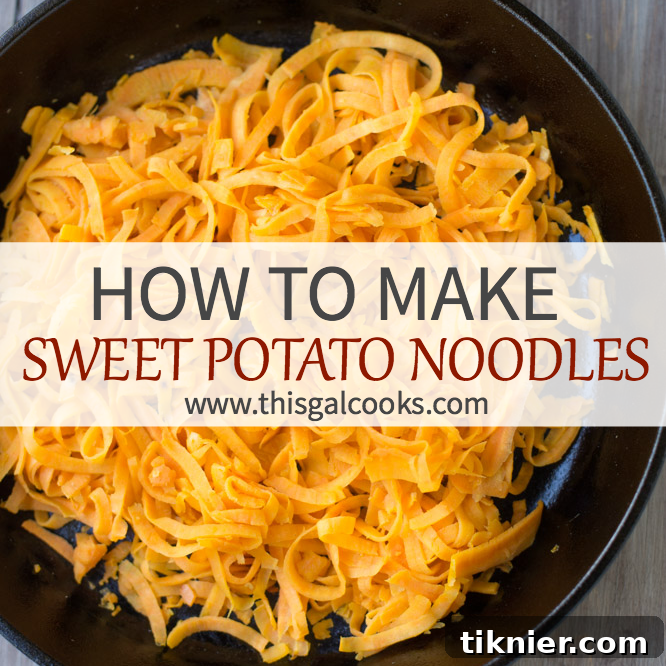
Welcome to your ultimate guide on how to effortlessly create delicious and healthy Sweet Potato Noodles right in your own kitchen. This simple, step-by-step tutorial will empower you to transform a humble sweet potato into a versatile, gluten-free, and incredibly flavorful pasta alternative.
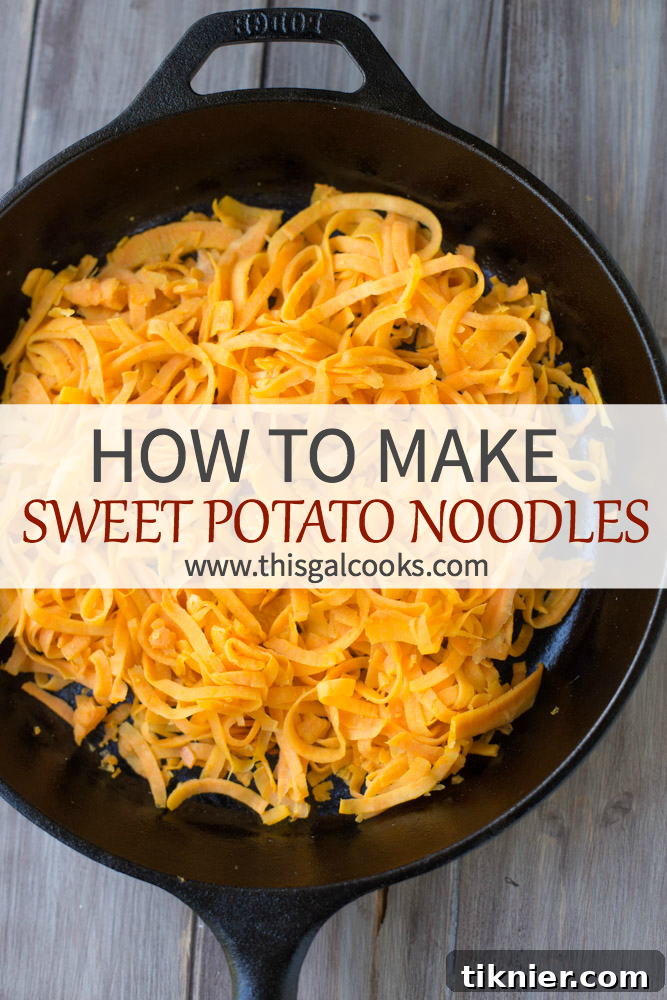
Sweet potato noodles have quickly become one of my absolute favorite methods to infuse dinner with excitement, without relying on processed or uninspiring boxed ingredients. They are inherently gluten-free, bursting with natural sweetness and nutrients, and surprisingly straightforward to prepare once you’re equipped with the right tools and a few simple techniques for cooking them to perfection in a skillet.
My first attempt at spiralizing a sweet potato was, to put it mildly, overly ambitious. I enthusiastically picked the largest potato available, forced it into my compact handheld spiralizer, and ended up with significantly more frustration than actual noodles. However, through persistent trial and error, I mastered the art. Now, spiralizing sweet potatoes is a go-to prep technique, especially when I’m looking for a wholesome and robust base that can stand up to rich and savory toppings like hearty lentils, perfectly fried eggs, or succulent spiced chicken. It’s a game-changer for anyone seeking a fresh twist on their favorite meals.
This comprehensive guide will walk you through the entire process of making sweet potato noodles from scratch. We’ll cover everything from selecting the best type of potato and choosing the most effective spiralizer, all the way through to expert tips for cooking, storing, and seasoning your homemade noodles. I’ll also share my tried-and-true original recipe below, so you can follow the exact step-by-step instructions that have yielded perfect results for years.
Whether you’re exploring paleo-friendly dinner concepts, searching for a fantastic gluten-free pasta substitute, or simply curious about that spiralizer you bought on a whim, you’ve landed in the ideal spot. Prepare to unlock a world of culinary possibilities with this vibrant root vegetable.
Let’s dive into why sweet potato noodles are not just a trend, but a truly worthwhile addition to your weekly menu.
Skip to Julie’s Special Recipe!
Why Sweet Potato Noodles Are a Culinary Sensation
Sweet potatoes have surged in popularity, and for excellent reasons. Beyond their delightful, naturally sweet flavor, these vibrant tubers are nutritional powerhouses, generously packed with dietary fiber, potent beta-carotene, and an array of essential micronutrients. They also feature a low glycemic index, making them an outstanding choice for those following a paleo diet or simply seeking a more stable energy source.
The versatility of sweet potatoes in the kitchen is truly remarkable. They can be baked until tender, grilled to perfection, or sautéed for a quick and easy side. Imagine mashing a baked sweet potato to create a luscious sweet potato casserole, or drizzling grilled sweet potato slices with olive oil to serve alongside grilled chicken for a balanced meal. Sautéing diced sweet potatoes and serving them with eggs offers a healthy, protein-packed breakfast that’s both satisfying and delicious. And, of course, their ability to transform into gluten-free sweet potato noodles opens up an entirely new world of culinary applications.
From a textural standpoint, sweet potato noodles possess a superior firmness compared to their zucchini counterparts. They offer just the right amount of natural starch to provide a satisfying, substantial bite, ensuring they remain firm and never turn watery or limp when cooked correctly. This makes them an ideal base for vibrant stir-fries, creative grain-free pasta bowls, hearty breakfast skillets, and virtually any dish where you’d typically use rice or traditional pasta. Their inherent structure allows them to absorb sauces beautifully without losing their integrity, making every mouthful a delightful experience.
Furthermore, if you’re navigating the challenge of pleasing picky eaters at home, sweet potato noodles are a brilliant and discreet method to introduce more vegetables into their diet without the usual resistance. When lightly tossed in a touch of olive oil and a dash of seasoning, their natural sweetness and appealing texture make them inherently craveable and incredibly easy to customize with diverse flavor profiles. This subtle approach can encourage even the most hesitant diners to enjoy their greens (or in this case, their vibrant orange!) without complaint.
Ultimately, whether your motivations are health-driven or simply a desire for a delicious new foundation for your favorite meals, sweet potato noodles deliver an unbeatable combination of versatility, robust nutrition, and exceptional taste, all within one simple, elegant dish. They truly embody the concept of wholesome food that doesn’t compromise on flavor or satisfaction.
Essential Tools for Crafting Perfect Sweet Potato Noodles
The success of your spiralizing adventure hinges significantly on using the right equipment. Sweet potatoes are considerably denser and firmer than softer vegetables like zucchini or cucumbers, so investing in a tool with sharp blades and a stable base is crucial for achieving clean, consistently shaped noodles without a struggle.
Countertop Spiralizer (Highly Recommended)
This is undeniably the superior choice if you intend to incorporate veggie noodles into your diet regularly. A countertop spiralizer securely suctions to your kitchen surface, preventing any movement while you work. It typically features a crank handle that makes turning the potato incredibly easy and provides exceptional control over the pressure and angle applied. This precision allows you to create uniform noodles every time. Look for models that offer multiple blade settings, giving you the flexibility to choose your preferred noodle thickness, from delicate angel hair to hearty fettuccine-style strands.
Handheld Spiralizer
While a handheld spiralizer can certainly get the job done in a pinch, especially for smaller, softer vegetables like zucchini, it demands significantly more muscle and patience when tackling dense sweet potatoes. If this is your chosen method, opt for narrower sweet potatoes that can fit more easily into the device. It’s also essential to trim the ends of the potato flat and even, ensuring a snug and secure fit that prevents slipping and allows for more efficient spiralizing.
Julienne Peeler
No spiralizer at hand? Don’t despair! A julienne peeler is a perfectly viable alternative for creating sweet potato noodles. While the process is undoubtedly slower and can be a bit more tedious, you’ll still achieve lovely, short, ribbon-like noodles that cook up beautifully and offer a delightful texture. To use it effectively, hold the sweet potato firmly in one hand and steadily drag the julienne peeler downwards with the other hand, applying even pressure in long, consistent strokes. This method requires a bit of practice but yields fantastic results.
Additional Gear That Enhances the Process
- A Sturdy Cutting Board: Essential for safely trimming the ends of your sweet potatoes and preparing them for spiralizing. A stable surface prevents accidents and makes the task much easier.
- A Reliable Vegetable Peeler: Perfect for efficiently removing the skin from your sweet potatoes, ensuring a smooth surface for the spiralizer blades to work with and a consistent noodle texture.
- A Clean Kitchen or Paper Towel: Crucial for drying the spiralized noodles before they hit the pan. Removing excess moisture prevents them from steaming and helps achieve that desirable caramelized edge and firm texture.
Regardless of the tool you ultimately select, the primary objective remains consistent: to produce firm, even strands of sweet potato that cook uniformly and maintain their appealing shape. I’ve personally experimented with all three methods, and while a countertop spiralizer remains my top recommendation for ease and efficiency, even the humble julienne peeler can deliver excellent results if you’re prepared to invest a little extra time and effort.
Mastering Sweet Potato Selection for Perfect Spiralizing
Not every sweet potato is created equal when it comes to spiralizing. The shape and quality of the potato you choose can significantly impact the ease and success of the process, directly affecting the final texture and appearance of your noodles.
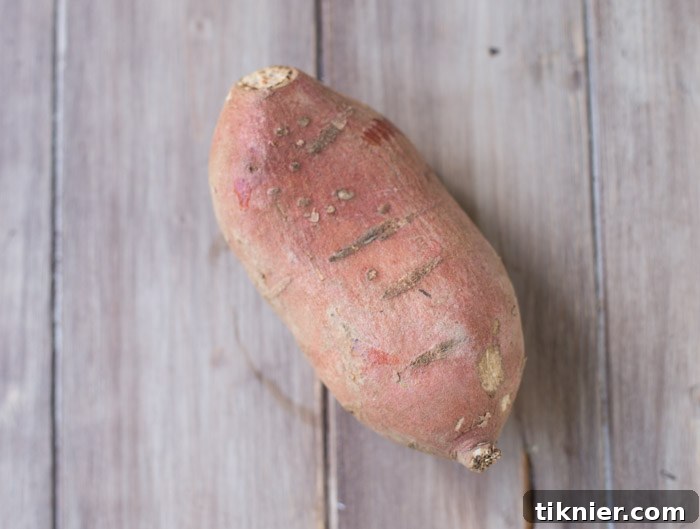
For optimal results, seek out long, slender sweet potatoes that maintain a relatively uniform width from one end to the other. Ideally, they should be similar in size and shape to a medium zucchini. These elongated potatoes are far simpler to spiralize because they fit neatly into the feeding chambers of both handheld and countertop spiralizers, minimizing the need for awkward cuts and reducing waste. Their consistent shape ensures you get long, unbroken strands of noodles.
Conversely, it’s best to steer clear of sweet potatoes that are short, excessively thick, or heavily tapered at the ends. If a potato is too wide, it simply won’t fit into the spiralizer’s opening, forcing you to slice it in half lengthwise. While these half-moon noodles will still cook and taste delicious, they won’t possess the characteristic long, elegant spirals that make this dish so visually appealing and satisfying. The goal is to maximize those beautiful, continuous strands.
Furthermore, always choose firm, smooth-skinned potatoes that are free from any soft spots, blemishes, or sprouts. Softer potatoes are prone to breaking apart during the spiralizing process, leading to shorter, fragmented noodles. They also tend to become mushy and lose their desirable texture more quickly during cooking, detracting from the overall dish.
If you plan to prep your sweet potatoes in advance, store unpeeled sweet potatoes in a cool, dark, and dry pantry, rather than refrigerating them. Cold temperatures can alter their internal texture, often making them harder and more fibrous, which can complicate the spiralizing process. Once you’ve spiralized them, however, the raw noodles can be stored in an airtight container in the refrigerator for up to 2 to 3 days. Lining the container with a paper towel can help absorb excess moisture and keep them fresh.
Taking a moment to select the right sweet potato upfront will save you considerable frustration and ensure you end up with superior, visually appealing noodles that hold their shape beautifully from pan to plate.
The Ultimate Guide to Making Sweet Potato Noodles
Preparing sweet potato noodles is a straightforward process that yields incredibly delicious results. Follow these simple steps to create a versatile base for countless meals.
What you will need:
- 2 medium sweet potatoes (refer to selection notes above for ideal size and shape)
- 1 tbsp extra virgin olive oil
- A generous pinch of kosher salt
- A 10-inch skillet (cast iron or stainless steel recommended)
Step 1: Choose and Prepare Your Sweet Potatoes. Begin by selecting thinner sweet potatoes, ideally those with a circumference similar to a medium zucchini. This choice is crucial for a smooth and effortless spiralizing experience. Fatter or irregularly shaped potatoes often require cutting lengthwise to fit into most spiralizers, resulting in shorter, less uniform noodles. For this recipe, two medium-sized sweet potatoes will yield approximately 4-5 cups of freshly spiralized noodles. Once selected, thoroughly peel, wash, and pat your sweet potatoes dry to remove any surface moisture.
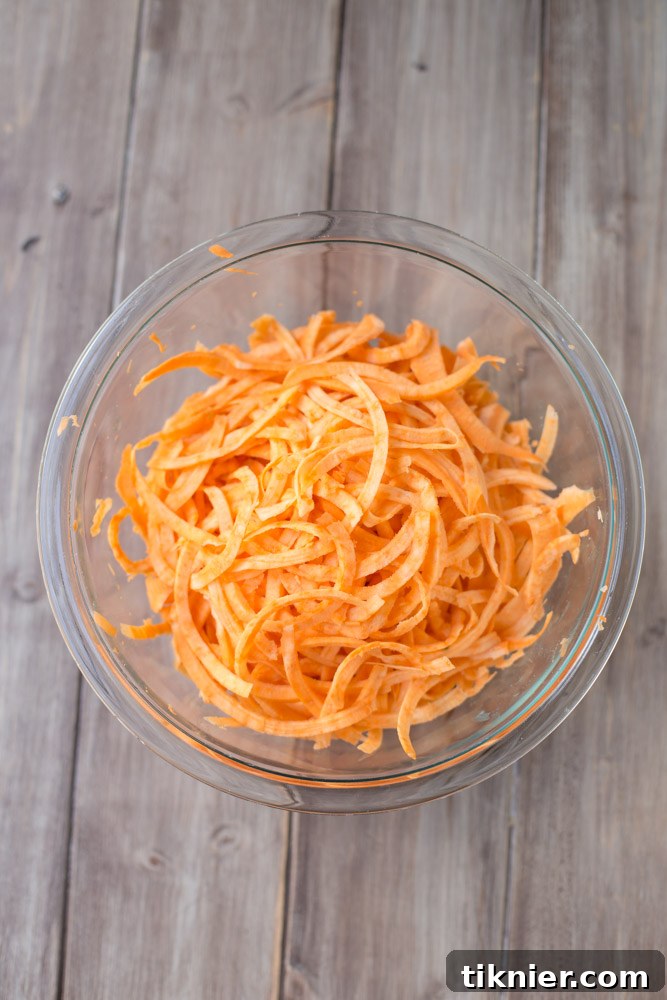
Step 2: Spiralize the Sweet Potatoes. Now it’s time to transform your potatoes into beautiful noodles! Attach the sweet potatoes to your spiralizer following the manufacturer’s instructions. While I have used a hand-held spiralizer in the past, I found it somewhat challenging for the density of sweet potatoes. A countertop spiralizer is generally more efficient. If you don’t own a spiralizer, a julienne peeler is an excellent alternative. To use it, hold the sweet potato firmly in one hand and carefully draw the julienne peeler down the potato with your other hand in long, even strokes. Continue this process, rotating the potato as needed, until the entire sweet potato has been “peeled” into noodle-like strands. NOTE: Using a julienne peeler requires patience and can be a bit tedious, but the results are entirely worth the effort.
Step 3: Cook Your Sweet Potato Noodles. Heat 1 tablespoon of extra virgin olive oil in a 10-inch skillet (a cast iron skillet offers excellent heat retention, but stainless steel works well too) over medium-high heat. Once the oil is shimmering, add the spiralized sweet potatoes to the skillet. Using kitchen tongs, toss the noodles continuously to ensure they are evenly coated with the olive oil. Keep the noodles moving by tossing them every few seconds to prevent them from sticking to the bottom of the skillet or burning. Cook for approximately 5-10 minutes. The exact cooking time will depend entirely on your preferred noodle texture. If you enjoy a slight crunch and al dente texture, aim for about 5 minutes. If you prefer softer, more tender noodles, extend the cooking time closer to 10 minutes. The best way to determine doneness is to sample a noodle as it cooks, adjusting to your personal preference.
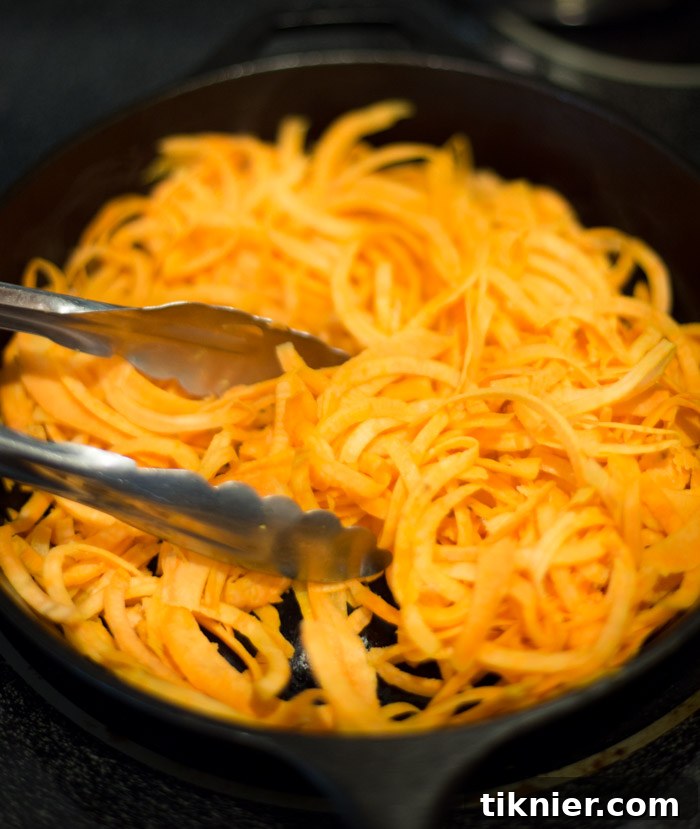
Once the sweet potato noodles have reached your desired texture, remove the skillet from the heat. They are now ready to be served immediately, either directly from the skillet or transferred to serving bowls. Customize them with your favorite sauces, savory toppings, or a simple sprinkle of fresh herbs.
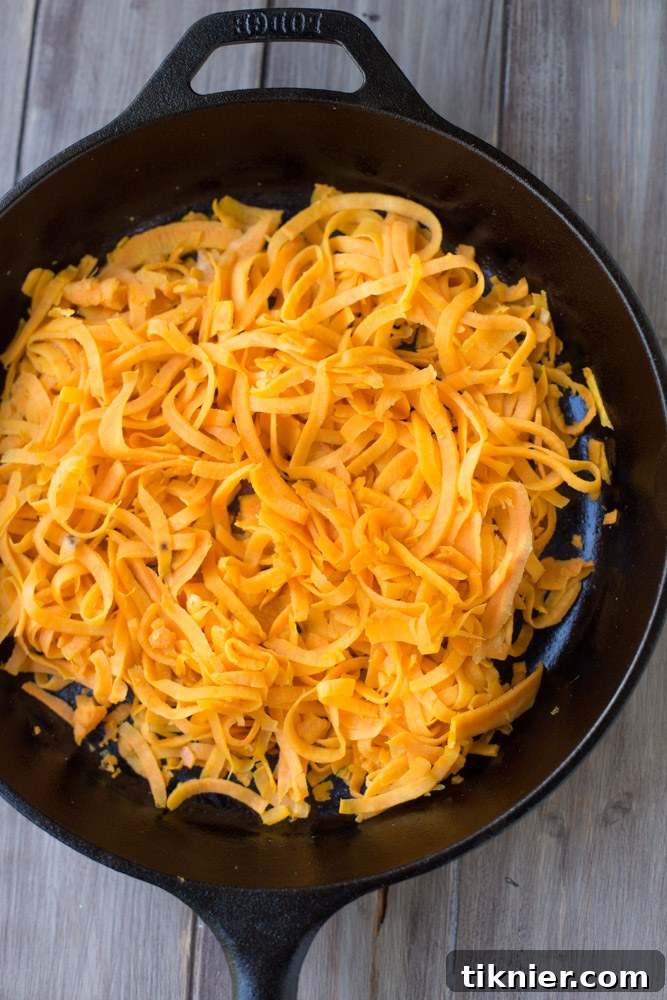
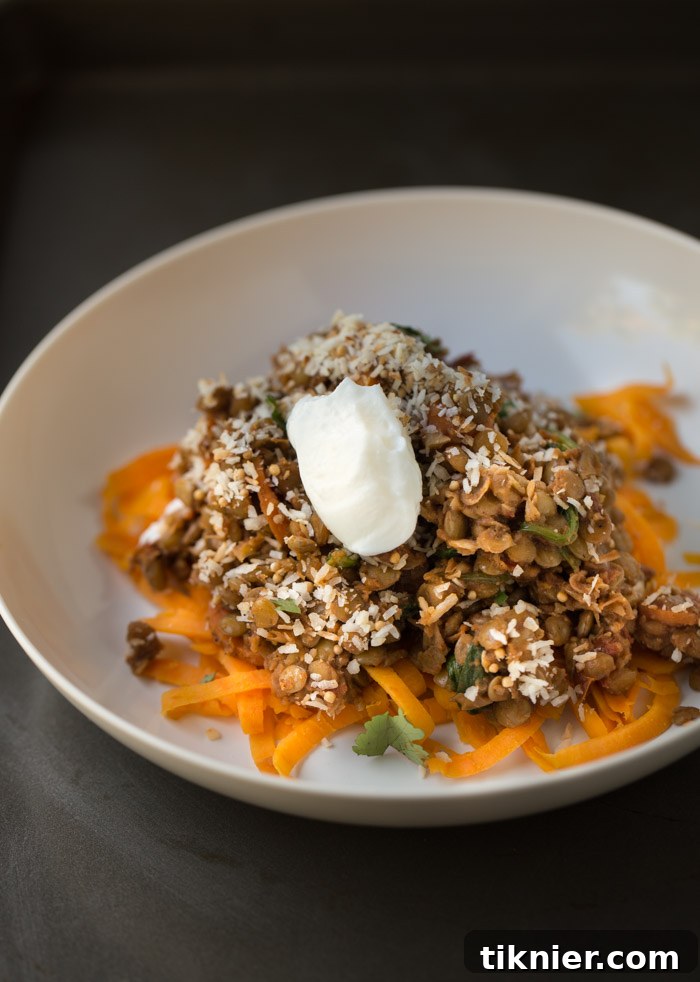
For an especially satisfying meal, I often top these tender noodles with Spiced Braised Lentils (a recipe expertly adapted from Food 52’s Genius Recipes cookbook, which I’ll be sharing on this blog very soon!).
6 Common Mistakes to Avoid for Perfect Sweet Potato Noodles
While making sweet potato noodles is a relatively simple culinary endeavor, a few common missteps can hinder your success, especially if you’re new to spiralizing or cooking them. Being aware of these pitfalls will help ensure your noodles consistently turn out tender, flavorful, and free from frustration.
1. Using the Wrong Size or Shape Potato
This is perhaps the most frequent error. Sweet potatoes that are excessively thick, short, or possess an irregular, bulbous shape will not spiralize easily or efficiently. You’ll likely find yourself either needing to awkwardly cut them down, sacrificing the desirable long noodle effect, or worse, experiencing jams and breakage in your spiralizer mid-process. Always aim for firm, straight, and medium-width sweet potatoes that can fit comfortably and securely into your spiralizer for continuous, unbroken strands.
2. Neglecting to Dry the Noodles Properly
After being spiralized, sweet potatoes retain a certain amount of natural moisture. If you add them directly to a hot pan while still wet, they will steam rather than sauté. This steaming action prevents the noodles from achieving that lovely caramelized browning on their edges, resulting in a softer, less flavorful texture. Always pat your spiralized noodles thoroughly dry with a clean kitchen towel or paper towel before introducing them to the skillet; this step is crucial for achieving crisp-tender results.
3. Skipping the Oil or Using an Inadequate Pan
Sweet potato noodles require a generously slick, hot surface to prevent them from sticking and to promote even cooking. A sufficient amount of olive oil (or your preferred cooking fat) combined with a high-quality nonstick or meticulously seasoned cast iron skillet makes an enormous difference. While stainless steel pans can be used, they demand closer monitoring and more frequent tossing with tongs to ensure the noodles don’t adhere to the surface and cook evenly.
4. Overcrowding the Skillet
Loading too many noodles into the pan at once is a surefire way to achieve unevenly cooked or soggy results. When the skillet is overcrowded, the temperature drops, and the moisture released from the potatoes has nowhere to escape, leading to steaming instead of sautéing. If you’re preparing a larger batch, it’s always best to cook the noodles in two separate rounds. This ensures the pan remains hot enough for proper searing and allows the noodles to genuinely sauté and caramelize.
5. Overcooking Until Mushy
Sweet potato noodles cook remarkably quickly, typically reaching their ideal doneness in just 5 to 10 minutes, depending on whether you prefer them with a slight crunch or a softer texture. Cooking them for too long will cause them to lose their structural integrity, turn mushy, and fall apart. Begin checking for doneness around the 5-minute mark, and continue to toss them regularly to promote even cooking and prevent over-softening.
6. Forgetting to Taste and Adjust Seasoning
Always taste your sweet potato noodles just before removing them from the heat. A simple pinch of additional salt, a dash of freshly ground black pepper, a squeeze of bright lemon juice, or a sprinkle of fresh herbs can completely transform and elevate the flavor balance. Don’t be hesitant to make minor adjustments on the fly once the noodles are nearly finished cooking; a little tweaking can make a big impact.
By paying attention to these seemingly small details, you’ll easily bypass the most common sweet potato noodle slip-ups and consistently achieve a dish that is wonderfully flavorful, perfectly tender, and perfectly prepared to complement any sauce or topping you choose to add.
Creative Ways to Serve Sweet Potato Noodles
One of the most appealing qualities of sweet potato noodles is their exceptional adaptability. Once you’ve expertly spiralized and cooked them, you’re left with a naturally sweet, robust, and utterly versatile base that harmonizes beautifully with an extensive range of flavors, from rich, bold sauces to delicate, fresh toppings. Here are some of my favorite ways to incorporate them into your meals, whether you’re crafting a complete main course or simply elevating a side dish.
As a Brilliant Pasta Swap
Sweet potato noodles excel as a substitute for traditional spaghetti or linguine in virtually any dish. Their slightly sweet flavor profile adds an intriguing depth that pairs wonderfully with a variety of sauces. They are particularly excellent with:
- Classic marinara or a fresh tomato basil sauce for a comforting Italian-inspired meal.
- Vibrant pesto, perhaps garnished with toasted pine nuts, for a burst of herbaceous flavor.
- A rich and creamy garlic Parmesan sauce, offering a decadent yet healthier alternative to traditional pasta.
It’s worth noting that because sweet potato noodles possess their own mild sweetness, they tend to shine brightest when paired with savory or subtly spicy sauces. This creates a delightful contrast that truly balances the overall flavor experience.
The Perfect Breakfast Skillet Base
Transform your morning routine by using cooked sweet potato noodles as the foundation for a hearty and nutritious breakfast skillet. Simply toss them in a cast iron skillet and crown them with:
- A perfectly fried or gently poached egg, allowing the runny yolk to meld with the noodles.
- Creamy slices of fresh avocado for healthy fats and a smooth texture.
- Crispy crumbled bacon or savory turkey sausage for a boost of protein.
- A sprinkle of tangy goat cheese or salty feta to add a complex flavor dimension.
This combination is a staple in my weekend breakfast repertoire. The sweet potatoes, when sautéed, develop a lovely caramelized flavor that complements the richness of egg yolk and the freshness of herbs exquisitely.
In Wholesome Grain-Free Bowls or Flavorful Stir-Fries
For a swift, healthy, and satisfying lunch or dinner, sweet potato noodles are an exceptional choice. Try tossing them with:
- A generous handful of sautéed greens, such as nutrient-rich spinach or robust kale, for added freshness and vitamins.
- Lean cooked ground turkey or convenient shredded rotisserie chicken for a quick protein boost.
- A luscious drizzle of tahini dressing, a savory peanut sauce, or even a spicy chipotle mayo for an explosion of global flavors.
This serving method is incredibly flexible, allowing you to mix and match with whatever fresh ingredients or delicious leftovers you have on hand in your refrigerator. It’s an effortless way to create a wholesome, customizable meal.
Paired with Spiced Braised Lentils (My Personal Favorite)
Among all the wonderful ways to enjoy sweet potato noodles, my absolute favorite is undoubtedly serving them generously topped with spiced braised lentils. The earthy, savory depth of the lentils, combined with the tender, slightly sweet strands of the noodles, creates a culinary experience that is pure, unadulterated comfort food. I first discovered and adapted this incredible pairing from Food52’s renowned Genius Recipes cookbook, and it has since become a cherished and regular fixture in my meal rotation.
Simple Flavor Enhancements
If you prefer to keep things understated yet still packed with flavor, a few basic additions can brilliantly elevate your cooked sweet potato noodles:
- Freshly minced garlic and a medley of aromatic fresh herbs (like parsley, cilantro, or thyme) for a fragrant boost.
- A simple yet elegant combination of high-quality olive oil and a squeeze of bright lemon juice for a zesty, fresh taste.
- A dash of chili flakes for a subtle kick and a hint of lime zest for an invigorating citrusy note.
- For a truly unique and cozy sweet-savory side, try tossing them with a knob of butter and a sprinkle of warm cinnamon.
Whether you’re crafting an elaborate dinner or simply adding flair to your leftovers, sweet potato noodles provide a dynamic base that is inherently flavorful enough to stand proudly on its own, yet simultaneously flexible enough to embrace and enhance the boldest of toppings and sauces.
The more you incorporate them into your cooking, the more innovative ideas you’ll naturally generate. Soon, reaching for that spiralizer will become a seamless and integral part of your weekly culinary rhythm.
Make-Ahead Strategies and Storing Leftovers
Integrating sweet potato noodles into your regular weekly meal prep can be incredibly efficient with a little planning. Here’s how to properly store, reheat, and even freeze your noodles to maintain their ideal texture without turning them soggy or mushy.
Can You Spiralize Sweet Potatoes in Advance?
Absolutely! You can pre-spiralize sweet potatoes up to 2 days before you plan to cook them. To keep them fresh, store the raw noodles in an airtight container. Line the container with a dry paper towel or two; these will absorb any excess moisture that the sweet potatoes release, preventing them from becoming slimy. Remember to replace the paper towel if it becomes damp to ensure optimal freshness. For shorter prep times, such as later in the day, you can also store spiralized noodles in a large zip-top bag, pressing out as much air as possible. A key tip: do not wash the noodles after spiralizing if you’re storing them raw, as extra moisture can significantly contribute to sogginess.
How to Store Cooked Sweet Potato Noodles
Once your sweet potato noodles are cooked, allow them to cool completely to room temperature. Then, transfer them into an airtight container. Properly stored, they will keep well in the refrigerator for up to 3 to 4 days, making them perfect for planned leftovers or quick weekday meals.
For the best possible results and to preserve the texture, it’s advisable to store the cooked noodles separately from any sauces or additional toppings. This allows you to reheat the noodles evenly without overcooking or compromising the integrity of other components of your meal.
The Best Way to Reheat Sweet Potato Noodles
The most effective method for reheating cooked sweet potato noodles is in a skillet over medium heat. Add a small splash of olive oil or even a tablespoon of water to the pan to help loosen them up and prevent sticking. Gently stir and toss the noodles just until they are warmed through. It’s best to avoid reheating them in the microwave whenever possible, as microwaving tends to make the noodles soft, unevenly heated, and can quickly lead to a mushy texture.
Be mindful not to overheat them, as prolonged heat exposure will break down their structure and result in undesirable mushiness.
Can You Freeze Sweet Potato Noodles?
- Raw noodles: Freezing raw sweet potato noodles is generally not recommended. They tend to thaw poorly, often breaking apart or developing a gummy texture, which compromises their quality.
- Cooked noodles: You can freeze cooked sweet potato noodles, but be aware that their texture may change slightly upon thawing. For this reason, they are best utilized in dishes where texture isn’t the primary concern, such as adding them to hearty soups, stews, or casseroles. To freeze, allow them to cool completely, then place them in a freezer-safe bag or container for up to 2 months.
If your goal is to incorporate sweet potato noodles into your regular meal prep, storing them raw for a few days or cooking fresh batches in smaller portions tends to yield the most satisfying texture and flavor. With these simple storage and reheating tricks, your delicious sweet potato noodles will always be ready to enjoy whenever you desire.
Creative Variations and Flavor Twists for Sweet Potato Noodles
Once you’ve mastered the foundational technique of preparing basic sweet potato noodles, an exciting world of culinary creativity awaits. This humble root vegetable is far more versatile than many realize, offering abundant opportunities to experiment with diverse flavors, colors, and textures.
Explore Different Varieties of Sweet Potatoes
While most recipes typically feature classic orange-fleshed sweet potatoes, venturing into other varieties can introduce fascinating nuances:
- Purple sweet potatoes offer a distinct earthy flavor and a truly striking, vibrant hue. They tend to be a little drier, so spiralize them slowly and deliberately to prevent breakage.
- Japanese sweet potatoes, characterized by their white flesh and beautiful purple skin, are often sweeter and starchier than their orange counterparts. Their higher starch content helps them hold their shape exceptionally well in the skillet, providing a delightful texture.
Each sweet potato variety brings a slightly different texture and flavor profile to the table. Experiment with them to discover which one you prefer for savory main courses, subtly sweet side dishes, or visually stunning, colorful bowls.
Integrate Other Spiralized Vegetables
For a truly vibrant and nutrient-dense noodle blend, consider mixing your sweet potato noodles with other spiralized vegetables. This adds both visual appeal and a broader spectrum of nutrients:
- Bright carrots for an extra crunch and a touch of sweetness.
- Earthy beets for a deep, jewel-toned color and a unique flavor.
- Fresh zucchini for a lighter, softer contrast in texture.
- Mellow yellow squash for a sunny color and delicate taste.
You can spiralize these vegetables raw and combine them with your sweet potato noodles either before or after cooking for added texture, a burst of color, and an enhanced nutritional profile.
Diversify Your Oils and Seasonings
The choice of cooking oil and seasoning blends can profoundly alter the character of your sweet potato noodles:
- Olive oil is a classic choice, imparting a smooth, Mediterranean-inspired flavor that complements most dishes.
- Ghee or clarified butter provides a rich, nutty depth, making it an excellent option for paleo-friendly preparations.
- Coconut oil is ideal if you’re aiming for Thai- or Indian-style flavor profiles, lending a subtle tropical aroma.
Pair your chosen oil with imaginative seasoning blends:
- Smoked paprika and cumin for a smoky, savory base perfect for a taco bowl.
- Curry powder and garlic for an aromatic Indian-inspired twist.
- A pinch of cinnamon and nutmeg transforms them into a cozy, subtly sweet side dish, perfect for fall.
- Chili flakes and fresh lime zest for a bright, zesty, and spicy kick that awakens the palate.
Finish with a Flavorful Sauce
Sometimes, all it takes to make sweet potato noodles feel entirely new and exciting is a change of sauce:
- A creamy blend of tahini and lemon juice for a nutty, tangy, and deeply satisfying dressing.
- Rich peanut sauce or an almond butter dressing for an authentic Asian-style noodle bowl experience.
- A sophisticated balsamic glaze paired with crumbled goat cheese for an elegant, fall-inspired dish.
Once you’ve mastered the core cooking method, sweet potato noodles truly become a versatile blank canvas for your culinary imagination. Don’t hesitate to toss in leftovers, utilize whatever fresh ingredients are waiting in your fridge, or experiment with a novel seasoning combination that sparks your interest. Sweet potatoes are remarkably compatible with a wide range of bold flavors, and there’s no single “right” way to serve them—only endless delicious possibilities.
Frequently Asked Questions About Sweet Potato Noodles
Here are clear and concise answers to the most common questions I receive regarding this delicious sweet potato noodle recipe.
Do you need to peel sweet potatoes before spiralizing?
Yes, I highly recommend peeling them first. While sweet potato skin is edible, it is quite tough and can interfere with the delicate blades of most spiralizers. Removing the skin ensures your noodles emerge cleaner, more uniform, and with a consistently smooth texture. A standard vegetable peeler works perfectly for this task.
Can I bake sweet potato noodles instead of sautéing them?
You certainly can, but you’ll want to keep a close eye on them during the process. To bake, toss the raw noodles with a little olive oil and spread them out in a single layer on a baking sheet lined with parchment paper. Bake at 400°F (200°C) for approximately 10 to 15 minutes, making sure to flip them halfway through to ensure even cooking. They won’t achieve quite the same level of softness or caramelization as the skillet-sautéed version, but they will still be excellent for adding to bowls or tossing with your favorite sauces.
Are sweet potato noodles healthy?
Absolutely, sweet potato noodles are an incredibly healthy choice. Sweet potatoes themselves are nutritional powerhouses, brimming with dietary fiber, powerful antioxidants, and a significant amount of beta-carotene, which the body converts to Vitamin A. They also have a lower glycemic index compared to white potatoes. When prepared simply with healthy fats like olive oil or ghee, they provide a nourishing, nutrient-dense base for a wide variety of meals, making them particularly popular among those following paleo, Whole30, and gluten-free diets.
How do you prevent sweet potato noodles from becoming soggy?
The key to avoiding soggy sweet potato noodles is to control moisture. First, always pat the raw, spiralized noodles thoroughly dry with a paper towel before you begin cooking. Second, ensure you don’t overcrowd the skillet; cook in batches if necessary so the pan stays hot. Use medium-high heat and continuously stir and toss the noodles with tongs. This technique ensures they sauté and slightly caramelize rather than steaming in their own juices. If they sit untouched in the pan for too long, they will soften more than desired and risk becoming mushy.
Can you make sweet potato noodles without a spiralizer?
Yes, it is definitely possible, although it requires a bit more time and manual effort. A julienne peeler is an excellent tool for this purpose and will produce short, ribbon-like noodles. To use it, securely hold the sweet potato in one hand and carefully drag the peeler down the potato in long, steady strokes with the other hand. While this method is slower and more hands-on, the resulting noodles are still wonderfully delicious and function perfectly in most recipes. If you don’t own a spiralizer, it’s a fantastic way to experience sweet potato noodles before deciding to invest in a new kitchen gadget.
How to Make Sweet Potato Noodles
4-5 Cups
5 minutes
10 minutes
15 minutes
Ingredients
- 1 tbsp extra virgin olive oil
- 2 medium sweet potatoes (see notes for size)
- pinch of kosher salt
Instructions
- Use your spiralizer to sprialize the sweet potatoes. I used a hand-held sprializer, which was slightly difficult to use for a sweet potato. If you don’t own a spiralizer, you may use a julienne peeler to create sweet potato noodles. Hold the potato in one hand and slowly pull the julienne peeler down the potato with your other hand. Repeat this process until the entire sweet potato is “peeled”. NOTE: using a julienne peeler is a tedious process but it can be done.
- Cook the sweet potato noodles. Place 1 tbsp of extra virgin olive oil in a 10 inch skillet (I used cast iron but you may use stainless steel) and heat over medium high heat. Add the spiralized sweet potatoes and toss with tongs to coat with the olive oil. Continue to toss with the tongs every few seconds to prevent the potatoes from burning or becoming stuck on the bottom of the skillet. Do this for 5-10 minutes. The cooking time will depend on your preferred texture of the noodles. If you love a little crunch, cook for 5 minutes. If you prefer soft noodles, cook for 10. Sample a noodle to find out if it’s reached your preferred texture.
- Once the noodles are done cooking, remove from heat and serve directly from the skillet or in serving bowls with whichever sauces or topping you prefer.
Notes
Choose thinner sweet potatoes as they will be easier to use in a spiralizer.
Nutrition Information:
Amount Per Serving:
Calories: 65 Total Fat: 0g Sodium: 23mg Carbohydrates: 17g Sugar: 4g Protein: 1g
Explore More Delicious Recipes
Looking for further inspiration to integrate your homemade sweet potato noodles into exciting meals? Discover these cozy, nutrient-packed ideas from This Gal Cooks, designed to tantalize your taste buds and expand your culinary repertoire:
- Blackened Scallops with Sweet Potato Noodles
Savor perfectly seared, smoky scallops nestled upon a creamy, dairy-free bed of sweet potato noodles. These noodles are delicately tossed with rich coconut milk, aromatic shallots, and fragrant garlic, creating a light yet luxurious dish that’s also wonderfully Whole30-friendly. - Tropical Sweet Potato Burrito Bowls
Craft vibrant, explosively flavorful bowls featuring tender, cumin-seasoned sweet potatoes, bright cilantro-lime rice, and a refreshing, zesty fresh pineapple salsa. All these components come together effortlessly in a single skillet, ensuring easy prep and minimal cleanup. - Spiced Lentils with Toasted Coconut + A Baby Shower!
These deeply earthy and aromatic lentils are the quintessential topping for hot, tender sweet potato noodles. Infused with exotic garam masala, creamy coconut, fresh spinach, and sweet carrots, this dish offers pure, wholesome comfort food in every bite.
Each of these delightful dishes artfully showcases sweet potato noodles in innovative and delectable ways, ranging from elegant seafood preparations to spice-forward, protein-rich vegetarian bowls. They offer perfect pairings to celebrate your newfound success in preparing beautiful, homemade sweet potato noodles!