The Ultimate Oven Roasted Turkey Recipe: Juicy, Flavorful, and Perfectly Crispy Every Time
There’s an undeniable magic that happens when the warm, inviting aroma of a perfectly oven roasted turkey begins to waft through the house on a crisp holiday morning. It’s more than just a smell; it’s a promise of shared joy, abundance, and cherished memories waiting to be made around the dining table. For many, the centerpiece of a holiday feast, particularly Thanksgiving, is a golden-brown, succulent turkey, and achieving that picture-perfect result can often feel like a daunting culinary challenge. However, with this comprehensive guide and my special recipe, you’re not just cooking a meal; you’re crafting an unforgettable experience.
I still vividly recall the very first Thanksgiving I hosted as a newlywed. My dear mother-in-law, a wonderful woman with a purist’s approach to cooking, swore by a turkey seasoned with nothing more than salt and pepper. While her turkeys were always good, I harbored a quiet desire to infuse my own personal touch, to create a bird that would be exceptionally memorable without straying too far from the beloved traditions we all held dear.
My quest led me to experiment with a compound butter – a flavorful mixture designed to be slathered under the turkey’s skin. I knew that butter was the secret weapon for a truly juicy bird, but I wanted more than just a simple blend of herbs. On a spontaneous impulse, I reached for a jar of smoked paprika from my pantry. I had long admired its subtle yet profound smoky depth in other dishes, and I wondered what culinary magic it might weave with poultry.
I carefully mixed the softened butter with finely chopped fresh thyme, a touch of bright orange zest for a subtle citrusy lift, and, of course, that transformative smoked paprika. As I gently spread that beautiful, sunset-hued butter all over and under the turkey’s skin, I felt a delightful sense of culinary adventure. And when that magnificent oven roasted turkey emerged from the oven, gleaming with a perfect golden-brown hue, the entire family fell into a hushed silence, captivated by its beauty and intoxicating aroma. Even my discerning mother-in-law, after her first incredibly juicy and flavorful bite, had to concede that my little twist was an absolute triumph – a recipe worth keeping for generations to come.
Skip to My Special Recipe!
Why This Oven Roasted Turkey Recipe Guarantees Success
The tradition of a whole roasted turkey gracing the center of a holiday meal is more than just a culinary custom; it’s a deeply ingrained symbol of abundance, family gatherings, and celebration within American culture. For centuries, families have gathered around tables laden with this magnificent bird, solidifying its place as one of the most iconic and anticipated dishes in our nation’s culinary tapestry. It’s not just food; it’s an experience, a memory in the making.
However, this beloved tradition often arrives hand-in-hand with a significant amount of pressure and anxiety for the home cook. We’ve all been privy to the dreaded horror stories, or perhaps even lived through them ourselves: breast meat so dry it resembles sawdust, thighs that remain stubbornly undercooked, and skin that is either disappointingly pale and flabby or, conversely, burnt to an unappetizing crisp. The sheer size and irregular shape of a whole turkey inherently make it a challenging protein to cook evenly, which is precisely why so many home cooks feel intimidated by the task of roasting a turkey.
This ultimate oven roasted turkey recipe is meticulously designed to banish that fear and empower you to create a show-stopping bird with confidence. Its unwavering success is rooted in a few simple yet incredibly powerful and effective techniques that ensure a consistently perfect outcome. The undisputed star of this culinary show is the unique smoked paprika and orange zest compound butter. By carefully placing this flavorful butter directly beneath the turkey’s skin, it performs a continuous basting action as it melts during cooking. This ingenious method guarantees that the often-prone-to-drying-out breast meat remains exceptionally moist, tender, and succulent, while simultaneously infusing the entire bird with an exquisite deep, smoky, and subtly sweet flavor profile that will tantalize every palate.
Furthermore, the strategic two-temperature roasting method employed in this recipe is an absolute game-changer. The initial phase of roasting at a moderate temperature (325°F) is crucial for allowing the thicker parts of the turkey, such as the thighs and legs, to cook through thoroughly and gently without prematurely burning the exterior. Following this, a final blast of high heat (400°F) is the secret to achieving that coveted, perfectly crisp, shatteringly delicious, golden-brown skin that everyone eagerly vies for. This reliable and masterfully crafted method doesn’t just promise; it delivers a spectacular, perfectly cooked, and incredibly flavorful centerpiece every single time, making you the undisputed holiday hero.
Essential Ingredients for Your Perfect Oven Roasted Turkey
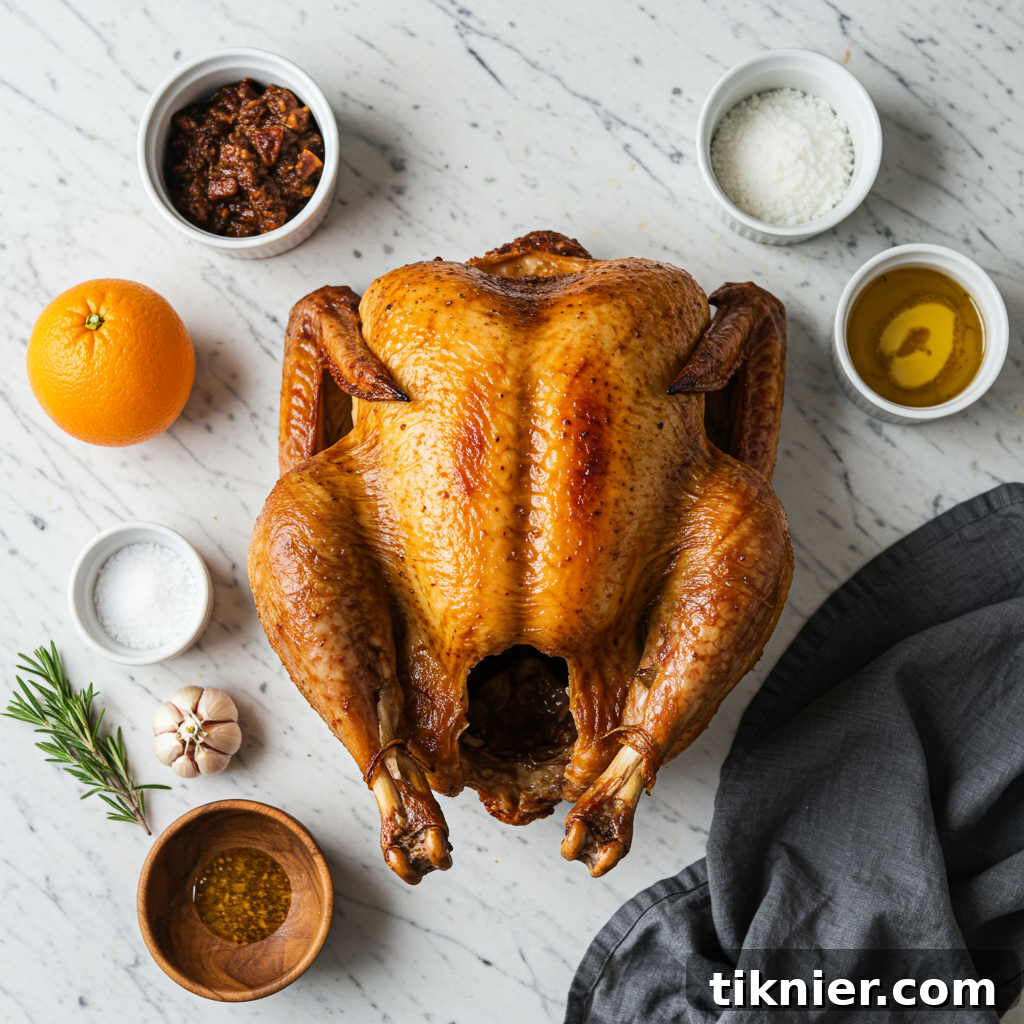
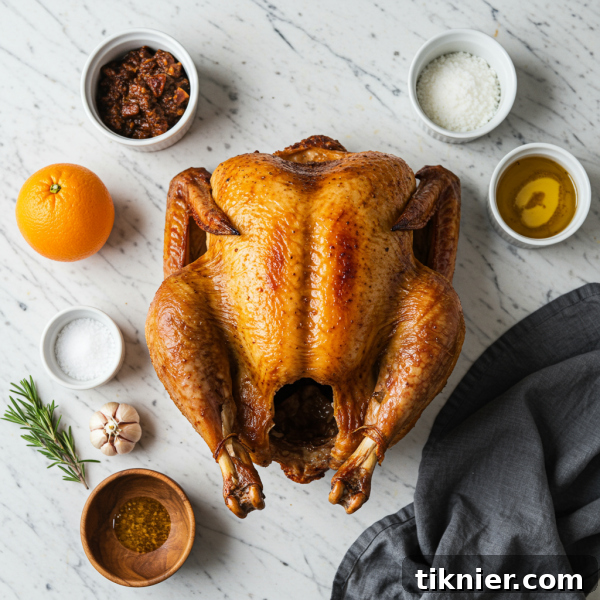
The true magic behind this exceptional oven roasted turkey lies in the thoughtful selection and combination of its ingredients, with our signature compound butter taking center stage. The smoked paprika, in particular, is not just an ingredient; it’s the secret weapon, imparting a stunning, rich color to the bird and infusing it with a deep, complex smoky flavor that will undoubtedly have your guests clamoring for your recipe. Using only the highest quality, freshest ingredients available genuinely elevates the final taste and texture, making all the difference.
- For the Turkey: 1 (12-14 lb) whole turkey. Ensure it is completely thawed and that all giblets and the neck have been removed from the cavity. Proper thawing is crucial for even cooking.
- For the Smoked Paprika & Orange Zest Compound Butter:
- 1 cup (2 sticks) unsalted butter, softened to true room temperature. This is vital for easy mixing and spreading.
- 2 tablespoons fresh thyme leaves, finely chopped. Fresh herbs provide the best aroma and flavor.
- 1 tablespoon smoked paprika (This is the star ingredient! Do not substitute regular paprika).
- 1 tablespoon fresh orange zest. Zest from a fresh orange offers a bright, fragrant note.
- 2 teaspoons kosher salt.
- 1 teaspoon freshly ground black pepper.
- For the Aromatic Cavity Fillings: These ingredients infuse the bird with moisture and subtle flavors from the inside out.
- 1 large yellow onion, quartered.
- 1 large navel orange, quartered.
- 1 head of garlic, sliced in half crosswise, exposing the cloves.
- 4-5 whole sprigs of fresh thyme.
- For the Roasting Pan Base: This liquid prevents drippings from burning and creates a flavorful foundation for gravy.
- 2 cups low-sodium chicken or turkey broth.
A few crucial notes on these ingredients to ensure your success. First, please verify that your butter is genuinely softened to room temperature, not melted. It should be pliable enough to easily stir with a fork. This consistency is absolutely essential for creating a smooth, uniform compound butter and for effortlessly spreading it under the turkey’s delicate skin. Second, and perhaps most importantly, resist the temptation to substitute regular paprika for smoked paprika. Smoked paprika is distinctively crafted from peppers that have been slowly smoked and then dried over oak fires, endowing it with a truly unique, savory, and deep smoky flavor that is unequivocally essential to the signature taste of this oven roasted turkey recipe. The difference in flavor profile is significant and will directly impact the final dish.
Optional Day-Before Prep: For the Juiciest, Crispiest Oven Roasted Turkey
For those who aspire to achieve the absolute pinnacle of flavor and texture – a turkey that is not only exceptionally juicy but also boasts incredibly crispy, perfectly browned skin – dedicating a little extra time to a few simple steps the night before roasting will yield truly remarkable results. This advanced preparation allows the seasonings ample time to deeply penetrate the meat, ensuring maximum flavor, and crucially, gives the skin a chance to thoroughly dry out, which is the ultimate secret to achieving that coveted shatteringly crisp exterior.
Additional Ingredients for Night-Before Preparation:
- 2 tablespoons kosher salt (separate from the compound butter salt)
- 1 teaspoon black pepper (optional, for extra seasoning)
Step-by-Step Instructions for Day-Before Prep:
- Dry Brine the Turkey: Once your turkey is fully thawed, remove any remaining giblets and internal packaging. The most critical step here is to thoroughly pat the entire turkey, both inside and out, absolutely dry with paper towels. Any residual moisture will hinder crispiness. Sprinkle the additional kosher salt (and pepper, if you’re using it) generously and evenly over the entire surface of the turkey. Make sure to get some into the cavity and, if possible, gently work some under the skin, especially over the breast meat.
- Air-Dry Overnight in the Refrigerator: Carefully place the salted turkey, breast-side up, on a wire rack that is set over a baking sheet. This setup is important as it allows air to circulate freely around the entire bird. Leave the turkey uncovered in the refrigerator overnight, or for a minimum of 8–12 hours. This dual-purpose step is a game-changer: it permits the salt to deeply season the meat, enhancing its flavor from within, and it simultaneously works to dry out the skin, setting it up perfectly for an incredibly crisp roast.
When you are ready to proceed with roasting the following day, remove the turkey from the refrigerator approximately 1 hour before you plan to cook it (as per Step #1 of the main instructions below). Before applying the compound butter, give it another quick pat with paper towels to remove any last traces of visible moisture (the skin should feel slightly tacky to the touch, not wet). Then, simply continue with the rest of the oven roasted turkey recipe as written, knowing you’ve already laid the groundwork for an exceptionally flavorful and perfectly crispy bird.
Step-by-Step Instructions for Crafting Your Perfect Oven Roasted Turkey
Follow these detailed steps closely, and I promise you will proudly present a stunningly beautiful and incredibly delicious oven roasted turkey that will impress everyone at your table. Remember, every step contributes to the final masterpiece, so avoid cutting corners. Especially crucial is the resting step at the end; it’s just as vital as the roasting itself for a truly juicy bird!
- Bring Turkey to Room Temperature & Prepare: Remove your fully thawed turkey from the refrigerator about 1 hour before you intend to begin cooking. This allows the bird to come closer to room temperature, promoting more even cooking. Ensure the neck and giblets are completely removed from the cavity. Using plenty of paper towels, thoroughly pat the turkey dry, both inside the cavity and all over its exterior. A truly dry bird is the absolute key to achieving that coveted, crispy skin.
- Prepare the Smoked Paprika & Orange Zest Compound Butter: In a medium-sized mixing bowl, combine the softened unsalted butter, finely chopped fresh thyme, smoked paprika, fresh orange zest, kosher salt, and freshly ground black pepper. Using a sturdy fork or a rubber spatula, mix all the ingredients together thoroughly until they are well combined and the butter has transformed into a uniform, inviting orange-red color.
- Apply the Compound Butter to the Turkey: This step is where the magic truly begins. Gently slide your clean fingers between the skin and the breast meat of the turkey, carefully creating a pocket. Work slowly and gently to avoid tearing the delicate skin. Take approximately two-thirds of your beautifully colored compound butter and spread it evenly over the entire breast meat, directly under the skin. If accessible, repeat this process for the thigh meat. Finally, take the remaining one-third of the butter and generously rub it all over the outside of the turkey skin, ensuring complete coverage.
- Fill the Cavity with Aromatics: Loosely fill the turkey’s cavity with the quartered yellow onion, quartered navel orange, halved head of garlic, and whole sprigs of fresh thyme. These aromatics will gently steam inside the bird as it roasts, infusing the meat with wonderful, subtle flavors and contributing to its overall moisture.
- Prepare the Roasting Pan: Place a sturdy roasting rack inside a large, heavy-duty roasting pan. Carefully set the prepared turkey on top of the rack, ensuring it is breast-side up. Pour the 2 cups of low-sodium chicken or turkey broth into the bottom of the pan, underneath the rack. This liquid is essential; it prevents the precious pan drippings from burning and creates a rich, flavorful base for your gravy. For neatness and to prevent burning, tuck the wing tips under the body of the turkey.
- Begin Roasting at Moderate Temperature: Preheat your oven to 325°F (160°C). Carefully place the roasting pan with the turkey into the preheated oven. Roast for approximately 13-15 minutes per pound. For instance, a 13-pound turkey will typically require around 2.5 to 3 hours at this temperature. Roast until the internal temperature, when measured in the thickest part of the thigh, reaches approximately 160°F (71°C).
- Finish with High Heat for Crispy Skin: About 30 minutes before you anticipate the turkey will be fully cooked, increase the oven temperature to 400°F (200°C). This final, powerful blast of heat is specifically designed to render the fat, crisp up the skin beautifully, and achieve that perfect golden-brown color that signifies a perfectly cooked oven roasted turkey.
- Check for Doneness: The turkey is officially fully cooked when an instant-read meat thermometer, inserted into the thickest part of the thigh (being careful not to touch the bone), registers a safe and delicious 165°F (74°C). Additionally, when the thigh meat is pierced, the juices should run clear.
- The Crucial Resting Period: This step is non-negotiable for a truly juicy turkey! Carefully remove the roasting pan from the oven and transfer the magnificent turkey to a large cutting board. Tent it loosely with aluminum foil to keep it warm. Allow the turkey to rest undisturbed for at least 20 to 30 minutes before you begin carving. This essential resting period permits the juices, which have migrated to the surface during cooking, to redistribute evenly throughout the meat, ensuring every single slice is incredibly moist, tender, and bursting with flavor.
How to Serve Your Glorious Oven Roasted Turkey
The moment you finally present this magnificent, golden-brown oven roasted turkey to your eager guests at the table is truly a special and eagerly anticipated occasion. I always make it a point to bring the whole, impressive bird out on a large, elegant platter first. A few sprigs of fresh thyme and bright orange slices serve as a simple yet effective garnish, allowing everyone a moment to admire its beauty and savor the intoxicating aroma before my husband, or designated carver, commences the carving process. It’s a moment of collective awe and appreciation before the feast truly begins.
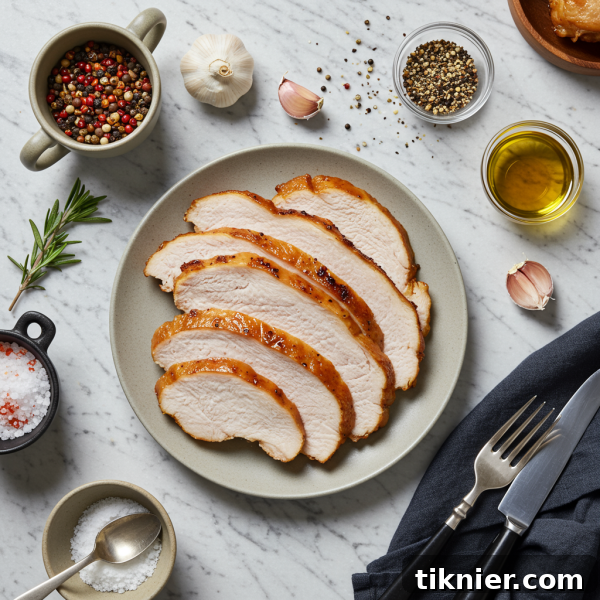
Once expertly carved, artfully arrange the succulent slices of both white and dark meat on the platter. A fantastic, rich gravy is, in my household, an absolutely non-negotiable accompaniment to turkey. Be sure to utilize those incredibly flavorful pan drippings from your roasting pan – they are rich with the essence of the smoked paprika, orange zest, and aromatic vegetables, providing an unparalleled base for a gravy that will have everyone reaching for seconds, or even thirds.
Of course, a stellar oven roasted turkey demands an equally stellar supporting cast of side dishes to complete the holiday feast. Here are some of our family’s cherished must-haves that pair exquisitely with the unique smoky and citrus notes infused into this particular turkey recipe:
- Creamy Mashed Potatoes: The ultimate fluffy, comforting vehicle for soaking up every last drop of that luscious turkey gravy.
- Southern Cornbread Dressing/Stuffing: A quintessential classic that perfectly complements the turkey without ever overpowering its star flavor.
- Green Bean Casserole: That beloved creamy, crunchy, and savory side dish that is simply synonymous with holiday celebrations and family gatherings.
- Homemade Cranberry Sauce: The vibrant sweet and tart flavor of homemade cranberry sauce offers a stunning contrast to the savory richness of the turkey, and it beautifully highlights the subtle orange zest present in our special compound butter.
For a slightly more contemporary and visually stunning presentation, consider arranging the carved turkey meat on a large rustic wooden board, artfully surrounded by beautifully roasted root vegetables, vibrant clusters of red or green grapes, and an abundance of fresh herbs. This creates a breathtaking, farm-to-table inspired centerpiece that feels simultaneously elegant, inviting, and utterly memorable.
Storing & Reusing Your Delicious Oven Roasted Turkey Leftovers
Let’s be completely honest: the highly anticipated leftovers are often one of the absolute best parts of embarking on the culinary journey of making a giant oven roasted turkey! Planning for these delightful second (and third) meals is half the fun. However, proper storage is paramount to ensuring that every morsel of leftover turkey remains just as delicious and enjoyable on day three as it was on the very first day it was served.
First and foremost, it’s crucial to remove all the meat from the turkey bone within a couple of hours of serving. Resist the urge to simply stick the entire carcass directly into the refrigerator. Instead, carefully carve all the remaining meat off the bones and transfer it into airtight containers or heavy-duty resealable freezer bags. Stored correctly, the cooked turkey meat will stay wonderfully fresh in the refrigerator for up to 4 days. For extended storage, you can confidently freeze it for up to 3 months. I personally find it helpful to freeze the turkey in convenient portion sizes, often adding a tablespoon or two of leftover broth or gravy to each portion to prevent the meat from drying out upon reheating.
When it comes to reheating your precious leftovers, it’s generally best to try and avoid the microwave, as it often has a tendency to make the meat tough and rubbery. The optimal method for reheating is to gently warm the turkey in a skillet over medium-low heat with a splash of broth or water, just enough to create a little steam and moisture. Alternatively, you can warm it in a 300°F (150°C) oven, placed in a covered baking dish, until it is heated through evenly and gently.
Now, for the most exciting part: creatively reusing those glorious leftovers! The possibilities are truly abundant:
- The Ultimate Turkey Sandwich: Elevate your sandwich game by layering thick slices of succulent turkey on high-quality bread, adding a dollop of cranberry sauce, a spoonful of leftover dressing/stuffing, and a spread of creamy mayonnaise.
- Hearty Turkey Noodle Soup: Don’t discard the turkey carcass! Use it to make an incredibly rich, homemade turkey stock. Then, add diced leftover turkey meat, your favorite vegetables (carrots, celery, onions), and comforting egg noodles for a soul-warming soup.
- Creamy Turkey Pot Pie: A classic comfort food that is absolutely perfect for using up not only leftover turkey but also any extra vegetables you might have from your holiday meal.
- Fresh Turkey Salad: Finely chop the leftover turkey meat and mix it with creamy mayonnaise, crunchy celery, minced red onion, and your favorite fresh herbs (like parsley or dill) for a delicious, versatile salad. Serve it on sandwiches, with crackers, or as a light meal on its own.
The culinary adventures with leftover oven roasted turkey are truly endless, making it a delicious gift that keeps on giving all week long, transforming into new and exciting meals.
Substitutions & Creative Variations for Your Oven Roasted Turkey
While my absolute favorite combination for this oven roasted turkey recipe features the unique blend of smoked paprika and orange zest, I wholeheartedly encourage every cook to embrace their creativity in the kitchen. This recipe serves as a fantastic, reliable template that can be effortlessly adapted to suit your personal taste preferences, dietary needs, or simply whatever fresh ingredients you happen to have readily available. Think of the compound butter as your culinary canvas, ready for your artistic touch.
You have the freedom to swap out the herbs and spices to completely transform the flavor profile of your turkey. Here are just a few inspiring ideas to get your creative juices flowing:
- Classic Herb Butter: For a more traditional and universally loved flavor profile, you can easily omit the smoked paprika and orange zest. Instead, opt for a fragrant blend of finely chopped fresh sage, rosemary, and thyme. This trio is the quintessential poultry seasoning, a timeless combination that consistently delivers a familiar and comforting aroma and taste.
- Bright Lemon and Savory Garlic: If you prefer a zesty and bright flavor, swap the orange for a lemon. Incorporate fresh lemon zest into your compound butter and place quartered lemons along with extra cloves of garlic inside the turkey’s cavity. This variation creates a delightfully vibrant, zesty, and deeply savory flavor that is a true classic pairing with roasted poultry.
- A Hint of Heat: For families who appreciate a little warmth and subtle kick in their food, consider adding a half-teaspoon of cayenne pepper or a pinch of red pepper flakes to the compound butter mixture. It won’t make the turkey overwhelmingly spicy, but it will introduce a lovely, gentle warmth that lingers pleasantly in the background, adding another layer of complexity.
- Dairy-Free Oven Roasted Turkey Option: If you or your guests require a dairy-free oven roasted turkey, a high-quality vegan butter substitute can be seamlessly used in place of unsalted butter in the compound butter recipe. Alternatively, you could create a flavorful paste using olive oil, combining it with all the specified herbs and spices, and then generously rub this mixture both under and over the turkey’s skin. While the skin might not achieve the exact same deep browning as with dairy butter, the meat will still be incredibly moist, tender, and richly flavored.
Never be afraid to experiment and personalize your holiday meal. The fundamental technique of utilizing a flavorful fat (like compound butter or an oil-based paste) under the skin, combined with the effective two-temperature roasting method, will consistently work beautifully, regardless of the specific flavor combinations you choose to explore. Your perfect oven roasted turkey awaits your unique touch!
Wow Your Friends & Family With This Oven Roasted Turkey Recipe
Yield: 1 turkey
Prep Time: 30 minutes
Cook Time: 3 hours
Total Time: 3 hours 30 minutes
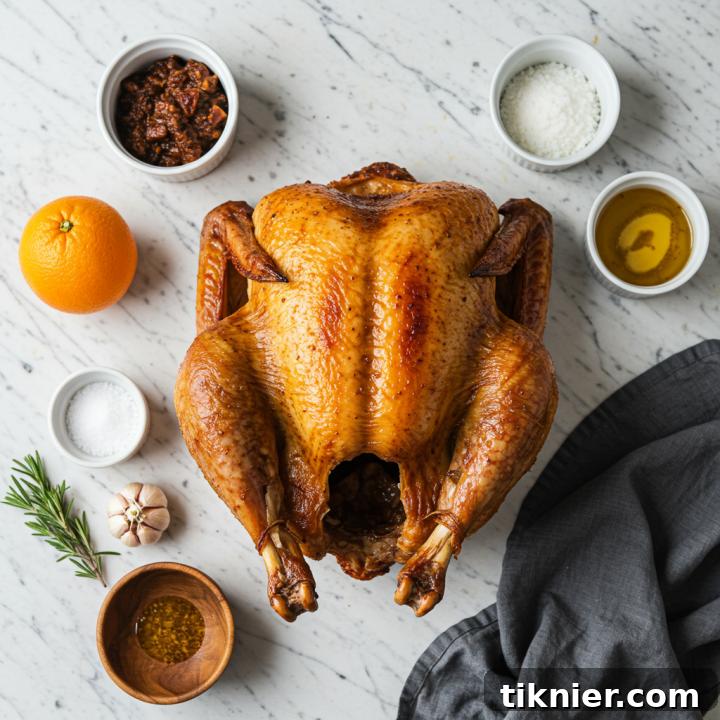
A golden, juicy oven roasted turkey infused with smoked paprika, thyme, and fresh orange zest. This recipe uses a simple compound butter under the skin for a smoky, citrusy flavor that keeps the meat tender and the skin perfectly crisp.
Ingredients
- 1 (12–14 lb) whole turkey, thawed, giblets and neck removed
- 1 cup (2 sticks) unsalted butter, softened
- 2 tablespoons fresh thyme leaves, chopped
- 1 tablespoon smoked paprika
- 1 tablespoon orange zest
- 2 teaspoons kosher salt
- 1 teaspoon black pepper
- 1 large yellow onion, quartered
- 1 large navel orange, quartered
- 1 head of garlic, halved crosswise
- 4–5 sprigs fresh thyme
- 2 cups low-sodium chicken or turkey broth
Instructions
- Remove turkey from the fridge 1 hour before cooking to reach room temperature. Pat dry thoroughly inside and out with paper towels.
- Mix softened butter, thyme, smoked paprika, orange zest, salt, and pepper until smooth.
- Gently lift the skin over the breasts and thighs. Rub two-thirds of the butter under the skin, spreading evenly. Rub the remaining butter over the outside of the turkey.
- Fill the cavity with onion, orange quarters, halved garlic, and thyme sprigs.
- Place turkey breast-side up on a roasting rack set in a large pan. Pour broth into the pan bottom. Tuck the wingtips under the bird.
- Roast at 325°F for 13–15 minutes per pound (about 2.5–3 hours for a 13 lb turkey), until the thickest part of the thigh reaches 160°F.
- Increase oven temperature to 400°F for the final 30 minutes to crisp and brown the skin.
- Remove from oven when the thigh temperature reaches 165°F. Tent with foil and rest 30 minutes before carving.
Notes
Optional Day-Before Prep:
A. Dry Brine the Turkey: After the turkey is fully thawed, remove the giblets and pat it completely dry. Sprinkle the kosher salt (and pepper, if using) evenly over the entire surface of the turkey, including the cavity and under the skin where possible. Place the turkey breast-side up on a wire rack set over a baking sheet to allow air to circulate.
B. Air-Dry Overnight: Leave the salted turkey uncovered in the refrigerator overnight, or at least 8–12 hours. This step does two things: it allows the salt to deeply season the meat for maximum flavor and helps the skin dry out so it roasts up shatteringly crisp.
Nutrition Information:
Amount Per Serving (based on 12 servings for a 12lb turkey):
Calories: 412
Total Fat: 22g
Carbohydrates: 2g
Protein: 50g
5 Frequently Asked Questions About Oven Roasted Turkey
Here are some clear, concise, and helpful answers to the most common questions I receive about mastering this oven roasted turkey recipe. These tips will help you avoid common pitfalls and ensure your holiday centerpiece is nothing short of perfect.
How do I know when my oven roasted turkey is perfectly cooked?
This is arguably the single most critical question when it comes to roasting a turkey, and the answer is refreshingly straightforward: always, always use a reliable meat thermometer. While general timing charts found in recipes are certainly helpful guidelines, remember that oven temperatures can vary significantly, and the starting temperature of your specific bird will also influence the overall cooking time. Guessing is the primary culprit behind both disappointingly dry breast meat and potentially unsafe, undercooked thighs. The only definitive way to ensure your oven roasted turkey is perfectly and safely cooked to juicy perfection is to accurately check its internal temperature.
You should insert an instant-read digital thermometer into the thickest part of the thigh, making absolutely certain that the probe does not touch the bone. The bone conducts heat differently and will inevitably provide you with a false, misleading reading. The magic number you are aiming for is 165°F (74°C). Once your thermometer registers this temperature, your turkey is done! I typically remove my turkey from the oven precisely at 165°F, understanding that the internal temperature will continue to rise by a few degrees (known as “carryover cooking”) while the turkey rests, ensuring ultimate juiciness.
Should I brine my oven roasted turkey before roasting it?
Brining, which involves soaking the turkey in a saltwater solution, is a widely popular and effective technique for ensuring a wonderfully moist bird. It absolutely works wonders for many recipes. However, for this particular oven roasted turkey recipe, I find that it is an entirely unnecessary additional step. The genius of the compound butter, which is generously pushed under the skin, serves a very similar and equally effective purpose. As the butter melts, it continuously bastes and seasons the meat directly from the inside out, actively working to keep the meat incredibly juicy, tender, and infused with deep flavor. This negates the need for the often messy and time-consuming process of brining.
That said, if you have a cherished, tried-and-true brining tradition that your family loves, you can certainly still choose to brine your turkey. My only crucial suggestion would be to significantly reduce or even completely eliminate the kosher salt called for in the compound butter recipe. A brined bird will have already absorbed a substantial amount of salt, and you certainly don’t want to risk over-salting your delicious turkey. This recipe, as written, is specifically designed to be fantastically flavorful and moist without the added, often cumbersome, step of brining, making your holiday preparation much simpler.
Why is my oven roasted turkey skin not crispy?
Ah, the universal quest for that perfectly crispy, golden-brown turkey skin! There’s nothing quite as disappointing as presenting a beautiful oven roasted turkey only to find its skin is disappointingly flabby and pale. If your turkey skin isn’t achieving that beautiful, crisp texture, there are typically three primary culprits at play. The first, and most common, issue is residual moisture. You absolutely must, without exception, thoroughly pat the entire turkey completely dry with paper towels before you even think about applying any butter or seasonings. Water is the sworn enemy of crispiness, as it creates steam rather than allowing the skin to dry and crisp.
The second reason could be tenting the turkey with aluminum foil too early or for an excessive duration. The foil, while useful for preventing over-browning, traps steam, which will inevitably soften and undo all your efforts for crispy skin. Only tent the turkey if specific parts, such as the wingtips or the very top of the breast, are browning much too quickly and you need to slow their cooking. The final, and equally important, reason is skipping the vital high-heat finish. That last 20-30 minutes of roasting at 400°F (200°C) is specifically engineered to render the fat in the skin and crisp it up to that perfect, irresistible golden-brown texture. Do not, under any circumstances, skip this crucial final step!
Can I prepare my oven roasted turkey ahead of time?
Absolutely! You can most certainly complete a significant portion of the preparation work in advance, which can be an absolute lifesaver, especially on the bustling morning of a holiday. I highly recommend preparing the smoked paprika and orange zest compound butter up to two days prior to your roasting day. Simply store it in an airtight container in the refrigerator, and then remember to take it out and let it soften on the counter for about an hour before you intend to use it.
You can also go a step further and apply the compound butter to the turkey the night before. After thoroughly patting the turkey dry, gently apply the butter both under and over the skin as directed in the recipe. Then, wrap the entire turkey very tightly in plastic wrap and place it back in the refrigerator. This advanced butter application effectively acts as a dry brine, allowing the salt, herbs, and flavors to deeply penetrate and season the meat overnight, enhancing both its taste and moisture. However, for paramount food safety reasons, do not stuff the turkey’s cavity with the aromatic vegetables and orange until you are completely ready to place the oven roasted turkey into the preheated oven on roasting day.
What is the best way to thaw a frozen oven roasted turkey?
Properly thawing your turkey is unequivocally critical for both ensuring food safety and achieving an even, thorough cook. Never, under any circumstances, attempt to thaw a turkey on your kitchen counter at room temperature, as this allows dangerous bacteria to grow. The safest and most consistently reliable method for thawing is in the refrigerator. Just be sure to plan well in advance, as this method requires a significant amount of time. The general rule of thumb is to allow approximately 24 hours of thawing time for every 4 to 5 pounds of turkey weight. Place the frozen turkey, still securely in its original leak-proof wrapper, on a rimmed baking sheet or in a shallow pan on the bottom shelf of your refrigerator. This prevents any potential drips from contaminating other foods.
If you find yourself short on time and need to accelerate the thawing process, you can utilize the cold water bath method. Ensure the turkey remains in its original, leak-proof packaging and submerge it completely in cold tap water in a clean sink or a large cooler. It is absolutely imperative that you change the cold water every 30 minutes to ensure it remains cold and safe, preventing the growth of bacteria. This method typically takes about 30 minutes per pound of turkey, so a 12-pound turkey would require approximately 6 hours to thaw completely using this technique. Always cook the turkey immediately after thawing with this method.