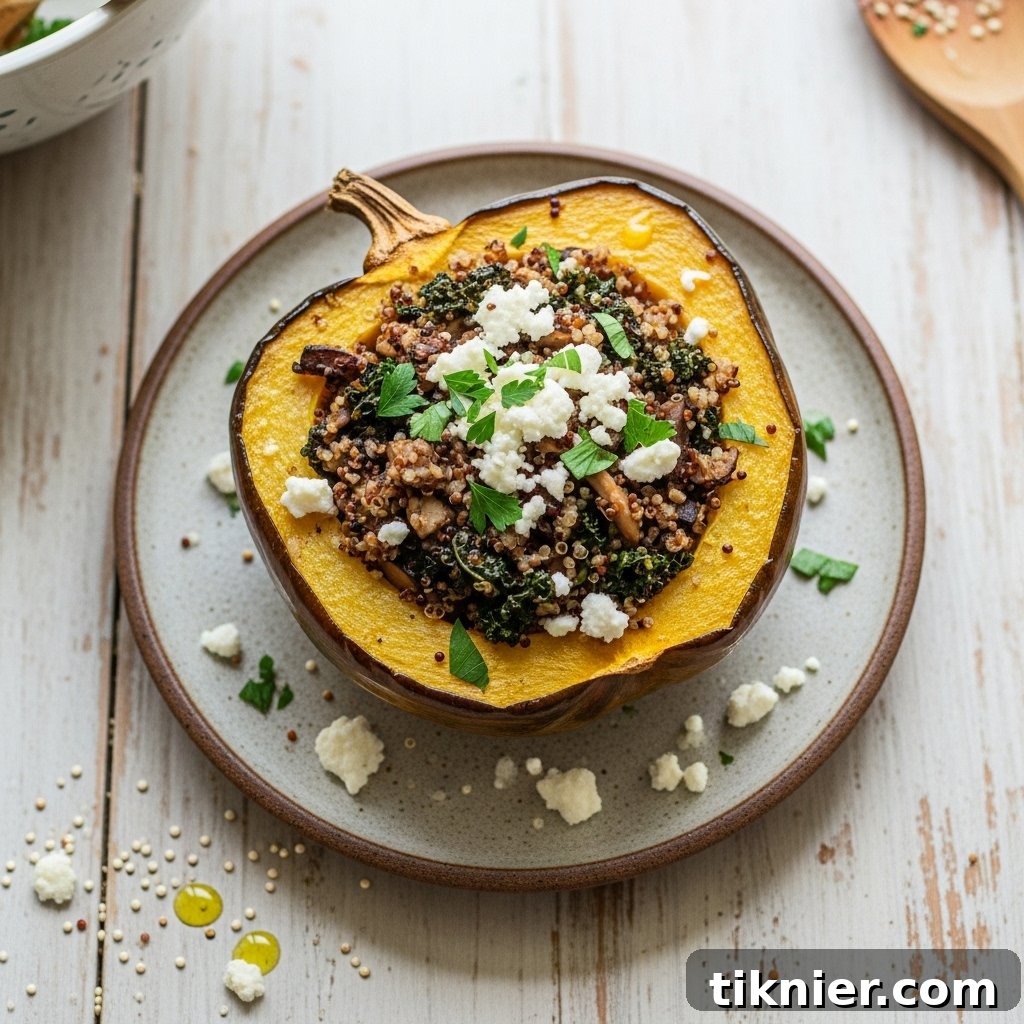
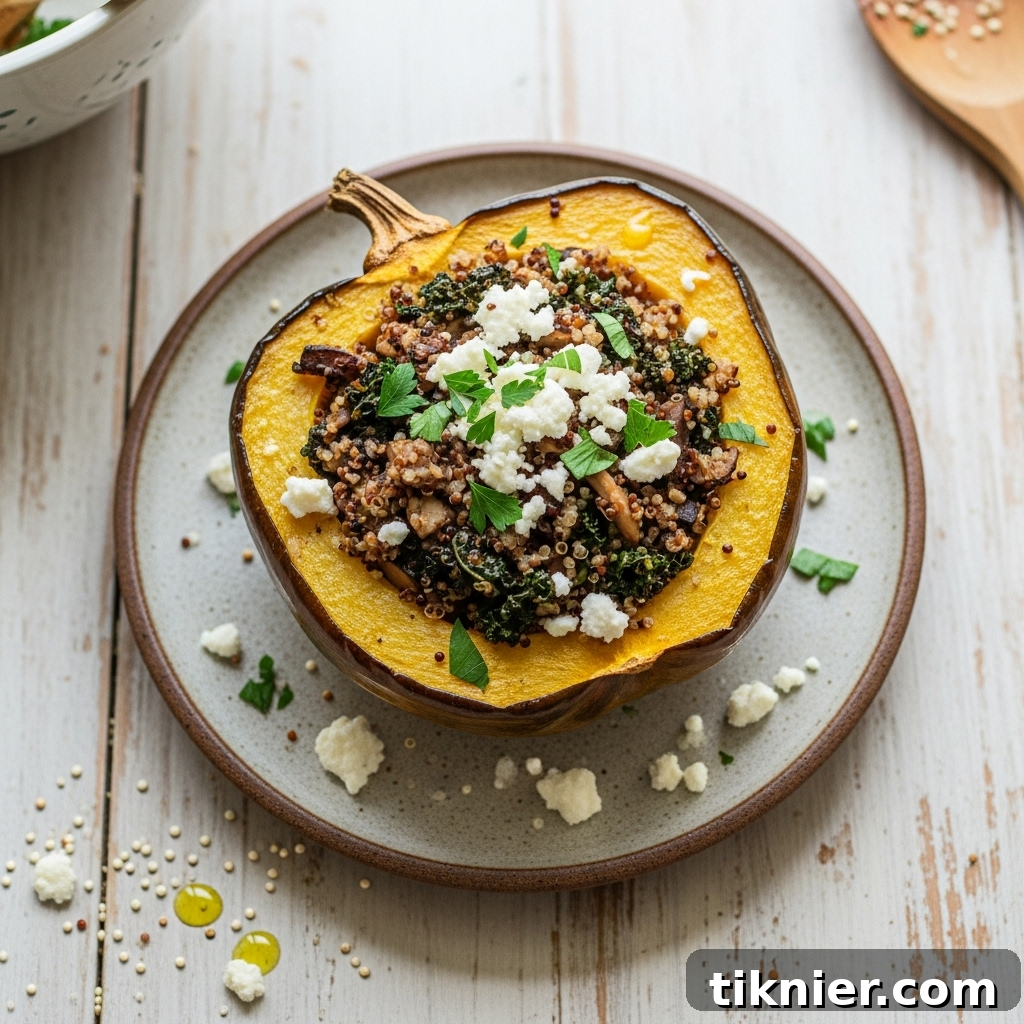
As the leaves begin to turn and a crispness fills the air, there’s nothing quite like a meal that warms you from the inside out and fills your home with irresistible autumnal aromas. This is that dish: a truly elegant and utterly delicious **Vegetarian Stuffed Acorn Squash** that beautifully captures the essence of fall.
My journey to perfecting this recipe began a few years ago at a delightful potluck hosted by my wonderful neighbor, Clara. She served a classic stuffed acorn squash, brimming with savory rice and sausage. It was undeniably delicious and incredibly comforting. However, as my husband and I have been actively seeking to incorporate more meatless meals into our weekly routine, my culinary curiosity was immediately piqued. I knew I could craft a vegetarian version that was just as hearty, satisfying, and perhaps even more vibrant.
My initial attempts were promising, but something was missing. That elusive “spark” – a touch of unexpected brightness that elevates a dish from simply good to truly memorable. While the familiar fall flavors of sage and thyme were present, and the earthy notes of mushrooms and quinoa provided a wonderful foundation, the overall profile needed a compelling counterpoint to truly sing.
Then, a eureka moment! I remembered a jar of homemade preserved lemons, tucked away in the back of my fridge, patiently awaiting their moment to shine. Their intensely salty, tangy, and complex citrus flavor is truly unique and unmatched. I finely minced a small amount of the rind and stirred it into the filling. That was the missing piece! The exquisite pop of flavor was exactly what the dish needed, transforming it from a pleasant meal into an absolute showstopper. The preserved lemon rind masterfully cuts through the richness of the other ingredients, creating a harmonious balance that makes every single bite a delight.
Skip to My Special Recipe!
Why This Vegetarian Stuffed Acorn Squash Recipe is a Must-Try
Stuffed vegetables represent a culinary tradition that spans centuries and continents, a testament to its simple brilliance. The concept is universally appealing: take a humble vegetable, hollow it out, and fill it with a delicious medley of grains, proteins, cheeses, and aromatic herbs. Acorn squash, with its naturally sweet, nutty flesh and its perfect, ready-made bowl shape, truly seems destined for stuffing. Its robust texture holds up beautifully to roasting, creating a tender, edible vessel for a flavorful filling.
In American kitchens, stuffed acorn squash has long been cherished, particularly as a beautiful and festive centerpiece for autumn gatherings and holiday tables, most notably Thanksgiving. It’s the epitome of comforting home cooking – hearty, visually stunning, and surprisingly straightforward to prepare. While many traditional recipes often lean into classic sweet and savory combinations like apples, sausage, or wild rice, my recipe takes this beloved dish to an elevated level, making it stand out among other **fall dinner ideas**.
The foundation of this particular **Vegetarian Stuffed Acorn Squash** is solid and satisfying: a delightful symphony of earthy cremini mushrooms, protein-packed quinoa, naturally sweet dried cranberries, and crunchy toasted pecans. But the true innovation, the secret weapon that truly distinguishes this recipe, is the inclusion of finely minced preserved lemon rind. This isn’t just a subtle hint of citrus; it’s a complex, deeply savory, and bright flavor that provides an incredible depth and cutting acidity you simply won’t find in other variations. It’s this unexpected twist that truly transforms a familiar comfort food into something new, exciting, and profoundly memorable.
This simple yet impactful addition imbues the dish with a feeling that is both rustic and refined, showcasing how a single ingredient can make all the difference. The preserved lemon acts as a vibrant catalyst, brightening every other ingredient in the filling: it amplifies the savory notes of the mushrooms, enhances the sweetness of the cranberries, and makes the fresh herbs sing with renewed fragrance. It’s a complete, wholesome, and incredibly flavorful meal that appeals to both vegetarians and meat-eaters alike, making it a perfect **meatless meal** for any occasion.
Essential Ingredients for Your Vegetarian Stuffed Acorn Squash
The inherent beauty of this **healthy vegetarian recipe** lies in its thoughtful selection of simple, wholesome, and distinctly autumnal ingredients. While the ingredient list might appear extensive at first glance, each component has been carefully chosen to play a crucial and specific role in building layers of complex flavor and satisfying texture. From the naturally sweet and tender squash to the rich and savory filling, every element comes together in perfect harmony to create a truly balanced and delectable dish.
The undisputed star and my personal secret ingredient, which truly sets this recipe apart, is the **finely minced preserved lemon rind**. It’s important to note that this is far more than just lemon zest. Preserved lemons are whole lemons that have been cured in salt and their own juices over an extended period. This transformative process mellows the typical tartness of fresh lemon and intensifies its citrus flavor into something incredibly complex, deeply salty, subtly sweet, and intensely aromatic. A mere tablespoon adds an unparalleled brightness and depth that elevates the entire dish, preventing it from feeling heavy or one-note. You can often find jars of high-quality preserved lemons in specialty grocery stores, or if you’re feeling adventurous, they are surprisingly simple to make at home.
When selecting your main ingredient, choose acorn squashes that feel notably heavy for their size, with a deep, dark green skin that might feature a few hints of orange. These characteristics are indicators of ripeness, ensuring a sweeter and more flavorful squash. For the filling, using a good quality, savory vegetable broth is also crucial for cooking the quinoa. The quinoa will absorb all the rich flavors of the broth, significantly enhancing the overall taste of your stuffing. Opt for a low-sodium broth if you prefer to control the salt content precisely, especially since we’re also adding preserved lemon.
- 2 medium acorn squashes (ideally about 1.5 lbs each), chosen for ripeness and firmness
- 3 tbsp high-quality olive oil, thoughtfully divided for various steps
- 1 tbsp pure maple syrup, for a touch of natural sweetness and caramelization on the squash
- 1/2 tsp sea salt, plus additional to taste – always season thoughtfully
- 1/4 tsp freshly ground black pepper, plus more for seasoning
- 1/2 cup uncooked quinoa, thoroughly rinsed under cold water to remove bitterness
- 1 cup flavorful vegetable broth, preferably low-sodium
- 1 medium yellow onion, finely chopped for even cooking and subtle flavor
- 2 cloves garlic, freshly minced for aromatic depth
- 8 oz cremini mushrooms, thoroughly cleaned and chopped – these add a wonderful umami richness
- 1 tbsp finely minced preserved lemon rind (the key twist ingredient that makes all the difference!)
- 1 tsp fresh thyme leaves, picked from the stem (or 1/2 tsp dried, if fresh is unavailable)
- 1/2 tsp dried sage, a classic fall herb that pairs beautifully with squash
- 3 cups chopped kale, tough stems carefully removed – it will wilt down considerably
- 1/2 cup toasted pecans, roughly chopped for added crunch and nutty flavor
- 1/3 cup dried cranberries, for bursts of sweet-tart flavor
- 1/2 cup crumbled feta cheese, offering a salty, tangy counterpoint (omit for vegan)
- 2 tbsp fresh parsley, finely chopped, for a bright, vibrant garnish
Step-by-Step Instructions For Crafting Your Stuffed Acorn Squash
Preparing this **quinoa stuffed squash** is a truly enjoyable culinary experience, transforming your kitchen into an aromatic haven with the delightful scents of autumn. We’ll approach this recipe in thoughtful stages, first roasting the acorn squash until it reaches perfect tenderness, while simultaneously preparing the incredibly flavorful and hearty filling. Just follow these detailed steps, and you’ll have a stunning, delicious meal ready to impress in no time.
Step 1: Preparing and Roasting the Acorn Squash
Begin by preheating your oven to a robust 400°F (200°C). The initial step, cutting the squash, can seem a little challenging, but with the right tools and technique, it’s quite manageable. Ensure you have a very stable cutting board – I often place a damp paper towel underneath mine to prevent any slipping – and a sharp, heavy chef’s knife. Carefully slice each acorn squash in half, cutting lengthwise from the stem end to the blossom end. Once halved, use a sturdy spoon, like an ice cream scoop, to thoroughly remove all the seeds and the stringy fibrous bits from the center. You want a clean, smooth cavity to generously hold our delicious filling.
Step 2: Glaze and Season the Squash Halves
In a small bowl, whisk together two tablespoons of the olive oil with the maple syrup until well combined. This simple yet effective glaze is designed to help the squash caramelize beautifully in the oven, enhancing its natural sweetness and creating a rich, golden-brown exterior. Generously brush this mixture all over the cut surfaces and inside the cavities of the squash halves. Don’t be shy – cover every part! Then, season them liberally with salt and freshly ground black pepper. Place the seasoned squash halves cut-side down on a large baking sheet. This ensures the cut surfaces make good contact with the hot pan, promoting that lovely caramelization. Pop them into your preheated oven and roast for 30 to 40 minutes, or until they are nearly tender.
Step 3: Perfectly Cook the Quinoa
While your acorn squash is roasting, turn your attention to the quinoa. In a small saucepan, combine your thoroughly rinsed quinoa with the vegetable broth. Bringing the quinoa to a boil first, then immediately reducing the heat to low, is key to preventing it from becoming mushy. Cover the pot tightly and let it simmer gently for about 15 minutes. The quinoa is done when all the liquid has been absorbed and you can see tiny “tails” separating from the grains. Once cooked, remove the saucepan from the heat, keeping it covered, and let it stand for an additional 5 minutes. This steaming period allows the quinoa to fully fluff up and achieve the perfect texture. Finally, fluff it gently with a fork.
Step 4: Sautéing the Flavorful Filling Base
In a large skillet, heat the remaining tablespoon of olive oil over medium heat. Add your finely chopped yellow onion and sauté until it becomes soft and translucent, which typically takes about 5 to 6 minutes. Next, add the minced garlic, the chopped cremini mushrooms, that magical preserved lemon rind, fresh thyme, and dried sage. Continue to cook this mixture, stirring occasionally, until the mushrooms release their moisture, and then begin to brown and develop slightly crispy edges. This crucial step is where the deep, savory flavors for your filling truly begin to build, and the preserved lemon infuses its unique brightness throughout.
Step 5: Wilting the Kale and Combining the Filling
Add the chopped kale to the skillet with the mushroom mixture. It might look like an overwhelming amount of kale at first, but don’t worry – it will wilt down significantly. Stir the kale frequently, allowing it to soften and reduce in volume, which should only take a couple of minutes. Once the kale is tender-crisp, remove the skillet from the heat. In a large mixing bowl, combine the perfectly cooked quinoa, the savory mushroom and kale mixture, the toasted pecans, the dried cranberries, and half of the crumbled feta cheese. Give everything a good, thorough stir to ensure all ingredients are evenly distributed. Taste the filling at this point and adjust the seasoning with additional salt and pepper if needed, remembering that the preserved lemon already provides a salty kick.
Step 6: Stuffing and Final Bake for Perfection
Carefully check the doneness of your roasted squash. It should be easily pierced with a fork but still firm enough to hold its shape. Remove the baking sheet from the oven and carefully flip the squash halves over so they are cut-side up. Now for the most satisfying part! Generously pile the vibrant and aromatic quinoa filling into each squash cavity. Don’t be shy – mound it up high for an impressive presentation and a truly hearty serving. Sprinkle the remaining feta cheese over the top of the stuffed squash halves. Return the baking sheet to the oven for another 10 to 15 minutes, allowing everything to heat through completely, and the feta to soften slightly and become golden. Before serving, garnish generously with fresh chopped parsley for a burst of color and freshness. Serve warm and enjoy your beautiful **stuffed squash**!
How To Serve Your Vegetarian Stuffed Acorn Squash
This **Vegetarian Stuffed Acorn Squash** is, without a doubt, a showstopper on its own, making it an ideal centerpiece for any meal, whether it’s a weeknight dinner or a special gathering. The vibrant colors, rich textures, and generous, artfully piled stuffing create a presentation that suggests hours of intricate kitchen work, though we know the process is wonderfully straightforward. It is robust enough to serve as a satisfying main course, or it can be presented as a substantial and elegant side dish, depending entirely on the occasion and your appetite.
I find this dish perfect for those special weeknight dinners when you want something nourishing and comforting, or for entertaining friends, as it caters beautifully to diverse dietary preferences. Typically, one stuffed squash half makes a perfect single serving as a main course, offering a complete and balanced meal. To round out the experience, pairing it with a simple, complementary side is often best. You want accompaniments that enhance, rather than overpower, the delicate sweetness of the squash and the intricate flavors of its filling.
Here are a few of my favorite ways to serve this versatile **acorn squash recipe**:
- As a Hearty Main Course: Offer one generously stuffed squash half per person alongside a crisp, fresh green salad. A light vinaigrette on the salad provides a lovely acidic contrast to the warm, earthy roasted squash, cleansing the palate beautifully. This is ideal for a **healthy vegetarian recipe** night.
- Accompanied by Crusty Bread: A thick slice of warm, crusty sourdough bread or a soft dinner roll is the perfect companion. It’s excellent for soaking up any delicious flavorful bits of filling or caramelized squash that might be left on the plate, adding another layer of comforting texture to the meal.
- For Your Holiday Feast: This dish is a magnificent addition to any larger holiday spread, such as Thanksgiving or Christmas. When part of a bigger meal, you might serve smaller portions, perhaps half of a squash half, allowing guests to sample a variety of dishes. It pairs wonderfully with other classic holiday sides like creamy mashed potatoes, savory green bean casserole, and tangy cranberry sauce.
- With a Drizzle of Something Extra: For those who appreciate an added touch of richness or tang, a light drizzle of high-quality balsamic glaze can add a sophisticated sweet-tart note. Alternatively, a dollop of plain Greek yogurt or a swirl of sour cream can introduce a creamy element that beautifully contrasts with the savory filling, providing a lovely finish.
Regardless of how you choose to present it, this **Vegetarian Stuffed Acorn Squash** is guaranteed to impress. It’s truly a complete and elegant meal, neatly packaged, and bursting with incredible texture, vibrant color, and unforgettable flavor, solidifying its place as a top **fall dinner idea**.
Storing & Reusing Vegetarian Stuffed Acorn Squash Leftovers
One of the many fantastic aspects of this **healthy vegetarian recipe** is that the leftovers are every bit as delicious, if not more so, the next day. Often, the flavors have even more time to meld and deepen overnight, creating an even richer and more savory experience. Storing and reheating this dish is remarkably simple, and I’ve also discovered a few creative ways to transform the leftovers, making them feel like an entirely new and exciting meal.
Proper storage is paramount to maintaining the fresh taste and appealing texture of your stuffed squash. It’s crucial to allow the fully cooked and stuffed squash halves to cool down completely to room temperature before attempting to pack them away. This step is important because it prevents condensation from forming inside your storage container, which could otherwise make the delicious filling soggy and diminish its texture. Once thoroughly cooled, you have excellent options for preserving your culinary creation.
Here’s how I typically handle the wonderful leftovers:
- In the Refrigerator: Place any leftover stuffed squash halves in an airtight container. They will maintain their quality and flavor beautifully in the refrigerator for up to 4 days. When it’s time to reheat, for the best results, place the squash halves on a baking sheet, cover them loosely with aluminum foil (this prevents the top from drying out or over-browning), and warm them in a 350°F (175°C) oven for approximately 15-20 minutes, or until they are heated through to the center. While microwaving is an option for convenience, the oven method is superior for preserving the optimal textures of both the squash and the filling.
- Creative Leftover Idea: Speedy Grain Bowl: My absolute favorite way to repurpose this dish is to gently scoop the savory filling out of the roasted squash shell and use it as the flavorful base for a quick and wholesome grain bowl. I’ll often add some fresh, crisp greens (like arugula or spinach), perhaps a handful of canned chickpeas for extra protein, and a light drizzle of good quality olive oil or a bright lemon vinaigrette. This makes for a fantastic, satisfying, and incredibly healthy lunch that feels entirely fresh.
- Deconstructed Breakfast Hash/Scramble: Another ingenious idea is to chop up both the tender squash flesh and the flavorful filling into smaller pieces. Sauté this mixture in a pan with a little bit of olive oil until heated through and slightly caramelized. You can then crack in one or two eggs and scramble them directly with the mixture, or serve it alongside a perfectly fried egg. This creates a wonderfully hearty and flavorful breakfast hash or brunch scramble, turning dinner leftovers into a delightful morning meal.
I generally do not recommend freezing the fully assembled and stuffed squash. The delicate texture of the roasted squash can become unpleasantly watery and mushy upon thawing, compromising the overall quality of the dish. However, if you’re looking for a make-ahead option, you can certainly prepare the quinoa filling mixture ahead of time and freeze it separately in an airtight container for up to 3 months. When you’re ready to enjoy, simply thaw the filling, roast a fresh acorn squash, and then stuff it for a quick, wholesome, and delicious meal.
Customizing Your Vegetarian Stuffed Acorn Squash: Substitutions & Variations
This **Vegetarian Stuffed Acorn Squash** recipe is wonderfully versatile, a quality I always cherish in a truly great keeper recipe. Think of this recipe not just as a set of rigid instructions, but as a fantastic, flexible template. You have the freedom to easily swap ingredients based on what you already have in your pantry, any specific dietary needs or preferences you might have, or simply to satisfy a craving for a different flavor profile. Don’t hesitate to experiment and truly make this delicious dish your own – it’s designed for customization!
The core components – the robust acorn squash and the hearty grain-based filling – are exceptionally adaptable. Whether your goal is to make the dish entirely vegan, to explore a different grain option, or to simply infuse new and exciting flavors, there are numerous simple yet delicious adjustments you can make without sacrificing the integrity or deliciousness of the meal. This makes it a go-to for varied dietary needs and adventurous palates.
Here are some of my favorite and most effective substitutions and variations:
- Grain Swaps for the Filling: If quinoa isn’t available or if you simply prefer another grain, you can easily substitute it with other hearty options like farro, barley, wild rice, or even a quick-cooking couscous. Just ensure that you cook the chosen grain according to its specific package directions before incorporating it into the filling mixture. This ensures proper texture and absorption of flavors.
- Making it Fully Vegan: This recipe is already very close to being entirely plant-based. To make it completely vegan, simply omit the crumbled feta cheese. As an alternative, you could replace it with your favorite brand of dairy-free crumbled cheese for a similar texture and tang. Additionally, ensure you are using pure maple syrup for the squash glaze and not honey, which is not always considered vegan.
- Nut and Seed Variations: While pecans add a delightful crunch and buttery flavor, they are easily interchangeable. Toasted walnuts, slivered almonds, or even roasted pumpkin seeds (pepitas) would be equally delicious and provide a different textural dynamic. Always remember to toast your nuts or seeds first, as this truly brings out their deepest, most aromatic flavors.
- Different Greens to Wilt: If kale isn’t your preferred green, or if you simply have something else on hand, feel free to use fresh spinach or Swiss chard instead. Keep in mind that spinach wilts much more quickly than kale, so you’ll only need to cook it for about a minute or two until just tender. Swiss chard will take a bit longer, similar to kale.
- Exploring Flavor Twists: For those who appreciate a touch of heat, a small pinch of red pepper flakes added to the mushroom mixture can provide a subtle, welcome warmth. You could also explore entirely different flavor profiles by swapping the traditional sage and thyme for other complementary herbs like earthy rosemary, fragrant marjoram, or even a blend of Italian herbs. A touch of smoked paprika could also add a delightful smoky depth.
By experimenting with these thoughtful and simple changes, you can create a fresh and exciting version of this wonderful **Vegetarian Stuffed Acorn Squash** every time you prepare it, ensuring it remains a favorite throughout the entire fall and winter season, providing endless delicious possibilities for your **meatless meals**.
Vegetarian Stuffed Acorn Squash with Preserved Lemon
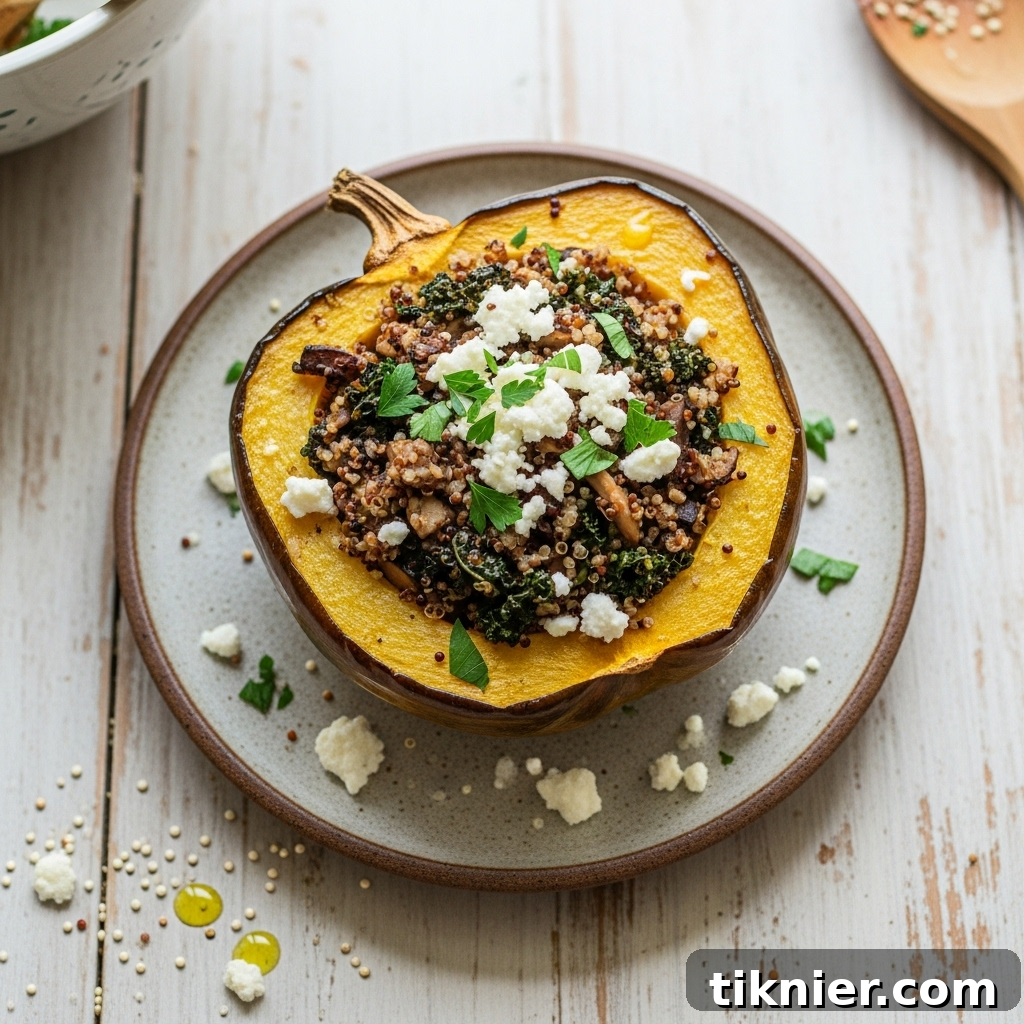
Description: Tender roasted acorn squash filled with a savory and bright mixture of quinoa, mushrooms, kale, and a special twist of preserved lemon.
Yield: 4 servings | Category: Main Course | Cuisine: American
Prep Time: 20 minutes | Cook Time: 55 minutes
Ingredients
- 2 medium acorn squashes
- 3 tbsp olive oil, divided
- 1 tbsp maple syrup
- 1/2 tsp salt, plus more to taste
- 1/4 tsp black pepper, plus more to taste
- 1/2 cup uncooked quinoa, rinsed
- 1 cup vegetable broth
- 1 medium yellow onion, finely chopped
- 2 cloves garlic, minced
- 8 oz cremini mushrooms, chopped
- 1 tbsp finely minced preserved lemon rind
- 1 tsp fresh thyme leaves
- 1/2 tsp dried sage
- 3 cups chopped kale
- 1/2 cup toasted pecans, roughly chopped
- 1/3 cup dried cranberries
- 1/2 cup crumbled feta cheese
- 2 tbsp chopped fresh parsley, for garnish
Instructions
- Preheat oven to 400°F (200°C). Carefully halve squashes lengthwise and scoop out all seeds and stringy bits.
- In a small bowl, whisk together 2 tbsp olive oil and maple syrup. Brush this mixture evenly over the cut surfaces and inside the squash halves. Season generously with salt and pepper.
- Place the squash halves cut-side down on a baking sheet and roast for 30-40 minutes, or until nearly tender when pierced with a fork.
- While the squash roasts, combine rinsed quinoa and vegetable broth in a small saucepan. Bring to a boil, then reduce heat to low, cover, and simmer for 15 minutes. Remove from heat and let sit, covered, for 5 minutes before fluffing with a fork.
- In a large skillet, heat the remaining 1 tbsp olive oil over medium heat. Add chopped onion and cook until soft and translucent (5-6 minutes). Add minced garlic, chopped mushrooms, preserved lemon rind, fresh thyme, and dried sage. Cook, stirring occasionally, until mushrooms release their liquid and begin to brown (about 8-10 minutes).
- Add chopped kale to the skillet and stir frequently until it has wilted down, which takes only a couple of minutes. Remove the skillet from the heat.
- In a large mixing bowl, combine the cooked quinoa, the mushroom and kale mixture, toasted pecans, dried cranberries, and half of the crumbled feta cheese. Stir well to combine and taste for seasoning, adding more salt and pepper if desired.
- Carefully remove the roasted squash from the oven and flip the halves over so they are cut-side up. Generously spoon the quinoa filling into each squash cavity, mounding it high.
- Sprinkle the remaining feta cheese over the top of the stuffed squash halves. Return the baking sheet to the oven and bake for another 10-15 minutes, or until the filling is heated through and the feta is lightly golden.
- Garnish with fresh chopped parsley just before serving warm.
Notes
The preserved lemon rind is truly the star and the key to this recipe’s unique, bright, and savory flavor profile; I highly recommend not skipping it! Also, keep a close eye on your squash during roasting to prevent it from becoming overly soft or mushy. The goal is tender, not disintegrating.
Servings: 4 | Calories: 450 | Fat: 22g | Carbohydrates: 55g | Protein: 15g
5 Frequently Asked Questions About Vegetarian Stuffed Acorn Squash
Here are clear and concise answers to the most common questions I receive about this delightful **Vegetarian Stuffed Acorn Squash recipe**, designed to help you master this dish with confidence.
How do you safely and effectively cut an acorn squash for stuffing?
Cutting an acorn squash can feel like the most intimidating part of this recipe, but I assure you, it’s completely manageable with the right approach and tools. First, ensure your cutting board is absolutely secure; I always place a damp paper towel or a thin kitchen towel underneath it to prevent any slipping. You will need a large, exceptionally sharp chef’s knife; attempting this with a small or dull knife significantly increases the risk of accidents. Place the acorn squash on its side on the cutting board. Carefully slice off a very thin piece from both the top (stem end) and the bottom (blossom end) to create two small, stable, flat surfaces. This stability is crucial. Now, stand the squash upright on one of these flat ends. Position the heel of your knife precisely in the center of the squash and carefully press down, using your other hand to apply steady, firm pressure to the top of the blade. Push down slowly and firmly until you cut all the way through the squash. Once it’s cleanly divided into two halves, you can easily scoop out the seeds and fibrous strands with a sturdy spoon.
Can I prepare this vegetarian stuffed acorn squash ahead of time?
Absolutely, this is an excellent **fall recipe** for advance preparation, making it perfect for busy weeknights, dinner parties, or holiday meals when your time in the kitchen is particularly precious. You have a couple of convenient options. You can fully assemble the entire dish, stuff the roasted squash halves, and prepare it completely up to the final bake. Cover the stuffed squash tightly with plastic wrap or aluminum foil and store it in the refrigerator for up to 24 hours before you plan to bake it. If starting with a cold dish, you may need to add an extra 10-15 minutes to the final baking time to ensure it heats through completely. Alternatively, you can prepare the components separately: roast the squash halves and make the entire quinoa filling mixture up to two days in advance. Store these in separate airtight containers in the refrigerator. When you’re ready to serve, simply fill the squash, top with the feta, and bake as directed. This method helps prevent the squash from becoming overly soft and the filling from making it soggy before its final oven warm-up.
What is the best substitute for preserved lemon in this stuffed acorn squash recipe?
While the preserved lemon truly makes this dish exceptional with its unparalleled salty, savory, and intensely bright citrus flavor, I understand it’s not an ingredient everyone keeps readily on hand. If you’re unable to find it or need a suitable substitute, you can achieve a similar bright lift and depth with a clever combination of fresh lemon zest and a touch of extra salt. While it won’t be an exact replica of the complex flavor, it will certainly work beautifully in a pinch. For this particular recipe, I would recommend using the finely grated zest of one whole fresh lemon along with an additional 1/4 to 1/2 teaspoon of sea salt (adjust to your taste). Incorporate both the lemon zest and the extra salt into the mushroom and onion mixture at the same stage the recipe calls for the preserved lemon rind. This will provide that crucial pop of citrus and the essential salinity that expertly balances all the earthy and sweet flavors in the wholesome filling, keeping the vibrant spirit of the dish alive.
Is this vegetarian stuffed acorn squash recipe gluten-free?
Yes, absolutely! One of the key reasons I adore using quinoa as the grain for this hearty and flavorful filling is that it is naturally gluten-free. This makes the **Vegetarian Stuffed Acorn Squash** a fantastic and safe dish to serve to guests with gluten sensitivities or celiac disease, ensuring everyone can enjoy it. Beyond being gluten-free, quinoa is also a complete protein, which significantly contributes to making this vegetarian meal incredibly satisfying, nourishing, and hearty. All the other core ingredients in this recipe—from the fresh vegetables and aromatic herbs to the crunchy nuts and creamy cheese—are also inherently free of gluten. As a general best practice, especially when cooking for someone with a severe allergy or celiac disease, it’s always wise to double-check the labels on any packaged ingredients you use, such as vegetable broth or dried cranberries, to confirm they are certified gluten-free and haven’t been processed in facilities that handle wheat.
How do I know when my acorn squash is perfectly roasted?
This is a crucial question, as the texture of the roasted squash significantly impacts the overall enjoyment of the dish. You’re aiming for that ideal point where the squash flesh is perfectly tender and creamy, yet still firm enough to hold its shape beautifully without becoming mushy or collapsing. The initial roasting time of 30-40 minutes is a very good general guideline, but the most reliable way to check for optimal doneness is through a simple visual and tactile test with a fork or the tip of a small paring knife. During the first roast, when the squash is placed cut-side down, carefully lift a corner of one half and gently pierce the thickest part of its flesh. The fork or knife should slide in with very little resistance, much like piercing a perfectly baked potato. If you find yourself needing to apply significant pressure, the squash likely needs more time in the oven. You should also observe some lovely caramelization and browning around the cut edges of the squash. Remember, the squash will undergo an additional 10-15 minutes of cooking after it has been stuffed, so it’s always better for it to be just perfectly tender rather than overly soft at this initial stage.
Explore More Delicious Recipes Next!
If you’ve fallen in love with the cozy, elegant, and deeply satisfying flavors of this **Vegetarian Stuffed Acorn Squash**, I have a strong feeling you’ll also adore some of my other favorite recipes. These are perfect for those special occasions, celebratory gatherings, or simply when you’re craving a delicious dinner that feels a little extra special and truly nourishes the soul. Here are a few more culinary inspirations that I highly recommend you try next, especially as we move further into the festive holiday season or any time you wish to elevate your home cooking experience.
- Thanksgiving Dinner Ideas: This **acorn squash recipe** is a stellar addition to any Thanksgiving table, serving as a beautiful and delicious vegetarian main or side. This comprehensive collection offers all the other essential recipes you’ll need to orchestrate a truly unforgettable feast, from the perfectly roasted turkey to all the beloved classic sides and delectable desserts.
- 110 Easy Dinner Ideas: For those evenings when you desire something impressive and incredibly tasty but simply don’t have hours to dedicate to cooking, this extensive list is my absolute go-to source for inspiration. You’ll discover a wealth of quick, flavorful, and incredibly diverse meals designed to effortlessly get you through the busiest of weeks with delicious results.
- Cheap Meal Ideas: Crafting wonderful, wholesome food doesn’t have to strain your budget. This fantastic collection is brimming with an array of budget-friendly recipes that are packed with robust flavor, designed to be satisfying, and absolutely perfect for nourishing family dinners without compromise.
I sincerely hope these suggestions spark some wonderful ideas for your upcoming meals and inspire many happy hours in your kitchen. Happy cooking, everyone!