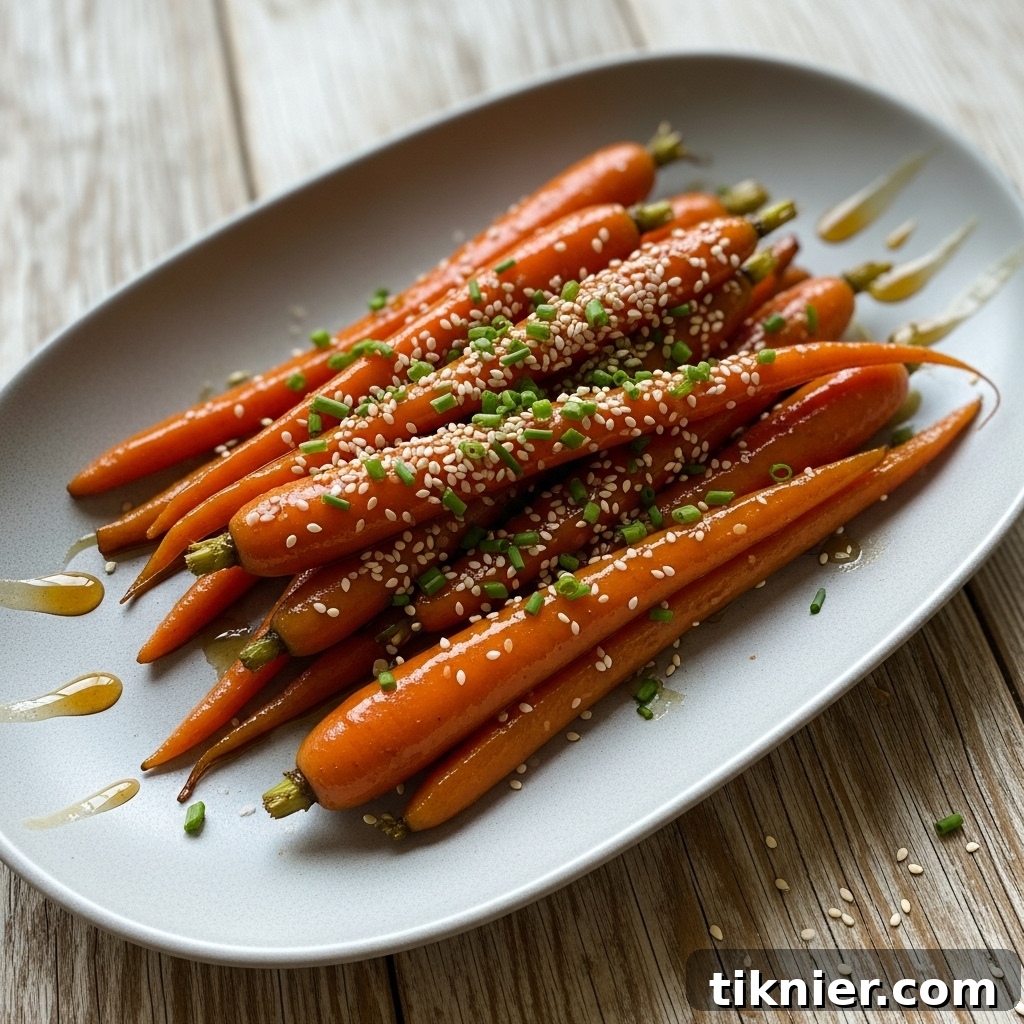
There are some dishes that hold a special place in our hearts, embodying the very essence of home, comfort, and cherished memories. For me, these quintessential dishes always included honey-glazed carrots. My grandmother, with her culinary wisdom and warm smile, prepared them for every single holiday dinner without fail. They were a symphony of sweetness and tenderness, cooked simply with butter and a generous drizzle of honey until they achieved a delectable, almost candy-like consistency. For many years, I adored them just as they were, a perfect reflection of tradition and simplicity.
However, as I transitioned into hosting my own family gatherings, a desire began to stir within me – a gentle nudge to infuse these beloved traditions with my own unique touch. I yearned to preserve that comforting, classic appeal while introducing a subtle, unexpected twist. The pivotal “aha!” moment arrived one bustling weeknight. I was quickly whipping up a comforting miso soup, and a tub of fragrant white miso paste sat conveniently on my kitchen counter.
On a spontaneous impulse, I decided to whisk a spoonful of this savory miso paste into the melting honey and butter, which was destined for my latest batch of carrots. The outcome was nothing short of culinary magic. The profound, salty, and savory depth of the miso masterfully cut through the inherent sweetness of the honey, orchestrating a glaze that was astonishingly delicious, complex, and utterly captivating. It gracefully elevated the humble carrot from a simple side dish into something truly extraordinary. These Honey Glazed Carrots with a Miso Twist have now become my undisputed go-to side dish, consistently earning effusive praise and rave reviews from everyone who tastes them.
They stand as a beautiful homage to my grandmother’s timeless tradition, yet with a distinct, personal flourish that makes them entirely my own.
Skip to My Special Recipe!
Unveiling the Magic: Why This Honey Miso Glazed Carrots Recipe is a Game-Changer
Glazed carrots have long been a cherished staple on dinner tables across various cultures, particularly revered in the American South for their comforting appeal. They offer a wonderfully simple yet effective way to encourage everyone, even the most discerning eaters, to enjoy their vegetables. The classic recipe, typically featuring butter and either honey or brown sugar, is celebrated for its straightforward preparation and the comforting sweetness that beautifully complements a wide array of savory main courses. It’s a dish that evokes nostalgia and warmth.
The inherent beauty of such a timeless recipe lies in its potential as a perfect canvas for culinary innovation. While the traditional version is undeniably lovely, it can sometimes present a slightly one-dimensional flavor profile, leaning quite heavily on its sweet notes. My aspiration was to introduce a layer of depth and forge a more harmoniously balanced taste experience without unduly complicating the dish’s inherent simplicity.
This is precisely where our secret weapon, white miso paste, takes center stage. Miso, a revered fermented soybean paste integral to Japanese cuisine, is a powerhouse of what culinary experts describe as umami. Umami is often referred to as the “fifth taste,” joining sweet, sour, salty, and bitter. It’s that rich, profoundly savory, and deeply satisfying flavor found in delectable ingredients like aged Parmesan cheese, earthy mushrooms, and robust soy sauce. Incorporating umami into a dish elevates it from merely good to truly unforgettable.
By thoughtfully adding just one tablespoon of mild, subtly sweet white miso (also known as shiro miso) to our glaze, we introduce this extraordinary savory element. Crucially, this addition does not transform the carrots into something that tastes overtly Japanese or like a bowl of soup; rather, it performs a delicate balancing act. The miso perfectly counteracts and enhances the sweetness of the honey while simultaneously amplifying the natural, earthy nuances of the carrots themselves. Furthermore, a small dash of rice vinegar is included to provide a bright, acidic counterpoint, tying all the flavors together and ensuring the glaze feels vibrant and never overly heavy. This ingenious, yet simple, culinary twist masterfully transforms a familiar and comforting side dish into a truly memorable and highly sought-after creation.
Essential Ingredients for Crafting Your Perfect Honey Miso Glazed Carrots
The true brilliance of this recipe lies in the synergistic harmony created when a select few, high-quality ingredients come together to produce such an explosion of flavor. You won’t find yourself navigating a labyrinthine shopping list; instead, you’ll only need a handful of essential items to make these carrots truly sparkle on your plate. Here’s a detailed breakdown of what you’ll want to have meticulously prepared and within arm’s reach in your kitchen:
- 1 ½ pounds carrots: Opt for fresh, firm carrots, peeled to ensure a smooth texture and uniformly sliced about ½-inch thick on the diagonal. This particular cut is not just aesthetically pleasing but also maximizes the surface area for our luscious glaze to cling to.
- 3 tablespoons unsalted butter: Unsalted butter is crucial here. It gives you precise control over the overall sodium content of the dish, especially since miso paste naturally contributes a significant amount of saltiness.
- 3 tablespoons honey: A good quality, runny honey such as clover, wildflower, or even a local varietal will infuse the glaze with its rich, natural sweetness and a delightful aroma.
- 1 tablespoon white miso paste (shiro miso): This is our star ingredient, the secret weapon! White miso is characterized by its milder, slightly sweeter flavor compared to red miso, making it the perfect choice to impart that incredible savory umami depth without overpowering the delicate sweetness of the honey. You’ll typically locate it in the refrigerated section of your grocery store, often adjacent to tofu and other specialty Asian ingredients.
- 1 tablespoon rice vinegar: A splash of rice vinegar introduces a bright, subtle acidity that beautifully cuts through the richness of the butter and honey, balancing the overall flavor profile and preventing the glaze from feeling overly heavy or cloying.
- ¼ cup water: Essential for the initial steaming phase, which ensures the carrots cook through to a perfect crisp-tender consistency before the glazing process begins.
- Kosher salt and freshly ground black pepper: To season to taste. Remember to be mindful with the salt, as the miso is already quite savory. Black pepper adds a lovely subtle spice and aromatic complexity.
- 1 teaspoon toasted sesame seeds: For a delightful garnish that adds a pleasant nutty crunch and an inviting visual appeal.
- 1 tablespoon finely chopped fresh chives: A final flourish of fresh chives provides a delicate, oniony freshness and a vibrant pop of green color, enhancing both the flavor and presentation.
When selecting your carrots, always prioritize freshness. Look for carrots that are firm, smooth, and vibrant in color, avoiding any that appear limp or rubbery. While any variety of carrot will technically work, a high-quality, fresh carrot will undoubtedly yield the best flavor and texture in the finished dish. Peeling is non-negotiable for that silky-smooth glaze adhesion, and the diagonal slice truly makes a difference in both presentation and how well the glaze coats each piece. With these carefully chosen ingredients, you’re well on your way to creating a truly exceptional side dish.
Step-by-Step Culinary Journey: Crafting Irresistible Honey Miso Glazed Carrots
This remarkable recipe comes together with surprising speed and ease, right on your stovetop, making it an ideal side dish for both the demands of a busy weeknight and the celebratory grandeur of special occasions. The secret to its success lies in meticulously building the layers of flavor, commencing with the carrots themselves and culminating in that incredibly luscious, glossy glaze. So, arm yourself with a large, sturdy skillet, and let’s embark on this delicious cooking adventure.
Step 1: The Initial Sauté – Awakening the Carrots’ Flavor
Our culinary journey begins by coaxing out the natural sweetness and developing a foundational flavor in the carrots. In your chosen large skillet, melt the unsalted butter over a steady medium-high heat. Once the butter is gloriously foamy and fragrant, introduce your uniformly sliced, diagonally cut carrots along with a small, strategic pinch of kosher salt. Engage in a lively sauté, tossing the carrots continuously in the hot butter for approximately 4 to 5 minutes. This crucial initial step serves a dual purpose: it kickstarts the cooking process, ensuring tenderness, and, more importantly, it initiates the caramelization of the natural sugars within the carrots, laying a deep, flavorful groundwork even before the glaze is introduced.
Step 2: The Gentle Steam – Achieving Crisp-Tender Perfection
Now, our objective is to cook the carrots thoroughly until they reach that coveted “crisp-tender” state without succumbing to overcooking or burning. With caution, pour the ¼ cup of water into the hot skillet. Expect an immediate and satisfying sizzle and burst of steam – a normal and welcome reaction. Allow the water to reach a gentle simmer, then promptly reduce the heat to a steady medium-low. Securely place a lid on your skillet, allowing the carrots to steam peacefully for about 8 to 10 minutes. The hallmark of “crisp-tender” is when a fork can effortlessly pierce a carrot slice, yet it still retains a delightful, slight resistance or “bite.” Avoid the lamentable fate of mushy carrots at all costs.
Step 3: The Glaze Genesis – Whisking a Symphony of Flavors
While your carrots are serenely steaming, seize this opportune moment to artfully prepare the star of our show: the exquisite glaze. In a small, separate bowl, meticulously combine the honey, the umami-rich white miso paste, and the bright rice vinegar. Vigorously whisk all these components together until the miso paste is completely and utterly dissolved, resulting in a mixture that is silky-smooth and perfectly uniform. This diligent whisking is paramount, as it guarantees a flawless glaze, free from any unwanted small clumps of miso in your magnificent final dish.
Step 4: The Evaporation Imperative – Preparing for the Glaze’s Embrace
Once your carrots have reached their tender zenith, remove the lid from the skillet and elevate the heat back to a robust medium-high setting. Our next critical task is to evaporate any residual water that may be lingering at the bottom of the pan. This step is absolutely non-negotiable. Should you proceed to add the luscious glaze while there is still water present, the glaze will become unduly diluted and will fail to reduce and thicken into the coveted, beautiful, and glossy coating we are striving for. Maintain a watchful eye; this vital evaporation process typically requires only a minute or two.
Step 5: The Glaze’s Grand Entrance – Coating and Caramelizing to Perfection
When the skillet is demonstrably dry and ready, it’s time for the grand finale: pour your meticulously prepared honey-miso mixture generously over the awaiting carrots. Now, stir with purpose and passion! Continue to cook, stirring and enthusiastically tossing the carrots without cessation, for a concentrated period of 2 to 3 minutes. Observe as the sauce dynamically bubbles and rapidly thickens, a clear indication that the sugars are caramelizing and developing their glorious sheen. Maintain constant movement to ensure that every single, individual carrot slice is lavishly coated in that exquisite glaze and, crucially, to prevent any scorching on the bottom of your cherished pan.
Step 6: The Final Symphony – Seasoning to Individual Taste
With the glaze perfectly adhered and shimmering, promptly remove the skillet from the heat. This is the precise moment for the ultimate refinement of seasoning. Take a moment to taste a glazed carrot. The inherent savory qualities of the miso contribute a significant amount of saltiness, so you may find that very little, if any, additional kosher salt is required. Conclude with a few generous grinds of freshly ground black pepper, which will provide a delightful piquant contrast to the harmonious sweet and savory notes of the glaze.
Step 7: The Flourish and Feast – Garnish, Serve, and Savor
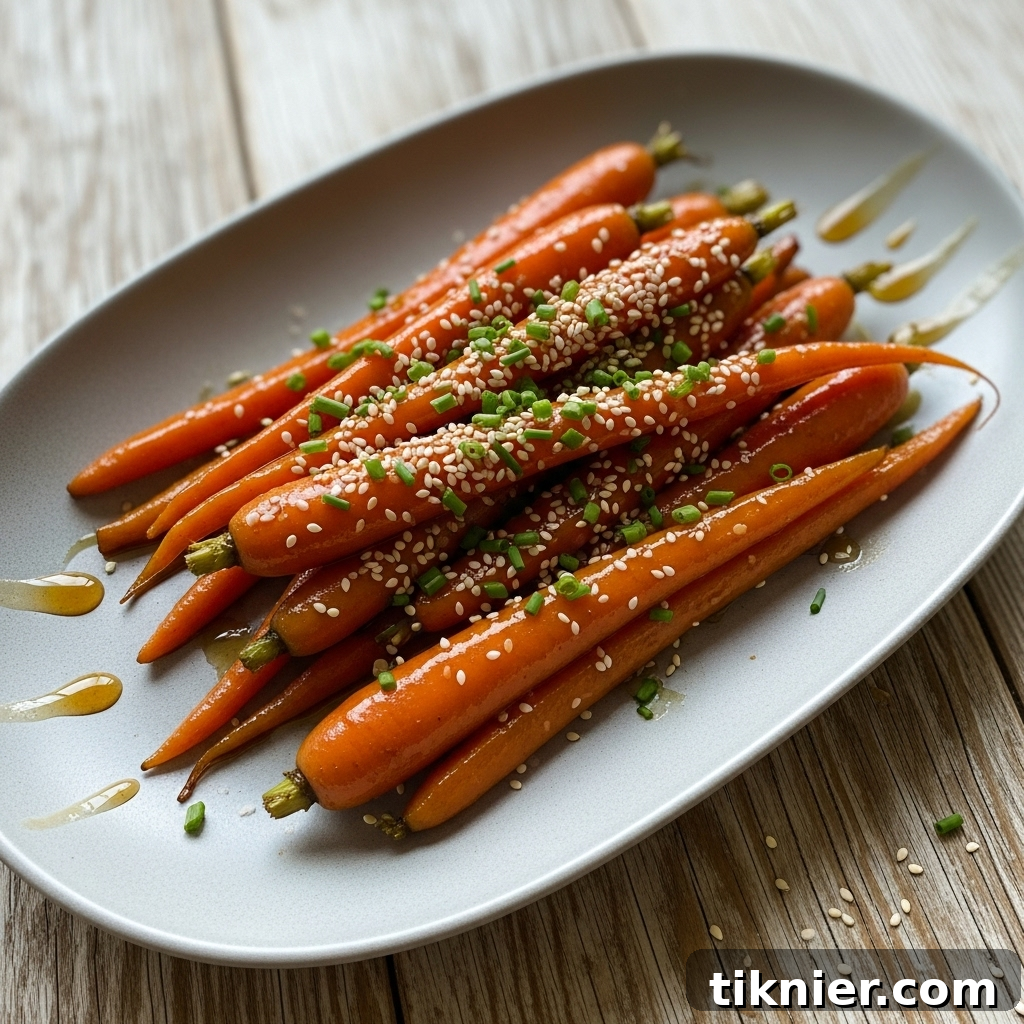
Carefully transfer your magnificently prepared honey miso glazed carrots to an elegant serving dish. To impart the final, exquisite touches, artfully sprinkle them with the toasted sesame seeds, which will contribute a delightful textural crunch and a subtle nutty flavor. Follow this with a scattering of finely chopped fresh chives, offering a vibrant burst of color and a delicate, fresh oniony counterpoint. Serve them piping hot and brace yourself for an outpouring of compliments and requests for the recipe!
How to Serve Your Exquisite Honey Miso Glazed Carrots
These honey miso glazed carrots possess an extraordinary versatility, making them feel perfectly at home on virtually any dining table. Their beautifully balanced sweet and savory flavor profile allows them to pair effortlessly with an expansive spectrum of main courses, positioning them as an exceptionally reliable and impressive choice for any meal, ranging from an elaborate holiday banquet to a simple, comforting weeknight dinner.
For a truly classic and unforgettable pairing, you simply cannot go wrong by serving these glazed carrots alongside an array of perfectly roasted meats. They are an absolute dream companion for a show-stopping holiday centerpiece such as:
- A succulent roasted chicken or a grand holiday turkey: The inherent sweetness of the carrots exquisitely complements the savory herbs and rich flavors of poultry, creating a harmonious bite.
- A beautifully baked brown sugar glazed ham: The combination here is nothing short of divine, as the carrots introduce an extra layer of sweet and savory complexity, enhancing the ham’s own rich glaze.
- Perfectly seared pork chops or a tender, juicy pork tenderloin: Pork and a sweet, savory glaze are, without exaggeration, a culinary match made in heaven. The carrots elevate the dish with their vibrant flavor and texture.
- A robust, savory beef roast or prime rib: Against the deep, rich flavors of beef, these carrots provide a bright, welcoming contrast, cutting through the richness and offering a delightful counterpoint.
Beyond the festive holiday table, these remarkably easy-to-prepare carrots are sophisticated enough to effortlessly elevate a routine weeknight meal. Consider serving them alongside a flaky, pan-seared salmon or elegantly seared scallops; the profound umami from the miso glaze beautifully echoes and enhances the savory notes of the seafood. For those seeking a delicious vegetarian option, they are absolutely fantastic served over a generous bed of fluffy quinoa, hearty farro, or incredibly creamy polenta, allowing the grains to luxuriate and soak up any exquisite extra glaze. They can even bravely take center stage in a nourishing grain bowl, harmoniously paired with roasted chickpeas, fresh greens, and a light vinaigrette. When it comes to presentation, always serve them warm in an aesthetically pleasing bowl or platter, ensuring those vibrant fresh chives and toasted sesame seeds are artfully sprinkled right at the very end to maximize their visual appeal, fresh flavor, and delightful crunch.
Maximizing Your Meal: Storing and Reusing Leftover Honey Miso Glazed Carrots
While there’s undeniable joy in savoring these magnificent carrots fresh from the skillet, having leftovers is a truly wonderful thing. They demonstrate remarkable resilience and, with the correct reheating approach, can be just as delicious the following day, if not better! The key to preserving their delectable quality lies in proper storage and gentle reheating techniques to revive that exquisite glaze to its former glory.
Firstly, it is absolutely crucial to allow any leftover carrots to cool down completely to room temperature. This vital step prevents the accumulation of condensation within your storage container, which could otherwise render them unappetizingly watery. Once thoroughly cooled, meticulously transfer them into an airtight container and store them securely in the refrigerator. When stored correctly, they will maintain their delightful quality for up to four days, making them an excellent choice for efficient meal preparation throughout the week or for effortlessly enjoying the delicious aftermath of a grand holiday meal.
When the time comes to enjoy these culinary treasures once more, you have several convenient and effective options for reheating:
- Stovetop (Recommended Method): This is, without a doubt, my preferred technique, as it performs the most outstanding job of revitalizing the glaze. Simply place the carrots in a clean skillet over a gentle medium-low heat. You may wish to add a minuscule splash of water or a tiny pat of butter to aid in loosening and re-emulsifying the glaze. Heat, stirring occasionally and gently, until they are thoroughly warmed through and the glaze once again possesses its alluring, glossy sheen.
- Microwave (Quick & Easy): For those moments when speed is of the essence, the microwave is a perfectly acceptable alternative. Arrange the carrots in a microwave-safe dish and heat them in measured 30-second increments, stirring meticulously between each interval, until they achieve your desired temperature. While the texture might become marginally softer than their initial preparation, the flavor will remain wonderfully delicious.
- Oven (Batch Reheating): If your oven is already preheated and in use for other dishes, you can efficiently reheat the carrots this way. Spread them out evenly on a small baking sheet and warm them in a 350°F (175°C) oven for approximately 10 minutes, or until they are heated through to the core. This method can also help to slightly re-caramelize the glaze.
Remember, don’t merely perceive them as “leftovers”! Get creative. You can chop the chilled carrots and artfully toss them into a vibrant salad for an unexpected sweet and savory dimension. They are also incredibly versatile when added to a quick stir-fry or elegantly folded into a wrap alongside some leftover roasted chicken or chickpeas. The culinary possibilities for these delightful carrots are truly boundless!
Creative Twists and Adaptations: Substitutions & Variations for Your Honey Miso Glazed Carrots
One of the most liberating and enjoyable aspects of a fundamentally simple yet robust recipe like this is its inherent adaptability. It effortlessly allows you to customize it to perfectly align with your personal taste preferences or to ingeniously utilize whatever ingredients you happen to have readily available in your pantry. While my adoration for the honey and miso combination remains unwavering, there are a plethora of exciting avenues to explore, enabling you to switch things up and truly make these glazed carrots your signature dish. Whether you need to meticulously accommodate a specific dietary restriction, are simply in the mood for culinary experimentation, or wish to infuse a new flavor profile, here are some inspiring ideas to ignite your creativity.
Embrace the joy of culinary exploration! Feel absolutely encouraged to experiment with the core components of the glaze or to introduce additional flourishes that reflect your unique palate. Cooking should always be an enjoyable and imaginative process, so never hesitate to try something wonderfully new and exciting.
- Sweetener Symphony Swap: Should you find yourself without honey, or if you simply prefer an alternative flavor, pure maple syrup emerges as a truly fantastic substitute. It will bestow the carrots with a subtly different, perhaps warmer and richer, kind of sweetness. Alternatively, an equal quantity of light brown sugar can be used; ensure it dissolves completely with the butter before you introduce the other glaze ingredients, maintaining that silky texture.
- Embracing Veganism: To effortlessly transform this already delightful recipe into a completely plant-based offering, the adjustment is remarkably simple. Merely swap the unsalted dairy butter for your preferred brand of high-quality vegan butter or, for a different dimension, even a touch of creamy coconut oil. All other ingredients are inherently vegan, making this a very straightforward and accessible conversion.
- A Dash of Dynamic Heat: For those who appreciate a spirited kick of spice in their dishes, consider introducing a generous pinch of red pepper flakes into the glaze mixture. For a more profound and complex heat, a small dash of sriracha or the robust Korean gochujang paste can be incorporated. The gentle, underlying heat creates a captivating and wonderful contrast to the dish’s predominant sweet and savory notes.
- Exploring Aromatic Herbs and Spices: While I personally adore the bright, verdant freshness of chives, your culinary canvas is vast. Finely chopped fresh parsley or vibrant cilantro would both offer equally lovely and distinct aromatic profiles. For an entirely different flavor journey, consider infusing the glaze with a warm, earthy spice such as a delicate pinch of ground ginger or even a whisper of cinnamon, which can lend a comforting and exotic dimension.
- Miso-Free Magic: If white miso paste proves elusive or is not suitable for your dietary needs, you can still achieve a distinct, albeit different, umami-rich flavor. A tablespoon of low-sodium soy sauce or tamari (for a gluten-free option) can serve as an effective substitute, providing a savory depth. However, exercise caution: these alternatives tend to be saltier and possess a more assertive flavor than white miso, so always taste the glaze before adding any additional salt.
These thoughtful variations empower you to tailor this versatile dish impeccably to complement any specific meal or occasion. A hint of ginger might be perfectly suited for an Asian-inspired dinner, while the inviting warmth of maple syrup could be the ideal accompaniment for a cozy, fall-themed feast. Crucially, the fundamental cooking technique remains unchanged, guaranteeing that you will consistently achieve beautifully tender, perfectly glazed carrots every single time.
Honey Miso Glazed Carrots: The Perfect Sweet & Savory Side
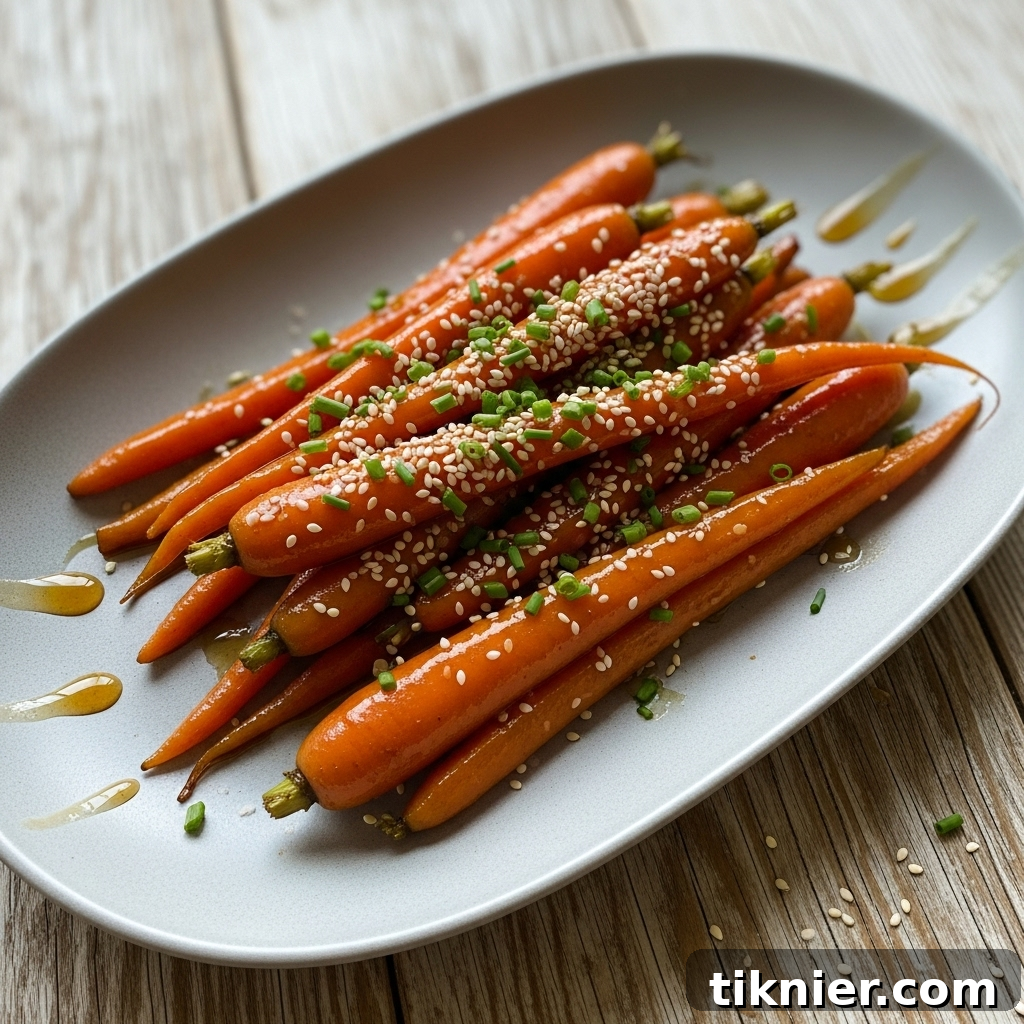
Description: A beloved classic side dish reimagined with a modern, gourmet twist! These tender, sweet honey-glazed carrots are gracefully elevated by the rich, savory, and umami-packed depth of white miso paste. The result is an impeccably balanced sweet and savory glaze that is utterly addictive and endlessly satisfying. They’re astonishingly quick to prepare, incredibly easy to execute, and guaranteed to impress even the most discerning palates.
Yield: 4-6 servings | Category: Side Dish | Cuisine: American Fusion
Prep Time: 10 minutes | Cook Time: 20 minutes
Ingredients
- 1 ½ pounds carrots, peeled and sliced ½-inch thick on the diagonal
- 3 tablespoons unsalted butter
- 3 tablespoons honey
- 1 tablespoon white miso paste (shiro miso)
- 1 tablespoon rice vinegar
- ¼ cup water
- Kosher salt and freshly ground black pepper to taste
- 1 teaspoon toasted sesame seeds, for garnish
- 1 tablespoon finely chopped fresh chives, for garnish
Instructions
- In a large skillet over medium-high heat, melt the unsalted butter. Add the diagonally sliced carrots and a small pinch of kosher salt. Sauté for 4-5 minutes, stirring occasionally, until the carrots begin to soften and develop a slight color.
- Carefully pour in the ¼ cup of water. Bring the water to a gentle simmer, then reduce the heat to medium-low. Cover the skillet with a lid and allow the carrots to steam for 8-10 minutes, or until they are crisp-tender (easily pierced with a fork but still retaining a slight bite).
- While the carrots are steaming, prepare the glaze. In a small bowl, whisk together the honey, white miso paste, and rice vinegar until the miso is completely dissolved and the mixture is smooth and uniform.
- Once the carrots are tender, remove the lid from the skillet and increase the heat back to medium-high. Cook, stirring occasionally, for 1-2 minutes to evaporate any remaining water from the pan. This step is crucial for a thick glaze.
- Pour the prepared honey-miso mixture over the carrots in the dry skillet. Cook, stirring and tossing the carrots constantly, for 2-3 minutes. The sauce will rapidly bubble and thicken into a beautiful, glossy glaze, coating every piece of carrot.
- Remove the skillet from the heat. Taste the carrots and season with additional kosher salt (if needed, remembering miso is salty) and freshly ground black pepper to taste.
- Transfer the glazed carrots to a serving dish. Garnish generously with toasted sesame seeds and finely chopped fresh chives for added crunch, color, and fresh flavor. Serve hot.
Notes
Exercise caution when seasoning with salt at the very end, as the white miso paste inherently contributes a significant amount of saltiness to the dish. Always taste first before adding more!
Servings: 6 | Calories: 175kcal | Fat: 8g | Carbohydrates: 25g | Protein: 2g
Exploring Common Queries: 5 FAQs About Honey Miso Glazed Carrots
Here, you’ll find comprehensive and straightforward answers to the most frequently asked questions I receive about this particular honey miso glazed carrots recipe. These insights will help you master the dish and troubleshoot any potential issues.
Can I use pre-cut or baby carrots for this Honey Glazed Carrots recipe?
You absolutely can, and many home cooks find this to be a fantastic time-saving shortcut! Using pre-peeled baby carrots or even pre-cut carrot sticks will work perfectly fine in this recipe and will yield delicious results. The primary advantage, of course, is the sheer convenience; you can simply open the bag and proceed directly to the cooking steps, bypassing the peeling and chopping entirely. This can be a real boon, especially when you’re orchestrating a large meal with multiple dishes requiring your attention.
However, it’s worth noting a couple of nuanced differences. I’ve found that whole carrots, when freshly peeled and precisely cut at home, tend to possess a slightly sweeter, more pronounced, and robust “carrot-y” flavor compared to their pre-packaged counterparts, which can sometimes be a bit milder. Additionally, because baby carrots are typically smaller and often thicker than the ½-inch diagonal slices recommended, you might need to make minor adjustments to the cooking time. During the steaming phase, keep a vigilant eye on them and perform a fork test frequently to ensure they reach that desirable crisp-tender stage without becoming overly soft or mushy. Rest assured, the glorious honey-miso glaze will coat them just as beautifully and impart its wonderful flavor.
My glaze for the Honey Glazed Carrots didn’t thicken properly. What could have gone wrong?
This is a very common concern, and almost invariably, it boils down to one simple yet critically important step: the complete evaporation of the water. After you’ve successfully steamed the carrots to tender perfection, it is absolutely essential to remove the lid, elevate the heat to medium-high, and thoroughly cook off any residual liquid that remains pooling in the skillet *before* you introduce the glaze ingredients. If you were to pour the rich honey-miso mixture into a pan that still contains water, the glaze would become diluted, rendering it unable to properly reduce, concentrate, and achieve that coveted thick, glossy coating we’re striving for.
Another potential culprit could be insufficient heat during the final glazing stage. Once you’ve added the glaze to the carrots, maintaining the skillet over medium-high heat is crucial. This higher temperature facilitates the rapid caramelization of the sugars present in the honey and encourages the liquid to reduce quickly, thereby forming that beautiful, lustrous coating. If the heat is too low, the sauce will merely warm up rather than actively thickening and adhering to the carrots. Therefore, exercise patience during the minute or two it takes for the water to evaporate, then work swiftly over a hot pan, stirring continuously, to ensure a perfect, shimmering glaze every single time.
Is there an effective substitute for white miso in these Honey Glazed Carrots?
The distinctive character of white miso is truly central to the unique flavor profile of this recipe, lending a savory depth and subtle sweetness that is genuinely challenging to replicate with perfect fidelity. Its mild, slightly sweet umami essence is precisely what elevates these carrots from good to truly exceptional. However, if you find yourself absolutely unable to source it, or if you have an allergy that prevents its use, you can certainly attempt a substitute, though it’s important to understand that the final flavor will inevitably differ.
The most accessible and closest substitute would be a low-sodium soy sauce or tamari (for a gluten-free option). These will deliver a salty, umami-rich punch. I would advise starting with a slightly smaller quantity, perhaps just 2 teaspoons instead of a full tablespoon of miso, as soy sauce and tamari can be notably saltier and possess a more assertive flavor than the delicate white miso. Bear in mind, however, that you will lose the subtle sweetness, the creamy texture, and the fermented complexity that the miso uniquely provides. Another option, though less common and altering the profile significantly, might be to mix a very small amount of tahini with the soy sauce to add a touch of body, but this will introduce a nutty flavor. Ultimately, I highly recommend making the effort to seek out white miso if at all possible; it genuinely transforms and defines the dish in a way no substitute can fully match.
Can I prepare these Honey Glazed Carrots ahead of time for an event or party?
Absolutely, this recipe is wonderfully suited for make-ahead preparation, which can be an absolute lifesaver when you’re meticulously planning for a bustling party, a festive holiday gathering, or any occasion requiring efficient kitchen management. You can confidently cook the entire recipe from start to finish, allowing the magnificent carrots to cool down completely to room temperature afterward. Once cooled, transfer them carefully into an airtight container and store them in the refrigerator for up to two days prior to your event. This allows you to spread out your cooking tasks and reduce stress on the big day.
When you’re ready to serve, the optimal method for reheating them is gently in a skillet on the stovetop over medium-low heat. You might find it beneficial to add a small teaspoon of butter or a tiny splash of water to the pan; this helps to gently loosen the glaze, ensuring it becomes glossy and vibrant once more. Just heat them until they are thoroughly warmed through. A crucial tip for presentation: I would strongly advise waiting to add the fresh garnishes, such as the finely chopped chives and the toasted sesame seeds, until *after* you have reheated them. This ensures that the chives retain their bright, fresh green color and delicate flavor, and the sesame seeds maintain their delightful crunch and aromatic toastiness.
What’s the best way to cut carrots for Honey Glazed Carrots to maximize flavor and presentation?
For this particular recipe, I enthusiastically recommend employing a specific cutting technique: slicing the carrots on the diagonal, which yields elegant oval-shaped coins, each approximately a half-inch thick. This method of cutting goes far beyond merely enhancing the aesthetic appeal on the plate, though it undeniably lends a more refined and visually appealing presentation compared to simple, perfectly round coins. The principal reason I advocate for this diagonal cut is that it dramatically increases the total surface area of each individual piece of carrot.
A greater surface area translates directly to more precious real estate for that incredibly delicious honey-miso glaze to adhere to, ensuring that every single bite you take is absolutely bursting with concentrated flavor. Furthermore, this cutting style also contributes to a slightly more even and consistent cooking process for all the carrot pieces. To execute this technique, simply hold your sharp chef’s knife at an approximate 45-degree angle to the carrot and proceed to make your uniform slices. Of course, if you’re in a considerable hurry or prefer simplicity, cutting them into straightforward half-inch rounds will still work perfectly well. The paramount consideration is to maintain a consistent thickness across all your slices, which is vital to ensure that every piece cooks at precisely the same rate, resulting in a perfectly tender batch.
Explore More Delicious Recipes
If you’ve thoroughly enjoyed the unique, comforting, and sophisticated flavors of these Honey Miso Glazed Carrots, I am confident that you will equally appreciate some of my other favorite recipes that passionately celebrate vegetables.
- Roasted Rainbow Carrots with Carrot Puree: A visually stunning and incredibly flavorful dish that cleverly utilizes carrots in two distinct ways, creating an extraordinary depth of flavor and texture.
- Moroccan Carrot Soup: Immerse yourself in the warm and fragrant spices of Morocco with this inviting and hearty carrot soup, a truly transporting culinary experience.
- Spicy Maple Glazed Delicata Squash Rings: If the allure of a harmonious sweet and savory glaze captured your palate, you will absolutely adore this impressively easy yet elegant side dish featuring delicate squash.
I sincerely hope you’ll give these fantastic recipes a try and share your thoughts and experiences with me!