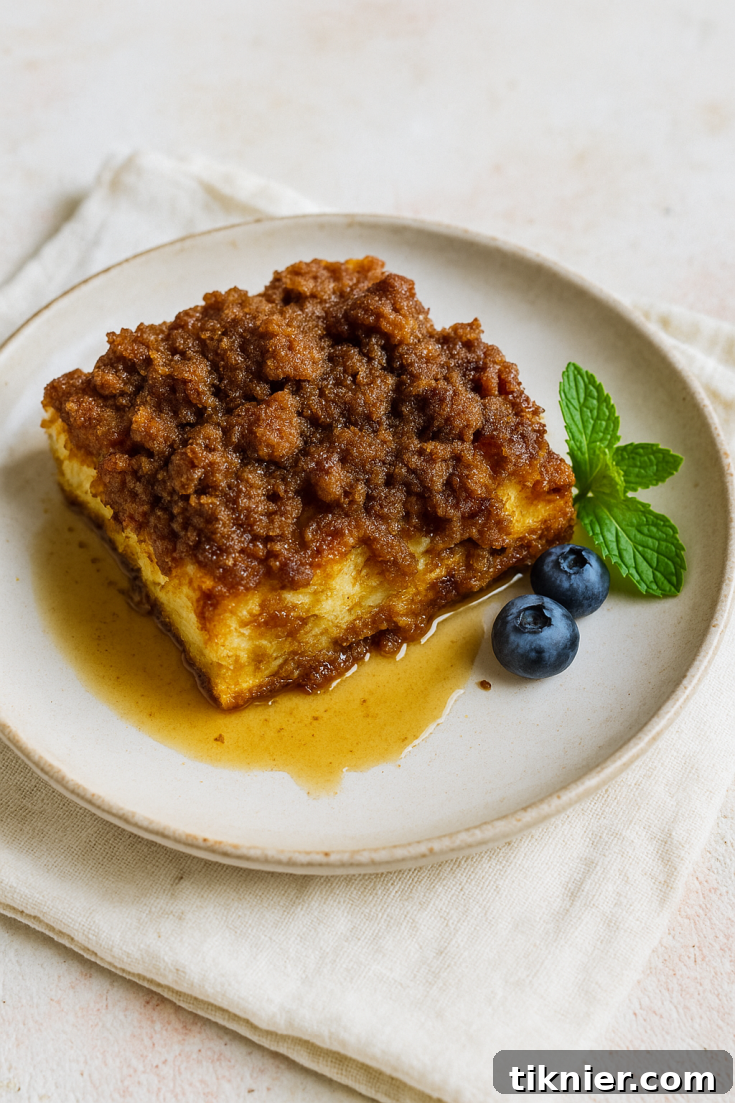
The Ultimate Make-Ahead Baked French Toast Recipe with Streusel Topping
Imagine waking up to the aroma of warm cinnamon and vanilla, without the usual morning rush. That’s the magic of this incredible baked French toast. It’s the easiest, most delicious way to feed a crowd, allowing you to relax and savor your coffee while a comforting, custardy breakfast bakes to golden perfection in the oven.
My journey to perfecting baked French toast began when I hosted Christmas morning brunch. With family flying in and toddlers running around, the last thing I wanted was to be tethered to the stove, flipping individual slices while everyone else enjoyed their mimosas and conversations. I yearned for something warm, inviting, and utterly effortless. So, I adapted my favorite traditional French toast recipe, giving it the oven treatment, transforming it into a stress-free casserole.
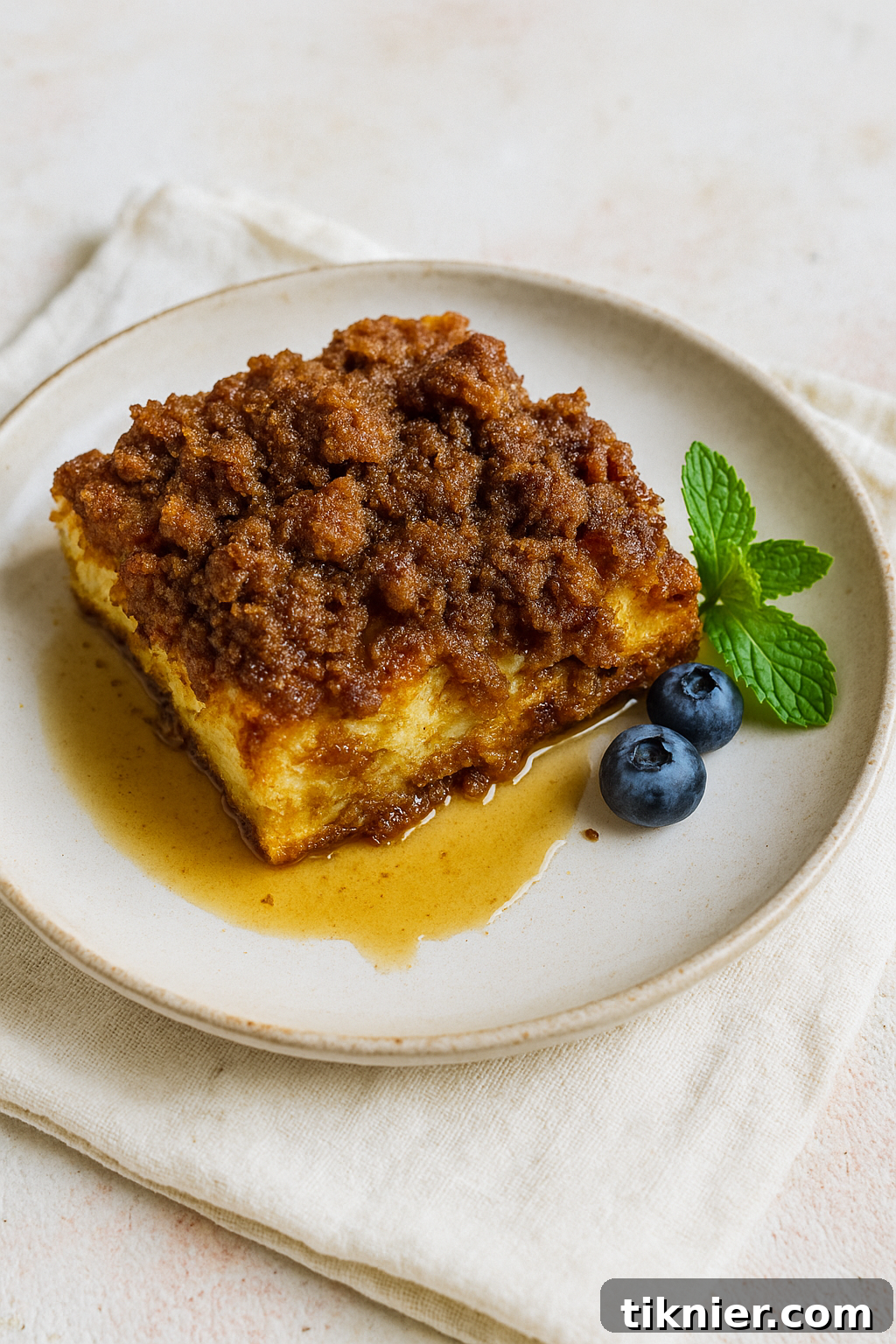
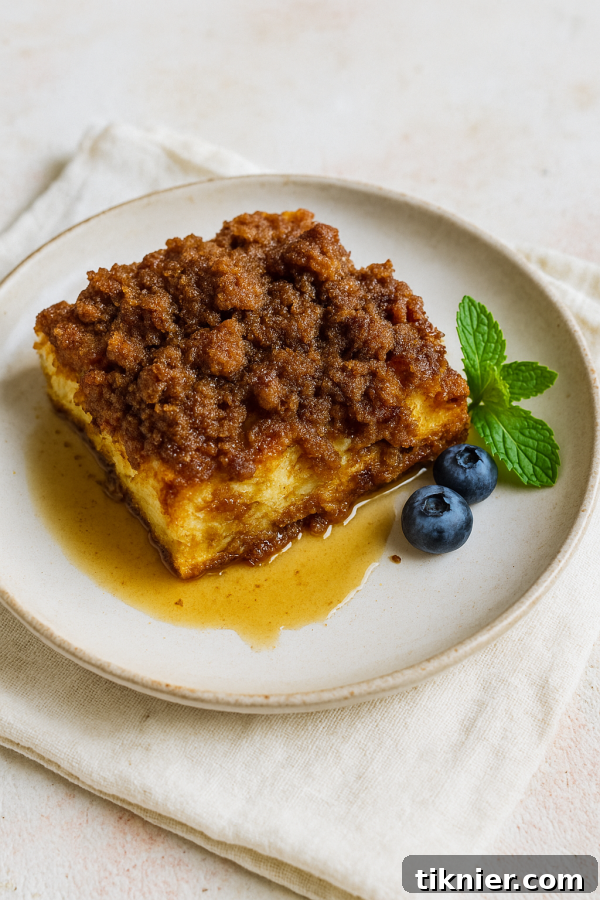
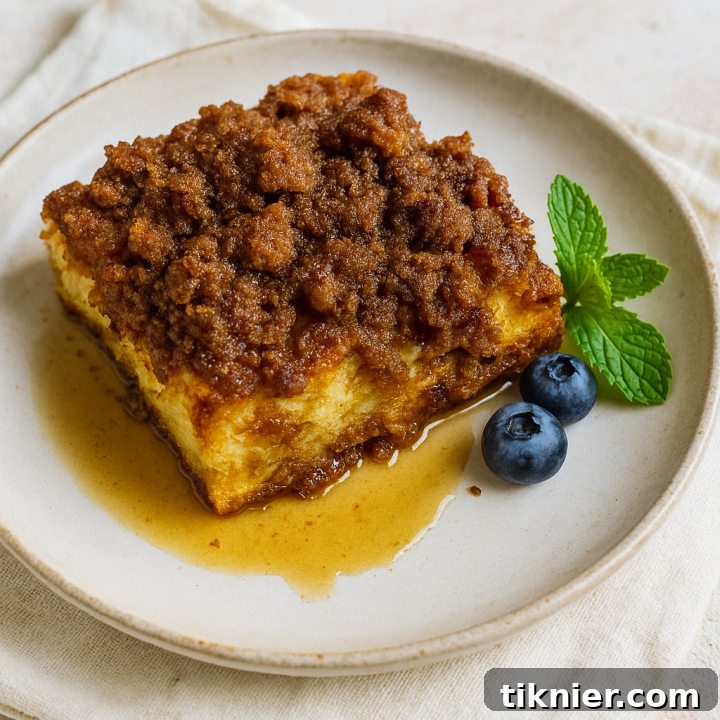
But what truly elevates this recipe above all others is the addition of a buttery, spiced cinnamon streusel topping. As it bakes, it creates an irresistible golden, crisp crust that beautifully contrasts with the soft, custardy bread beneath. This delightful crunch in every bite isn’t just a texture; it’s a special touch that makes this dish unforgettable. What started as a holiday solution has since become a year-round staple in my home. It’s ideal for festive occasions, celebratory gatherings like baby showers, or simply a luxurious, lazy Sunday morning. And the best part? Almost all the prep work can be done the night before, making your morning completely hassle-free.
Why This Baked French Toast Recipe is a Brunch Game-Changer
Baked French toast has rightfully earned its place as a beloved brunch favorite, and for excellent reasons. It embodies coziness, offers unparalleled convenience, and delivers pure, satisfying flavor. Traditional French toast, while delicious, can be quite demanding. It requires constant attention, dipping each slice individually, cooking them in small batches, and diligently monitoring to prevent burning or a mushy texture. When you choose to bake it, however, the process becomes wonderfully simple: you layer everything into a single dish, pour over the rich custard, and let the oven handle the rest. The result is consistently perfect – a beautifully golden and crisp top, deliciously caramelized edges, and a tender, soft middle that avoids any sogginess.
This particular recipe stands out and works flawlessly due to three fundamental elements:
- Sturdy, Day-Old Bread: The foundation of exceptional baked French toast is bread that can truly hold its own. Stale or slightly dried bread is paramount because its structure allows it to absorb the rich custard thoroughly without disintegrating. This ensures each piece maintains its shape and offers a delightful chewiness after baking.
- The Magic of an Overnight Soak: Allowing the bread to soak in the custard overnight is a non-negotiable step. This extended period permits the flavors to deeply meld together, infusing every fiber of the bread with the sweet, spiced richness of the custard. It also allows the bread to fully hydrate, resulting in an incredibly tender, melt-in-your-mouth texture that can’t be achieved with a quick soak.
- Irresistible Cinnamon Streusel Topping: This isn’t just a garnish; it’s a key component that transforms the dish. The buttery cinnamon streusel topping bakes into a delightful crunchy crust, offering a textural contrast that elevates the entire experience. It adds an extra layer of flavor and ensures a golden, appealing finish that makes this baked French toast truly special.
The combination of these elements yields a baked French toast casserole that captures the very best aspects of both classic French toast and a comforting bread pudding. It slices neatly into perfect portions, fills your kitchen with an intoxicating aroma, and reheats like a dream, making it ideal for leftovers.
Essential Ingredients for the Perfect Baked French Toast
Crafting this incredible baked French toast doesn’t require exotic ingredients, but selecting quality components can significantly elevate the final taste and texture. Here’s what you’ll need, along with a few tips to ensure the best results:
For the Rich French Toast Base:
- 1 loaf of Brioche or Challah Bread: Sliced into 1-inch cubes. Day-old bread is truly best, as its slightly dry texture is ideal for soaking up the custard without becoming mushy. Brioche offers a rich, buttery flavor, while challah provides a slightly denser, chewy texture.
- 6 large Eggs: These are the backbone of your custard, providing richness, structure, and helping the French toast achieve its custardy interior.
- 2 cups Whole Milk: Whole milk contributes to the creamy texture and rich flavor of the custard. You can use 2% milk in a pinch, but whole milk yields a more luxurious result.
- 1/2 cup Heavy Cream: Adding heavy cream makes the custard exceptionally decadent and velvety, preventing the French toast from drying out and enhancing its melt-in-your-mouth quality.
- 1/2 cup Light Brown Sugar: Brown sugar offers a deep, caramel-like sweetness that complements the spices beautifully. It also helps create a slightly caramelized crust.
- 2 teaspoons Vanilla Extract: Use a high-quality pure vanilla extract for the best flavor. Vanilla is crucial for that classic, comforting French toast aroma and taste.
- 1 1/2 teaspoons Ground Cinnamon: Cinnamon is the star spice here, providing warmth and depth.
- 1/4 teaspoon Ground Nutmeg: A small hint of nutmeg adds complexity and enhances the overall spice profile without overpowering the cinnamon.
- 1/4 teaspoon Salt: A touch of salt balances the sweetness and brings out all the other flavors, making them more vibrant.
For the Delectable Cinnamon Streusel Topping:
This topping is the secret weapon that truly sets this baked French toast apart. Its buttery, crumbly texture bakes into a golden, crispy crust that beautifully contrasts the soft, custardy bread beneath.
- 1/2 cup All-Purpose Flour: The base for your streusel, providing structure.
- 1/2 cup Light Brown Sugar: Adds sweetness and moisture, contributing to the streusel’s classic crumbly texture and rich flavor.
- 1 teaspoon Cinnamon: Infuses the streusel with an inviting, warm spice.
- 1/4 teaspoon Salt: A tiny pinch enhances the sweetness and rounds out the flavors of the streusel.
- 6 tablespoons Cold Unsalted Butter, cubed: Cold butter is essential for achieving a crumbly, tender streusel. It creates pockets of steam during baking, resulting in a light and crispy topping.
The synergy of these ingredients, especially the luxurious bread and the standout streusel, creates a baked French toast that is both comforting and extraordinary.
Step-by-Step Guide to Your Best Baked French Toast
Making this baked French toast casserole is surprisingly straightforward, especially when you break it down into these simple steps. The beauty of this recipe lies in its make-ahead convenience, letting you enjoy a leisurely morning without sacrificing flavor or quality.
- Prepare Your Baking Dish: Begin by generously greasing a 9×13-inch baking dish with butter or a nonstick cooking spray. This crucial step ensures your French toast doesn’t stick and makes for easy serving and cleanup.
- Arrange the Bread Cubes: Spread your cubed day-old brioche or challah bread evenly across the bottom of the prepared baking dish. You want a full layer that fills the dish without being overly packed, allowing the custard to seep into every nook and cranny.
- Whip Up the Custard: In a large mixing bowl, combine the eggs, whole milk, heavy cream, light brown sugar, vanilla extract, ground cinnamon, ground nutmeg, and salt. Whisk vigorously until all the ingredients are thoroughly combined and the mixture is smooth and uniform. This ensures an even distribution of flavor in every bite.
- Pour and Soak (The Overnight Magic!): Slowly and evenly pour the prepared custard mixture over the bread cubes in the baking dish. Gently press down on the bread with a spatula or the back of a spoon to help it absorb the liquid. Make sure all the bread pieces are submerged. Once saturated, cover the dish tightly with aluminum foil and refrigerate it overnight, or for a minimum of 4 hours. This long soak is key to achieving that incredibly custardy, non-soggy texture.
- Prepare the Streusel Topping: While your French toast is soaking (or shortly before baking), prepare the streusel. In a medium bowl, combine the all-purpose flour, light brown sugar, cinnamon, and salt. Add the cubed cold unsalted butter. Using a fork, your fingertips, or a pastry blender, cut the butter into the dry ingredients until the mixture resembles coarse crumbs with some pea-sized pieces of butter remaining. This texture is vital for a crumbly, crispy topping. Refrigerate the streusel until you’re ready to bake.
- Preheat Oven and Top the Casserole: About 30 minutes before you plan to bake, remove the French toast casserole from the refrigerator and let it sit at room temperature. This helps ensure even baking. While it rests, preheat your oven to 350°F (175°C). Evenly sprinkle the chilled streusel topping over the entire surface of the bread and custard mixture.
- Bake to Golden Perfection: Place the uncovered baking dish into the preheated oven. Bake for approximately 45 to 50 minutes. The French toast is ready when the top is beautifully golden brown, the streusel is crisp, and the center is set but still slightly soft and jiggly when gently shaken. If you notice the top browning too quickly, you can loosely tent it with foil.
- Cool and Serve: Once baked, remove the casserole from the oven and let it rest for about 10 minutes before slicing and serving. This resting period allows the French toast to firm up slightly, making it easier to cut and ensuring the custardy center is perfectly set. Serve warm with your favorite toppings.
Expert Tip: A common pitfall is using fresh, soft bread. Fresh bread tends to turn mushy when soaked in custard. Always opt for day-old bread, or if you only have fresh, cut it into cubes and lightly toast it in a 300°F (150°C) oven for about 10-15 minutes to dry it out slightly before assembling the casserole. This structural integrity is crucial for a perfectly textured baked French toast.
Expert Tips for Success with Your Baked French Toast
Achieving the perfect baked French toast is simple with these additional tips and insights:
- Bread Selection is Key: While brioche and challah are ideal, a sturdy white bread like Texas toast or even a French baguette (sliced and cubed) can work well. Avoid soft, sandwich-style bread, which will become too soggy.
- Don’t Rush the Soak: The overnight soak is non-negotiable for a truly custardy interior. If you’re short on time, a minimum of 4 hours will suffice, but overnight yields the best results.
- Room Temperature for Even Baking: Taking the casserole out of the fridge 30 minutes before baking helps it bake more evenly and prevents a cold center from extending cook time.
- Streusel Texture: When making the streusel, don’t overmix. You want coarse crumbs, not a smooth dough. This ensures pockets of butter that create flakiness and crunch.
- Checking for Doneness: The center should be mostly set but still have a slight jiggle. An internal temperature of 170°F (77°C) is ideal for egg custards. If the top is browning too quickly, loosely tent the dish with foil.
- Rest Before Serving: Allowing the casserole to rest for 10 minutes out of the oven helps the custard set fully, making for cleaner slices and preventing it from falling apart.
Serving Suggestions: Elevate Your Baked French Toast Experience
This baked French toast casserole is a masterpiece straight out of the oven, beautiful in its simplicity. However, there are countless ways to dress it up and transform it into a truly memorable brunch spread. Its versatility allows it to pair wonderfully with both sweet and savory accompaniments, giving you endless options to delight your guests or yourself.
- Classic Sweet Toppings: A dusting of powdered sugar and a generous drizzle of warm, pure maple syrup is the quintessential pairing. For an extra touch, warm your maple syrup slightly before serving.
- Fresh Fruit Medley: Brighten your plate with an assortment of fresh berries (strawberries, blueberries, raspberries), sliced bananas, or a spoonful of homemade fruit compote (berry, apple, or peach compotes are divine).
- Creamy Indulgences: A dollop of freshly whipped cream, a scoop of vanilla bean ice cream (for a dessert-like twist), or a serving of creamy vanilla Greek yogurt can add a luscious texture and extra richness.
- Savory Counterparts: Balance the sweetness with a side of crispy bacon, savory breakfast sausage links or patties, or even a frittata or scrambled eggs for a hearty contrast.
- Nutty Crunch: Garnish with candied pecans, toasted walnuts, or a sprinkle of slivered almonds for an added layer of texture and flavor.
- Herbaceous Touch: For a sophisticated presentation, a few fresh mint leaves can add a pop of color and a subtle refreshing note.
When hosting brunch, I often create a “toppings bar” where guests can customize their own plates. This not only adds an element of fun but also ensures that even the most discerning eaters find something they adore.
Storing and Reheating Your Delicious Leftovers
One of the many virtues of baked French toast is how remarkably well it stores and reheats. You can easily prepare it ahead of time for future meals or savor the leftovers without any compromise on its delightful texture and flavor. Proper storage is key to maintaining its quality, so always ensure it cools completely before stashing it away to prevent unwanted condensation and sogginess.
- Refrigeration: Any leftover baked French toast should be transferred to an airtight container and stored in the refrigerator. It will stay fresh and delicious for up to 4 days.
- Optimal Reheating in the Oven: For individual slices or larger portions, the oven is your best friend for reheating. Place the slices on a baking sheet and reheat in a preheated oven at 325°F (160°C) for 10–15 minutes, or until warmed through and the streusel topping is re-crisped. This method best preserves the crispy top and custardy interior.
- Microwave Convenience: If you’re in a hurry, the microwave can be used to reheat individual servings. However, be aware that this method will soften the crispy streusel topping. Heat in 30-second intervals until warmed to your liking.
- Freezing for Future Enjoyment: Baked French toast freezes beautifully, making it an excellent meal-prep option.
- To freeze individual slices: Once completely cooled, wrap each slice tightly in plastic wrap, then wrap again in aluminum foil. This double layer protects against freezer burn.
- To freeze the entire casserole: If freezing the whole dish, ensure it’s thoroughly cooled. Wrap the baking dish tightly with several layers of plastic wrap, then with aluminum foil.
Frozen French toast can be stored for up to 2 months. Reheat frozen slices directly in the oven at 350°F (175°C) for 15–25 minutes (depending on thickness) until heated through. For a whole frozen casserole, it may take 45-60 minutes, potentially longer, until warmed to the center. If you plan to freeze a portion, consider slightly underbaking it by 5 minutes initially, as this prevents it from drying out upon reheating.
With these storage and reheating tips, you can enjoy the comforting flavors of this baked French toast whenever the craving strikes, making your mornings (and future mornings!) even more delightful.
Creative Variations and Substitutions for Your Baked French Toast
This baked French toast recipe is a fantastic canvas for culinary creativity. It’s wonderfully adaptable, allowing you to tailor it to your preferences, dietary needs, or whatever ingredients you have on hand. Start with the core recipe, then let your imagination guide you in exploring different flavors and textures.
- Dairy-Free Adaptation: For a dairy-free version, simply substitute whole milk with almond milk, oat milk, or soy milk. For the heavy cream, a full-fat canned coconut milk can provide a similar richness. Ensure you use a plant-based butter (like a vegan butter stick) for the streusel topping.
- Gluten-Free Option: Choose a high-quality, sturdy gluten-free loaf of bread. Ensure it’s dense enough to absorb the custard without crumbling. Brands that mimic brioche or challah textures work best. Toasting the gluten-free bread cubes slightly before soaking can further enhance its structure.
- Egg-Free Alternative: While eggs are central to the custard’s texture, you can experiment with flax eggs (1 tbsp ground flaxseed + 3 tbsp water per egg, let sit for 5 mins) or a commercial egg replacer for the French toast base. Be aware that the texture will likely be softer and less custardy.
- Flavor Infusions and Add-Ins:
- Chocolate Lover’s Dream: Sprinkle chocolate chips, mini chocolate chips, or even chunks of dark chocolate between the bread layers for a rich, melty surprise.
- Fruity Freshness: Add diced apples, pears, or rehydrated raisins, cranberries, or dried cherries directly into the bread layers before pouring the custard. Fresh blueberries or sliced peaches can be added at this stage too, or sprinkled on top during the last 15 minutes of baking.
- Citrus Zest: Incorporate the zest of an orange or lemon into the custard for a bright, aromatic lift.
- Seasonal Twists:
- Autumn Spice: In the fall, replace some of the cinnamon with pumpkin pie spice and add a couple of tablespoons of pumpkin purée to the custard for a delightful pumpkin French toast casserole.
- Spring Awakening: Pair lemon zest with blueberries for a fresh, zesty flavor profile perfect for spring brunches.
- Decadent Cream Cheese Layer: For an indulgent, cheesecake-style French toast, soften 4-6 ounces of cream cheese and dollop small amounts between the bread layers. As it bakes, the cream cheese melts into the custard, creating pockets of rich, tangy creaminess.
Don’t be afraid to experiment with these variations. Starting with this reliable base recipe allows you to explore new flavor combinations and cater to various preferences, ensuring your baked French toast is always a hit.
Frequently Asked Questions About Baked French Toast
Here are clear and concise answers to some of the most common questions regarding this beloved baked French toast recipe, ensuring you have all the information for a perfect brunch every time.
What kind of bread is best for baked French toast?
The top contenders for baked French toast are sturdy, rich breads like brioche, challah, or a good quality French bread (like a baguette or country loaf). These breads have a tender crumb and sufficient structure to absorb a substantial amount of custard without becoming soggy or falling apart. Brioche is highly recommended for its buttery richness, while challah offers a slightly chewier texture. Crucially, always opt for day-old or slightly stale bread. If you only have fresh bread, cube it and lightly toast it in a 300°F (150°C) oven for about 10-15 minutes to dry it out before assembling.
Can I make baked French toast ahead of time?
Absolutely, and this is one of the greatest advantages of this recipe! You can fully assemble the entire dish, including layering the bread and pouring the custard, the night before. Cover it tightly and refrigerate it overnight (or for at least 4 hours) to allow the bread to soak thoroughly. In the morning, all you need to do is prepare and sprinkle the streusel topping and bake. This make-ahead capability makes it ideal for stress-free entertaining or busy mornings.
How do I keep baked French toast from getting soggy?
Preventing soggy baked French toast hinges on a few key factors:
1. Use stale or lightly toasted bread: Fresh bread is too soft and quickly turns mushy.
2. Proper bread-to-liquid ratio: Ensure the bread isn’t swimming in custard. There should be enough to soak, but not an excess.
3. Gentle pressing: After pouring the custard, gently press the bread down to ensure even saturation without compacting it too much.
4. Don’t overbake, but ensure it’s set: Bake until the center is just set with a slight jiggle, but not wet. Overbaking can dry it out, while underbaking leads to a soft, unset center.
Can I freeze baked French toast?
Yes, baked French toast freezes wonderfully! It’s perfect for meal prepping individual servings. Allow the baked casserole to cool completely. For best results, cut it into individual squares, then wrap each piece tightly in plastic wrap followed by aluminum foil to prevent freezer burn. You can freeze it for up to 2 months. To reheat, place frozen slices directly on a baking sheet in a 350°F (175°C) oven for 15–25 minutes, or until thoroughly heated through and the crust is crisp again.
How long should I bake French toast in the oven?
Typically, this baked French toast recipe requires 45 to 50 minutes of baking time at 350°F (175°C). However, baking times can vary slightly depending on your oven, the thickness of your casserole, and whether it’s coming straight from the fridge (which might add 5-10 minutes). Look for a beautiful golden-brown top, a crispy streusel, and a center that is mostly set but still has a slight, gentle jiggle when the dish is moved. It should not be visibly wet in the middle.
Discover More Brunch Favorites
If you’ve fallen in love with the convenience and comfort of this baked French toast, you’re in for a treat! Here are a few more irresistible brunch-ready recipes that promise to deliver similar crowd-pleasing delight:
- Chocolate Pecan Pie Overnight French Toast Bake
- Croissant French Toast Casserole
- Classic, Easy, Homemade French Toast Recipe
Each of these recipes offers a unique twist on the beloved French toast concept, but they all share the common thread of being comforting, satisfying, and perfect for sharing. Give them a whirl next time you’re planning a breakfast gathering, or simply when you want to make a slow morning (or even a Monday!) a little more delicious and special.