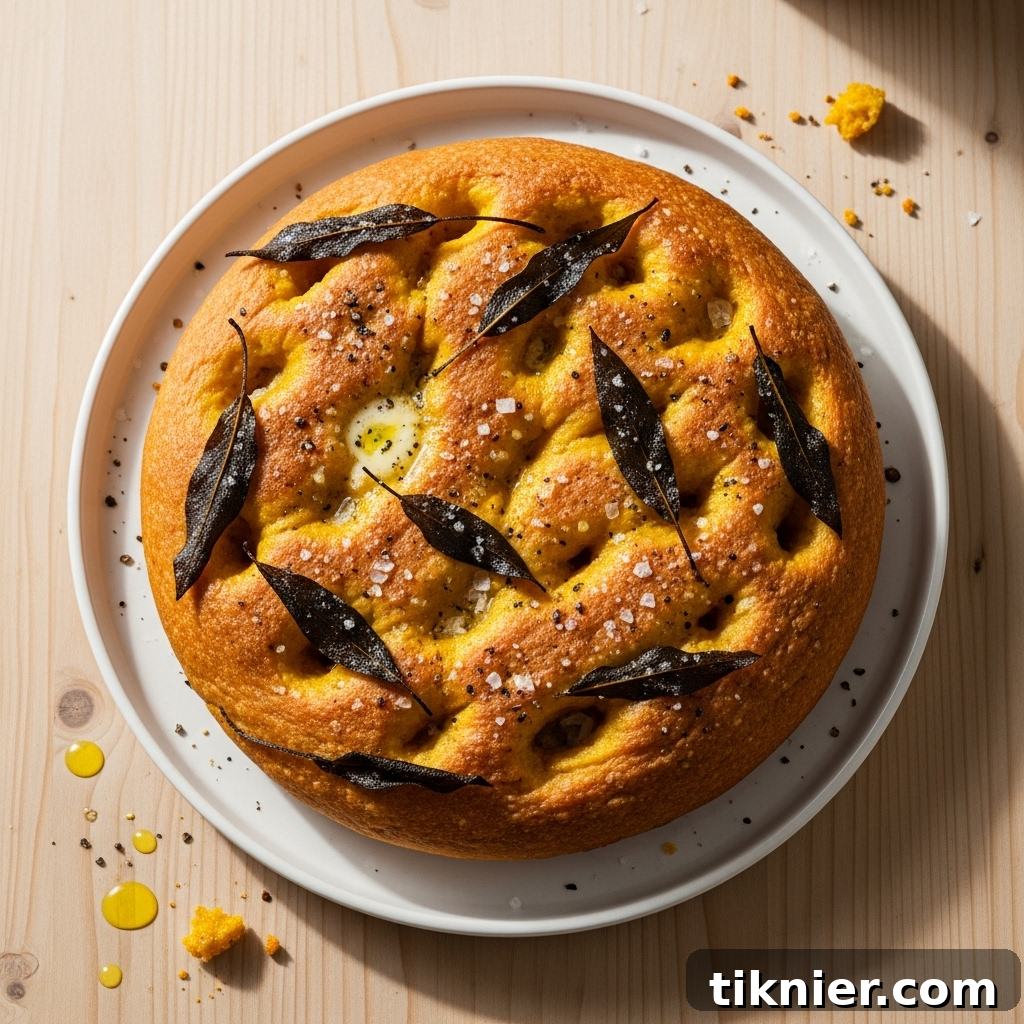
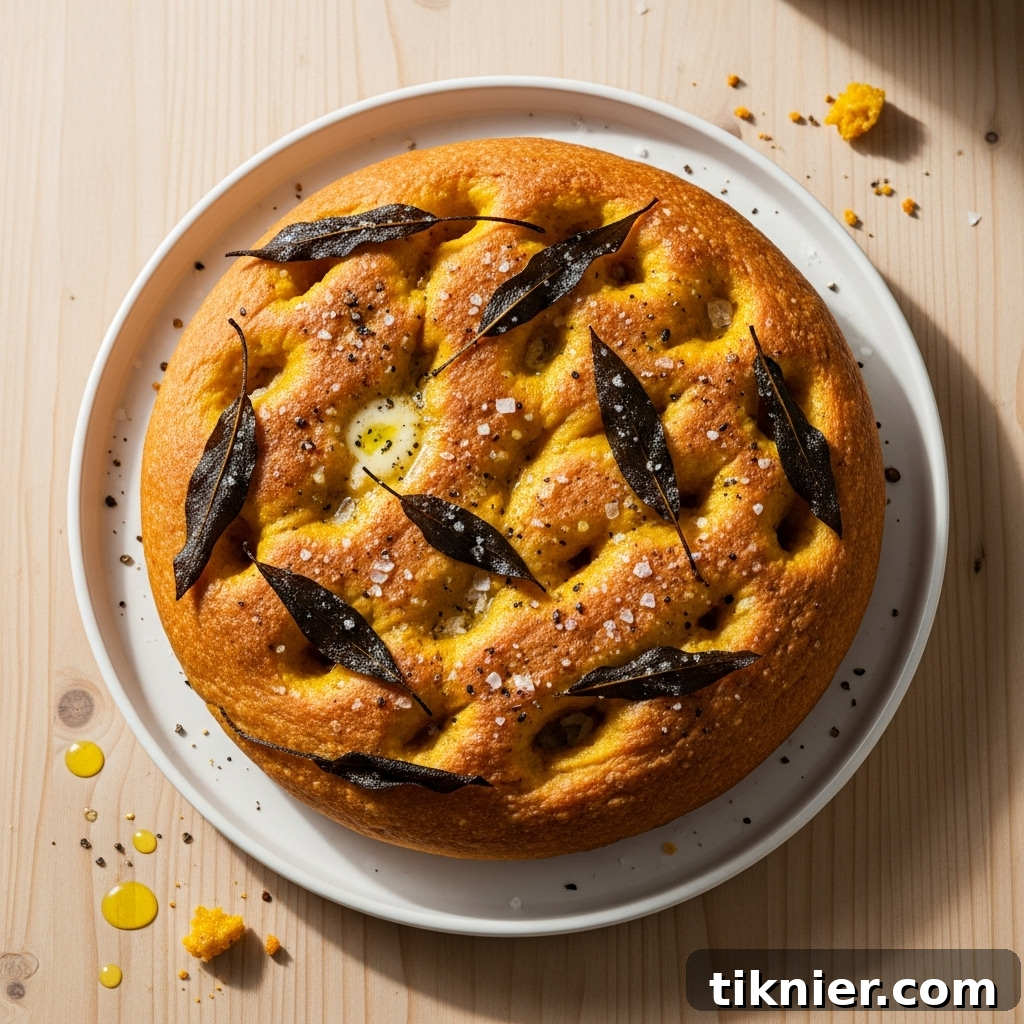
Imagine walking into a gathering, platter in hand, and leaving with nothing but compliments and requests for your secret recipe. That’s precisely the experience you’ll have with this remarkable Pumpkin Focaccia with Brown Butter and Crispy Sage. It’s not just bread; it’s a conversation starter, a warm embrace, and an unforgettable culinary adventure, perfectly tailored for the cozy ambiance of fall.
The genesis of this recipe sprang from a simple pumpkin bread I encountered at a quaint fall festival nestled in the mountains. While undeniably pleasant, a spark of inspiration ignited within me, whispering of its untapped potential. How could this rustic delight ascend to greatness? The answer materialized during my Thanksgiving menu planning, where the aromatic magic of browned butter and crisp sage, a long-held secret to my beloved sausage stuffing, sparked a revelation. This deeply savory, nutty aroma, synonymous with holiday cheer, would be the quintessential complement to the subtle sweetness of a pumpkin-infused focaccia.
Driven by this vision, I embarked on a journey of culinary refinement. The dough underwent meticulous tweaking, evolving into a masterpiece of pillowy softness on the inside, yet retaining that characteristic focaccia chew. The crowning glory became a generous topping: rich, nutty brown butter, fragrant extra-virgin olive oil, and delicate, crispy sage leaves, crumbled just so. The outcome is nothing short of a showstopper. The exterior achieves an unbelievably golden, crisp perfection, while the pumpkin purée ensures an interior that remains tender, moist, and utterly flavorful. This bread transcends the ordinary, offering a sophisticated, savory twist on a classic fall staple, and I am confident it will capture your hearts and taste buds.
Skip to My Special Recipe!
Why This Pumpkin Focaccia with Brown Butter and Sage is a Must-Try
Focaccia, a culinary jewel of Italian heritage, has graced tables for centuries, revered for its humble ingredients and deeply satisfying texture. It serves as a culinary blank canvas, traditionally adorned with little more than a drizzle of exquisite olive oil and a sprinkle of coarse sea salt. Its enduring popularity stems from its unparalleled versatility; it can be dipped, topped, or sliced to form the most delightful sandwiches. It embodies rustic charm, offering profound comfort and a surprising ease for even novice home bakers to master.
My unique rendition elevates this classic appeal by imbuing it with a distinctive autumnal and Southern-inspired character. The strategic addition of pumpkin purée to the dough orchestrates a symphony of enhancements. Firstly, it imparts a visually stunning, warm hue and a delicate hint of earthy sweetness—a flavor profile perfectly attuned to the crisp embrace of cooler months. Beyond aesthetics, the pumpkin purée acts as a powerful humectant, infusing the bread with an extraordinary level of moisture. This ensures the focaccia remains exceptionally tender and fresh, defying the typical staling process and staying delicious for days longer than conventional loaves.
However, the true virtuoso of this recipe, the transformative twist that etches this Pumpkin Focaccia into culinary memory, is undoubtedly the brown butter and sage topping. The act of browning butter, a deceptively simple technique involving melting butter until its milk solids gently toast, unlocks a complex spectrum of nutty, almost caramel-like aromas. When fresh sage leaves are introduced to this fragrant elixir, they crisp up, infusing the butter with a profound herbal depth. The resulting topping is a deeply savory and intensely aromatic marvel. As it’s poured over the dimpled surface, it collects in those little wells, creating exquisite pools of concentrated flavor that perfectly counterbalance the subtle sweetness of the pumpkin-infused dough. This ingenious combination transmutes a simple bread into a gourmet experience, rivaling the offerings of the most esteemed artisanal bakeries.
The harmonious interplay of a pillowy, moist, pumpkin-enriched crumb, a super crisp, golden-brown crust, and that opulent, herby topping is the magic formula that renders this recipe a guaranteed triumph every single time. It’s a bread that doesn’t just nourish, but truly delights.
Essential Ingredients for Your Perfect Pumpkin Focaccia
The enchanting appeal of this bread is born from a carefully curated selection of simple, high-quality ingredients, each playing a vital role in a harmonious culinary ensemble. While the ingredient list may appear straightforward, the discerning choice of each component will profoundly influence the ultimate flavor and texture of your exquisite loaf. Let’s explore the elements you’ll need to craft this gorgeous bread, ensuring every bite is a testament to thoughtful preparation.
- For the Pillowy Dough:
- 1 cup (240ml) warm water (around 105-115°F / 40-46°C): The ideal temperature is crucial for activating the yeast without killing it. Think of it as a warm bath for your yeast.
- 2 ¼ teaspoons (1 packet) instant yeast: Instant yeast is a fantastic choice for its convenience, as it doesn’t require proofing beforehand. It can be mixed directly with the dry ingredients.
- 1 tablespoon maple syrup: Beyond adding a subtle, natural sweetness that complements the pumpkin, maple syrup also acts as food for the yeast, helping it to activate and thrive.
- 4 ⅓ cups (520g) bread flour: This is a non-negotiable for achieving the signature chewy focaccia texture. Bread flour boasts a higher protein content than all-purpose flour, leading to stronger gluten development and a more elastic, resilient crumb.
- 1 cup (245g) pure pumpkin purée, NOT pumpkin pie filling: This distinction is paramount! Pure pumpkin purée provides natural sweetness, moisture, and that beautiful autumnal hue without any added spices or sugars that would disrupt the savory profile of this focaccia.
- 2 teaspoons fine sea salt: Essential for seasoning the dough, enhancing all other flavors, and controlling yeast activity.
- ¼ cup (60ml) extra-virgin olive oil, plus more for the bowl and pan: A good quality olive oil is vital. It contributes to the dough’s tenderness, flavor, and helps create a wonderfully crisp crust when baking.
- For the Irresistible Brown Butter & Crispy Sage Topping:
- 6 tablespoons unsalted butter: Unsalted butter allows you complete control over the saltiness of your dish, and its milk solids are key to achieving that rich, nutty brown butter flavor.
- 12-15 fresh sage leaves: Fresh sage is indispensable here. Its earthy, slightly peppery, and aromatic notes perfectly meld with the brown butter, creating an iconic fall flavor pairing.
- 2 tablespoons extra-virgin olive oil: Added to the brown butter, it helps distribute the rich flavor, prevents the butter from burning, and contributes to the focaccia’s moist, savory top.
- 1 ½ teaspoons flaky sea salt, for finishing: This is not just a garnish; it’s a flavor and texture enhancer. The large crystals provide a delightful crunch and a burst of briny flavor that contrasts beautifully with the richness of the bread.
- ½ teaspoon freshly cracked black pepper: Adds a subtle warmth and aromatic complexity, elevating the savory profile of the topping.
A few crucial details regarding these ingredients will ensure your success. The choice of bread flour is paramount; its elevated protein content is the secret to the focaccia’s distinctive chewiness that all-purpose flour simply cannot replicate. Furthermore, be unequivocally certain you select pure pumpkin purée. Pumpkin pie filling, pre-sweetened and pre-spiced, will irrevocably alter the intended savory flavor profile of our bread, turning it into a dessert rather than the exquisite savory creation it’s meant to be.
The true alchemical transformation, of course, lies within the brown butter and sage topping. This is the heart of the recipe’s unique and sophisticated character. Dedicating those few extra minutes to allow the butter to toast to a nutty, fragrant perfection is the subtle yet profound step that will inevitably lead everyone to inquire about your recipe. And for the final flourish, please do not bypass the flaky sea salt! Those crunchy, crystalline bursts on the surface deliver the ultimate textural contrast and a final, exhilarating pop of flavor, making every bite an unforgettable experience.
Recommended Equipment for Baking Success
Having the right tools can make all the difference in your baking journey. For this Pumpkin Focaccia, a few standard kitchen items will set you up for success:
- Stand Mixer with Dough Hook (Optional, but Recommended): Makes kneading effortless, ensuring a well-developed, elastic dough. If you don’t have one, hand kneading works perfectly fine, just requires a bit more effort.
- Large Mixing Bowls (2): One for activating yeast and mixing the dough, another for the first rise.
- 9×13-inch Baking Pan: A standard metal or ceramic baking dish is ideal for achieving the focaccia’s classic rectangular shape and crispy edges.
- Small Saucepan: Essential for browning the butter and crisping the sage.
- Whisk: For activating yeast and combining ingredients.
- Rubber Spatula or Wooden Spoon: For initial mixing of dough.
- Measuring Cups and Spoons: For accurate ingredient proportions.
- Clean Kitchen Towel or Plastic Wrap: For covering the dough during rises.
- Paper Towels: For draining crispy sage leaves.
Step-by-Step Instructions: Crafting Your Golden Pumpkin Focaccia
Embarking on the journey of homemade bread can often feel daunting, but let me assure you, this focaccia recipe is one of the most forgiving and profoundly rewarding baking experiences you can undertake. Just follow these meticulously detailed steps, and together, we will conjure a gorgeous, golden loaf that will fill your kitchen with an aroma of pure bliss in no time.
Step 1: Awaken the Yeast
Our first crucial step is to gently rouse our yeast from its slumber. In the capacious bowl of your stand mixer (or simply a large, comfortable mixing bowl if kneading by hand), delicately combine the warm water, instant yeast, and maple syrup. The water should feel akin to a warm, inviting bath on your wrist – never hot, which would compromise the yeast, nor cold, which would hinder its activation. Give this mixture a tender whisk to integrate the ingredients, then allow it to rest undisturbed for approximately 5 to 10 minutes. During this period, you’re eagerly anticipating a transformation: the surface should become visibly foamy and dotted with tiny bubbles. This effervescent display is your clear indication that the yeast is alive, vibrant, and poised to perform its magic, imparting lift and flavor to your dough.
Step 2: Master the Mix and Knead
Once your yeast mixture is bubbling with life, it’s time to introduce the heart of our bread. Add the precise measure of bread flour, the luxurious pumpkin purée, the fine sea salt, and the initial ¼ cup of extra-virgin olive oil directly into the bowl. If you are blessed with a stand mixer, attach the dough hook and begin mixing on a low speed. Observe as the ingredients gradually coalesce into what might appear to be a somewhat shaggy, unrefined dough. Continue mixing, then gracefully increase the speed to medium, allowing the dough hook to meticulously knead the dough for a duration of 5 to 7 minutes. The dough reaches its perfect state when it transforms into a smooth, supple, and noticeably elastic mass, cleanly pulling away from the sides of the bowl. Should you opt for the gratifying art of hand kneading, begin by mixing all the ingredients with a sturdy wooden spoon until roughly combined. Then, transfer the dough onto a lightly floured countertop and engage in 8 to 10 minutes of dedicated kneading, working it until it achieves that same desirable smoothness and elasticity.
Step 3: Embrace the First Rise
Prepare a clean, generously sized bowl by lightly coating its interior with a delicate film of olive oil. Gently gather your beautifully kneaded dough into a cohesive ball and nestle it into the oiled bowl. Turn the dough over once, ensuring its surface is kissed with oil; this simple action is a proactive measure against the formation of an undesirable dry skin. Envelop the bowl with a clean kitchen towel, creating a cozy sanctuary, and position it in a warm, tranquil, and draft-free corner of your kitchen. My personal preference is to utilize my oven, with only its interior light switched on, creating an ideal, gently heated environment. Allow the dough the luxury of time to rise for 60 to 90 minutes, or until it has majestically doubled in size, becoming light and airy.
Step 4: Pan Preparation and the Second Ascent
With your dough beautifully risen, ready your 9×13-inch baking pan. Pour a generous two to three tablespoons of extra-virgin olive oil into its base. Using your fingertips, meticulously spread this golden liquid across the entire bottom and up the sides of the pan, ensuring a non-stick surface and contributing to that coveted crispy crust. With utmost gentleness, deflate the risen dough, releasing its accumulated gases, and carefully transfer it into the prepared pan. Begin to gently press and stretch the dough, coaxing it towards each corner. It is perfectly normal if the dough exhibits a slight resistance and springs back; this indicates healthy gluten development. Should this occur, simply cover the pan and grant the dough a peaceful 15-minute repose. This brief rest allows the gluten to relax, making the dough significantly more cooperative for stretching. Once it is beautifully stretched to fill the pan, cover it once more and allow it a second, vital rise for an additional 30 to 45 minutes, until it appears delightfully puffy and airy.
Step 5: Forge the Topping and Dimple the Dough
As your dough embarks on its final, glorious ascent, take this opportune moment to preheat your oven to a robust 425°F (218°C) and craft that absolutely divine topping. In a small saucepan, melt the unsalted butter over medium heat. Introduce the whole, fresh sage leaves and allow them to sizzle gently, swirling the pan periodically. Observe closely as the butter undergoes a magical transformation: it will begin to smell wonderfully nutty and develop delicate brown specks at the bottom – these are the toasted milk solids responsible for its depth of flavor. Simultaneously, the sage leaves will darken and become exquisitely crispy. Without delay, retrieve the now crispy sage leaves and transfer them to a paper towel-lined plate to drain, preserving their delicate crunch. Immediately whisk the additional extra-virgin olive oil into the fragrant browned butter. Now for the truly engaging part: generously coat your fingertips in olive oil (this is crucial to prevent sticking) and press them firmly, yet gently, all over the puffy dough. Create deep, inviting dimples that reach tantalizingly close to the bottom of the pan. These depressions are not merely aesthetic; they are reservoirs for the luxurious topping.
Step 6: Crown and Bake to Golden Perfection
With your dough beautifully dimpled, artfully pour the warm brown butter and olive oil mixture over its entire surface, ensuring it seeps generously into every one of those inviting little pockets. Carefully transfer the pan to your preheated oven and bake for 20 to 25 minutes. Your goal is a magnificent, deep golden-brown hue across the top, indicating a perfectly caramelized crust. The moment it emerges from the oven, radiating warmth and incredible aroma, generously sprinkle it with the flaky sea salt and a fresh crack of black pepper. Finally, crumble those precious crispy sage leaves you carefully saved and scatter them over the glistening surface. The aroma that now permeates your kitchen will be utterly heavenly, a testament to your culinary artistry. Allow the focaccia to cool for just a few minutes – enough to set, but not too long – before artfully slicing and serving it warm, allowing its tender interior and crisp exterior to be fully appreciated.
Creative Ways to Serve Your Pumpkin Focaccia
This magnificent bread, bursting with such nuanced flavor, is undeniably delicious enough to be savored purely on its own, perhaps torn straight from the pan while still warm. However, its savory, subtly sweet profile bestows upon it an incredible versatility, making it a spectacular addition to a grander meal or a sophisticated offering for guests. There are countless delightful ways to present this extraordinary Pumpkin Focaccia, ensuring it always shines.
One of my absolute favorite presentations is to feature it as the radiant centerpiece of a lavish fall appetizer board. Begin by slicing the warm focaccia into thick, inviting strips or elegant squares and artfully arrange them on a spacious platter. Surround this golden masterpiece with an array of complementary bowls: perhaps creamy, whipped ricotta, a luscious sweet and savory fig jam, and certainly a small dish of premium quality olive oil for an extra touch of dipping indulgence. To elevate the experience further, incorporate an assortment of cured meats, such as delicate prosciutto, a selection of fine cheeses like sharp cheddar or a creamy brie, and a scattering of beautifully toasted nuts. This transforms the focaccia into an interactive and undeniably impressive starter, setting a sophisticated tone for any gathering.
Beyond appetizers, this bread serves as the quintessential companion to any hearty autumn soup or stew, transforming a simple meal into an elevated experience. Here are a few more inspiring ideas to get your culinary creativity flowing:
- As a Soup Sidekick: Imagine a thick, warm slice artfully placed alongside a steaming bowl of creamy tomato soup, a velvety butternut squash soup, or a robust beef stew. Its tender crumb and crisp crust are perfect for soaking up every last, flavorful drop.
- For Elevated Sandwiches: Split a perfectly portioned square of focaccia horizontally to create an extraordinary base for gourmet sandwiches. Envision a Thanksgiving leftover creation with thinly sliced turkey, a smear of cranberry sauce, and creamy brie, or a vegetarian delight featuring roasted seasonal vegetables with tangy goat cheese and a drizzle of balsamic glaze.
- A Crisp Salad Contrast: The warm, yielding texture of pumpkin focaccia provides a delightful contrast to the crisp, cool freshness of a seasonal salad. It transforms a light green salad into a much more substantial and deeply satisfying lunch or a delightful side for a light dinner.
- The Perfect Thanksgiving Starter: Prior to the grand feast, cut the focaccia into small, manageable squares and present them elegantly in a rustic bread basket. It sets an exquisitely festive tone for the holiday meal without being overly filling, allowing guests to anticipate the main courses.
Regardless of your chosen serving method, I wholeheartedly advocate presenting this focaccia warm. A mere few minutes in a moderate oven is all it takes to revive the crust’s crispness and reawaken that irresistible brown butter and sage aroma. This small, effortless step makes a profound difference, guaranteeing that each and every bite is as exquisitely delicious as the very first.
Storing & Reimagining Your Pumpkin Focaccia Leftovers
Should you miraculously find yourself with any vestiges of this delectable Pumpkin Focaccia—a rare occurrence in my household, I confess—rest assured that it stores and reheats with remarkable grace. Thanks to the inherent moisture from the pumpkin purée and the richness of the olive oil in the dough, it retains its tender, moist quality exceptionally well, alleviating any immediate concerns about it drying out. Proper storage is the key to extending its delicious life for several days, allowing you to savor every last crumb.
For immediate enjoyment and short-term storage, it is paramount to allow the focaccia to cool completely to room temperature. This crucial step prevents any unwanted condensation from forming, which would inevitably lead to a soggy crust. Once thoroughly cooled, gently encase the loaf tightly in plastic wrap or nestle it within an airtight container. Stored this way, it will maintain its exquisite quality on your kitchen counter for up to three glorious days. I purposefully avoid refrigerating bread, as the cool, dry air within a refrigerator can paradoxically accelerate the staling process, robbing your focaccia of its tender charm.
If your aim is to preserve this culinary treasure for an extended period, you’ll be delighted to know that this bread freezes like an absolute dream. You have the option to freeze the entire loaf, or, as is my preferred and most practical method, slice it into individual, ready-to-enjoy portions first. Each slice should be meticulously wrapped in plastic wrap, then all wrapped portions should be placed into a robust, freezer-safe zip-top bag. In the freezer, it will happily retain its quality for an impressive span of up to two months. This strategic approach allows you the unparalleled luxury of retrieving a single, perfect slice whenever a sudden craving for its unique flavor strikes. To reheat from frozen, simply place a slice directly into a 350°F (175°C) oven for 10-15 minutes, or until it is warmed through to the center and its crust has recaptured that delightful crispness.
Beyond mere reheating, any leftover focaccia can be triumphantly transformed into a medley of new and exciting culinary creations, ensuring that not a single delicious morsel goes to waste:
- Gourmet Croutons: Repurpose leftover focaccia by cutting it into charming one-inch cubes. Toss these cubes with a delicate drizzle of olive oil and bake them at 375°F (190°C) until they achieve a resplendent golden hue and an irresistible crunch. These are phenomenal atop vibrant salads or enriching hearty soups.
- Savory Bread Pudding: Elevate the humble bread pudding by utilizing these flavorful cubes as the foundation for a savory iteration. Combine them with a rich custard of eggs and cream, a generous hand of cheese, and perhaps some browned sausage or sautéed mushrooms for an utterly fantastic and sophisticated brunch dish.
- Autumnal Panzanella Salad: Toasted cubes of this distinctive pumpkin focaccia would be an absolutely phenomenal and inspired addition to a fall-themed Panzanella salad. Imagine it alongside roasted butternut squash, tender kale, and a vibrant maple vinaigrette, creating a symphony of seasonal flavors and textures.
Armed with these ingenious tips, not a single delectable crumb of your hard-earned creation will be wasted. You can prolong the joy of that fresh-baked taste, savoring your culinary masterpiece long after it has emerged from the oven.
Substitutions & Exciting Variations for Your Pumpkin Focaccia
One of the most liberating aspects of a recipe like this is its inherent adaptability, allowing you to effortlessly tailor it to your unique preferences or to the ingredients you readily have at hand in your pantry. This Pumpkin Focaccia serves as a truly magnificent canvas, inviting boundless culinary creativity. While I firmly believe the brown butter and sage combination achieves absolute perfection, there exists a vast spectrum of possibilities to infuse it with your personal signature.
Should you find yourself without a specific ingredient, or if you’re navigating a dietary restriction, there’s no need for concern. For instance, if bread flour is unavailable, all-purpose flour can serve as a suitable substitute. Bear in mind that the resulting crumb will exhibit a slightly softer, perhaps more cake-like texture, deviating from the characteristic chewiness of focaccia, but it will remain undeniably delicious. When making this substitution, be attentive to the dough’s consistency, as you may need to subtly adjust the flour amount during kneading to achieve the correct tackiness. Similarly, honey can be effectively employed in place of maple syrup to activate the yeast, offering a slightly different, yet equally appealing, background note.
Ready to unleash your inner culinary artist? Here are some of my most cherished variations to explore. Feel empowered to mix and match elements to forge your own distinct version of this beloved bread:
- Aromatic Herb Swaps: If the robust character of sage isn’t your preference, fresh rosemary or thyme would offer equally fantastic aromatic profiles. Consider finely chopping these fresh herbs and adding them directly to the topping, or for a more integrated flavor, knead a small quantity into the dough itself during the mixing stage.
- Indulgent Cheese Infusion: For a focaccia that boasts an even richer, more profoundly savory depth, experiment with sprinkling approximately a half cup of freshly grated Parmesan cheese or crumbled goat cheese over the dimpled dough just before it enters the oven. The cheese will melt and crisp beautifully, adding a layer of umami.
- Crunchy Nut or Seed Additions: Introduce a delightful textural contrast and an earthy richness by gently pressing some toasted pecans, walnuts, or vibrant green pepitas (pumpkin seeds) into the dimples of the dough alongside the brown butter mixture. These additions will toast further in the oven, intensifying their flavor.
- A Sweet & Spicy Zing: Elevate the flavor profile with a subtle kick. Add a pinch of red pepper flakes to the brown butter as it simmers for a gentle heat, or for a more pronounced sweet and spicy finish, drizzle the baked focaccia with a touch of hot honey just before serving.
- Alternative Squash Purées: If you happen to have roasted butternut squash purée or sweet potato purée on hand, either can be seamlessly substituted for the pumpkin purée in equal measurements. Each will lend a slightly distinct, yet equally delicious and autumnal, flavor profile to your focaccia.
- Garlic Lover’s Dream: For those who adore garlic, infuse the olive oil with a few thinly sliced garlic cloves before adding it to the brown butter. Alternatively, sprinkle a teaspoon of garlic powder into the dough for a more even distribution of flavor.
- Sun-Dried Tomato & Olive Medley: For a more traditional Mediterranean twist, scatter finely chopped sun-dried tomatoes and pitted Kalamata olives over the dimpled dough before adding the brown butter. These additions bring bursts of savory, briny flavor.
The very essence of this recipe lies in its incredibly moist, tender pumpkin-infused dough and its sumptuously rich, aromatic topping. As long as you safeguard these core elements, feel entirely at liberty to experiment with the specific flavorings. Remember, cooking should be a joyous and exploratory endeavor, so embrace this recipe as a launchpad for your own unique culinary creations!
Pumpkin Focaccia with Brown Butter and Crispy Sage
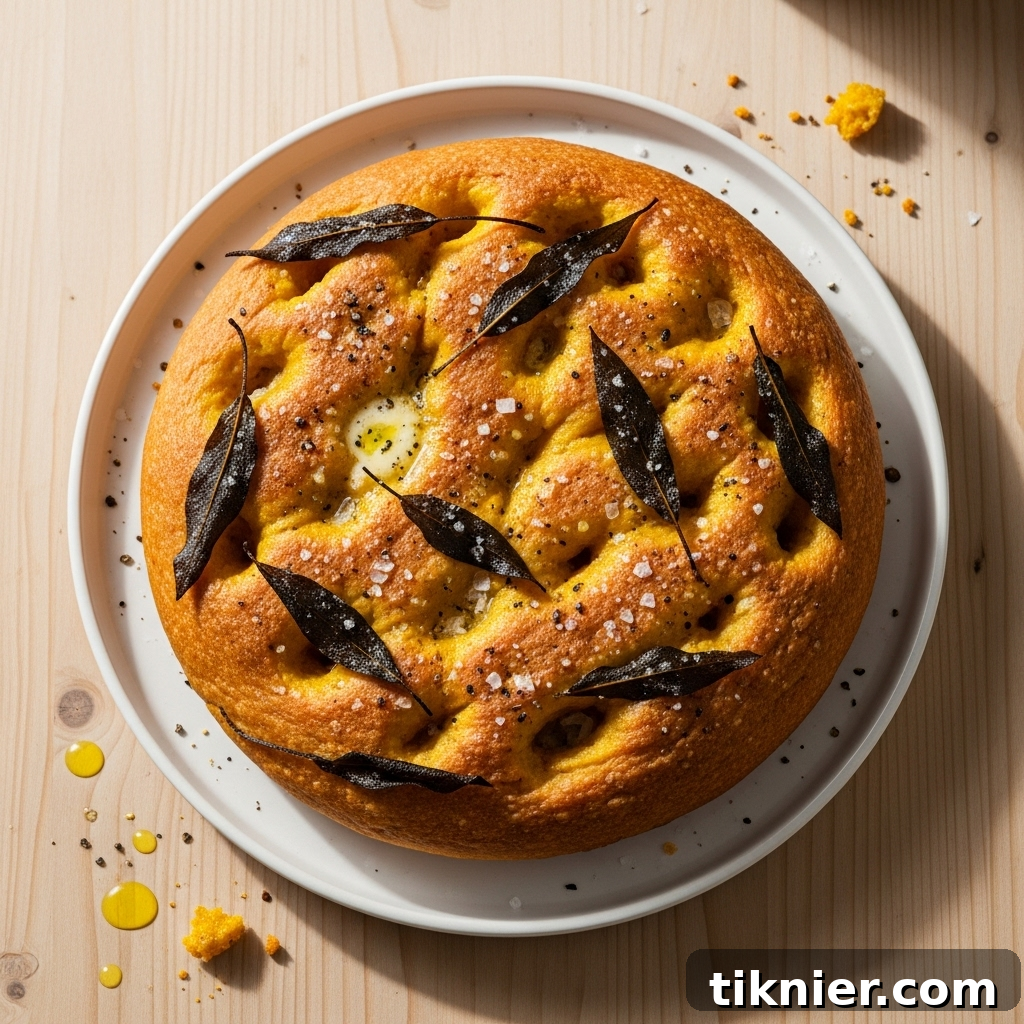
Description: Indulge in a truly remarkable focaccia experience featuring a pillowy, chewy crumb infused with the subtle sweetness of real pumpkin. Crowned with nutty brown butter, aromatic crispy sage, and a delicate sprinkle of flaky sea salt, this savory bread is an elegant and unforgettable addition to any fall gathering or a cozy weeknight meal.
Yield: 12 generous servings | Category: Artisanal Bread | Cuisine: Italian-American, Seasonal
Prep Time: Approximately 2 hours (includes rising time) | Cook Time: 20-25 minutes
Ingredients
- For the Pumpkin-Infused Dough:
- 1 cup (240ml) warm water (105-115°F / 40-46°C)
- 2 ¼ teaspoons (1 packet) instant yeast
- 1 tablespoon maple syrup
- 4 ⅓ cups (520g) bread flour
- 1 cup (245g) pure pumpkin purée (not pie filling)
- 2 teaspoons fine sea salt
- ¼ cup (60ml) extra-virgin olive oil, plus extra for oiling bowls and pan
- For the Brown Butter & Sage Topping:
- 6 tablespoons unsalted butter
- 12-15 fresh sage leaves
- 2 tablespoons extra-virgin olive oil
- 1 ½ teaspoons flaky sea salt, for finishing
- ½ teaspoon freshly cracked black pepper
Instructions
- Activate Yeast: In a large mixing bowl, combine warm water, instant yeast, and maple syrup. Whisk gently and let sit for 5-10 minutes until foamy and bubbly.
- Mix and Knead Dough: Add bread flour, pumpkin purée, fine sea salt, and ¼ cup olive oil to the yeast mixture. Mix with a dough hook (stand mixer) on low, then medium speed for 5-7 minutes, or hand knead for 8-10 minutes until smooth and elastic.
- First Rise: Lightly oil a clean bowl. Form dough into a ball, place in the bowl, turning once to coat. Cover with a clean kitchen towel and let rise in a warm, draft-free spot for 60-90 minutes, or until doubled in size.
- Prepare Pan & Second Rise: Pour 2-3 tablespoons of olive oil into a 9×13-inch baking pan, spreading it evenly. Gently deflate dough, transfer to pan, and gently press/stretch towards corners. If it springs back, cover and rest for 15 minutes, then continue stretching. Cover and let rise again for 30-45 minutes until puffy.
- Prepare Topping & Dimple: Preheat oven to 425°F (218°C). In a small saucepan, melt butter over medium heat. Add sage leaves and cook, swirling, until butter is nutty-brown and sage is crispy. Remove crispy sage to paper towel. Whisk 2 tablespoons olive oil into browned butter. Dip oiled fingers into dough, pressing deeply to create numerous dimples.
- Top and Bake: Pour the brown butter-olive oil mixture evenly over the dimpled dough, ensuring it settles into the pockets. Bake for 20-25 minutes, or until the top is deeply golden brown.
- Finish & Serve: Immediately upon removing from the oven, sprinkle generously with flaky sea salt and freshly cracked black pepper. Crumble the reserved crispy sage leaves over the top. Allow to cool for a few minutes before slicing and serving warm.
Notes
Crucially, ensure you use 100% pure pumpkin purée, not pumpkin pie filling, to maintain the savory balance of this bread. The quality of your extra-virgin olive oil significantly influences the final flavor and crust texture. For best results, avoid over-kneading or rushing the rising times.
Servings: 12 | Calories: 295 kcal | Fat: 12g | Carbohydrates: 40g | Protein: 7g
5 Frequently Asked Questions About Pumpkin Focaccia
Here, I’ve compiled straightforward and comprehensive answers to the most common inquiries I receive regarding this delightful Pumpkin Focaccia recipe. These insights will help you master the nuances and troubleshoot any potential challenges, ensuring your baking experience is both smooth and successful.
1. Can I prepare this pumpkin focaccia dough ahead of time?
Absolutely, and this is truly one of the most advantageous qualities of this focaccia dough, offering fantastic flexibility for your schedule! You have several excellent options for advance preparation. The most highly recommended method involves a technique known as cold fermentation in the refrigerator. After you’ve meticulously mixed and kneaded the dough to perfection (following Step 2 in the instructions), transfer it to a lightly oiled bowl, secure it tightly with plastic wrap to prevent a skin from forming, and place it directly into your refrigerator. The dough can rest peacefully in this cold environment for an impressive duration of up to three days.
The chilled conditions significantly slow down the yeast’s activity, allowing the dough to undergo an exceptionally slow, extended rise. This prolonged fermentation is not merely for convenience; it actively contributes to the development of a far more complex, nuanced, and profound flavor profile in the finished bread. When you are ready to embark on the baking phase, simply retrieve the bowl from the refrigerator, allow it to sit on your kitchen counter for approximately one to two hours to gently return to room temperature, and then proceed seamlessly with shaping it in the pan (Step 4) and undertaking the crucial second rise. This technique is an absolute game-changer for holiday baking or when hosting, enabling you to complete a significant portion of the preparatory work well in advance, reducing stress on the day of your event.
2. Why didn’t my pumpkin focaccia dough rise as expected?
A dough that stubbornly refuses to rise can be incredibly disheartening for any baker, but almost invariably, this issue can be traced back to one of a few common culprits. The leading suspect is typically the yeast itself. Your yeast might unfortunately be old, inactive, or past its expiration date. Always, without fail, double-check the “best by” date printed on the packet or jar. Another frequent possibility is that the temperature of the water you used to activate the yeast was inappropriate – either excessively hot, which effectively kills the delicate yeast organisms, or too cold, which fails to awaken them from their dormant state. The water should feel comfortably warm to the touch, resembling the ideal temperature for a baby’s bath, ideally hovering around 110°F (43°C).
The ambient environment is also a major contributing factor. Yeast, as a living organism, thrives and performs its best work in a warm, cozy, and undisturbed location. If your kitchen space is particularly cold or prone to drafts, the rising process will be significantly protracted, if it occurs adequately at all. My most trusted and effective trick is to place the covered dough bowl inside my oven (ensuring the oven is completely turned off!) with only the oven light illuminated. The warmth generated by the light creates a perfectly controlled, slightly elevated temperature environment, ideal for encouraging the dough to flourish and double in size as intended.
3. Can I substitute all-purpose flour for bread flour in this pumpkin focaccia recipe?
Yes, absolutely, you can certainly use all-purpose flour in a pinch, and your pumpkin focaccia will still turn out beautifully delicious and enjoyable. However, it’s important to understand the primary difference you’ll observe will be in the bread’s texture. Bread flour is specifically milled to have a higher protein content compared to all-purpose flour. This increased protein is crucial because it develops more robust gluten strands when the dough is kneaded. This stronger gluten network is what gives traditional focaccia its characteristic chewier, more elastic, and satisfyingly structured crumb.
When you opt for all-purpose flour, the resulting crumb will generally be softer, lighter, and more tender – a texture often likened to a very rich dinner roll or a tender cake. While it’s not an inherently negative outcome, it simply deviates from the classic focaccia chewiness. You might also find that you need to make slight adjustments to the amount of flour added, either a little less or a little more, to achieve the desired dough consistency. This is because different flours absorb moisture at varying rates. The key is to add flour incrementally, a tablespoon at a time, until your dough is smooth and tacky to the touch, but not excessively sticky, allowing for easy handling.
4. What’s the critical difference between pumpkin purée and pumpkin pie filling for this recipe?
This is an incredibly important distinction, and mistakenly using the wrong product can dramatically alter and even ruin the intended flavor and balance of your savory Pumpkin Focaccia. You must, without exception, use 100% pure pumpkin purée. When examining the can, the ingredient list should unequivocally state only “pumpkin.” This product is nothing more than pure, cooked, and mashed pumpkin, devoid of any added sweeteners, spices, or other thickeners. It provides the essential natural moisture, contributes a beautiful, earthy color, and imparts the subtle, authentic pumpkin flavor we desire for our savory bread.
Pumpkin pie filling, conversely, is a pre-mixed, convenience product specifically formulated for making desserts. It comes pre-sweetened with sugars and is already infused with a blend of warming spices such as cinnamon, nutmeg, cloves, and sometimes ginger, along with other thickeners. If you were to use pumpkin pie filling in this savory recipe, your focaccia would be overwhelmingly sweet and taste distinctly like a dessert. This dessert-like flavor profile would clash severely and unpleasantly with the savory notes of the brown butter and sage topping, creating a confusing and undesirable culinary experience. Always take a moment to double-check the label on the can before making your purchase to ensure you select the correct ingredient.
5. How do I achieve those signature deep dimples in my pumpkin focaccia?
Creating those beautifully pronounced, deep dimples in your focaccia is not only a wonderfully tactile and enjoyable part of the baking process, but it is also absolutely fundamental to both the texture and the ultimate flavor of the finished bread. These charming little wells serve a crucial purpose: they act as perfect reservoirs, holding delightful pools of the rich brown butter and fragrant olive oil, thereby ensuring that every single bite of focaccia is incredibly moist, tender, and bursting with flavor. The key to success lies in handling the dough gently during its second rise, yet being confidently firm when you form the dimples. Ensure your dough has achieved a lovely, puffy lightness in the pan before you begin.
Before you even begin the dimpling process, a non-negotiable step is to generously coat your fingertips in olive oil. This is vital because it prevents your fingers from adhering to the delicate dough, which could otherwise cause tearing and deflate the precious air pockets. Then, with oiled fingers, press straight down into the dough. Don’t be timid! Apply enough pressure so that you can distinctly feel the bottom of the pan beneath your fingertips. Your objective is to create deep, discernible indentations all over the entire surface of the dough. These well-formed dimples are essential for trapping the luxurious topping and also play a significant role in preventing the formation of large, uneven air bubbles during baking, thus contributing to that classic, desired focaccia appearance and consistency.
Explore More Delicious Recipes Next!
If the joy and satisfaction you experienced crafting this Pumpkin Focaccia mirrored the immense pleasure my family derives from devouring it, I have no doubt you’ll be eager to embark on your next culinary adventure. There’s a profound sense of accomplishment in creating something truly delicious from scratch, a feeling amplified when you share it with the cherished people in your life.
Whether you’re meticulously planning an elaborate holiday feast, or simply seeking inspiring new additions to your everyday meal rotation, I’ve curated a wealth of recipes that I believe you will genuinely enjoy. The following collections represent some of the most popular and highly acclaimed dishes on the blog, each thoroughly tested and perfected, poised to become beloved staples in your home kitchen, just as they have become in mine. I invite you to browse through them, and I sincerely hope you discover fresh inspiration to ignite your culinary passion!
- Thanksgiving Dinner Ideas: This delightful focaccia is, without question, a perfect and unique addition to any Thanksgiving table. If your quest is for more showstopping recipes for the big day – from the succulent turkey centerpiece to delectable sides and irresistible desserts – this comprehensive guide is your ideal starting point for planning an unforgettable holiday menu.
- 110 Easy Dinner Ideas That Taste Great: We all navigate those notoriously busy weeknights when conjuring a delicious, home-cooked meal feels like a formidable challenge. This extensive collection is my personal tried-and-true resource for simple, yet profoundly satisfying dinners that liberate you from spending hours toiling in the kitchen, making healthy eating effortless.
- Easy Breakfast Ideas & Recipes: Begin your day on the absolute right note with a fantastic meal! This curated list is brimming with an array of options, ranging from incredibly quick and nourishing weekday solutions to more leisurely and indulgent weekend brunch recipes, perfectly suited for savoring a slow, relaxed Saturday morning.
Happy cooking, y’all! I eagerly anticipate seeing what magnificent creations you embark on next.