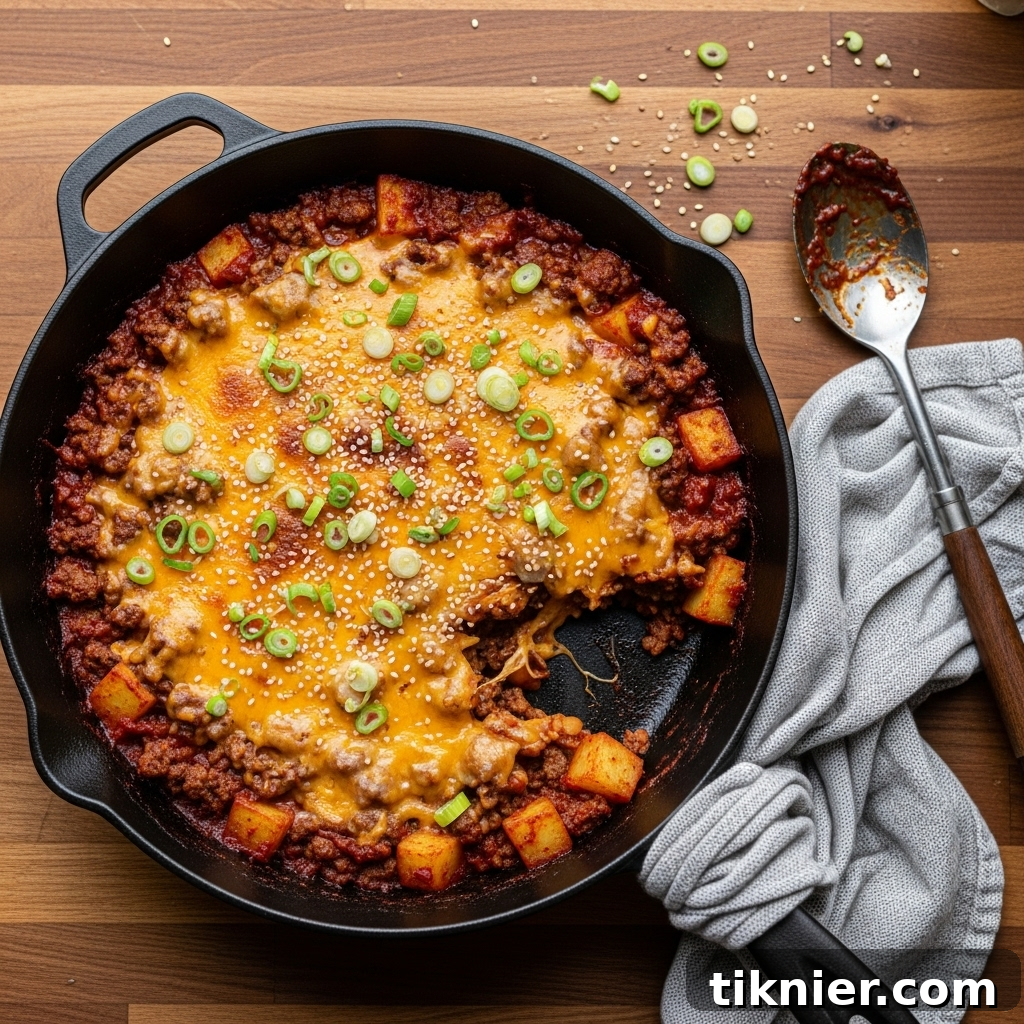
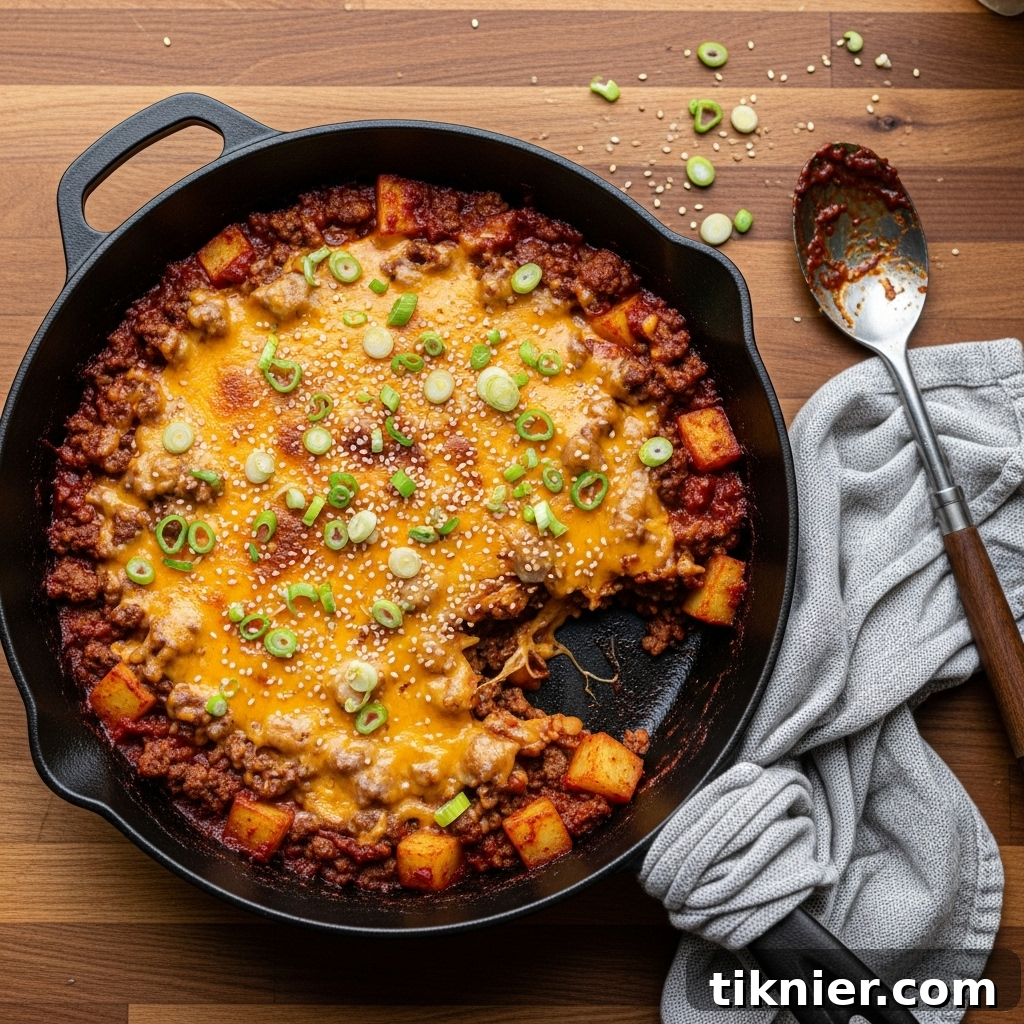
Some of the most cherished and delicious recipes often emerge from moments of what I affectionately call “pantry panic.” It’s that familiar, frantic realization that dinner plans have completely evaporated, and a chorus of hungry stares from your family quickly follows. This exact scenario paved the way for the creation of my uniquely flavorful take on the classic comfort dish: Spicy Gochujang Ground Beef and Potatoes.
I grew up on a humble rendition of ground beef and potatoes. It was a staple in our home – reliably simple, wonderfully hearty, and incredibly comforting. Typically seasoned with nothing more than salt, pepper, and a dash of garlic powder, it was always satisfying. However, after years of preparing it the same traditional way, I found myself craving a culinary adventure, a transformation for our beloved skillet dinner. Even my incredibly supportive husband, who genuinely enjoys anything I cook, seemed to yearn for something with a bit more zest and excitement.
One particularly uninspired Tuesday evening, as I surveyed the contents of my pantry, my gaze settled upon an unassuming tub of gochujang – the vibrant Korean chili paste I had purchased for a different recipe. A culinary lightbulb instantly illuminated! What if I harnessed the complex savory, subtly sweet, and wonderfully spicy notes of gochujang to reinvigorate our familiar weeknight meal? I swiftly gathered fresh ginger, a splash of soy sauce, and a hint of brown sugar. The rest, as they say, is delicious history.
The resulting dish was nothing short of a revelation. The gochujang, combined with its supporting cast of aromatics and seasonings, created a rich, glossy, and deeply flavorful sauce that clung perfectly to every tender piece of beef and potato. This simple addition completely transformed a mundane meal into something truly extraordinary. Crowned with a generous, melted blanket of sharp cheddar cheese, it achieved a sublime balance – a perfect marriage of cozy Southern comfort and the bold, exciting flavors of Korea. This vibrant skillet meal has quickly become one of our most requested dinners, a testament to its irresistible appeal.
Jump to the Full Recipe Card!
Why This Ground Beef and Potatoes Skillet is a Weeknight Winner
At its very core, a skillet featuring ground beef and potatoes embodies the essence of comfort food. It’s a dish that resonates with familiarity and reliability, built upon affordable pantry staples capable of feeding a hungry family without straining the budget. This is the kind of meal that has graced dinner tables for generations across countless cultures, a true testament to its universal appeal, simplicity, and consistent deliciousness. Indeed, almost every culinary tradition boasts its own version of a hearty meat and potato hash or stew, recognizing the fundamental satisfaction these ingredients provide.
However, what truly elevates this particular ground beef and potatoes recipe and makes it a standout from traditional versions is the inspired integration of one extraordinary ingredient: gochujang. This unique Korean fermented chili paste isn’t just a heat source; it’s a secret weapon that profoundly transforms and enhances the entire dish. Gochujang introduces an incredible depth of savory, umami-rich flavor, a nuanced sweetness derived from its fermented rice component, and a satisfying, lingering warmth that gently builds with each mouthful. It’s a complex flavor profile that simply can’t be replicated by mere chili powder.
This remarkable paste works wonders in our skillet because it forms a visually stunning, glossy sauce that expertly coats every tender potato cube and every savory morsel of ground beef. Complementing the gochujang, a dash of soy sauce introduces essential saltiness and further umami depth, while freshly grated ginger and minced garlic infuse the dish with a bright, aromatic fragrance. A spoonful of brown sugar steps in to perfectly balance the inherent spice and savory notes, creating a harmonious flavor symphony. And just when you might think the dish couldn’t possibly get any better, we introduce a generous blanket of sharp cheddar cheese. As the creamy, piquant cheese melts beautifully over the top, it subtly tames the spice, adds a luxurious texture, and introduces a rich, tangy counterpoint that results in an irresistible fusion of flavors. It’s the perfect, comforting marriage of bold Eastern influences and beloved Western comfort cuisine.
Essential Ingredients for Your Gochujang Ground Beef and Potatoes
One of the aspects I adore most about this recipe is its ability to conjure such an incredibly show-stopping flavor profile from a relatively small collection of simple, readily available ingredients. The true magic lies not in complexity, but in the ingenious combination, especially our star component that infuses this dish with its signature, unforgettable kick.
- 1 tablespoon sesame oil: Not just for cooking, but for its distinctive nutty aroma that builds the first layer of flavor.
- 1 pound lean ground beef: I prefer 85/15 or 90/10 for rich flavor without excessive grease.
- 1 medium yellow onion, chopped: Provides a foundational sweetness and aromatic depth once caramelized.
- 2 cloves garlic, minced: An indispensable aromatic, essential for savory depth.
- 1 tablespoon fresh ginger, grated: Adds a bright, zesty, and warming spice that pairs beautifully with gochujang.
- 1 ½ pounds Yukon Gold potatoes, cut into ½-inch cubes: These are the ideal choice for their buttery flavor and ability to hold their shape.
- 1 cup beef broth: Creates the liquid base for our flavorful sauce, adding richness.
- 2 tablespoons gochujang (Korean chili paste): The absolute heart and soul of this recipe, providing complex heat, sweetness, and umami.
- 2 tablespoons soy sauce: Enhances the savory notes and provides crucial saltiness.
- 1 tablespoon brown sugar: A vital component for balancing the spice of the gochujang and adding a touch of molasses-like sweetness.
- 1 cup shredded sharp cheddar cheese: Melts into a creamy, tangy blanket that complements the spicy sauce perfectly.
- 2 green onions, thinly sliced: For a fresh, mild oniony bite and a beautiful pop of color as a garnish.
- Toasted sesame seeds for garnish: Adds a lovely crunch and further enhances the Asian-inspired flavor profile.
The linchpin of this entire dish is, without a doubt, the gochujang. This versatile Korean chili paste has become increasingly accessible and can typically be found in the international or Asian foods aisle of most major grocery stores today. It’s important to note that different brands of gochujang can vary slightly in their heat levels, so if you’re particularly sensitive to spice, feel empowered to start with a slightly lesser amount (say, 1.5 tablespoons) and adjust to your preference. Its unparalleled complex flavor, combining heat, umami, and a subtle sweetness, is what truly defines and elevates this ground beef and potatoes recipe.
When it comes to selecting your potatoes, I unequivocally advocate for Yukon Golds. Their naturally buttery flavor and their uniquely waxy texture are paramount for this skillet dish, allowing them to absorb the rich sauce while maintaining their structural integrity. They become wonderfully tender without ever dissolving into a starchy mush. For the ground beef, I consistently lean towards a leaner blend, such as 85/15 or 90/10. This ensures you capture all the robust beefy flavor without contending with an excessive amount of grease, making for a cleaner, more enjoyable dish.
And now, a crucial tip regarding the cheese: whenever possible, please purchase a block of sharp cheddar and take the extra moment to shred it yourself. Pre-shredded cheese often contains anti-caking agents (like cellulose or potato starch) that, while preventing clumping in the bag, can unfortunately hinder the cheese from melting into that perfectly smooth, gloriously gooey, blanket-like consistency we are striving for. This seemingly minor step makes a substantial difference in the final texture and indulgence of the dish.
Step-by-Step Instructions for Crafting Your Spicy Gochujang Ground Beef and Potatoes
This remarkable one-pan wonder comes together with surprising ease, unfolding in just a few straightforward stages. Follow these detailed steps, and I assure you, you’ll soon have a vibrant new family favorite gracing your dinner table. For the best results in even cooking and to prevent sticking, I highly recommend using a large, heavy-bottomed skillet or a sturdy Dutch oven.
Step 1: Perfectly Brown the Beef
Begin by heating your sesame oil in the large skillet over medium-high heat. Allow it to get shimmering hot; the distinct nutty aroma of toasted sesame oil is the very first layer of profound flavor we are building. Once heated, add the ground beef to the pan. Use a sturdy wooden spoon or a spatula to diligently break the beef apart into crumbles as it cooks. Our goal is to achieve a beautiful, even browning across all surfaces, which translates to maximum flavor development through the Maillard reaction. Once the beef is thoroughly cooked and browned, carefully drain off any accumulated excess fat from the skillet. This step is crucial for preventing a greasy final dish and allowing the sauce to truly shine.
Step 2: Sauté the Flavorful Aromatics
With the browned beef still in the skillet (or after briefly removing it if preferred, then adding back), add the chopped yellow onion. Cook the onion, stirring intermittently, until it has softened considerably and transitioned to a translucent, tender state. This typically takes about five minutes. At this point, stir in your finely minced garlic and freshly grated ginger. Continue to cook for just another minute, allowing these powerful aromatics to release their incredible, fragrant perfume. Exercise caution here; garlic can burn quickly, which can impart a bitter taste, so keep a watchful eye!
Step 3: Whisk Together the Dynamic Sauce
While your aromatics are gently sautéing in the skillet, grab a small, convenient bowl. Into this bowl, whisk together the beef broth, gochujang, soy sauce, and brown sugar. Continue whisking diligently until the thick gochujang paste and the brown sugar are completely dissolved and seamlessly integrated into the beef broth. This preparatory step is vital for ensuring that the sauce boasts a consistently smooth texture and a perfectly balanced flavor profile throughout the entire dish, avoiding any clumps of chili paste.
Step 4: Combine All Ingredients and Bring to a Simmer
Now, add your meticulously cubed potatoes directly into the skillet with the seasoned beef and aromatics. Then, pour that vibrantly colored, beautifully whisked gochujang sauce all over everything in the pan. Give the entire mixture a good, thorough stir, ensuring that every piece of beef and every potato cube is evenly and generously coated with the luscious sauce. Increase the heat slightly and bring the mixture to a lively simmer, where you see gentle but consistent bubbling.
Step 5: Cover and Cook Until Tender
Once the mixture is actively simmering, reduce the heat to low, ensuring it maintains a gentle simmer, and place a tight-fitting lid on your skillet. Allow it to cook undisturbed for approximately 15 to 20 minutes. During this period, remember to give it a gentle stir every now and then (perhaps every 5-7 minutes) to prevent any sticking to the bottom of the pan and to ensure even cooking. The potatoes are perfectly done when they can be easily pierced with the tines of a fork, indicating they are wonderfully tender throughout.
Step 6: Thicken the Flavorful Sauce
Carefully remove the lid from the skillet. Allow the dish to continue cooking uncovered for an additional 3 to 5 minutes over low heat. This crucial step permits any excess liquid to evaporate, allowing the sauce to reduce and thicken into a rich, glossy, and beautifully cohesive glaze that lovingly coats every single component in the skillet. This concentration of flavor is key to the dish’s success.
Step 7: Melt the Glorious Cheese
Now for the truly indulgent and visually appealing part! Remove the skillet completely from the heat source. Evenly sprinkle the shredded sharp cheddar cheese generously over the entire surface of the ground beef and potatoes. Promptly replace the lid for just a minute or two. The residual heat trapped within the skillet will work its magic, melting the cheese into a glorious, bubbly, and gooey blanket that unites all the flavors beautifully.
Step 8: Garnish and Serve Hot
To finish your culinary masterpiece, artfully scatter the thinly sliced green onions and a sprinkle of toasted sesame seeds over the melted cheese. This final touch adds a wonderful burst of fresh, mild oniony flavor, a vibrant splash of color, and a delightful textural crunch. Serve this magnificent skillet dish hot, directly from the pan, and prepare for rave reviews!
Creative Ways to Serve Your Gochujang Ground Beef and Potatoes
One of the most appealing qualities of this flavorful dish is its inherent completeness; it truly stands alone as a deeply satisfying and wholesome meal. More often than not, I simply carry the entire skillet, fresh from the stove, directly to the dining table. Placed upon a sturdy trivet, it invites everyone to dig in family-style, fostering a wonderful sense of communal dining and, as a bonus, significantly reducing the number of dishes to wash!
However, should you wish to extend the meal, elevate its presentation, or simply introduce a little something extra, this versatile ground beef and potatoes skillet readily adapts. It’s incredibly flexible, allowing you to dress it up for a special gathering or keep it casually simple for any busy weeknight occasion.
Here are some of my favorite and most recommended serving suggestions to inspire your next meal:
- Topped with a Fried or Poached Egg: This is an absolute game-changer! Crown a hearty bowl of the gochujang beef and potatoes with a perfectly fried egg, its edges crispy and yolk still wonderfully runny, or a delicately poached egg. The rich, golden yolk, when broken, creates an even creamier and more luxurious sauce, making this an outstanding option for a decadent brunch or an exceptionally hearty dinner.
- Over a Bed of Steamed Rice: Serving the robust beef and potatoes mixture over a fluffy mound of perfectly steamed white or brown rice is a classic pairing. The rice acts as an ideal sponge, eagerly soaking up every last drop of that incredibly delicious and spicy gochujang sauce, ensuring no flavor is left behind.
- As Fresh Lettuce Wraps: For a lighter, incredibly refreshing, and vibrant approach, spoon generous portions of the mixture into crisp lettuce cups. Varieties like iceberg, butter lettuce, or even sturdy romaine hearts work wonderfully. The cool, refreshing crunch of the lettuce provides a fantastic textural and temperature contrast to the warm, savory, and spicy filling.
- Alongside a Simple Green Salad: A crisp, refreshing green salad tossed with a bright, acidic vinaigrette serves as an excellent counterpoint. Its clean flavors and acidity help to cut through the richness of the dish, creating a balanced and palate-cleansing experience. Alternatively, a refreshing cucumber salad, perhaps dressed with a light rice vinegar and a sprinkle of sesame seeds, would also be a fantastic, cooling side.
- With Quick Pickled Daikon or Cucumbers: To lean further into the Korean fusion aspect, serve your skillet with a side of quick-pickled daikon radish or cucumber. The tangy, slightly sweet, and crunchy pickles offer a brilliant contrast to the savory, spicy main dish, adding another layer of flavor and texture complexity.
No matter how you ultimately choose to present and enjoy it, the bold, savory, and uniquely spiced flavors of this ground beef and potatoes skillet are guaranteed to shine through and impress. It’s a dish that feels special enough to share with guests yet remains wonderfully straightforward for any bustling weeknight, making it a truly versatile culinary gem.
Storing and Reimagining Leftovers of Ground Beef and Potatoes
If, by some miracle, you find yourself with any leftovers of this truly incredible dish, consider yourself fortunate. I honestly believe that the flavors in this gochujang ground beef and potatoes skillet only deepen and become even more exquisite the next day, as all the ingredients have additional time to meld and harmonize. Storing and reheating these precious leftovers is remarkably simple, and there are some truly fun and creative ways to transform them into an entirely new, exciting meal.
For optimal storage, first ensure that the ground beef and potatoes have cooled completely to room temperature. This is a crucial step to prevent any unwanted condensation from forming inside the storage container, which can lead to sogginess. Once fully cooled, transfer the leftovers into an airtight container and place it in the refrigerator. Stored correctly, they will maintain their deliciousness and quality for up to 4 days.
When you’re ready to savor them once more, here are the most effective methods for reheating:
- In a Skillet (My Preferred Method): For the best results, place the desired portion of leftovers in a non-stick skillet over medium-low heat. To help refresh the sauce and prevent it from drying out, add a small splash of beef broth or water. Heat gently, stirring occasionally, until everything is warmed evenly and thoroughly throughout. This method helps maintain the texture and vibrancy of the dish.
- In the Microwave (Quick and Easy): For a super-fast and convenient option, the microwave works perfectly. Place a single serving in a microwave-safe dish, cover it loosely (a damp paper towel works well to retain moisture), and heat in 1-minute intervals. Be sure to stir well in between each interval to ensure uniform heating and prevent cold spots.
Don’t hesitate to unleash your culinary creativity with any remaining portions! These leftovers are incredibly adaptable and can easily be reinvented into a completely fresh and exciting meal. Here are some inspiring ideas:
- Hearty Breakfast Burritos: Spoon the mixture into warm tortillas along with fluffy scrambled eggs and a sprinkle of extra cheese for a satisfying, flavor-packed breakfast or brunch burrito.
- Stuffed Bell Peppers: Halve some colorful bell peppers, fill them with the ground beef and potato mixture, top with a little more cheese, and bake until the peppers are tender and the filling is bubbly.
- Korean-Inspired Shepherd’s Pie: Transform it into a unique shepherd’s pie by topping the mixture with a layer of creamy mashed potatoes and baking until golden brown and heated through.
- Quick Quesadillas or Tacos: Use the mixture as a savory filling for quesadillas or crunchy tacos, adding your favorite fresh toppings like cilantro or a dollop of sour cream.
The possibilities for reinventing these leftovers are truly delicious and endlessly creative!
Versatile Substitutions & Exciting Variations for Your Ground Beef and Potatoes
While I absolutely adore this ground beef and potatoes recipe precisely as it is written, it also serves as an exceptional launchpad for your very own culinary creativity. It is incredibly forgiving and remarkably easy to adapt, allowing you to tailor it perfectly based on what ingredients you happen to have in your pantry or, more importantly, to suit your family’s specific taste preferences and dietary needs. So, please, don’t be shy about making this dish uniquely your own!
This dynamic gochujang ground beef and potatoes skillet can be effortlessly customized. Whether your aim is to experiment with different proteins, significantly boost the vegetable content, or simply fine-tune the spice level to your liking, there are an abundance of simple yet impactful swaps you can implement.
Here are several creative ideas to help you embark on your personalized culinary journey:
- Protein Power Swaps: If ground beef isn’t your preference, this recipe shines equally well with other ground proteins. Consider using lean ground turkey, ground chicken, or even flavorful ground pork. Each will impart a slightly different nuance to the dish. For those seeking a delicious vegetarian or vegan alternative, a plant-based ground “meat” substitute or crumbled firm tofu, pressed well to remove excess moisture, works wonderfully and absorbs the gochujang sauce beautifully.
- Explore Different Potatoes: While my unwavering recommendation for their texture and buttery flavor remains Yukon Golds, other potato varieties can certainly be used. Red potatoes are another excellent choice as they are a waxy variety and will maintain their shape admirably. For a delightful sweet and spicy contrast, I highly encourage you to try using sweet potatoes; the combination of their natural sweetness with the complex heat of gochujang is nothing short of divine. If using a starchy potato like Russets, be aware they may break down more, creating a thicker, stewier consistency.
- Amp Up the Vegetables: This recipe is a phenomenal vehicle for incorporating extra nutrition and color, making it perfect for clearing out your vegetable crisper drawer! Heartier vegetables such as finely chopped carrots, celery, or diced bell peppers (red, yellow, or orange for extra sweetness) can be added to the skillet along with the onions, giving them ample time to soften and cook through. Quicker-cooking vegetables like zucchini, green beans (snapped into bite-sized pieces), or even broccoli florets can be stirred in about halfway through the potato simmering time. For leafy greens like fresh spinach or kale, simply wilt them in during the last few minutes of cooking, just before you add the cheese; the residual heat will be sufficient. Frozen peas or corn can also be stirred in during the final minutes of heating.
- Customize the Spice Level: You are the master of your own heat! If you prefer a milder dish, start by using just one tablespoon of gochujang, or actively seek out a “mild” version of the paste at your grocery store. For those who crave an intense fiery kick, feel absolutely free to increase the gochujang to 3 tablespoons or even more. Additionally, swapping the sharp cheddar for pepper jack cheese will introduce an extra layer of subtle heat and a different cheesy flavor dimension. You could also sprinkle in a pinch of red pepper flakes with the garlic and ginger for an extra pop of heat.
Consider this recipe not just a set of instructions, but a flexible template. The core, the truly incredible gochujang sauce, possesses immense versatility and can be applied in countless other delicious culinary creations. Have immense fun experimenting and making it your signature dish!
Spicy Gochujang Ground Beef and Potatoes Skillet
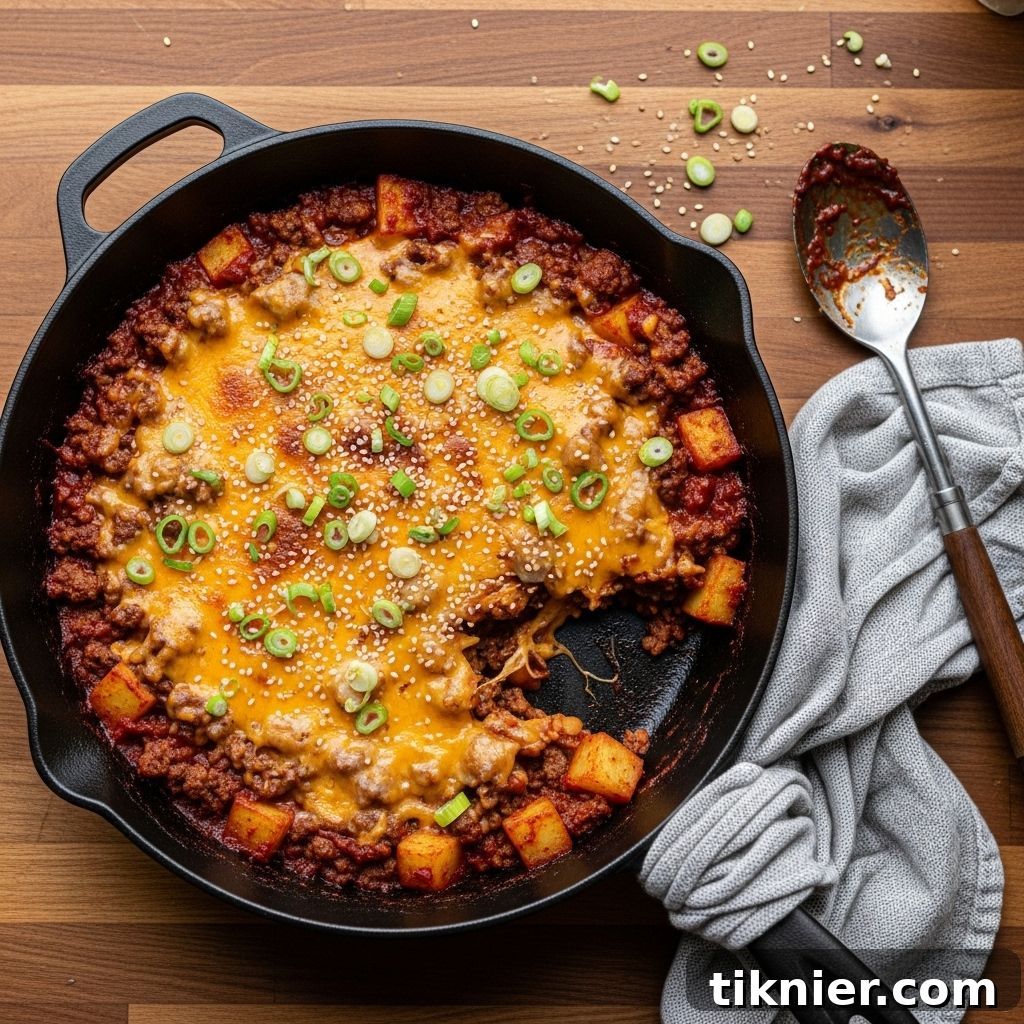
Description: A heartwarming and incredibly flavorful one-pan meal where classic ground beef and potatoes receive a vibrant, savory, sweet, and spicy Korean-inspired gochujang sauce makeover, all crowned with a generous layer of perfectly melted sharp cheddar cheese. An easy weeknight dinner with a gourmet twist!
Yield: 4-6 servings | Category: Main Dish | Cuisine: American / Korean Fusion
Prep Time: 15 minutes | Cook Time: 30 minutes
Ingredients
- 1 tablespoon sesame oil
- 1 pound lean ground beef (85/15 or 90/10 recommended)
- 1 medium yellow onion, chopped
- 2 cloves garlic, minced
- 1 tablespoon fresh ginger, grated
- 1 ½ pounds Yukon Gold potatoes, cut into ½-inch cubes
- 1 cup beef broth (low sodium preferred)
- 2 tablespoons gochujang (Korean chili paste, adjust to taste)
- 2 tablespoons soy sauce (low sodium preferred)
- 1 tablespoon brown sugar (light or dark)
- 1 cup shredded sharp cheddar cheese (freshly shredded for best melt)
- 2 green onions, thinly sliced
- Toasted sesame seeds for garnish
Instructions
- Heat sesame oil in a large, heavy-bottomed skillet or Dutch oven over medium-high heat. Add ground beef and cook, breaking it apart, until thoroughly browned. Drain any excess fat carefully from the skillet.
- Add the chopped yellow onion to the skillet with the beef. Cook, stirring occasionally, for about 5 minutes until the onion has softened and become translucent. Stir in the minced garlic and grated fresh ginger and cook for an additional 1 minute until fragrant, being careful not to burn the garlic.
- In a small bowl, whisk together the beef broth, gochujang, soy sauce, and brown sugar until the gochujang and sugar are completely dissolved and the sauce is smooth.
- Add the cubed potatoes to the skillet. Pour the prepared gochujang sauce evenly over the beef and potatoes. Stir well to ensure all ingredients are thoroughly coated.
- Bring the mixture to a gentle simmer. Once simmering, reduce the heat to low, cover the skillet with a lid, and cook for 15-20 minutes, stirring gently every 5-7 minutes, until the potatoes are tender and easily pierced with a fork.
- Remove the lid and continue to cook uncovered for another 3-5 minutes. This step allows any excess liquid to evaporate and the sauce to thicken into a rich, glossy glaze that clings beautifully to the ingredients.
- Remove the skillet from the heat. Evenly sprinkle the shredded sharp cheddar cheese over the entire surface of the dish. Place the lid back on for 1-2 minutes, allowing the residual heat to melt the cheese into a glorious, gooey layer.
- Garnish generously with the thinly sliced green onions and a sprinkle of toasted sesame seeds before serving hot, directly from the pan.
Notes
For the most luxurious melt, always opt for freshly grated sharp cheddar cheese instead of pre-shredded varieties. Feel free to adjust the amount of gochujang (Korean chili paste) to perfectly match your preferred spice level – start with less if you’re sensitive to heat and add more if you love a kick! A dollop of sour cream or plain Greek yogurt can also help cool down the spice if desired.
Servings: 4 | Calories: 550 kcal | Fat: 30g | Carbohydrates: 35g | Protein: 35g
5 Essential FAQs About Our Ground Beef and Potatoes Skillet
Here are clear, concise answers to the most frequently asked questions I receive about this incredibly popular ground beef and potatoes recipe, designed to help you master this dish every time.
1. What kind of potatoes are best for this Ground Beef and Potatoes skillet?
For this particular skillet recipe, my unwavering recommendation is always Yukon Gold potatoes. Their texture is simply unparalleled for a dish where potatoes need to hold their shape while becoming tender. Yukon Golds are classified as “waxy” potatoes, meaning they possess a lower starch content compared to their starchy counterparts. This characteristic allows them to remain wonderfully firm and creamy, even after simmering in a rich sauce, without disintegrating into a mushy consistency. Furthermore, their naturally buttery flavor wonderfully complements the savory and spicy gochujang sauce, enhancing the overall taste profile significantly.
If Yukon Golds are unavailable, red potatoes make an excellent second choice. They are also a waxy variety and will similarly maintain their structure well during cooking. While russet potatoes are fantastic for mashing or baking due to their high starch content, they tend to fall apart quickly in a saucy skillet dish like this, leading to a more stew-like texture rather than distinct, tender cubes. You can use them in a pinch, but be prepared for a slightly different outcome.
2. Is this Ground Beef and Potatoes recipe very spicy?
This is a perfectly valid question, as individual heat tolerances vary widely. I would categorize this dish as having a medium, pleasantly warm spice level, rather than being overwhelmingly fiery. The star ingredient, gochujang, offers far more than just heat; it imparts a complex spectrum of savory, sweet, and umami flavors. The chili’s warmth is more of a background note that gently builds and lingers rather than delivering an immediate, intense burn. The brown sugar incorporated into the sauce plays a crucial role in perfectly balancing the chili paste, and the substantial nature of the rich beef and starchy potatoes also significantly helps to temper the overall spice level.
Additionally, the final generous layer of melted sharp cheddar cheese does a fantastic job of mellowing out the heat further with its creamy, salty, and tangy profile. If you are particularly sensitive to spice, you can easily customize the recipe. Start with just one tablespoon of gochujang. You can always taste the sauce before it fully simmers and incrementally add more if you desire a stronger kick. Serving the finished dish with a dollop of cooling sour cream, plain Greek yogurt, or even a drizzle of milk is an excellent and effective way to temper any excess heat.
3. Can I make Ground Beef and Potatoes ahead of time?
Absolutely! This recipe is a fantastic candidate for meal prepping, and in my opinion, the flavors actually deepen and become even more harmonious and delicious when allowed to meld overnight. You can prepare the entire dish from start to finish, allow it to cool completely to room temperature, and then transfer it to an airtight container. Store it securely in the refrigerator for up to four days. When you’re ready to enjoy it again, simply reheat it gently in a skillet on the stovetop with a splash of beef broth or water to refresh the sauce and ensure it remains moist.
If you prefer to get a head start on dinner without fully cooking the meal, you can certainly prep the individual components in advance. Chop your onion, potatoes, mince the garlic, and grate the ginger, storing each in separate airtight containers in the fridge. You can also whisk together all the sauce ingredients (beef broth, gochujang, soy sauce, brown sugar) and keep this mixture in a sealed jar in the refrigerator. With all the preliminary prep work accomplished, the skillet dinner will come together effortlessly in under 30 minutes on even the busiest of weeknights.
4. What can I substitute for gochujang in this Ground Beef and Potatoes recipe?
While gochujang truly is the heart and soul of this recipe’s distinct and complex flavor profile, and I strongly recommend making an effort to procure it, I understand that sometimes it might not be readily available. If you absolutely cannot find it or need an immediate substitute, you can create a similar flavor profile using a combination of other ingredients. The goal is to mimic its unique blend of heat, savory depth, and subtle sweetness. A good starting point would be to combine another chili paste, such as sriracha or a chili-garlic sauce, with a small amount of white miso paste to introduce that crucial fermented umami flavor.
Since these alternative chili sauces are often saltier and typically lack the inherent sweetness found in gochujang, you may need to adjust other seasonings. This might involve adding an extra pinch of brown sugar to compensate for the missing sweetness and slightly reducing the amount of soy sauce to prevent the dish from becoming overly salty. While the resulting taste won’t be an exact replica of the profound, complex, and fermented notes of authentic gochujang, this substitution will still yield a wonderfully delicious, spicy, and savory sauce for your ground beef and potatoes, ensuring a satisfying meal.
5. How can I add more vegetables to my Ground Beef and Potatoes?
This ground beef and potatoes skillet is an incredibly versatile and forgiving canvas for incorporating additional vegetables, making it an excellent way to boost the nutritional content and flavor. It’s one of my go-to methods for utilizing vegetables lurking in the refrigerator’s crisper drawer. For heartier vegetables that require more cooking time, such as diced carrots, celery, or even sliced mushrooms, the ideal time to add them is along with the onions in Step 2. This ensures they have ample time to soften and fully cook through, integrating seamlessly into the dish.
For vegetables that cook more rapidly, such as chopped bell peppers (any color will add sweetness and vibrancy!), zucchini, or even small broccoli or cauliflower florets, you can introduce them to the skillet approximately 10 minutes into the simmering time (Step 5). This timing allows them to become tender-crisp without turning to mush. If you wish to incorporate delicate leafy greens like fresh spinach or kale, simply stir large handfuls of them into the skillet at the very end of the cooking process, just before you add the cheese (Step 7). The residual heat from the dish will be more than sufficient to wilt them down perfectly. Lastly, frozen vegetables like peas or corn can also be stirred in during the final few minutes of cooking for convenience.
Explore More Delicious Recipes
If you thoroughly enjoyed the hearty, comforting, and incredibly flavorful nature of this ground beef and potato recipe, I have several other tried-and-true recipes that I am confident you and your family will absolutely adore. Each one promises satisfying flavors and brings a touch of warmth to your kitchen.
- The Perfect Ground Beef Casserole: A truly cozy, classic bake featuring layers of savory flavor, designed to gather the entire family around the dinner table for a comforting meal.
- Easy Stout Shepherd’s Pie: Rich, deeply savory, and crowned with a luscious layer of fluffy mashed potatoes, this recipe represents the ultimate comfort food at its absolute finest—perfect for chilly evenings.
- Hearty & Easy Beef Stew Recipe: A soul-warming stew brimming with incredibly tender chunks of beef and wholesome vegetables, making it an ideal choice for any brisk evening.
Each of these recipes is a cherished favorite in my own home, bringing joy and deliciousness to our meals. I sincerely hope they become equally beloved staples in yours as well! Happy cooking!