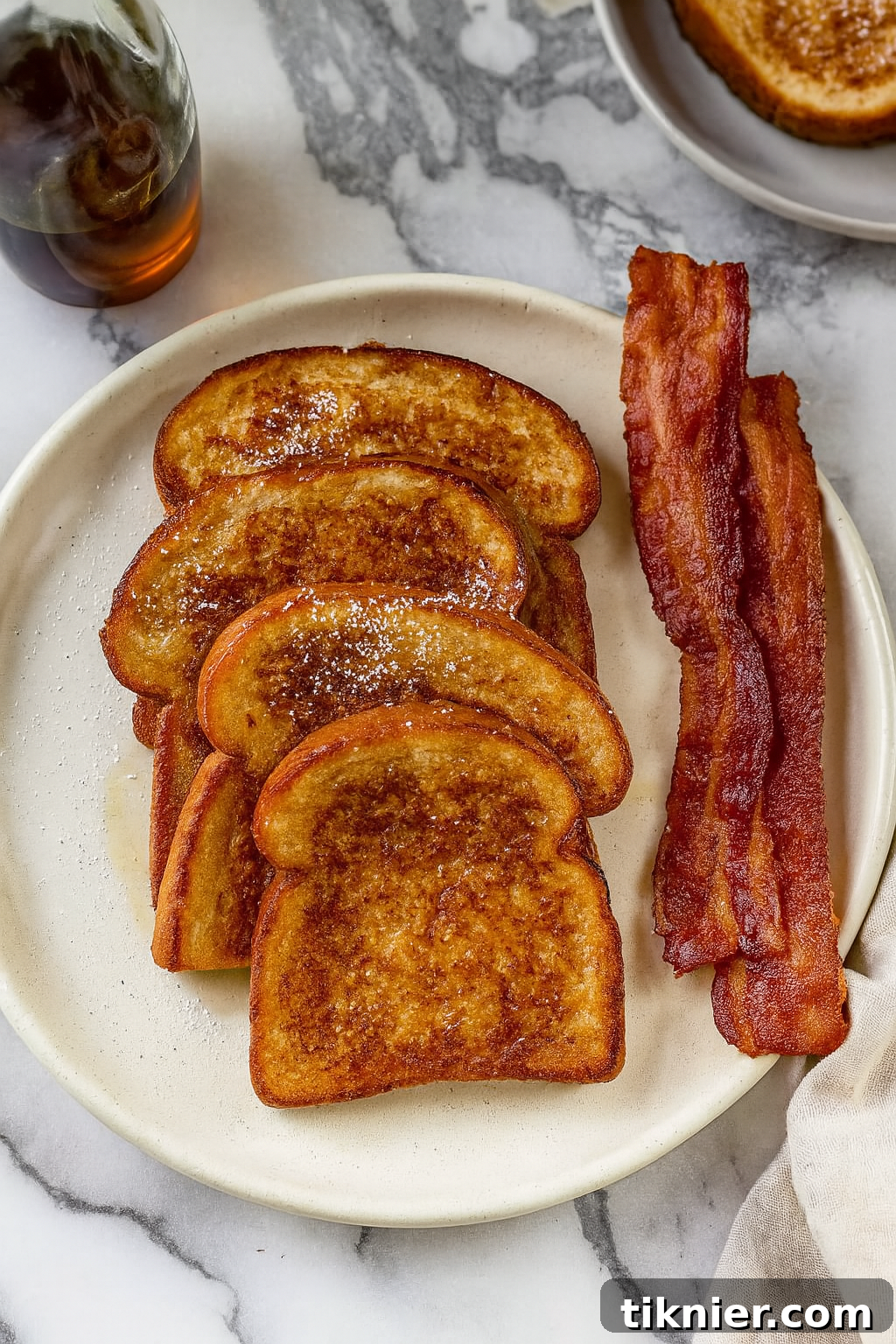
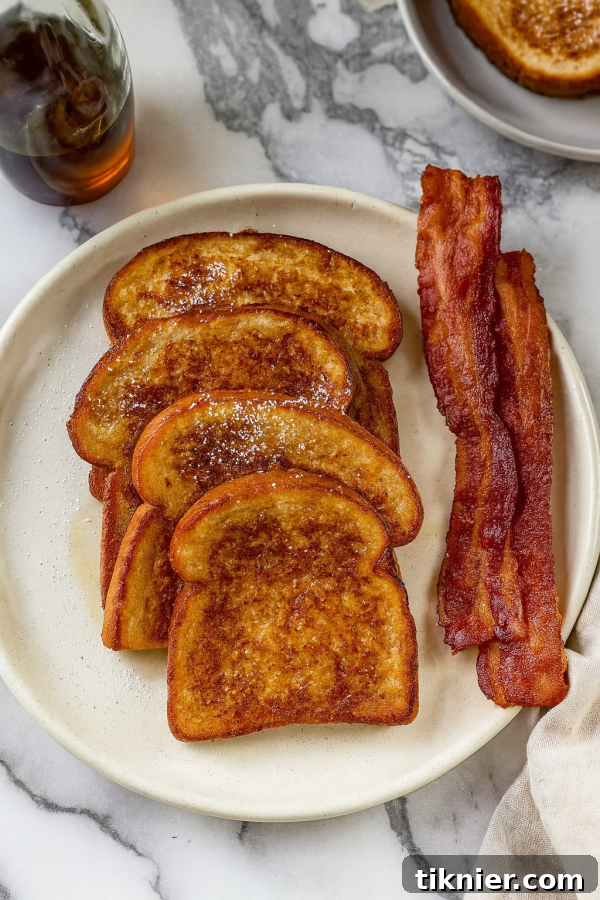
There’s something inherently comforting and luxurious about a stack of golden, buttery French toast. It’s more than just a breakfast; it’s an experience that transforms an ordinary morning into something truly special. Whether it’s a bustling weekend brunch or a quiet weekday indulgence, a perfectly prepared French toast always hits the spot, wrapping you in warmth and nostalgia.
My journey with French toast began in my grandmother’s cozy kitchen, a place filled with the aromas of baking and bustling activity. I was just a child, perhaps ten years old, perched on a step stool in my pajamas, proudly wielding the biggest egg whisk I could find. Grandma had a knack for turning simple ingredients into magical meals. Her method involved allowing day-old white bread to slowly absorb a sweet, cinnamon-spiked custard before gently dropping it into her well-seasoned cast iron skillet, where it would sizzle and transform into perfection.
What I remember most vividly from those mornings wasn’t just the taste, but the incredible aroma that filled the air. A symphony of warm vanilla, the enticing scent of toasted bread edges, and a subtle hint of nutmeg dancing through the kitchen. It was the smell of home, of love, and of cherished memories being made.
Her “secret ingredient” was wonderfully simple yet profoundly impactful: a splash of evaporated milk and just a touch of real vanilla bean paste. These two additions, which I incorporate into my recipe to this day, are what give homemade French toast a deeper, richer, and more complex flavor profile. It’s a subtle difference, but one that elevates each bite from merely good to truly unforgettable.
Skip to Julie’s Special French Toast Recipe!
Why This French Toast Recipe Stands Out for Ultimate Flavor and Fluffiness
French toast holds a special place in breakfast cuisine for many excellent reasons. It’s incredibly easy to prepare, offers a touch of indulgence without requiring extensive effort, and effortlessly transforms everyday pantry staples into an exceptionally delicious meal. Most of us grew up with some variation of this dish, whether it was made with thick Texas toast or classic sandwich bread, adorned with a dusting of powdered sugar, or lavishly drenched in maple syrup. It’s a dish that evokes nostalgia, offers profound comfort, and consistently pleases a crowd.
The distinction between an acceptable French toast and a truly outstanding one often lies in a few crucial details. The precise ratio of ingredients in the custard, the specific type of bread chosen, and the method by which it’s soaked and cooked all contribute significantly to the final outcome. This particular recipe takes the beloved classic version that we all know and enhances it with a subtle yet powerful upgrade: using fragrant vanilla bean paste instead of standard vanilla extract. This addition introduces an extra layer of gourmet flavor, making each mouthful feel more elevated and sophisticated, all without adding any complexity to the preparation process.
Beyond its superior flavor, this recipe is remarkably adaptable. You have the flexibility to substitute different types of milk, utilize whatever bread you happen to have on hand, and dress it up with an endless array of toppings to suit any preference. Whether you’re preparing a solo breakfast feast or catering to a hungry crowd on a leisurely Saturday morning, this easy homemade French toast recipe consistently delivers perfect results, making every breakfast feel like a special occasion.
Essential Ingredients for the Best Homemade French Toast
Crafting exceptional French toast doesn’t require an extensive list of ingredients, but a few strategic choices can significantly upgrade your results. Here’s a comprehensive look at everything you’ll need to achieve golden, fluffy perfection:
- Thick-sliced bread: The foundation of great French toast. Opt for brioche, challah, or French bread for superior texture and flavor.
- Large eggs (3): These are crucial for binding the custard and creating that rich, eggy texture.
- Whole milk or half-and-half (3/4 cup): Provides richness and ensures a creamy custard. You can also use evaporated milk for an even richer profile, as my grandmother did.
- Vanilla bean paste (1 teaspoon): This is the secret ingredient that truly makes the flavor pop! You’ll see tiny vanilla specks and taste a much deeper, more authentic vanilla essence than with extract.
- Ground cinnamon (1/2 teaspoon): Adds warmth and classic spice that complements the vanilla beautifully.
- Salt (a pinch): A small amount of salt balances the sweetness and enhances all the other flavors.
- Butter: Essential for greasing the pan, providing a golden crust and rich buttery flavor.
Choosing Your Bread Wisely for Optimal Texture
The type of bread you choose is paramount to the success of your French toast. Brioche and challah are exceptional choices because they are naturally rich, slightly sweet, and possess a dense yet airy crumb that readily soaks up the custard without becoming soggy or falling apart. French bread, with its crusty exterior and soft interior, also works wonderfully, providing a delightful textural contrast. If you’re using more common sandwich bread, it’s best if it’s a day or two old, or lightly toasted beforehand. This slight dryness helps the bread absorb the custard more effectively, preventing a soggy interior while ensuring a crisp exterior.
The Custard Base: Eggs, Milk, and That Special Vanilla Touch
The custard is the heart of your French toast. Large eggs provide the necessary structure and richness, while whole milk or half-and-half contribute to a creamy consistency. My grandmother’s trick of adding a splash of evaporated milk further deepens this richness, offering a subtle caramel note. However, the real game-changer is vanilla bean paste. Unlike standard vanilla extract, which is alcohol-based, vanilla bean paste is thicker, more concentrated, and contains actual vanilla bean seeds. This not only imparts a more intense, authentic vanilla flavor but also gives your French toast those characteristic tiny black specks that signify true quality. If vanilla bean paste isn’t available, you can certainly use vanilla extract; just increase the quantity slightly (about 1.5 teaspoons) to achieve a comparable flavor impact.
Step-by-Step Guide to Perfect Golden French Toast Every Time
Follow these straightforward steps to achieve consistently golden, beautifully fluffy, and utterly delicious slices of French toast:
- Prepare Your Bread: Begin by slicing your chosen bread into generous 3/4 to 1-inch thick pieces. This thickness is crucial for absorbing enough custard without becoming overly saturated. If your bread is fresh, allow it to sit out uncovered for a few hours, or lightly toast it in a toaster or oven. Day-old or slightly stale bread is ideal as it retains its structure better when soaked, preventing mushiness.
- Whisk the Custard: In a wide, shallow bowl (perfect for dipping!), combine the large eggs, whole milk (or half-and-half/evaporated milk), vanilla bean paste, ground cinnamon, and a pinch of salt. Whisk these ingredients together vigorously until the mixture is completely smooth and all components are well combined. Ensure there are no streaks of egg yolk or spice clumps.
- Soak the Bread Just Right: Carefully dip each slice of bread into the prepared custard mixture. Allow each side to soak for approximately 20 to 30 seconds. The goal is for the bread to be thoroughly coated and to absorb a good amount of the custard, but not to become so saturated that it begins to fall apart. This timing is key to a custardy interior and crisp exterior.
- Heat Your Pan to Perfection: Place a large skillet or griddle over medium heat. Allow it to preheat sufficiently before adding any butter. Once hot, add a generous pat of butter and let it melt and sizzle. The butter should be evenly distributed across the cooking surface.
- Cook the Toast to Golden Perfection: Gently transfer the soaked bread slices to the hot, buttered skillet. Avoid overcrowding the pan; cook in batches if necessary to ensure each slice browns evenly. Cook for 3 to 4 minutes on each side, or until each side achieves a beautiful golden-brown color and a slightly crisp exterior.
- Serve Hot and Enjoy: French toast is always best served immediately, fresh off the skillet. Arrange the golden slices on a platter and bring them to the table. If you’re preparing a larger batch for a group, you can keep cooked slices warm in a low oven (around 200°F / 95°C) on a baking rack while you finish cooking the remaining pieces.
Pro Tips for the Fluffiest French Toast
Using a cast iron skillet often yields the best results, creating wonderfully crispy edges and a delightfully soft, custardy middle. Remember the importance of not overcrowding the pan; if the slices are too close, they will steam rather than properly brown and crisp. For an extra special touch, consider sprinkling a small amount of cinnamon sugar onto one side of the French toast just before flipping it. This will create a lightly caramelized, irresistible crust that adds another layer of flavor and texture.
Endless Topping Possibilities for Your French Toast
One of the joys of French toast is its incredible versatility when it comes to toppings. From classic combinations to creative gourmet additions, there’s a world of flavor to explore. I often gravitate towards a delightful mix of fresh fruit and something sweet and rich. A drizzle of pure maple syrup alongside vibrant fresh strawberries, or a dollop of fluffy whipped cream generously sprinkled with toasted pecans, are always fantastic choices. But remember, there are absolutely no strict rules here—let your cravings guide you!
Whether you’re aiming for a quick and simple weekday breakfast or transforming your French toast into a show-stopping brunch centerpiece, here are some inspiring topping ideas:
- Fresh Berries & Powdered Sugar: A timeless classic, offering a burst of freshness and elegant sweetness.
- Sliced Bananas & Honey: A comforting and naturally sweet combination, enhanced by a drizzle of golden honey.
- Mascarpone Cheese & Jam: For a decadent, creamy tang, spread a layer of mascarpone and top with your favorite fruit jam.
- Brûléed Banana Slices: Elevate bananas by sprinkling with sugar and torching for a caramelized crust.
- Toasted Coconut & Lime Zest: A tropical twist that adds texture and bright citrus notes.
- Cinnamon Sugar Dusting: A simple yet effective way to add a sweet, spiced crust.
- Nutella & Hazelnuts: Indulge in a rich chocolate-hazelnut spread with crunchy nuts.
- Apple Compote & Whipped Cream: Warm, spiced apples provide a cozy, autumnal feel.
- Lemon Curd & Blueberries: A zesty and sweet pairing that brightens the entire dish.
- Peanut Butter & Jelly: A nostalgic, protein-packed option, especially for kids (or the kid in you!).
If you’re hosting a brunch, arranging the golden slices on a large platter and setting out a variety of toppings allows guests to customize their own perfect plate. French toast also pairs beautifully with savory sides such as crispy bacon, flavorful sausage links, or even a savory egg bake. For an adult brunch, consider a refreshing mimosa or a robust cup of freshly brewed coffee to complement your meal.
Storing and Reheating Your Delicious French Toast
Leftover French toast is a fantastic thing to have on hand, especially for those busy mornings when you crave something special but lack the time for fresh preparation. I often make a double batch specifically for this purpose!
To Store:
- First and foremost, ensure the French toast has cooled completely to room temperature before storing. This prevents condensation which can lead to sogginess.
- Once cooled, place the slices in an airtight container or wrap them snugly in aluminum foil.
- Refrigerated French toast can be enjoyed for up to 3 days.
- For longer storage, freeze individual slices by first placing them in a single layer on a baking sheet until solid, then transferring them to a freezer-safe bag or container. This prevents them from sticking together. Frozen French toast can last for up to 2 months.
To Reheat:
Reheating properly is key to bringing back that delightful texture:
- Oven Method: Preheat your oven to 350°F (175°C). Place the slices on a baking sheet and bake for about 10 minutes, or until thoroughly heated through and slightly crispy.
- Toaster or Toaster Oven: This is an excellent method for achieving delightfully crispy edges, much like they were freshly made.
- Skillet Reheat: Heat a skillet over medium heat with a small touch of butter. Reheat the slices for a few minutes per side until warm and re-crisped.
If reheating from frozen, there’s no need to thaw first; simply pop the slices directly into the oven or toaster. I generally advise against using a microwave for reheating French toast, as it tends to make the bread rubbery and soft rather than crisp and custardy.
As a bonus tip, consider cutting leftover slices into fun sticks before freezing. These French toast dippers are a fantastic, quick breakfast option for kids, or perfect for grabbing on the go.
Customizing Your French Toast: Substitutions & Creative Variations
This classic French toast recipe provides a superb foundation that encourages culinary creativity. Whether you’re adapting it for dietary needs or simply looking to experiment with seasonal flavors, there’s ample opportunity to personalize this beloved dish.
For Dietary Swaps:
- Dairy-Free: Substitute traditional dairy milk with almond milk, oat milk, or coconut milk (canned for extra richness, or carton for lighter).
- Egg-Free: For an egg-free version, you can replace each large egg with a ‘flax egg’ (1 tablespoon ground flaxseed meal mixed with 2.5 tablespoons water, allowed to sit for 5 minutes to thicken) or a ‘chia egg’ (same ratio with chia seeds). Note that the texture will be slightly different.
- Gluten-Free: Opt for high-quality gluten-free sandwich bread, brioche, or challah. Ensure it’s thick-sliced to prevent it from breaking down during soaking.
For Exciting Flavor Variations:
- Autumnal Spice: Incorporate a teaspoon of pumpkin pie spice or apple pie spice into the custard for a warm, cozy fall-inspired French toast.
- Nutty Notes: Swap out vanilla for almond extract (use a smaller amount, as almond extract is potent) for a distinct nutty aroma.
- Bright Citrus Zest: Grate in a teaspoon of orange zest or lemon zest into the custard for a vibrant, citrusy burst of flavor that cuts through the richness.
- Liqueur Infusion: For an adult twist, add a splash (1-2 tablespoons) of orange liqueur (like Grand Marnier or Cointreau), rum, or Kahlúa to the custard.
- Chocolate Lover’s Dream: Mix in a tablespoon of cocoa powder to the custard, or sprinkle mini chocolate chips between layers when baking as a casserole.
For Different Bread Adventures:
- Decadent Croissant French Toast: Use day-old croissants for an extra rich, buttery, and flaky French toast experience. They absorb the custard beautifully.
- Tangy Sourdough: Sourdough bread offers a delightful tanginess that provides a sophisticated contrast to the sweet custard, perfect for a more rustic feel.
- Sweet Hawaiian Rolls: For a smaller, sweeter, and incredibly fluffy version, Hawaiian rolls make excellent bite-sized French toast pieces.
- Cinnamon Swirl Bread: Elevate the spice factor by using a pre-made cinnamon swirl bread, which adds extra flavor and visual appeal.
- Panettone or Challah: During holidays, turn stale panettone or challah into an extraordinary French toast for a festive touch.
Once you’ve mastered the base recipe a few times, you’ll naturally discover your own favorite twists and additions. French toast is truly a dish that encourages and rewards culinary experimentation!
Frequently Asked Questions About This French Toast Recipe
Here are clear and concise answers to some of the most common questions I receive about making perfect French toast:
What’s the best bread to use for French toast?
For the ultimate French toast, brioche, challah, and thick-sliced French bread are my top recommendations. They are rich, slightly sweet, and possess a robust structure that absorbs the custard without becoming soggy. If you’re using regular sandwich bread, ensure it’s a day or two old or lightly toasted; this helps it soak up the custard more effectively and maintain its integrity.
Can I make French toast without eggs or milk?
Yes, you certainly can, though the final texture will be somewhat different from the traditional version. For an egg-free substitute, use a flax egg or chia egg (combine 1 tablespoon of ground flax or chia seeds with 2.5 tablespoons of water for each egg, and let it sit for 5 minutes to thicken). For a dairy-free option, almond milk, oat milk, or coconut milk (either from a carton or full-fat canned for richness) work wonderfully. You might need to adjust the soaking time slightly, as these alternatives can absorb the liquid at different rates.
Why is my French toast soggy in the middle?
Soggy French toast is usually a sign that the bread was either too fresh, too thin, or was soaked for an excessive amount of time. To prevent this, always use thick slices (3/4 to 1 inch) of slightly stale bread. Soak the bread just long enough for the custard to be absorbed, but not until it’s saturated. Also, ensure your skillet is adequately hot (medium heat) to quickly sear and brown the exterior, creating a barrier that locks in the custardy interior.
Can I prepare French toast the night before?
Absolutely, and it’s a fantastic make-ahead option, especially for entertaining or holidays! You can prepare the custard and soak the bread, then arrange the soaked slices in a buttered baking dish. Cover it tightly and refrigerate overnight. In the morning, bake it as a French toast casserole at 350°F (175°C) for 30 to 40 minutes, or until it’s beautifully golden brown and set in the center. This method yields a slightly different but equally delicious result.
What can I use instead of syrup for French toast?
While maple syrup is a classic, there are many delightful alternatives! Consider drizzling with honey or agave nectar. Fruit compotes (homemade or store-bought), fresh fruit sauces made from berries or peaches, or even a simple dusting of powdered sugar are excellent. For richer options, try nut butters, Greek yogurt, whipped cream, or various fruit jams and preserves. For an extra special touch, you can brûlée banana slices with a sprinkle of sugar and a kitchen torch, or create a quick berry sauce by simmering frozen berries with a touch of sugar and lemon juice.
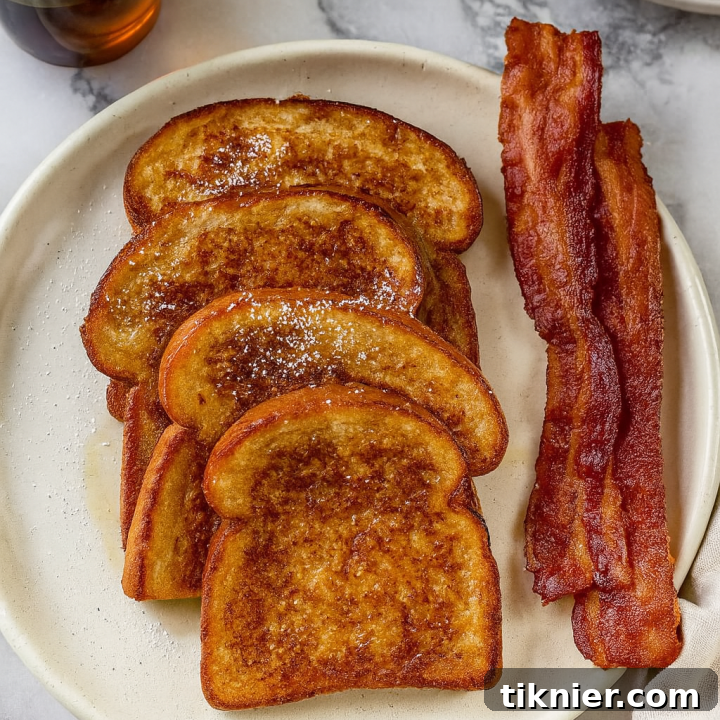
My Simple, Easy, Homemade, Classic French Toast Recipe
6 slices
10 minutes
10 minutes
20 minutes
This classic French toast recipe is rich, golden, and lightly spiced with cinnamon and vanilla bean paste. It’s quick to whip up and perfect for weekend brunch or a cozy breakfast at home. Use brioche or challah for the best texture and flavor.
Ingredients
- 6 slices thick-sliced bread (brioche, challah, or French bread)
- 3 large eggs
- 3/4 cup whole milk or half-and-half
- 1 teaspoon vanilla bean paste (or 1 1/2 teaspoons vanilla extract)
- 1/2 teaspoon ground cinnamon
- Pinch of salt
- Butter, for greasing the pan
Instructions
- Slice bread into 3/4 to 1-inch thick slices. If using fresh bread, let it sit out for a few hours or toast lightly so it’s slightly stale.
- In a wide, shallow bowl, whisk together eggs, milk, vanilla bean paste, cinnamon, and salt.
- Dip each slice of bread into the custard mixture, soaking for 20–30 seconds per side until fully coated.
- Heat a large skillet or griddle over medium heat and add a pat of butter.
- Cook bread slices in the skillet for 3–4 minutes per side, until golden brown and slightly crisp.
- Serve immediately with your favorite toppings, or keep warm in a low oven until ready to serve.
Notes
Day-old bread works best because it soaks up the custard without getting soggy. If using fresh bread, let it sit out for a few hours or toast it lightly.
Vanilla bean paste adds a deeper flavor and those signature specks, but vanilla extract works just fine in a pinch.
For a crispier finish, sprinkle a little cinnamon sugar on one side before flipping to caramelize the edges.
Discover More Delicious Breakfast Delights
If you’ve savored every bite of this homemade French toast recipe, you’re in for a treat! Here are a few more beloved breakfast and brunch favorites from the blog that promise to delight your taste buds and warm your kitchen:
- Croissant French Toast Casserole with Blueberries and Cream Cheese – Imagine tender, buttery croissants baked into a hearty casserole, studded with sweet blueberries and pockets of creamy cream cheese. It bakes up golden brown and bursting with comforting flavors, perfect for a gathering.
- Overnight Chocolate Pecan Pie French Toast Casserole – For a truly indulgent experience, this rich and decadent casserole layers thick slices of bread with melty chocolate chips and crunchy pecans. Soaked overnight, it bakes into a spectacular breakfast treat that tastes just like pecan pie.
- Brown Sugar French Toast – A delightful and simple variation on classic French toast. The addition of brown sugar to the custard creates an extra layer of caramelized sweetness and a depth of flavor that’s both familiar and wonderfully new.
Happy cooking, and may your mornings be filled with the comforting sizzle of delicious food and the aroma of freshly brewed coffee. Don’t forget to pour that extra cup!