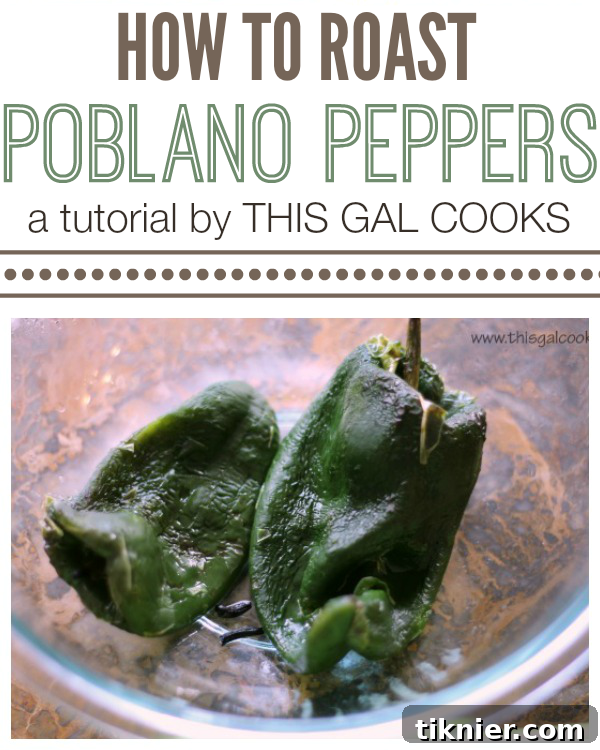
Unlock the incredible flavor of fresh poblano peppers right in your own kitchen! This comprehensive guide, “How to Roast Poblano Peppers,” will take you through every step, ensuring you achieve perfectly charred, tender, and incredibly versatile peppers every time. Say goodbye to store-bought, sodium-laden jars and embrace the superior taste and freshness of homemade roasted poblanos.
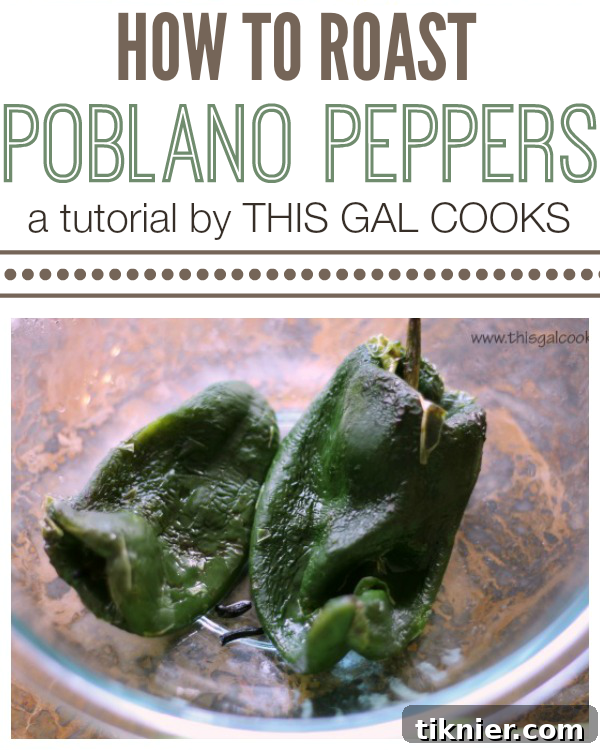
There’s a reason why so many cherished recipes, from hearty stews to elegant entrees, call for the distinct smoky notes of roasted poblano peppers. I’ve personally created and enjoyed countless dishes featuring this amazing ingredient, including my Roasted Poblano & Crab Chowder and a comforting Chili Relleno Casserole. While convenient, those jars of pre-roasted peppers often come with unnecessary added sodium and lack the vibrant freshness and depth of flavor you get from roasting them yourself. Plus, it’s significantly more economical to roast them at home!
Today, I’m thrilled to share my simple, foolproof method for roasting poblano peppers. While many tutorials exist, I believe my approach offers practical tips and insights that will empower you to master this essential culinary technique. My goal is to equip you with valuable food knowledge that will enhance your cooking and inspire you to experiment with these fantastic peppers. I truly hope you find this tutorial enjoyable and incredibly useful!
Skip to the Printable Recipe Card!
Why This Roasted Poblano Peppers Recipe Works So Well
Roasting peppers is a time-honored culinary tradition, deeply rooted in Mexican and Southwestern cuisines, and for good reason. The magic truly happens when intense heat chars the tough outer skin of the pepper. This essential step not only makes the skin incredibly easy to peel away but, more importantly, it infuses the pepper’s flesh with an irreplaceable deep, smoky, and slightly sweet flavor. This transformative process takes a crisp, mildly spicy poblano and turns it into a tender, complex, and astonishingly versatile ingredient – the perfect foundation for iconic dishes like chiles rellenos, rajas con crema, and a myriad of delicious sauces and soups.
Historically, many traditional methods for roasting peppers involved direct open flames, typically on a gas stovetop burner or an outdoor grill. While these techniques are undeniably fantastic and yield superb results, they can sometimes be a bit messy, require careful attention, and might feel intimidating for home cooks who are less experienced with direct flame cooking. This is precisely where my broiler method shines. It brings all the authentic char and smoky goodness indoors, offering maximum control and minimal fuss. You achieve the same coveted, intense flavor and tender texture without the need for specialized equipment or the risk of filling your entire kitchen with smoke.
The secret weapon in this easy method for Roasted Poblano Peppers is simple: cooking spray. It might sound too good to be true, but trust me, it’s a game-changer. A light, even coating of cooking spray is all that’s required. Unlike brushing with olive oil, which can sometimes be applied too generously and cause the peppers to steam rather than char, cooking spray promotes that crucial dry, intense heat under the broiler. This dry heat is what encourages the skin to blister, blacken, and separate perfectly from the flesh. Too much oil can result in a softer, potentially greasy pepper that’s harder to peel. The cooking spray ensures an ideal char, making the skins virtually slide off after the essential steaming step. This method is all about achieving consistent, authentic fire-roasted flavor with remarkable simplicity and efficiency, right from your oven.
Mastering the Art: How to Roast Poblano Peppers
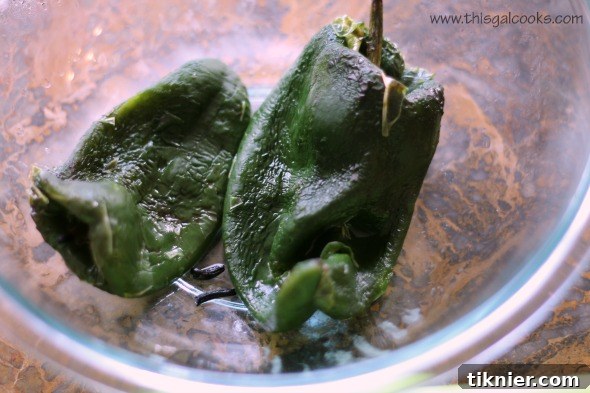
What you will need to get started:
- Poblano peppers: The quantity will depend entirely on your recipe. Choose firm, vibrant green peppers without blemishes. Make sure to wash and thoroughly dry them before roasting.
- Cooking spray: Essential for achieving that perfect blistered skin without excess oil.
- Aluminum Foil: For lining your baking sheet, making cleanup a breeze and helping with the charring process.
- A baking sheet: A sturdy, flat baking sheet is crucial for even heat distribution under the broiler.
- Large bowl with a lid: This is vital for the steaming step after roasting. If a lid isn’t available, plastic wrap works just as effectively to create a tight seal.
- Gloves: I cannot stress this enough – wear gloves when handling roasted peppers, especially when peeling and seeding. Poblano peppers contain capsaicin, which can cause significant skin irritation if it comes into contact with your bare hands, and can be especially painful if it gets near your eyes. Trust me on this one; protect your hands!
Detailed Directions for Perfect Roasted Poblano Peppers:
- Prepare your oven: Position an oven rack about 6 inches from the broiler element. Set your oven to broil. If your oven offers both “high” and “low” broil settings, always opt for “high.” The intense, direct heat is what creates that desirable char and blistered skin.
- Line your baking sheet: Line a sturdy baking sheet with aluminum foil. This step is not just for easier cleanup; the foil helps concentrate the heat and promotes better charring.
- Apply cooking spray: Lightly but thoroughly spray each poblano pepper with cooking spray. Ensure all surfaces of the pepper are coated. This thin layer of oil is key to getting the skin to blister and blacken beautifully without making the pepper greasy.
- Arrange on the baking sheet: Place the prepared peppers in a single layer on the aluminum foil-lined baking sheet. Make sure they are not touching, allowing for even exposure to the broiler’s heat.
- Broil until charred: Place the baking sheet under the broiler. Broil for approximately 5-10 minutes per side, or until the skins are dark, extensively blistered, and bubbly. You’ll want to see significant blackening over most of the pepper’s surface; a few brown spots won’t be enough to easily remove the skin. Keep a close eye on them, as broilers can vary in intensity, and peppers can go from charred to burnt quickly. I also recommend leaving your oven door slightly cracked open (about an inch) during this process. This helps to prevent the peppers from steaming too much in the oven, ensuring they get crispy rather than overly soft, and helps to dissipate some of the smoke.
- Steam for easy peeling: As soon as the peppers are sufficiently charred, carefully remove them from the oven and immediately transfer them to the large bowl. Cover the bowl tightly with its lid or plastic wrap and let the peppers steam for 15-20 minutes. This crucial steaming period allows the residual heat to loosen the charred skin from the flesh, making it incredibly easy to peel later. Do not skip or rush this step!
- Peel and seed the peppers: Once the peppers have steamed, put on your gloves! Carefully remove each pepper from the bowl. Start peeling off the loosened skins with your gloved hands. You can do this under a gentle stream of cold water; the water helps to lift and rinse away any stubborn bits of skin and stray seeds. Next, remove the stem end (cap) and gently open the pepper. Scrape out all of the seeds and the white internal membranes (pith). This is where most of the pepper’s heat resides, so removing them gives you a milder flavor. Again, running water can assist in this process.
- Handle with care: Remember that roasted peppers become quite delicate. Be gentle while removing the skins and seeds to prevent them from tearing. If your recipe calls for whole peppers (like for stuffed poblanos), preserving their integrity is important. However, if you’re dicing them for soups, casseroles, or sauces, a few tears won’t affect the final dish.
How To Serve Your Delicious Roasted Poblano Peppers
Once you’ve mastered creating a beautiful batch of freshly Roasted Poblano Peppers, an entire world of culinary possibilities opens up! Their distinctive smoky, tender flavor has the power to elevate countless dishes, transforming everyday meals into something truly special and deeply flavorful. These peppers are a cornerstone of Southwestern and Mexican cooking for excellent reasons, and they also integrate wonderfully into contemporary Southern kitchens, adding a unique twist.
Keeping them whole makes them perfect for traditional preparations, allowing their impressive size and shape to shine. Conversely, dicing or slicing them unlocks a whole new realm of culinary applications, making them adaptable for almost any dish. They can boldly take center stage as the star ingredient or serve as a fantastic supporting character, adding layers of complexity, a mild, inviting heat, and a ton of personality to your table. The versatility of roasted poblanos is truly boundless!
Here are some of my absolute favorite and highly recommended ways to incorporate them into your cooking:
- Stuffed Peppers (Chiles Rellenos): This is the quintessential use for whole roasted poblanos! Carefully slice them open and generously fill them with a delectable mixture of cheeses such as Monterey Jack, Oaxaca, or cotija, savory seasoned ground meat (beef, pork, or chicken), or a vibrant combination of corn and black beans. You can then bake them until bubbly and golden, or for a more indulgent experience, dip them in a light egg batter and fry them to create a truly showstopping and comforting meal.
- In Hearty Soups and Creamy Chowders: Diced Roasted Poblano Peppers are absolutely divine when added to creamy corn chowder, a comforting chicken tortilla soup, or a robust white chicken chili. Their smoky depth introduces a layer of flavor complexity that simply cannot be replicated by any other ingredient, transforming a simple soup into a gourmet experience.
- Sliced into Rajas con Crema: A beautifully simple yet incredibly elegant dish, “Rajas con Crema” involves slicing the roasted peppers into delicate strips (“rajas”) and gently simmering them with sautéed onions in a rich, luscious cream sauce. This makes for an exquisite side dish, a decadent taco filling, or even a flavorful topping for enchiladas.
- Diced into Vibrant Salsas and Dips: Finely chop these smoky peppers and fold them into your favorite homemade salsa recipe, classic guacamole, or a warm, creamy queso dip. The smoky element is an unparalleled addition that will inevitably have everyone at your gathering asking for your secret ingredient.
- As a Versatile Topping: Slice the roasted peppers into strips or dice them and use them liberally as a gourmet topping for an array of dishes. Imagine them enhancing tacos, nachos, quesadillas, juicy burgers, or even scrambled eggs for a sophisticated breakfast. They effortlessly elevate everyday meals with their unique flavor profile.
- Blended into Sauces: Purée them with tomatillos for a smoky salsa verde, or blend them into creamy pasta sauces for a subtle kick.
- With Grilled Meats: Serve strips of roasted poblano peppers alongside grilled chicken, steak, or fish for a healthy and flavorful side that complements the smoky char of the main course.
Honestly, you simply can’t go wrong with these peppers. Having them readily available in your refrigerator or freezer is like having a constant source of inspiration in your kitchen. They have a remarkable ability to make everything just a little bit better, adding depth and excitement to even the simplest culinary creations.
How To Store & Reuse Your Roasted Poblano Peppers Leftovers
One of the most appealing aspects of preparing a batch of homemade Roasted Poblano Peppers is their excellent storage capacity. I frequently make a larger quantity than immediately needed for a specific recipe, precisely so I can have them at my fingertips for effortlessly assembling quick, flavorful meals throughout the week. When stored correctly, these peppers wonderfully retain their cherished smoky flavor and tender texture, making them an invaluable component for efficient meal prepping.
The cardinal rule for proper storage is to ensure they are kept in an airtight container. This crucial step serves a dual purpose: it prevents the peppers from drying out and losing their fresh quality, and it also effectively contains their distinctive, potent smoky aroma, keeping it from permeating your entire refrigerator. You have the flexibility to store them whole, sliced, or diced, depending on your intended future use. Personally, I find it most efficient to peel and seed all of them right after roasting. This way, they are completely prepped and ready to be tossed into a dish at a moment’s notice, saving precious time on busy weeknights. It’s a small investment of effort upfront that yields significant returns in convenience and flavor later on.
Here’s a comprehensive guide on how to handle your leftover roasted peppers for both short-term and long-term storage, ensuring maximum freshness and flavor:
- Refrigerating for Short-Term Use: Place the completely cooled, peeled, and seeded peppers in an airtight container or a heavy-duty zip-top bag. They will maintain their quality beautifully in the refrigerator for up to 5 days. It’s entirely normal to observe a small amount of liquid accumulating at the bottom of the container; this is just the pepper’s natural moisture. These refrigerated peppers are perfect for immediately tossing into salads, scrambling with eggs, adding to sandwiches, or quickly incorporating into any recipe that calls for them.
- Freezing for Long-Term Storage: For extended storage, freezing is an excellent option that preserves their unique flavor. While you can freeze them whole, I personally find it much more practical and space-efficient to freeze them in slices or dices, pre-portioned for future recipes. To prevent them from clumping together into a solid block, I recommend a “flash freeze” step: arrange the pepper pieces in a single layer on a parchment-lined baking sheet and freeze them for about an hour, or until solid. Once frozen individually, transfer them to a freezer-safe zip-top bag or an airtight container. Properly frozen, they can last for up to 6 months in the freezer, ready to be used whenever inspiration strikes.
- Reusing Thawed Leftovers: When you’re ready to use frozen peppers, simply thaw them overnight in the refrigerator. Be aware that thawed peppers will have a slightly softer texture than freshly roasted ones, which actually makes them ideally suited for cooked applications. They blend seamlessly into rich sauces, add depth to simmering soups or stews, become a fantastic component in casseroles like my Chili Relleno Casserole, or elevate a simple cheese dip with their smoky essence.
Having these versatile and delicious peppers on hand is like having a hidden flavor bomb tucked away in your fridge or freezer, always ready to transform any meal into a more exciting and memorable culinary experience.
Substitutions & Variations For Roasted Poblano Peppers
While this fundamental method for preparing Roasted Poblano Peppers is quite perfect in its simplicity and effectiveness, the true joy of cooking lies in personalizing recipes to suit your tastes, available ingredients, and kitchen equipment. There are numerous creative avenues to explore, whether you need to swap out the type of pepper, experiment with alternative roasting techniques, or simply infuse different flavor notes. This recipe serves as an excellent foundational guide, allowing for simple yet impactful modifications.
The core technique of charring, steaming, and peeling is a universally applicable method for many varieties of peppers. The primary factor to consider when making substitutions is the thickness of the pepper’s skin and flesh, as this will directly influence the necessary roasting time. Peppers with thinner walls will naturally cook much faster, demanding closer attention to prevent burning. Think of this guide as your versatile jumping-off point for all your future pepper-roasting adventures!
Here are a few thoughtful substitutions and exciting variations you might like to try:
- Exploring Different Peppers: If fresh poblano peppers are unavailable, excellent mild-to-medium heat substitutes include Anaheim or New Mexico green chiles. They share a similar size and manageable heat level, making them ideal stand-ins. For those who crave more heat, this same roasting method can be applied to jalapeños or serranos; however, be mindful that these smaller, thinner-walled peppers will roast significantly faster, and wearing gloves is an absolute must! Sweet bell peppers (any color) also benefit greatly from roasting, developing a wonderful smoky sweetness that is perfect for salads, sandwiches, or as a side dish.
- Embracing the Grill Method: For an even more profound, char-grilled flavor, an outdoor grill is an outstanding choice. Preheat your grill to a medium-high temperature. Place the peppers directly onto the hot grill grates over a direct flame. Use long tongs to turn them every few minutes until their skins are evenly blackened and blistered on all sides – this typically takes about 10-12 minutes in total, depending on your grill’s heat. The crucial post-grilling steps of steaming and peeling remain exactly the same as with the broiler method.
- The Traditional Gas Stovetop Method: For home cooks comfortable with direct flame, placing a pepper directly on the grates of a gas stove burner over an open flame is a very quick and effective method. Use long tongs to carefully turn the pepper until its skin is charred all over. This technique is incredibly fast but demands your undivided attention and excellent kitchen ventilation to manage the smoke.
- Infusing Extra Flavor: While I adore the pure, earthy flavor of simply roasted poblanos, you can certainly introduce additional aromatics. Instead of just cooking spray, consider lightly brushing the peppers with a small amount of olive oil that has been infused with a pinch of garlic powder, a hint of smoked paprika, or a dash of ground cumin before broiling. These additions will lend another subtle, complementary layer of flavor to the finished product, enriching their natural profile without overpowering it.
- Roasting with Aromatics: For an even more complex flavor profile, you can roast whole garlic cloves, onion wedges, or even a few cherry tomatoes alongside your poblanos on the same baking sheet. Once roasted, these can be blended with the peppers into a smoky sauce or salsa.
Don’t hesitate to experiment with these variations. Discovering your personal favorite roasting method and ideal pepper is a delightful part of the culinary journey and one of the many rewards of cooking at home.
Roasted Poblano Peppers
Incredibly simple broiler method for making perfect Roasted Poblano Peppers every single time. It gives you that beautiful, blistered skin that peels away like a dream, leaving you with a tender, flavorful pepper that’s ready for anything.
Ingredients
- Poblano peppers (amount needed depends on your recipe) washed and dried
- Cooking spray
- Aluminum Foil
- A baking sheet
- Large bowl with a lid (if you don’t have a lid for the bowl, you can use plastic wrap to cover it)
- Gloves (I recommend wearing gloves while handling the roasted peppers. Trust me, they will irritate your skin if you don’t)
Instructions
- Set your oven to broil (if you have a high and low broil setting, set to high)
- Line a baking sheet with aluminum foil.
- Spray each poblano pepper with cooking spray, ensuring that all surfaces are covered with the spray.
- Place the peppers on the aluminum foil lined baking sheet.
- Broil for about 5-10 minutes per side or until the skins are dark and bubbly. The entire skin doesn’t need to be dark but to ensure that the skins are easily removed, the majority of the skins should be dark and bubbly. I also recommend leaving your oven slightly cracked open so the peppers to not burn too much. You want them to be crispy but not burnt.
- Remove the peppers from the oven and place in the bowl. Cover and set aside for 15-20 minutes.
- Put on your gloves and start removing the skins from the peppers. Remove as much of the skin as you can and then run the pepper under cold water. The water will help to lift more of the skins off. Remove the cap and gently remove any of the seeds. You can also do this under running water.
- Be sure to be gentle with the peppers while removing the skins and the seeds. They are delicate and will break easily. If you are using them in soups or to make a casserole, it won’t matter if they break but if you are making stuffed peppers, you will want the peppers to stay in once piece.
5 Essential FAQs About Roasting Poblano Peppers
Here are clear, concise, yet comprehensive answers to the most frequently asked questions I receive about this simple method for making incredibly delicious Roasted Poblano Peppers.
Are roasted poblano peppers spicy, and how can I control the heat?
This is undeniably the most common question I encounter, and it’s an important one! Generally speaking, poblano peppers are celebrated for their mildness. On the widely recognized Scoville scale, which quantifies the heat level of peppers, poblanos typically register between 1,000 and 2,000 Scoville Heat Units (SHU). To put this into perspective, a common jalapeño pepper can range from 2,500 to 8,000 SHU, making poblanos significantly milder and more approachable. They are primarily prized for their rich, earthy, and slightly smoky flavor rather than their fiery kick.
However, it’s worth noting that like all natural produce, there can be some natural variability. Occasionally, you might encounter a poblano that is noticeably spicier than its average counterpart. The heat-producing compound, capsaicin, is predominantly concentrated in the seeds and, more significantly, in the whitish veins or membranes found inside the pepper. While the roasting process can sometimes mellow the overall heat slightly, the most effective way to precisely control the spice level in your finished dish is through meticulous removal of these seeds and membranes after the peppers have been roasted and peeled. If you or your guests are sensitive to spice, ensure you scrape out every bit of that internal pith. Conversely, if you appreciate a subtle warmth, you can choose to leave a few of the veins intact, allowing a controlled amount of heat to remain.
Can I roast poblano peppers on the grill instead of in the oven?
Absolutely, grilling is an exceptional and highly recommended alternative method for preparing Roasted Poblano Peppers! In fact, utilizing an open flame on the grill can impart an even more pronounced and intensely smoky flavor profile to the peppers, which many find highly desirable. The overall process closely mirrors the broiler method, making for an easy transition. Begin by preheating your outdoor grill to a medium-high temperature. Once hot, place the clean, dry poblano peppers directly onto the grill grates. Cook them, turning every 2 to 3 minutes using long-handled tongs, until their skins are thoroughly blackened, blistered, and softened on all sides. This charring phase typically takes around 10 to 12 minutes, depending on the heat of your grill and the size of the peppers.
Once the peppers are evenly charred and blistered, immediately transfer them to a bowl and cover it tightly with a lid or plastic wrap. This crucial steaming step is just as vital for grilled peppers as it is for broiled ones, allowing them to steam for 15 to 20 minutes. This trapped moisture softens the charred skins, making them incredibly easy to peel. After they’ve had sufficient time to steam, you can proceed to peel, seed, and utilize them in your recipes exactly as you would with oven-broiled peppers. This grilling method is particularly fantastic during warmer months when you’re already firing up the grill for other dishes, adding an extra dimension of outdoor flavor.
Why won’t the skins peel off my roasted poblano peppers easily?
Encountering stubborn skins on your Roasted Poblano Peppers can be incredibly frustrating, but in nearly all cases, this issue stems from one of two common culprits: either the peppers were not sufficiently charred during the roasting process, or they were not allowed to steam for an adequate duration after roasting. For the pepper skins to effectively loosen and separate from the flesh, they require a thorough blackening and blistering. The intense, direct heat essentially works to cook and detach the outer epidermal layer from the softer, fleshy interior of the pepper. If your peppers only exhibit a few isolated brown spots or light charring, the skin will almost certainly remain firmly adhered.
The second, and perhaps most frequent, reason for recalcitrant skins is an insufficient steaming step. Once those hot peppers are removed from the oven or grill, it is absolutely imperative to immediately trap that residual heat and moisture by placing them in a tightly covered bowl. This trapped steam is the true magic worker; it continues to cook the skin just enough, softening the charred layer and making it effortlessly slide off. Therefore, ensure your bowl is covered as tightly as possible, either with a fitted lid or tightly sealed plastic wrap, and allow them the full 15 to 20 minutes to complete this vital process. Rushing or skipping this steaming period is, without a doubt, the primary reason home cooks struggle with peeling peppers.
What is the difference between a poblano pepper and an ancho chile?
This is a wonderfully insightful question that highlights an interesting botanical and culinary transformation, as they are, in fact, the exact same pepper at two distinct stages of its life cycle! A poblano is the fresh, green pepper that we use for roasting in this very recipe. It’s plump, firm, and characterized by its mild heat and earthy, slightly vegetal flavor. These are the peppers you’d typically find fresh in the produce section of your grocery store.
When that identical poblano pepper is left on the vine to fully ripen, it undergoes a dramatic color change, transitioning from green to a deep, rich red. Once fully ripened, it is then harvested and traditionally dried. It is this dried, ripened poblano pepper that is known as an ancho chile. The name “ancho” fittingly translates to “wide” in Spanish, a reference to the broad, flat shape the chile assumes after the drying process. The drying process profoundly alters the pepper’s flavor profile. While a fresh poblano offers a straightforward earthy and mildly spicy taste, a dried ancho chile develops a much deeper, sweeter, and more complex flavor. It boasts pronounced notes of dried fruit, often likened to raisins, with hints of chocolate and a rich, smoky undertone. Ancho chiles are a cornerstone ingredient in many traditional Mexican dishes, most notably in intricate sauces like mole poblano, and are typically rehydrated in hot water before being used. So, to summarize: think of ‘poblano’ for fresh and roasted applications, and ‘ancho’ for imparting deep, sweet, and complex dried-chile-based flavors to sauces and stews.
Do I have to remove the seeds from roasted poblano peppers?
Technically speaking, removing the seeds from your Roasted Poblano Peppers is not strictly mandatory, as they are edible. However, I wholeheartedly and strongly recommend taking the extra step to remove them for several significant reasons pertaining to both the texture and overall flavor of your final dish. The seeds of a poblano pepper contribute very little in terms of desirable flavor; instead, they can impart a slightly bitter taste and often introduce an unpleasantly gritty or chewy texture to your recipe, detracting from the silky tenderness of the roasted flesh.
Furthermore, as mentioned previously, the seeds and, more importantly, the white internal membranes (pith or veins) are where the vast majority of the pepper’s capsaicin—the compound responsible for its spiciness—is concentrated. By carefully removing these components, you gain much greater control over the heat level of your dish, ensuring it remains pleasantly mild as expected from a poblano, or allowing you to add spice from other sources if desired. The good news is that the process of removing them after roasting and steaming is quite straightforward and quick. Once the pepper has been peeled, you can either grasp and pull off the stem cap, which often conveniently removes a large portion of the seed pod along with it, or you can make a clean slit down one side of the pepper and gently scrape out the seeds and membranes using a spoon or your gloved fingers. A quick rinse under cool running water can help to dislodge any lingering stragglers. The end result of this small effort is a beautifully smooth, tender, and perfectly flavored pepper that is truly ready to shine as the star in your culinary creations.
Try These Delicious Recipes Next
Now that you’re an absolute pro at making perfectly charred and tender Roasted Poblano Peppers, it’s time to put your newfound skills to delightful use! Here are a few of my all-time favorite recipes from the site where these versatile peppers truly shine, transforming good dishes into something extraordinary.
- Roasted Poblano Crab Chowder: This is a truly indulgent and satisfying chowder. The smoky depth of the roasted poblano peppers beautifully complements the sweet, delicate flavor of crab meat, creating a rich, creamy, and incredibly comforting meal that feels both sophisticated and heartwarming.
- Chili Relleno Casserole: Experience all the irresistible flavors of traditional chiles rellenos, but in a wonderfully simplified, layered casserole format. This dish is perfect for a busy weeknight family dinner, offering cheesy goodness and a mild pepper kick without the fuss of individual stuffed peppers.
- Stir Fry Vegetables With Penne: While seemingly unconventional, adding diced roasted poblanos to this vibrant, Asian-style stir-fry brings a unique smoky undertone and an extra layer of complexity. It’s a delicious, healthy, and incredibly versatile recipe packed with fresh veggies, elevated by the unexpected smoky notes of the peppers.
I sincerely hope you enjoy incorporating these incredible roasted peppers into your own culinary repertoire, making them a delicious and versatile staple in your kitchen!