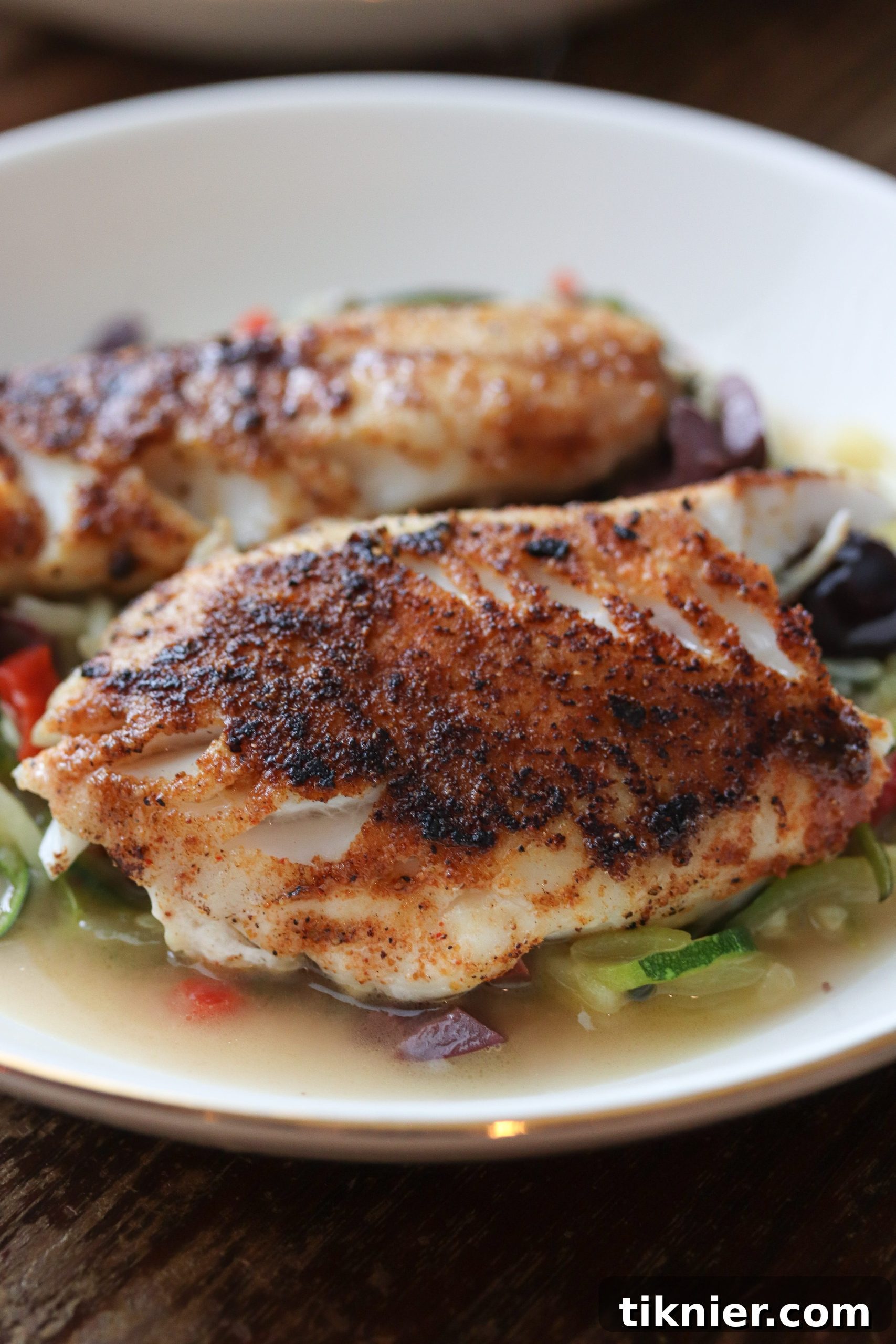
Embark on a culinary journey with this delectable and wholesome Mediterranean-seasoned Black Sea Bass, elegantly served atop grain-free, low-carb zucchini noodles. This exquisite dish is remarkably easy to prepare, making it a perfect choice for a quick yet gourmet meal ready in under 30 minutes!
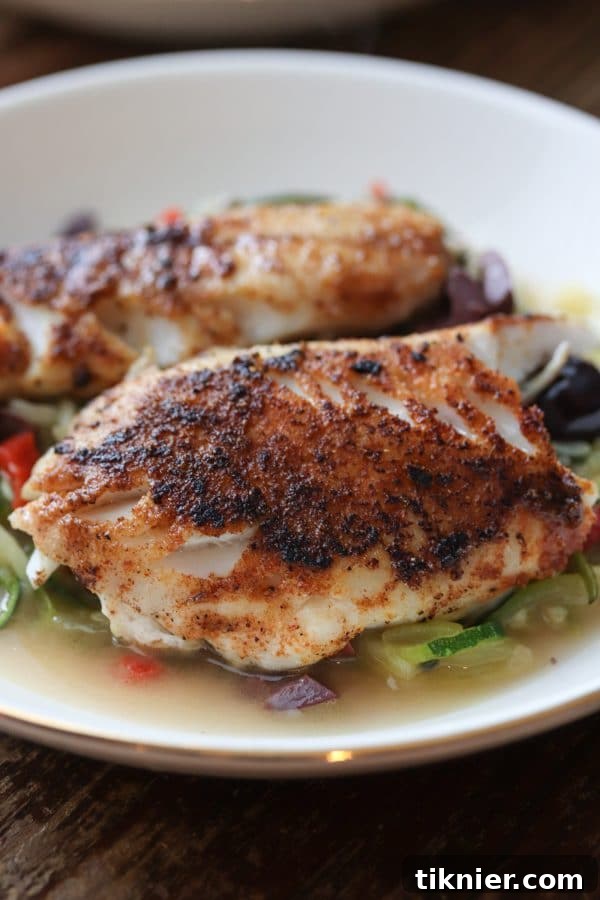
There’s a reason this Black Sea Bass recipe quickly became a staple in my kitchen, making its way onto my dinner plate not just once, but twice in the same week! When I say it’s both incredibly delicious and astonishingly easy to prepare, I mean it. Few dishes achieve such repeat performance, unless we’re talking about beloved leftovers. This recipe, however, is so fresh and satisfying, you’ll want to make it from scratch again and again.
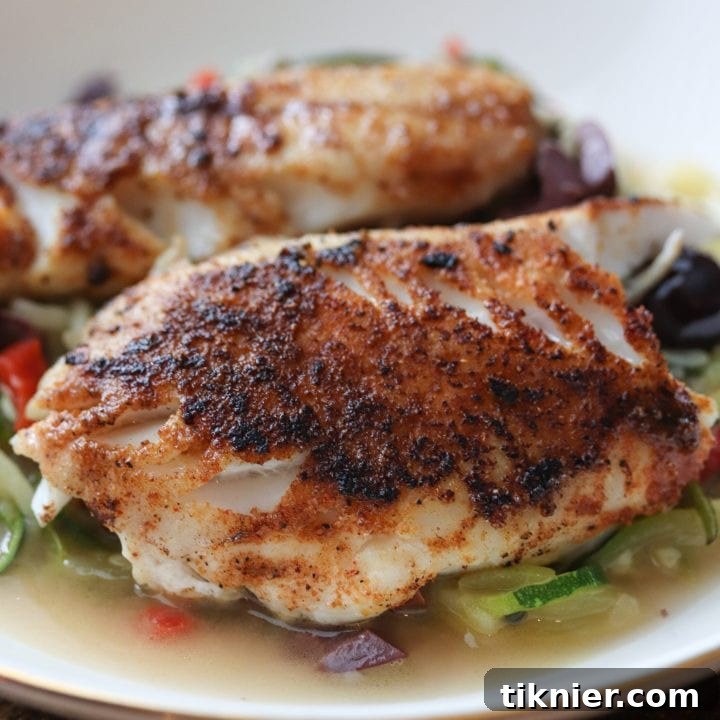
Our Black Sea Bass is generously seasoned with a thoughtfully crafted Mediterranean-inspired spice blend, then perfectly pan-seared. The result is a fish that boasts a beautifully flaky texture and tender, juicy meat, achieving culinary perfection with minimal effort. The rich flavors of the Mediterranean effortlessly elevate the natural sweetness of the sea bass.
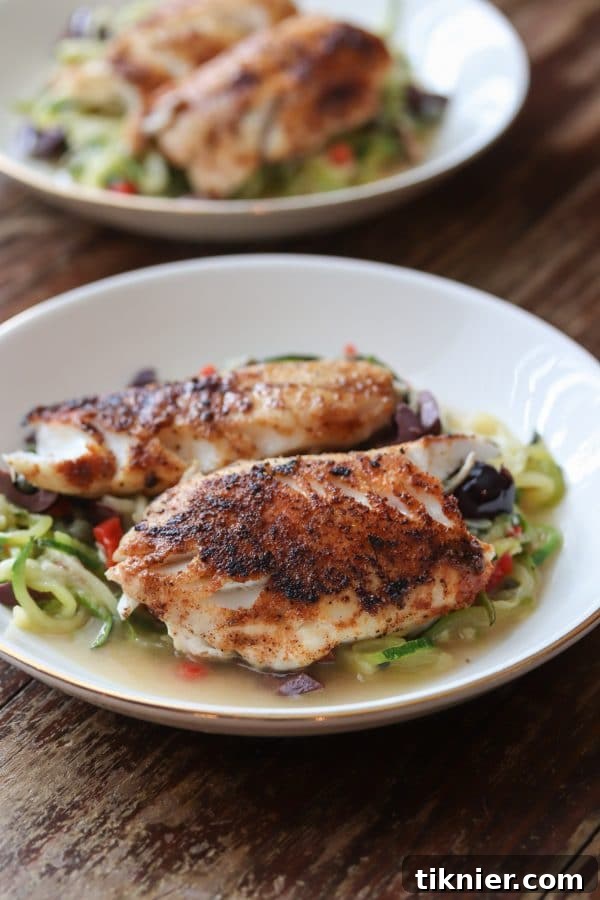
Complementing the fish are vibrant zucchini noodles, affectionately known as zoodles. These slender strands offer a fantastic, healthy, and grain-free alternative to traditional pasta, making them ideal for low-carb and keto lifestyles. They are sautéed just until tender, then tossed with a medley of flavorful ingredients: sweet diced pimentos, briny capers, savory Kalamata olives, a bright splash of lemon juice, and a touch of rich butter. Crown these exquisite noodles with your perfectly pan-seared Black Sea Bass, and you’ve created a healthy, gourmet dinner that will impress even the most discerning palates.
Life, as it often does, has a way of sweeping us up in its currents. My intention was to share this incredible Black Sea Bass recipe with you much sooner, but recent events took precedence. Between embracing a new role at my company following a promotion, diving deep into the learning curve of said new job (a process still very much underway!), and embarking on an unforgettable midwest road trip (a story I’m eager to share in a future post!), my culinary content creation took a slight detour. And, of course, there’s always the inevitable post-work desire to simply unwind and be a little lazy.
Does that sound familiar? Do the demands of daily life sometimes put your ambitious cooking plans on hold?
Rest assured, the wait is over! Let’s now dive straight into the heart of this recipe. I genuinely hope you’ll savor this Black Sea Bass and zucchini noodle creation as much as I do. It truly is a dish worth making room for, even on the busiest of weeks!
Skip to My Special Recipe!
Why This Black Sea Bass Recipe Works So Well for a Healthy and Flavorful Meal
Pan-seared fish is a culinary technique revered across the globe, especially in the sun-drenched coastal regions of the Mediterranean. Its enduring popularity stems from its elegant simplicity and its ability to perfectly showcase the delicate, fresh flavors of the fish itself. This method creates a thin, beautifully golden-brown crust on the exterior, offering a delightful textural contrast to the moist, flaky, and tender meat within. Beyond its textural appeal, pan-searing is a rapid cooking method that expertly locks in the fish’s natural juices and flavors, preventing it from drying out and ensuring every bite is succulent.
The timeless appeal of pan-searing lies in its accessibility. It doesn’t demand complicated techniques, nor does it require an extensive list of obscure ingredients. All you truly need is a quality skillet, a fresh piece of fish, and a judicious application of heat. This makes it an ideal cooking choice, whether you’re preparing a quick and satisfying weeknight dinner or aiming to impress guests on a special occasion without committing hours to the kitchen. It’s a method that consistently delivers restaurant-quality results in your home.
My unique rendition of this classic Mediterranean foundation introduces a delightful Southern twist: the inclusion of diced pimentos. While capers and Kalamata olives contribute a wonderfully briny, salty punch that is characteristic of Mediterranean cuisine, the pimentos bring a gentle sweetness and a subtle, almost smoky depth. This unexpected addition beautifully rounds out the entire flavor profile, softening the acidity and saltiness of the other ingredients and adding a layer of warmth and complexity that is utterly comforting and surprisingly harmonious.
It’s this subtle yet impactful twist that truly elevates this Black Sea Bass recipe, making it unforgettable. That unexpected pop of sweet, mild flavor from the pimentos transforms what could be a simple seared fish into a complete, perfectly balanced, and exciting meal. It bridges the gap between two distinct culinary worlds, creating a dish that feels both sophisticated in its execution and wonderfully familiar in its comforting taste, leaving you craving more with every forkful. This fusion truly highlights the versatility and adaptability of global flavors.
Essential Ingredients for Your Perfect Black Sea Bass Dinner
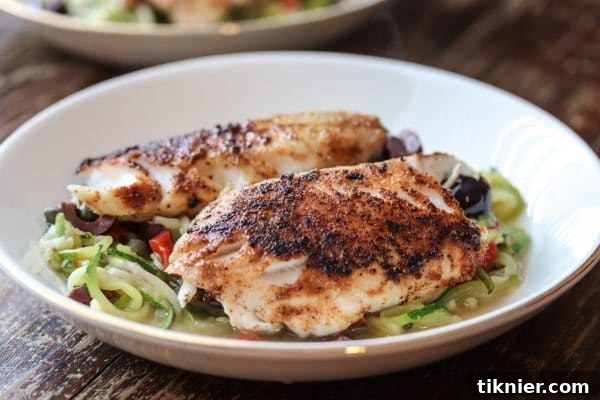
The true brilliance of this Black Sea Bass recipe lies in its emphasis on simple, yet extraordinarily high-quality ingredients. When preparing a delicate fish like Black Sea Bass, each component must contribute significantly to the overall flavor and texture, allowing the natural essence of the fish to truly shine. This recipe thoughtfully brings together a handful of fresh and vibrant items to craft a truly memorable and healthy meal. While the Black Sea Bass is undoubtedly the star, my secret ingredient is what subtly ties all these magnificent flavors together, creating a cohesive and satisfying experience.
My special twist, as mentioned, is the inclusion of diced pimentos. Often affectionately referred to as the “caviar of the South,” these sweet, vibrant red peppers are a visual delight, adding a gorgeous pop of color to the dish. More importantly, they contribute a subtle, smoky sweetness that exquisitely complements the sharp brininess of the capers and the salty depth of the olives. Pimentos are not just for garnish here; they actively transform the humble zucchini noodle base from a simple side dish into an integral and flavorful component of the entire meal’s profile. When you’re shopping, keep an eye out for diced pimentos typically sold in small jars, usually located near the olives and pickles section in most well-stocked grocery stores.
For the Black Sea Bass itself, **freshness is paramount** for achieving the best flavor and texture. If circumstances allow, I highly recommend purchasing your filets from a reputable local fishmonger on the very day you plan to cook. Fresh filets should exhibit a moist, firm appearance, free from any dullness or dryness. The flesh should be translucent and have a clean, oceanic scent. Similarly, when selecting your zucchini, opt for smaller, firm specimens. These tend to be less watery and possess a more concentrated, desirable flavor compared to their larger, often overgrown counterparts.
- 2 4oz Black Sea Bass filets (see notes for suitable substitutions)
- 2 tsp Mediterranean Seasoning Mix (detailed ingredients below)
- 1 tbsp unsalted butter or ghee, for searing the fish
- 2 medium to large zucchini, for spiralizing
- 1 tbsp Avocado Oil, coconut oil, or high-quality extra virgin olive oil, for sautéing noodles
- 1.5 tbsp diced pimentos, drained well
- 2 tbsp capers, drained and rinsed
- 5 whole pitted Kalamata olives, finely chopped
- 1/2 tbsp unsalted butter or ghee, for tossing with noodles
- A generous splash of fresh lemon juice (approx. 1-2 tsp)
- Extra sea salt and freshly ground black pepper, to taste, for the zucchini noodles
For the Signature Mediterranean Seasoning Mix:
- 1/2 tsp ground coriander
- 1/2 tsp garlic powder
- 1 tsp sweet paprika
- 1 tsp ground cumin
- 1/2 tsp fine sea salt
- 1/2 tsp freshly ground black pepper
Step-by-Step Instructions for Crafting Your Perfect Black Sea Bass Dish
This remarkable Black Sea Bass recipe comes together with impressive speed, making it an ideal candidate for busy weeknights. To ensure a seamless and stress-free cooking experience, it is highly advisable to adopt the French culinary technique known as ‘mise en place’ – meaning ‘everything in its place’. Have all your ingredients meticulously prepped, measured, and ready to go *before* you even contemplate turning on the stove. This simple organizational step will make the entire process flow effortlessly.
1. Create Your Aromatic Spice Mix
In a small, clean bowl, combine the ground coriander, garlic powder, sweet paprika, ground cumin, fine sea salt, and freshly ground black pepper. Use a small whisk or a fork to thoroughly blend these spices until they are evenly distributed. I often find it convenient to prepare a double or even triple batch of this versatile seasoning blend. Store any excess in a small, airtight jar in your pantry; it’s absolutely fantastic on grilled chicken, roasted vegetables, or even sprinkled on eggs for a flavorful twist. This ensures you’re always ready for a quick, flavorful meal.
2. Expertly Prepare the Black Sea Bass
Carefully remove your Black Sea Bass filets from the refrigerator. The most crucial step for achieving that coveted perfect, crispy sear is to ensure the fish is completely dry. Using paper towels, gently but thoroughly pat both sides of each filet until all surface moisture is absorbed. Remember, moisture is the arch-nemesis of a good crust! Once the filets are impeccably dry, sprinkle each one evenly with approximately 1 teaspoon of your freshly prepared seasoning mix, ensuring the entire surface is covered. Set the seasoned fish aside and allow it to rest while you turn your attention to preparing the vibrant zucchini noodles.
3. Prepare and Sauté the Zucchini Noodles to Perfection
Employing a spiralizer fitted with the small noodle attachment, transform your zucchini into long, delicate strands. Place the newly created zucchini noodles in a medium bowl. Lightly season them with a sprinkle of extra sea salt and pepper, then drizzle with 1 tablespoon of your chosen avocado oil, coconut oil, or extra virgin olive oil. Gently toss the noodles with tongs to ensure they are evenly coated. Heat a 10-inch cast iron skillet over medium heat. Once hot, add the zucchini noodles to the skillet. Cook them for approximately 5 minutes, tossing frequently with tongs, until they are just tender-crisp. It’s vital not to overcook them, as they can quickly become watery and lose their desirable texture. Once tender, reduce the heat to the lowest possible setting to simply keep them warm. Now, incorporate the drained diced pimentos, rinsed capers, finely chopped Kalamata olives, the remaining half tablespoon of butter, and a bright splash of fresh lemon juice. Toss everything together vigorously to combine all the wonderful flavors.
4. Master the Art of Cooking the Sea Bass
In a separate 12-inch cast iron skillet, melt 1 tablespoon of butter over medium to medium-high heat. The butter should be fully melted and just beginning to sizzle, but it’s important that it doesn’t brown or burn. If your Black Sea Bass filets still have the skin on, place them skin-side down into the hot skillet. You should immediately hear a satisfying sizzle. Gently press down on the filets with a fish spatula for a few seconds to ensure the entire skin surface makes full contact with the hot pan, promoting even crisping. Cook for 3 minutes without disturbing the fish. This allows a beautiful crust to form. Carefully flip the filets and cook for another 3 minutes on the other side. The fish is perfectly cooked when its flesh is opaque throughout and flakes effortlessly with the gentle prod of a fork. The total cooking time will typically range from 6 to 8 minutes, depending on the precise thickness of your individual filets. Precision here ensures a moist and tender result.
5. Thoughtfully Plate Your Mediterranean Masterpiece
Divide the warm, flavorful zucchini noodle mixture evenly between two shallow bowls, creating an inviting and colorful bed for the fish. With utmost care, place a perfectly seared Black Sea Bass filet on top of each mound of noodles. If you prefer a skinless presentation, you can gently remove the crispy skin from the fish before plating. For an optional but delightful final touch, consider sprinkling a small amount of crumbled feta cheese or freshly grated Parmesan cheese over the top, which adds an extra layer of salty, tangy flavor that complements the dish beautifully. Serve immediately and enjoy the fruits of your labor!
Creative Ways to Serve Your Mediterranean Black Sea Bass
This Black Sea Bass recipe, complete with its flavorful zucchini noodles, truly stands as a complete and satisfying meal on its own. The expertly seasoned fish delivers a lean protein punch, while the vibrant zucchini noodles, enriched with pimentos, olives, and capers, brilliantly serve as both your vegetable component and a delightful, savory sauce. It’s a beautifully self-contained dish that radiates elegance when thoughtfully plated in a shallow bowl. The striking visual contrast of the bright green zucchini, the deep purple hues of the Kalamata olives, and the vivid red of the pimentos creates a gorgeous canvas, perfectly highlighting the golden-seared Black Sea Bass placed gracefully on top.
However, if you’re looking to expand the meal, perhaps to accommodate a larger gathering or simply to add more variety, there are numerous wonderful accompaniments that harmonize beautifully with these Mediterranean flavors. The secret to successful pairing is selecting sides that complement the delicate taste of the sea bass without ever overwhelming its subtle nuances.
Here are a few of my favorite ideas for serving this exquisite dish:
- Crusty Artisan Bread: There’s truly nothing quite like a warm, crusty baguette or a thick slice of rustic sourdough bread. It’s the perfect vehicle for mopping up every last drop of the delectable juices and buttery sauce that inevitably gather at the bottom of your bowl. This adds a lovely texture and ensures no flavor goes to waste.
- A Simple, Refreshing Green Salad: A light and crisp side salad of mixed greens, perhaps adorned with some vibrant cherry tomatoes and thinly sliced cucumber, offers a refreshing counterpoint. Dress it simply with a classic lemon vinaigrette to add a zesty, bright element that cleanses the palate and complements the fish without competing.
- The Perfect Wine Pairing: This Mediterranean-inspired dish practically begs for a crisp, dry white wine. A vibrant Sauvignon Blanc from France’s Loire Valley, a refreshing Spanish Albariño, or a light and zesty Italian Pinot Grigio would all be exceptional choices. Their inherent bright acidity will gracefully cut through the richness of the butter and impeccably complement the delicate flavors of the Black Sea Bass, enhancing your dining experience.
- Complementary Grains: For those who desire a more substantial meal, a small portion of fluffy quinoa or a creamy, rich Parmesan polenta served alongside can be a wonderful addition. These grains offer a comforting base that absorbs the flavors beautifully while still keeping the meal balanced.
When you’re ready to plate your meal, remember that presentation can significantly enhance the dining experience. A final sprinkle of fresh, finely chopped parsley or delicate dill over the top can add a touch of verdant freshness and an appealing burst of color. Serving this meal is ultimately about celebrating simple, elegant flavors and ensuring they look as appealing and refined as they taste.
Storing & Reusing Your Black Sea Bass Leftovers
While this Black Sea Bass dish is undeniably at its peak when enjoyed fresh from the skillet, any leftovers can still be a delightful treat if handled with proper care. Cooked fish, by nature, can be a bit challenging to reheat without compromising its texture, but with the right storage and reheating techniques, you can confidently enjoy it the following day without significant loss of its wonderful flakiness and flavor. The key, as always, is gentleness and attention to detail.
First and foremost, allow any remaining portions to cool down to room temperature. However, it’s crucial not to leave them out for more than an hour or so to maintain food safety. Once cooled, store the Black Sea Bass filets and the zucchini noodle mixture in separate, airtight containers. Keeping them separated is a vital step: it prevents the fish from making the noodles soggy and helps preserve the distinct texture and integrity of both components, ensuring each remains enjoyable.
Your meticulously stored leftovers will maintain their quality in the refrigerator for up to two days. I generally advise against attempting to stretch their storage beyond this timeframe, as the delicate quality and flavor of the fish will begin to noticeably decline, and food safety concerns increase.
When it comes to creatively reusing your leftovers, here are a few inspired ideas:
- Gentle Skillet Reheating: The absolute best method to reheat the fish filet is in a skillet over very low heat with just a tiny pat of butter or a drizzle of olive oil. Warm it gently for only a minute or two on each side, just until it’s heated through. You can also achieve this by warming it in a preheated 275°F (135°C) oven for about 10 minutes. Crucially, avoid the microwave at all costs, as its intense, uneven heat will inevitably render the fish tough, dry, and rubbery, destroying its delicate texture.
- Flaked Fish Salad (My Personal Favorite!): A fantastic and effortless way to repurpose leftover fish is to transform it into a refreshing salad. Gently flake the cold sea bass apart with a fork and combine it with the leftover zucchini noodles. Add a fresh squeeze of lemon juice for brightness, and perhaps a handful of peppery arugula for an extra textural and flavor dimension. This makes for a delicious, light, and incredibly easy lunch that requires no reheating whatsoever – perfect for a quick midday meal.
- Dynamic Fish Tacos: Give your leftovers a whole new lease on life by turning them into vibrant fish tacos! Gently flake the remaining fish and warm it softly in a skillet. Serve these delicate flakes in warm corn tortillas, topped with a crisp slaw, a sprinkle of fresh cilantro, and a zesty drizzle of lime crema. This completely reinvents the meal, offering a fresh and exciting culinary experience.
By properly storing and creatively reheating your Black Sea Bass leftovers, you ensure that none of your delicious cooking goes to waste. It’s a smart and satisfying way to extract a second, equally wonderful meal from your initial culinary efforts.
Versatile Substitutions & Creative Variations for Your Black Sea Bass
One of the aspects I cherish most about cooking is the inherent freedom to personalize a recipe, transforming it into something uniquely your own. This Black Sea Bass dish is wonderfully adaptable, lending itself beautifully to a myriad of substitutions and creative variations. Whether you need to swap an ingredient based on what’s readily available at your local market or you’re simply eager to experiment with different flavor profiles, there are countless ways to infuse your personal touch into this delightful meal.
The most evident and frequent substitution you might consider is the fish itself. While Black Sea Bass is truly exquisite with its delicate flavor and firm texture, you can achieve excellent results using any other firm, mild white fish. This recipe is notably forgiving, so feel free to explore and experiment with confidence.
Here are some of my go-to substitutions and imaginative variations to inspire your culinary creativity:
- Alternative Fish Choices: If Black Sea Bass is unavailable, don’t despair! Try using halibut, haddock, cod, or even snapper. Each offers a unique character, but all will perform well. Remember to adjust the cooking time slightly based on the specific thickness of your chosen filet. Chilean Sea Bass also works beautifully, though it possesses a distinctly richer, more buttery flavor profile and higher oil content, making it a more luxurious option.
- Vegetable Swaps for Zucchini Noodles: Not everyone is a fan of zucchini noodles, and that’s perfectly fine! This dish is equally fantastic served over a tender bed of sautéed spinach with garlic, alongside perfectly roasted asparagus spears, or even atop a creamy, comforting polenta. You can also explore other spiralized vegetables such as sweet potato noodles for a touch of sweetness and increased fiber, or delicate yellow squash noodles for a similar texture to zucchini.
- Introduce a Hint of Heat: For those who appreciate a lively kick, a small pinch of red pepper flakes can be a wonderful addition. Incorporate them into your spice mix for the fish, or toss a few into the zucchini noodles along with the pimentos and olives for a pleasant, warming spice.
- Elevate with Fresh Herbs: To infuse an extra layer of freshness and aromatic complexity, stir in a tablespoon of freshly chopped herbs just before serving. Fresh dill would perfectly complement the seafood and Mediterranean theme, while vibrant parsley offers a clean, peppery note. Delicate chives also provide a subtle oniony freshness that enhances the overall flavor.
- Adapt for Dietary Preferences: To easily make this dish entirely dairy-free, simply substitute the butter with an equal amount of high-quality ghee (which is clarified butter and often tolerated by those with dairy sensitivities) or a robust extra virgin olive oil for both searing the fish and tossing the noodles. The great news is that this recipe is already naturally gluten-free and inherently low-carb, making it a fantastic choice for various dietary needs.
Above all, don’t hesitate to play around with the ingredients and make this recipe truly your own. You could, for instance, swap the bold Kalamata olives for the milder, fruitier Castelvetrano variety, or add a handful of sun-dried tomatoes to the zucchini mixture for an additional layer of concentrated savory flavor. Cooking should be an enjoyable, creative process, so use this incredibly versatile recipe as a delicious and inspiring starting point for your culinary adventures!
Black Sea Bass with Zucchini Noodles
2 servings
10 minutes
15 minutes
25 minutes
Delicious and healthy Mediterranean seasoned Black Sea Bass served with grain-free and low-carb zucchini noodles. So easy to make and ready to serve in under 30 minutes!
Ingredients
- 2 4oz black sea bass filets **see notes for substitutions
- 2 tsp seasoning mix (see ingredients below)
- 1 tbsp butter or ghee
- 2 large zucchini
- 1 tbsp Avocado Oil, coconut oil or extra virgin olive oil
- 1.5 tbsp of diced pimentos
- 2 tbsp capers
- 5 whole pitted kalamata olives, chopped
- 1/2 tbsp unsalted butter or ghee
- splash of lemon juice
- Extra sea salt and pepper for the zucchini noodles
- 1/2 tsp ground coriander
- 1/2 tsp garlic powder
- 1 tsp paprika
- 1 tsp ground cumin
- 1/2 tsp sea salt
- 1/2 tsp ground black pepper
Instructions
- Make the spice mix. Combine all spice mix ingredients and mix well.
- Prepare the sea bass. Dry the filets and then sprinkle each sea bass filet with 1 tsp of the seasoning mix. Set aside.
- Prepare and cook the zucchini noodles. Spiralize the zucchini noodles with the small noodle attachment. Sprinkle with sea salt, pepper and 1 tbsp of oil. Toss to coat. Heat a 10 inch cast iron skillet over medium heat and add the zucchini noodles. Cook until tender, about 5 minutes, mixing often. Tongs work well for this. After cooking reduce the heat to the lowest setting you can – you just want to keep the noodles warm. Add the pimentos, capers, chopped kalamata olives, 1/2 tbsp butter and splash of lemon juice. Toss to combine.
- Cook the sea bass. Heat 1 tbsp of butter in a 12 inch cast iron skillet over medium heat. If your sea bass has skin, place skin side down first and cook for 3 minutes. Flip over and cook for another 3 minutes. Flip back over and cook until the fish is flaky, 4-5 minutes.
- Plate your meal. Divide the zucchini noodles among two bowls. Top with the seared sea bass. You can remove the skin from the sea bass before placing on top of the zucchini noodles, if desired Sprinkle with parmesan cheese or feta cheese if desired.
Notes
Nutrition information calculated using My Fitness Pal and is an estimate. These calculations do not include the spices. Here is a link to the recipe in My Fitness Pal for your reference. Black Sea Bass. **you may use Chilean Sea Bass, Haddock or Halibut if you cannot find Black Sea Bass. Adapted from The Mediterranean Dish
Nutrition Information:
Yield: 2
Serving Size: 1 bowl
Amount Per Serving:
Calories: 345 Total Fat: 21g Carbohydrates: 20g Fiber: 4g Protein: 22g
5 Essential FAQs About Black Sea Bass and This Recipe
Here are comprehensive and straightforward answers to the most frequently asked questions I receive about Black Sea Bass and this particular recipe, designed to help you master this delicious dish.
What does Black Sea Bass truly taste like, and what is its texture?
Black Sea Bass boasts a wonderfully delicate, mild, and clean flavor profile, which is precisely why it’s so highly sought after by both professional chefs and home cooks. Its taste is subtly sweet, without the pronounced “fishy” aroma or strong flavor that can sometimes be associated with other ocean fish. This makes it an excellent, approachable choice for individuals who might be new to or hesitant about incorporating more fish into their diet. Furthermore, its mildness makes it incredibly versatile, acting as a perfect canvas for a wide array of seasonings and culinary preparations.
Its texture is another one of its standout qualities. The flesh is firm, lean, and beautifully white, yet it transforms into an incredibly flaky and tender consistency once cooked. It holds its shape remarkably well during the cooking process, making it an ideal candidate for methods like pan-searing, grilling, or broiling. Because its inherent flavor is so subtle and refined, Black Sea Bass readily absorbs and enhances the flavors of the spices, herbs, and sauces you choose to pair it with, resulting in a harmonious and memorable culinary experience.
How can I confidently tell when my Black Sea Bass is cooked perfectly?
Achieving perfectly cooked fish can sometimes feel intimidating, but there are a couple of straightforward and reliable methods to determine when your Black Sea Bass is done. The most accurate and recommended technique is to use an instant-read meat thermometer. Insert the thermometer into the thickest part of the filet; it should register an internal temperature of 145°F (63°C). At this precise temperature, the fish will be thoroughly opaque and cooked through, yet it will remain beautifully moist and tender, never dry.
If you don’t have an instant-read thermometer readily available, you can employ the classic “flake test.” Gently insert the tip of a fork or a small, sharp knife into the thickest part of the fish and give it a slight twist. If the fish is properly cooked, the flesh will easily flake apart into nice, distinct, and opaque chunks. Conversely, if it still appears translucent in the center or resists flaking, it requires another minute or two of cooking time. Always exercise caution to avoid overcooking, as Black Sea Bass can quickly transition from perfectly flaky to disappointingly dry if left on the heat for too long.
Is it advisable to cook Black Sea Bass with the skin on, and why?
Absolutely! In fact, I highly recommend cooking Black Sea Bass with the skin on, especially when pan-searing. When prepared correctly, the skin transforms into an incredibly crispy and delightfully flavorful texture, providing a wonderful textural contrast to the tender, moist flesh beneath. Beyond its culinary appeal, leaving the skin on serves a practical purpose: it acts as a protective layer, shielding the delicate fish from the direct heat of the pan. This protection is crucial in preventing the fish from overcooking and drying out, helping to lock in moisture and flavor.
The secret to achieving that irresistible crispy skin lies in two key steps: first, ensure the filet is thoroughly patted dry with paper towels before you apply any seasoning. Any residual moisture will steam the skin rather than crisp it. Second, place the fish skin-side down into a hot, well-oiled skillet. Upon placement, gently press down on the filets with a fish spatula for a few seconds. This ensures that the entire surface of the skin makes full, even contact with the hot pan, facilitating uniform browning and crisping. Resist the temptation to move the fish around during the initial few minutes of cooking; this undisturbed time is essential for developing that beautiful, golden-brown, and crispy crust.
Is Black Sea Bass considered a sustainable fish choice, and what should I look for?
This is an excellent and increasingly important question, and it’s a concern I actively prioritize in my own kitchen. Generally speaking, Black Sea Bass sourced from the U.S. Atlantic is widely considered a sustainable seafood choice. The populations are typically well-managed, and fishing practices are regulated to prevent overfishing, ensuring a healthy and resilient stock. However, it’s important to note that sustainability status can sometimes vary based on the specific geographical location of the catch and the particular fishing methods employed.
To make the most informed and responsible choice, I strongly recommend consulting the latest recommendations from highly reputable sources such as the Monterey Bay Aquarium Seafood Watch program or the NOAA Fisheries website. These organizations provide up-to-date information and comprehensive guides on the status of various fish populations and their sustainability ratings. When you are at your fish counter, do not hesitate to engage with your fishmonger. A knowledgeable and responsible fishmonger should be able to provide you with precise information regarding the origin of their fish and its harvesting methods, empowering you to make the best decision.
What is the key difference between Black Sea Bass and Chilean Sea Bass?
This is a very common point of confusion for many consumers, and it’s a crucial distinction to understand because, despite their similar names, they are two entirely different species of fish, completely unrelated to each other. Black Sea Bass is a true bass, indigenous to the Atlantic Ocean, primarily found off the coast of the United States. As we’ve discussed, it’s a smaller fish characterized by a mild, delicate flavor and a firm, beautifully flaky texture.
Chilean Sea Bass, on the other hand, is not a bass at all. Its authentic name is the Patagonian Toothfish, and it inhabits the frigid, deep waters surrounding Antarctica. The rebranding to “Chilean Sea Bass” was primarily for marketing purposes, aimed at making it more appealing to consumers. It is a significantly larger fish with a remarkably high oil content, which imparts a distinctly rich, buttery flavor and a luxurious, silky, moist texture. While both fish are undoubtedly delicious in their own right, they possess distinctly different flavor profiles and textural characteristics. Additionally, Chilean Sea Bass is almost always considerably more expensive due to its unique qualities and the challenges associated with its harvesting.
Explore These Other Flavorful Seafood Recipes Next!
If you’ve thoroughly enjoyed crafting and savoring this fresh and flavorful Black Sea Bass recipe, I have a few other seafood-centric dishes that I’m confident you will absolutely love. These recipes continue the theme of delicious, accessible, and often quick meals that bring vibrant flavors to your table.
- Blackened Fish Tacos with a Creamy Slaw: Perfect for a fun, zesty, and subtly spicy take on your next fish night. These tacos are always a hit and are incredibly customizable, making them a fantastic option that the whole family is sure to enjoy.
- Sheet Pan Salmon with Lemon and Dijon: Discover the ultimate in convenience and elegance with this dish. It’s a super easy and incredibly flavorful weeknight meal that requires minimal cleanup, making it a dream for busy evenings when you crave something wholesome and satisfying.
- Broiled Tilapia with Chipotle Peach Salsa: Prepare to tantalize your taste buds with this bright, dynamic, and wonderfully flavorful dish. It comes together in mere minutes, making it an ideal choice, especially during the warmer months when fresh peaches are in season, offering a delightful blend of sweet and smoky notes.
I genuinely hope these carefully selected recipes bring a little something extra special and delicious to your dinner table, inspiring more culinary adventures in your kitchen!