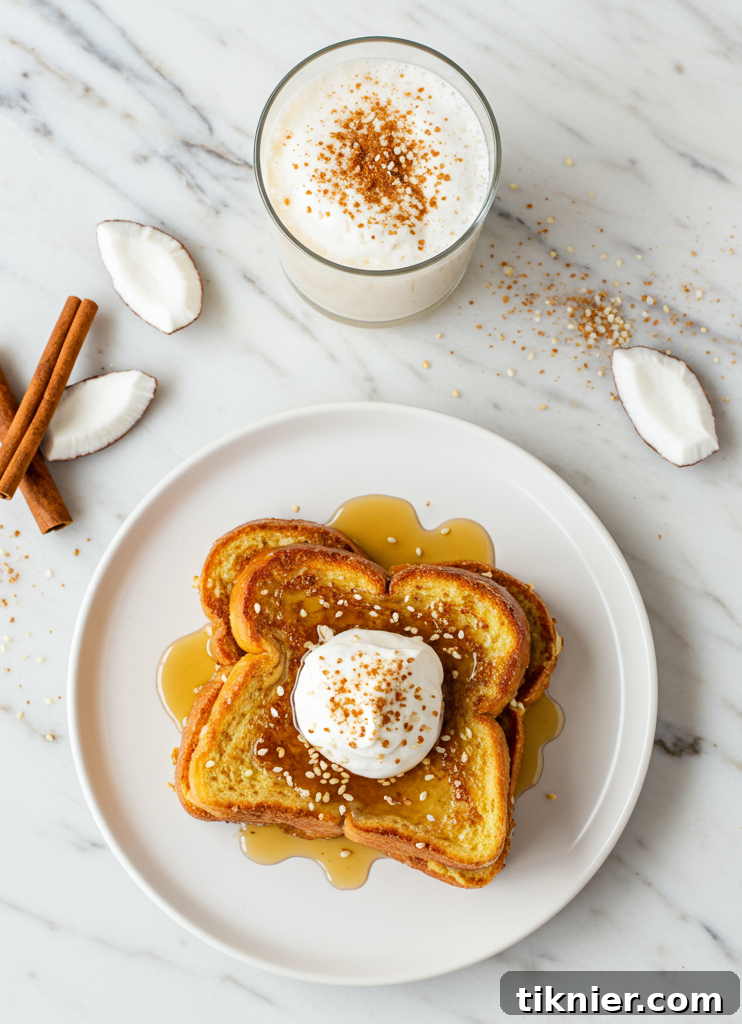
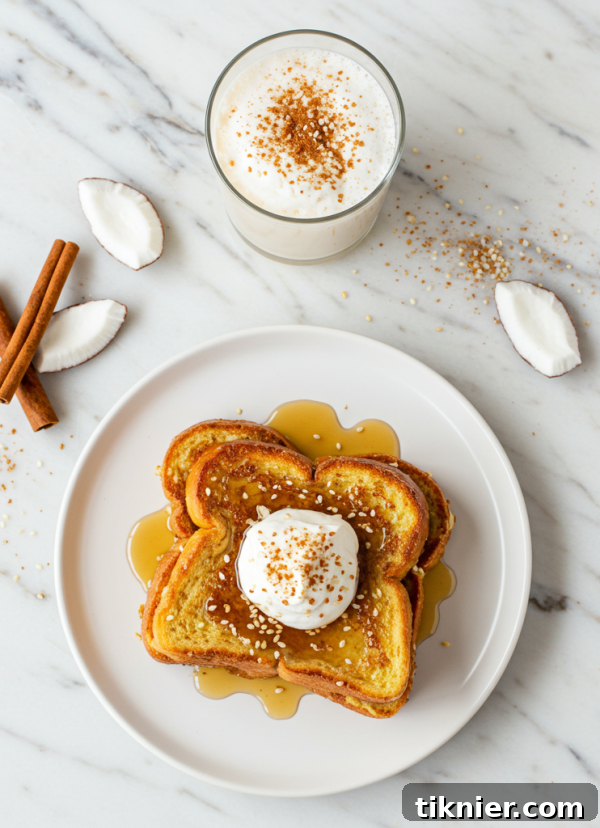
French toast is an undeniable breakfast classic, a beloved brunch centerpiece that evokes warmth, comfort, and nostalgia. For many, it’s a cherished weekend tradition, filling the kitchen with the inviting aroma of cinnamon and sweet bread, much like my grandmother’s house on a Sunday morning. This delightful dish, often thought to require milk for its signature custardy texture, can be enjoyed by everyone, including those seeking a dairy-free option or simply finding themselves out of milk.
Imagine crafting a plate of golden, perfectly cooked French toast that doesn’t just meet expectations but exceeds them, all while being completely milk-free. This isn’t just a substitute; it’s an elevated experience. The secret lies in a luxurious ingredient that brings a unique richness and subtle sweetness: full-fat coconut cream. This creamy alternative transforms ordinary French toast into something truly extraordinary, ensuring you won’t miss the dairy one bit.
To further enhance this milk-free French toast, we introduce a delightful culinary twist: toasted sesame seeds. These tiny seeds, once lightly toasted, release a nutty aroma and provide a delicate crunch that contrasts beautifully with the soft, custardy bread. It’s a simple yet impactful addition that elevates the flavor profile, adding an unexpected layer of sophistication to a familiar comfort food. Get ready to rediscover French toast, reimagined for a modern palate – it’s creamy, dreamy, dairy-free, and utterly delicious.
Why This Milk-Free French Toast Recipe Is a Game-Changer
I’ve always believed that French toast, a universal symbol of breakfast indulgence, should be accessible to everyone, regardless of dietary needs or what’s currently in the fridge. This recipe stands as a testament to that philosophy, brilliantly demonstrating that you absolutely do not need traditional milk to create a truly delicious and satisfying French toast experience. In fact, simple, thoughtful substitutions can unlock an entirely new world of flavor and texture, making classic dishes even more exciting.
So, what exactly makes this dairy-free French toast so remarkably special and effective? It all starts with the carefully chosen foundation. Our star ingredient, coconut cream, steps in as a superior milk alternative. Unlike thinner plant-based milks, full-fat coconut cream delivers an unparalleled richness and a delightful, subtle sweetness that cow’s milk simply can’t replicate. Its thick, velvety consistency is perfectly suited for soaking into the bread, ensuring that each slice develops that coveted custardy interior without becoming waterlogged or soggy.
Beyond the creamy base, my unique twist elevates this dish further: toasted sesame seeds. These unassuming seeds undergo a magical transformation when gently toasted. The heat coaxes out their deeply nutty, aromatic oils, creating an intoxicating fragrance. When sprinkled over the soft French toast, they provide a delightful textural contrast—a delicate crunch that harmonizes beautifully with the smooth, tropical notes of the coconut. This combination is not just a substitute; it’s an intentional pairing that creates a more complex and engaging flavor profile.
Furthermore, the higher fat content of coconut cream plays a crucial role in the cooking process. It contributes to a beautifully golden-brown crust that caramelizes exquisitely in the pan, achieving that desirable crisp exterior while keeping the inside wonderfully moist. This ensures your French toast is never soggy, but always perfectly cooked with a delightful chew. The gentle heat of the skillet then works its magic, bringing all these wonderful flavors together to create a breakfast that is both comforting in its familiarity and delightfully unexpected in its gourmet twist. This milk-free French toast is genuinely a treat that will impress even the most discerning palates.
Essential Ingredients for Dairy-Free French Toast
Gathering the right ingredients is the first step towards creating this cozy, comforting, and utterly delicious twist on a breakfast classic. We’re swapping out traditional milk for rich coconut cream and adding a distinctive nutty hint of toasted sesame, promising a French toast experience that’s both familiar and wonderfully novel. Here’s what you’ll need to create this gourmet milk-free French toast:
- 6 slices of bread: For the best results, opt for rich, sturdy bread like brioche or challah. Their slightly sweet flavor and robust texture hold up well to soaking without falling apart, resulting in a supremely custardy interior. Day-old bread works even better as it absorbs the custard more effectively.
- 1 (13.5 oz) can full-fat coconut cream: This is the cornerstone of our milk-free recipe. For optimal thickness and richness, ensure you purchase full-fat coconut cream (not light coconut milk) and refrigerate it overnight. This allows the solid cream to separate and rise to the top, making it easy to scoop out the thickest, most decadent part.
- 2 large eggs: Essential for binding the custard and giving the French toast its classic structure and golden hue.
- 2 tablespoons granulated sugar: Provides a touch of sweetness to complement the coconut and enhance the browning of the bread. Adjust to your preference.
- 1 teaspoon vanilla extract: A classic addition that rounds out the flavors and adds a warm, inviting aroma to the custard.
- 1/4 teaspoon ground cinnamon: The quintessential French toast spice, offering warmth and depth that pairs beautifully with both coconut and sesame.
- Pinch of salt: A small but mighty ingredient that balances the sweetness and enhances all the other flavors, making them pop.
- 2 tablespoons sesame seeds: These tiny powerhouses add a fantastic nutty flavor and a delightful crunch. Make sure to toast them properly for maximum impact.
- 2 tablespoons coconut oil: Perfect for cooking the French toast. Coconut oil imparts a subtle tropical flavor that complements the coconut cream beautifully and helps achieve a golden, crisp exterior.
- Maple syrup: For serving. A drizzle of high-quality maple syrup is the perfect classic accompaniment.
- Fresh berries: For serving. Bright, juicy berries like raspberries, blueberries, or sliced strawberries add a vibrant burst of freshness and color.
Remember, toasting the sesame seeds is a critical step that unlocks their full flavor potential and provides that delightful textural contrast. Use a dry skillet over medium-low heat and stir constantly, as they can burn very quickly. Once golden and fragrant, remove them from the pan immediately to cool. With these carefully selected ingredients, you’re all set to create an unforgettable milk-free French toast experience.
Step-by-Step Guide to Crafting Milk-Free French Toast
French toast is more than just a meal; it’s a comforting ritual that feels like home. But if you’re seeking a dairy-free alternative or simply want to try something refreshingly different, I’ve got you covered. This recipe transforms the classic with creamy coconut and a satisfying nutty crunch from toasted sesame seeds. It’s a simple yet elegant twist that elevates the traditional breakfast to a gourmet experience, and I’m confident you’ll adore it.
1. Perfectly Toast Your Sesame Seeds
Toasting is crucial for unlocking the deep, nutty flavor and intoxicating aroma of sesame seeds. This step truly enhances the overall taste of your French toast.
Begin by placing the sesame seeds in a small, dry skillet over medium-low heat. Stir them frequently with a wooden spoon or spatula to ensure even toasting and prevent burning. Watch them closely, as they can go from golden to burnt in a matter of seconds. Continue toasting until they turn a beautiful golden brown and become wonderfully fragrant, typically taking about 3 to 5 minutes. Once toasted, immediately remove them from the hot pan and spread them on a cool plate to stop the cooking process. Set them aside to cool completely.
2. Prepare the Luxurious Coconut Cream Custard Mixture
Now, let’s create the heart of our milk-free French toast: the rich coconut cream custard. This is where the magic truly begins, as the coconut cream provides an unparalleled richness, subtle sweetness, and wonderfully creamy texture that will make you forget all about traditional milk.
In a wide, shallow dish (perfect for dipping bread), combine the solid part of one can of full-fat coconut cream (scooped from the top after refrigerating overnight), two large eggs, two tablespoons of granulated sugar, one teaspoon of vanilla extract, and a pinch of salt. Whisk all these ingredients vigorously until they are thoroughly combined, smooth, and lump-free. The mixture should have a uniform, creamy consistency.
3. Perfectly Soak the Bread
This is a critical step where your bread absorbs all the decadent flavors of the coconut custard. Proper soaking ensures a soft, custardy interior without the bread becoming overly soggy or falling apart.
Gently dip each slice of your chosen bread (brioche or challah work best) into the prepared coconut cream mixture. Ensure both sides are thoroughly coated. Allow the bread to soak for approximately 15-20 seconds per side. This timeframe allows the bread to absorb ample liquid, creating that desirable richness, while preventing oversaturation. Lift the bread carefully, allowing any excess custard to drip back into the dish.
4. Cook Your Golden French Toast
Achieving that beautiful golden-brown crust and a perfectly cooked interior requires attention to detail during this step.
Heat a lightly oiled griddle or a large non-stick skillet over medium heat. You can use coconut oil, butter, or your preferred cooking fat. Ensure the pan is adequately hot, but not smoking, before adding the bread. Carefully place the soaked bread slices onto the hot griddle, making sure not to overcrowd the pan. Cook for about 2-3 minutes per side, or until each side is beautifully golden brown and the French toast is cooked through. The coconut cream will contribute to a lovely caramelized crust and a wonderfully fragrant aroma. Adjust heat if necessary to prevent burning.
5. Serve and Savor Your Creation
The moment you’ve been waiting for! French toast is always best enjoyed fresh and warm.
Serve your coconut cream French toast immediately, directly from the griddle. For an exquisite finish, generously sprinkle the top with the cooled, toasted sesame seeds. A decadent drizzle of maple syrup is always a welcome addition, and a dollop of fresh fruit, such as vibrant berries, adds a touch of freshness and color. You’ll find this unique, milk-free twist on a beloved classic to be incredibly delicious and deeply satisfying. Enjoy every single bite!
Enhancing Your Milk-Free French Toast Experience: Serving Suggestions
Serving French toast is an art form, a chance to transform simple slices into a show-stopping breakfast or brunch masterpiece. It’s about more than just placing food on a plate; it’s about creating a balanced, aesthetically pleasing, and utterly delicious experience. For this Coconut Cream & Toasted Sesame French Toast, I like to think about layers of flavor and texture that truly celebrate its unique profile.
To begin, a delicate dusting of powdered sugar adds a touch of elegance and visual appeal. It melts slightly into the warm French toast, providing a whisper of sweetness. Next, don’t hold back on the star ingredient itself: a generous dollop of that glorious coconut cream, perhaps lightly whipped, can be placed alongside or on top. Its luxurious richness is truly divine and harmonizes exquisitely with the subtle, nutty undertones of the sesame.
The toasted sesame seeds are non-negotiable for serving! They are not just a garnish but a crucial component that provides a delightful crunch and intensifies the nutty, aromatic flavor. A generous sprinkle over each slice goes a long way, ensuring every bite includes that fantastic textural contrast. For those who appreciate a classic touch, a drizzle of high-quality maple syrup is always welcome. However, this French toast is so incredibly flavorful on its own that it truly doesn’t require much else to shine.
To balance the richness, I often include a vibrant side of fresh berries. A colorful assortment of raspberries, blueberries, or sliced strawberries adds a beautiful pop of color and a much-needed touch of acidity to cut through the decadent sweetness. For those who prefer a more robust meal, pairing the sweet French toast with a savory element is perfection. Crispy bacon or savory breakfast sausage provides an ideal salty counterpoint, creating a well-rounded and deeply satisfying brunch spread.
No matter how you choose to present it, ensure your French toast is served warm and inviting. This dish is meant to be shared and enjoyed with loved ones. So, set a beautiful table, pour some freshly brewed coffee, and let the good times and delicious flavors roll.
Storing & Reusing Leftover Milk-Free French Toast
It’s always a joy to make a big batch of French toast, but sometimes, even with the best intentions, you might end up with a few slices left over. The good news is that French toast, especially this Coconut Cream & Toasted Sesame version, is remarkably forgiving and reheats beautifully, making it perfect for a quick breakfast on a busy weekday morning or a creative culinary experiment.
Storing Leftover French Toast:
Proper storage is key to maintaining the quality and preventing sogginess. First and foremost, allow the French toast slices to cool completely to room temperature before storing them. This step is crucial because warm French toast placed directly into a container will create condensation, leading to undesirable soggy results.
Once cooled, place the slices in an airtight container or a heavy-duty zip-top bag. If you need to stack multiple slices, it’s highly recommended to place a piece of parchment paper or wax paper between each slice. This prevents them from sticking together and makes them easier to separate when reheating. Store the container in the refrigerator for up to 2-3 days.
Reheating Your Milk-Free French Toast:
Several methods work well for reheating, each offering a slightly different result:
- Oven or Toaster Oven (Recommended): This is my absolute favorite method for reheating French toast as it helps to crisp up the exterior beautifully while ensuring the interior remains soft. Preheat your oven or toaster oven to 350°F (175°C). Arrange the French toast slices in a single layer on a baking sheet. Bake for about 7-10 minutes, flipping them halfway through, until they are heated through and the edges are slightly crispy and golden.
- Toaster: For a quick reheat, a toaster can work wonders. Place a single slice in each slot and toast on a medium-low setting. You might need to toast it a couple of times to achieve desired warmth and crispness, but keep a close eye on it to prevent burning, especially with the sugar content.
- Microwave: While convenient, reheating in the microwave will result in softer, less crispy French toast. If time is of the essence, place slices on a microwave-safe plate and heat on medium power for 30-60 seconds per slice, depending on thickness, until warmed through.
Creative Ways to Reuse Leftover French Toast:
Don’t let those delicious Coconut Cream & Toasted Sesame French toast slices go to waste! Get creative and transform them into exciting new dishes:
- French Toast Croutons: Cut the leftover slices into small cubes. Reheat them in the oven or air fryer until extra crispy. These make fantastic, slightly sweet, and savory croutons for a fresh green salad, adding a lovely unexpected texture and flavor.
- Yogurt or Ice Cream Topping: Crumble the cooled French toast slices into smaller pieces. Sprinkle them over a bowl of yogurt, a scoop of vanilla ice cream, or even oatmeal. The toasted sesame seeds provide a delightful crunch and unique flavor that elevates simple desserts or breakfasts.
- Quick Bread Pudding Base: Leftover French toast is an excellent foundation for a speedy bread pudding. Cut the slices into chunks, arrange them in an oven-safe dish, pour a simple custard (eggs, milk alternative, sugar, spices) over them, and bake until set. You’ll have a delightful, easy dessert in no time!
- Sweet & Savory Sandwich: Use two slices as the “bread” for a unique sandwich. Fill it with cream cheese, sliced fruit, or even a thin slice of ham for a fascinating flavor combination.
With these tips, your delicious milk-free French toast will never go to waste, ensuring every last bite is enjoyed to its fullest potential!
Inspiring Substitutions & Creative Variations for Milk-Free French Toast
One of the true joys of cooking is the freedom to adapt, innovate, and personalize recipes to suit your pantry, preferences, or dietary needs. This Coconut Cream & Toasted Sesame French Toast recipe, while a delicious departure from the norm, serves as a fantastic canvas for your own culinary creativity. Don’t be afraid to experiment and make it uniquely yours! Here are a few inspiring ideas to get you started on your journey to customized, dairy-free French toast perfection:
- Diverse Milk Alternatives: While coconut cream offers unparalleled richness, you have a wealth of other plant-based milk options. If coconut isn’t your preferred flavor, try unsweetened almond milk, soy milk, or oat milk. Each will subtly alter the flavor profile – almond milk offers a delicate nuttiness, soy milk provides a neutral creaminess, and oat milk lends a naturally sweet, almost malty note. Remember that thinner milks might require a slightly longer soak time or an extra egg to maintain custard consistency.
- Explore Different Bread Bases: Brioche and challah are fantastic for their rich texture, but don’t limit yourself! A good quality sourdough can introduce a pleasant tang, while a hearty whole wheat bread offers a denser, more wholesome option. For a gluten-free French toast, confidently use your favorite gluten-free bread. Just be mindful that gluten-free varieties often absorb liquids more quickly, so adjust your soaking time to prevent oversaturation.
- Sweetener Swaps & Enhancements: Maple syrup beautifully complements the coconut and sesame, but honey or agave nectar are excellent natural substitutes. For a deeper, more caramelized flavor, consider adding a tablespoon of brown sugar or even a touch of molasses to the custard mixture. You could also experiment with date syrup for a unique, fruity sweetness.
- Spice It Up: Beyond classic cinnamon and a hint of vanilla, the spice cabinet holds endless possibilities. A pinch of nutmeg or allspice can add traditional warmth. For an exotic twist, try a tiny bit of ground cardamom, which pairs exquisitely with coconut, or even a very, very small dash of ground ginger for a gentle warmth. Be judicious with potent spices!
- Alternative Nutty Goodness: If sesame seeds aren’t available or you’re looking for a different texture, chopped almonds, pecans, or walnuts make excellent substitutes. Lightly toast them before sprinkling to bring out their inherent nutty flavors. For a tropical flair, toasted coconut flakes can be folded into the batter or used as a garnish.
- Infuse with Fruit: Elevate the fresh fruit component by incorporating it directly into the cooking process. Before placing the custard-soaked bread into the pan, arrange a layer of thinly sliced bananas, apples, or berries on the griddle. Place the bread on top, allowing the fruit to caramelize slightly as it cooks, adding a burst of natural sweetness and soft texture to each bite.
- Zesty Citrus Notes: A tiny bit of orange or lemon zest grated into the custard mixture can brighten all the flavors and add a refreshing aromatic lift, cutting through the richness beautifully.
Remember, cooking should always be an enjoyable and exploratory process. These suggestions are merely jumping-off points. Feel empowered to mix and match, discover your own favorite combinations, and truly make this milk-free French toast recipe your signature dish. Happy cooking!
Frequently Asked Questions About Milk-Free French Toast
I frequently get asked a variety of questions about making delicious French toast without traditional dairy milk. Here are some of the most common inquiries and detailed answers to help you master this delightful dish:
Can you truly make delicious French toast without milk?
Absolutely, without a doubt! Not only is it possible, but it can also be incredibly delicious and even surpass traditional versions in richness and unique flavor. There are many fantastic milk alternatives that create a wonderfully rich and flavorful custard base. Coconut cream, as highlighted in this recipe, is a standout option. It contributes a luxurious richness and a subtle natural sweetness that pairs wonderfully with ingredients like toasted sesame seeds, adding an extra layer of gourmet flavor to your French toast.
What are the best substitutes for milk in French toast?
You have a plethora of excellent dairy-free options! Almond milk, soy milk, and oat milk are all popular and effective choices that provide a good base. However, for the most decadent, creamy, and satisfying results, I wholeheartedly recommend using thick, full-fat canned coconut cream, as I do in my Coconut Cream & Toasted Sesame French Toast. Its higher fat content and rich texture mimic the qualities of dairy milk more closely than thinner alternatives.
Will using a milk substitute significantly alter the taste of the French toast?
It might subtly change the flavor profile, depending on the specific substitute you choose. Coconut cream will impart a gentle, tropical coconut flavor, which I find exquisitely complements the nutty sesame seeds. Other milk alternatives like unsweetened almond milk or oat milk tend to be more neutral in taste, allowing the other flavors (like vanilla and cinnamon) to shine through more prominently. The key is to select a substitute whose flavor you enjoy.
How can I ensure my milk-free French toast isn’t dry or soggy?
Achieving the perfect texture is crucial. To ensure your French toast isn’t dry, the key is thorough saturation of the bread in the custard mixture. Allow each slice to soak for a good 15-20 seconds on each side, letting it absorb ample liquid without becoming waterlogged. Don’t rush this step! Conversely, to prevent sogginess, ensure your griddle or skillet is heated to the correct medium temperature, and avoid overcrowding the pan. Giving each slice enough space allows it to cook evenly and develop that beautiful golden, slightly crisp exterior. Also, starting with good quality, slightly stale bread makes a huge difference, as it absorbs the custard more effectively than fresh bread.
Can I prepare French toast without milk ahead of time?
For the absolute best results in terms of texture and freshness, I always recommend serving French toast immediately after cooking. However, you can certainly prepare the custard mixture ahead of time to make your morning cooking process much smoother. Simply whisk together the eggs, coconut cream (or your chosen milk alternative), sugar, vanilla, and any spices the night before. Cover the mixture tightly and refrigerate. When you’re ready to cook, just give it a quick whisk, dip your bread, and proceed with cooking. This prep-ahead tip makes busy mornings so much easier!
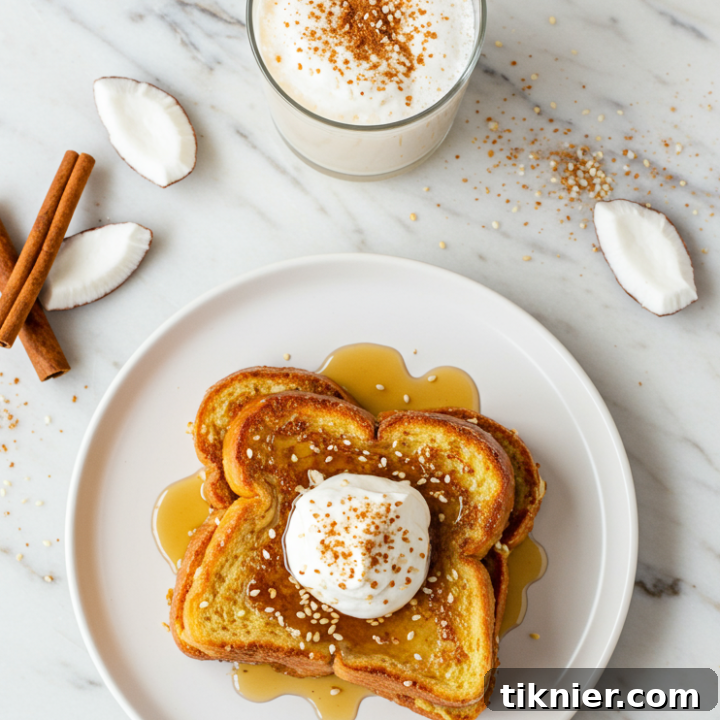
French Toast Without Milk? Just Add Coconut Cream & Toasted Sesame
3 servings
10 minutes
15 minutes
25 minutes
This delightful dairy-free French toast recipe ingeniously uses rich coconut cream instead of milk, enhanced with a nutty depth from toasted sesame seeds. It’s an exquisite, unique, and utterly satisfying choice for any weekend brunch!
Ingredients
- 6 slices bread (challah or brioche work well for best results)
- 1 cup full-fat coconut cream (refrigerated overnight for optimal thickness)
- 2 large eggs
- 1/4 cup granulated sugar
- 1 teaspoon vanilla extract
- 1/4 teaspoon ground cinnamon
- 2 tablespoons sesame seeds, toasted
- 2 tablespoons coconut oil, for cooking
- Optional toppings: maple syrup, fresh fruit (berries, sliced banana), coconut flakes, powdered sugar
Instructions
- Toast Sesame Seeds: Place sesame seeds in a dry pan over medium heat. Stir frequently until they are golden brown and fragrant, about 3-5 minutes. Immediately remove from pan and set aside to cool.
- Prepare Custard: In a shallow dish, whisk together the coconut cream (the thick, solid part), eggs, sugar, vanilla extract, and cinnamon until thoroughly combined and smooth.
- Add Sesame Seeds: Gently fold in the toasted sesame seeds into the custard mixture.
- Heat Skillet: Heat coconut oil in a large skillet or griddle over medium heat until shimmering.
- Soak Bread: Dip each slice of bread into the coconut cream mixture, ensuring both sides are evenly coated. Allow any excess custard to drip off before placing on the griddle.
- Cook French Toast: Place the soaked bread onto the hot skillet. Cook for 2-3 minutes per side, or until golden brown and cooked through with a custardy interior.
- Serve Immediately: Serve your French toast warm with your favorite toppings, such as a generous drizzle of maple syrup, fresh berries, and extra coconut flakes. Enjoy this unique twist on a classic!
Explore More Delicious Breakfast Recipes
If you loved this unique milk-free French toast, you’ll be excited to discover more inspiring ways to start your day. Elevate your morning menu with these tried-and-true French toast dishes and other delightful breakfast ideas:
- Cardamom Crème Brûlée French Toast: Indulge in a luxurious breakfast with this sweet and spiced French toast, featuring a delicate hint of cardamom and a crisp, caramelized sugar crust. It’s a truly elegant treat.
- How to Make Classic French Toast: Master the foundational recipe every home cook should know. This guide covers the essential techniques for perfectly golden, custardy French toast that’s simple yet incredibly satisfying.
- Protein French Toast: For a balanced and energizing start to your day, try this protein-packed French toast. It’s a healthy twist that doesn’t compromise on flavor or deliciousness.
Each recipe brings a unique angle, from classic comfort to creative gourmet, ensuring your breakfast table is always exciting and delicious.