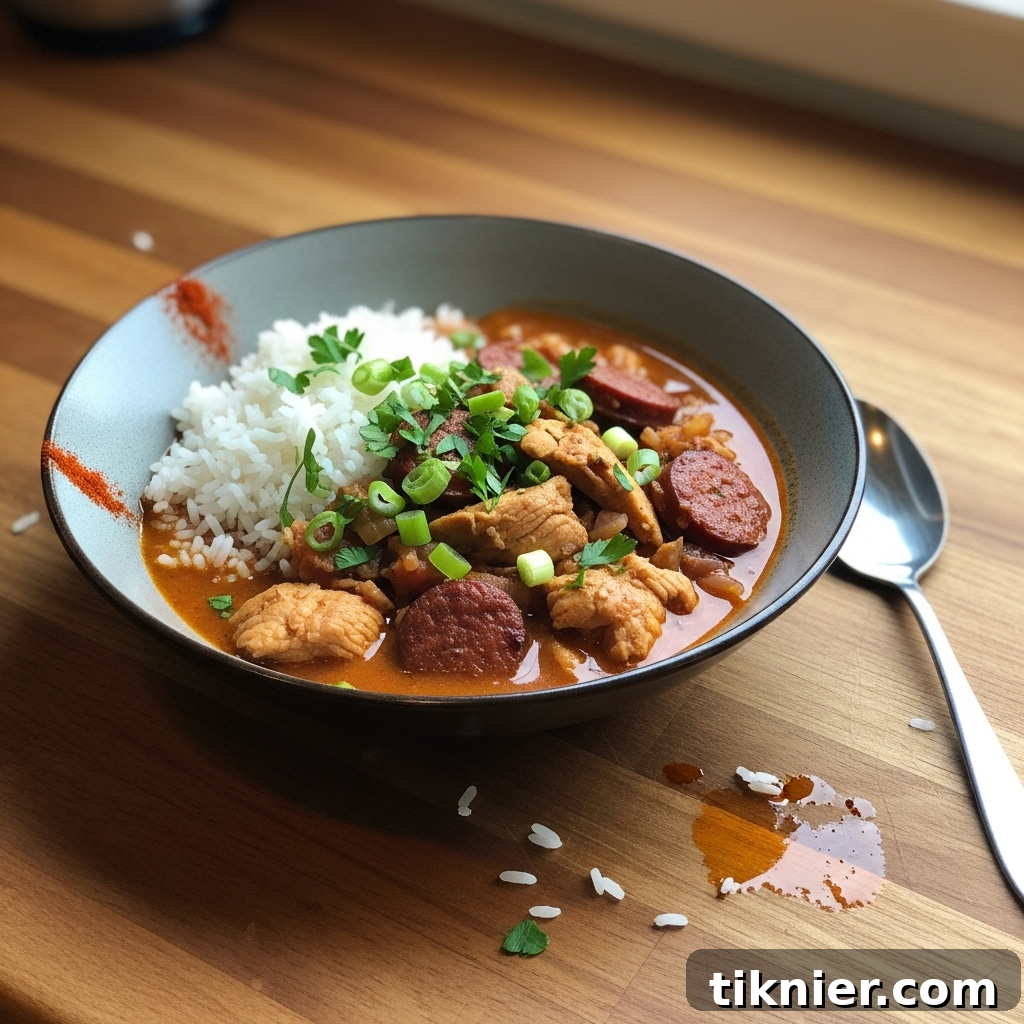
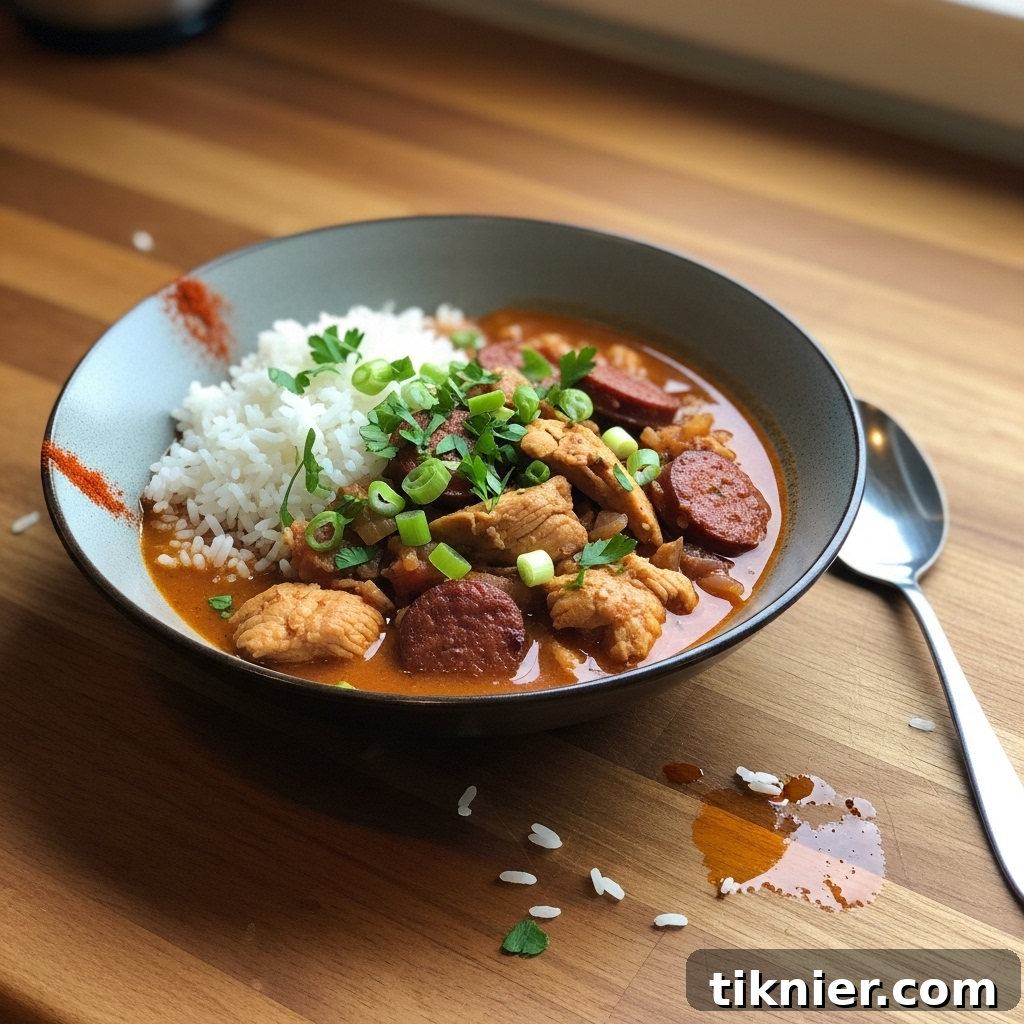
Smoked Paprika & Chipotle Gumbo: A Louisiana Classic with a Southwest Kick
There are some dishes that do more than just nourish your body; they feed your soul. For me, and for millions across Louisiana and beyond, that dish is gumbo. It’s a culinary masterpiece, a warm embrace in a bowl, and the kind of comfort food that makes a chilly day feel like a celebration. This particular recipe for Smoked Paprika and Chipotle Gumbo isn’t just a meal; it’s a testament to the power of tradition, elevated by a whisper of innovation. It’s the pot of gold at the end of a long, chilly day’s rainbow, promising warmth, flavor, and pure contentment.
My journey to perfecting gumbo began not in my own kitchen, but in the heart of Cajun Country. I vividly recall my first truly great gumbo experience at my friend Angelle’s house in Lafayette. Her Maw Maw, a formidable and kind woman, was visiting, and she spent an entire afternoon meticulously tending to a colossal cast iron pot. The air was thick with the intoxicating aroma of toasted flour, savory sausage, and something else – an elusive, deeply soulful scent that permeated every corner of the house. Maw Maw’s roux, stirred with unwavering patience, was so dark and glossy it resembled melted chocolate. That pot of gumbo was a revelation: incredibly rich, layered with complex flavors, and possessing a profound warmth that settled deep into my bones. It was more than food; it was a story, a heritage, a labor of love.
Inspired by that unforgettable experience, I embarked on a personal quest to recreate that magic. For years, I made countless batches, experimenting with various spice blends, adjusting simmer times, and striving to achieve that perfect, elusive roux. My efforts yielded good, solid gumbos, but they always felt like they were missing that indefinable “something extra,” that signature touch that would make the recipe uniquely mine. Then, one evening, while preparing a batch of gumbo, I was also mincing chipotle peppers in adobo sauce for some chicken tacos. On a whim, I scraped a little of that smoky, piquant adobo sauce and a finely minced chipotle pepper into my simmering gumbo. The moment that earthy, smoky heat met the rich, nutty roux, I knew I had found it. It was the perfect Southern-meets-Southwest kiss, a subtle yet transformative addition that my gumbo had been waiting for – a taste that was both familiar and excitingly new.
Skip to My Special Recipe!
Why This Smoked Paprika & Chipotle Gumbo Recipe Works
Gumbo is far more than just a stew; it is the very heart of Louisiana cuisine, a culinary crucible reflecting centuries of cultural exchange. Its rich history is a beautiful tapestry woven from French, West African, Spanish, and Choctaw traditions. The French gifted us the roux, that indispensable, slow-toasted blend of flour and fat that forms the very foundation and depth of gumbo. From West African culinary practices, we inherited okra, a classic natural thickener. Meanwhile, the indigenous Choctaw people introduced us to filé powder, made from ground sassafras leaves, offering another unique way to thicken and flavor this iconic dish.
This vibrant historical lineage imbues every bowl of gumbo with a profound sense of specialness. It’s a dish built on patience, particularly when it comes to crafting the roux. That slow, meticulous stirring, the gradual transformation of simple ingredients into a deeply flavored base, is a rite of passage for any aspiring Southern cook. It’s what elevates mere flour and oil into a nutty, complex flavor foundation that cannot be rushed or replicated. The roux isn’t just a thickener; it’s the soul of the gumbo, imparting a distinctive depth and roasted flavor that defines the entire dish.
So, what truly makes my Smoked Paprika and Chipotle Gumbo version stand out in a culinary landscape brimming with wonderful gumbo recipes? It’s what I affectionately call the “two-part smoky secret.” First, a generous spoonful of high-quality smoked paprika is incorporated. This ingredient provides a deep, woodsy, and subtly sweet smoky flavor that perfectly complements the savory richness of the andouille sausage. It lays down a classic, comforting, and authentic smoky baseline that resonates with traditional Louisiana flavors.
Then comes the twist – the minced chipotle pepper in adobo sauce. This addition isn’t about simply cranking up the heat to an overwhelming degree. Instead, it introduces a different, more nuanced kind of smoke – one with a delicate tang and a smoldering, earthy warmth that is both complex and inviting. The chipotle doesn’t overpower the traditional gumbo flavors; rather, it enhances them, adding an unexpected layer of depth and intrigue that will leave everyone at your table wondering about your secret ingredient. It’s a small adjustment, but it creates a world of difference, bridging traditional Southern comfort with a hint of vibrant Southwestern flair, making this gumbo truly unforgettable.
Essential Ingredients for Crafting Your Signature Gumbo
The inherent beauty of a truly great gumbo lies in its ability to transform humble, everyday ingredients into something profoundly spectacular. For this specific recipe, we meticulously combine classic components with a couple of key players that elevate the dish and make it sing with unique flavor. Quality is paramount here; investing in the best ingredients you can source, especially for the sausage and chicken stock, will significantly impact the final taste and richness of your gumbo.
Here’s the precise list of what you’ll need to embark on this flavorful culinary journey:
- 1 cup all-purpose flour: The foundation of our dark, rich roux.
- ¾ cup neutral oil or rendered bacon fat: A good neutral oil (like canola or vegetable) provides the fat for the roux, but rendered bacon fat adds an unparalleled layer of smoky depth.
- 2 lbs boneless, skinless chicken thighs, cut into 1-inch pieces: Thighs are preferred for their flavor and ability to remain tender during long simmering.
- 1 lb andouille sausage, sliced into ½-inch rounds: Authentic, high-quality smoked andouille is crucial for that characteristic spicy, savory, andouille kick.
- 2 medium yellow onions, diced: A key component of the “Holy Trinity,” adding sweetness and aromatic depth.
- 1 large green bell pepper, diced: Another essential member of the “Holy Trinity,” contributing a fresh, slightly bitter note.
- 3 celery stalks, diced: Completes the “Holy Trinity,” providing earthy and herbaceous undertones.
- 6 cloves garlic, minced: Aromatic powerhouse, providing pungent depth.
- 1 tbsp smoked paprika: Our first layer of unique smoky flavor, deep and woodsy.
- 1-2 canned chipotle peppers in adobo sauce, minced, plus 1 tsp of the adobo sauce (the twist): The second, more complex smoky element, bringing earthy heat and a subtle tang. Adjust quantity to your spice preference.
- 1 tsp dried thyme: Classic Southern herb, adds an earthy, savory aroma.
- ½ tsp cayenne pepper (or more, to taste): Provides adjustable heat.
- 2 tsp freshly ground black pepper: Essential seasoning for depth and sharpness.
- 1 tsp kosher salt, plus more for seasoning chicken: Balances and enhances all flavors.
- 8 cups high-quality, low-sodium chicken stock, warmed: A robust, flavorful stock is vital for the gumbo’s liquid base. Warming it prevents the roux from seizing.
- 2 bay leaves: Infuses subtle herbal notes during simmering.
- 1 cup sliced okra, fresh or frozen (optional): A traditional thickener and flavor enhancer, often debated but loved by many.
- ½ cup chopped green onions, for garnish: Adds a fresh, sharp bite and vibrant color.
- ½ cup chopped fresh parsley, for garnish: Brightens the dish with herbaceous freshness.
- Cooked white rice, for serving: The classic accompaniment, essential for soaking up the rich gravy.
- Filé powder, for serving (optional): A traditional Choctaw thickener and flavor enhancer, served at the table.
A few crucial notes on these ingredients: For the roux, while a good neutral oil ensures a smooth base, rendered bacon fat introduces an extra layer of irreplaceable smoky richness that truly deepens the gumbo’s profile. When selecting your andouille sausage, prioritize a genuine, high-quality smoked variety. Its distinct coarse texture and characteristically spicy, smoky flavor are absolutely fundamental to achieving an authentic and richly flavored gumbo. Don’t compromise here!
And for our “secret weapon,” the canned chipotle peppers in adobo sauce, you’ll typically find these flavorful gems in the international aisle of most well-stocked grocery stores. They pack a considerable punch, so I advise starting with just one minced pepper and then tasting to decide if you’d like to incorporate more for additional heat. Crucially, the smoky adobo sauce they are packed in is culinary liquid gold; never discard it! Ensure you scrape in at least a teaspoon of that concentrated smoky, tangy essence, as it contributes significantly to the unique depth of this gumbo.
Step-by-Step Instructions For Making Your Perfect Gumbo
Creating a truly magnificent gumbo is an exercise in process, patience, and passion. This isn’t a dish to rush; it’s an experience to savor. I highly recommend putting on some of your favorite music, perhaps pouring yourself a glass of wine or a cold beer, and embracing the journey. We will build these incredible flavors meticulously, layer by delicious layer, transforming simple ingredients into a soulful masterpiece.
Step 1: Brown the Meats and Build a Flavorful Fond
We begin by establishing a robust flavor base. Generously season your 1-inch pieces of chicken thigh with a good pinch of kosher salt and freshly ground black pepper. Grab a substantial Dutch oven or a heavy-bottomed stockpot – the heavier the better, as it distributes heat more evenly. Heat a tablespoon of your chosen oil over medium-high heat until shimmering. Add the sliced andouille sausage in a single layer, ensuring not to overcrowd the pot; you might need to work in two batches. Allow them to cook until they’re beautifully browned and slightly crispy, typically taking about 5 to 7 minutes. The goal is not just to cook them but to render some fat and develop a flavorful crust. Use a slotted spoon to transfer the browned sausage to a plate and set aside. In the same pot, with any rendered sausage fat, add your seasoned chicken pieces. Cook them until they’re nicely browned on all sides, about 6-8 minutes. They don’t need to be cooked through at this stage; we’re simply aiming for that gorgeous color and the development of rich fond (the browned bits) on the bottom of the pot. Remove the chicken and set it aside with the sausage.
Step 2: Master the Art of the Dark Roux
This is arguably the most critical step, the very heart and soul of your gumbo. Reduce the heat to medium-low. Add the remaining ¾ cup of oil or rendered bacon fat to the pot, then gradually whisk in the 1 cup of all-purpose flour until a completely smooth paste forms. Now comes the test of your patience. You must cook this mixture, stirring constantly and deliberately with a flat-edged wooden spoon or a heatproof silicone spatula, for approximately 30 to 45 minutes. The continuous stirring prevents burning and ensures even toasting. You’re aiming for a rich, deep color that resembles a shiny copper penny, or even better, dark chocolate. As you stir, make sure to scrape the bottom of the pot continuously to prevent any sticking or scorching. Listen to the roux; it will become quieter as the moisture cooks out. Smell it; it will transform from raw flour to a nutty, toasted aroma. If, at any point, you detect black flecks or even a faint burnt smell, you must, unfortunately, discard it and start over. A burned roux will impart a bitter, acrid taste that will irrevocably ruin the entire pot of gumbo. There are no shortcuts here; patience yields perfection.
Step 3: Sauté the Holy Trinity and Infuse the Spices
Once your roux has achieved that coveted dark chocolate hue, immediately add your diced onion, green bell pepper, and celery – collectively known as the “Holy Trinity” of Cajun and Creole cooking. The moisture released from these vegetables will effectively halt the cooking process of the roux, preventing it from burning further. Stir everything constantly, ensuring the vegetables are well coated in the roux, until they have softened and become translucent, which typically takes about 8 to 10 minutes. This step is crucial for developing the foundational aromatic flavors. Next, stir in the minced garlic, the fragrant smoked paprika, the minced chipotle peppers along with their smoky adobo sauce, dried thyme, cayenne pepper, and freshly ground black pepper. Continue to cook for just one minute more, stirring constantly, until the entire mixture becomes incredibly aromatic and the spices bloom, releasing their full potential.
Step 4: Build the Luxurious Gumbo Base
It’s now time to transform that intensely fragrant paste into a beautiful, liquid base. It is absolutely essential that your chicken stock is warm; this critical step helps prevent the roux from seizing or clumping when combined with the liquid, ensuring a silky-smooth gumbo. Gradually pour in the warm stock, adding just one ladleful at a time, whisking vigorously after each addition. This gradual incorporation allows the roux to dissolve completely and seamlessly into the stock, creating a thick, smooth, and gravy-like liquid. Continue this process until all 8 cups of stock have been incorporated and the base is uniform. Once combined, bring the mixture to a gentle, low simmer.
Step 5: Simmer to Perfection and Flavor Integration
Return the beautifully browned sausage and chicken pieces to the pot. Drop in the two bay leaves, and if you’re choosing to use it, add the sliced okra. Give everything a good, thorough stir to ensure all ingredients are submerged and combined. Reduce the heat to the absolute lowest possible setting on your stove, partially cover the pot, and allow this magnificent concoction to simmer gently for at least 90 minutes. For truly unparalleled flavor depth and meat tenderness, if your schedule permits, extend this simmering time for up to 2 or even 3 hours. The longer it simmers at a low heat, the more the individual flavors will meld, deepen, and truly marry, creating a cohesive and complex taste that is the hallmark of a great gumbo. During this extended simmer, you may periodically skim any excess oil that rises to the surface if you prefer a less oily finish.
Step 6: Finish, Garnish, and Serve with Flair
After the long, slow, and transformative simmer, your gumbo is nearing completion. Turn off the heat and carefully fish out the bay leaves; their work is done. Stir in half of your freshly chopped green onions and half of the vibrant fresh parsley. This addition at the end provides a wonderful burst of fresh, bright flavor and a beautiful contrasting color that truly elevates the dish. Give the gumbo a final taste and adjust the seasoning as needed with more salt and pepper – remember, individual palates vary. To serve, ladle generous portions of the hot gumbo into bowls, always over a hearty scoop of fluffy white rice positioned in the center of the bowl. Garnish each serving lavishly with the remaining fresh green onions and parsley. This is pure, unadulterated comfort and tradition, presented beautifully in a bowl.
How To Serve Gumbo Like a Louisiana Pro
Serving gumbo isn’t just about placing food on a plate; it’s an event, a tradition, and a gesture of hospitality. The classic, non-negotiable way to present this soulful dish is to ladle it piping hot over a generous scoop of fluffy, long-grain white rice, placed right in the center of the bowl. The rice serves as the perfect canvas, its neutral flavor and absorbent texture soaking up every last drop of that rich, smoky, and complex gravy. It’s the essential foundation upon which gumbo greatness is built, providing substance and balance to the hearty stew.
However, the art of presentation and complementary flavors doesn’t stop there. Fresh garnishes are absolutely key to brightening up the deep, savory flavors of the gumbo. A liberal sprinkle of finely sliced green onions and vibrant chopped fresh parsley is a mandatory final touch. These herbs add not only a pop of contrasting color but also a fresh, sharp bite that elegantly cuts through the inherent richness of the gumbo, offering a delightful textural and flavor counterpoint. For aficionados who appreciate an extra layer of thickening and a distinctive, earthy aroma, it’s customary to pass a small shaker of filé powder around the table. Emphasize to your guests that filé powder should always be added directly to individual bowls, never to the main pot, as boiling gumbo after adding filé can result in an undesirable stringy texture.
While gumbo is undoubtedly a complete and satisfying meal in itself, a few thoughtfully chosen simple sides can beautifully round out the dining experience and offer delightful contrasts. Here are a few of my personal favorites:
- Creamy Potato Salad: This pairing might raise an eyebrow if you’re not from Louisiana, but a scoop of cool, creamy, Creole-style potato salad served either alongside or, more traditionally, directly into the hot gumbo, is a beloved and surprisingly brilliant tradition. The cool, velvety texture and tangy notes of the potato salad provide an exquisite contrast to the hot, spicy, and rich gumbo. It’s a combination that truly needs to be experienced to be understood.
- Crusty French Bread or Baguette: Essential for sopping up every precious drop of that incredible gravy from the bottom of the bowl. A simple, fresh baguette, warmed slightly, is all you need to ensure no flavor goes to waste. The crusty exterior and soft interior are perfect for dipping.
- A Simple Green Salad with Vinaigrette: A light, crisp green salad tossed with a bright, tangy vinaigrette can offer a refreshing and palate-cleansing counterpoint to the heartiness and richness of the main course. It provides a welcome lightness between savory spoonfuls of gumbo.
To complement the meal, a cold beer, particularly a crisp Louisiana lager or a refreshing pilsner, is a classic and highly recommended pairing. If you prefer wine, a dry rosé, with its fruity notes and crisp acidity, or a crisp, unoaked Chardonnay, can also work wonderfully, providing a delightful balance to the gumbo’s complexity. Ultimately, serving gumbo is about creating a warm, inviting, and communal experience, so gather your favorite people around the table, share stories, and savor every delicious bite together.
How To Store & Reuse Gumbo Leftovers: Maximizing Flavor & Minimizing Waste
One of the true joys of dedicating your time and effort to making a substantial pot of gumbo is the promise of delicious leftovers. I genuinely believe that gumbo, like many great stews, tastes even better the next day, after the flavors have had ample time to meld, deepen, and truly get to know each other. Storing your gumbo properly is key to enjoying its enhanced flavors for several days to come and even beyond.
First and foremost, always allow the gumbo to cool down sufficiently before transferring it to storage containers. Leaving the pot on the counter for about an hour, stirring occasionally, is typically enough to bring its temperature down safely. Avoid placing a steaming hot pot directly into the refrigerator, as this can significantly raise the internal temperature of your fridge, potentially putting other perishable foods at risk. Once it has cooled to room temperature, you have excellent options for preserving its deliciousness:
- Refrigeration: Transfer the cooled gumbo into clean, airtight containers. It will keep beautifully and safely in the refrigerator for up to 3 to 4 days. For optimal texture, I highly recommend storing any cooked white rice separately. This prevents the rice from absorbing too much liquid and becoming mushy, ensuring it retains its fluffy consistency when reheated.
- Freezing: Gumbo is an exceptional candidate for freezing, making it perfect for meal prepping or enjoying a quick taste of Louisiana anytime. Pour the completely cooled gumbo into freezer-safe containers or heavy-duty freezer bags, ensuring you leave about an inch of headspace at the top to allow for expansion during freezing. Properly stored, gumbo will maintain its quality in the freezer for up to 3 months. When you’re ready to enjoy it, simply transfer it to the refrigerator to thaw overnight.
Reheating your gumbo is straightforward. Pour the desired portion into a saucepan or microwave-safe bowl and gently warm it over low to medium heat on the stove, stirring occasionally, until it is heated through evenly. It’s important to avoid boiling the gumbo vigorously, especially if you’ve previously added filé powder, as this can negatively affect its texture. If you find that the gumbo has thickened up more than you prefer in the refrigerator, you can easily restore it to your desired consistency by adding a small splash of chicken stock or water while reheating.
Beyond simply reheating another bowl, you can get wonderfully creative with gumbo leftovers. It makes a fantastic, hearty sauce to spoon generously over creamy grits for a truly satisfying Southern-style breakfast or brunch. Alternatively, use it as the savory base for an incredibly flavorful pot pie; simply top it with a biscuit, puff pastry, or cornbread crust and bake until golden brown and bubbly. You could even transform it into unique gumbo tacos or sliders, offering a playful twist on a classic. Its versatility ensures that not a single drop of this delicious creation goes to waste!
Customizing Your Gumbo: Substitutions & Variations for Every Palate
While I firmly believe this chicken and sausage gumbo recipe, with its distinctive smoked paprika and chipotle kick, is pretty close to perfection, one of the greatest joys of cooking lies in the ability to adapt a recipe and make it truly your own. Gumbo, at its heart, is an incredibly versatile dish, offering countless avenues to switch things up based on your personal taste preferences, dietary needs, or simply what ingredients you happen to have on hand.
Never be afraid to experiment with the ingredients. However, always remember that the foundational elements of a truly great gumbo are the meticulously prepared dark roux and the aromatic “Holy Trinity” (onion, bell pepper, celery). Striving to keep these core components intact will ensure your variations still deliver that authentic gumbo depth and character. From there, the culinary possibilities are nearly endless, allowing you to personalize your pot to your heart’s content.
Here are some of my favorite substitutions and variations to inspire your creative gumbo endeavors:
- Protein Swaps and Additions: The most popular and traditional variation involves adding or substituting seafood. You can easily incorporate 1 pound of peeled and deveined large shrimp during the last 5-10 minutes of simmering, until they turn pink and opaque. Similarly, delicate crabmeat or flavorful crawfish tails (ensure they are pre-cooked if frozen) can be stirred in during the final 2-3 minutes, just long enough to heat them through without overcooking. If chicken thighs aren’t your preference, shredded rotisserie chicken offers a convenient alternative; simply stir it in towards the end of the simmer to heat through. For a different sausage profile, explore options like smoked kielbasa, tasso, or another spicy smoked sausage that complements the flavors.
- Embrace Vegetarian and Vegan Options: For a delightful meat-free gumbo, you can create a rich mushroom-based version. Replace the chicken and sausage with approximately 2 pounds of mixed mushrooms, such as cremini, shiitake, and oyster mushrooms. Sauté them after the Holy Trinity until they’ve released their liquid and are beautifully browned, building an umami depth. Crucially, use a high-quality, rich vegetable stock instead of chicken stock to maintain a flavorful base. For a fully vegan version, ensure your oil for the roux is plant-based and omit any animal products.
- Adjusting the Heat to Your Preference: This particular recipe delivers a medium, smoky heat that is generally well-balanced. If you crave a spicier experience, feel free to add another minced chipotle pepper, increase the amount of cayenne pepper, or serve with a few dashes of your favorite Louisiana-style hot sauce at the table. For those who prefer a milder profile, simply use only one chipotle pepper and consider omitting the cayenne pepper entirely. The beauty is in customizing it to your palate.
- Roux Alternatives and Gluten-Free Choices: If you’re pressed for time or feel intimidated by the process of making a very dark roux, you can opt for a lighter, “blonde” roux. This takes significantly less time (around 10-15 minutes of constant stirring) and will still thicken the gumbo effectively, though it will impart a less nutty and complex flavor than its darker counterpart. For individuals avoiding gluten, readily available gluten-free gumbo roux mixes can be found in specialty stores, or you can thicken the gumbo at the very end with a cornstarch slurry (a mixture of cornstarch and cold water), though this method will alter the flavor and texture profile compared to a traditional flour-based roux.
Consider this recipe a robust and incredibly flavorful starting point. Whether you’re adding luxurious seafood for a special occasion, incorporating additional vegetables for a lighter meal, or fine-tuning the spice level, the core technique and deep flavors will consistently yield a delicious and satisfying pot of gumbo every single time. Enjoy the creative process!
Smoked Paprika & Chipotle Gumbo
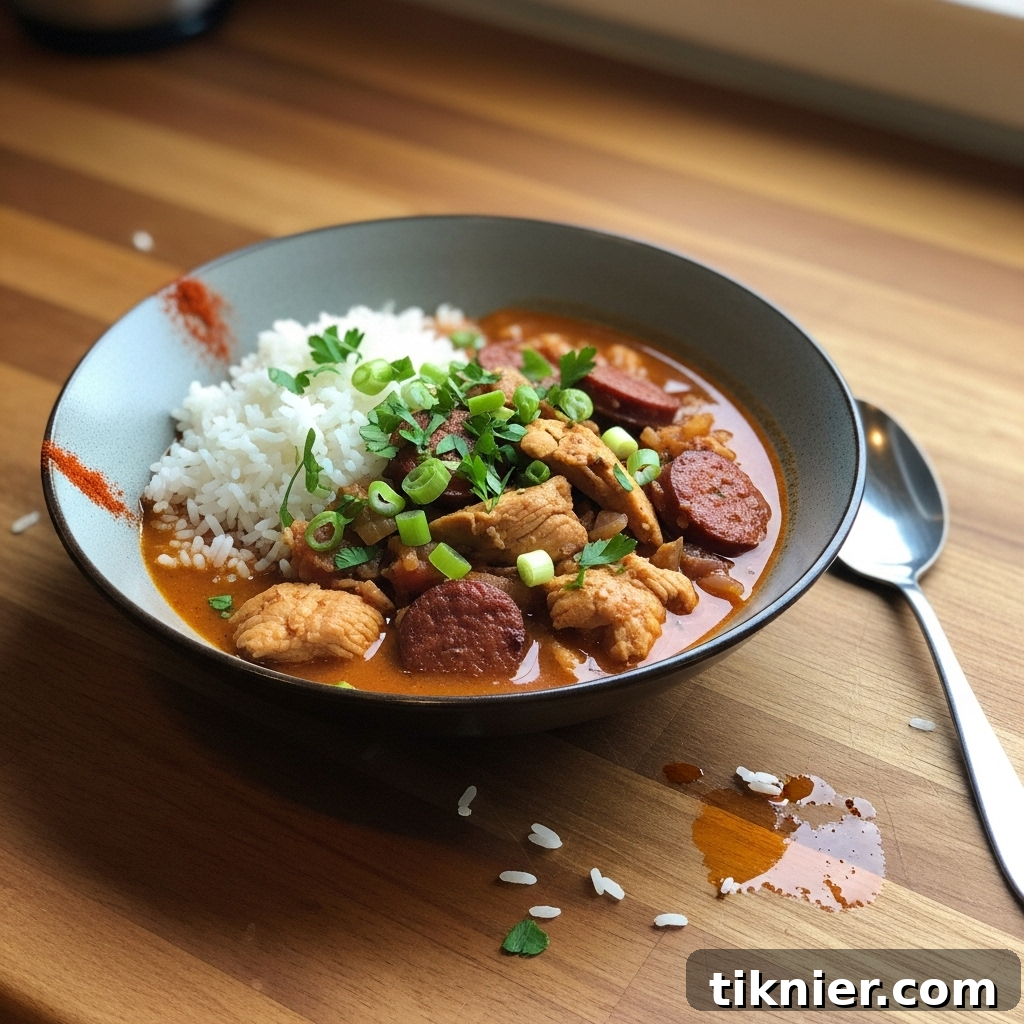
Description: A rich, soulful chicken and andouille sausage gumbo featuring a deep, dark roux. A modern twist of smoked paprika and chipotle peppers in adobo sauce adds an unforgettable layer of smoky, earthy heat and complex flavor to this cherished Louisiana classic. Perfect for chilly evenings and gatherings.
Yield: 8-10 servings | Category: Main Course | Cuisine: Cajun/Creole, Southern
Prep Time: 30 minutes | Cook Time: 2 hours 30 minutes to 3 hours
Ingredients
- 1 cup all-purpose flour
- ¾ cup neutral oil or rendered bacon fat
- 2 lbs boneless, skinless chicken thighs, cut into 1-inch pieces
- 1 lb andouille sausage, sliced into ½-inch rounds
- 2 medium yellow onions, diced
- 1 large green bell pepper, diced
- 3 celery stalks, diced
- 6 cloves garlic, minced
- 1 tbsp smoked paprika
- 1-2 canned chipotle peppers in adobo sauce, minced, plus 1 tsp of the adobo sauce
- 1 tsp dried thyme
- ½ tsp cayenne pepper (or more, to taste)
- 2 tsp freshly ground black pepper
- 1 tsp kosher salt, plus more for seasoning chicken
- 8 cups high-quality, low-sodium chicken stock, warmed
- 2 bay leaves
- 1 cup sliced okra, fresh or frozen (optional)
- ½ cup chopped green onions, for garnish
- ½ cup chopped fresh parsley, for garnish
- Cooked white rice, for serving
- Filé powder, for serving (optional)
Instructions
- Prepare Meats: Season chicken with salt and pepper. In a large Dutch oven or heavy-bottomed pot, brown sausage in batches over medium-high heat until crispy. Remove and set aside. In the same pot, brown chicken pieces on all sides. Remove and set aside with the sausage.
- Make the Roux: Reduce heat to medium-low. Add remaining oil/fat and flour to the pot. Whisk until smooth. Cook, stirring constantly, for 30-45 minutes until the roux achieves a deep dark chocolate color. Do not burn.
- Sauté Trinity & Spices: Immediately add diced onion, bell pepper, and celery to the roux. Cook, stirring, for 8-10 minutes until softened. Stir in minced garlic, smoked paprika, minced chipotle peppers, adobo sauce, thyme, cayenne, black pepper, and 1 tsp salt. Cook for 1 minute until fragrant.
- Build the Base: Gradually whisk in the warm chicken stock, one ladleful at a time, until smooth and well combined. Bring the mixture to a low simmer.
- Simmer Gumbo: Return the browned sausage and chicken to the pot. Add bay leaves and okra (if using). Reduce heat to the lowest setting, partially cover, and simmer for at least 90 minutes, or up to 3 hours, stirring occasionally. Skim any excess oil if desired.
- Finish & Serve: Remove from heat and discard bay leaves. Stir in half of the chopped green onions and fresh parsley. Taste and adjust seasoning with more salt and pepper if needed. Serve hot over fluffy white rice, garnished with the remaining green onions and parsley.
Notes
The key to an authentic, flavorful gumbo is mastering the dark roux. This step requires patience and constant stirring; do not rush it. If you see any black flecks or detect a burnt smell, you must discard the roux and start fresh, as a burnt roux will impart a bitter taste to the entire dish. Gumbo flavors deepen and meld beautifully overnight, so it often tastes even better the next day!
Servings: 10 | Calories: 580 kcal | Fat: 35g | Carbohydrates: 30g | Protein: 38g
5 Essential FAQs About Gumbo: Your Questions Answered
Gumbo is a culinary art form, and like any great art, it often inspires questions about its techniques, ingredients, and traditions. Here are comprehensive and straightforward answers to the most common questions I receive about making and enjoying this particular Smoked Paprika and Chipotle Gumbo recipe, designed to help you confidently master this soulful dish.
How dark should the roux for my gumbo be, and why is it so important?
The color of your roux is profoundly important and directly impacts the final flavor, color, and even thickness of your gumbo. For this chicken and sausage gumbo, I strongly advocate for a roux that reaches a color resembling a shiny copper penny at a minimum, ideally pushing towards a rich milk chocolate or even a dark chocolate hue. Achieving this color typically requires patient, constant stirring over medium-low heat for about 25-30 minutes for a copper penny, and up to 45 minutes or more for a dark chocolate roux.
Why is this crucial? A lighter roux has more thickening power and a more “flour-y” taste. As the roux darkens, the flour starches cook down, reducing its thickening capability but simultaneously developing an incredibly deep, nutty, roasted, and complex flavor. This rich, dark flavor is characteristic of authentic Cajun and Creole gumbos. While a darker roux results in a slightly thinner, more stew-like consistency, this is precisely what we aim for. The golden rule: stir constantly and manage your heat meticulously. If you see any black flecks appear or detect even the faintest smell of scorching, you must unfortunately discard it and start fresh. A burnt roux is irredeemably bitter and will ruin the entire pot, making the patience invested in this step absolutely non-negotiable.
Can I add shrimp or other seafood to this chicken and sausage gumbo?
Absolutely, and enthusiastically yes! This chicken and sausage gumbo recipe provides an exceptional base for incorporating a variety of seafood, a classic and beloved combination in many Louisiana gumbos. The fusion of flavors from the land and sea creates an even more complex and luxurious eating experience. The most critical factor when adding seafood is precise timing to ensure delicate seafood cooks perfectly and doesn’t become tough or rubbery.
For large shrimp, you should add them into the simmering gumbo during the last 5 to 10 minutes of cooking. They are done when they turn opaque and pink. If you’re incorporating pre-cooked crawfish tails (which most frozen varieties are), add them during the final 2-3 minutes, just long enough to gently heat them through. For extremely delicate crabmeat, the best practice is to gently fold it in right at the very end, after you’ve turned off the heat, allowing the residual warmth of the gumbo to heat it without breaking apart its tender flakes. Adding seafood transforms this into an even more extravagant and deeply flavorful dish.
My gumbo isn’t thick enough; what did I do wrong, and how can I fix it?
First, take a deep breath and don’t panic! Gumbo consistency is often a matter of personal preference, and it’s important to remember that a truly traditional Louisiana gumbo is typically designed to be more like a hearty, thick soup or stew rather than a dense, gloopy gravy. The primary thickener is the roux, and as explained previously, a darker roux, which we aim for, has less thickening power than a lighter one. So, if you achieved a beautiful dark chocolate roux, your gumbo will naturally be a bit thinner, and this is perfectly authentic and desirable.
If you used okra, it will contribute some natural thickening as its mucilage cooks down. If, after simmering, you still find your finished gumbo thinner than your ideal, you have a few traditional and modern options. The most traditional method is to use filé powder. Offer it at the table, allowing guests to stir about a quarter to a half teaspoon into their individual bowls. Filé powder not only thickens the gumbo as it sits but also imparts a unique, earthy sassafras flavor. A more modern, though less traditional, approach is to create a cornstarch slurry: mix one tablespoon of cornstarch with two tablespoons of cold water until smooth, then whisk it gradually into the simmering gumbo until it reaches your desired thickness. Remember, a little goes a long way with cornstarch.
What is the “Holy Trinity” in gumbo, and why is it so essential?
The “Holy Trinity” is truly the aromatic cornerstone of virtually all Cajun and Creole cooking, and its presence is absolutely non-negotiable for a truly flavorful gumbo. This iconic trio consists of precisely diced yellow onions, green bell peppers, and celery. It’s called the “Holy Trinity” because these three humble vegetables, when combined and properly cooked, lay down the fundamental flavor base for countless Louisiana dishes, imparting a depth and character that cannot be achieved otherwise.
Typically, the ratio is two parts onion to one part bell pepper and one part celery. These aromatic vegetables are added directly to the hot, dark roux. This serves two vital purposes: first, the moisture contained within the vegetables immediately cools down and halts the cooking process of the intensely hot roux, preventing it from burning after it’s reached its desired color. Second, as these vegetables slowly cook down and soften within the rich roux, they release their natural sugars and savory flavors, building the foundational layer of complexity upon which the entire gumbo is meticulously constructed. Attempting to skip or reduce the Holy Trinity would result in a gumbo that is noticeably lacking in authentic depth, aroma, and the characteristic Louisiana flavor profile.
Is it really necessary to simmer the gumbo for the full 90 minutes (or longer)?
While you could technically consume the gumbo after it’s been brought to a simmer and the chicken has cooked through, doing so would mean missing out on the transformative magic that makes gumbo such an iconic and deeply satisfying dish. The long, slow simmer – for a minimum of 90 minutes, and ideally up to 2 or even 3 hours – is not merely a suggestion; it is absolutely crucial for the profound development of deep, complex, and harmonious flavors that define a truly exceptional gumbo. Think of this extended simmering as a low-and-slow investment that yields immense returns in flavor.
During this extended simmering period, several critical flavor and texture transformations occur. The tough collagen and connective tissues in the chicken thighs slowly break down, rendering the meat incredibly tender, succulent, and infused with the gumbo’s flavors. The smoked andouille sausage continues to release its spicy, savory, and smoky essences, permeating the entire pot. Most importantly, the individual flavors of the dark roux, the aromatic Holy Trinity, and all the spices gradually meld and marry together, creating a cohesive, well-rounded, and far more profound taste profile that is infinitely greater than the sum of its individual parts. This patient integration of flavors creates a richness and depth that simply cannot be rushed. Patience, truly, is the secret ingredient in any great gumbo recipe.
Explore More Culinary Adventures! Try These Recipes Next
If the rich, comforting embrace of this Smoked Paprika and Chipotle Gumbo captured your heart and satisfied your soul, I’m confident you’ll discover similar joy and inspiration within these other carefully curated recipe collections from my kitchen. They are perfect resources for finding your next family favorite, discovering exciting new weeknight wonders, or planning your next special meal, all designed to bring flavor and ease to your cooking.
- 110 Easy Dinner Ideas: When you’re in need of swift inspiration for what to prepare tonight, this extensive list will become your culinary compass. It’s packed with a diverse array of delicious, straightforward, and approachable recipes suitable for any day of the week or any casual occasion, ensuring dinner is never a dilemma.
- Cheap Meal Ideas: A large, hearty pot of gumbo is a fantastic example of how to feed a crowd generously without stretching your budget. This collection expands on that philosophy, offering even more incredibly flavorful and satisfying budget-friendly recipes that prove you don’t need to spend a fortune to enjoy gourmet taste at home.
- Thanksgiving Dinner Ideas: Gumbo, with its deep flavors and communal spirit, makes a wonderful and often unique addition to any holiday table, particularly in the South. Discover more show-stopping recipes within this collection, perfect for planning and executing your next grand celebration or festive gathering, impressing guests with every dish.