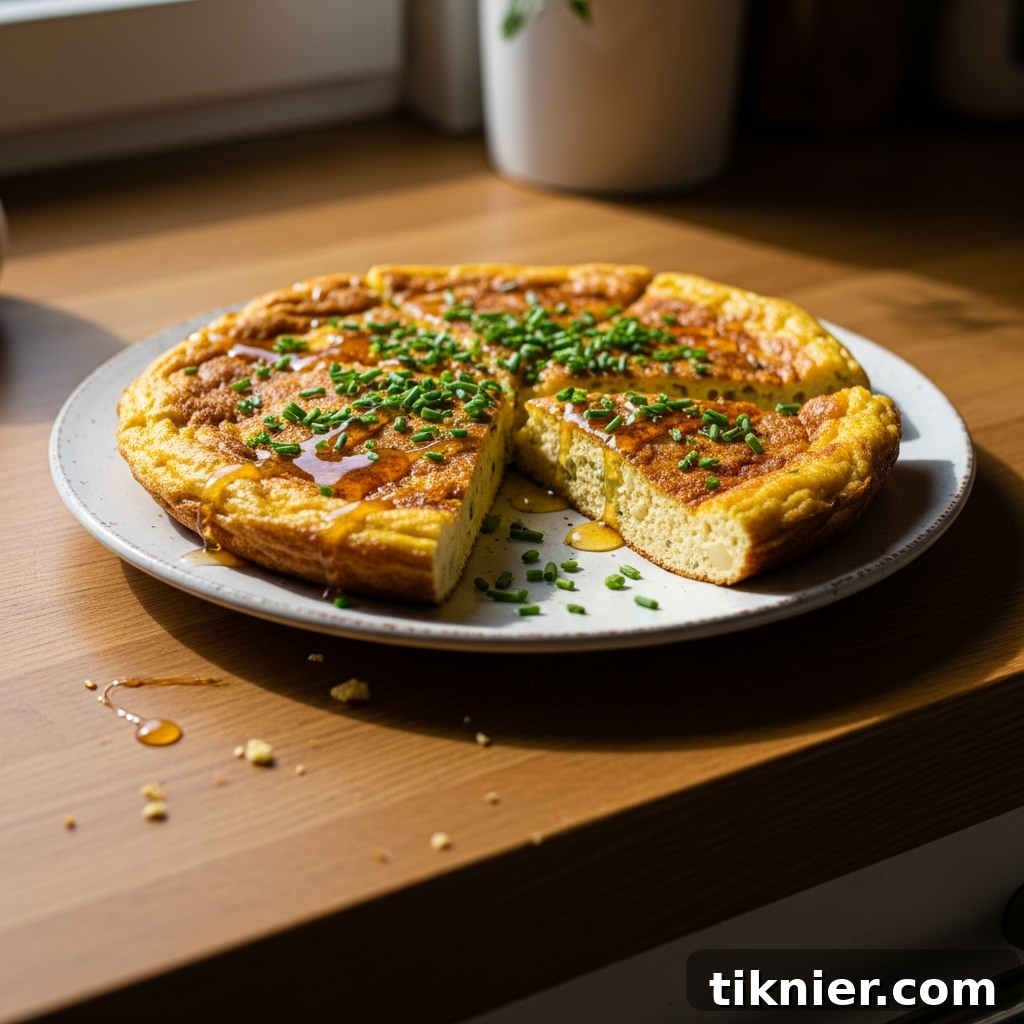
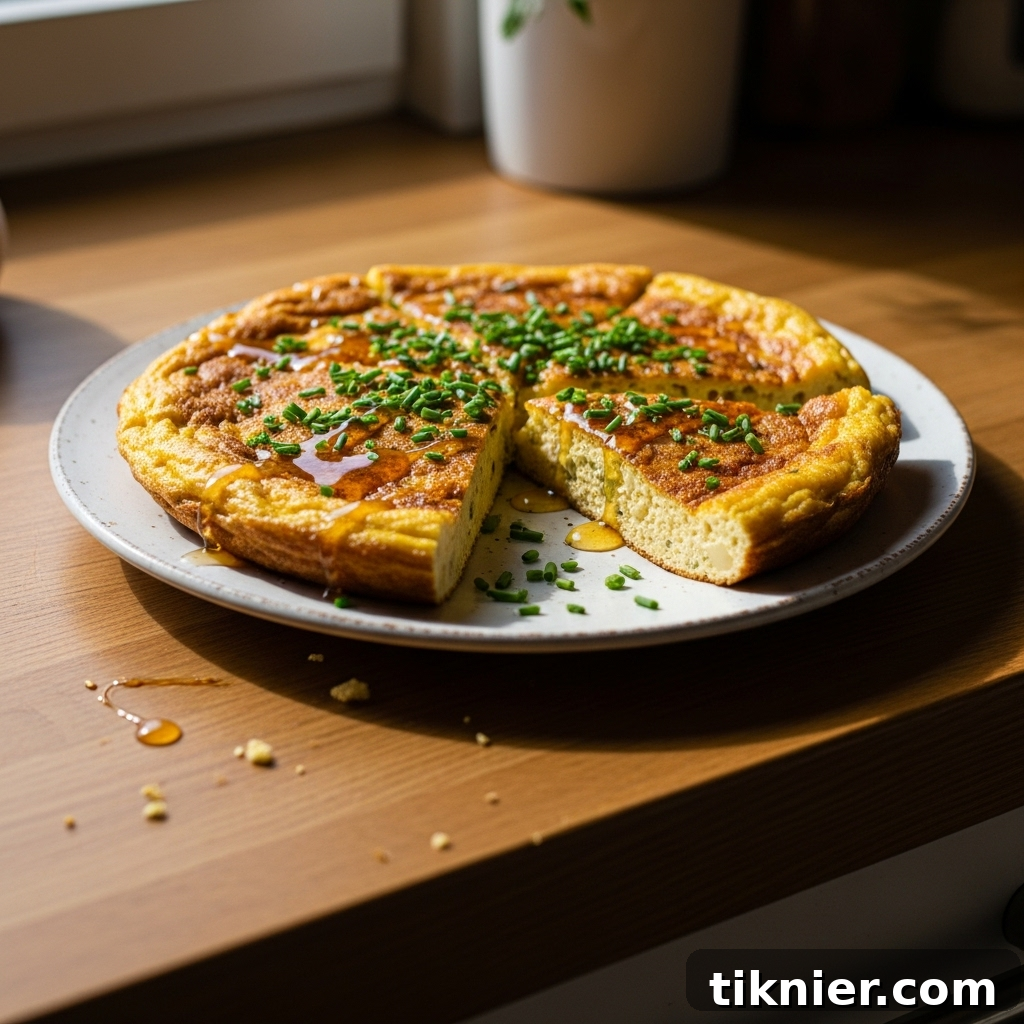
Transform your mornings or elevate any meal with this exquisite Smoked Gouda and Prosciutto Frittata with Hot Honey. This isn’t just another egg dish; it’s a culinary experience designed for those who appreciate elegant flavors without complicated techniques. Whether you’re planning a sophisticated brunch, a special holiday breakfast, or even a light yet satisfying dinner, this frittata recipe promises to impress with its rich, balanced profile.
My journey to perfecting this frittata began during a memorable trip to Charleston with my husband, Mark. We stayed at a charming bed and breakfast where the innkeeper served a puffy, glorious egg dish – simple, yet incredibly sophisticated, filled with local sausage and greens. It was that moment that sparked a desire within me to recreate such an elegant, comforting feeling in my own kitchen.
Back home, I experimented tirelessly. I envisioned a dish that would feel special enough for guests or a festive occasion. The combination of salty prosciutto and creamy, smoky Gouda cheese immediately stood out. It was undeniably good, but I sensed it needed a unique twist, a signature element to truly make it unforgettable. The inspiration struck unexpectedly during a casual cheese board evening. A drizzle of hot honey over some prosciutto created an explosion of sweet, spicy, and salty notes that was nothing short of a revelation. The very next morning, I knew exactly what my frittata was missing.
The moment that golden, puffed frittata emerged from the oven, I drizzled it generously with that magical hot honey. It was the perfect finale. The delicate sweetness and subtle heat from the honey perfectly cut through the richness of the eggs, the savory depth of the smoky Gouda, and the crisp saltiness of the prosciutto. This harmonious blend of flavors is what transforms a simple egg dish into an extraordinary one, ensuring every bite is a symphony of sweet, spicy, smoky, and salty sensations. It’s a taste profile you won’t soon forget, making this the best Smoked Gouda Frittata recipe you’ll ever try.
Skip to My Special Recipe!
Why This Smoked Gouda & Prosciutto Frittata Recipe Works Perfectly
The frittata, with its humble Italian origins, is a testament to culinary ingenuity. Meaning “fried” in Italian, it was traditionally a dish born from necessity—a clever way to utilize leftover ingredients. Essentially a crustless quiche or a thicker, open-faced omelet, its brilliance lies in its simplicity and adaptability. This particular easy frittata recipe leverages a key two-step cooking process: starting on the stovetop to set the base and then finishing in the oven. This method is crucial for achieving that signature creamy, custardy interior and a beautifully set, golden-brown top that distinguishes a great frittata.
This approach allows the egg mixture to cook more evenly and puff up gracefully, resulting in a substantial dish that holds its shape beautifully when sliced into elegant wedges. It’s a technique that makes the frittata not only thicker and more satisfying than a standard omelet but also ideal for serving a crowd, easily becoming a centerpiece for any brunch or breakfast spread. Its inherent versatility makes it a beloved staple worldwide, inviting endless creative possibilities from simple garden vegetables to more luxurious ingredients. It truly is a blank canvas for the home chef.
What elevates this specific Smoked Gouda and Prosciutto Frittata above others is the intentional layering of sophisticated flavors that dance on the palate. We begin with thin slices of prosciutto, which render beautifully and crisp up to provide a profound, salty umami that far surpasses mere bacon in its depth. Next, the smoked Gouda cheese melts into a wonderfully luscious and creamy texture, imparting a distinct smoky note that perfectly complements the rich pork. But the true game-changer, the element that transforms this from good to truly exceptional, is the final drizzle of hot honey. This is where the magic happens – the unexpected sweetness of the honey balances the inherent saltiness of the prosciutto and cheese, while the subtle warmth from the chili infusion artfully cuts through the richness of the eggs. The result is a dynamic, exciting bite that creates a harmonious blend of sweet, salty, smoky, and savory notes, making this a truly memorable and highly sought-after dish for any occasion.
Essential Ingredients for Your Perfect Frittata
Crafting a truly exceptional frittata hinges on the quality of your ingredients. While the list for this Smoked Gouda and Prosciutto Frittata is refreshingly simple, selecting premium components makes a remarkable difference in the final flavor and texture. Here’s a detailed look at what you’ll need to create this show-stopping dish:
- 12 large eggs: These form the very foundation of our frittata. Always opt for the freshest, highest-quality eggs you can find. Farm-fresh eggs, with their vibrant, rich yellow yolks, offer a noticeably superior flavor and a more beautiful color to your finished dish. They provide the perfect structure for that desired fluffy, custardy texture.
- 1/2 cup half-and-half: This is our secret to achieving that wonderfully tender, creamy, and custardy texture. Half-and-half strikes the ideal balance of richness—it’s lighter than heavy cream but adds more body and silkiness than whole milk. It ensures your frittata remains moist and luxurious without being overly heavy.
- 1 tsp salt: Essential for seasoning the eggs and enhancing all the other flavors. I prefer fine sea salt, but kosher salt is an excellent alternative. Proper seasoning prevents the frittata from tasting bland.
- 1/2 tsp black pepper: Adds a subtle warmth and a gentle bite. Always use freshly ground black pepper for the most potent aroma and flavor; pre-ground pepper often loses its potency quickly.
- 2 tbsp unsalted butter: Used to sauté our aromatics and prosciutto, it adds a foundational richness. Opting for unsalted butter allows you precise control over the overall saltiness of your frittata, which is particularly important given the inherent saltiness of both prosciutto and smoked Gouda.
- 1 large shallot, thinly sliced: Shallots offer a delicate, nuanced flavor that is sweeter and milder than a common onion. They create a beautiful aromatic base without overpowering the star ingredients, contributing a subtle depth.
- 4 oz prosciutto, roughly chopped: This exquisite Italian dry-cured ham is a cornerstone of this recipe. When cooked, its edges crisp up beautifully, introducing a delightful textural contrast and an intense, complex salty and savory depth that is truly unparalleled.
- 5 oz baby spinach: Don’t be alarmed by the volume—a whole container might seem like a lot, but spinach wilts down dramatically. It infuses the frittata with vibrant color, a boost of nutrients, and a fresh, earthy flavor that expertly balances the richness of the eggs and cheese.
- 1 1/2 cups shredded smoked Gouda cheese, divided: This semi-hard Dutch cheese is a true star here. It boasts a distinctive smoky, buttery, and slightly sweet flavor profile that melts into an incredibly creamy, luscious texture, pairing absolutely divinely with the savory prosciutto. Dividing it ensures cheese throughout and a beautiful golden topping.
- 1/4 cup chopped fresh chives, divided: Chives deliver a mild, fresh oniony flavor that brightens the entire dish and adds a pop of brilliant green color. We incorporate some into the egg mixture and reserve some for a final, aromatic garnish.
- 2 tbsp hot honey, for drizzling: This is truly the secret weapon that elevates this frittata from delicious to absolutely spectacular. The unique sweet heat of the hot honey, drizzled generously over the warm frittata, provides a crucial contrasting element that perfectly balances all the rich, savory, and salty flavors. You can easily find it pre-made or craft your own by gently warming honey with a pinch of red pepper flakes for a homemade touch.
Step-by-Step Instructions: Crafting Your Perfect Frittata
Mastering a frittata might sound intimidating, but it’s remarkably straightforward. The key to success lies in a few simple steps and, crucially, using the right pan. An oven-safe, 10-inch skillet—preferably a well-seasoned cast iron skillet—is your best friend here, as it ensures even heat distribution and a seamless transition from stovetop to oven.
1. Preheat Oven and Prepare the Egg Mixture
Begin by preheating your oven to 400°F (200°C) and positioning an oven rack in the middle. This ensures uniform cooking. In a spacious mixing bowl, crack all 12 large eggs. Pour in the half-and-half, salt, and freshly ground black pepper. Whisk vigorously until the mixture is completely smooth, uniform in color, and slightly frothy on top. Thorough whisking incorporates air, which is vital for achieving that beautiful, puffy frittata texture in the oven. Once combined, set the bowl aside.
2. Sauté Aromatics and Prosciutto for Flavor Base
Place your chosen oven-safe skillet over medium heat and melt the two tablespoons of unsalted butter. As soon as the butter is shimmering, add your thinly sliced shallot. Cook the shallots, stirring occasionally, for about 2 to 3 minutes until they soften and release their wonderfully sweet and fragrant aroma. Next, introduce the roughly chopped prosciutto to the skillet. Allow it to cook for 4 to 5 minutes, stirring intermittently, until it begins to render its fat and the edges become delightfully crispy. This crucial step develops a deep, savory flavor base for your frittata.
3. Wilt the Fresh Spinach
Now, it’s time for the baby spinach. While it may initially appear to be an overwhelming mountain in your pan, rest assured it will wilt down significantly. Add the spinach in large handfuls, stirring it continuously into the hot prosciutto and shallot mixture. It will collapse very quickly, usually within just 1 to 2 minutes. The objective is to cook it just until it has visibly wilted. Be mindful not to overcook it at this stage, as it will continue to cook in the oven. Overcooked spinach can release excess moisture, potentially leading to a watery frittata.
4. Combine and Set on the Stovetop
Return to your bowl of whisked eggs. Add one cup of the shredded smoked Gouda cheese and half of your chopped fresh chives directly into the egg mixture. Give it a quick stir to ensure even distribution. Now, carefully pour the entire egg mixture evenly over the cooked ingredients in your skillet. Use a spatula to gently spread the prosciutto and spinach so everything is nicely distributed within the eggs. Crucially, let the frittata cook on the stovetop over medium-low heat without stirring. This allows the edges to slowly set, a process that typically takes about 5 to 7 minutes. You’ll observe the outer ring of the frittata firming up and looking cooked, while the center will still remain visibly liquid and jiggly.
5. Bake, Rest, and Garnish for Perfection
Once the frittata’s edges are visibly set, evenly sprinkle the remaining half-cup of smoked Gouda cheese over the top. With utmost care, transfer the entire hot skillet into your preheated 400°F (200°C) oven. Bake for approximately 10 to 15 minutes. The frittata is perfectly done when it has beautifully puffed up like a soufflé, its top boasts a lovely golden-brown hue, and the center is just set. You can test for doneness by gently inserting a knife into the center; it should come out clean. Exercise extreme caution when removing the very hot skillet from the oven. Allow the frittata to rest in the pan for at least 5 minutes; it will naturally deflate a bit, which is entirely normal. This essential resting period permits the custard to fully set, making it much easier and cleaner to slice. Finally, for the grand culinary flourish, generously drizzle that spectacular hot honey all over the top and sprinkle with the remaining fresh chives. Slice into elegant wedges and serve warm for an unforgettable meal.
How To Serve This Elegant Frittata
One of the most appealing aspects of a frittata, and particularly this Smoked Gouda and Prosciutto Frittata with Hot Honey, is its remarkable versatility in serving. Bursting with savory, salty, smoky, and sweet-hot flavors, it’s robust enough to shine as the main attraction for any meal—be it a relaxed weekend brunch, a festive holiday breakfast, or even a sophisticated yet simple weeknight dinner. The complex yet harmonious flavor profile ensures a complete and satisfying experience in every single slice.
However, if you wish to curate a more comprehensive meal, there are numerous simple and delicious accompaniments that will beautifully complement the frittata without ever overshadowing its starring role. When considering pairings, think about introducing elements of freshness, contrasting textures, and a touch of acidity to perfectly balance the inherent richness of the eggs and cheese. Often, a straightforward green salad or a vibrant platter of fresh fruit is all that’s needed to round out the plate exquisitely.
Here are some of my most cherished ways to serve this outstanding frittata, ensuring it truly shines:
- Crisp Arugula Salad with Lemon Vinaigrette: A lightly dressed, peppery green salad is the quintessential counterpoint to the rich frittata. Toss fresh baby arugula with a simple dressing made from fresh lemon juice, a good quality olive oil, a pinch of salt and pepper, and perhaps a few delicate shavings of Parmesan cheese or a sprinkle of toasted pine nuts for added texture. The arugula’s slight bitterness and the dressing’s bright acidity beautifully cut through the frittata’s richness.
- Rustic Toasted Sourdough or Ciabatta: A thick slice of crusty, toasted bread is absolutely divine for soaking up any lingering hot honey drizzle and the creamy egg custard. Serve it plain for simplicity, or elevate it further by rubbing a cut clove of garlic over the warm toast and finishing with a drizzle of extra virgin olive oil for an extra layer of Mediterranean flavor.
- Herb-Roasted Potatoes: For a more substantial meal, particularly when serving this frittata for dinner, a side of perfectly crispy roasted potatoes is an undeniable crowd-pleaser. Toss cubed potatoes with fresh rosemary, garlic powder, salt, and pepper before roasting until they achieve a glorious golden-brown crispness.
- Seasonal Fresh Fruit Platter: To capture that classic brunch ambiance, a colorful and abundant platter of fresh, seasonal fruit is always a delightful choice. Think vibrant sliced melon, an assortment of berries, juicy grapes, and bright citrus segments. The refreshing sweetness and natural acidity of the fruit cleanse the palate between savory bites, adding a wonderful lightness to the meal.
- A Sparkling Glass of Bubbly: For those celebratory occasions or simply to enhance a special brunch, a chilled glass of Prosecco, Cava, or a classic Mimosa makes a fantastic pairing. The effervescence and crisp acidity of the sparkling wine offer a sophisticated contrast to the savory depth of the frittata, elevating the entire dining experience.
Regardless of how you choose to serve it, remember that simplicity is often the key. This frittata is the star, and its accompaniments are merely there to enhance its brilliance. Simply slice it into generous wedges, plate them beautifully, and prepare to receive an abundance of compliments.
How To Store & Reuse Your Delicious Frittata Leftovers
While this Smoked Gouda and Prosciutto Frittata is so incredibly delicious you might not have any leftovers, it’s always wise to know the best practices for storing and enjoying it later. Thankfully, this frittata holds up beautifully and is often just as delightful, if not more so, the next day as the flavors meld further. Proper storage is paramount to preserving its perfect texture and rich flavor, ensuring you can effortlessly enjoy a quick, delicious meal with minimal effort.
First and foremost, allow the frittata to cool completely to room temperature before storing. Attempting to store it while still warm can trap condensation, which can lead to a dreaded soggy bottom. Once thoroughly cooled, you have a couple of excellent storage options. My preferred method is to keep it right in the oven-safe skillet it was cooked in, ensuring it’s tightly covered with plastic wrap or aluminum foil. If you need your skillet back for other culinary adventures, you can carefully slice the frittata into individual portions and arrange them in an airtight container. This pre-portioned approach makes grab-and-go breakfasts or lunches incredibly convenient and efficient.
Here’s a comprehensive guide to handling storing, reheating, and even creatively reusing your frittata leftovers:
- Refrigerating for Freshness: When properly stored in an airtight container or meticulously wrapped to prevent air exposure, your frittata will remain fresh and delicious in the refrigerator for up to 4 days. You might even find that the flavors deepen and become more complex overnight, making it a fantastic make-ahead option.
- Optimal Reheating in the Oven: For the absolute best texture, I highly recommend reheating individual slices or even the whole frittata in the oven or a toaster oven. Place the slices on a baking sheet and warm them at 350°F (175°C) for approximately 10-15 minutes, or until they are heated through to the center. This method helps to subtly re-crisp the edges while keeping the interior wonderfully creamy, bringing it close to its freshly baked glory.
- Quick Reheating in the Microwave: If time is of the essence, the microwave is a viable option for reheating. Place a single slice on a microwave-safe plate and heat it in short 30-second intervals until it’s warm. Be vigilant to avoid overheating, as eggs can become rubbery and tough in the microwave. A helpful trick is to place a damp paper towel over the slice; this helps to create a gentle steaming environment, preventing dryness.
- Enjoying Chilled or at Room Temperature: Do not underestimate the simple pleasure of eating a slice of frittata cold or at room temperature. A chilled slice is surprisingly delicious and incredibly refreshing, making it an ideal candidate for packing in a lunchbox, for a quick and satisfying picnic meal, or simply as a convenient snack straight from the fridge.
- Creative Repurposing for New Meals: Get imaginative with your frittata leftovers! You can easily crumble a slice and use it as a flavorful filling for a breakfast burrito, perhaps adding some zesty salsa and creamy avocado. One of my personal favorite ways to reuse it is to create a delightful frittata sandwich. Simply tuck a warmed or cold slice between two pieces of toasted bread, adding a little extra fresh arugula or a dollop of flavorful mayonnaise for an incredible, quick lunch that feels gourmet.
Embracing proper storage means you can effortlessly cook once and enjoy two or three truly delicious meals. This Smoked Gouda and Prosciutto Frittata is genuinely the gift that keeps on giving, making your week a little bit easier and significantly more delicious.
Substitutions & Creative Variations for Your Frittata
The true joy and liberating spirit of making a frittata lie in its incredible forgivingness and remarkable adaptability. While this particular recipe, featuring the irresistible combination of prosciutto, smoked Gouda, and hot honey, is a steadfast favorite in my home, it should absolutely serve as a dynamic starting point for your own culinary exploration. Think of it less as a rigid set of rules and more as a versatile template, inviting you to unleash your creativity based on your personal preferences, whatever ingredients you happen to have on hand, or any specific dietary needs you might have. Customizing a frittata is not only straightforward but almost always leads to deliciously satisfying results.
The fundamental core of any great frittata remains the eggs and the half-and-half (or your chosen dairy), which together create that beautifully custardy and tender base. Beyond these essential components, the fillings are your personal playground. As long as you maintain similar proportions to ensure the frittata sets properly, you can confidently swap out the meats, cheeses, and vegetables. A crucial tip to remember is always to pre-cook any raw vegetables or meats before incorporating the egg mixture. This ensures they are tender and, more importantly, cooks off any excess moisture, which is vital to prevent your frittata from becoming watery or failing to set properly.
Here are some of my favorite substitutions and inspiring variations to spark your imagination and help you craft your own signature frittata:
- Diverse Meat Options: If prosciutto isn’t available or preferred, this frittata would be equally delightful with other savory meats. Consider using crispy, crumbled bacon (rendering it thoroughly first), flavorful crumbled Italian sausage (mild or spicy), or diced leftover ham for a hearty addition. For an entirely vegetarian frittata, simply omit the meat and compensate by adding a greater variety or quantity of vegetables, such as a medley of sautéed mushrooms, colorful bell peppers, or tender roasted asparagus spears.
- Creative Cheese Swaps: While the smoky Gouda is undeniably superb, the frittata welcomes a wide array of other cheeses beautifully. Experiment with tangy crumbled goat cheese for a bright, creamy counterpoint, sharp white cheddar for a classic, robust bite, or a creamy Fontina or Gruyère, both of which are renowned for their exceptional melting qualities and nutty flavors. A generous sprinkle of finely grated Parmesan cheese will always add a wonderful salty, umami depth.
- Abundant Vegetable Additions: Feel completely free to bulk up your frittata with even more vegetables. Sautéed sliced mushrooms, deeply caramelized onions, vibrant roasted red peppers, tender steamed broccoli florets, or even some leftover roasted Brussels sprouts would be fantastic and nutritious additions. Simply add these cooked vegetables to the skillet along with (or in place of) the spinach before pouring in the egg mixture.
- Thoughtful Dairy-Free Alternatives: To adapt this frittata for a dairy-free diet, you can easily substitute the half-and-half with an equal amount of unsweetened almond milk, oat milk, or for a richer texture, full-fat coconut cream. For the cheese component, select your favorite high-quality dairy-free shredded cheese alternative that melts well. Remember to also swap the unsalted butter for olive oil or a plant-based butter alternative to ensure it remains completely dairy-free.
- Aromatic Herb Variations: While fresh chives offer a classic and bright oniony note, you could certainly explore other fresh herbs to give your frittata a distinct flavor profile. Fresh dill adds a wonderful lightness, parsley provides a fresh, clean taste, and basil contributes a sweet, aromatic Mediterranean touch. A little bit of fresh thyme, particularly when paired with mushrooms and Gruyère cheese, creates a deeply savory and earthy combination.
Never hesitate to experiment with your frittata. The most memorable and delicious frittata is ultimately the one that’s filled with your absolute favorite ingredients. Use this recipe as your trusted guide, and allow your taste buds to lead the way. You might just uncover your very own signature combination that quickly becomes a new cherished family favorite, proving the incredible versatility of this elegant dish.
Smoked Gouda and Prosciutto Frittata with Hot Honey
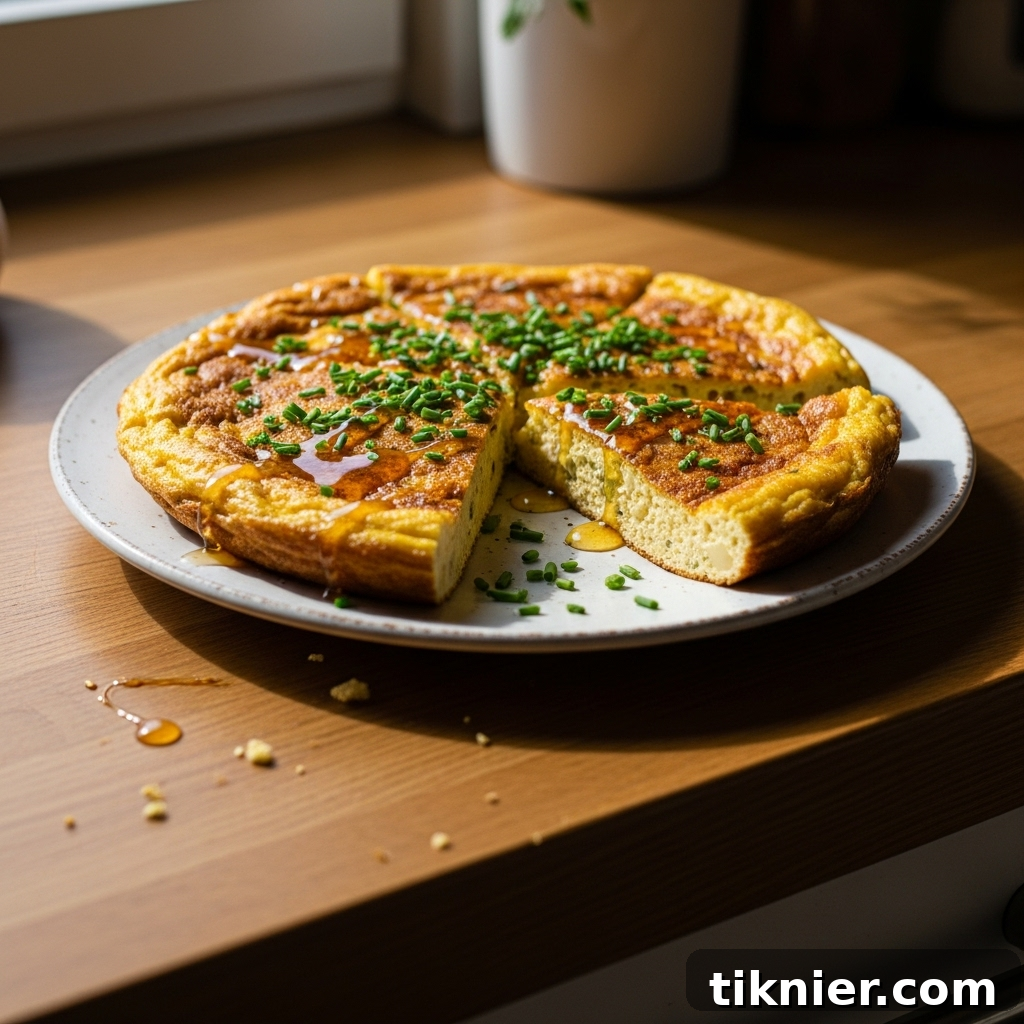
Description: A fluffy, savory frittata packed with crispy prosciutto, smoky Gouda cheese, and fresh spinach, all brought together with a surprising and delicious sweet-heat drizzle of hot honey. Perfect for brunch, lunch, or a light dinner.
Yield: 8 servings | Category: Breakfast | Cuisine: Italian-American
Prep Time: 10 minutes | Cook Time: 25 minutes
Ingredients
- 12 large eggs
- 1/2 cup half-and-half
- 1 tsp salt
- 1/2 tsp black pepper
- 2 tbsp unsalted butter
- 1 large shallot, thinly sliced
- 4 oz prosciutto, roughly chopped
- 5 oz baby spinach
- 1 1/2 cups shredded smoked Gouda cheese, divided
- 1/4 cup chopped fresh chives, divided
- 2 tbsp hot honey, for drizzling
Instructions
- Preheat oven to 400°F (200°C). Position a rack in the middle.
- In a large bowl, whisk together eggs, half-and-half, salt, and pepper until smooth and slightly frothy. Set aside.
- In a 10-inch oven-safe skillet over medium heat, melt butter. Add shallot and cook for 2-3 minutes until softened and fragrant.
- Add chopped prosciutto to the skillet and cook for 4-5 minutes, stirring, until slightly crispy and fat has rendered.
- Stir in baby spinach in large handfuls until just wilted, about 1-2 minutes. Ensure moisture has evaporated.
- Stir 1 cup of the shredded smoked Gouda and half of the chopped chives into the egg mixture.
- Pour the prepared egg mixture evenly into the skillet over the cooked ingredients. Gently spread fillings if needed. Cook on the stovetop over medium-low heat for 5-7 minutes without stirring, until the edges are set.
- Evenly sprinkle the remaining 1/2 cup of smoked Gouda over the top of the frittata.
- Carefully transfer the skillet to the preheated oven and bake for 10-15 minutes, until the frittata is beautifully puffed, golden brown on top, and the center is just set. A knife inserted should come out clean.
- Remove from oven and let the frittata rest in the pan for at least 5 minutes. Drizzle generously with hot honey and sprinkle with the remaining fresh chives before slicing into wedges and serving warm.
Notes
A well-seasoned cast-iron skillet is highly recommended for even heating and a lovely presentation. To prevent a rubbery texture, be careful not to overbake the frittata; it should be just set in the center with a very slight jiggle. The residual heat will continue to cook it as it rests.
Servings: 8 | Calories: 320 kcal | Fat: 24g | Carbohydrates: 5g | Protein: 21g
5 Essential FAQs About Making the Best Frittata
Here are clear, concise answers to the most common questions I encounter regarding this particular frittata recipe, designed to help you achieve perfect results every time.
Why does my frittata turn out rubbery or watery?
A rubbery or watery frittata is almost always the consequence of one of two issues: overcooking the eggs or incorporating too much moisture from the fillings. Eggs are incredibly delicate, and when subjected to excessive cooking time or temperatures, their proteins tighten excessively, expelling water and leading to a tough, spongy texture. To prevent this, remove your frittata from the oven when the center is just barely set—it might still have a very slight, delicate jiggle, but the residual heat within the pan will continue the cooking process as it rests. The classic test is to insert a thin knife into the center; it should emerge clean.
Excess moisture from your chosen fillings is the other frequent culprit. Many vegetables, especially those with high water content like spinach, mushrooms, or zucchini, release a significant amount of liquid when heated. It is critically important to sauté your vegetables thoroughly before adding the eggs, allowing this surplus moisture ample time to evaporate. For ingredients like spinach, cook it only until it visibly wilts; cooking it longer will cause it to steam and release more water into your skillet. If you are using particularly watery vegetables, consider gently pressing them against the side of the pan with a spoon to extract any extra liquid before pouring in the egg mixture, ensuring a firm and well-set frittata.
What is the fundamental difference between a frittata and a quiche?
While frittatas and quiches are both celebrated egg-based dishes, they possess distinct characteristics that set them apart. The most immediately noticeable difference is the crust: a quiche traditionally features a rich, buttery pastry crust, whereas a frittata is characteristically crustless. This makes the frittata a naturally lighter and often gluten-free alternative. Their preparation methods also diverge, leading to variations in their final texture. A quiche filling typically consists of a liquid custard of eggs and a higher proportion of heavy cream, poured into a pre-baked crust and then baked slowly in the oven, yielding an exceptionally smooth, soft, and delicate set. Conversely, a frittata begins its cooking journey on the stovetop. Fillings are sautéed in an oven-safe skillet, the egg mixture is introduced, and the edges are allowed to set before the entire pan is transferred to the oven to finish baking. This unique stovetop-to-oven technique results in a frittata that cooks faster and typically boasts a firmer, slightly puffier, and more rustic texture. Furthermore, frittatas generally contain less dairy than quiches, often utilizing milk or half-and-half instead of heavy cream, which contributes to a slightly less rich, yet equally satisfying, mouthfeel.
What is the best type of pan to use for making a frittata?
For achieving an ideal frittata, a well-seasoned, 10-inch cast-iron skillet is unequivocally the superior choice. Cast iron excels because it heats incredibly evenly and possesses excellent heat retention properties, which are vital for cooking the frittata uniformly from its edges to its center. Its most significant advantage is its seamless transition from the stovetop directly into a hot oven, a fundamental requirement for the classic frittata cooking method. Moreover, a properly seasoned cast-iron skillet offers a naturally non-stick surface, which is a tremendous bonus when it comes time to effortlessly slide those perfectly cooked wedges out of the pan for serving.
If a cast-iron skillet isn’t available, any 10-inch oven-safe, non-stick skillet will also perform admirably. The critical descriptor here is “oven-safe.” It is absolutely imperative to confirm that your chosen pan, including its handle, is specifically designed to withstand the 400°F (200°C) oven temperature. Many non-stick pans feature plastic or rubber-coated handles that are not heat-resistant and will melt or degrade in a hot oven. Using an oven-safe skillet is non-negotiable for both kitchen safety and the successful execution of your frittata. Avoid using pans that lack a non-stick coating, as eggs are notoriously prone to sticking, which can lead to a frustrating mess and make serving an unnecessary challenge.
Can I prepare this frittata ahead of time for convenience?
Absolutely! The frittata is an exceptional make-ahead dish, which is precisely one of the reasons it’s so perfectly suited for entertaining guests or streamlining your meal prep for the week. You have several convenient options for preparing it in advance. You can cook the entire frittata from start to finish, allow it to cool completely to room temperature, and then cover and refrigerate it for up to 3 to 4 days. It can be served delightfully chilled, at room temperature, or reheated. To reheat a whole frittata, place it in a 350°F (175°C) oven for approximately 15-20 minutes, or until it is thoroughly warmed through. Individual slices can also be reheated as needed using the methods discussed in the storage section.
Alternatively, you can choose to prep the individual components ahead of time. For example, you can sauté the shallots, prosciutto, and spinach, then store this cooked filling in an airtight container in the refrigerator for up to two days. Simultaneously, you can whisk your egg and cheese mixture and store it separately in another airtight container. When you’re ready to cook, simply heat the prepared fillings in your skillet, pour the pre-mixed egg mixture over the top, and proceed with the stovetop and oven cooking according to the recipe instructions. This clever method allows you to serve a freshly baked frittata with only a few minutes of active cooking time, making it incredibly convenient for busy mornings or unexpected guests.
How can I tell when my frittata is fully cooked to perfection?
Knowing the precise moment to remove your frittata from the oven is the ultimate secret to achieving that coveted creamy, custardy texture without overcooking. Your visual cues are your most reliable guide. After baking for the recommended 10-15 minutes, the frittata should be noticeably puffed up, particularly around its edges, and its top surface should boast a beautiful, inviting golden-brown color. The most critical area to observe is the very center of the frittata: it should appear set, meaning no longer liquid or wet. A very slight, gentle jiggle right in the middle is perfectly acceptable and even desirable, as the frittata will continue to cook slightly from the residual heat of the hot pan after you remove it from the oven.
For an added layer of certainty and a more foolproof test, you can employ the classic cake-testing method. Carefully insert a thin knife or a clean toothpick directly into the center of the frittata. If it comes out clean, without any wet, raw egg mixture clinging to it, then your frittata is perfectly done. If it emerges with liquid egg on it, return the frittata to the oven for an additional 2 to 3 minutes and then retest. It’s crucial to avoid overcooking. An overbaked frittata will continue to puff up but may develop cracks on its surface and, more importantly, will yield a tougher, rubbery texture when consumed. Trust these visual cues and the simple knife test, and you will consistently achieve a perfectly cooked, tender frittata every single time.
Continue Your Culinary Journey: Try These Delicious Recipes Next!
If you’ve fallen in love with the ease and exquisite flavors of this Smoked Gouda and Prosciutto Frittata, I’m confident you’ll adore some of my other cherished recipes. These selections are perfectly suited for busy weeknights, effortless entertaining, and maximizing the potential of simple, wholesome ingredients, just like our star frittata.
- Easy Breakfast Ideas and Recipes: Are you constantly searching for more delightful ways to infuse your mornings with something special? This extensive collection is brimming with my go-to breakfast and brunch recipes that are guaranteed to delight everyone at your table, from quick weekday options to more elaborate weekend feasts.
- Cheap Meal Ideas & Budget-Friendly Recipes: The beauty of a great frittata lies in its ability to transform simple ingredients into something truly incredible without breaking the bank. If you share a passion for crafting delicious, satisfying meals while adhering to a budget, you’ll discover an abundance of inspiration and practical recipes here.
- 110 Easy Dinner Ideas That Taste Great: While a frittata makes for a wonderfully light and elegant dinner, if you’re seeking even more straightforward and satisfying dinner ideas for any night of the week, this comprehensive list is tailor-made for you. It’s packed with diverse recipes perfect for simplifying your dinner routine.