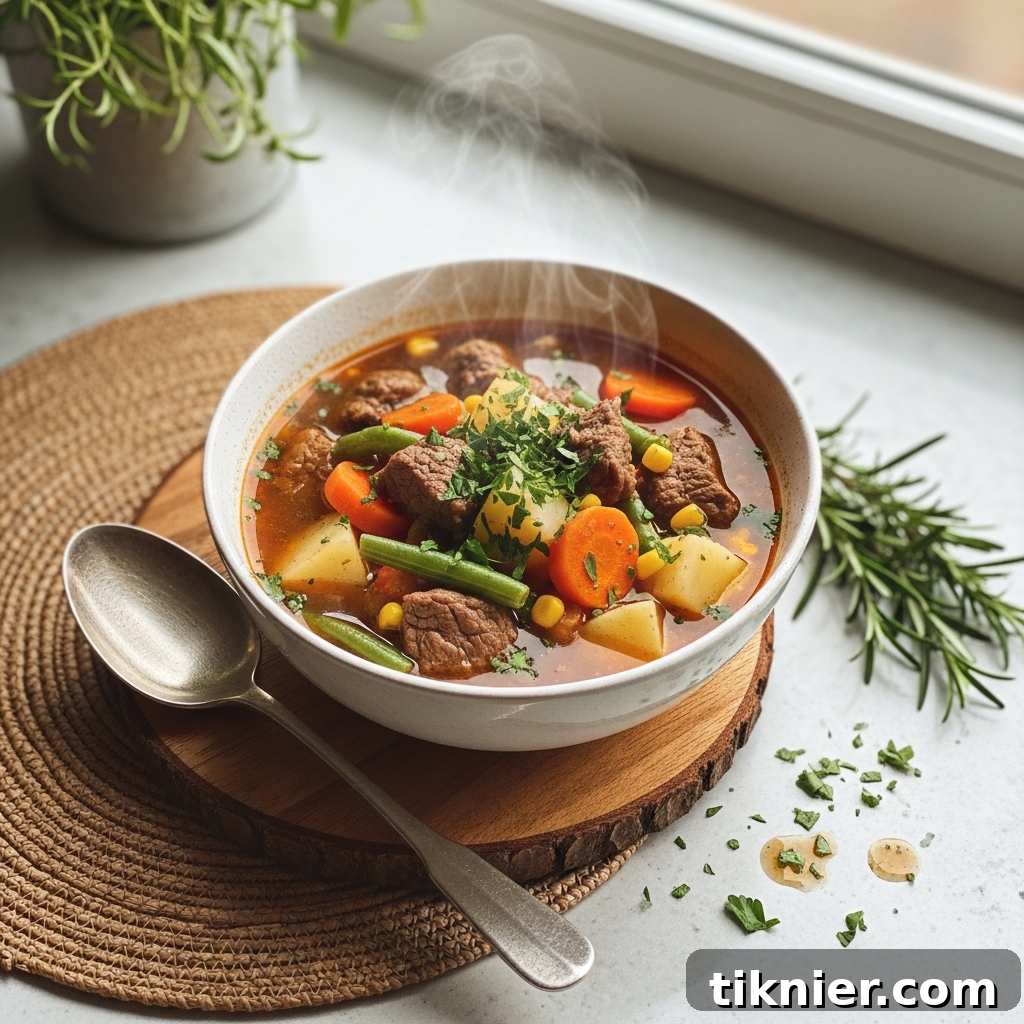
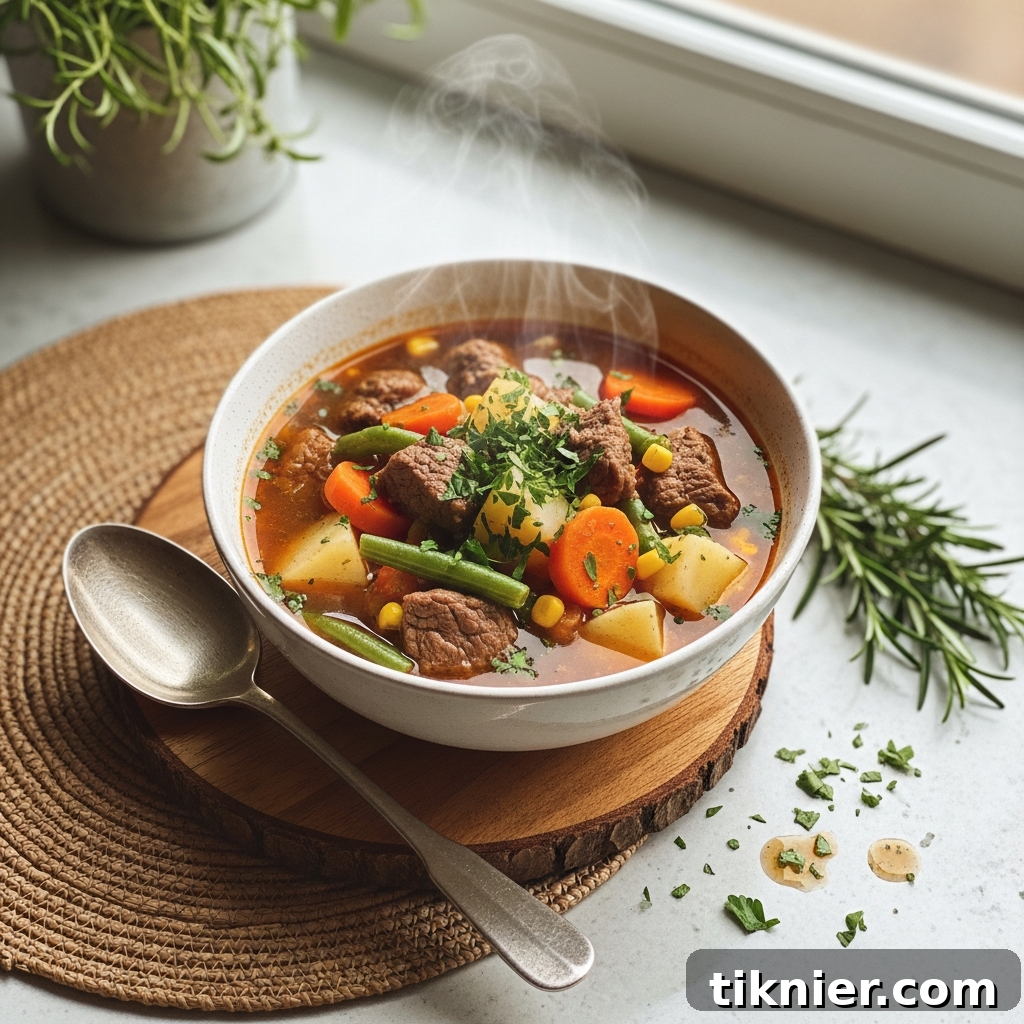
There are some truly magical scents that instantly transport you back to cherished memories, and for me, the rich, savory aroma of a pot of old fashioned vegetable beef soup simmering on the stove is exactly that – pure, unadulterated nostalgia. My grandmother was, without a doubt, the undisputed queen of this classic comfort dish. I can vividly recall chilly autumn afternoons when her kitchen would be filled with the comforting fragrance emanating from a colossal stockpot, bubbling gently on the range, promising warmth and satisfaction. That scent was the very essence of home.
Her version was the epitome of traditional, hearty cooking – precisely what your body craved after a long day. For many years, I faithfully recreated her recipe, savoring every single spoonful and cherishing the precious memories that came with each bite. However, as many home cooks can attest, I often find myself unable to leave well enough alone. I always felt that while her soup was wonderfully deep and savory, it yearned for just a tiny spark, an unexpected brightness to truly elevate those robust flavors and make them sing.
One serendipitous evening, while preparing a simple salad dressing, a small but significant idea struck me. I reached for the bottle of balsamic vinegar, and on an impulse, added just a splash to my finished bowl of soup. What happened next was nothing short of a culinary revelation. The vinegar didn’t make the soup taste sour or distinctly Italian, as some might fear. Instead, it subtly awakened every ingredient. It introduced a delicate tang and an almost imperceptible hint of sweetness that miraculously made the beef taste beefier and brightened the earthy notes of the tomatoes. It was the missing piece of the puzzle, the subtle secret that transforms my version of this beloved classic soup into an unforgettable standout. It’s truly a game-changer for homemade vegetable beef soup.
Ready to Try My Secret Ingredient? Jump to the Recipe!
Why This Old Fashioned Vegetable Beef Soup Recipe is a Culinary Triumph
Old fashioned vegetable beef soup holds a revered place as a quintessential comfort food, and its enduring popularity is deeply rooted in culinary history and practicality. This dish was originally born from resourcefulness, a brilliant way to transform tougher, more affordable cuts of beef and a bounty of garden-fresh vegetables into a profoundly nourishing and incredibly filling meal. It’s a recipe that has gracefully transcended generations, with countless families proudly passing down their own unique interpretations. Its appeal endures because it is profoundly satisfying, deceptively simple to prepare, and truly feels like a warm, comforting embrace in a bowl, particularly on a cold evening.
The true magic behind any truly exceptional old fashioned vegetable beef soup lies in the art of the slow simmer. This gentle, extended cooking process is what miraculously transforms a potentially tough cut of meat, such as beef chuck, into unbelievably tender, melt-in-your-mouth morsels. As the beef slowly cooks, its natural collagen breaks down, enriching the broth with a magnificent body and an unparalleled depth of savory flavor. Simultaneously, the diverse array of vegetables meld together in perfect harmony, with each contributing its distinct character to the complex tapestry of the finished dish, creating a robust and wholesome flavor profile.
So, what exactly makes my particular beef vegetable soup recipe so uniquely special? It’s all about achieving a sublime balance of flavors. While the traditional slow cooking method certainly develops a wonderfully deep and savory foundation, it can sometimes result in a flavor profile that feels a little one-dimensional or “flat.” My secret twist, a simple yet impactful splash of high-quality balsamic vinegar stirred in at the very end, is the absolute key to unlocking its full potential. The inherent acidity of the vinegar brilliantly cuts through the richness of the beef and the broth, effectively brightening the entire soup and preventing it from becoming heavy. It introduces a sophisticated layer of complexity that you might not immediately identify, but whose absence would be profoundly missed. This subtle addition elevates the classic flavor profile without ever overpowering it, making every single spoonful more vibrant, more memorable, and utterly irresistible. This one small, final step truly transforms a great, hearty soup into an absolutely unforgettable culinary experience, making it the best vegetable beef soup you’ll ever make.
Essential Ingredients for Your Perfect Old Fashioned Vegetable Beef Soup
The inherent beauty of this classic soup lies in its foundation of simple, wholesome, and readily available ingredients. We’re utilizing classic, easy-to-find items that, when brought together, create something truly extraordinary. There’s nothing overly complicated or fussy here – just pure, hearty goodness that evokes the feeling of a meal lovingly prepared in Grandma’s kitchen, yet with my distinctive, flavor-enhancing twist. For the most flavorful and authentic old fashioned vegetable beef soup, choosing quality ingredients is key.
Here’s a comprehensive list of what you’ll need to gather:
- 2 tablespoons olive oil: The perfect base for browning your beef and sautéing the aromatics, imparting a subtle, fruity note.
- 2 pounds beef chuck, cut into 1-inch cubes: This is the star of the show. Beef chuck is essential for achieving that melt-in-your-mouth tenderness and a rich, gelatinous broth.
- 1 large yellow onion, chopped: Provides a foundational sweetness and aromatic depth to the soup.
- 3 carrots, peeled and sliced into rounds: Adds natural sweetness, vibrant color, and earthy flavor.
- 2 celery stalks, sliced: A crucial aromatic that contributes to the classic flavor trinity (mirepoix) of French cooking.
- 4 cloves garlic, minced: For that irresistible pungent and savory kick that elevates almost any dish.
- 8 cups low-sodium beef broth: Opting for low-sodium allows you complete control over the final seasoning of your soup.
- 1 (28 ounce) can diced tomatoes, undrained: Adds a beautiful acidity, sweetness, and chunky texture to the broth.
- 2 medium Russet potatoes, peeled and cut into 1/2-inch cubes: Provides hearty substance and helps to naturally thicken the soup as it cooks.
- 1 ½ cups frozen cut green beans: A convenient way to add tender, fresh-tasting greens.
- 1 cup frozen corn: Brings bursts of sweetness and a lovely texture contrast.
- 1 teaspoon dried thyme: A classic herb pairing for beef, offering earthy, slightly minty notes.
- 1 teaspoon dried rosemary, crushed: Its piney, fragrant aroma complements the beef wonderfully. Crushing it releases its oils for maximum flavor.
- 2 bay leaves: Infuses the broth with a subtle, complex, and almost floral aroma that enhances overall depth.
- Salt and freshly ground black pepper to taste: Essential for seasoning layers and bringing all the flavors into sharp focus.
- Twist Ingredient: 2 tablespoons balsamic vinegar: The secret weapon that brightens, deepens, and adds an unexpected layer of complexity to the soup.
- 2 tablespoons fresh parsley, chopped, for garnish: Adds a final flourish of vibrant color and a fresh, herbaceous counterpoint.
For the beef, I cannot stress enough the importance of using **beef chuck**. Its fantastic marbling and abundant connective tissue are designed to break down beautifully over a long cooking time, yielding incredibly tender beef and a profoundly richer, more flavorful broth. Please resist the temptation to use a leaner cut, such as sirloin or tenderloin, as these will likely become dry, tough, and chewy under extended heat, completely missing the desired texture for a hearty beef vegetable soup.
When selecting your **beef broth**, choosing a low-sodium version is absolutely paramount. This critical choice grants you precise control over the ultimate saltiness of your soup. Remember, you can always add more salt to taste, but removing it is impossible. And for our special “secret” twist, the **balsamic vinegar**, investing in a decent quality bottle will genuinely make a discernible difference. You don’t need an exorbitant, decades-aged balsamic; a good-quality, readily available vinegar from your local grocery store will provide that perfect touch of bright, tangy, and subtly sweet flavor that truly makes this classic soup sing with newfound vibrancy. These carefully selected ingredients come together to create the best vegetable beef soup recipe you’ve ever tasted.
Step-by-Step Instructions For Crafting Your Signature Old Fashioned Vegetable Beef Soup
Creating this truly exceptional old fashioned vegetable beef soup is an exercise in building rich layers of flavor, meticulously crafted one step at a time. We’ll embark on this culinary journey by expertly browning the beef to create a deep, savory foundation, and conclude with our secret ingredient that masterfully ties all the vibrant flavors together. So, grab your most cherished large Dutch oven or a sturdy stockpot, and let’s begin this delightful cooking adventure. It’s a surprisingly simple process that consistently yields the most profoundly delicious and comforting results, making it an easy beef soup recipe to master.
Step 1: Achieve a Perfect Brown on the Beef
Begin by thoroughly patting your beef cubes completely dry with paper towels. This crucial step is absolutely essential for achieving that desirable, deeply browned crust, which is paramount for developing rich flavor. Season the dried beef generously on all sides with salt and freshly ground black pepper. Heat your olive oil in your chosen pot over medium-high heat until it shimmers. Once hot, add the beef in a single layer, ensuring not to overcrowd the pot. Overcrowding will cause the beef to steam rather than sear, hindering crust formation. Work in batches if necessary. Brown the beef cubes thoroughly on all sides, then transfer them to a clean plate and set aside for later use. This browning step is foundational for a flavorful homemade beef soup.
Step 2: Expertly Sauté the Aromatics
Reduce the heat to medium and add the chopped onion, carrots, and celery directly into the same pot. You absolutely want to utilize all those incredibly flavorful browned bits and drippings left from the beef, as they contribute immense depth. Sauté the vegetables for approximately 6 to 8 minutes, stirring occasionally, until they begin to soften and become fragrant. Next, add the minced garlic and cook for just one more minute, until its wonderful, pungent aroma fills your kitchen. Be vigilant to prevent the garlic from burning, as burnt garlic can impart a bitter taste to your beef vegetable soup.
Step 3: Combine Ingredients and Deglaze for Maximum Flavor
Now, return the beautifully browned beef and any accumulated juices from the plate back into the pot. Pour in the rich beef broth and, using a wooden spoon, vigorously scrape up all those flavorful browned bits (known as “fond”) that are stuck to the bottom of the pot. This vital process is called deglazing, and it’s where an enormous amount of concentrated flavor resides. Stir in the undrained diced tomatoes, the cubed potatoes, dried thyme, crushed rosemary, and the two bay leaves. These ingredients lay the groundwork for a truly hearty soup.
Step 4: The Art of the Slow Simmer
Increase the heat to bring the soup to a gentle simmer. As soon as you observe the first bubbles, reduce the heat to low, cover the pot tightly, and let it perform its magic for 1 ½ to 2 hours. This extended, slow cook time is precisely what will transform your beef into an incredibly tender and succulent masterpiece. You’ll know your old fashioned vegetable beef soup is ready when a piece of beef easily falls apart with the slightest poke from a fork, indicating perfect tenderness.
Step 5: Incorporate the Final Vegetables
Once the beef has reached its peak tenderness, gently stir in the frozen green beans and corn directly into the pot. Allow the soup to continue to simmer, this time uncovered, for an additional 20 minutes. This provides ample time for the frozen vegetables to cook through perfectly and allows the broth to thicken just slightly, concentrating the flavors even further. This step completes the vegetable medley in your homemade beef soup.
Step 6: Unleash the Secret Twist
Carefully remove the pot from the heat. Now for the moment of culinary magic. Locate and discard the two bay leaves. Then, stir in the two tablespoons of balsamic vinegar. Adding it at this stage, off the direct heat, is crucial as it preserves its bright, tangy flavor profile, ensuring it perfectly complements and enhances the rich, savory notes of your old fashioned vegetable beef soup without being cooked out. This is the secret to the best vegetable beef soup!
Step 7: Season to Absolute Perfection
This is the final and arguably most critical step in perfecting your soup. Carefully taste the soup and adjust the seasoning as needed. It may require a bit more salt, or perhaps a few more generous grinds of freshly ground black pepper, to make all the complex flavors truly pop and harmonize. Continue to season until it tastes absolutely just right to your palate.
Step 8: Garnish and Serve Your Masterpiece
Ladle your beautiful, steaming old fashioned vegetable beef soup into individual bowls. Crown each serving with a generous sprinkle of fresh, chopped parsley. The vibrant green not only adds a lovely splash of color but also contributes a touch of fresh, herbaceous flavor that brightens the entire dish. Serve it piping hot and revel in every comforting, delicious spoonful. This easy beef soup recipe is now ready to impress!
How To Serve Your Delectable Old Fashioned Vegetable Beef Soup
Serving this magnificent old fashioned vegetable beef soup is just as comforting and satisfying an experience as the process of making it. It truly stands as a complete, hearty meal encapsulated within a single bowl, brimming with fork-tender beef, a vibrant medley of wholesome vegetables, and a richly flavored broth. While you can certainly enjoy this robust soup entirely on its own, pairing it with the ideal accompaniment can effortlessly elevate your meal from merely wonderful to absolutely perfect. A little something extra to artfully dip into that exquisite broth is always a cherished addition at my family’s table, completing the perfect homemade beef soup experience.
Here are some of my most beloved and highly recommended ways to serve up a steaming, inviting bowl of this classic, comforting beef vegetable soup:
- Crusty Artisan Bread: This is an absolute non-negotiable staple in my household. A thick, generous slice of rustic sourdough or a warm, fragrant piece of a freshly baked French baguette serves as the ultimate vehicle for soaking up every single last, precious drop of that incredibly flavorful broth. It’s the quintessential pairing for any hearty soup.
- Classic Cornbread Perfection: For an authentic touch of Southern charm and comfort, you simply cannot surpass a side of warm, tender cornbread. Whether your preference leans towards a sweeter or a more savory profile, a slightly crumbly piece of cornbread, perhaps crowned with a melting pat of butter, is an utterly heavenly and harmonious match for this robust soup.
- Gooey Grilled Cheese Sandwiches: Transform your soup night into the ultimate comfort food extravaganza by thoughtfully serving it alongside warm, gooey, and buttery grilled cheese sandwiches. This timeless pairing is a magical combination that consistently brings immense joy to both children and adults alike, creating an unforgettable meal.
- Crispy Saltine Crackers: Sometimes, the simplest choice proves to be the very best. A sleeve of crisp saltine crackers, crumbled generously over the top of your soup, adds a delightful salty crunch and evokes a wonderful sense of culinary nostalgia that many find deeply comforting.
- Simple, Fresh Green Salad: If you’re seeking to introduce a delightful touch of freshness and balance, a light and simple side salad dressed with a bright vinaigrette works beautifully. It offers a crisp, cool, and refreshing contrast to the warm, hearty, and deeply satisfying nature of the soup.
You can also consider adding a few delightful final flourishes directly atop the soup itself. A generous dollop of creamy sour cream or protein-rich Greek yogurt can impart a lovely creamy tang, while a sprinkle of sharp cheddar cheese that slowly melts into the piping hot broth is always a deliciously indulgent choice. Regardless of how you choose to serve it, this old fashioned vegetable beef soup is guaranteed to be an absolute hit, becoming a cherished family favorite in no time.
How To Store & Reuse Your Delicious Old Fashioned Vegetable Beef Soup Leftovers
One of the most delightful aspects of preparing a generous pot of old fashioned vegetable beef soup is that the leftovers are often just as incredibly delicious, if not even more so, than the initial serving. As the soup gracefully rests in the refrigerator overnight, the multitude of flavors are granted even more time to thoroughly mingle and deepen, transforming the next day’s bowl into a truly magnificent treat. Proper storage techniques are absolutely essential to ensure your homemade beef soup remains fresh, flavorful, and safe to enjoy for subsequent meals.
Here’s your comprehensive guide to expertly handling your delicious leftovers:
- Refrigerating for Freshness: Allow the soup to cool down safely at room temperature for a period, but crucially, not for more than two hours. Once adequately cooled, transfer the soup into an airtight container. Store it securely in your refrigerator, where it will maintain its excellent quality and freshness for up to 4 days. This makes it a perfect make-ahead easy beef soup recipe.
- Freezing for Future Enjoyment: This particular soup is an outstanding candidate for freezing, preserving its flavors beautifully. After allowing it to cool completely, carefully ladle the soup into freezer-safe containers or robust, heavy-duty freezer bags. Be sure to leave approximately one inch of headspace at the top of the container or bag to accommodate for expansion during the freezing process. When stored correctly, the soup will retain its best quality for an impressive period of up to 3 months. While the texture of the potatoes might undergo a subtle change upon thawing, it is typically not significantly noticeable within the overall context of the rich, hearty soup.
- Reheating to Perfection: For optimal results and to preserve its exquisite flavors, reheat the soup gently in a saucepan on your stovetop over medium-low heat. Stir it occasionally until it is thoroughly warmed through, ensuring even heating. Alternatively, you can reheat individual portions conveniently in the microwave, pausing to stir every minute or so to guarantee uniform heat distribution. If you are reheating from a frozen state, it is always best practice to thaw the soup in the refrigerator overnight prior to warming.
While another comforting bowl of this classic vegetable beef soup is always an excellent idea, you can also unleash your culinary creativity with the leftovers. Consider serving the hearty soup over a generous scoop of creamy mashed potatoes or a bed of fluffy rice for a delightfully different kind of meal. You could even thicken the remaining soup slightly with a bit of cornstarch slurry and ingeniously repurpose it as a savory, robust filling for a rustic beef pot pie, crowned with a flaky pastry crust. The possibilities for enjoying this delicious old fashioned beef vegetable soup are truly endless and utterly delectable.
Unleash Your Creativity: Substitutions & Variations for Old Fashioned Vegetable Beef Soup
While I firmly believe that this specific old fashioned vegetable beef soup recipe, with its unique balsamic twist, is truly perfect as written, I also understand that the art of cooking is deeply personal and often revolves around making a dish authentically your own. This classic vegetable beef soup is remarkably versatile and forgiving, openly inviting you to make thoughtful swaps based on the ingredients you conveniently have on hand or the specific preferences of your family. It’s a recipe that enthusiastically welcomes a touch of culinary creativity and experimentation in the kitchen, ensuring your homemade beef soup is always a success.
Here are some simple yet effective substitutions and exciting variations you might consider trying:
- For the Beef Selection: If high-quality beef chuck isn’t readily available, don’t despair! You can successfully substitute other excellent stewing cuts such as bottom round or brisket, which will also tenderize beautifully over a long simmer. For those busy weeknights when time is of the essence, you could even substitute 1 ½ pounds of lean ground beef. If using ground beef, brown it thoroughly and drain any excess fat before adding the vegetables, ensuring a lighter yet still flavorful easy beef soup.
- Expanding Your Vegetable Horizon: The garden truly is your limit here! Feel entirely free to add or substitute other hearty, in-season vegetables. Earthy parsnips, slightly bitter turnips, naturally sweet potatoes, rich mushrooms, or even a few generous handfuls of finely chopped cabbage or kale would all make absolutely wonderful and nutritious additions to your beef vegetable soup. If you opt for fresh green beans and corn instead of their frozen counterparts, simply add them at the same time you introduce the potatoes, allowing them ample cooking time to reach perfect tenderness.
- Herbaceous Variations: If you are fortunate enough to have fresh herbs on hand, by all means, incorporate them! A helpful rule of thumb is to use one tablespoon of fresh herbs for every one teaspoon of dried herbs to achieve equivalent flavor. A fragrant sprig of fresh thyme and a robust sprig of fresh rosemary would impart a vibrant, garden-fresh essence to your homemade beef soup.
- Broth and Liquid Enhancements: In a pinch, you can certainly use vegetable broth or even chicken broth, though beef broth is preferred for depth. For an even deeper, more complex, and sophisticated flavor profile, consider replacing one cup of the beef broth with a dry red wine, such as a Cabernet Sauvignon or a robust Merlot. If using wine, add it to the pot after sautéing the vegetables, allowing it to simmer and reduce for a few minutes before adding the beef broth, letting its flavors concentrate.
- Alternative “Twists” for Acidity: If balsamic vinegar isn’t accessible, a splash of red wine vinegar or even a couple of teaspoons of Worcestershire sauce can also provide a delightful depth and a much-needed touch of acidity, perfectly finishing your soup with a rich umami note.
This incredibly adaptable recipe can also be easily tailored to accommodate various dietary needs. To craft a lower-carbohydrate version, you can swap the potatoes for an equal amount of chopped cauliflower florets or turnips, which offer a similar texture without the starch. If you need to adhere to a gluten-free diet, simply ensure that you use a certified gluten-free beef broth, as some brands may contain gluten-containing additives. The most important objective is to have immense fun experimenting and creating an old fashioned vegetable beef soup that you and your beloved family will absolutely adore and cherish for years to come.
My Signature Old Fashioned Vegetable Beef Soup
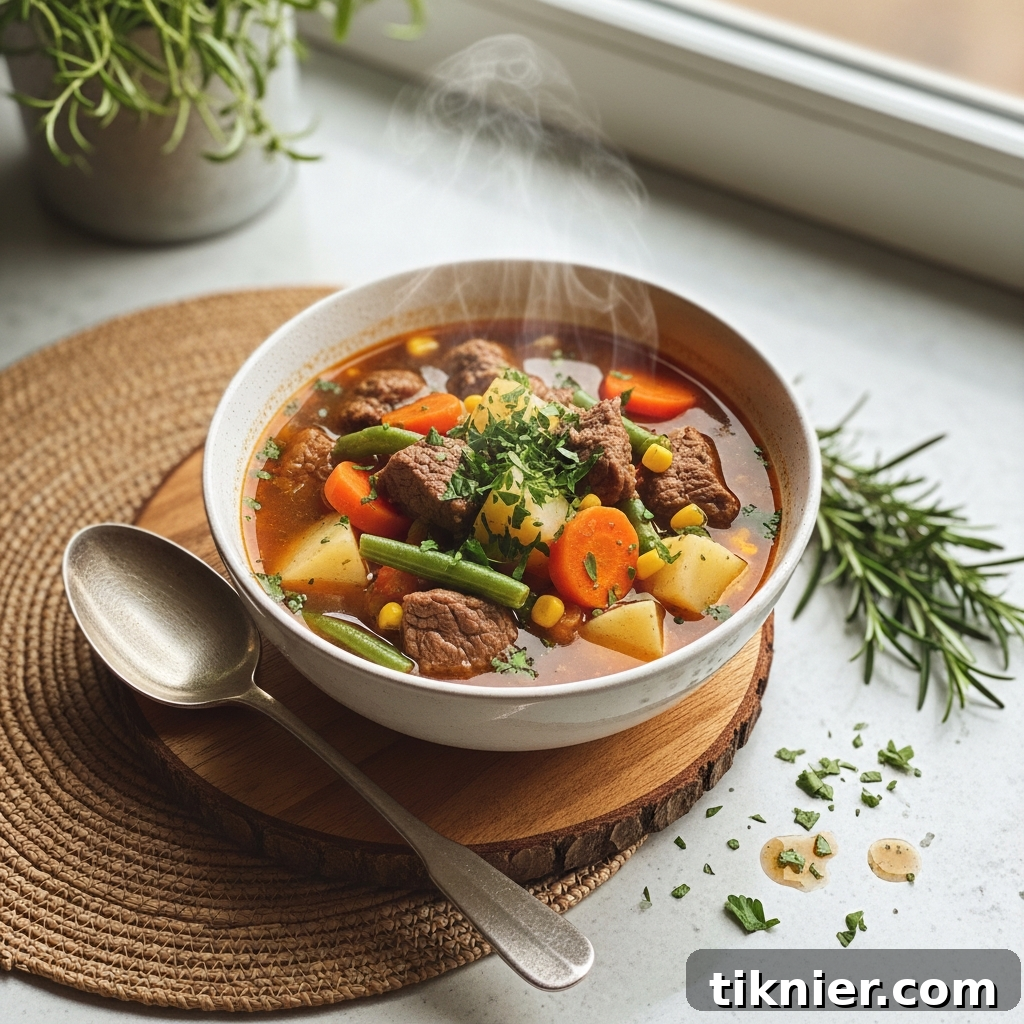
Description: A hearty, classic soup featuring fork-tender beef and a vibrant medley of garden vegetables, expertly elevated by a secret ingredient – balsamic vinegar – that adds an unexpected bright, complex, and utterly irresistible flavor dimension. This is the ultimate comfort food, a truly memorable homemade beef soup.
Yield: 8-10 generous servings | Category: Soup | Cuisine: American | Diet: High Protein, Wholesome
Prep Time: 25 minutes | Cook Time: 2 hours 30 minutes
Ingredients
- 2 tbsp olive oil
- 2 lbs beef chuck, cut into 1-inch cubes
- 1 large yellow onion, chopped
- 3 carrots, peeled and sliced into rounds
- 2 celery stalks, sliced
- 4 cloves garlic, minced
- 8 cups low-sodium beef broth
- 1 (28 ounce) can diced tomatoes, undrained
- 2 medium Russet potatoes, peeled and cut into 1/2-inch cubes
- 1 ½ cups frozen cut green beans
- 1 cup frozen corn
- 1 tsp dried thyme
- 1 tsp dried rosemary, crushed
- 2 bay leaves
- Salt and freshly ground black pepper to taste
- 2 tbsp balsamic vinegar (the secret ingredient!)
- 2 tbsp fresh parsley, chopped, for garnish
Instructions
- Prepare and Brown Beef: Pat beef cubes completely dry with paper towels and season generously with salt and pepper. Heat olive oil in a large Dutch oven or stockpot over medium-high heat. Brown beef in batches on all sides to create a flavorful crust, then transfer to a plate and set aside.
- Sauté Aromatics: Reduce heat to medium. Add chopped onion, carrots, and celery to the pot, scraping up any browned bits from the beef. Sauté for 6-8 minutes until softened. Add minced garlic and cook for 1 minute until fragrant, being careful not to burn it.
- Combine and Simmer: Return browned beef (and any juices) to the pot. Pour in beef broth, deglazing the pot by scraping up all the flavorful fond from the bottom. Stir in undrained diced tomatoes, cubed potatoes, dried thyme, crushed rosemary, and bay leaves.
- Slow Cook to Tenderness: Bring the soup to a gentle simmer. Reduce heat to low, cover the pot, and cook for 1.5 to 2 hours, or until the beef is incredibly tender and falls apart easily with a fork.
- Add Remaining Vegetables: Stir in the frozen green beans and corn. Continue to simmer, uncovered, for another 20 minutes to cook the vegetables through and allow the broth to slightly thicken.
- Add the Secret Twist: Remove the pot from the heat. Discard the bay leaves. Stir in the 2 tablespoons of balsamic vinegar. Adding it off the heat preserves its bright, tangy flavor.
- Season to Taste: Taste the soup and adjust seasoning as needed with additional salt and freshly ground black pepper to enhance all the flavors.
- Garnish and Serve: Ladle the hot soup into bowls. Garnish each serving with fresh, chopped parsley for a final touch of color and fresh flavor. Serve immediately and enjoy your delicious old fashioned vegetable beef soup!
Notes
For the absolute best flavor and a rich, deep broth, it’s crucial not to overcrowd the pan when browning the beef. Working in batches ensures a proper sear and creates that essential flavorful crust that forms the very foundation of this incredible soup’s taste. Don’t skip the balsamic vinegar – it truly makes all the difference!
Servings: 10 | Calories (approximate): 350 | Fat (approximate): 15g | Carbohydrates (approximate): 25g | Protein (approximate): 30g
5 Frequently Asked Questions (FAQs) About Old Fashioned Vegetable Beef Soup
Here are some direct, comprehensive answers to the most common questions I consistently receive about this comforting and flavorful old fashioned vegetable beef soup recipe, designed to help you master this classic dish and create the best vegetable beef soup possible.
What is the absolute best cut of beef to use for old fashioned vegetable beef soup?
The undisputed best cut of beef for this particular soup is, without any hesitation, a boneless beef chuck roast. Chuck, which originates from the shoulder of the cow, is a hardworking muscle that boasts a generous amount of fat marbling and abundant connective tissue, specifically collagen. While “connective tissue” might not initially sound appealing, it is, in fact, the secret ingredient to achieving an amazingly tender and flavorful soup. During the long, slow simmering process, this collagen magically breaks down into rich, unctuous gelatin. This gelatin is what imparts a wonderful body to the broth and creates that coveted silky, luxurious mouthfeel. Simultaneously, the fat slowly renders, keeping the meat incredibly moist and imbuing it with deep, savory flavor.
The ultimate result is beef that is unbelievably tender, literally falling apart with just a gentle touch of a fork. If you were to attempt using a leaner, more expensive cut like sirloin or tenderloin, it would unfortunately become tough, dry, and distinctly chewy because it simply lacks the necessary fat and collagen to withstand such a prolonged cooking time. If beef chuck roast is unavailable at your local butcher or grocery store, other excellent alternatives for stewing cuts include bottom round roast or brisket. Just remember this golden rule for this style of hearty soup: starting with a tougher, more collagen-rich cut is actually preferable for achieving the desired tender outcome.
Can I prepare this hearty vegetable beef soup in a slow cooker or an Instant Pot?
Yes, absolutely! This versatile old fashioned vegetable beef soup recipe is remarkably adaptable to various modern cooking methods, including both the slow cooker and the Instant Pot. For a slow cooker preparation, I still very strongly recommend taking the initial step of browning the beef and sautéing the onions, carrots, and celery on the stovetop first. This crucial preliminary step develops a profound depth of flavor (the “fond”) that simply cannot be fully replicated otherwise in a slow cooker. After completing the stovetop steps, transfer all the browned beef and sautéed aromatics (excluding the frozen vegetables, balsamic vinegar, and fresh parsley) into your slow cooker. Cook on the LOW setting for approximately 7-8 hours or on the HIGH setting for 4-5 hours. Stir in the frozen green beans and corn during the last 30 minutes of the cooking cycle. Finish the soup with the balsamic vinegar and fresh parsley just before serving.
For an Instant Pot method, utilize the “Sauté” function to brown the beef in batches and cook the aromatics directly in the pot. Return the browned beef to the pot, then add the beef broth, diced tomatoes, potatoes, and all the dried herbs. Secure the lid, set the valve to “Sealing,” and cook on high pressure for 35 minutes. Allow the pressure to release naturally for at least 10 minutes before carefully performing a quick release of any remaining pressure. Stir in the frozen corn and green beans and use the “Sauté” function for a few additional minutes to ensure they are heated through. Finally, turn off the heat and stir in the balsamic vinegar to brighten all the flavors. This makes for a convenient and easy beef soup option.
Why is my beef tough in my vegetable beef soup, despite cooking it for a long time?
Tough beef is undoubtedly the most common and frustrating issue encountered when making beef soup or stew, and it almost invariably boils down to one of two primary culprits: either selecting the wrong cut of meat or improper cooking time and temperature. As previously mentioned, using a lean cut of beef is a primary offender. Leaner cuts are optimally suited for quick cooking methods, such as grilling or searing, and they will, counter-intuitively, become progressively tougher the longer you cook them in a soup or stew. For this recipe, you unequivocally need a cut like beef chuck, which is rich in connective tissue.
The second, and perhaps even more common, reason for tough beef is that the soup simply wasn’t cooked for a sufficient duration or was cooked at an excessively high temperature. The intricate process of breaking down tough collagen into tender, succulent gelatin requires both ample time and a gentle, consistent heat. If you attempt to rush this process by boiling the soup aggressively instead of allowing it to simmer gently, the muscle fibers in the beef will seize up, resulting in tough, stringy meat. The key to perfectly tender beef is unwavering patience. The soup truly needs that full 1.5 to 2 hours (or even more, depending on your cut and pot) at a low, gentle simmer for the magical transformation to occur. If your beef still feels tough, the chances are it just needs more time simmering to reach its desired melt-in-your-mouth tenderness. This is crucial for the best vegetable beef soup.
Can I use fresh vegetables instead of frozen in this old fashioned soup recipe?
Of course, absolutely! While this specific old fashioned beef vegetable soup recipe conveniently calls for frozen corn and green beans to streamline the preparation process, you can effortlessly substitute fresh vegetables. In fact, utilizing fresh, peak-season produce can introduce even more vibrant and nuanced flavors to your soup, making it an even more exceptional homemade beef soup. If you choose to use fresh cut green beans and fresh corn kernels meticulously cut from the cob, you will want to incorporate them into the pot a little earlier in the cooking process than their frozen counterparts to ensure they have ample time to become perfectly tender and fully integrate their flavors.
I would highly recommend adding fresh green beans and fresh corn at the same time you introduce the potatoes into the pot, which is typically about 1.5 to 2 hours before the soup is fully cooked. This timing will provide them with sufficient cooking time – approximately an hour and a half – allowing them to soften completely and thoroughly meld their natural sweetness and earthiness with the rich broth. You are also encouraged to experiment with a wider variety of other fresh vegetables, such as sweet peas, lima beans, or even chopped zucchini, thoughtfully adding them according to their individual required cooking times. Softer vegetables, like zucchini or summer squash, should generally be added in the last 20 to 30 minutes of simmering to prevent them from becoming overcooked and turning to mush. Customizing the vegetables is a great way to make this an easy beef soup that caters to your preferences.
How do I thicken my vegetable beef soup if it turns out too thin for my liking?
If you find that your old fashioned vegetable beef soup has a thinner consistency than you prefer and you’re aiming for a richer, more stew-like texture, rest assured there are several easy and effective methods to achieve your desired thickness. The simplest approach is often to simply allow it to continue simmering. Remove the lid from the pot for the last 20-30 minutes of the cooking process. This strategic move permits some of the excess liquid to evaporate, which will naturally concentrate the flavors and gradually thicken the broth. The potatoes already present in the soup will also release some of their natural starches as they cook and break down, contributing to a subtle thickening effect.
For a more pronounced and significant thickening effect, you can efficiently utilize a cornstarch slurry. In a small bowl, thoroughly mix one tablespoon of cornstarch with two tablespoons of cold water until the mixture is completely smooth and free of lumps. Slowly whisk this slurry into the simmering soup, stirring continuously, and allow it to cook for a few more minutes until the broth has visibly thickened to your satisfaction. Another clever culinary trick is to leverage the vegetables themselves. You can remove about a cup of the cooked soup (including some potatoes and other soft vegetables), blend it until it reaches a smooth, creamy consistency, and then stir this blended mixture back into the pot. Alternatively, you can simply use the back of a sturdy spoon to gently mash some of the tender, cooked potatoes directly against the side of the pot, effectively releasing their starches into the broth and creating a natural, wholesome thickening. These methods ensure you can achieve your perfect homemade beef soup consistency.
Explore More Comforting Recipes Next!
If you absolutely adored this heartwarming and comforting old fashioned vegetable beef soup, I’m confident you’ll find a few more hearty beef recipes from my kitchen that will quickly become new favorites. These are perfect for cozy dinners and satisfying meals.
- Hearty Ground Beef Soup with Smoky Fire Roasted Tomatoes: Discover a quick-to-prepare and incredibly flavorful soup that ingeniously utilizes lean ground beef and robust fire-roasted tomatoes to create a smoky, utterly delicious, and easy weeknight meal that the whole family will love.
- Easy Beef Stew Recipe: Indulge in a timeless, rich, and deeply satisfying classic beef stew. It’s truly perfect for a comforting Sunday dinner, featuring fall-apart tender beef simmered in a luscious, savory gravy that promises warmth and satisfaction.
- Hearty Ground Beef Stew Recipe: Here’s another fantastic and incredibly affordable option, this time utilizing versatile ground beef. This hearty stew is wonderfully thick, profoundly satisfying, and impressively comes together in a flash, making it an ideal choice for busy evenings.
I sincerely hope you discover a new cherished favorite among these truly comforting and classic beef recipes, bringing warmth and joy to your kitchen.