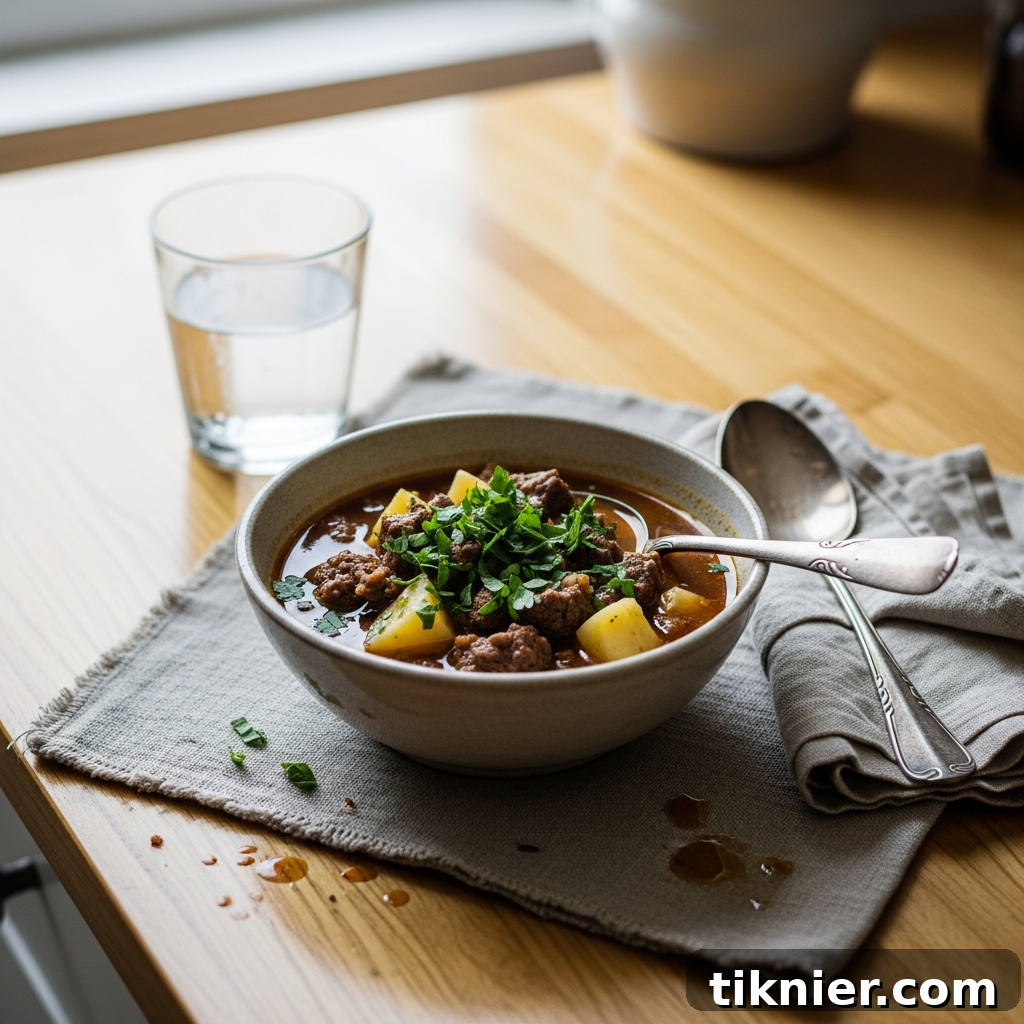
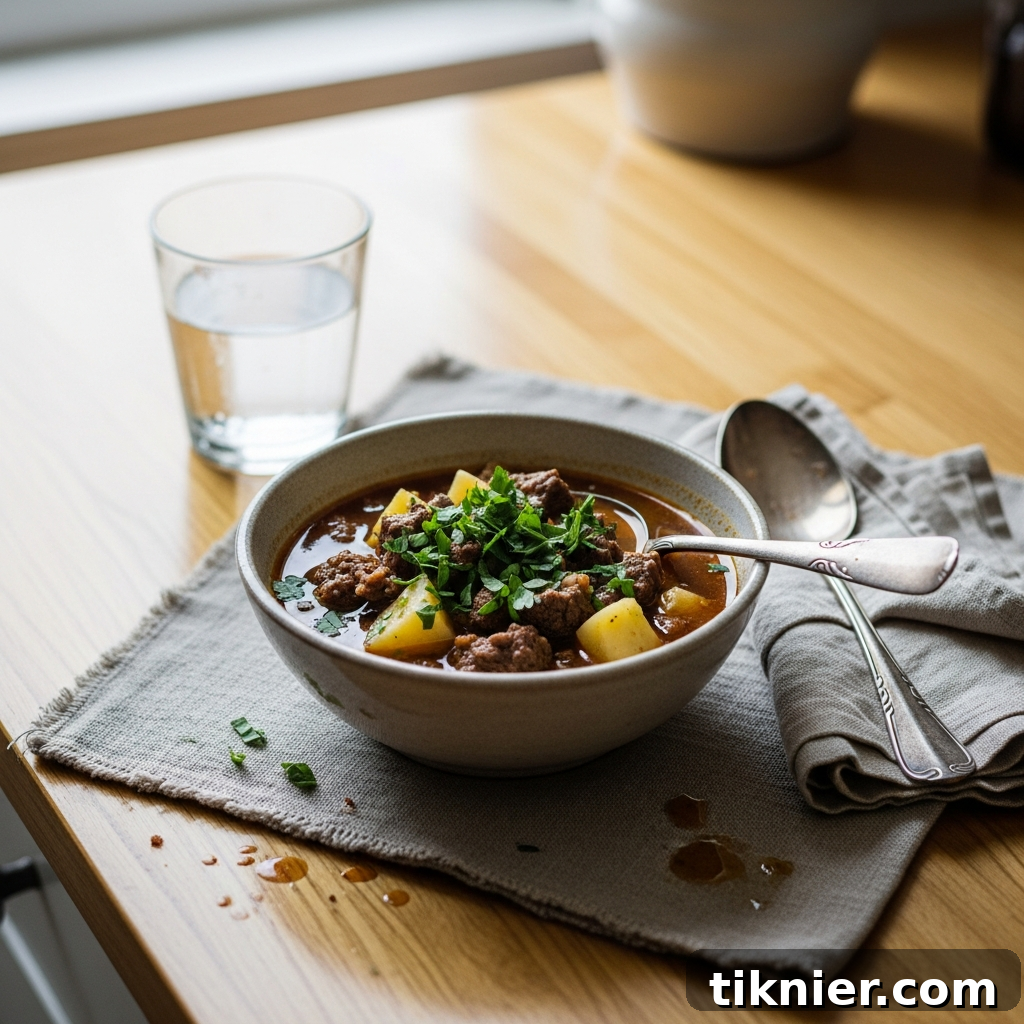
There’s a special kind of warmth that only a simmering pot of soup can bring to a home, especially as the crisp air of autumn begins to settle in. For me, some of the most cherished memories are intertwined with the comforting aromas drifting from my mother’s kitchen. Her classic vegetable soup was always hearty and nourishing, a true staple for those first chilly evenings. As I grew older and ventured into my own culinary explorations, I found myself longing for a soup that offered a bit more depth, a touch more character, something that felt both deeply familiar and uniquely exciting.
One evening, facing a package of ground beef and a well-stocked pantry, inspiration struck. I decided to build upon the timeless foundation of beef, potatoes, and carrots, but with a clear vision: to infuse it with distinctive flavors that would elevate it beyond the ordinary. This creative experiment led to the birth of my now-beloved ground beef soup recipe, a dish my family anticipates with eagerness the moment the leaves start to change color.
The secret to its unparalleled flavor? It’s a harmonious blend of two understated yet powerful ingredients. A generous spoonful of rich, smoky paprika introduces an incredible warmth and complexity, transforming the broth into something deeply satisfying. Then, at the very end of the cooking process, a judicious splash of high-quality balsamic vinegar brightens every note, adding a nuanced tang that makes each bite utterly captivating. These simple additions are game-changers, evolving a humble, everyday soup into a truly memorable culinary experience.
More than just a recipe, this ground beef soup is a testament to pure comfort, delivered with a sophisticated twist. It’s the quintessential one-pot meal for busy weeknights, offering both convenience and gourmet appeal. And as with most great soups, it somehow tastes even more incredible the following day, making leftovers a highly anticipated treat.
Skip to My Special Recipe!
Why This Ground Beef Soup Recipe Is a Must-Try
Ground beef soup stands as a beloved cornerstone in home kitchens worldwide, and for excellent reasons. It’s an inherently versatile, budget-friendly, and effortlessly satisfying meal, relying on staples most of us already have on hand. This classic dish excels at transforming a single pound of ground beef into a generous, flavorful feast capable of feeding a hungry family, often with enough left over for delicious next-day lunches. For generations, cooks have relied on this simple yet potent combination of savory meat, nourishing vegetables, and rich broth to create a hearty and wholesome meal without excessive fuss or specialized ingredients.
The enduring appeal of a classic ground beef soup lies in its comforting simplicity. The robust flavor of the beef, combined with the tender earthiness of potatoes and the subtle sweetness of carrots, creates a flavor profile that feels like a warm embrace on a chilly day. It’s a recipe that has been lovingly passed down through countless families, each adding their own small, personal touches. Its status as a true classic is well-earned, delivering dependable deliciousness time and time again.
But what precisely makes my particular version of this humble classic truly exceptional? It’s all in the thoughtful details and the strategic inclusion of two transformative ingredients. First, we introduce the power of smoked paprika. Unlike its regular counterpart, smoked paprika (often labeled as “pimentón de la Vera”) brings a deep, complex, woodsy flavor to the broth. This distinct smokiness evokes the richness of slow-cooked or roasted meats and vegetables, blooming beautifully in the pot with the other aromatics and infusing the entire soup with an incredibly satisfying, subtle depth that lingers on the palate.
The second, equally impactful twist is the splash of balsamic vinegar added just before serving. While it might seem an unconventional choice for a beef soup, trust me, this is where the magic truly happens. The vibrant acidity of the balsamic vinegar expertly cuts through the richness of the beef and broth, preventing the soup from tasting heavy or one-dimensional. Instead, it brightens and lifts all the existing flavors, adding a sophisticated, tangy finish that awakens your taste buds and ensures every spoonful is engaging and fresh. These two seemingly simple additions are what elevate a good ground beef soup to an absolutely unforgettable culinary experience, making it a staple you’ll want to revisit often.
Essential Ingredients for the Ultimate Ground Beef Soup
The secret to this ground beef soup’s remarkable flavor lies in its careful selection of simple, high-quality ingredients. While many items on this list might seem standard at first glance, a couple of key players are truly doing the heavy lifting to make this recipe profoundly special. Here’s a detailed breakdown of exactly what you’ll need to create this incredibly comforting and deeply flavorful bowl of goodness, ensuring every component contributes to the rich, balanced taste.
- 1 lb lean ground beef: For the best balance of flavor and texture without excessive grease, I highly recommend using an 85/15 or 90/10 lean-to-fat ratio. This proportion provides sufficient fat to render and develop robust flavor during the browning process, while still allowing for easy draining of any excess, ensuring your soup broth remains clear and rich, not oily.
- 1 large yellow onion, chopped: Yellow onions are the foundation of many savory dishes. When sautéed, they release a sweet, aromatic base that is absolutely crucial for building the foundational layers of flavor in this soup.
- 2 medium carrots, peeled and sliced: Carrots contribute a natural sweetness that complements the savory beef beautifully, adding both flavor and a vibrant pop of color to the soup.
- 2 celery stalks, chopped: Celery provides a distinct savory, slightly peppery note, adding essential aromatic complexity and balancing the sweetness of the carrots and onions.
- 3 cloves garlic, minced: Freshly minced garlic is non-negotiable for its pungent, aromatic intensity. It’s a flavor booster that provides a delicious depth when bloomed with the spices.
- 2 tablespoons olive oil: Used for sautéing the ground beef and aromatic vegetables, olive oil helps conduct heat evenly and adds a subtle, fruity undertone.
- 2 teaspoons smoked paprika (the star twist): This is arguably the most crucial ingredient beyond the beef itself! Seek out “smoked” or “pimentón de la Vera” on the label. Its deep, complex, and woodsy smoke flavor cannot be replicated by regular paprika and is essential for the unique character of this soup.
- 1 teaspoon dried thyme: A classic herb that boasts earthy, minty, and slightly lemon notes, thyme pairs exceptionally well with beef and potatoes, adding a timeless herbaceous layer.
- 1 teaspoon dried oregano: With its peppery, earthy, and slightly bitter notes, oregano further enhances the Mediterranean-inspired aromatic profile, deepening the overall flavor.
- 2 tablespoons tomato paste: A concentrated burst of umami, tomato paste is vital for intensifying the tomato flavor, adding richness, and giving the broth a gorgeous depth and body.
- 6 cups beef broth: The quality of your broth will significantly impact the final taste of your soup. Opt for a high-quality beef broth or stock. Using a low-sodium version allows you to precisely control the overall saltiness of the dish, seasoning to your exact preference.
- 1 (28-ounce) can fire-roasted diced tomatoes, undrained: Fire-roasted tomatoes possess a sweeter, more intense, and naturally smoky flavor compared to regular diced tomatoes. They perfectly complement the smoked paprika, adding another layer of complex taste without extra effort.
- 1.5 lbs Yukon Gold potatoes, diced into 1/2-inch cubes: Yukon Golds are the ideal choice for this soup. They are waxy enough to maintain their shape and integrity during extended simmering, preventing them from becoming mushy, yet they cook down to a wonderfully creamy and tender texture that is incredibly satisfying.
- 1 tablespoon Worcestershire sauce: This savory condiment is a powerhouse of umami, adding a subtle tang and a rich, complex depth that enhances the beef flavor without being overtly detectable.
- 1 tablespoon balsamic vinegar (the bright twist): My absolute secret weapon! A good quality balsamic vinegar, added at the very end, introduces a bright, tangy acidity that balances the richness of the soup, lifts all the flavors, and adds an unexpected layer of sophisticated taste. Do not skip this!
- 1 cup frozen corn: Added at the end, frozen corn provides a delightful pop of sweetness and a pleasant textural contrast, brightening the soup’s overall profile.
- 1 cup frozen peas: Similar to corn, frozen peas are stirred in towards the end, contributing a burst of fresh, sweet flavor and vibrant green color, preventing them from overcooking and losing their appeal.
- Salt and freshly ground black pepper to taste: Essential for seasoning and bringing all the individual flavors into perfect harmony. Taste and adjust repeatedly until the flavors truly sing.
- Fresh parsley, chopped, for garnish: A final sprinkle of fresh parsley adds a burst of freshness, a lovely green color, and a herbaceous note that brightens the entire dish, offering a wonderful aromatic finish.
Step-by-Step Instructions for Crafting the Perfect Ground Beef Soup
Creating this deeply satisfying and hearty ground beef soup is a straightforward and incredibly rewarding process. By following these detailed steps, you’ll build layers of exquisite flavor at each stage, culminating in a delicious, soul-warming meal that will quickly become a household favorite. Precision and patience are your best friends here, ensuring every ingredient shines.
Step 1: Expertly Brown the Beef and Onion
Begin by heating the olive oil in a large, heavy-bottomed pot or a Dutch oven over medium-high heat. A Dutch oven is particularly excellent for this recipe because its superior heat distribution helps brown the ingredients evenly and prevents scorching. Once the oil shimmers, add the chopped yellow onion and the ground beef to the hot oil. Use a sturdy wooden spoon or a spatula to diligently break the beef into smaller pieces as it cooks. The goal here is to achieve a beautiful, deep brown color on the beef, not just a dull gray. Those richly browned bits, known as “fond,” are pure concentrated flavor that will become the backbone of your soup. Once the beef is thoroughly cooked through and well-browned, carefully tilt the pot and use a spoon or ladle to drain off any excess fat. This step is crucial to prevent your soup from becoming greasy.
Step 2: Sauté the Aromatics and Bloom the Spices
Return the pot, with the browned beef and onions, to the heat. Add the sliced carrots and chopped celery. Sauté them for approximately 5 to 7 minutes, stirring occasionally, until they begin to soften slightly but are not fully tender. This allows their natural sweetness to develop. Next, introduce the minced garlic, the star smoked paprika, dried thyme, and dried oregano. Stir these ingredients constantly for about one minute. This vital step, often referred to as “blooming” or “toasting” the spices, intensifies their flavors and releases their potent aromas in the hot fat. Your kitchen will undoubtedly be filled with an absolutely intoxicating scent at this point, signaling the wonderful flavors yet to come.
Step 3: Integrate the Tomato Paste for Richness
Stir the tomato paste into the beef and vegetable mixture, ensuring it is well-distributed. Continue to cook for another minute or so, stirring frequently. This step is essential for caramelizing the tomato paste, which cooks out any raw, metallic flavors and deepens its rich, savory, and slightly sweet notes. You’ll notice the paste beginning to darken slightly and coat the beef and vegetables, indicating it’s ready for the next stage.
Step 4: Build the Robust Soup Base and Simmer to Perfection
Now, it’s time to transform these wonderful components into a magnificent soup! Carefully pour in the beef broth, add the entire can of fire-roasted diced tomatoes (undrained, as the liquid contains valuable flavor), the Worcestershire sauce, and the diced Yukon Gold potatoes. Stir everything together thoroughly, making sure to scrape up any flavorful browned bits (the fond) from the bottom of the pot with your spoon. This ensures all the developed flavors are incorporated into the broth. Bring the entire mixture to a rolling boil, then immediately reduce the heat to low, cover the pot tightly, and let it simmer gently for 20 to 25 minutes. The primary objective here is to cook the potatoes until they are perfectly tender. You can easily test their doneness by piercing one with a fork; it should offer little resistance.
Step 5: Incorporate the Final, Fresh Vegetables
Once your potatoes have reached that ideal tender stage, stir in the frozen corn and frozen peas. There’s no need to thaw these vegetables beforehand; they will quickly heat through and cook directly in the simmering soup. Allow them to cook for just about 5 minutes. Adding them at this later stage is key to keeping them bright, plump, and full of fresh flavor, preventing them from becoming overcooked and mushy, which can detract from their appeal.
Step 6: The Crucial Finishing Touch: Balsamic Vinegar
Remove the pot completely from the heat source. This step is paramount before adding the final, transformative ingredient. Stir in the balsamic vinegar. Adding the balsamic off the heat is vital because it preserves its vibrant, tangy acidity and complex flavor profile, which can be easily diminished or cooked off by high temperatures. This ensures that bright, lifting quality remains intact, making a significant difference to the overall taste.
Step 7: Season, Taste, and Serve with Flair
With the soup now complete, give it a final, thorough taste test. Season generously with salt and freshly ground black pepper. Remember, proper seasoning is what makes all the individual flavors pop and harmonize beautifully. Continue to taste and adjust until you’re completely satisfied with the balance. Ladle your delicious, steaming hot ground beef soup into bowls, add a vibrant garnish of fresh chopped parsley for an extra burst of freshness and color, and serve immediately. Enjoy the rich aromas and comforting flavors you’ve created!
How To Serve Your Hearty Ground Beef Soup
While this ground beef soup is undeniably a hearty and complete meal on its own, thoughtful accompaniments and garnishes can elevate a simple dinner into a truly memorable dining experience. The way you serve this soup is half the fun, offering myriad opportunities to customize each bowl to personal preferences and enhance the overall enjoyment.
In my opinion, the most classic and utterly essential pairing for this robust soup is a substantial piece of bread, perfect for dipping. There’s truly nothing more satisfying than tearing off a chunk of crusty French bread, a warm slice of artisanal sourdough, or a soft, fluffy dinner roll, and dragging it through the rich, savory broth, soaking up every last drop of flavorful goodness. For a touch of Southern charm, a piece of homemade skillet cornbread would also make an absolutely perfect companion, ready to absorb every delicious nuance from the bottom of the bowl.
Beyond bread, a crisp, simple green salad tossed with a light vinaigrette provides a refreshing and vibrant contrast to the warmth and heartiness of the soup. It beautifully rounds out the meal, offering a fresh counterpoint without making the entire dinner feel too heavy. This balance of textures and temperatures enhances the overall dining satisfaction.
If you enjoy creating an interactive dining experience, consider setting up a charming topping bar for your family or guests. This allows everyone to personalize their bowl with a variety of textures and flavors. Here are some of my favorite garnishes that beautifully complement this ground beef soup:
- Creamy Dairy Options: A dollop of cool sour cream or a sprinkle of freshly grated sharp cheddar cheese melts wonderfully into the hot soup, adding a luscious creaminess and a tangy, rich element that contrasts beautifully with the savory broth.
- Satisfying Crunch: For those who love a textural contrast, crumbled saltine crackers, classic oyster crackers, or even some crispy fried onions provide a delightful crunch that adds another dimension to each spoonful.
- Burst of Freshness: A little extra chopped fresh parsley, or a scattering of thinly sliced green onions (scallions), can instantly add a final burst of bright, clean flavor and a visually appealing touch, enhancing the soup’s freshness.
- A Hint of Heat: For diners who appreciate a bit of a kick, a few dashes of your favorite hot sauce, such as Tabasco or a smoky chipotle variety, or a small sprinkle of red pepper flakes, will do the trick nicely, adding a gentle warmth that enlivens the palate.
Ultimately, serving this ground beef soup is all about providing comfort and catering to individual preferences. By offering a few carefully chosen options, you make dinner feel a little more special, interactive, and tailored to everyone’s enjoyment, transforming a simple meal into a delightful occasion.
How To Store & Reuse Ground Beef Soup Leftovers Efficiently
One of the true joys of preparing a large pot of homemade soup is the anticipation of enjoying the leftovers, which often taste even better the following day. As this ground beef soup rests and cools, the individual flavors have more time to meld and deepen, creating an incredibly rich and complex profile. This makes it an ideal candidate for a hassle-free lunch or an effortless second dinner. Proper storage techniques are crucial to maintaining its freshness, flavor, and safety.
Firstly, it is absolutely imperative to allow the soup to cool down sufficiently before transferring it to storage containers. Leaving a large, hot pot of soup on the counter for an extended period can promote bacterial growth. To expedite the cooling process, you can divide the soup into smaller, shallower containers, which increase the surface area for quicker heat dissipation. Alternatively, placing the pot in an ice bath in your sink (ensuring no water gets into the soup) can rapidly bring down its temperature. Once the soup reaches close to room temperature, it is ready for safe storage.
Here’s how to effectively handle your delicious ground beef soup leftovers for optimal enjoyment:
- Refrigeration: For short-term storage, ladle the cooled soup into clean, airtight containers. These containers prevent air exposure, which can lead to spoilage and flavor degradation. Store the soup in the refrigerator for up to 4 days. When you’re ready to reheat, individual portions can be warmed in the microwave, stirring occasionally to ensure even heating. For larger quantities, gently reheat the soup in a saucepan on the stovetop over medium-low heat, stirring frequently, until it is heated through to a safe internal temperature. It’s important to avoid vigorously boiling the soup during reheating, as this can cause the vegetables, particularly the potatoes, to become mushy and lose their desirable texture.
- Freezing: This ground beef soup freezes exceptionally well, making it perfect for meal prepping or saving for a quick future meal. Pour the cooled soup into freezer-safe containers or heavy-duty freezer bags. When using containers, remember to leave about an inch of headspace at the top to allow for expansion as the soup freezes, preventing containers from cracking. Properly stored, it will maintain its quality in the freezer for up to 3 months. To serve, the best method is to thaw the frozen soup overnight in the refrigerator. Once thawed, you can reheat it gently on the stovetop as described for refrigerated leftovers. While the texture of the potatoes might change slightly after freezing and thawing (they can become a bit softer), the overall flavor will remain absolutely fantastic, a testament to its robust profile.
Beyond simply reheating a bowl, you can get wonderfully creative with your soup leftovers. If you find yourself with just a small amount, don’t let it go to waste! You can easily repurpose it as a flavorful base for an entirely new meal. Try simmering the leftover soup down until it’s thicker, creating a more stew-like consistency, and then serving it spooned over fluffy rice or tender egg noodles for a hearty dinner. Another fantastic option is to use it as a savory filling for a comforting shepherd’s pie; simply top the thickened soup with a generous layer of mashed potatoes and bake until golden brown and bubbly. Leftovers are truly a gift that keeps on giving, so embrace their versatility and savor every last bit!
Customization: Substitutions & Variations for Ground Beef Soup
While I firmly believe this specific ground beef soup recipe, with its smoky paprika and balsamic vinegar twists, is close to perfection, I also understand that every home cook loves to infuse dishes with their personal style and preferences. The beauty of this recipe lies in its remarkable flexibility, making it an excellent base for experimentation and adaptation. Whether you need to accommodate specific dietary requirements, want to utilize ingredients you already have on hand, or simply wish to explore new flavor dimensions, this soup is incredibly forgiving.
Don’t hesitate to play around with the ingredients! Soups are inherently adaptable, and changing one or two components can lead to exciting and delicious new discoveries. In fact, this recipe is a fantastic way to clean out that often-overflowing vegetable crisper drawer, minimizing food waste and maximizing flavor.
Here are several ideas to inspire your culinary creativity and help you tailor this ground beef soup to your taste and pantry:
- Protein Swaps: If you’re looking for an alternative to ground beef, this recipe adapts beautifully. You can easily substitute it with lean ground turkey or ground chicken for a lighter option, or use ground Italian sausage (mild or hot) for a different flavor profile. If opting for sausage, you might want to adjust the amount of other seasonings, as sausage typically comes pre-seasoned. Ensure proper browning for any protein choice to develop maximum flavor.
- Vegetable Add-ins and Boosts: This soup is incredibly welcoming to a wider array of vegetables. Consider adding diced zucchini, tender green beans, robust kale, or vibrant spinach. For quick-cooking greens like spinach or kale, stir them in during the last few minutes of simmering, allowing them just enough time to wilt beautifully without becoming overcooked or mushy. Other great additions include bell peppers (red, yellow, or green) with the onions and celery, or even diced parsnips for an earthy sweetness alongside the carrots.
- Turn Up the Heat: For those who appreciate a fiery kick, it’s simple to introduce more spice. Add a generous pinch of red pepper flakes along with the other dried spices during the blooming stage. Alternatively, finely dice a fresh jalapeño or serrano pepper and sauté it with the onions and celery for a more integrated heat. A dash of cayenne pepper can also provide a quick heat boost.
- Hearty Grains and Pasta Options: To make the soup even more substantial and filling, you can incorporate grains or small pasta. About a half-cup of small pasta shapes like ditalini, elbow macaroni, or orzo, or grains such as barley, farro, or brown rice, can be added. If adding them directly to the soup pot with the broth, be aware that they will absorb a significant amount of liquid, so you may need to add an extra cup or two of beef broth to maintain the desired consistency. A crucial tip for leftovers: I highly recommend cooking pasta or grains separately and adding them directly to individual bowls just before serving. This method prevents them from becoming overly mushy or absorbing all the broth in stored leftovers.
- Low-Carb Version: For a delicious low-carb adaptation, you can easily replace the Yukon Gold potatoes with diced cauliflower florets or turnips. Cauliflower is an excellent substitute, as it offers a similar texture when cooked. If using cauliflower, add the florets during the last 10-15 minutes of simmering, as it cooks much faster than potatoes and you want to avoid it turning into mush. Turnips can be added earlier with the other root vegetables.
- Herb Garden Freshness: While dried herbs work wonderfully, fresh herbs can elevate the flavor even further. Consider adding a sprig of fresh rosemary or a bay leaf during the simmering stage, removing them before serving. A blend of Italian herbs can also provide a vibrant, aromatic lift.
These are merely suggestions to ignite your culinary imagination. The most enjoyable aspect of cooking is truly making a recipe your own, so feel free to experiment, get creative, and tailor this incredibly delicious ground beef soup to perfectly suit your family’s unique tastes and preferences. Happy cooking!
Smoky & Hearty Ground Beef Soup
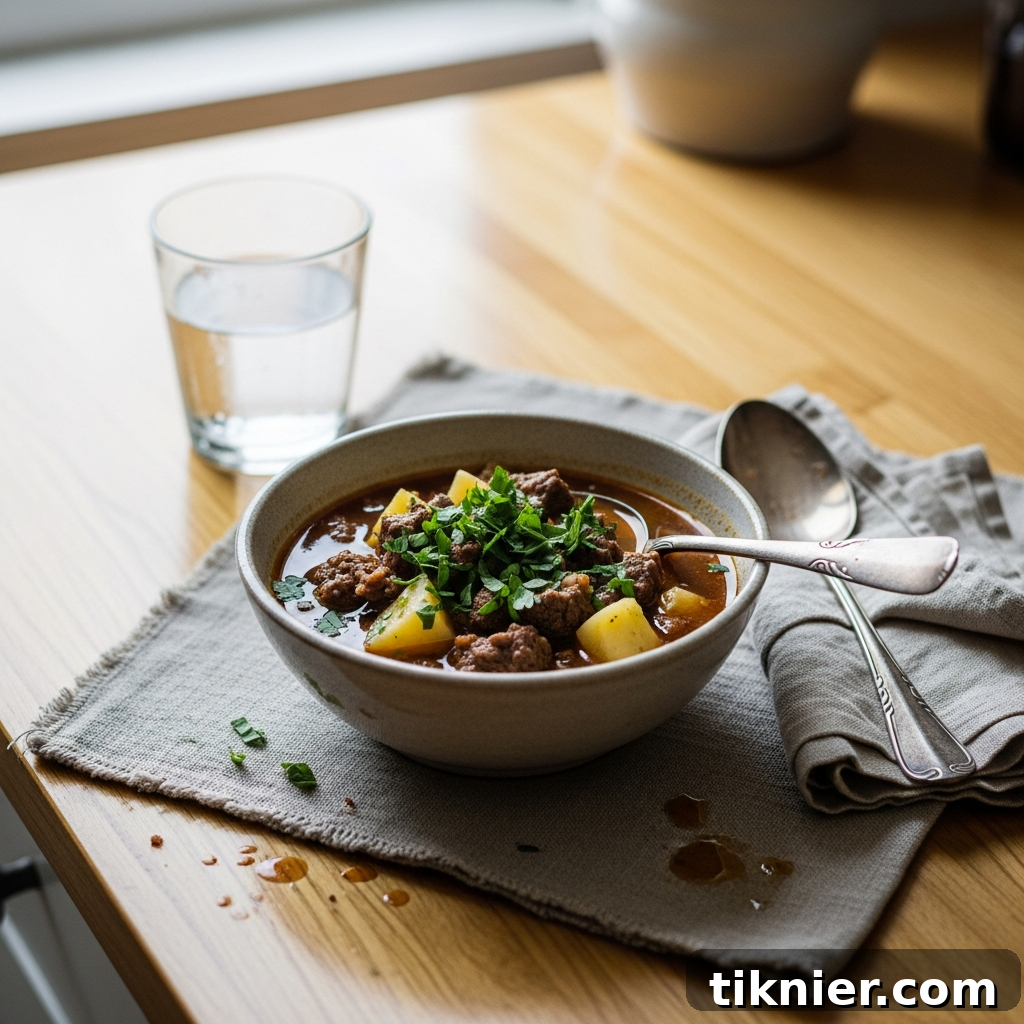
Description: A comforting classic, this ground beef and vegetable soup is beautifully elevated by the deep, complex flavor of smoked paprika and a bright, tangy finish from a splash of balsamic vinegar. It’s a satisfying one-pot meal, perfect for those seeking warmth and sophisticated flavor on a cozy night in.
Yield: 8 servings | Category: Soup | Cuisine: American
Prep Time: 15 minutes | Cook Time: 45 minutes
Ingredients
- 1 lb lean ground beef (85/15 or 90/10 recommended)
- 1 large yellow onion, chopped
- 2 medium carrots, peeled and sliced
- 2 celery stalks, chopped
- 3 cloves garlic, minced
- 2 tablespoons olive oil
- 2 teaspoons smoked paprika (essential for flavor)
- 1 teaspoon dried thyme
- 1 teaspoon dried oregano
- 2 tablespoons tomato paste
- 6 cups beef broth (low-sodium preferred)
- 1 (28-ounce) can fire-roasted diced tomatoes, undrained
- 1.5 lbs Yukon Gold potatoes, diced into 1/2-inch cubes
- 1 tablespoon Worcestershire sauce
- 1 tablespoon balsamic vinegar (the secret brightener)
- 1 cup frozen corn
- 1 cup frozen peas
- Salt and freshly ground black pepper to taste
- Fresh parsley, chopped, for garnish
Instructions
- Brown Beef & Onion: Heat olive oil in a large pot or Dutch oven over medium-high heat. Add chopped onion and ground beef, breaking up the beef as it cooks. Brown thoroughly, then carefully drain off any excess fat.
- Sauté Veggies & Bloom Spices: Return pot to heat. Add carrots and celery; cook for 5-7 minutes until slightly softened. Stir in minced garlic, smoked paprika, dried thyme, and dried oregano; cook for 1 minute, stirring constantly, until fragrant.
- Add Tomato Paste: Stir in the tomato paste and continue to cook for 1 more minute, allowing it to caramelize slightly and deepen in color.
- Build & Simmer: Pour in the beef broth, fire-roasted tomatoes (undrained), Worcestershire sauce, and diced potatoes. Stir everything together well, scraping up any browned bits from the bottom of the pot. Bring the mixture to a rolling boil.
- Cook Potatoes: Reduce the heat to low, cover the pot, and let it simmer for 20-25 minutes, or until the potatoes are fork-tender.
- Add Final Veggies: Stir in the frozen corn and frozen peas. Continue to simmer, uncovered, for another 5 minutes, allowing them to heat through completely.
- Finishing Touch: Remove the pot from the heat. Stir in the balsamic vinegar. (Adding it off the heat preserves its bright, tangy flavor).
- Season & Serve: Taste the soup and season generously with salt and freshly ground black pepper until the flavors are perfectly balanced. Ladle into bowls, garnish with fresh chopped parsley, and serve hot.
Notes
For the authentic flavor profile of this recipe, it’s crucial not to substitute regular paprika for smoked paprika; the smoky depth is key. Adding the balsamic vinegar off the heat is a vital step that preserves its bright, acidic notes, which can be lost under high temperatures. This soup is a fantastic make-ahead meal as it truly tastes even better the next day, allowing all the rich flavors to meld and deepen further!
Servings: 8 | Calories: 350 kcal | Fat: 15g | Carbohydrates: 30g | Protein: 25g
Frequently Asked Questions (FAQs) About Ground Beef Soup
Here are clear and comprehensive answers to some of the most common questions I receive about preparing and enjoying this specific ground beef soup recipe. These tips and insights are designed to help you achieve a perfectly delicious and satisfying pot of soup every single time you make it!
How can I make this ground beef soup thicker?
If you prefer a heartier, more stew-like consistency for your soup, there are several effective and easy methods to achieve it. My preferred approach is to create a simple cornstarch slurry. In a small bowl, whisk together one tablespoon of cornstarch with two tablespoons of cold water until the mixture is completely smooth and free of lumps. Slowly drizzle and whisk this slurry into the simmering soup, allowing it to cook for an additional minute or two. You’ll notice the soup begin to thicken quite rapidly. You can repeat this process with another small slurry if you desire an even thicker result.
Another excellent trick is to leverage the natural starches present in the potatoes. Before serving, you can gently mash a few of the tender potato cubes against the side of the pot using the back of a spoon. Stir these mashed potatoes back into the soup, and their released starches will naturally contribute to a thicker broth. For an even smoother thickness, you could remove about a cup of the soup (ensuring it contains plenty of potatoes), blend it until it’s perfectly smooth using an immersion blender or a regular blender (be cautious with hot liquids), and then stir it back into the pot. Finally, a simpler method is to allow the soup to simmer, uncovered, for an extra 10-15 minutes. This allows some of the liquid to naturally evaporate and reduce, leading to a more concentrated and thicker broth.
Can I make this ground beef soup in a slow cooker or Instant Pot?
Absolutely! This versatile recipe is highly adaptable to both slow cooker and Instant Pot methods, allowing for convenient hands-off cooking. For a slow cooker, I strongly recommend taking the crucial first step of browning the ground beef with the onions and garlic on the stovetop. This initial browning step is indispensable for developing a rich, foundational layer of flavor that truly enhances the soup’s depth. After draining the excess fat, transfer the browned beef and onion mixture to your slow cooker. Add all the remaining ingredients as listed in the recipe, with the exception of the frozen peas, frozen corn, and balsamic vinegar. Cook on the low setting for 6-8 hours or on the high setting for 3-4 hours, or until the potatoes are perfectly tender. Stir in the frozen vegetables during the final 30 minutes of cooking, and then add the balsamic vinegar just before you’re ready to serve.
For an Instant Pot, you can execute the entire recipe directly in the pot, streamlining the process even further. Begin by using the “Sauté” function to brown the ground beef and onions. Once browned, drain the fat. Then, add the minced garlic and the dried spices (smoked paprika, thyme, oregano) and continue to sauté for another minute until fragrant. Stir in the tomato paste and cook for one more minute. Next, pour in the beef broth, making sure to scrape up any flavorful browned bits (fond) from the bottom of the pot to prevent a “Burn” error. Add the fire-roasted tomatoes, diced potatoes, and Worcestershire sauce. Secure the lid, set the valve to “Sealing,” and cook on high pressure for 10 minutes. Allow the pressure to release naturally for 10 minutes before carefully performing a quick release of any remaining pressure. Finally, stir in the frozen peas, corn, and balsamic vinegar, and taste to season with salt and pepper before serving your deliciously quick ground beef soup.
What’s the best ground beef to use for this type of soup?
The choice of ground beef can indeed significantly influence the final flavor and texture of your soup. For this recipe, I consistently recommend using a lean ground beef with an 85/15 or 90/10 lean-to-fat ratio. This particular ratio offers an excellent balance: it provides enough fat to render and impart substantial flavor, contributing to the richness of the broth and keeping the meat tender during the initial browning process. However, it’s not so fatty that it will make your soup overly greasy. Since the recipe instructs you to drain any excess fat after browning, you get the best of both worlds – all the wonderful, deep flavor from the fat without an oily broth that can detract from the soup’s appeal.
You could opt for ground chuck, which often comes in an 80/20 lean-to-fat ratio, for an even richer, beefier flavor. If you choose this, be especially diligent about thoroughly draining the grease after browning. On the other hand, using extra-lean ground beef (such as 93/7) is also a viable option if your primary goal is to minimize fat content. However, exercise caution not to overcook extra-lean beef during the browning stage, as it can become dry and tough more easily due to its lower fat content. Ultimately, an 85/15 ground beef strikes the perfect balance for a flavorful, hearty, and well-textured ground beef soup.
How do I prevent my potatoes from getting mushy in the soup?
This is a fantastic and very common question, as nobody enjoys mushy, disintegrated potatoes in their otherwise perfect soup! The key to maintaining the integrity of your potatoes lies in two primary factors: selecting the correct type of potato and managing the cooking time effectively. For hearty soups and stews like this one, it is always best to choose a waxy or an all-purpose potato variety. Yukon Golds, as specified in this recipe, are an excellent choice. Other good options include Red Bliss or new potatoes. These varieties have a lower starch content and a firmer flesh, which allows them to hold their shape much more effectively during prolonged simmering compared to starchy potatoes like Russets. Russets, with their high starch content, are best reserved for mashing or baking, as they tend to break down easily in liquids.
The second critical factor is being careful not to overcook them. While the recipe suggests simmering for 20-25 minutes, it’s always a smart practice to start checking for doneness around the 20-minute mark. To test, simply pierce a potato cube with a fork or the tip of a knife. It should be tender enough to be easily pierced, but still retain a slight bit of firmness and not fall apart. Remember that the potatoes will continue to cook slightly even after you add the frozen vegetables and remove the soup from the heat, so it’s always better to err on the side of slightly underdone than overdone. Additionally, cutting your potatoes into uniform, 1/2-inch cubes ensures that they all cook at roughly the same rate, preventing some from being overcooked while others are still hard.
Can I add pasta or rice to this ground beef soup?
Yes, you can absolutely add pasta or rice to this ground beef soup to make it even heartier and more substantial! However, to ensure the best results and maintain the quality of both the soup and the added starch, it’s highly recommended to cook them separately from the main soup and add them directly to individual bowls just before serving. Both pasta and rice act like small sponges, and if you cook them directly in the soup pot, they will absorb a significant amount of the flavorful broth. This can lead to a much thicker, almost stew-like consistency, and often results in mushy grains or pasta, especially if you plan to enjoy leftovers.
If you choose to incorporate these, simply prepare a small pasta shape (like ditalini, elbow macaroni, or orzo) or a pot of white or brown rice according to their package directions. Once cooked al dente (for pasta) or tender (for rice), drain them well. When you’re ready to serve the soup, place a scoop of the cooked pasta or rice in the bottom of each serving bowl. Then, ladle the hot, aromatic ground beef soup over the top. This method guarantees that your broth remains perfectly brothy, your pasta or rice retains its ideal texture, and your precious leftovers will store and reheat beautifully without becoming a thick, starchy, and unappealing mass. It’s a simple step that makes a big difference in the overall enjoyment of the dish, especially if you value the distinct textures of each component.
Explore More Comforting Recipes Next
If you thoroughly enjoyed the rich, smoky, and deeply comforting flavors of this unique ground beef soup, I’m confident you’ll also adore some of my other favorite, soul-satisfying comfort food recipes. Each offers a delightful culinary experience that’s perfect for cozy meals at home.
- Hearty Ground Beef Soup with Smoky Fire Roasted Tomatoes: This recipe is a delightful close cousin to today’s featured dish, placing an even greater emphasis on those incredible smoky tomato notes. It’s a must-try if you loved the depth in this soup!
- Taco Soup: Imagine all the vibrant, zesty flavors of your favorite taco, magically transformed into a warm, incredibly satisfying soup bowl. It’s a guaranteed family favorite for its ease and irresistible taste!
- Copycat Wendy’s Chili: If you frequently crave that classic, comforting fast-food chili, my homemade version is not only strikingly similar but, dare I say, even better – and surprisingly easy to whip up in your own kitchen.
I genuinely hope you’ll consider giving these fantastic recipes a try for your next cozy and delicious meal! They are all perfect additions to your rotation of comforting, family-friendly dishes.