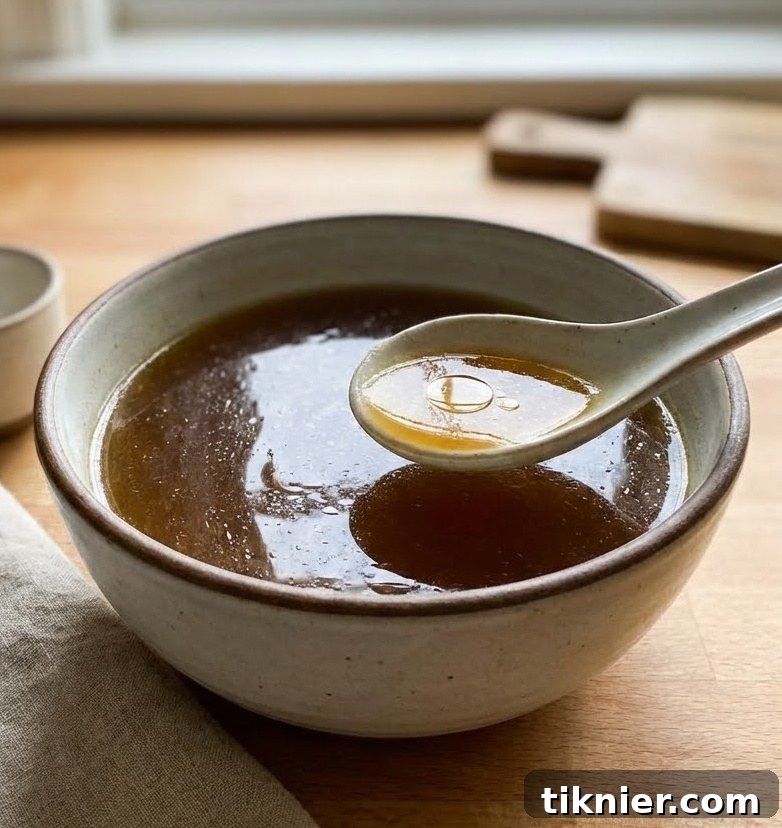
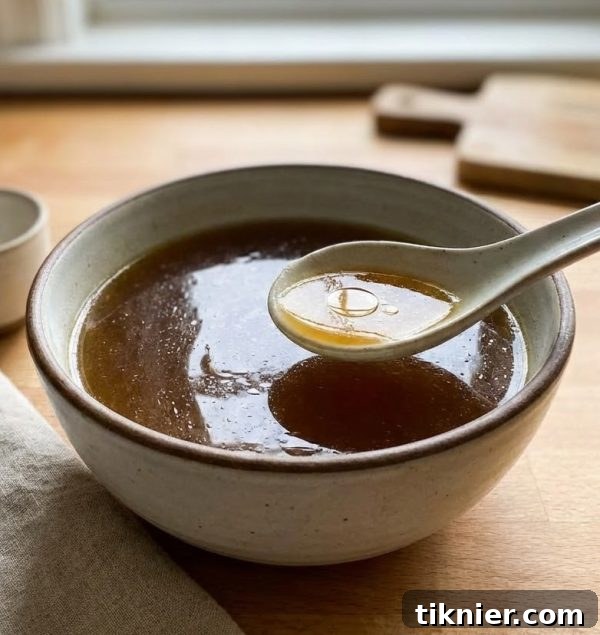
There are moments in life when a simple dish transcends its ingredients and becomes something truly restorative. For me, that moment arrived after a particularly demanding holiday season, leaving me utterly depleted. A thoughtful friend, a staunch believer in the power of nourishing foods, delivered a jar of her homemade bone broth. While comforting, I couldn’t shake the feeling that it was missing a certain je ne sais quoi – a subtle depth that would elevate it from merely good to truly exceptional, making you pause and savor each spoonful.
My mind drifted to a cherished Japanese restaurant my husband and I frequent. Their exquisite dashi broth, with its profound savory notes, always felt like a warm, internal embrace. I began to ponder: could I infuse this same level of intricate depth into a classic beef and chicken bone broth? This contemplation sparked an idea, a culinary epiphany if you will. The solution lay in two humble pantry staples: dried shiitake mushrooms and a piece of kombu, a type of dried kelp widely used in East Asian cuisine.
The transformation was nothing short of miraculous. The addition of kombu and shiitake didn’t impart an overwhelming seaweed or mushroom flavor. Instead, they acted as silent flavor amplifiers, unlocking a new stratum of rich, savory, umami goodness that made the inherent beef and chicken notes resonate with unprecedented clarity and intensity. What was once a wholesome but straightforward beverage evolved into a complex, satisfying soup – a liquid masterpiece I could proudly present to anyone. It remains my secret for crafting the most remarkably flavorful and deeply satisfying bone broth soup you will ever experience.
Skip to My Special Recipe!
Unlocking the Magic: Why This Umami-Rich Bone Broth Recipe Stands Out
Bone broth, far from being a modern health fad, boasts a storied history as a culinary cornerstone across diverse cultures for millennia. Long before its current wellness revival, our ancestors intuitively understood its profound benefits. The slow, patient simmering of bones and connective tissues meticulously breaks them down, meticulously releasing a treasure trove of vital nutrients into the liquid – collagen, gelatin, an array of essential amino acids, and vital minerals. This patient extraction yields a liquid that is not merely flavorful but incredibly restorative and deeply nourishing.
The contemporary resurgence of bone broth soup is a testament to its dual appeal. It serves as an indispensable foundational ingredient, forming the base for countless culinary creations, from rustic family soups and delicate sauces to robust gravies. Simultaneously, it is revered as a standalone elixir – a soothing, comforting, and restorative beverage, particularly cherished during periods of convalescence or simply for daily well-being. The hallmark of a truly superior bone broth is its richness and, crucially, its ability to set into a firm, glistening, jiggly gel when thoroughly chilled. This gel is the undeniable indicator of a successful and abundant extraction of precious collagen.
So, what sets this particular bone broth recipe apart amidst a plethora of others? It is its unparalleled depth of umami. While a conventionally prepared bone broth is undeniably delicious, it can occasionally present as somewhat one-dimensional or lacking a certain vibrant spark. My unique approach introduces a game-changing secret: the strategic addition of kombu, a nutrient-dense dried sea kelp, and dried shiitake mushrooms during the final phase of simmering. These two ingredients are not just additions; they are veritable powerhouses of natural umami, introducing a profound, savory, and almost meaty complexity that harmonizes exquisitely with the inherent flavors of beef and chicken, all without tasting overtly of seaweed or mushroom.
The kombu contributes a clean, mineral-rich savory depth and a spectrum of beneficial trace minerals, while the dried shiitake mushrooms infuse the broth with rich, earthy, and aromatic notes. This subtle yet impactful culinary twist transforms the broth from a commendable health food into an artisanal, gourmet soup base. The result is a profoundly more complex, beautifully rounded, and intensely satisfying flavor profile that genuinely encourages you to reach for another cup. This nuanced approach is the secret ingredient to crafting a bone broth soup that is truly unforgettable, leaving a lasting impression on your palate and nurturing your body from within.
The Essential Ingredients for Your Umami-Rich Bone Broth Soup
The foundation of an extraordinary bone broth lies in the careful selection of its ingredients, with the quality of your bones being paramount. Whenever possible, I strongly advocate for sourcing your bones from a reputable local butcher or a farmer’s market. Opting for grass-fed beef bones is a game-changer, yielding a broth with a significantly richer, more profound flavor and an enhanced nutritional density.
The judicious combination of various bone types is another critical element. Marrow bones contribute a luscious richness and a silken mouthfeel, while knuckle bones, brimming with cartilage, are indispensable for achieving that coveted, beautiful gel. Oxtail, a personal favorite, infuses the broth with an incredibly deep, robust beefy flavor. And for an exceptionally gelatinous broth, my secret weapon is chicken feet – they are almost entirely composed of skin, cartilage, and tendons, ensuring maximum collagen extraction. Here is the precise list of what you will need for my signature bone broth soup:
- 4 lbs beef bones: A thoughtfully selected mix is key – include marrow bones for richness, knuckle bones for gelatin, and oxtail for unparalleled beefy depth.
- 2 lbs chicken feet or wings: Chicken feet are highly recommended for their superior collagen content, ensuring a robust gel. Wings also work well for added chicken flavor and some gelatin.
- 2 large carrots: Roughly chopped, they provide natural sweetness and a foundational earthy note.
- 2 celery stalks: Roughly chopped, contributing a fresh, subtle herbaceousness to the aromatic base.
- 1 large onion: Quartered, with the skin on (as it adds color and beneficial compounds), offering a sweet and pungent depth.
- 1 head of garlic: Sliced horizontally through the middle, allowing the cloves to release their aromatic essence into the broth.
- 2 tablespoons apple cider vinegar: This crucial acidic component plays a vital role in helping to draw out essential minerals and collagen from the bones.
- 1 tablespoon whole black peppercorns: For a gentle, warming spice and classic aromatic foundation.
- 2 bay leaves: Infusing the broth with a subtle, aromatic, and slightly bitter note that enhances overall complexity.
- 1/4 cup dried shiitake mushrooms: These umami powerhouses contribute a rich, earthy flavor and an incredible savory depth.
- 1 (4-inch) piece of kombu (dried kelp) – THE UMAMI TWIST: This is our star secret ingredient, providing clean, oceanic umami and vital minerals without imparting a strong “seaweed” taste.
- 1 bunch of fresh parsley: Added at the very end to contribute a fresh, green, and slightly herbaceous brightness.
- Sea salt to taste: Essential for enhancing and balancing all the incredible flavors.
A special mention for our star ingredient: kombu. This dried kelp is readily available in the international or Asian food aisles of most well-stocked grocery stores, or at any dedicated Asian market. It is an indispensable component in traditional Japanese cooking, forming the backbone of authentic dashi broth. Even a small piece goes an incredibly long way in lending a deep, nuanced savory flavor. Its inclusion is a simple yet transformative step that elevates a good broth into a truly exceptional one. Do not omit it!
Mastering the Craft: Step-by-Step Instructions for Making Bone Broth Soup
Crafting bone broth soup is indeed a labor of love, but it is primarily a hands-off process, allowing time and gentle heat to work their magic. The secret lies in the long, slow simmer, which meticulously extracts every ounce of flavor and nutrient from the bones. By diligently following these steps, you are guaranteed to achieve a consistently clear, intensely flavorful, and wonderfully gelatinous broth every single time. Patience is your greatest ally here; resist the urge to rush the process, and you will be richly rewarded with a truly remarkable culinary creation.
1. The Crucial Roasting of Bones and Vegetables
Begin by preheating your oven to a robust 450°F (230°C). Roasting is not merely optional; it is a foundational step that is absolutely vital for developing a profound, rich, and beautifully golden-brown broth. Arrange your beef bones and chicken feet in a single layer on one or two large, heavy-duty roasting pans, ensuring they have ample space to brown evenly without steaming. Roast them for an initial period of 30 to 40 minutes, or until they achieve a deep, caramelized brown hue and fill your kitchen with an incredibly enticing aroma. Approximately five minutes before the bones are fully roasted, scatter your roughly chopped carrots, celery, onion, and garlic onto the pan to allow them to soften slightly and acquire a touch of caramelization. This initial browning and caramelization are the crucial first layers in building an extraordinary flavor profile.
2. Deglazing and Transferring to Your Stockpot
Once the bones and vegetables are perfectly roasted, carefully transfer them into a very large stockpot. For this recipe, I recommend a pot with at least a 12-quart capacity. Do not overlook the highly flavorful browned bits that will be firmly stuck to the bottom of your roasting pan – this is pure, concentrated flavor. Pour a small amount of water (about 1/2 to 1 cup) into the hot roasting pan and, using a sturdy wooden spoon or spatula, vigorously scrape up all those caramelized remnants. This process, known as deglazing, captures all the rich flavor. Pour this liquid gold directly into your stockpot. Now, add the apple cider vinegar, which acts as a gentle solvent, aiding in the extraction of vital minerals and collagen from the bones. Finally, incorporate the whole black peppercorns and the bay leaves.
3. The Gentle Submersion and Initial Simmer
With all your ingredients in the pot, pour in enough cold, filtered water to completely cover everything by at least two inches. Starting with cold water is a traditional technique that helps to create a clearer, cleaner broth by slowly bringing impurities to the surface. Bring the pot to a rapid boil over high heat, watching closely. The moment it reaches a rolling boil, immediately reduce the heat to the absolute lowest setting possible. Your goal is the barest whisper of a simmer – just a few gentle bubbles should occasionally break the surface every few seconds. During the first hour of simmering, you will likely observe some foamy scum rising to the top. Use a large, shallow spoon or ladle to carefully skim this off and discard it. This critical step helps to ensure your final broth is beautifully clean and exceptionally clear, free from impurities.
4. The Long, Patient Simmer – The Heart of the Broth
Once you’ve skimmed the initial scum, cover the pot with its lid, but leave it slightly ajar. This small opening allows steam to gently escape, preventing the broth from becoming cloudy. Allow the broth to simmer undisturbed for a minimum of 12 hours. However, for a truly profound and richly flavored beef broth, I wholeheartedly recommend an extended simmer of a full 24 hours. A slow cooker is also an excellent option for this phase, offering consistent low heat without constant supervision. The longer the simmering duration, the more collagen, gelatin, and intricate flavors you will successfully extract from the bones. It is paramount to maintain a consistently gentle simmer; never allow the broth to reach a rolling boil, as this can lead to a cloudy appearance and a bitter taste.
5. Infusing the Secret Flavor Boosters
As you approach the final hour of your total simmering time, it’s time to introduce our secret weapons – the ingredients that elevate this broth to culinary excellence. Gently drop in the dried shiitake mushrooms and the piece of kombu. These ingredients require less cooking time and their flavors are best preserved when added later. In the very last 10 minutes of simmering, add the entire bunch of fresh parsley. Adding these delicate aromatics towards the end prevents any potential bitterness from developing and ensures their vibrant flavors shine through in the finished broth.
6. The Final Strain and Cooling Process
Once the simmering is complete, turn off the heat and allow the pot to cool down slightly, making it safer and easier to handle. Position a large, fine-mesh sieve over another large, heatproof pot or bowl. For a broth of unparalleled clarity, line your sieve with a layer of cheesecloth or a clean kitchen towel. Carefully ladle the broth through the strainer, allowing gravity to do its work. Resist the urge to press down on the solids, as this can force small particles through and make your broth cloudy. Discard all the spent bones and vegetables. Taste your magnificent, freshly strained broth and season it generously with sea salt to your personal preference. Allow the broth to cool completely at room temperature, then transfer it to the refrigerator. As it chills, a natural layer of fat will solidify on the surface. You can choose to skim this off and reserve it for cooking (it’s delicious!) or discard it. The truly magical sign of a successful broth is when the liquid underneath this fat cap is as firm and jiggly as gelatin.
Creative Ways to Serve Your Liquid Gold: Bone Broth Soup
Once you’ve prepared this incredible liquid gold in your own kitchen, the culinary possibilities are genuinely boundless. While my personal favorite method for enjoyment is simply sipping it warm from a favorite mug, particularly on a crisp morning or a chilly evening, there are countless inventive ways to transform this versatile broth into a profoundly satisfying meal or an exceptional base for a multitude of other dishes.
Serving this magnificent bone broth soup can be as elegantly simple or as delightfully elaborate as your mood dictates. It provides a truly wonderful and versatile canvas for culinary creativity, allowing its deep, savory, umami-rich flavor to take center stage. Here are some of my most cherished ways to serve it up for my family and friends, showcasing its versatility and deliciousness:
- As a Simple, Restorative Sipping Broth: Gently reheat the chilled broth on the stovetop over low heat until it is beautifully steamy and fragrant. Pour it into a comforting mug and, if desired, garnish with a delicate sprinkle of fresh chopped chives, a vibrant sprig of parsley, or a thin, elegant slice of lemon for a hint of brightness. It’s the quintessential, nourishing way to begin or conclude any day, offering warmth and well-being.
- Craft a Quick and Hearty Noodle Soup: Elevate your broth into a complete and satisfying meal in mere minutes. Bring the broth to a gentle simmer and add your preferred cooked noodles – be it delicate ramen, wholesome soba, or thick, comforting udon. Enhance it further with shredded rotisserie chicken for protein, a handful of vibrant, wilted spinach for greens, and a perfectly soft-boiled egg for added richness.
- The Ultimate Base for Heartier Soups and Stews: This umami-rich bone broth serves as the absolute perfect foundation for more complex and substantial soups and stews. Use it as the primary liquid for a vibrant vegetable soup, a robust lentil soup, or, my personal indulgence, a rich and deeply satisfying French onion soup. Its layered flavor profile is incomparably deeper and more nuanced than any store-bought carton broth could ever hope to achieve.
- Infuse Flavor into Cooked Grains: Take your side dishes to an entirely new level by cooking rice, quinoa, farro, or even couscous directly in this bone broth instead of plain water. This simple substitution infuses the grains with an incredible depth of savory flavor and an added boost of nutrients, transforming even the most humble side dish into something truly special and memorable.
For unparalleled convenience, consider freezing portions of your broth in ice cube trays. These miniature “flavor bombs” are perfect for effortlessly adding a splash of richness and savory depth to pan sauces, quick sautés, or whenever you’re reheating leftovers. A small cube of this homemade broth can astonishingly revive and elevate almost any dish, contributing moisture and a sophisticated umami dimension that plain water simply cannot provide. It’s a kitchen hack that keeps giving!
Preserving Your Liquid Gold: How to Store & Reuse Bone Broth Soup Leftovers
Making a substantial batch of bone broth soup is a thoughtful investment of your time and effort, so ensuring its proper storage is paramount to prevent any of your hard work from going to waste. Thankfully, homemade bone broth stores exceptionally well, allowing you to enjoy its benefits for weeks, or even months, to come. It’s precisely for this reason that I always aim to prepare the largest batch my stockpot can comfortably accommodate.
Once your broth has completely cooled down in the refrigerator, you’ll observe a distinct, solidified layer of fat forming on the surface. I highly recommend leaving this fat cap intact for storage purposes, as it acts as a natural, protective seal, helping to maintain the freshness of the nourishing broth beneath. When you’re ready to use your broth, you can effortlessly lift this solidified fat cap off with a spoon. Here’s how I expertly store my precious liquid gold for both short-term convenience and long-term preservation:
- In the Refrigerator: For immediate to short-term use, you can store your bone broth in impeccably clean, airtight containers, such as large glass mason jars, in the refrigerator. Properly stored in this manner, it will remain fresh and delicious for approximately five to seven days. I personally find that glass jars are superior as they neither absorb odors nor impart any unwanted flavors, and they are incredibly easy to sanitize. Always ensure you leave about an inch of headspace at the top of the container to allow for any slight expansion.
- In the Freezer for Extended Storage: When it comes to long-term preservation, your freezer becomes an invaluable ally. Bone broth freezes exceptionally well without significant loss of quality or flavor. You can freeze it in larger, freezer-safe containers, but it’s crucial to remember to leave at least an inch of headspace at the top, as liquids expand considerably when frozen. Stored this way, your broth will maintain its quality for a minimum of six months, and often even longer.
- The Smart Method: Freezing in Portions: My absolute favorite and most practical storage trick is to freeze the broth in smaller, more manageable individual portions. Silicone muffin tins or large ice cube trays are perfectly suited for this purpose. Once the broth has frozen solid in these molds, simply pop out the individual broth “pucks” and transfer them into a large, heavy-duty freezer bag or another airtight freezer container. This ingenious method allows you the flexibility to grab precisely the amount you need – whether it’s a single serving for a warming mug or a few small cubes to enhance a pan sauce, minimizing waste and maximizing convenience.
To effortlessly reuse your stored bone broth, simply thaw it overnight in the refrigerator, or gently reheat it directly in a saucepan over low heat. If using a frozen broth puck, you can often drop it directly into a pot or pan to thaw and heat. This is the ultimate kitchen hack, a ready-made secret weapon that stands prepared to infuse any meal with profound flavor, essential nutrition, and a generous dose of homemade care and love.
Customizing Your Creation: Substitutions & Variations for Bone Broth Soup
While I firmly believe this bone broth recipe, with its umami-rich twist, is pretty close to perfection, I also understand that every cook loves to infuse their unique personality into their dishes. Cooking should be an adventure of flexibility and enjoyment! This bone broth soup recipe is wonderfully forgiving and remarkably adaptable, allowing you to easily modify it based on the ingredients you have readily available, your specific dietary preferences, or simply your culinary curiosity. Consider this recipe not as a rigid rulebook, but rather as an excellent, robust template upon which you can build your own delicious variations.
Whether your goal is to swap out a protein source, accommodate a particular dietary requirement, or simply explore new and exciting flavor profiles, there are abundant simple adjustments you can make without compromising the integrity or deliciousness of the broth. Here are some of the most popular and incredibly tasty substitutions and variations you might consider trying:
- All-Chicken or All-Beef Broth: If you have a preference or simply limited access to different bone types, you can effortlessly adapt this recipe to use solely one type of bone. For an exclusive all-chicken broth, aim for approximately 6 to 7 pounds of chicken parts, emphasizing backs, necks, and especially chicken feet for their superior collagen content. For an all-beef broth, simply utilize 6 to 7 pounds of various beef bones (knuckle, marrow, oxtail). Note that the simmering time for an all-chicken broth can be slightly shorter, typically ranging from 8 to 12 hours.
- Experiment with Diverse Aromatics: Feel empowered to expand beyond the classic mirepoix. You could introduce a few star anise pods and a cinnamon stick during the simmer for an aromatic, pho-inspired flavor profile. A generous knob of fresh ginger or a few slices of vibrant turmeric root can add wonderful warmth and potent anti-inflammatory benefits. A handful of fresh thyme or fragrant rosemary sprigs, added at the end alongside the parsley, would also contribute a beautiful herbaceous complexity.
- For a Gentle Spicy Kick: If your palate enjoys a hint of warmth, you can easily incorporate a dried chili pepper (such as a guajillo or ancho) or a teaspoon of red pepper flakes into the pot along with the other aromatics. This will infuse the broth with a subtle, comforting spice that is particularly inviting on a cold day. Adjust the quantity to your preferred level of heat.
- Explore Pork and Lamb Bones: Do not hesitate to venture into using other types of bones! Pork bones, especially trotters (pigs’ feet), create an astonishingly rich and incredibly gelatinous broth that is fantastic for ramen or hearty stews. Lamb bones will yield a broth with a more distinct, slightly gamier flavor profile, which is absolutely delicious as a sophisticated base for lamb stews, tagines, or even a robust lentil soup.
- Adding Greenery and Fresh Herbs: Beyond parsley, consider fresh dill, cilantro, or even some spinach stems added in the last 15-20 minutes of simmering. For a more intense herbal note, you can tie a bouquet garni (a bundle of herbs like thyme, bay leaf, and rosemary) and add it during the last hour.
Regardless of your chosen additions or substitutions, the core technique remains steadfast: the initial roasting of the bones to build deep flavor, followed by a long, slow, and gentle simmer. The ultimate objective is always to meticulously extract the maximum possible flavor and nutritional goodness from your ingredients. So, take this opportunity to clean out your freezer, utilize those often-discarded vegetable scraps, and craft a pot of bone broth soup that is not only profoundly nourishing but also uniquely and deliciously yours.
The Ultimate Umami-Rich Bone Broth Soup
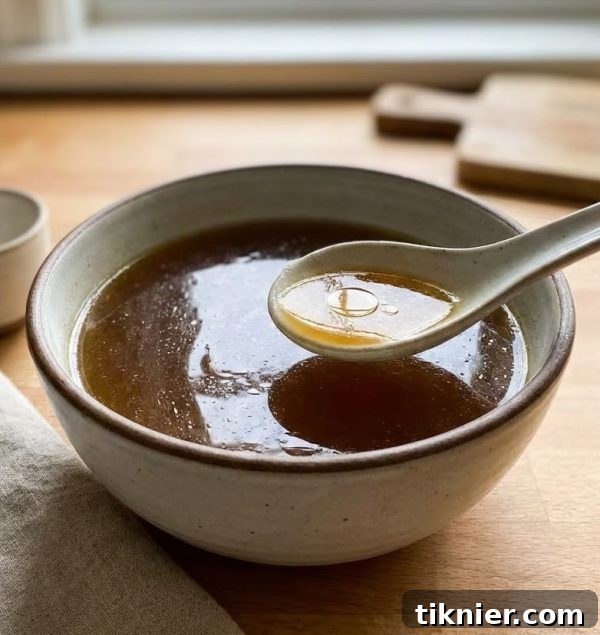
Description: A deeply nourishing and incredibly flavorful bone broth soup crafted from a thoughtful blend of beef and chicken bones. The inclusion of a secret ingredient twist – kombu and dried shiitake mushrooms – cultivates an unparalleled savory umami depth, transforming this classic recipe into something truly extraordinary and unforgettable.
Yield: Approx. 4 quarts | Category: Soup | Cuisine: American (with Japanese influence)
Prep Time: 15 minutes | Cook Time: 12-24 hours
Ingredients
- 4 lbs beef bones (a mix of marrow, knuckle, and oxtail recommended)
- 2 lbs chicken feet or wings (chicken feet provide superior gelatin)
- 2 large carrots, roughly chopped
- 2 celery stalks, roughly chopped
- 1 large onion, quartered (skin on for color)
- 1 head of garlic, sliced in half horizontally
- 2 tablespoons apple cider vinegar (aids in mineral extraction)
- 1 tablespoon whole black peppercorns
- 2 bay leaves
- 1/4 cup dried shiitake mushrooms (umami booster)
- 1 (4-inch) piece of kombu (dried kelp – the secret umami ingredient)
- 1 bunch of fresh parsley
- Sea salt to taste
Instructions
- Preheat your oven to 450°F (230°C). Arrange beef bones and chicken feet in a single layer on a roasting pan. Roast for 30-40 minutes until deeply browned. Add chopped carrots, celery, onion, and garlic to the pan for the last 5 minutes of roasting to lightly caramelize.
- Carefully transfer the roasted bones and vegetables to a very large stockpot (at least 12-quart capacity). Deglaze the roasting pan by adding a small amount of water and scraping up any browned bits; pour this flavorful liquid into the stockpot.
- Add the apple cider vinegar, whole black peppercorns, and bay leaves to the pot. Pour in enough cold, filtered water to cover all ingredients by at least two inches.
- Bring the pot to a rapid boil over high heat. Immediately reduce the heat to the lowest possible setting to maintain a very gentle simmer. During the first hour, use a large spoon to skim off any foam or scum that rises to the surface to ensure a clear broth.
- Cover the pot, leaving the lid slightly ajar to allow steam to escape. Allow the broth to simmer gently for a minimum of 12 hours, with 24 hours being ideal for beef bones to maximize collagen and flavor extraction. Ensure it never reaches a rolling boil.
- During the final hour of total simmering time, add the dried shiitake mushrooms and the piece of kombu to the pot. In the very last 10 minutes, add the entire bunch of fresh parsley.
- Turn off the heat and allow the broth to cool slightly. Place a large, fine-mesh sieve (lined with cheesecloth for extra clarity, if desired) over another large pot or heatproof bowl. Carefully ladle the broth through the strainer, discarding all solids.
- Season your beautiful, finished broth with sea salt to your personal taste. Allow it to cool completely at room temperature, then transfer to the refrigerator. Once fully chilled, a layer of solidified fat will form on top; skim this off if desired (it can be used for cooking). The broth underneath should be firm and gelatinous.
Notes
For the clearest broth, lining your sieve with cheesecloth before straining is highly recommended. The ultimate sign of a successful broth is its ability to cool to a firm, jiggly, gelatinous texture, indicating high collagen content. Store the finished bone broth in an airtight container in the refrigerator for up to 7 days, or in the freezer for up to 6 months for longer preservation. Remember to leave headspace when freezing liquids.
Servings: 16 (1-cup servings) | Calories: 80 | Fat: 4g | Carbohydrates: 2g | Protein: 10g
5 Frequently Asked Questions About Bone Broth Soup
Here are comprehensive and straightforward answers to the most common questions I frequently receive about this incredibly nourishing and flavorful umami-rich bone broth soup recipe.
Why isn’t my bone broth soup gelling when chilled?
This is undeniably the most frequent query I encounter, and it can be a truly frustrating outcome after patiently waiting for 12 to 24 hours for your broth to cook. The desired “gel” is often considered the holy grail of homemade bone broth, serving as a direct and tangible indicator of a high concentration of beneficial collagen. If your broth remains stubbornly liquid like water even after it’s been thoroughly chilled, the issue almost invariably traces back to one of three critical factors: the ratio of water to bones, the specific types of bones you’ve utilized, or the insufficient duration of the simmering process.
Firstly, you might have used an excessive amount of water. For optimal results, you want just enough cold water to completely cover your bones by approximately two inches. Too much water will dilute the concentration of gelatin and other extracted compounds, preventing proper gelling. Secondly, the selection of bone types is absolutely crucial. You fundamentally need bones that are naturally rich in cartilage, joints, and connective tissues. This is precisely why I strongly advocate for the inclusion of ingredients such as chicken feet, knuckle bones, and oxtail in my recipe. If your bone selection is limited primarily to marrow bones (which are excellent for flavor but lower in gelatin-producing cartilage), you won’t achieve the desired gelling power. Finally, the simmering time might simply have been insufficient. For beef bones, a minimum of 12 hours is absolutely essential, with a full 24 hours being the gold standard to thoroughly break down all the connective tissue into abundant gelatin.
Can I make this bone broth soup in an Instant Pot or pressure cooker?
Absolutely, you most certainly can! A modern pressure cooker, such as an Instant Pot, is a remarkably efficient and fantastic tool for preparing this delicious bone broth soup in a significantly reduced timeframe. The high-pressure environment within these appliances is incredibly effective at extracting all the valuable goodness from the bones much faster than conventional stovetop simmering. To successfully adapt this recipe for your Instant Pot, you would still begin by meticulously roasting the bones and vegetables in your oven. This initial step is non-negotiable, as it is crucial for developing that deep, caramelized flavor that truly sets the broth apart.
After roasting, carefully transfer all the bones and vegetables to your Instant Pot’s inner pot. Add the remaining ingredients, including the apple cider vinegar and aromatics, ensuring you do not fill the pot beyond its designated maximum fill line. Secure the lid, set the valve to the sealing position, and cook on high pressure for approximately 2 to 3 hours. Once the cooking cycle is complete, allow the pressure to release naturally for at least 30 minutes before performing a quick release of any remaining pressure. At this point, you can add the kombu, shiitake mushrooms, and fresh parsley, then switch the Instant Pot to the “Sauté” function (on low) and let it gently simmer for another 15 to 20 minutes to perfectly infuse those delicate final flavors. While the overall flavor profile might be slightly less nuanced than a full 24-hour stovetop simmered broth, it remains an excellent, time-saving alternative that still consistently produces a wonderfully gelatinous and remarkably delicious result.
What is the fundamental difference between bone broth and stock?
This is an excellent and frequently asked question, as the terms “bone broth” and “stock” are often used interchangeably in culinary discourse, leading to some confusion. While they are indeed very similar and share many common characteristics, there are a few key distinctions that set them apart. The primary differentiator lies in their respective cooking times and, consequently, their intended purpose and nutritional profiles.
A traditional stock is typically simmered for a considerably shorter period, usually ranging from 2 to 6 hours. Its main objective is to provide a flavorful liquid base for other culinary applications, such as gravies, sauces, or quick soups. While a good stock will possess a pleasant body and flavor, it does not typically gel when thoroughly chilled, indicating a lower concentration of collagen. Bone broth, on the other hand, is uniquely defined by its extended cooking duration, which can range anywhere from 8 to a staggering 24 hours or even more. This significantly prolonged simmering period is specifically engineered to meticulously break down the cartilage, connective tissues, and even some bone material to maximize the release of collagen, gelatin, amino acids, and a broad spectrum of minerals. The end result is a much more nutrient-dense, richly flavored, and often gelatinous liquid that is frequently consumed on its own for its profound health benefits. So, in summary: all true bone broth can certainly be utilized as stock due to its intense flavor, but not all stock possesses the gelatinous consistency, nutrient density, and therapeutic qualities characteristic of an authentic bone broth.
How long does homemade bone broth soup typically last?
Properly stored homemade bone broth has a surprisingly generous shelf life, which is a significant advantage given that you typically prepare a large batch at once. Once you have meticulously strained and thoroughly cooled your broth, you can effectively store it in clean, airtight containers, such as glass mason jars, within your refrigerator. In the refrigerated environment, your bone broth will remain wonderfully fresh and absolutely delicious for approximately five to seven days. I’ve found that intentionally leaving the solidified fat layer on top, after chilling, actually helps to preserve it even more effectively, as it creates a natural, protective seal against air and potential contaminants.
For significantly longer-term storage, the freezer is unequivocally your best friend. Your homemade bone broth soup will maintain its peak quality, flavor, and nutritional integrity for at least six months when properly stored in the freezer, and often much longer. I highly recommend employing a strategy of freezing it in various portion sizes to maximize convenience and versatility. Larger, freezer-safe containers are perfect for storing quantities destined for big batches of soup or stew, while smaller portions frozen in ice cube trays or silicone muffin tins are ideal for adding a quick flavor boost to sauces, sautés, or for individual servings. Always ensure that whatever container you choose for freezing is indeed freezer-safe and that you leave a little room (at least an inch of headspace) at the top to accommodate the natural expansion of the liquid as it freezes, preventing cracks or spills.
What are the absolute best bones to use for making bone broth soup?
The undisputed secret to crafting an absolutely amazing bone broth soup lies in utilizing a thoughtful variety of bones. Each distinct type of bone contributes unique characteristics to the final product, and a synergistic mix is precisely what creates a beautifully balanced, profoundly flavorful, and supremely gelatinous bone broth. You’re looking for a combination that offers meaty richness, a good amount of marrow, and, crucially, an abundance of cartilage and connective tissue.
For a robust beef broth, as featured in this recipe, I highly recommend a blend that includes: knuckle bones or neck bones, which are incredibly rich in cartilage – the primary source of that coveted gel. Incorporate some marrow bones, such as femur bones, for a luxurious richness and a silky mouthfeel that enhances the broth’s texture. Finally, include some meaty bones like oxtail or beef short ribs for an unparalleled deep, savory, and robust beefy flavor. For the essential chicken component, nothing truly surpasses chicken feet. They are almost entirely composed of skin, cartilage, and tendons, making them the ultimate secret weapon for achieving a truly jello-like consistency when the broth cools. Additionally, chicken wings and backs are excellent supplementary choices, contributing both flavor and additional gelatin.
Expand Your Culinary Horizons with These Next Recipes
If you thoroughly enjoyed the profound, savory, and umami-rich flavors of this homemade bone broth soup, I am confident you will also adore these other comforting and deeply flavorful recipes from my kitchen, each designed to nourish and delight.
- Fall Off The Bone Braised Oxtail Recipe: Put your freshly made bone broth to magnificent use by employing it as the rich, flavorful base for this incredibly tender and luxurious oxtail dish. It embodies the very essence of pure comfort food, melting in your mouth.
- The Very Best French Onion Soup: A truly exceptional French onion soup begins and ends with an outstanding beef broth. This recipe provides the perfect opportunity to showcase the depth and complexity of your homemade umami-rich bone broth, elevating this classic to new heights.
- Easy Beef Stew Recipe with Red Wine: Transform your traditional beef stew into an unforgettable culinary experience by substituting store-bought stock with your nutrient-dense, homemade bone broth. The resulting difference in flavor, richness, and mouthfeel is simply extraordinary and will be immediately noticeable.
I sincerely hope you embark on the delightful journey of trying these recipes next, and that they bring as much warmth, joy, and deliciousness to your table as they consistently do to mine!