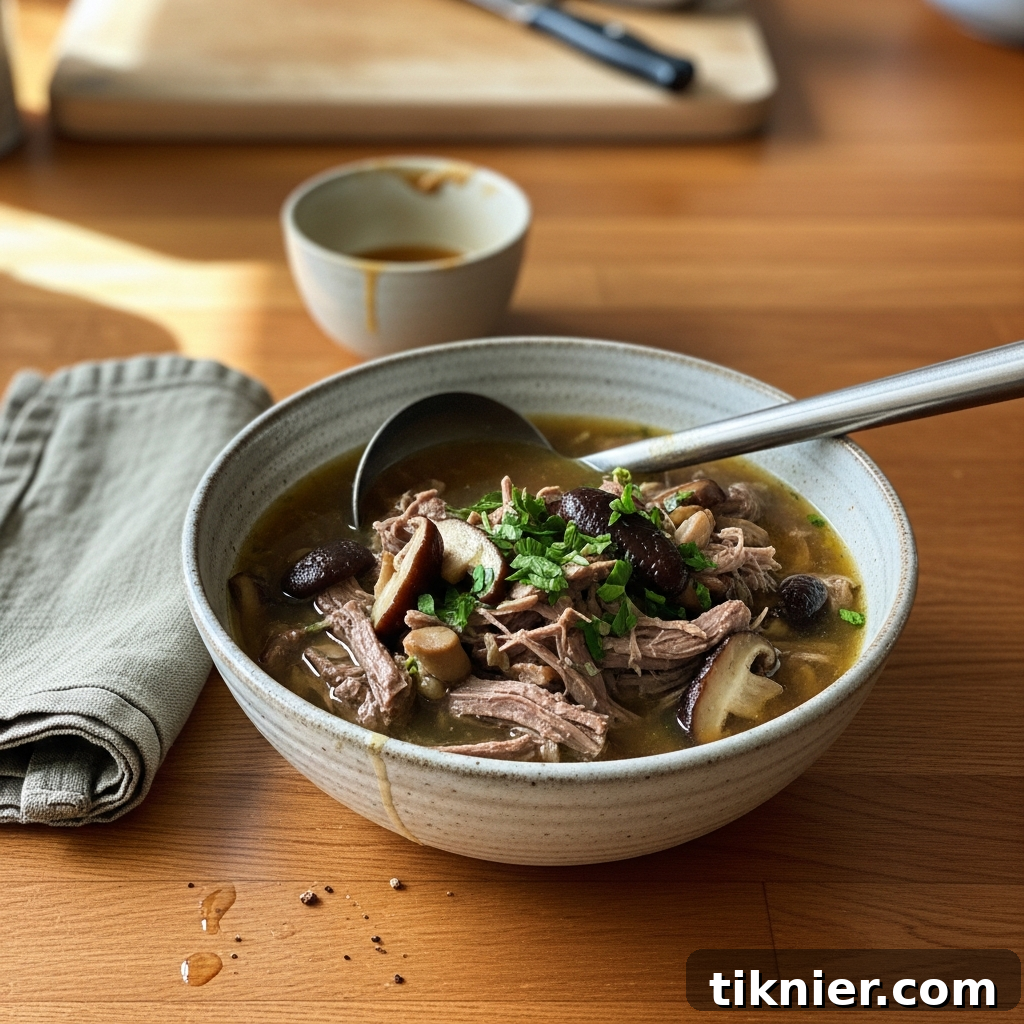
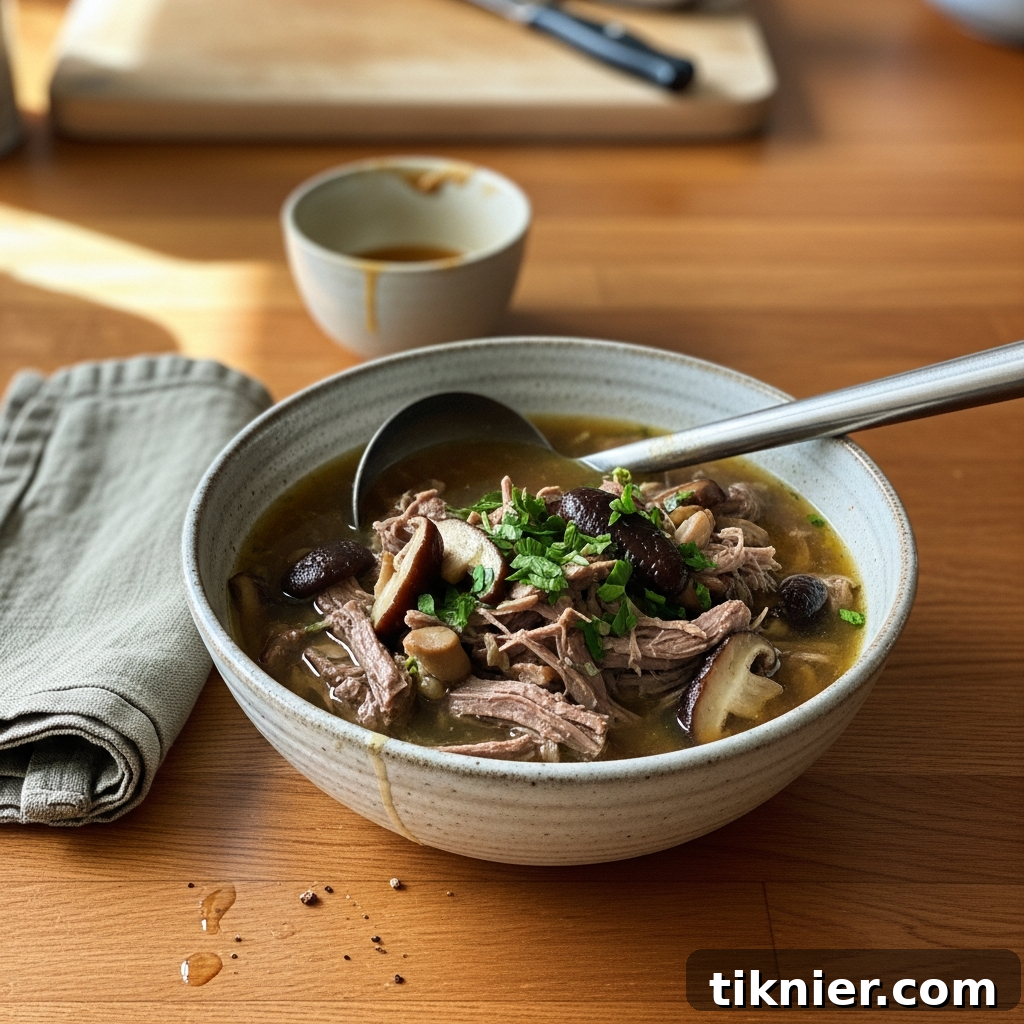
Hearty Duck Soup with Miso and Mushrooms: A Culinary Masterpiece
There are some culinary experiences that etch themselves into your memory, defining a flavor profile and setting a new standard. For me, the first true, honest-to-goodness duck soup wasn’t in some Michelin-starred Parisian bistro, but deep in the quiet woods, at a friend’s rustic hunting cabin. It was a simple, hearty affair, simmered for countless hours over a crackling wood stove. The aroma alone was intoxicating, a promise of the deep, comforting flavors to come. That first spoonful was transformative – rich, soulful, and incredibly satisfying. From that moment, I knew I had to recreate that magic, not just for special occasions, but for my own kitchen back home.
That classic, rustic soup was my initial inspiration, but as any passionate cook knows, “well enough” is rarely truly enough. I was determined to capture that profound, soulful flavor and elevate it, making it truly unforgettable. My culinary journey began with experimenting, carefully playing with ingredients that could complement the inherent richness of the duck without overshadowing its distinct character. The goal was to build layers of flavor, creating a symphony rather than a solo performance.
After a series of delightful (and a few less-than-delightful) attempts, I finally unearthed the perfect secret weapon. A single, unassuming spoonful of white miso paste. It might sound unconventional, perhaps even a little out of place in a traditional duck soup, but I urge you to trust this process. This fermented soybean paste introduces an incredible, savory depth, a nuanced background note of umami that makes the entire pot of soup sing with complex flavors. It transcends the boundaries of a simple, classic duck soup, transforming it into something truly special – a dish that feels both timeless and elegantly modern all at once. This is the exact recipe I turn to when the crisp autumn air signals the arrival of colder weather, when I crave comfort but also wish to impress without being tethered to the kitchen all day.
It’s pure comfort, elevated with a sophisticated, unexpected twist.
Skip to My Special Recipe!
Why This Duck Soup Recipe Stands Out
Duck soup holds a revered place in culinary traditions across the globe, celebrated for its uniquely rich and profoundly flavorful broth. Historically, it’s a testament to using every part of the bird, transforming what might be considered less desirable cuts into a deeply satisfying and nourishing meal. The inherent fat of the duck renders slowly and beautifully during cooking, infusing the entire soup with a luxurious, silky texture and a depth of flavor that is simply unattainable with chicken or beef. It’s an experience unto itself, a culinary indulgence that speaks of warmth and tradition.
This particular recipe not only honors that wonderful tradition but takes it to an entirely new level. The alchemy begins with a crucial step: searing the duck legs until the skin is wonderfully crisp and golden. This initial browning achieves two vital things: it renders out a significant amount of the duck fat, which will later infuse the broth, and more importantly, it creates what chefs call “fond” – those beautifully browned, caramelized bits that cling to the bottom of your pot. This fond is pure flavor gold, a concentrated essence of savory goodness. The act of deglazing the pot with dry white wine then liberates all that precious flavor, dissolving it into the emerging broth, setting a robust foundation for the soup.
What truly distinguishes my duck soup recipe is the meticulous layering of umami flavors, creating a complexity that dances on the palate. We don’t just rely on the inherent richness of the duck. The thoughtful combination of earthy dried porcini mushrooms, with their potent, concentrated soaking liquid, fresh, meaty shiitake mushrooms, and a dash of savory soy sauce, all work in concert to build an incredibly complex and satisfying base. However, the true showstopper, the ingredient that elevates this soup to an art form, is the delicate swirl of white miso paste stirred in at the very end.
This final addition is a stroke of genius. It contributes a subtle yet profound savory sweetness, a creamy depth that rounds out and brightens all the other flavors. The miso transforms the broth, adding a complex dimension that is utterly irresistible, a taste that lingers pleasantly long after the last spoonful. It’s this masterful blend of classic French culinary technique, particularly in the foundational steps, with the sophisticated, umami-rich influences of Japanese cuisine, that makes every single spoonful of this duck soup a truly exceptional and memorable experience.
Essential Ingredients for Your Duck Soup Masterpiece
Embarking on the creation of a truly spectacular soup begins with the careful selection of your ingredients. While the list for this duck soup might appear somewhat extensive at first glance, rest assured that each component plays a vital and distinct role in building the intricate layers of flavor that define this remarkable dish. Do not be intimidated; the process is straightforward, and the ingredients harmoniously come together to create a cohesive and deeply satisfying result.
The undisputed star and foundational element of this rich duck soup is, of course, the duck itself. I specifically call for **duck legs** (which include both the thigh and drumstick) for several compelling reasons. These cuts are brimming with robust, dark meat flavor and contain a generous amount of connective tissue. This tissue, when subjected to a slow and gentle simmer, breaks down beautifully, transforming into tender, succulent meat that practically falls off the bone. Furthermore, the fat from the legs renders perfectly, enriching the broth with an unparalleled silkiness. While a high-quality duck stock would undoubtedly add another layer of luxurious richness, a good quality chicken stock serves as an excellent and readily available alternative.
Our “secret weapon” for crafting an unforgettable, profoundly flavorful broth is undoubtedly **white miso paste**. This fermented soybean paste is a culinary gem, imparting a subtle, gentle sweetness and a powerful punch of umami that elevates the entire soup from delicious to extraordinary. It’s crucial to use white miso (often labeled as “shiro miso”), as it is the mildest and sweetest variety, ensuring it enhances rather than overpowers the delicate balance of flavors in the soup. You can typically find white miso in the refrigerated section of most larger or international grocery stores.
Here’s what you’ll need:
- 4 duck legs: The cornerstone of our soup, providing rich flavor and tender meat.
- 1 tablespoon olive oil: For searing the duck and sautéing aromatics.
- 1 large yellow onion, chopped: A foundational aromatic for depth.
- 2 carrots, peeled and diced: Adding sweetness and color to the mirepoix.
- 2 celery stalks, diced: Essential for the classic aromatic base.
- 8 cups duck or chicken stock: The liquid base for your luxurious broth.
- 1 cup dry white wine: For deglazing and adding a bright acidity.
- 4 cloves garlic, minced: A pungent aromatic that enhances savory notes.
- 1 bay leaf: Contributes a subtle, herbaceous note to the simmer.
- 1 teaspoon dried thyme: Classic poultry seasoning, perfect with duck.
- Salt and freshly ground black pepper to taste: Essential for seasoning and bringing out flavors.
- 1 cup shiitake mushrooms, sliced: Offering a meaty texture and earthy umami.
- 1/2 cup dried porcini mushrooms, rehydrated in 1 cup of hot water: Providing intense, woodsy depth and flavor.
- 2 tablespoons white miso paste: Our secret ingredient for profound umami and sweetness.
- 1/4 cup chopped fresh parsley: For freshness, color, and a herbaceous finish.
- 1 tablespoon soy sauce: An additional layer of savory umami.
- 1 teaspoon grated fresh ginger: Adds a subtle warmth and aromatic brightness.
A final, important note on the mushrooms: the intentional combination of both dried porcini and fresh shiitake is not arbitrary. The dried porcinis, once rehydrated, contribute an intense, deeply woodsy flavor profile, especially when their potent soaking liquid is carefully strained and added to the broth. The fresh shiitakes, on the other hand, offer a delightful, meaty texture that beautifully complements the tender duck. This synergy between the two varieties truly works wonders, creating a mushroom presence that is both profound and pleasant.
Step-by-Step Instructions: Crafting Your Duck Soup
The beauty of this duck soup lies in its meticulously layered flavors, a process that begins right from the very first step and builds progressively. We’ll take our time, allowing each ingredient to contribute its full essence, developing a rich, complex broth that will serve as the perfect foundation for our succulent duck and earthy mushrooms. A heavy-bottomed pot or a trusty Dutch oven is your indispensable companion here, as its superior heat distribution ensures even cooking and helps prevent any scorching, crucial for coaxing out those deep flavors.
1. Sear the Duck Legs to Perfection
Begin by thoroughly patting your duck legs completely dry with paper towels. This seemingly simple step is absolutely crucial for achieving that gorgeously crisp, golden-brown skin we desire. Once dry, season them generously all over with salt and freshly ground black pepper. Heat the olive oil in your Dutch oven over medium-high heat until it shimmers, indicating it’s ready. Carefully place the duck legs, skin-side down, into the hot oil. You should hear a satisfying sizzle immediately. Resist the urge to move them for about 5 to 7 minutes; allow them to sear undisturbed until the skin develops a deep golden-brown color. Flip them over and sear for another 3 to 4 minutes on the other side to lightly brown the meat, then remove them to a plate and set aside.
2. Sauté the Aromatic Base
Reduce the heat to medium. At this point, you’ll find a delightful amount of rendered duck fat shimmering in the pot – consider this liquid gold, bursting with flavor. Add your chopped onion, carrots, and celery – the classic mirepoix – directly into that flavorful fat. Cook, stirring occasionally, until the vegetables have softened and the onion becomes translucent, which typically takes about 5 to 7 minutes. As the vegetables release their moisture, use your wooden spoon to gently scrape up any of those delectable browned bits (fond) from the bottom of the pot, incorporating them into your aromatic base.
3. Deglaze the Pot for Concentrated Flavor
Add the minced garlic to the softened vegetables and cook for just one more minute until its wonderful, fragrant aroma fills your kitchen. Now, pour in the dry white wine. This will create a burst of steam and a satisfying sizzle, which is exactly what you want. Continue vigorously scraping the bottom of the pot with your wooden spoon to release every last bit of that concentrated, browned flavor. Let the wine simmer and bubble away until it has reduced by about half. This process not only cooks off the raw alcohol flavor but leaves behind a beautifully complex essence that will deeply flavor your broth.
4. Simmer the Soup to Tenderness
Return the seared duck legs to the pot, nestling them among the aromatics. Pour in the duck or chicken stock, ensuring the duck legs are mostly submerged. Add the bay leaf and dried thyme. Bring the liquid to a gentle simmer, then immediately reduce the heat to very low. You want to see just a few lazy bubbles occasionally breaking the surface, indicating a slow, steady cook. Cover the pot tightly and let it simmer undisturbed for at least 1.5 to 2 hours. This extended, slow cooking process is the secret to achieving duck meat that is incredibly tender and falls effortlessly off the bone.
5. Prepare Final Ingredients and Add Mushrooms
While the soup is gently simmering, it’s time for some prep work. Once the duck legs are cool enough to handle, remove them from the pot. Carefully shred the tender duck meat from the bones, discarding the skin and bones, and set the shredded meat aside. Next, carefully strain the liquid from your rehydrated porcini mushrooms through a fine-mesh sieve or even a coffee filter directly into the soup. This step is crucial for adding incredible, concentrated mushroom flavor while catching any residual grit. Roughly chop the rehydrated porcinis and add them to the pot along with the fresh shiitake mushrooms and the reserved shredded duck meat. Let this flavorful combination simmer for another 15 minutes to allow the mushrooms to cook through and their flavors to meld beautifully with the broth.
6. Finish with the Umami Touch
This is the magical final touch that truly elevates the soup and makes it unique. In a small bowl, place the two tablespoons of white miso paste. Ladle about a half-cup of the hot soup broth into the bowl and whisk vigorously until the miso is completely dissolved and forms a smooth, creamy paste. Pour this tempered miso mixture back into the main pot of soup. This tempering process is essential, as it prevents the miso from clumping and ensures it integrates seamlessly. Stir in the soy sauce, the grated fresh ginger, and the fresh parsley. Give the soup a taste and adjust the seasoning with more salt and pepper if you feel it needs it. Serve immediately, piping hot, and prepare to enjoy a truly extraordinary bowl of duck soup.
How To Serve Your Exquisite Duck Soup
Serving this magnificent duck soup is an experience that rivals the pleasure of preparing it. The sight of the rich, amber broth, brimming with tender, shredded duck and succulent, earthy mushrooms, is a feast for the eyes and a promise of profound comfort. You can absolutely serve it as is for a wonderfully comforting and deeply satisfying meal, but by adding a few simple, thoughtful touches, you can transform it into something truly special, elevating a weeknight dinner to an occasion.
My preferred method for presenting this soup is in wide, shallow bowls. This not only allows the soup to cool slightly more quickly but, more importantly, showcases all the delicious ingredients suspended within the vibrant broth. A generous piece of crusty, rustic bread on the side is, in my household, simply non-negotiable. It is absolutely perfect for sopping up every last, precious drop of that incredible, flavorful broth. For a refreshing counterpoint to the soup’s richness, a simple side salad dressed with a light vinaigrette can provide a welcome burst of freshness and acidity.
If you’re inclined to get a little more creative and personalize each serving, here are a few of my go-to ideas for dressing up a bowl of this magnificent duck soup:
- Embrace Grains or Noodles: For those seeking a heartier, more substantial meal, ladle the rich duck soup over a scoop of cooked wild rice, fluffy quinoa, or toothsome farro. This also makes for an absolutely fantastic noodle soup when served over your favorite cooked noodles, such as earthy soba, chewy udon, or classic egg noodles. It transforms into a complete and robust dish.
- Garnish Generously: A final sprinkle of fresh herbs, such as finely chopped chives, extra fresh parsley, or even a hint of cilantro, adds a pop of vibrant color and a burst of fresh flavor. If you appreciate a touch of heat, a delicate drizzle of chili oil or a few judicious red pepper flakes can introduce a lovely warmth. For a delightful tangy creaminess, a dollop of sour cream or crème fraîche swirled into the hot soup offers a luxurious contrast.
- Thoughtful Wine Pairing: Since we’ve already incorporated a dry white wine into the recipe to build its foundational flavors, continuing with a glass of that same wine, or a similar varietal, makes for an ideal pairing. A crisp Sauvignon Blanc, a bright Pinot Grigio, or even a light, unoaked Chardonnay will beautifully cut through the richness of the duck and harmonize with the complex broth, enhancing the overall dining experience.
No matter how you choose to serve it, this duck soup is meticulously designed to be savored, to be enjoyed slowly and mindfully. It’s more than just a meal; it’s the kind of dish that encourages you to slow down, relax, and immerse yourself in the simple, profound pleasure of a perfectly crafted, warming bowl of comfort.
Storing and Reusing Your Delicious Duck Soup Leftovers
One of the true joys of preparing a large, comforting pot of soup like this duck soup is the promise of delicious leftovers. Indeed, many soups, including this one, often taste even better the next day. As the duck soup rests overnight, the myriad of flavors have ample time to meld and deepen, becoming even more complex and harmonious. Proper storage is paramount to ensuring you can enjoy its rich goodness for several days to come, or even longer.
Firstly, it is critically important to allow the soup to cool down to room temperature before attempting to store it. Placing a large, hot pot of soup directly into the refrigerator can significantly raise the internal temperature of your appliance, potentially putting other foods at risk and making your refrigerator work harder than necessary. Once cooled, transfer the soup into airtight containers. When stored correctly, it will keep beautifully in the refrigerator for up to four days, offering a convenient and wholesome meal option.
For extended enjoyment, this duck soup freezes exceptionally well. I highly recommend portioning it out into individual freezer-safe containers or robust freezer bags. This thoughtful preparation makes it incredibly easy to retrieve a single serving for a quick, nourishing lunch or a comforting dinner without any fuss. The soup will maintain its best quality in the freezer for up to three months, making it an excellent meal-prep staple.
- Gentle Reheating is Key: The optimal way to reheat your duck soup is gently on the stovetop over medium-low heat. This slow and steady method ensures the soup warms through evenly without the risk of boiling, which can unfortunately cause the tender duck meat to become tough. While convenient, try to avoid reheating it in the microwave if possible, as microwaves can create uneven hot spots and sometimes affect the delicate texture of the ingredients.
- Repurpose as a Flavorful Base: The leftover broth from this soup is an absolute treasure, brimming with rich, concentrated flavors. It can be ingeniously repurposed as a fantastic base for an array of other dishes. You could, for instance, strain out any remaining solids and use the exquisite broth to cook a delicious risotto, or employ it as the luxurious cooking liquid for grains such as farro, barley, or even couscous, imparting incredible depth to them.
- Transform into a Hearty Stew: To effortlessly transform your leftover soup into an even more substantial and comforting stew, simply create a quick slurry. Whisk together a tablespoon of cornstarch with a small amount of cold water until smooth. Stir this slurry into the simmering soup and continue to cook for a few minutes, stirring gently, until it thickens to your desired consistency. This heartier version is absolutely wonderful served over creamy mashed potatoes, soft polenta, or even wide egg noodles for a truly satisfying meal.
Having a container of this exquisitely delicious duck soup readily available in your fridge or freezer truly feels like a small luxury. It’s the perfect, wholesome solution for those bustling weeknights when you crave something deeply comforting and nourishing, without the need for extensive cooking.
Creative Substitutions & Delicious Variations for Your Duck Soup
While I wholeheartedly believe this duck soup recipe, as written, achieves a perfect balance of flavors and textures, I understand that sometimes necessity or personal preference dictates a need for flexibility. The wonderful news is that this particular duck soup recipe is remarkably adaptable. You can confidently make several thoughtful swaps and creative additions without compromising the rich, soulful essence of the dish, allowing it to truly become your own signature creation.
The most crucial element remains the concept of slow-cooked, richly flavored poultry. If sourcing duck legs proves challenging, don’t despair! You can still achieve a similarly deep and comforting result with other cuts of poultry. Just be mindful that cooking times and perhaps the amount of fat rendered might need slight adjustments to ensure the meat is perfectly tender and the broth maintains its desired richness.
Here are some reliable substitutions and exciting variations you can confidently try to customize this soup to your specific needs and tastes:
- Alternative Protein Swaps: Instead of duck legs, you can successfully use two large chicken leg quarters or four meaty chicken thighs. These cuts also boast dark meat and connective tissue, which break down beautifully during a slow simmer, yielding tender results. For a delightful post-holiday twist, this recipe is a fantastic way to utilize leftover turkey, especially the flavorful dark meat from the legs and thighs.
- Enriching Vegetable Additions: Feel completely free to enhance the mirepoix with other root vegetables. A diced parsnip, for instance, would introduce a lovely, subtle sweetness that complements the duck beautifully. Alternatively, a finely chopped leek (using only the white and light green parts) could stand in for or supplement the yellow onion, offering a slightly milder and more refined onion flavor.
- Diverse Mushroom Varieties: If fresh shiitake or dried porcini mushrooms are not readily available, there are excellent substitutes. Fresh cremini mushrooms (also known as baby bellas) would be a superb fresh alternative, offering a pleasant texture and earthy flavor. Other dried mushroom varieties, such as dried mixed wild mushrooms, can also be used, though be aware that the specific flavor profile of the soup will shift slightly depending on the mushroom chosen.
- Indulgent Creamy Version: For an extra-luxurious and velvety smooth soup, consider stirring in about a quarter cup of heavy cream at the very end of the cooking process, after you have incorporated the miso paste. Just be sure to gently warm the soup through and avoid bringing it to a rolling boil once the cream has been added, as this can cause it to curdle.
- For a Zesty or Spicy Kick: If you appreciate a bit of warmth and heat in your soup, you can easily introduce it. Add a pinch of red pepper flakes along with the minced garlic during the sautéing stage to infuse the entire broth with a gentle spice. Alternatively, for a customizable heat, serve individual bowls with a delicate drizzle of your favorite chili oil or a dash of Sriracha on the side.
Never be afraid to experiment in the kitchen. Cooking should be an enjoyable and creative endeavor, and adapting recipes is one of the most rewarding ways to discover new flavor combinations that you truly love. The core technique of building a rich, flavorful broth will always ensure your soup is utterly delicious, no matter what small, personal tweaks or substitutions you decide to make along the way.
Hearty Duck Soup with Miso and Mushrooms
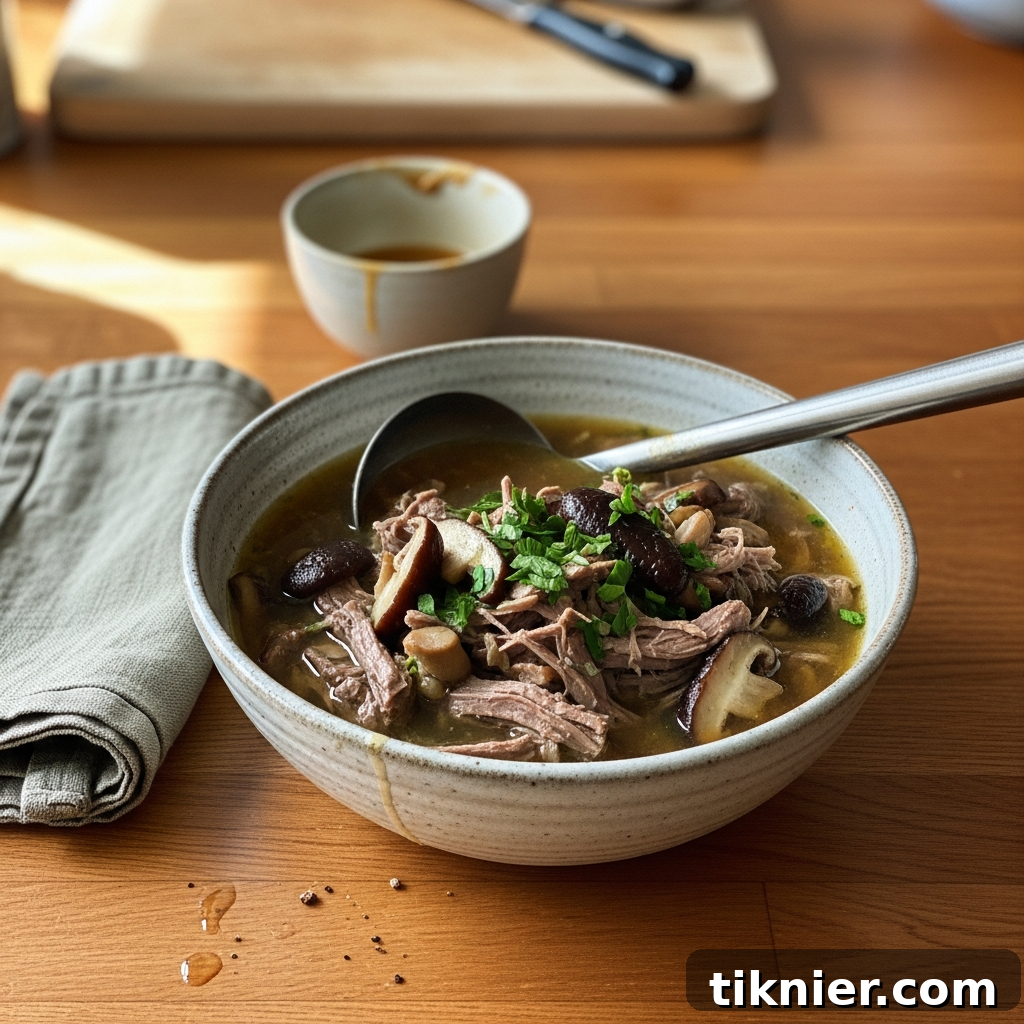
Description: A rich and profoundly comforting duck soup made with slow-simmered duck legs, earthy mushrooms, and a secret ingredient – white miso paste – for an unforgettable umami depth. This is a classic soup with a sophisticated, modern twist that promises to warm you from the inside out.
Yield: 6-8 servings | Category: Soup | Cuisine: American, French, Asian-Inspired
Prep Time: 20 minutes | Cook Time: 2 hours 30 minutes
Ingredients
- 4 duck legs (about 2-2.5 lbs total)
- 1 tablespoon olive oil
- 1 large yellow onion, chopped
- 2 carrots, peeled and diced
- 2 celery stalks, diced
- 8 cups duck or high-quality chicken stock
- 1 cup dry white wine (e.g., Sauvignon Blanc, Pinot Grigio)
- 4 cloves garlic, minced
- 1 bay leaf
- 1 teaspoon dried thyme
- Salt and freshly ground black pepper to taste
- 1 cup shiitake mushrooms, sliced
- 1/2 cup dried porcini mushrooms, rehydrated in 1 cup of hot water
- 2 tablespoons white miso paste (shiro miso)
- 1/4 cup chopped fresh parsley, plus more for garnish
- 1 tablespoon soy sauce (low sodium preferred)
- 1 teaspoon grated fresh ginger
Instructions
- Sear the Duck: Pat duck legs thoroughly dry with paper towels and season generously with salt and pepper. Heat olive oil in a large Dutch oven or heavy-bottomed pot over medium-high heat. Sear duck legs, skin-side down, for 5-7 minutes until deep golden brown and crisp. Flip and sear for another 3-4 minutes. Remove duck to a plate and set aside.
- Sauté Aromatics: Reduce heat to medium. Add chopped onion, carrots, and celery to the pot, utilizing the rendered duck fat. Cook, stirring occasionally, for 5-7 minutes until softened and onion is translucent. Add minced garlic and cook for 1 minute until fragrant.
- Deglaze the Pot: Pour in the dry white wine, scraping the bottom of the pot with a wooden spoon to release any browned bits (fond). Simmer until the wine has reduced by half, concentrating the flavors.
- Simmer the Soup: Return seared duck legs to the pot. Add stock, bay leaf, and dried thyme. Bring the liquid to a gentle simmer, then immediately reduce heat to low, cover, and cook for 1.5 to 2 hours, or until the duck meat is exceptionally tender and easily pulls from the bone.
- Prepare Duck & Mushrooms: Carefully remove duck legs from the pot. Once cool enough to handle, shred the tender meat, discarding bones and skin. Strain the reserved porcini mushroom soaking liquid through a fine-mesh sieve or coffee filter directly into the soup (this adds flavor without grit). Chop the rehydrated porcinis and add them to the pot along with the sliced shiitakes and shredded duck meat. Simmer for an additional 15 minutes.
- Finish with Umami: In a small bowl, whisk the white miso paste with about 1/2 cup of hot broth from the pot until completely smooth. Stir this tempered miso mixture back into the main pot of soup.
- Season & Serve: Stir in the soy sauce, grated fresh ginger, and chopped fresh parsley. Taste and adjust seasoning with additional salt and pepper as needed. Serve immediately, garnished with extra fresh parsley if desired.
Notes
Ensure you strain the porcini mushroom liquid through a fine-mesh sieve or coffee filter to remove any grit. For the best flavor and to preserve beneficial probiotics, do not boil the soup after adding the miso paste. Just gently warm it through.
Nutrition Information (Estimated per serving): (Based on 8 servings)
Servings: 8 | Calories: 450 kcal | Fat: 28g | Saturated Fat: 9g | Cholesterol: 110mg | Sodium: 850mg | Carbohydrates: 12g | Fiber: 2g | Sugar: 4g | Protein: 35g
5 Frequently Asked Questions About This Duck Soup
Here are some straightforward and comprehensive answers to the most common questions I receive about this comforting and flavorful duck soup recipe.
What part of the duck is best for duck soup, and why?
For a soup of this caliber, where the goal is both tender, shreddable meat and an exceptionally rich, full-bodied broth, the duck legs are unequivocally the best choice. This includes both the thigh and the drumstick. Duck legs are comprised of hardworking muscles, meaning they are inherently packed with a deeper, more robust flavor compared to leaner cuts like the breast. Crucially, they contain a significant amount of connective tissue. During the long, slow simmering process, this connective tissue breaks down beautifully, transforming into gelatin. It’s this gelatin that imparts a wonderfully silky, luxurious texture and a full-bodied mouthfeel to the soup that is incredibly difficult to achieve with other cuts.
While one could technically make a stock or soup from a whole duck carcass after roasting, using fresh duck legs allows you to proactively build layers of flavor from the very first step by searing the skin. This initial rendering of the fat and browning of the skin creates a foundational depth of flavor – the “fond” – in the pot that is absolutely essential to the final complexity of the dish. Duck breasts, on the other hand, are much leaner and best suited for quick cooking methods to a medium-rare finish; they would become dry and tough if subjected to the slow simmering required for this soup.
Can I make this duck soup in a slow cooker for convenience?
Yes, absolutely! This duck soup recipe is wonderfully adaptable for a slow cooker, making it an excellent option for a more hands-off approach, especially on busy days. However, it’s essential to understand that you will still need to perform the initial few steps on the stovetop. These preliminary steps are crucial for developing the soup’s deep, complex flavors and cannot be skipped. First, sear the duck legs in a skillet or the insert of your slow cooker (if it’s stovetop-safe) as directed in the recipe, and then set them aside. Next, sauté the mirepoix (onion, carrots, celery) and garlic in the same skillet, and then deglaze the pot with the white wine, scraping up all those flavorful browned bits.
Once you’ve completed these foundational steps, you can transfer everything – the seared duck legs, the sautéed vegetable mixture, the stock, bay leaf, and thyme – to your slow cooker crock. Cover it and cook on low for approximately 6 to 8 hours, or on high for 3 to 4 hours, until the duck is completely fork-tender and falls off the bone. After this, you can proceed with the final steps of the recipe: remove and shred the duck, add the mushrooms and shredded meat, and then stir in the miso paste, soy sauce, and fresh herbs right before serving to preserve their delicate flavors.
Why might my duck soup be greasy, and what’s the best way to fix it?
Duck is naturally a very fatty bird, and it’s this rich fat that contributes significantly to its delicious flavor and luxurious texture. However, a common concern is that the soup can sometimes end up with an excessive layer of grease floating on top. Fortunately, there are a couple of very effective and easy ways to manage this. The first and arguably simplest method is to allow the finished soup to cool completely to room temperature, and then transfer it to the refrigerator. As the soup chills, the fat will rise to the surface and solidify, making it incredibly easy to spoon off and discard before you reheat and serve the soup.
If you prefer to serve the soup immediately and find it to be a bit too greasy for your liking, you can use a wide, shallow ladle to skim the fat from the surface while it’s still hot. A useful trick is to tilt the pot slightly; this will encourage the fat to pool in one area, making it much easier to remove in larger quantities. Remember, searing the duck legs and rendering much of the fat at the beginning of the cooking process helps to control the overall greasiness from the outset, but some fat will inevitably cook into the broth during the long simmer. Therefore, skimming is a common and often necessary step to achieve a perfectly balanced and palatable duck soup.
Is duck soup considered a healthy meal option?
Duck soup, particularly this homemade version, can absolutely be a wonderfully healthy and nutritious part of a balanced diet, offering several excellent benefits. Duck meat itself is an outstanding source of high-quality protein, which is vital for muscle repair, growth, and overall body function. It’s also remarkably rich in essential minerals such as iron, crucial for oxygen transport in the blood, and selenium, a powerful antioxidant that protects cells from damage. The slow-simmered broth, especially when made with bones, contains beneficial collagen and gelatin, which are known to support joint health, improve skin elasticity, and contribute to a healthy gut lining.
Furthermore, this recipe is brimming with wholesome vegetables like carrots, celery, and onions, which provide a good dose of vitamins, minerals, and dietary fiber. The addition of various mushrooms further boosts the nutritional profile with antioxidants and additional fiber. However, it’s important to acknowledge that duck is naturally higher in fat compared to leaner proteins like chicken breast. As previously mentioned, judiciously skimming any excess fat from the surface of the soup is a smart way to manage the calorie and saturated fat content, tailoring it to your dietary preferences. Ultimately, like most wholesome foods, it’s about balance and moderation. This soup is a nutrient-dense, deeply satisfying, and highly flavorful meal, perfect for enjoying as a comforting and nourishing treat.
What unique flavor does miso paste contribute to this duck soup recipe?
The strategic addition of white miso paste is truly the secret twist that transforms this duck soup from merely great to absolutely exceptional and memorable. Miso is a traditional Japanese seasoning produced by fermenting soybeans with salt and koji (a type of fungus), and often rice, barley, or other grains. It introduces a profound flavor known as “umami,” which is often described as a savory, brothy, or meaty taste – often considered the elusive “fifth basic taste” alongside sweet, sour, salty, and bitter. In this particular duck soup, the miso paste provides a complex, rich savory depth that perfectly complements the robust flavor of the duck without overpowering its natural characteristics.
I specifically recommend using white miso (shiro miso) because it is the mildest and sweetest variety, characterized by its subtle, slightly nutty, and delicately sweet flavor profile. It seamlessly blends into the broth, adding a creamy texture and a rounded, harmonious quality that ties all the other ingredients together beautifully. It’s crucial to stir the miso in at the very end of the cooking process because high heat can destroy its delicate flavors and diminish the beneficial probiotics it contains. This final, thoughtful touch is what makes the broth so incredibly satisfying, lending the soup its unique, distinctive, and deeply memorable character that will leave you craving more.
Explore More Comforting Recipes Next!
If you’ve fallen in love with the rich, comforting, and deeply flavorful experience of this Hearty Duck Soup, I am confident you’ll thoroughly enjoy these other cherished recipes from my kitchen. Each one promises warmth, flavor, and a touch of culinary delight.
- Easy Roast Duck Recipe with Glaze – Perfect for a special occasion or a festive family meal, this recipe guides you through achieving incredibly crispy skin and juicy, tender meat every single time, complete with a delectable glaze.
- 25 Favorite Slow Cooker Soup Recipes – For more effortless and incredibly delicious soup inspiration, dive into this curated roundup of my absolute favorite “set-it-and-forget-it” recipes that deliver maximum flavor with minimal fuss.
- Easy Chicken Soup Recipe – When you’re craving the quintessential classic, this simple, soulful, and heartwarming chicken soup is like a warm, restorative hug in a bowl, perfect for any day.
Happy cooking, y’all!