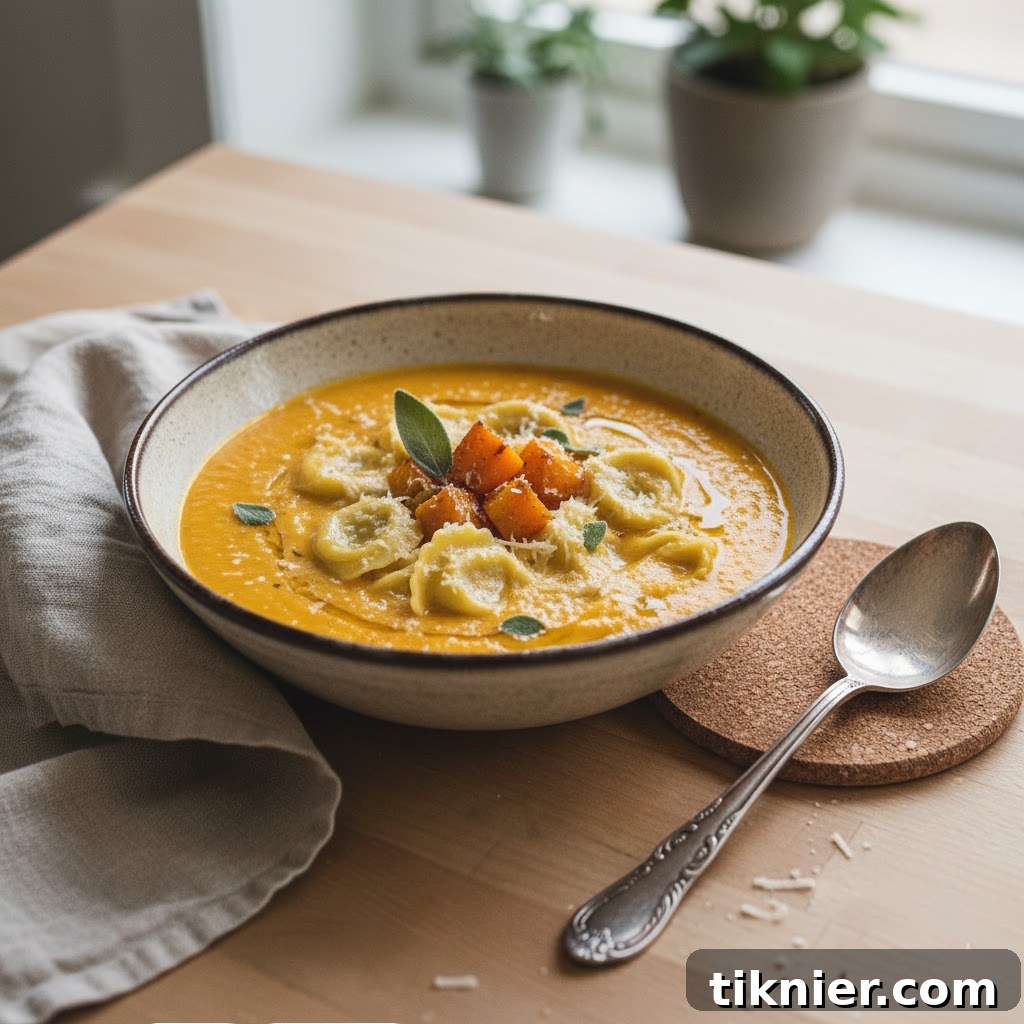

As the crisp air of autumn descends and the days grow shorter, there’s a timeless comfort found in a warm, inviting bowl of soup. This particular Vegetarian Tortellini Soup isn’t just any soup; it’s a culinary embrace, designed to warm you from the inside out and evoke memories of cozy gatherings. While my grandmother’s Sunday suppers always featured hearty, soul-satisfying meals, they rarely ventured into vegetarian territory. This recipe, however, takes that cherished sense of comfort and infuses it with a delightful, plant-forward twist.
My passion lies in reimagining classic dishes, introducing unexpected elements that elevate the familiar to something truly special. For this vegetarian tortellini soup, I moved away from the typical tomato-based or standard chicken broth, seeking a foundation that was richer, more nuanced, and deeply autumnal. This pursuit led to the inspired creation of a Roasted Butternut Squash & Sage Broth. The magic happens in the oven: roasting the butternut squash coaxes out its natural sugars, creating a profound sweetness and a slightly caramelized depth. Sage, with its earthy, slightly peppery notes, then weaves through this sweetness, creating a harmonious and utterly captivating base that perfectly complements plump, cheesy tortellini.
The result is a soup that feels both nostalgically familiar and wonderfully new. It’s a gentle, sophisticated twist on a beloved classic, crafted to be the quintessential meal for chilly evenings. Every spoonful promises a blend of creamy texture, savory warmth, and a hint of herbaceous freshness. It’s the kind of dish that doesn’t just satisfy hunger, but truly nourishes the soul. I’m confident that this cozy creation will become a cherished favorite in your home, especially as you seek comforting culinary escapes during the cooler months.
Why This Roasted Butternut Squash & Sage Tortellini Soup Stands Out
This isn’t merely a bowl of pasta floating in broth; it’s a carefully crafted culinary experience. What truly sets this Vegetarian Tortellini Soup apart is its homemade foundation: the luxurious roasted butternut squash and sage broth. This isn’t just a basic vegetable broth; it’s a symphony of flavors that delivers unparalleled depth and richness, transforming a simple soup into a memorable meal.
The secret to its exceptional taste lies in the roasting process. By slowly roasting the butternut squash, its natural sugars caramelize, intensifying its inherent sweetness and developing complex, nutty undertones that simply can’t be achieved through boiling or steaming. This deep, earthy sweetness forms the backbone of our broth, providing a naturally creamy texture and a vibrant golden hue. Complementing this richness is fresh sage, an herb renowned for its warm, aromatic, and slightly peppery flavor profile. When infused into the broth, sage imparts an irresistible fragrance that permeates the entire soup, creating an inviting aroma that promises comfort even before the first spoonful.
The cheese tortellini act as delightful pockets of joy, offering a satisfying chewiness and a burst of savory richness with every bite. They provide a wonderful textural contrast to the smooth, velvety broth and transform the soup into a hearty and fulfilling meal. While many vegetarian tortellini soups rely on a straightforward vegetable broth – which is perfectly acceptable for a quick meal – this recipe elevates the experience. The roasted butternut squash creates a creamy, subtly sweet, and incredibly satisfying base that offers so much more character and body than a typical broth.
For an extra touch of indulgence and a truly velvety finish, a swirl of cream (or coconut milk for a vegan alternative) is added at the very end. This simple addition enhances the soup’s luxurious texture, coating the tongue and amplifying the overall richness without overwhelming the delicate flavors. Finally, considering the interplay of textures is paramount to a truly great dish. A sprinkle of toasted pumpkin seeds provides a welcome crunch and a nutty counterpoint, balancing the inherent sweetness of the squash and adding another layer of sensory delight.
This recipe is a testament to the power of layering flavors and textures, proving that a vegetarian soup can be anything but boring. It’s robust, flavorful, and incredibly satisfying, designed to be a standout dish on any table.
Essential Ingredients for Your Comforting Tortellini Soup
Gathering the ingredients for this Vegetarian Tortellini Soup is the first step toward creating a truly comforting and memorable meal. We’re not just making any soup; we’re crafting a gourmet experience with our signature roasted butternut squash and sage broth. This thoughtful approach adds a unique sweetness and an undeniable warmth that epitomizes the cozy flavors of autumn.
Here’s a detailed look at what you’ll need to bring this wonderfully cozy vision to life, along with some tips for selecting the best components:
- 1 medium butternut squash: Look for a squash that is firm, heavy for its size, and free of blemishes. This will be the heart of our creamy, comforting broth. Peeling, seeding, and cubing it might seem like an extra step, but the flavor depth gained from roasting is absolutely worth it.
- 1 tablespoon olive oil, plus more for drizzling: High-quality extra virgin olive oil is ideal for roasting the squash and sautéing your aromatics. Its fruity notes complement the other flavors beautifully.
- 1 teaspoon salt, plus more to taste: Salt is crucial for enhancing all the other flavors. Start with the recommended amount and adjust throughout the cooking process.
- 1/2 teaspoon black pepper, plus more to taste: Freshly ground black pepper offers a more potent and aromatic punch than pre-ground varieties.
- 1 large yellow onion, chopped: Onions form the aromatic base of countless delicious dishes. When sautéed, they contribute a foundational sweetness and savory depth.
- 2 carrots, chopped: Carrots add natural sweetness, a vibrant color, and essential nutrients. They soften beautifully in the broth, contributing to its body.
- 2 celery stalks, chopped: Celery brings a subtle savory, slightly earthy note that rounds out the classic mirepoix (onion, carrot, celery) base.
- 4 cloves garlic, minced: Garlic is non-negotiable for its pungent, aromatic intensity that elevates almost any savory dish.
- 8 cups vegetable broth: Choose a high-quality vegetable broth, preferably low-sodium, so you can control the seasoning yourself. This forms the liquid base for our soup.
- 1/4 cup fresh sage leaves, roughly chopped, plus more for garnish: Fresh sage is key to the distinctive flavor profile of this soup. Its earthy, aromatic qualities pair exceptionally well with butternut squash.
- 9 ounces fresh or frozen cheese tortellini: The star pasta! Fresh tortellini cooks quickly and has a wonderfully tender bite. If using frozen, there’s no need to thaw before adding. Ensure your choice is genuinely vegetarian.
- 5 ounces baby spinach: These delicate greens wilt quickly into the hot soup, adding a boost of nutrition, a pop of color, and a fresh, mild flavor without overpowering the main ingredients.
- 1/4 cup grated Parmesan cheese, for serving (optional): A final sprinkle of salty, umami-rich Parmesan adds a delightful finish for those who enjoy dairy.
Remember, the quality of your ingredients directly impacts the final taste. Don’t be shy about selecting fresh, vibrant vegetables and a good quality tortellini. Having everything prepped and ready before you start cooking will make the entire process smooth and enjoyable. Soon enough, your kitchen will be filled with an irresistible aroma, and you’ll be ladling out bowls of this golden goodness!
Step-by-Step Guide to Crafting This Hearty Soup
Creating this flavorful Roasted Butternut Squash & Sage Vegetarian Tortellini Soup is a rewarding process that’s simpler than you might imagine. The depth of flavor achieved through roasting the squash and infusing the broth with fresh sage truly elevates this dish, making every spoonful a comforting experience. Follow these detailed steps for a perfect bowl:
1. Prepare and Roast the Butternut Squash
Begin by preheating your oven to 400°F (200°C). Peel the butternut squash, carefully remove the seeds, and cut the flesh into uniform cubes, about 1-inch in size. In a large bowl, toss these squash cubes with 1 tablespoon of olive oil, 1 teaspoon of salt, and 1/2 teaspoon of black pepper. Spread the seasoned squash in a single layer on a baking sheet. Roast for 25-30 minutes, or until the squash is tender, slightly caramelized, and beautifully golden brown. For an appealing garnish, you can set aside a few roasted cubes to add to your finished bowls.
2. Sauté the Aromatics
While the squash is roasting, prepare your soup base. In a large pot or a sturdy Dutch oven, drizzle a bit more olive oil over medium heat. Add the chopped onion, carrots, and celery. Sauté these vegetables for about 5-7 minutes, stirring occasionally, until they have softened and become translucent. Next, add the minced garlic and cook for just another minute until it becomes fragrant. Be careful not to burn the garlic, as this can impart a bitter taste.
3. Combine and Simmer the Soup Base
Once the butternut squash is roasted and the aromatics are softened, add the roasted butternut squash to the pot with the sautéed vegetables. Pour in the 8 cups of vegetable broth and add the roughly chopped fresh sage leaves. Bring the mixture to a gentle simmer, then reduce the heat and let it cook for about 15 minutes. This simmering time allows all the wonderful flavors to meld together, creating a richer and more cohesive taste. Taste the broth and season with additional salt and pepper as needed.
4. Blend for Creamy Perfection
For that signature creamy texture, it’s time to blend. If you have an immersion blender, carefully blend the soup directly in the pot until it is smooth and velvety. If you’re using a regular blender, transfer the soup in batches to avoid overfilling and blend until smooth. Remember to use caution when blending hot liquids; ensure the lid is secure and start at a low speed. Return all blended soup to the pot.
5. Cook the Tortellini
Bring the smooth, creamy soup base back to a gentle simmer over medium heat. Add the 9 ounces of fresh or frozen cheese tortellini to the pot. Cook according to the package directions, which typically takes about 3-5 minutes for fresh tortellini, or until they are tender and cooked through. Stir occasionally to prevent the tortellini from sticking to the bottom of the pot or to each other.
6. Wilt in the Spinach
Just before serving, stir in the 5 ounces of baby spinach. Cook for approximately 1 minute, or until the spinach has fully wilted into the warm soup. The heat from the soup is usually enough to quickly cook the delicate leaves, adding a fresh burst of color and a healthy dose of greens.
7. Season and Serve with Gusto
Give the soup one final taste test and adjust the seasoning with salt and pepper if necessary. Ladle the hot soup into bowls. Garnish each serving with any reserved roasted butternut squash cubes, a few fresh sage leaves, and a sprinkle of grated Parmesan cheese, if desired. A light drizzle of extra virgin olive oil over the top can also add a lovely finishing touch. Serve immediately and enjoy this deeply comforting and flavorful meal!
How to Serve and Enhance Your Vegetarian Tortellini Soup Experience
Serving this Roasted Butternut Squash & Sage Vegetarian Tortellini Soup is about more than just plating a dish; it’s about creating a holistic experience that amplifies its warmth and inviting flavors. The presentation can truly elevate this comforting meal.
To enhance the rustic charm of the soup, consider serving it in a deep, ceramic bowl. The weight and warmth of a substantial bowl naturally contribute to the cozy feel, especially on a crisp evening. For those who appreciate dairy, a generous sprinkle of freshly grated Parmesan cheese offers a delightful salty, umami finish that complements the sweet and savory notes of the broth. Alternatively, a small dollop of creamy ricotta cheese can add an extra layer of richness and a beautiful visual contrast as it slowly melts into the hot soup.
Fresh herbs are not just for flavor; they are also essential for brightening the presentation. A few fresh sage leaves, perhaps a small sprig, artfully placed on top of each serving, echo the herb infused within the broth and signal the delightful flavors to come. Beyond sage, a light sprinkle of chopped fresh parsley can add a vibrant green pop and a hint of freshness.
While the butternut squash naturally lends a creamy texture, a delicate swirl of heavy cream or a plant-based alternative like full-fat coconut milk can introduce an extra layer of velvety indulgence. Be mindful not to overdo it, as the soup’s inherent creaminess is already quite satisfying. However, a touch can soften the flavors and enrich the mouthfeel beautifully.
For a heartier meal, pairing this soup with a side of crusty artisan bread is highly recommended. A warm baguette or a rustic sourdough loaf is perfect for soaking up every last drop of the rich, flavorful roasted butternut squash and sage broth. To balance the richness of the soup and introduce a refreshing element, consider serving a simple green salad. A light vinaigrette, perhaps with a hint of lemon or a touch of apple cider vinegar, would complement the soup’s flavors without overpowering them.
If you’re hosting guests, a small bowl of toasted pumpkin seeds set on the table offers a wonderful textural contrast as a garnish. They add a pleasant crunch and a nutty depth, while also looking aesthetically pleasing. Most importantly, remember to serve this soup with a genuine smile. It’s truly a comforting dish, designed to be shared and savored with loved ones, making every gathering a little warmer and more special.
Storing & Reusing Leftovers: Maximize Your Soup’s Life
Leftovers of this Roasted Butternut Squash & Sage Vegetarian Tortellini Soup are truly a treasure! This soup is one of those magical dishes that often tastes even better the next day, as the flavors have more time to meld and deepen. Rest assured, making a large batch is a wise decision, as it keeps wonderfully and offers delicious options for future meals.
Proper Storage for Freshness:
The key to maximizing the lifespan and quality of your leftover soup begins with proper cooling. Always allow the soup to cool completely before transferring it to storage containers. This prevents condensation from forming inside the container, which can introduce excess moisture and negatively affect both the texture and flavor of the soup. I typically let it sit on the stovetop for an hour or two until it reaches room temperature, then I move it to the refrigerator to chill thoroughly.
Once cooled, transfer the soup into airtight containers. High-quality glass or BPA-free plastic containers are excellent choices. I personally prefer glass for its ease of cleaning and its resistance to staining. When filling, leave a little space at the top – about an inch – especially if you plan to freeze the soup, as liquids expand when frozen. Stored correctly in the refrigerator, your soup will remain fresh and delicious for 3-4 days. For extended enjoyment, freezing is an excellent option.
Freezing for Long-Term Enjoyment:
For longer storage, freezing is your best friend. In fact, the rich flavors of the roasted butternut squash and sage broth can even deepen a little after freezing and thawing, becoming even more complex. A small note of caution: the tortellini may become a bit softer in texture after freezing and thawing compared to its fresh, al dente state. If texture is paramount, you might consider freezing the broth separately and cooking fresh tortellini when you reheat.
To freeze, portion the cooled soup into freezer-safe containers or heavy-duty freezer bags. For optimal freezer organization and quicker thawing, lay freezer bags flat on a baking sheet until frozen solid, then stack them. Properly frozen, the soup will retain its quality for up to 2-3 months. Always remember to label and date your containers so you know exactly when your delicious soup was made!
Gentle Reheating Techniques:
When you’re ready to enjoy your frozen soup, it’s best to thaw it in the refrigerator overnight. If time is short, you can carefully thaw it using your microwave’s defrost setting, ensuring you stir frequently to promote even thawing. For reheating, the stovetop is often the preferred method. Gently warm the soup over medium heat, stirring occasionally, until it is heated through. If the soup appears too thick after thawing, you can add a splash of vegetable broth or water to achieve your desired consistency. Alternatively, reheating in the microwave is quick and convenient; just stir every minute or so to ensure even heating and prevent hot spots.
Creative Ways to Reuse Leftovers:
Beyond simply enjoying another comforting bowl, this versatile soup base offers several fantastic ways to repurpose it creatively:
- Creamy Pasta Sauce: This is a personal favorite! Blend a cup or two of the leftover soup until super smooth. Toss it with your favorite cooked pasta, a knob of butter, and a generous sprinkle of Parmesan cheese for a quick and incredibly flavorful pasta dish.
- Sauce for Roasted Vegetables: The rich butternut squash flavor makes an excellent sauce. Spoon the warmed soup over roasted broccoli, cauliflower, Brussels sprouts, or even grilled chicken for an instant upgrade.
- Heartier Meal Base: Transform the soup into an even more substantial meal by adding cooked shredded chicken, leftover roasted turkey, or a can of drained and rinsed white beans (like cannellini or great northern beans) during reheating. This boosts the protein content and adds another layer of texture.
- Savory Pancake or Frittata Base: Use a thickened version of the soup as a liquid base for savory pancakes or incorporate it into a frittata mixture for a unique brunch option.
Don’t be afraid to experiment and let your culinary imagination guide you. A little creativity can go a long way in turning leftovers into exciting new meals. I truly hope you enjoy every last drop and discover new ways to savor this wonderful soup!
Flavorful Substitutions & Creative Variations for Your Soup
I understand that every cook has unique tastes, dietary requirements, and sometimes, simply what’s available in the pantry. This Roasted Butternut Squash & Sage Vegetarian Tortellini Soup is wonderfully adaptable, allowing you to tweak it to perfectly fit your preferences and what you have on hand. After all, the most cherished recipes are often the ones you can truly make your own, right?
- Tortellini Options: While classic cheese tortellini offers a delightful richness, there are many avenues to explore. For those seeking a dairy-free experience, vegan tortellini options are increasingly available in most grocery stores, often featuring plant-based cheese or vegetable fillings. If gluten is a concern, opt for gluten-free tortellini, ensuring everyone at your table can enjoy this comforting soup. Beyond cheese, spinach and ricotta, mushroom, or even a simple vegetable-filled tortellini would be delicious and add different flavor nuances.
- Butternut Squash Alternatives: The roasted butternut squash is the star of our broth, imparting its unique sweetness and creamy texture. However, if butternut squash isn’t available or you’re looking for a different flavor profile, feel free to substitute it with other roasted vegetables. Sweet potatoes, with their similar sweetness and texture, make an excellent alternative. Roasted pumpkin (such as sugar pumpkin or kabocha) would also work beautifully, leaning into those quintessential autumn flavors.
- Sage Substitutions: Fresh sage brings an irreplaceable earthy aroma to this soup. If fresh sage is hard to find, you can use dried sage, but remember that dried herbs are more potent; use about 1/3 of the amount (e.g., 1 tablespoon dried for 1/4 cup fresh). Other complementary herbs like fresh thyme or rosemary could also be used, or a combination for a more complex herbal note.
- Adding More Vegetables: This soup is a fantastic canvas for incorporating additional vegetables. Hearty greens like baby spinach, kale (stemmed and roughly chopped), or Swiss chard can be stirred in during the last few minutes of cooking, just until they wilt. Diced zucchini, bell peppers, or even blanched green beans could also be added for extra color and nutrients. Consider adding a can of drained and rinsed cannellini or great northern beans along with the tortellini for added protein and fiber.
- Broth Shortcuts: While the homemade roasted butternut squash and sage broth is highly recommended for its superior flavor, if you’re truly short on time, you can use a high-quality store-bought vegetable broth as a base. To still capture some of that roasted flavor, consider adding a tablespoon of canned pumpkin puree and a pinch of dried sage to your store-bought broth before simmering.
- Adjusting the Spice Level: For those who appreciate a little heat, a pinch of red pepper flakes added with the aromatics or a dash of your favorite hot sauce stirred in at the end will provide a delightful kick. Always adjust the amount to your personal preference, tasting as you go.
I hope these suggestions inspire you to get creative and truly make this soup your own culinary masterpiece. Don’t hesitate to experiment with different combinations; this soup is remarkably forgiving and always delicious. Enjoy the process of customizing it to your heart’s content!
Frequently Asked Questions About Vegetarian Tortellini Soup
I often receive questions about vegetarian tortellini soup, especially when it features unique ingredients like roasted butternut squash and sage. Here are some of the most common inquiries, with detailed answers to help you perfect your soup-making skills:
Can I freeze vegetarian tortellini soup, and how does it affect the tortellini?
This is a very common and important question, and the answer comes with a slight nuance. You absolutely *can* freeze the soup, but be aware that the tortellini might undergo a textural change. After thawing and reheating, the pasta tends to become a bit softer and may lose some of its original al dente chewiness. If preserving the tortellini’s texture is a top priority, I highly recommend freezing the roasted butternut squash and sage broth separately. Then, when you’re ready to serve, thaw and reheat the broth, and cook fresh tortellini directly in it just before eating. The broth itself, especially with the roasted butternut squash and sage, freezes beautifully and maintains its rich flavor profile.
Is vegetarian tortellini soup a healthy meal option?
Yes, this vegetarian tortellini soup can certainly be a very healthy and nutritious meal! This particular recipe, with its base of roasted butternut squash and sage broth, is naturally packed with vitamins, minerals, and fiber from the vegetables. Butternut squash is an excellent source of Vitamin A, Vitamin C, and potassium. To make it even healthier, I suggest paying attention to the sodium content of the vegetable broth you choose (opt for low-sodium). Also, don’t shy away from loading it up with extra vegetables like spinach, kale, or carrots, which boost its nutrient profile significantly.
What kind of tortellini is best for this vegetarian soup?
For this specific recipe, I find that cheese tortellini perfectly complements the rich and slightly sweet butternut squash and sage broth. The savory cheese filling provides a wonderful contrast and adds to the soup’s comforting nature. However, your choice of tortellini is quite flexible! Spinach and ricotta tortellini would be a delicious option, adding an extra layer of green goodness and a creamy, herbaceous flavor. Mushroom-filled tortellini could also work wonderfully, bringing an earthy depth. The most crucial aspect is to ensure that whatever tortellini you choose is genuinely vegetarian, as some brands might contain non-vegetarian ingredients in their fillings or pasta.
How can I make my vegetarian tortellini soup even more flavorful?
The roasted butternut squash and sage broth is already a powerhouse of flavor, and truly, *do not skip that roasting step*—it makes all the difference! But there are always ways to amplify the taste. For a touch of brightness and acidity that can cut through the richness, a squeeze of fresh lemon juice stirred in at the very end works wonders. A swirl of your favorite pesto (ensure it’s vegetarian/vegan if needed) can also add a vibrant, herbaceous, and garlicky kick. And, as always, a final sprinkle of freshly grated Parmesan cheese (or a nutritional yeast alternative for vegan options) adds an irresistible salty, umami finish that enhances all the other flavors.
Can I adapt this vegetarian tortellini soup to be fully vegan?
Absolutely! This recipe is incredibly easy to make entirely vegan. The primary substitution you’ll need to make is for the tortellini itself; look for vegan tortellini, which are becoming increasingly available in most grocery stores and often feature plant-based cheese or vegetable fillings. The roasted butternut squash and sage broth is naturally vegan, as it uses vegetable broth. Just be sure to omit any dairy garnishes like Parmesan cheese or a swirl of cream, and instead opt for toasted pumpkin seeds, fresh herbs, or a sprinkle of nutritional yeast for a cheesy flavor. With these simple swaps, you can enjoy a delicious, comforting, and fully vegan tortellini soup!
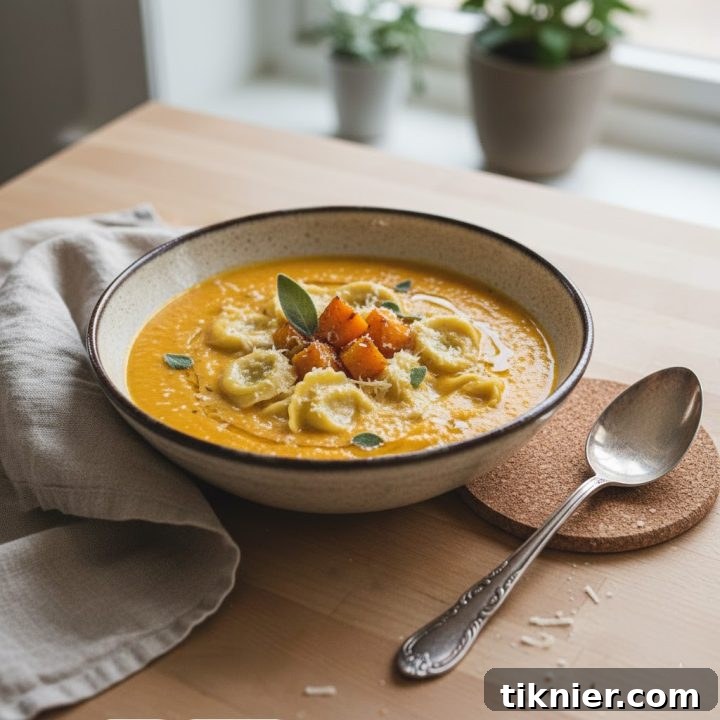
Roasted Butternut Squash & Sage Vegetarian Tortellini Soup
6 servings
20 minutes
45 minutes
1 hour 5 minutes
This vegetarian tortellini soup recipe features a flavorful broth made from roasted butternut squash and fresh sage. It’s a comforting and hearty meal perfect for a chilly evening.
Ingredients
- 1 medium butternut squash, peeled, seeded, and cubed
- 1 tablespoon olive oil, plus more for drizzling
- 1 teaspoon salt, plus more to taste
- 1/2 teaspoon black pepper, plus more to taste
- 1 large onion, chopped
- 2 carrots, chopped
- 2 celery stalks, chopped
- 4 cloves garlic, minced
- 8 cups vegetable broth
- 1/4 cup fresh sage leaves, roughly chopped, plus more for garnish
- 9 ounces fresh or frozen cheese tortellini
- 5 ounces baby spinach
- 1/4 cup grated Parmesan cheese, for serving (optional)
Instructions
- Preheat oven to 400°F (200°C). Toss cubed butternut squash with 1 tablespoon olive oil, 1 teaspoon salt, and 1/2 teaspoon pepper. Spread on a baking sheet and roast for 25-30 minutes, or until tender and slightly caramelized. Set aside a few roasted cubes for garnish, if desired.
- In a large pot or Dutch oven, drizzle a bit more olive oil and heat over medium heat. Add onion, carrots, and celery and cook until softened, about 5-7 minutes. Add garlic and cook for another minute until fragrant.
- Add roasted butternut squash to the pot along with vegetable broth and chopped sage. Bring to a simmer and cook for 15 minutes to allow the flavors to meld. Season with additional salt and pepper to taste.
- Using an immersion blender, carefully blend the soup until smooth. Alternatively, you can transfer the soup in batches to a regular blender.
- Bring the soup back to a simmer. Add tortellini and cook according to package directions, usually about 3-5 minutes, or until tender.
- Stir in baby spinach and cook until wilted, about 1 minute.
- Serve hot, garnished with reserved roasted butternut squash cubes, fresh sage leaves, and grated Parmesan cheese, if desired. A little drizzle of olive oil is nice, too.
Discover More Heartwarming Soup Recipes
If the rich, comforting flavors of this Roasted Butternut Squash & Sage Vegetarian Tortellini Soup warmed your soul, then you’re in for a treat! Exploring new soup recipes is a fantastic way to bring diverse flavors and cozy meals to your table, especially during the cooler months. From global inspirations to timeless classics, there’s always another bowl of goodness waiting to be discovered. Here are some other delightful soup options that promise to be equally satisfying and perhaps even spark new culinary adventures:
- Slow Cooker Moroccan Lentil Soup – Embark on a flavorful journey with this hearty, spice-laced lentil soup. Packed with warming spices like cinnamon, cumin, and a hint of curry powder, it’s a wonderfully aromatic and filling vegetarian-friendly option. Made effortlessly in the slow cooker, it allows the deep, complex flavors to meld beautifully over hours, resulting in a comforting and healthy meal that’s perfect for a chilly evening.
- Crock Pot Thai Chicken Soup – For those craving something a little more exotic, this creamy coconut milk-based soup is a revelation. Featuring the vibrant notes of red curry, earthy mushrooms, a touch of creamy peanut butter, and a bright squeeze of lime, it’s a harmonious blend of sweet, savory, and tangy. This make-ahead crockpot soup manages to be both light and incredibly rich, offering a delightful surprise for your taste buds with its unique flavor profile.
- Roasted Tomato Soup with Cream and Onions – Revisit a beloved classic with this elevated roasted tomato soup. It starts with sweet, caramelized oven-roasted tomatoes, onions, and fragrant thyme, all brought together with a hint of balsamic vinegar for depth. Finished with a swirl of cream (or a tangy touch of yogurt, as a variation), this soup is incredibly smooth, robust, and utterly comforting. It’s a sophisticated take on a familiar favorite, perfect for a cozy lunch or a light dinner.
Each of these recipes brings something distinct to your comfort-food repertoire: the spicy warmth of Moroccan spices, the exotic richness of Thai curry, or the roasted-sweet depth of a classic tomato soup. They are perfect additions to your meal rotation, ensuring there’s always a delicious and soul-satisfying soup waiting to be enjoyed.