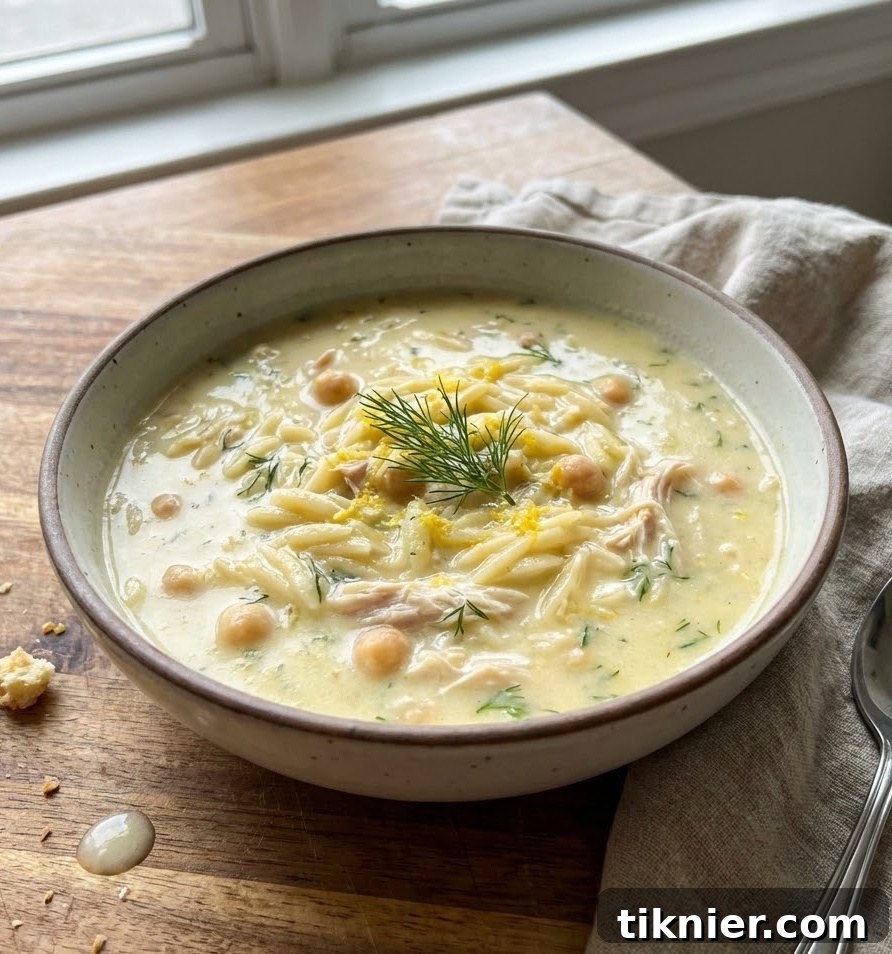
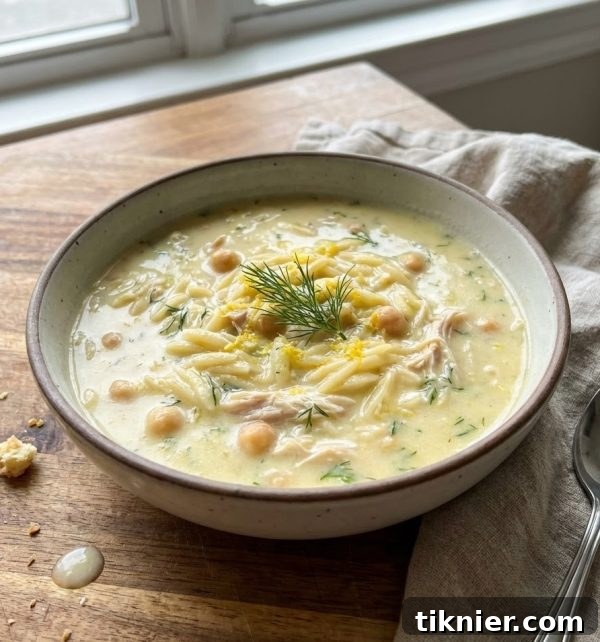
I distinctly recall the first time I savored an truly exceptional bowl of Greek lemon soup. My husband and I were on a charming weekend escape to a quaint town a few hours from home, when we serendipitously discovered a tiny, family-run Greek eatery. It was a brisk, rainy evening, and the owner warmly suggested their Avgolemono. Unsure what to anticipate, the moment that fragrant, steaming bowl arrived, I was instantly enchanted by its vibrant aroma and comforting presence.
The soup presented a perfect harmony of silky texture, bright tanginess, and profound comfort. It was far more complex and satisfying than any chicken soup I had tasted before. Right then, I knew I had to master this culinary marvel in my own kitchen. After years of preparing the traditional version, which I absolutely adore, I began to experiment. My goal was to create a heartier, even creamier Avgolemono, but without introducing any actual dairy cream.
That’s when the inspiration struck: chickpeas! By pureeing a portion of the chickpeas with the simmering broth, I achieved an unbelievably velvety texture that beautifully thickens the soup while imparting a subtle, earthy depth. This simple yet transformative addition makes this classic Greek lemon soup uniquely mine, and it has since become one of the most frequently requested dishes in my Southern kitchen. It’s truly a warm hug in a bowl, radiating a bright, sunny disposition that lifts the spirits.
Skip to My Special Recipe!
Why This Creamy Greek Lemon Soup Recipe Is a Must-Try
This isn’t merely another soup recipe; it’s a thoughtfully crafted evolution of a beloved Greek classic, traditionally known as Avgolemono. This iconic soup holds a cherished place in Greek home cooking, revered for its ability to transform simple, wholesome ingredients into something truly magical. The very heart and soul of the dish lies within the “avgolemono” sauce itself – a delicate, masterful emulsion of egg and lemon juice. When skillfully whisked into the hot broth, it creates a luxuriously silky, rich texture that needs no dairy whatsoever.
The enduring charm of the traditional Avgolemono is its pure, comforting simplicity. It’s the quintessential meal a Greek mother or grandmother would lovingly prepare when you needed warmth, comfort, or a little pick-me-up. It strikes a remarkable balance, being both incredibly light and deeply satisfying. The vibrant, zesty lemon perfectly cuts through the savory richness of the chicken broth, creating an exquisite flavor profile. The tempering of the eggs, a seemingly complex but easily mastered technique, is the true magic trick that bestows the soup with its characteristic velvety consistency, making each spoonful feel truly luxurious.
So, one might ask, why adapt something already so perfect? My intention isn’t to tamper with perfection, but rather to enhance and build upon its magnificent foundation. My unique addition, the pureed chickpeas, elevates this Greek lemon soup to an extraordinary new level of creaminess and heartiness. By blending half of the chickpeas into a smooth, luscious cream before reintroducing them to the pot, the soup gains an incredible body and an even richer mouthfeel. This plant-based puree works in perfect synergy with the traditional egg-lemon sauce, resulting in a final product that is exceptionally velvety, profoundly satisfying, and remarkably substantial. It also delivers a significant boost of plant-based protein and dietary fiber, transforming a typically light soup into a robust, filling meal perfectly suited for dinner. This subtle yet impactful tweak makes the soup distinctly my own, and I am confident you will find it unforgettably delicious and uniquely satisfying.
Essential Ingredients for Your Homemade Greek Lemon Soup
One of the most appealing aspects of this Greek lemon soup recipe is its reliance on readily available, wholesome ingredients that you likely already have in your pantry or can easily find at any grocery store. However, the quality of just a few key components can profoundly impact the final flavor, elevating your soup from good to absolutely outstanding. Here’s a detailed look at what you’ll need to create this comforting masterpiece:
- 2 tablespoons olive oil: Always opt for a high-quality extra virgin olive oil. Its fruity, peppery notes lay a beautiful, subtle flavor foundation right from the very first step of sautéing your aromatics.
- 1 large yellow onion, finely chopped: The unsung hero of many soups, a finely chopped onion slowly cooked provides a sweet, aromatic base, deepening the overall flavor complexity.
- 2 medium carrots, finely chopped: Carrots contribute a natural sweetness and a lovely pop of color, harmonizing beautifully with the other vegetables.
- 2 celery stalks, finely chopped: Completing the classic mirepoix (onion, carrot, celery), celery adds a subtle, savory earthiness that forms the backbone of the soup’s flavor.
- 8 cups high-quality chicken broth: This is arguably the most critical ingredient as it forms the very soul of your soup. Invest in the best broth you can find—a rich, flavorful homemade stock is ideal, but a premium store-bought broth will make a significant difference in depth of flavor.
- 1 cup uncooked orzo or long-grain white rice: Orzo, a small pasta shaped like rice, is the traditional choice and wonderfully soaks up the broth. However, long-grain white rice (such as Basmati or Jasmine) works equally beautifully, offering a gluten-free alternative if needed, and absorbing all those delicious flavors.
- 2 cups cooked, shredded chicken: For incredible flavor and a fantastic time-saver, a store-bought rotisserie chicken is my absolute favorite shortcut here! It’s consistently moist, seasoned perfectly, and saves you the effort of cooking chicken from scratch.
- 1 (15-ounce) can chickpeas, rinsed and drained: This is my unique secret ingredient! We’ll cleverly use half of these golden legumes whole for textural interest, and puree the other half to infuse the soup with an astonishing, dairy-free creaminess and a subtle, nutty richness.
- 3 large eggs: These are indispensable for creating the signature velvety, opaque texture of the avgolemono sauce. They are the thickening agents that give the soup its luxurious mouthfeel without any dairy.
- 1/2 cup fresh lemon juice: Please, heed my advice: use only fresh lemons! The bright, invigorating, and authentically zesty flavor of freshly squeezed lemon juice is non-negotiable and cannot be replicated by any bottled alternative. It’s what gives the soup its characteristic vibrant tang.
- 1/4 cup chopped fresh dill: Dill and lemon are a culinary match made in heaven. Its distinctive fresh, slightly anisy, herbaceous notes provide the perfect aromatic finishing touch, enhancing the Mediterranean essence of the soup.
- Salt and freshly ground black pepper to taste: These essential seasonings are crucial for balancing and amplifying all the individual flavors, ensuring the soup is perfectly seasoned to your preference.
- Lemon zest, for garnish: A final flourish of finely grated fresh lemon zest just before serving not only adds a beautiful visual appeal but also significantly boosts the bright, fragrant lemon aroma, making each spoonful even more inviting.
As you can see, the ingredient list is refreshingly straightforward. The true magic, however, unfolds through the cooking technique, particularly with the delicate handling of the eggs and the clever integration of my chickpea trick. Always prioritizing fresh herbs and freshly squeezed lemon juice will guarantee the brightest, most vibrant, and utterly authentic flavor in your finished Greek lemon soup.
Step-by-Step Guide to Crafting This Exquisite Greek Lemon Soup
Embarking on the creation of this creamy Greek lemon soup is a truly delightful culinary journey, and I promise you, it’s far simpler than it might sound. Just follow these meticulously detailed steps, and you’ll soon be rewarded with a magnificent pot of sunshine-yellow comfort. The most critical part, tempering the eggs, will be guided through with utmost care, ensuring your success.
Step 1: Laying the Flavor Foundation
Begin by selecting a generously sized pot or, my personal preference, a Dutch oven. A Dutch oven excels at distributing and retaining heat evenly, which is ideal for soup. Pour your olive oil into the pot and place it over medium heat. Once the oil glistens and shimmers slightly, introduce your finely chopped onion, carrots, and celery. Sauté this aromatic trio, stirring periodically, for approximately 6 to 8 minutes. Your goal is for the vegetables to soften, become beautifully translucent, and release their enticing fragrances. This foundational step is crucial for coaxing out their natural sweetness and building a deep, savory base that will permeate the entire soup.
Step 2: Simmering the Broth and Orzo
Next, carefully pour in your high-quality chicken broth. Increase the heat slightly to bring the mixture to a gentle simmer. As soon as you observe small, consistent bubbles forming, stir in the uncooked orzo. Allow the orzo to cook for about 10 to 12 minutes, or until it reaches an al dente, yet tender, consistency. Cooking the orzo directly within the broth allows it to absorb all the wonderful, savory chicken flavor, integrating it seamlessly into the soup.
Step 3: Creating the Velvety Chickpea Base
Now, for my special touch! While the orzo is leisurely simmering, retrieve half of your rinsed and drained chickpeas. Transfer them to a blender. With caution, ladle about 1/2 cup of the hot broth directly from the soup pot into the blender with the chickpeas. Secure the lid and blend until the mixture transforms into a completely smooth, luscious cream. This remarkable puree is precisely what will bestow our soup with its incredible, dairy-free richness and a wonderfully smooth mouthfeel.
Step 4: Incorporating Chicken and Remaining Chickpeas
Once the orzo is perfectly tender, gently stir the shredded chicken and the remaining whole chickpeas into the simmering soup. Allow them to warm through for just a minute or two. The whole chickpeas will add a lovely textural contrast to the creamy broth.
Step 5: Preparing the Avgolemono Egg-Lemon Mixture
In a separate medium-sized bowl, crack your three large eggs. Whisk them vigorously until they become pale yellow, light, and noticeably frothy. This aeration is key to a smooth avgolemono. Then, while continuing to whisk incessantly and steadily, slowly stream in the fresh lemon juice. Consistent whisking throughout this step is paramount for achieving a perfectly emulsified, smooth mixture that won’t curdle.
Step 6: The Art of Tempering the Eggs
This is arguably the most crucial step in achieving a silky Greek lemon soup, so approach it with patience and care. To temper the eggs means to gradually and gently raise their temperature, preventing them from scrambling when introduced to the hot soup. With one hand continuously whisking the egg-lemon mixture, use a ladle in your other hand to very slowly, in a thin stream, pour about 2 cups of the hot broth from the main soup pot into the egg bowl. Maintain that whisking motion the entire time! You’ll observe your mixture becoming smooth, warm to the touch, and slightly thickened. This process ensures the eggs are ready for the main pot without shocking them.
Step 7: Finishing the Soup with Flair
Once tempered, carefully pour your warmed egg-lemon mixture back into the main pot of soup. Simultaneously, stir in the previously blended creamy chickpea puree and the fragrant chopped fresh dill. Gently stir all the components together, allowing them to meld.
Step 8: Gentle Thickening to Perfection
Return the pot to the stove and keep it over very low heat. Continue to stir the soup constantly and gently for approximately 3 to 5 minutes. You will distinctly feel the soup begin to thicken, developing into that signature beautiful, velvety consistency. Here’s a critical warning: whatever you do, absolutely do not allow the soup to come to a boil! Boiling will inevitably cause the delicate egg proteins to curdle, ruining the smooth texture you’ve worked so hard to create.
Step 9: Final Seasoning and Presentation
Immediately remove the soup from the heat once it has thickened to your liking. Taste the soup and adjust the seasoning with salt and freshly ground black pepper as needed. Serve it piping hot, each bowl elegantly garnished with a little extra fresh lemon zest. This final touch adds an invigorating pop of bright aroma. Savor every comforting spoonful!
Mastering the Art of Serving Greek Lemon Soup
Presenting this exquisite Greek lemon soup is almost as gratifying as preparing it. Its inviting vibrant yellow hue and captivating fresh aroma make it a stunning centerpiece for any meal, whether you’re enjoying a quick, nourishing lunch or a comforting, hearty dinner. Often, the simplest approach to serving is the most effective: piping hot in a beautiful bowl, adorned with a few thoughtful garnishes to truly make it shine.
I always advocate for adding a little something extra right before the soup reaches the table. A final, generous sprinkle of fresh dill and a delicate dusting of lemon zest instantly awakens the senses and perfectly hints at the bright, herbaceous flavors within. For an added touch of luxury and richness, a light drizzle of high-quality, peppery extra virgin olive oil over the top of each serving is also a wonderful enhancement.
To transform this heartwarming soup into a more substantial and complete meal, consider pairing it with these delightful accompaniments:
- Crusty Artisan Bread: A warm, crusty baguette, a rustic loaf, or some soft, fluffy pita bread is practically a mandatory requirement for dipping. There’s truly nothing more satisfying than using a piece of bread to sop up every last drop of that silky, flavorful broth.
- A Simple Greek Salad: The crisp, refreshing flavors of a traditional Greek salad—featuring juicy tomatoes, cool cucumbers, thinly sliced red onion, Kalamata olives, and crumbled feta cheese, all lightly dressed—provide a perfect, vibrant contrast to the warm, comforting richness of the soup.
- Crumbled Feta Cheese: For an extra layer of authentic Greek flavor, generously sprinkle some tangy, salty feta cheese directly over the top of each bowl. The warmth of the soup will slightly soften the feta, creating a delightful textural and flavor experience that is absolutely delicious.
- Crispy Roasted Chickpeas: To introduce a fun and unexpected textural contrast, consider roasting some extra chickpeas until they are golden brown and wonderfully crispy. These can then be used as a flavorful, gluten-free crouton alternative, adding a delightful crunch to each spoonful.
When hosting a family dinner, I particularly enjoy serving the soup in large, inviting bowls, accompanied by a platter of warm pita bread, a separate bowl of crumbled feta, and a selection of fresh lemon wedges placed on the table. This allows everyone to customize their own bowl exactly to their liking, making the meal feel wonderfully interactive and special. Regardless of how you choose to present it, this Greek lemon soup is guaranteed to impress and bring comfort to all who taste it.
Storing and Reheating Your Greek Lemon Soup Leftovers
While this exquisite Greek lemon soup is undeniably at its peak when enjoyed fresh, any leftovers can still offer a wonderfully comforting meal if handled with proper care. The key to preserving its delicate nature lies primarily in the storage method and, most critically, in the reheating process, given the sensitivity of its egg-based broth.
Firstly, allow the soup to cool down completely to room temperature before storing. However, ensure it doesn’t sit out for longer than two hours to maintain food safety. Once cooled, transfer the soup into an airtight container. It will keep beautifully in the refrigerator for up to 3 or 4 days. You may notice that the orzo or rice will continue to absorb some of the liquid as it sits, making the soup thicker the following day. This is an entirely normal occurrence and nothing to worry about!
Here’s your essential guide to reviving those delicious leftovers:
- The Golden Rule: Reheat Low and Slow. This is the single most important piece of advice. Absolutely avoid high heat when reheating. Boiling the soup or microwaving it on a high setting will almost certainly cause the delicate egg proteins in the broth to curdle and separate, irrevocably ruining that beautiful silky texture you meticulously worked to create.
- Stovetop Method (Highly Recommended): This is by far the best way to reheat your Greek lemon soup. Pour the desired amount of leftover soup into a saucepan. Gently warm it over low heat, stirring frequently and consistently to ensure it heats evenly throughout. If the soup has thickened excessively due to the pasta absorbing liquid, you can gradually stir in a splash of additional chicken broth or water to thin it back to your preferred consistency. Heat just until it is warmed through, ensuring it never reaches a simmer or, crucially, a boil.
- Can I freeze this soup? I generally advise against freezing this particular soup. The delicate egg and lemon emulsion is prone to separating and can develop a grainy, unappetizing texture upon thawing and reheating. Furthermore, the orzo or rice can become quite mushy and lose its appealing bite after being frozen and defrosted. This is truly a soup that delivers its best experience when enjoyed within a few days of preparation.
By diligently following these straightforward steps, your second-day soup will be nearly as delicious and comforting as the first, offering a fantastic and easy lunch that feels like a genuine treat.
Delicious Substitutions & Creative Variations for Your Greek Lemon Soup
One of the most rewarding aspects of home cooking is the boundless freedom to personalize a recipe and make it truly your own. This Greek lemon soup serves as a magnificent canvas for a myriad of simple tweaks and creative variations, allowing you to adapt it based on your personal taste, dietary needs, or whatever ingredients you happen to have in your pantry. It’s a remarkably forgiving recipe, so feel empowered to experiment and play!
Whether you need to accommodate specific dietary restrictions, simply wish to explore a new flavor combination, or just want to use what’s on hand, here are some of my favorite and most successful ways to modify this delightful soup. Remember, these suggestions are merely starting points; let your culinary imagination be your guide.
- For a Perfectly Gluten-Free Version: This is an incredibly easy and straightforward substitution! Simply swap the traditional orzo with an equivalent amount of long-grain white rice. Alternatively, you could use your favorite gluten-free small pasta shape (like ditalini or pastina) or even quinoa for an added nutritional boost and a different texture. Just be sure to adjust the cooking time according to the package directions for your chosen grain or pasta.
- Transform it into a Hearty Vegetarian Meal: To make a delicious vegetarian Greek lemon soup, simply substitute the chicken broth with a high-quality vegetable broth. For optimal flavor, I recommend a robust vegetable broth that has depth, or even a “no-chicken” flavored broth. Naturally, you will also omit the shredded chicken. To maintain its heartiness and make it a substantial meal, consider adding an extra can of chickpeas, or incorporating other hearty white beans such as cannellini or great northern beans. The core flavors of lemon and dill, combined with the creamy avgolemono sauce, ensure the soup remains incredibly comforting and satisfying without any meat.
- Experiment with Fresh Herbs: While fresh dill is the quintessential herb for Avgolemono and truly classic, this soup is also wonderfully fragrant and flavorful with fresh parsley. A harmonious combination of both dill and parsley can be particularly lovely. For a more adventurous and different kind of bright, refreshing flavor, consider stirring in a small amount of finely chopped fresh mint right at the very end of cooking.
- Boost the Greens for Extra Nutrients: For an additional dose of vitamins and vibrant color, stir in a few generous handfuls of fresh baby spinach or finely chopped kale at the very end of the cooking process. Allow the greens to gently wilt into the hot soup for just a minute or two before serving. They will add a lovely freshness and enhance the nutritional profile of the dish.
- Introduce a Subtle Hint of Spice: If you appreciate a little warmth and gentle heat in your soup, a small pinch of red pepper flakes added along with the mirepoix (onion, carrots, celery) at the very beginning of cooking can impart a delightful, subtle kick. This touch of warmth beautifully complements the bright, zesty lemon flavor without overpowering it.
Don’t hesitate to explore and experiment with these ideas. The fundamental essence of this recipe lies in the masterful avgolemono technique and the rich, creamy chickpea base. As long as you preserve these core elements, you have the creative freedom to tailor the other ingredients to craft your absolutely perfect bowl of Greek lemon soup.
Creamy Greek Lemon Soup with a Twist
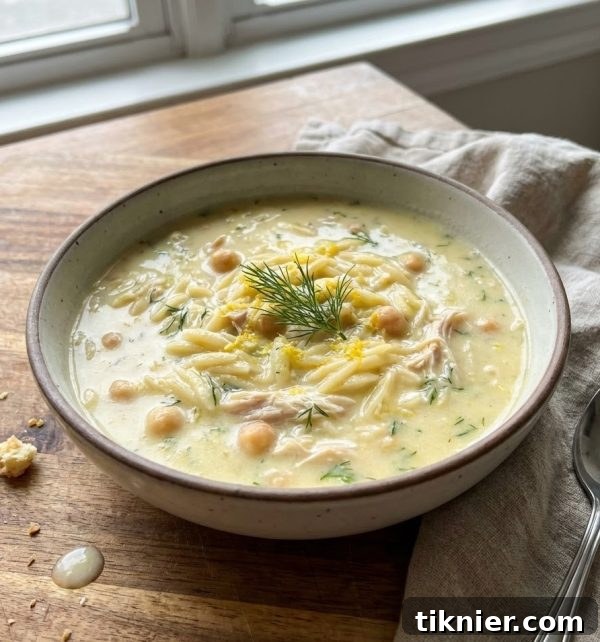
Description: A modern, elevated take on the traditional Greek Avgolemono. This unique recipe incorporates pureed chickpeas as a secret ingredient to achieve an unbelievably silky, dairy-free creamy texture. It’s a bright, comforting, and hearty soup that’s substantial enough to serve as a satisfying main course.
Yield: 8 generous servings | Category: Soup | Cuisine: Greek-inspired, Mediterranean
Prep Time: 15 minutes | Cook Time: 30 minutes
Ingredients
- 2 tablespoons olive oil
- 1 large yellow onion, finely chopped
- 2 medium carrots, finely chopped
- 2 celery stalks, finely chopped
- 8 cups high-quality chicken broth
- 1 cup uncooked orzo (or long-grain white rice for gluten-free)
- 2 cups cooked, shredded chicken (rotisserie chicken is a great shortcut)
- 1 (15-ounce) can chickpeas, rinsed and drained
- 3 large eggs
- 1/2 cup fresh lemon juice (do not use bottled)
- 1/4 cup chopped fresh dill
- Salt and freshly ground black pepper to taste
- Lemon zest, for garnish
Instructions
- Heat olive oil in a large pot or Dutch oven over medium heat. Add finely chopped onion, carrots, and celery. Sauté, stirring occasionally, for 6-8 minutes until vegetables are soft and translucent.
- Pour in the chicken broth and bring the mixture to a gentle simmer. Stir in the uncooked orzo (or rice). Cook for 10-12 minutes, or until the pasta/grain is tender.
- While the orzo is cooking, take half of the rinsed chickpeas and place them in a blender. Carefully ladle about 1/2 cup of hot broth from the soup pot into the blender. Blend until the mixture is completely smooth and creamy.
- Once the orzo is tender, stir the shredded chicken and the remaining whole chickpeas into the soup pot.
- In a separate medium bowl, vigorously whisk the three large eggs until they are pale and frothy. While continuously whisking, slowly stream in the fresh lemon juice.
- To temper the eggs, slowly ladle about 2 cups of the hot broth from the soup pot into the egg-lemon mixture, whisking constantly and vigorously throughout the entire process.
- Pour the tempered egg mixture back into the main soup pot. Stir in the creamy chickpea puree and the chopped fresh dill.
- Return the pot to very low heat and continue to stir constantly for 3-5 minutes, until the soup slightly thickens to a beautiful velvety consistency. It is crucial NOT to let the soup boil, as this will cause the eggs to curdle.
- Remove the soup from the heat. Taste and season with salt and freshly ground black pepper as needed. Ladle into bowls, garnish with fresh lemon zest, and serve immediately. Enjoy!
Notes
For convenience and incredible flavor, utilizing a store-bought rotisserie chicken is an excellent time-saver. Always use freshly squeezed lemon juice for the brightest, most authentic flavor profile. When reheating any leftover soup, remember to do so gently on the stovetop over low heat, stirring frequently, to prevent the delicate eggs from curdling and preserve the smooth texture.
Servings: 8 | Calories: Approximately 350 kcal | Total Fat: 12g | Total Carbohydrates: 35g | Protein: 25g
5 Frequently Asked Questions About This Creamy Greek Lemon Soup
Here are clear, concise, and helpful answers to the most common questions I receive regarding this delightful Greek lemon soup recipe, designed to help you achieve perfect results every time.
Why did my Greek Lemon Soup curdle, and how can I prevent it?
Ah, the dreaded curdling! This is by far the most common concern when preparing any avgolemono-style soup, and it almost invariably occurs for one of two primary reasons: improper tempering of the eggs or allowing the soup to boil after the egg mixture has been incorporated. The process of tempering is meticulously designed to gently and gradually elevate the temperature of the raw eggs, thereby preventing them from being shocked by the hot broth and consequently scrambling. It is absolutely paramount to pour the hot broth into the egg-lemon mixture very, very slowly, in a thin, continuous stream, while whisking constantly and vigorously. Do not, under any circumstances, rush this critical step!
The second, equally important rule to prevent curdling is this: once you have added the tempered egg mixture back into the main soup pot, never, ever let the soup come to a boil. Even a brief, rolling boil can cause the delicate egg proteins to seize up, coagulate, and separate, resulting in an undesirable grainy or curdled texture. After the eggs are incorporated, keep the heat on a very low setting and stir gently but continuously until the soup just begins to thicken to your desired velvety consistency. The moment it reaches this point, promptly remove it from the heat. This identical rule applies rigorously when reheating leftovers: a low and slow approach is the only way to maintain that beautiful, silky smooth broth.
Can I prepare this Greek Lemon Soup in advance for convenience?
You can certainly get a significant head start on preparing this delicious soup, which is a fantastic strategy for bustling weeknights or when you’re entertaining guests. For optimal results and to maintain the integrity of the avgolemono, I recommend making the soup base ahead of time. You can follow the recipe through Step 4, which involves cooking the vegetables, simmering the broth and orzo (or rice), and adding the shredded chicken and chickpeas. At this juncture, allow the soup base to cool completely before transferring it to an airtight container. It can then be safely stored in the refrigerator for up to two days.
When you are ready to serve, simply reheat the prepared soup base on the stovetop over medium-low heat until it is hot and gently simmering. Once warmed, you can then proceed with the final steps of the recipe: preparing the egg-lemon mixture, carefully tempering it with hot broth, and finally stirring it into the soup to achieve that signature thickness and velvety finish. This method ensures that the delicate avgolemono sauce is incorporated fresh, guaranteeing that luxurious, silky texture without any compromise on quality, while offering you the undeniable convenience of a make-ahead meal.
What is the secret to achieving such a creamy Greek Lemon Soup without using actual cream or dairy?
The secret to the astounding creaminess of this Greek lemon soup is a brilliant twofold approach, seamlessly blending a classic Greek culinary technique with my own innovative twist. The traditional secret, inherited from generations of Greek cooks, lies entirely within the avgolemono sauce itself. The magic happens through the careful whisking of eggs and then expertly tempering them. This process creates a stable, protein-based emulsion that naturally thickens the chicken broth, bestowing upon it a rich, creamy mouthfeel and a beautiful, characteristic pale yellow hue. It’s a remarkable culinary feat that adds significant body and a luxurious quality without a single drop of dairy product.
My unique contribution to this unparalleled creaminess is the strategic addition of pureed chickpeas. By blending just half of a can of chickpeas with a small amount of hot broth, you create what is essentially a silky, savory, and naturally plant-based cream. When this smooth puree is stirred back into the main pot, it effortlessly dissolves into the soup, adding another profound layer of velvety thickness, an enhanced body, and a subtle, earthy depth of flavor. The synergistic combination of the time-honored avgolemono technique and my innovative chickpea puree results in an incredibly rich, utterly satisfying, and remarkably creamy Greek lemon soup that tastes far more indulgent than its wholesome ingredients suggest.
Is it possible to make this Greek Lemon Soup suitable for a vegetarian diet?
Absolutely! This versatile soup adapts beautifully and seamlessly to a vegetarian diet with just a few simple ingredient swaps. The primary adjustment involves replacing the chicken broth with a flavorful, high-quality vegetable broth. I’ve found that either a robust, savory mushroom broth or a specialized “no-chicken” flavored vegetable broth works exceptionally well here, as they provide a deeper, more umami-rich flavor profile that truly enhances the soup. Naturally, you will also omit the shredded chicken entirely.
To ensure the vegetarian version of the soup remains wonderfully hearty and filling, I highly recommend incorporating an extra can of chickpeas. You can still follow the original recipe’s method of pureeing half of one can to achieve that desired creamy texture, while leaving the remaining chickpeas whole for added bite and substance. For even more nutritional value and texture, consider adding other finely chopped vegetables to the mirepoix, such as zucchini, bell peppers, or even mushrooms. Additionally, stirring in some hearty greens like fresh spinach or kale at the very end of cooking will further enhance its nutritional content. The vibrant core flavors of lemon, fresh dill, and the creamy avgolemono sauce are so inherently wonderful that the soup is just as spectacular and satisfying without any meat.
What truly differentiates Greek Lemon Soup from other popular chicken noodle soups?
While both Greek lemon soup and other familiar chicken noodle soups share the comforting elements of chicken and a starch, that is largely where their similarities diverge. A typical American-style chicken noodle soup, for instance, is characterized by a clear, relatively thin brothy base, often seasoned with classic herbs like thyme and parsley, and typically contains chunkier vegetables along with traditional egg noodles or other pasta shapes. It is undeniably a classic in its own right, but it offers a profoundly different sensory and culinary experience compared to Greek lemon soup.
The defining and truly distinctive characteristic of Greek lemon soup, or Avgolemono, is its iconic signature egg-lemon sauce. This is the element that elevates it from a simple broth into something entirely unique and extraordinary. The meticulously tempered eggs combined with fresh lemon juice create a thick, silky, and opaque broth that is simultaneously tangy, rich, and wonderfully velvety. The overall flavor profile is distinctly Mediterranean, being predominantly bright, vibrantly zesty from the lemon, and infused with the aromatic freshness of dill, contrasting sharply with the often more subdued herbaceous notes found in its American counterparts. My particular version further enhances this distinction with the addition of the creamy chickpea base, making it even richer, more substantial, and uniquely satisfying in its depth of flavor and texture.
Explore More Delicious Recipes
If you thoroughly enjoyed the comforting warmth and vibrant flavors of this unique creamy Greek lemon soup, I’m confident you’ll adore some of my other favorite recipes designed to bring deliciousness to your kitchen.
- Easy Chicken Soup Recipe: A quintessential, straightforward chicken soup that is the epitome of comfort food, perfect for chilly days or whenever you need a soothing, classic meal.
- Crockpot Lemon Rosemary Chicken: For another delightful combination of lemon and chicken, this incredibly easy slow cooker recipe consistently yields tender, juicy chicken bursting with aromatic flavors, making it a hassle-free weeknight dinner.
- Greek Tortellini Salad with Sun Dried Tomato Pesto: If you’re a fan of vibrant Greek-inspired flavors, this zesty and colorful pasta salad is an absolute must-try for your next potluck, picnic, or as a light yet satisfying weeknight meal.
I sincerely hope you’ll give these recipes a try and share your thoughts with me!